
What foods attract pantry pests? It’s not just the obvious stuff—pantry pests go after grains, dried fruit, nuts, baking supplies, pet food, and even chocolate. Birdseed bags often act as ground zero, while Indian meal moths target sugary raisins and merchant grain beetles prefer oily peanuts.
Flour beetles chew through cardboard to reach cake mix, and cigarette beetles infest your spice rack. Non-food items like decorative corn can also draw them in, and bulk or expired foods are the worst because they sit for months, letting pests breed unnoticed.
This guide breaks down exactly how each pest operates and what you can do about it. Keep reading to learn the practical steps to protect your pantry.
At A Glance
- Grains, cereals, flour, and oatmeal attract sawtoothed grain beetles and flour beetles.
- Dried fruits and vegetables provide sugary, damp breeding grounds for Indian meal moths.
- Nuts and seeds, especially oily ones, are prime targets for merchant grain beetles.
- Pet food and birdseed serve as protein-rich hubs that spread infestations to other foods.
- Baking supplies, spices, chocolate, and coffee draw cigarette beetles and Indian meal moths.
Why Grains and Cereals Are a Top Target for Pantry Pests
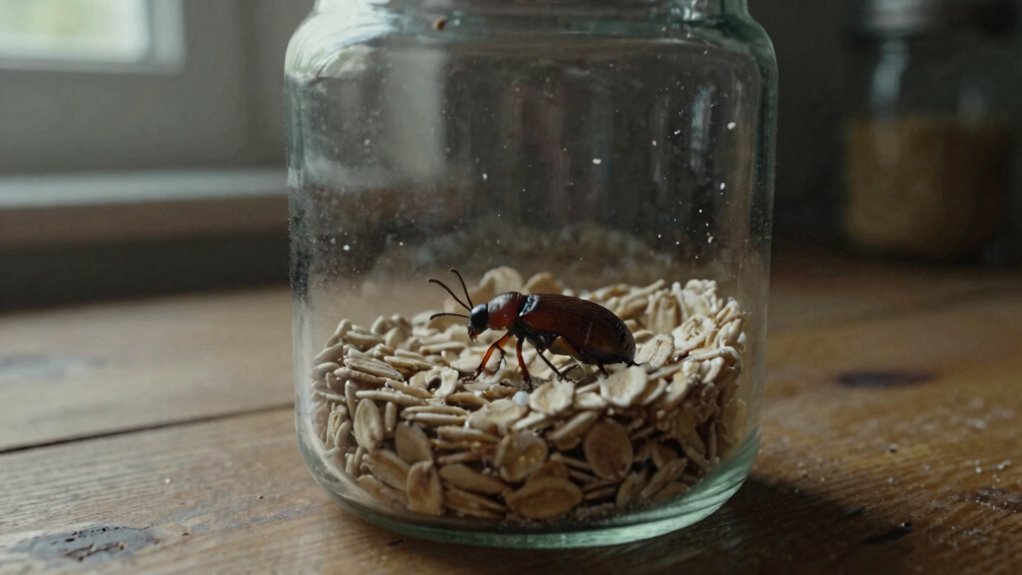
Grains and cereals are highly vulnerable to pantry pests like the sawtoothed grain beetle. These pests breed where cracked rice, spilled flour, or loose oatmeal accumulate.
Whole grain resistance works only for intact kernels with tough hulls. Damaged grains become an open invitation for beetle infestations.
Even unopened cereal boxes with foil or thin plastic get chewed through easily. Birdseed bags often serve as ground zero for pests that spread to your pasta or crackers.
Even unopened cereal boxes are no match for pests that start in birdseed.
Buy whole grains whenever possible to reduce risk. Store opened packages in airtight glass or metal containers.
Check birdseed for signs of infestation before bringing it indoors. Ignoring these easy targets will fund a beetle breeding program in your pantry.
Glue traps can be placed along wall edges and near dry goods to capture crawling pests without using any chemicals.
How Dried Fruits and Vegetables Invite Indian Meal Moths
Raisins and dried apricots are like five-star hotels for Indian meal moths, offering a sugary and damp place to lay eggs.
Dried vegetables in soup mixes also attract infestations because their porous surfaces and long shelf lives invite beetle larvae to settle in.
These pests chew through thin packaging easily, so airtight containers are the only real defense for dried goods.
To prevent pantry moth problems, always transfer dried fruits and vegetables into sealed glass or plastic containers.
Regularly inspect your storage areas for signs of moth activity to catch infestations early.
Storing these items in cool, dry places helps reduce the risk of meal moth eggs hatching.
For safe pest management, choose a reputable spray to avoid overuse risks like burning or redness.
High-Risk Dried Fruits
Indian meal moths are strongly attracted to the sugar in dried fruits like raisins and apricots. These high-risk foods become infested quickly if not stored properly.
A thorough inspection of dried figs is vital because soft crevices can hide tiny eggs. For effective raisin storage, use airtight glass jars or immediate refrigeration. Flimsy plastic bags offer no real pest control against determined larvae.
The sugar content in dried fruit fuels moth development from egg to flying adult. Apricots, prunes, and dates are similarly inviting to pantry moths.
Once inside a package, moths breed rapidly and contaminate nearby food. Your best pest prevention starts with a careful inspection of all dried fruit before storage.
Transfer every item to sealed containers right after purchase. Freeze new dried fruit for 48 hours to kill hidden eggs and stop infestations before they start.
The bottom line is that dried fruit is a moth magnet. Treat every raisin and fig as a potential Trojan horse and store them with airtight protection. Non-toxic and chemical-free pheromone traps can also be placed near stored dried fruit to capture male moths and break the breeding cycle.
Common Vegetable Infestations
Most dried vegetables invite Indian meal moths to move in, and once they do, they rarely pay rent. These pests love dried vegetables like carrot flakes, onion bits, or soup mix cubes because they’re high in starch and easy for larvae to chew through.
Even sealed plastic bags aren’t safe. Moths can crawl through tiny seams.
Ornamental corn is another favorite. Those colorful ears on your fall display are a perfect moth motel.
Larvae hide deep inside the kernels. You won’t spot them until tiny moths flutter out.
Inspect all dried vegetables and corn before storing. Keep them in airtight side-locking lids with silicone gaskets for a secure, pest-proof seal, not cardboard.
Toss any with silk webbing or live bugs. Check these items monthly or risk a pantry takeover.
Which Nuts and Seeds Attract Merchant Grain Beetles
A certain perverse irony exists in the fact that the very snacks humans hoard for comfort are the ones merchant grain beetles find most irresistible. The merchant grain beetle, a tiny, dark-brown pest, shows a particular preference for oily nuts and seeds.
Peanuts, almonds, and walnuts are prime targets, along with birdseed and garden seeds. These pests chew through thin plastic or cardboard packaging with ease, contaminating the contents.
Their larvae thrive on high-fat nut seeds. If you store nuts in bulk, check for tiny holes or webbing.
A fun fact is they’re named for infesting merchant ships’ cargo. Keep nut seeds in airtight glass jars or the freezer to prevent infestations.
Inspect birdseed sacks before bringing them indoors. Use sealed, non-porous containers for all oily nuts and seeds to stop merchant grain beetles.
For added protection, apply a light dusting of food-grade diatomaceous earth around pantry shelves and storage areas to kill any beetles that emerge.
The Baking Supplies and Spices That Flour Beetles Love
Baking supplies are a pantry pest’s version of an all-you-can-eat buffet, and flour beetles are the rowdiest guests. They chew through thin cardboard and plastic to get at flour, cake mix, and cornmeal, their go-to breeding grounds.
Yeast and powdered milk call out too, offering high-protein meals for hungry larvae. For effective pest control, store these items in airtight containers.
| Baking Supply | Flour Beetle Risk |
|---|---|
| Flour & Mixes | Very high. Eggs hide in unopened bags. |
| Cornmeal & Oats | High. Can live in sealed boxes. |
| Yeast & Choco | Moderate. Prefers warm, dark spots. |
Spice infestation starts when paprika, chili powder, or curry is left open. Cigarette beetles often join the party, so buy insect-proof containers today.
Keep baking goods in glass or metal containers to eliminate beetle breeding grounds. Toss any old spice jars where bugs have taken root.
A clean pantry reduces the beetle buffet, so follow these pantry pest control tips. Use professional pest management for stubborn infestations. Pheromone-based traps target pantry moths specifically, effectively disrupting the breeding cycle without chemicals.
How Pet Food and Birdseed Introduce Pests Into Your Home
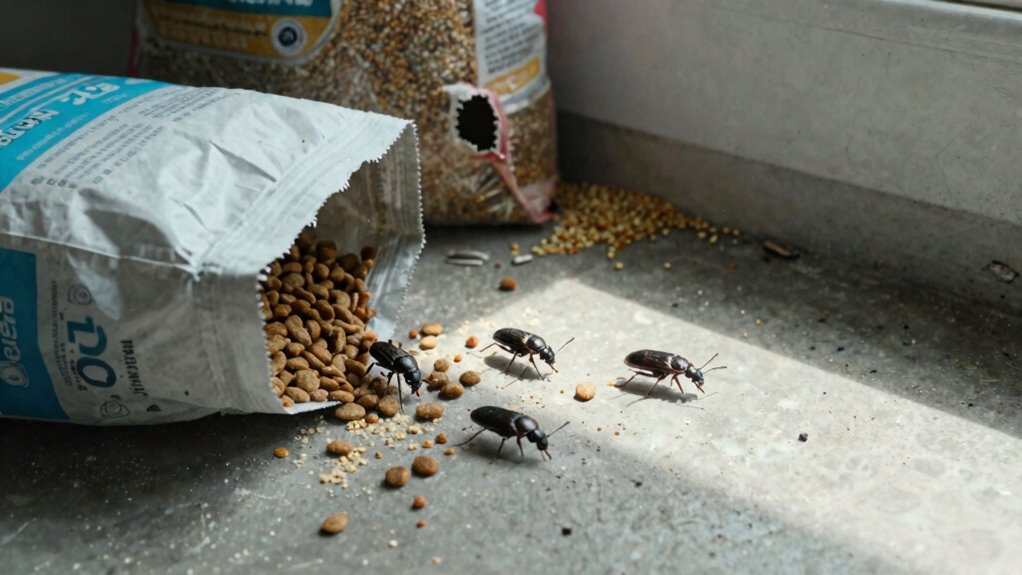
Flour beetles may love your cake mix, but your dog’s dinner and the bird feeder out back are even bigger pest magnets. These outdoor sources often carry hidden eggs, leading to infestation spread indoors.
Flour beetles may love your cake mix, but pet food and birdseed are even bigger pest magnets.
Dry pet food, especially large bags, is a protein-rich paradise for cigarette beetles. Birdseed, often grain-based, is a common culprit that introduces pests.
Store pet food in airtight containers to stop larvae from chewing through paper bags. Keep birdseed in a sealed metal can outside, since plastic bins are easy for rodents and insects to gnaw through.
Inspect bulk purchases for signs of webbing or small beetles before bringing them inside. One infested bag can start a chain reaction, moving from animal chow to your cereal.
Buying smaller quantities and storing everything in glass or heavy plastic breaks that cycle. For effective home pest control, rotate your stock and wipe down storage areas monthly.
If you notice pantry pests near pet supplies, act fast with targeted insecticide sprays or diatomaceous earth. Professional extermination services can also stop an infestation before it reaches your kitchen cabinets.
Keep pet food bowls clean and avoid leaving leftovers out overnight. Seal trash bins with tight lids, and clean up spilled birdseed under feeders weekly.
By choosing pest proof containers and practicing routine pest prevention, you protect both your pets and your pantry. Airtight containers with silicone gaskets prevent pests from chewing through packaging and breeding in stored foods.
When you suspect an active infestation, search for pest control near me to get immediate relief and long term monitoring.
With these simple steps, you can enjoy your backyard birds without inviting unwanted guests inside.
Why Sweets, Candies, and Chocolate Draw Indian Meal Moths
An open bag of chocolate chips can turn into a buffet faster than you can say hot cocoa emergency. Indian meal moths, those tiny winged troublemakers with a bronze tinged wing pattern, do not just stumble into your candy stash. They are practically summoned by the sugary, high protein aroma of sweets like chocolate, cookies, and dried fruit.
Chocolate candy is a prime target, as it is rich in both sugar and protein, perfect for larvae growth. Indian meal moths can chew through thin plastic or foil wrappers, even unopened ones, to reach that cocoa goodness.
Dried fruit and cookies get hit too, since larvae crave carbohydrates. These pests do not need a messy kitchen; a sealed bag of chocolate chips can still get invaded if eggs were already inside from the factory.
Check older candy, toss any with webbing or tiny worms, and store chocolate in airtight glass jars. This simple pest control step can save you from a full pantry infestation and costly replacements. For effective treatment, sprays with residual protection lasting up to 30 days can kill adult moths on contact and help prevent re-infestation.
How Cigarette Beetles Infest Your Tea, Coffee, and Spice Rack
Even as you reach for that tin of Earl Grey or that jar of paprika, cigarette beetles may already be staging a stealth operation in your spice rack. Their tiny larvae, barely visible, chew through cardboard, plastic, or foil to reach dried plant matter.
Cigarette beetle habits include targeting powdered spices, cocoa, tea leaves, and coffee beans. Items stored for months are especially vulnerable. Poor spice storage methods, like using unsealed containers or leaving bags clipped shut, invite infestation.
You can prevent a pest control problem by inspecting all dried herbs and spices upon purchase. Pay special attention to bulk-bin items. Store spices in airtight glass jars with rubber seals, not paper or plastic.
For reliable pest prevention, freeze new spices for 48 hours to kill any hidden eggs or larvae. A moth in your flour is bad, but a beetle in your cinnamon is just sad. Tight seals save your seasoning and keep your kitchen fresh. Using non-toxic glue traps near your spice rack can catch crawling pests without introducing harmful chemicals to your food storage area.
Non-Food Items That Still Attract Pantry Pests
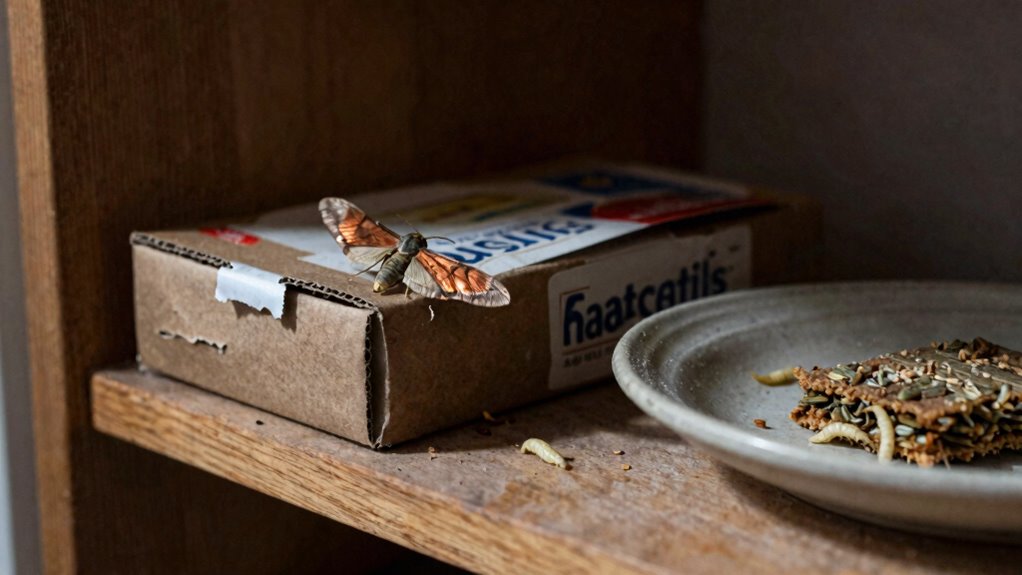
Even rodent baits, often grain based, can attract stored product pests. Your pest control could be feeding the very bugs you want to eliminate. That irony is a common pest control oversight in many homes.
Inspect all decorative garlands and holiday crafts for tiny holes or webbing. If it is dry, organic, and sitting in your pantry, assume it is a potential meal ticket. This thinking helps you prevent a full blown pantry pest infestation early.
Identifying these hidden food sources is key to effective pest management. A thorough pantry audit often reveals overlooked items that support an infestation. Stay proactive and check every non food organic material in your storage areas. Using species-specific pheromone lures can help detect early infestations and protect your shelves and bins.
Why Bulk and Expired Foods Increase Your Infestation Risk
Bulk purchases might save money, but they turn your kitchen into a welcome center for pests. Those giant bags of flour or snacks can sit for months, giving pantry moths and beetles a hidden nursery.
An expiration date is just a suggestion for determined weevils and grain beetles. The longer food stays in a big container, the higher your risk of pest infestation.
To reduce your infestation risk, always inspect bulk foods before bringing them home. Store grains and dry goods in airtight containers to block entry for common pests.
Check expiry dates carefully and rotate older items to the front of your shelf. Preventing a pest problem is easier than dealing with a full blown beetle outbreak in your pantry. For added protection, consider using pheromone traps designed for pantry moths to monitor and disrupt breeding cycles in your storage areas.
Bulk Storage Risks
A ten-pound bag of flour looks like a good deal, but it often hides pantry pests inside. Bulk storage risks multiply when grain sits for months, giving larvae a head start.
Consider these bulk food vulnerabilities. Breached packaging, like paper or thin plastic bags, tears easily and lets beetles crawl in from infested warehouse pallets. Hidden eggs in flour, rice, or nuts arrive already containing microscopic moth or weevil eggs, which hatch over time. For effective pest control, food-grade diatomaceous earth can be sprinkled around storage containers to dehydrate and kill emerging insects.
Slow rotation with bulk bins at home allows pests to breed through multiple generations before detection. That bag of bargain flour might harbor flour beetles, which are tiny brown bugs that love stale grain. To avoid bulk storage risks, buy in smaller quantities and store in airtight glass or metal containers.
Freeze new grains for 48 hours to kill hidden eggs and stop infestations early. This pest control strategy protects your kitchen from unwanted invaders.
Expired Items Attract Pests
Expired items attract pests like Indian meal moths to cereal boxes because thin cardboard breaks down fast and allows easy entry.
Stale nuts lure merchant grain beetles since the rancid oils create an irresistible smell.
Dried fruit draws cigarette beetles due to sugary residue and softened packaging.
The fix is simple: check expiration dates monthly and toss anything past its prime.
Pests do not care about your “I’ll use it later” plans, so old food is basically a welcome mat.
For effective pest control, keep it fresh or keep it gone.
Using UV-stabilized weatherproof netting can also help protect stored bulk foods from outdoor pests.
Large Bags Harbor Larvae
Large bags of pet food, birdseed, or flour are practically all-you-can-eat buffets for pantry pests.
Those 20 pound sacks from the warehouse store often sit around for months, giving moth eggs or beetle larvae a perfect, undisturbed nursery.
Once you haul one home, you have effectively invited a hidden colony.
Here is why they are such a magnet for infestations.
Long shelf life equals long risk.
That forgotten bag of birdseed bought six months ago is a larvae luxury hotel.
Thin plastic packaging is easily chewed, and larvae crawl in through tiny seams.
Expired items are less likely to be used quickly, letting pests multiply freely.
The bottom line is to avoid massive bulk bags unless you can use them fast.
Transfer opened bags into airtight containers to prevent pest control issues.
It is far less funny cleaning up an infestation than it is laughing about it later.
For effective pest prevention, buy only what you will consume within a few weeks.
How to Spot an Active Infestation and Stop It From Spreading
Most homeowners won’t notice an infestation until they see a live adult beetle crawling across the counter or a moth fluttering near the pantry light. Identifying infestation signs early is key to protecting your kitchen from pantry pests.
Check for webbing in corners, tiny holes in packaging, or a foul, musty smell. Larvae may likewise leave behind a trail of fine dust or frass, which looks like sawdust.
Adult beetles or moths near food should be trapped and discarded immediately. Small, worm-like creatures in food mean you must discard open items right away. Use pesticide-free glue traps placed along walls and corners to safely capture any crawling pests without harsh chemicals.
Silk threads on bags or shelves require a thorough clean and vacuum. Chewed packaging or food means you should inspect nearby containers for more signs of pest activity.
For spreading prevention, immediately seal infested items in a plastic bag and toss them outside. Then, vacuum the entire pantry, paying close attention to cracks and crevices.
Finally, wipe shelves with soapy water to remove any eggs or residue. Store new dry goods in airtight glass or hard plastic containers.
This stops the party before it even starts and keeps your pantry protected from future invasions.
Frequently Asked Questions
Can Pantry Pests Chew Through Plastic Containers?
Yes, some pantry pests can absolutely chew through plastic containers, but the thickness and quality of the plastic make all the difference.
Thin, flimsy bags or cheap food pouches are no match for pests like sawtoothed grain beetles, which can tear through them in no time.
Thick, rigid plastic with a tight-fitting lid, like a 3.5-gallon storage bin, is a whole different story.
Think of it as a tiny, six-legged jailbreak attempt: those hard surfaces are much tougher to breach, so they act as a reliable barrier for your dried goods.
The real secret to keeping bugs out is the seal, not just the plastic.
A weak latch or a warped lid is an open invitation, while a secure, snap-tight closure is your winning defense.
So, when you are shopping for food storage containers, look for hard plastic options with locking lids, and search for terms like “airtight pest-proof storage” or “bug-proof kitchen canisters” to find the best results.
This simple upgrade stops infestations before they start, saving you money and frustration.
For lasting protection, combine hard plastic bins with a good pantry cleaning routine, and consider adding bay leaves or diatomaceous earth as a natural deterrent.
Ultimately, hard plastic plus a strong seal equals true pest-proof storage that keeps your kitchen safe and your food fresh.
Are Unopened Packages Safe From Pantry Pest Infestation?
No, unopened packages are not safe from pantry pests. Pantry moths and beetles easily chew through paper, thin cardboard, plastic, foil, or cellophane to reach your food.
Even sealed boxes offer little protection against a stored product pest infestation. Cross contamination often starts from infested birdseed or pet food stored nearby.
Those items can introduce eggs or larvae that crawl into your sealed boxes. A single small tear or weak seal is enough to let them inside.
Your only real defense is to store all grains, nuts, and dried goods in hard glass or thick plastic containers. For long term pantry pest control, invest in airtight storage solutions that block entry and prevent reinfestation.
How Long Can Pantry Pests Survive Without Food?
Pantry pests can survive weeks without food, making them tough to eliminate. Adult beetles like sawtoothed grain beetles last two to three weeks without a meal.
Indian meal moth larvae can hold out for a month or more, which is impressive for such tiny freeloaders. Starvation tolerance varies by species and life stage, with larvae typically surviving longer than adults.
A clean, sealed pantry forces them to move on or perish for good. The bottom line is that a thorough cleaning and inspection breaks their cycle; no food means no future for these pests.
Store your dry goods in airtight containers to prevent future infestations. For immediate help, consider using pantry moth traps or food-grade diatomaceous earth as a trusted pest control solution.
Do Pheromone Traps Effectively Control Pantry Pest Populations?
Pheromone traps often fail to fully control pantry pest populations. They primarily monitor pests instead of eliminating them outright.
Pheromone effectiveness is limited to behavioral disruption. It confuses males so fewer females can successfully mate.
Traps catch only a fraction of the pests in your pantry. Eggs and larvae remain untouched inside flour boxes and cereal bags.
A fifteen dollar trap kit might reduce adult moth counts. It will not stop re infestation on its own.
For real pest control, combine traps with thorough sanitation. Toss out infested crackers and seal all dry goods in glass jars.
Vacuum cracks and shelves to remove hidden eggs. Traps work best as an early warning system for new activity.
If you rely on traps alone, pantry pests will win. Smart buyers use them as part of a complete pantry pest management plan.
Can Freezing Kill Pantry Pest Eggs and Larvae?
Yes, freezing can kill pantry pest eggs and larvae, but only when done at the right temperature and for the right duration. A steady 0°F (-18°C) for at least four days is the gold standard for temperature lethality, as shorter freezes may just stun the pests into dormancy.
This cold treatment stops ingredient infestation in flour, nuts, or dried fruit without using any chemicals. If you want to protect your food storage without spraying, this is a reliable home pest control method.
Keep in mind that freezing won’t kill eggs hidden inside sealed metal or thick glass containers. For best results, freeze small batches in plastic bags first, then transfer everything to airtight containers.
This approach works as a solid, low effort fix for most households dealing with Indian meal moths, flour beetles, or grain weevils. It is not a magic solution, but it is close enough for anyone looking for pest control products that are simple and chemical free.
Use this technique alongside sealed storage and regular pantry inspections to prevent reinfestation. For anyone searching for pest control solutions online, this is a practical step that saves money and reduces waste.


