
Getting rid of mosquito larvae in water doesn’t require a hazmat suit or a call to the pros. Whether you’re emptying buckets or treating a rain barrel, the right fix takes just minutes and a few dollars.
Dumping standing water kills larvae instantly, but for birdbaths or ponds, a Bti dunk works for 30 days without harming fish or pets.
Mineral oil handles pupae by blocking their breathing tubes, and weekly checks stop problems before they start.
In this guide, you’ll get the exact steps for every water source, plus the hidden spots homeowners often miss.
At A Glance
- Eliminate standing water in buckets, saucers, gutters, and tarps weekly to stop larvae development.
- Introduce Gambusia fish or tadpoles to ponds and rain barrels, reducing larvae up to 97%.
- Apply Bti dunks near water edges for birdbaths; replace monthly or after heavy rain.
- Use mineral oil drops to form a film that suffocates larvae and pupae within minutes.
- Hire professional treatments ($200–$500/acre) or install fine mesh screens on water containers.
Tip and Toss These 5 Common Containers in 10 Minutes
Why spend ten minutes hunting for a hidden swamp when you can just tip and toss five common containers and call it a day?
Buckets, birdbaths, clogged gutters, old tires, and plant saucers are prime aquatic habitats for mosquito breeding.
A New Jersey urban study found artificial containers made up 46.5% of Aedes albopictus breeding sites, whereas tree holes were a measly 0.1%.
Just flip them over, drain them, or drill drainage holes.
Source reduction beats any chemical treatment for pest control.
Biocontrol efficacy is impressive, but why rely on fish or tadpoles when you can simply deny mosquitoes a home?
These five items are your low hanging fruit for effective mosquito control.
Check them weekly, especially after rain.
This free, fast method requires zero special gear and fits any DIY pest management routine.
Bottom line: tip and toss these five, and you’ve eliminated the vast majority of larvae hiding in your yard.
You’ll prevent mosquito infestations without buying expensive products.
For any water you cannot tip or toss, an EPA-registered dunk containing Bti bacteria offers a safe, targeted backup that kills only mosquito larvae without harming fish, birds, or plants.
Where Do Mosquito Larvae Hide That You’ve Never Checked?
Some overlooked spots include unseen artificial containers like bottle caps and pet bowls tucked behind bushes.
Neglected gutters and downspouts hold water even after a light drizzle, and that is perfect for larvae.
Those forgotten downspouts might just be your mosquito nursery. Checking them takes less time than swatting one, and it is a key step in professional pest control.
For effective mosquito prevention, inspect these hidden breeding sites weekly.
You can use a larvicide to stop the cycle before they hatch.
Always drain standing water after rain to reduce your yard’s mosquito population.
This simple maintenance often eliminates the need for chemical treatments.
Using a larvicide like BTI ensures only mosquito larvae are targeted without harming fish or pets.
Unseen Artificial Containers
Most people remember to check the birdbath or the clogged gutter, but the mosquito larvae you never check are often finishing their development in plain sight.
Think overturned bottle caps, forgotten plant saucers, or even the shallow lid of a discarded coffee can.
These tiny, unseen artificial containers hold just enough water for a brood. The good news is that nature lends a hand with natural pest control.
Crustacean predation, like copepods, those tiny aquatic hunters, can slash larval numbers by up to 90 percent in experimental setups.
Tadpole effectiveness is similarly impressive, with one study showing tadpoles devoured 97 percent of larvae across multiple genera.
So before reaching for chemical mosquito killers, flip those small, overlooked items weekly. This free mosquito control method is fast and oddly satisfying.
The bottom line is to check the trivial spots. You will win the war without a single spray, using simple backyard mosquito prevention.
If you find persistent water that cannot be emptied, a BTI-based larvicide like Summit Chemical’s Pond Mosquito Dunks can kill larvae for over 30 days while remaining safe for fish and plants.
Neglected Gutters And Downspouts
Few things humiliate a homeowner like finding that the system designed to drain rain from your roof has become a luxury spa for mosquito larvae. Clogged gutters and downspouts trap water, leaf debris, and shade as perfect breeding grounds.
One healthy scoop can harbor hundreds of larvae. For effective pest control, target hidden spots like gutter elbows where stagnant, murky water collects.
| Hidden Spot | What You’ll Find | Quick Fix |
|---|---|---|
| Gutter elbows | Stagnant, murky water | Flush with hose monthly |
| Downspout base | Pooling, organic sludge | Extend downspout 6 feet |
| Leaf-clogged sections | Thick, wet mat of leaves | Install gutter guards |
Flush gutter elbows with a hose monthly to break the mosquito life cycle. At downspout bases, extend the pipe at least 6 feet to prevent pooling organic sludge.
For leaf clogged sections, install gutter guards to stop thick wet mats from forming. If you have ponds or rain barrels nearby, frog tadpole predation naturally slashes larvae counts by 90%.
For unreachable gutter pockets, a mineral oil application suffocates them fast. A good afternoon of gutter cleaning beats a summer of slapping bites and stops infestation before it starts.
What to Do When You Can’t Dump the Water
If you can’t dump the water, you still have solid options. Don’t panic and focus on practical mosquito control instead.
Predator introduction works wonders in ponds or large containers. Throw in a few gambusia fish, often called mosquito fish, and they’ll eat larvae like kids devouring candy.
Predator introduction works wonders in ponds or large containers.
Tadpoles work too, gobbling up to 97% of the larvae. For smaller spots like birdbaths, chemical treatment is your friend.
Use mosquito dunks or bits. They contain BTI bacteria that kills larvae without harming pets.
Drop one in and it releases toxins for 30 days. Just read the label and cheap dunks cost around $10 for a six-pack.
Mixing both methods gives you a one two punch. It ends the breeding cycle fast and keeps your yard safe.
Bottom line: pick a strategy and stick with it. The larvae vanish with consistent pest control action.
Consider using plant-based spray repellents as an alternative to chemical treatments for personal protection.
Which Larvicides Actually Work in Birdbaths and Fountains
Bti dunks or bits are your safest bet for birdbaths and fountains. These larvicides target mosquito larvae without harming birds or pets.
Oils work only in fountains you never touch with your hands. Avoid oil-based products in birdbaths where wildlife drinks or bathes.
For best mosquito control results, drop a Bti dunk directly into standing water. Use bits in smaller fountains for quick larval breakdown.
Stick with Bti products to keep your water features safe and functional. This pest control method is practical and effective for homeowners.
How to Place Mosquito Dunks for Maximum Larvae Kill
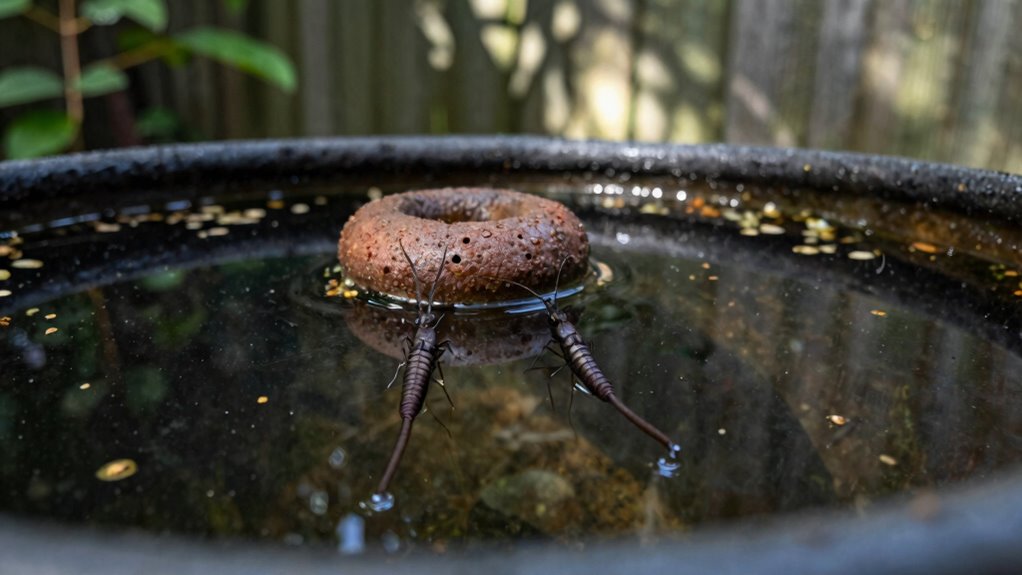
Place the dunk near the water’s edge, where larvae gather, not dropped in the center. Timing matters, as the bacteria kill lasts about 30 days, so set a calendar reminder for monthly reapplication. For a birdbath, just one half-dunk works. For a rain barrel, use a full one and replace it before the old one dissolves completely. This targeted placement boosts mosquito larvae control and keeps your pest management routine effective. For best results, check your local water features and adjust the dunk size to match volume. Plant-based natural oils like peppermint or cedarwood offer pet-safe alternatives for nearby outdoor areas.
Strategic Dunk Placement
A single mosquito dunk, properly placed, can eliminate larvae from an entire birdbath for up to 30 days. The key is placing it where water flows most, like near a fountain’s outflow or a downspout’s splash zone.
This dunk strategy guarantees the active ingredient disperses evenly, maximizing larvicide efficacy across the water body. For a rain barrel, drop the dunk in the middle. For a bucket, use a brick to weigh it down near the edge.
Floating dunks work well in still ponds, but avoid deep corners where circulation dies. Think of it like a slow-release tea bag. You want it steeping where the tea spreads best.
A typical $10 pack covers four to five large containers for a month, making placement the only cost beyond the purchase. For targeted mosquito control, this placement tip is your best tool.
Timing and Reapplication
Most people expect a mosquito dunk to work instantly, like a bug zapper, but that’s not how biology works.
The active ingredient, Bti, takes hours to kill larvae, and reapplication timing is critical.
A dunk lasts about 30 days, but heavy rain or algae growth can shorten that lifespan.
A key risk here is chemical resistance, so overusing any larvicide, even natural ones, can make larvae tougher over time.
To avoid that, consider predator introduction as part of your mosquito control plan.
Add mosquito fish or tiny crustaceans to water features; they eat larvae daily without any resistance issues.
For dunks, drop one per 100 square feet of water, and replace it after four weeks or after a major rain.
If you see new wrigglers before that, you waited too long, so check weekly.
This approach pairs well with a backyard mosquito treatment routine and reduces the need for frequent larvicide purchases.
It’s not glamorous, but it beats a backyard full of bites, so stay consistent with your inspection schedule.
Permethrin-based yard sprays offer an alternative barrier that lasts up to 6 weeks against adult mosquitoes, complementing your larvicide efforts.
When to Call a Pro for Liquid Larvicide Treatments
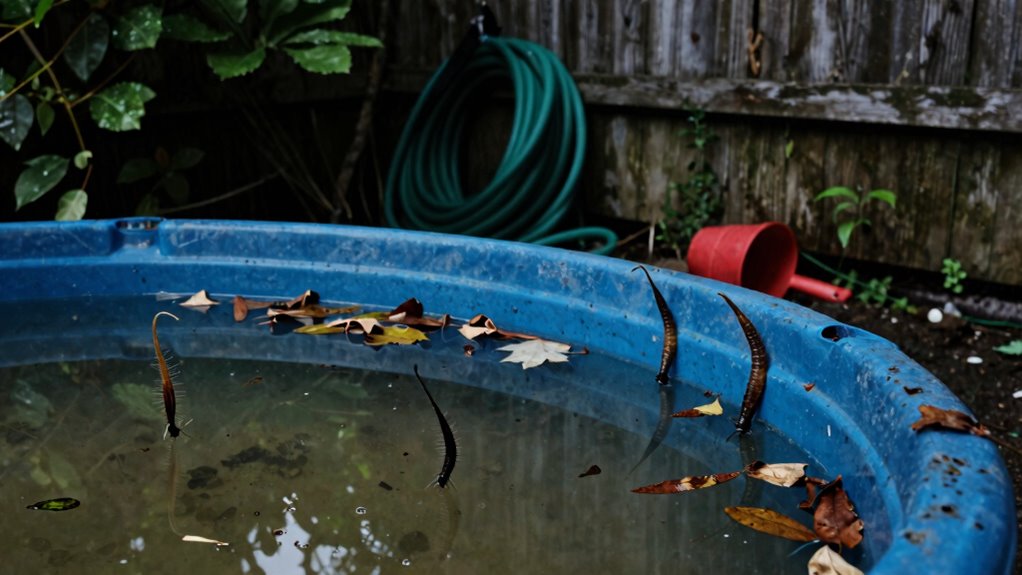
If your standing water problem is bigger than a birdbath, like a pond or a rain soaked pool cover, it is time to call a pro for liquid larvicide treatments. This is where professional mosquito control truly shines, using truck mounted or backpack sprayers to cover acres in minutes.
An expert consultation first identifies all hidden breeding sites, including gutters, old tires, and even clogged drains. This ensures no mosquito larvae escape treatment, targeting the source of your pest problem effectively.
DIY granules often fail on large water bodies, but pros use precise, EPA registered liquids. These treatments kill both larvae and pupae without harming fish or frogs, making them a safe and powerful choice.
DIY granules often fail on large water bodies, but pros use precise, EPA registered liquids that kill larvae without harming fish or frogs.
Professionals also reapply after heavy rain, saving you the hassle of monitoring weather and timing. Expect to pay between $200 and $500 per treatment for a typical acre, which is far cheaper than dealing with a full blown adult mosquito invasion.
A severe mosquito problem demands professional liquid larvicide services, not a weekend experiment. For reliable mosquito control and lasting relief, trust the experts to handle your standing water issue.
Can You Just Add Fish or Tadpoles to Your Pond?
Why wouldn’t you just toss some fish or tadpoles into your pond and call it a day? In theory, this biological control sounds simple, but effective pest control depends on the species you choose and your pond’s conditions.
Not every fish or tadpole is a mosquito larvae eating machine. For reliable mosquito management, your fish choices matter a lot.
Gambusia, also known as mosquitofish, or goldfish are a smart investment for natural pest control. They actively hunt larvae all day long.
Koi, however, are lazy predators that prefer algae over wigglers. Tadpoles aren’t all equal either.
Frog tadpoles can devour up to 97% of larvae in studies. Toad tadpoles barely bother with them.
You need the right species to get real predator effectiveness. Pond size and ecosystem also play a big role.
A tiny backyard pond with one goldfish works great for small scale mosquito control. A large, shady pond overrun with plants might hide larvae from any fish.
Bottom line: adding predators works, but do your research first. Otherwise you’ll just be feeding the mosquitoes instead of buying a proven solution.
Why Oil and Surface Films Kill Mosquito Pupae Instantly
Oil and surface films kill mosquito pupae by forming a thin layer on standing water that they cannot escape. This barrier blocks their breathing tubes and stops gas exchange, causing drowning in minutes.
To control pests around your home, licensed professionals spray or drip mineral oil onto stagnant water. These treatments create a suffocating film that works instantly without harming plants or animals when used correctly. For long-lasting protection against biting pests, permethrin-treated clothing offers a similar barrier effect on fabric fibers.
How Oil Suffocates Pupae
Suffocation is an undignified but effective way to stop mosquito pupae in standing water. When an oil film spreads across the surface, it directly attacks their air intake system, blocking their breathing trumpets in seconds.
Mosquito pupae rely on two small tubes called trumpets to breathe from the surface, unlike larvae. Oil’s surface tension coats these trumpets instantly, cutting off air supply and leaving the pupae to slowly sink. Without any airflow, the pupae suffer full oxygen deprivation within minutes. Their metabolism shuts down, ensuring they never become biting adults.
For pest control, this total coverage method is a game changer for stagnant water treatment. The surface film stays intact, reaching every pupa hiding under leaves or debris with no escape routes. It is messy but brutally effective for mosquito control, turning a pupa’s final moments into a very short story. When you need mosquito pupae elimination in your yard, this simple oil treatment kills pupae instantly, matching the coverage duration of high-concentration chemical repellents.
When you need mosquito pupae elimination in your yard, this simple oil treatment stops the next generation cold. Just apply it directly to still water areas where breeding happens, and watch the pupae lose their air supply fast.
2. Surface Film Prevention of Gas Exchange
A mosquito pupa’s breathing trumpets are its lifeline, but a surface film severs that connection instantly. Think of it like this: those trumpets rely on breaking the surface tension to grab air. For those preferring a chemical-free approach, plant-based repellents offer a non-toxic alternative to synthetic films. When a thin oil layer coats the water, it stops oxygen exchange cold. The pupa can’t get a breath, and it suffocates in minutes. No fancy chemicals are needed for this pest control solution. Just a physical barrier that messes with their entire respiratory system. It’s oddly satisfying how such a simple trick works every time. The film doesn’t need to be thick; a paper-thin coating does the job. This is why surface films are the only thing that reliably knocks out pupae, which are otherwise tough to kill. A quick application of a larvicide product like this is all it takes. For effective mosquito pupa elimination, add this step to your routine.
3. Mineral Oil Application Methods
From beneath the surface, a mosquito pupa relies on its breathing trumpets to pierce the water’s tension and sip air. Mineral oil application methods turn that lifeline into a death sentence.
The oil spreads into an ultra-thin film, instantly clogging those trumpets and suffocating pupae. There is no chance for last-minute gasps.
Here is how it works. First, instant suffocation occurs because a single milliliter of mineral oil covers a square meter of water, blocking oxygen exchange within seconds.
Pupae cannot swim away, so they die almost immediately. Second, the surface film prevention stops future gas exchange, unlike other larvicides that miss pupae.
This is why professionals call it “pupae poison.” Third, easy DIY use means homeowners pour a few drops into birdbaths or rain barrels.
A bottle costs about five dollars, and there is no mixing or fuss. Just do not drink the water, as your stomach will not forgive the oily surprise.
Bottom line: mineral oil is the only quick kill for pupae. It makes a non-negotiable tool for standing water control. Similar to solar bug zappers that rely on safe, chemical-free operation, mineral oil avoids toxic additives.
How to Treat Rain Barrels and Birdbaths Safely
Rain barrels and birdbaths are basically all you can eat buffets for mosquitoes if you are not careful. Any standing water, even a tiny puddle like a non chlorinated pool, is prime real estate for larvae.
For rain barrels, the fix is simple. Use a fine mesh screen over the opening to block adult mosquitoes.
Add a mosquito dunk every month. This bacterial larvicide tablet is safe for plants and pets.
Birdbaths need a weekly scrub and water change. That alone stops eggs from hatching.
A few drops of mineral oil on the water surface suffocates any larvae present. But do not overdo it because birds still need to drink.
However, for personal protection when outdoors near these water sources, consider using a repellent with Oil of Lemon Eucalyptus which provides up to 6 hours of protection.
The bottom line is screen it, scrub it, or dunk it. No excuses and no larvae.
The 3-Step Weekly Check to Stop Larvae Before They Hatch
1. Walk your property and flip any object holding water like buckets, plant saucers, or even bottle caps. Those tiny puddles become breeding grounds for mosquito larvae fast.
Check gutters, downspouts, and tarps because standing water here hides hundreds of developing pests. Clear out debris, slope tarps, and drill drainage holes in tire swings for professional mosquito control.
For rain barrels and ponds you keep, scrub the insides weekly to scrape off eggs. Then add a mosquito dunk with Bti bits for around ten dollars for a 30 day supply.
Do this every Sunday to stop larvae before they hatch. This simple pest inspection routine cuts off the mosquito life cycle at the source. For additional protection in areas where you relax outdoors, consider using repellent coils to keep adult mosquitoes away while you maintain the yard.
What to Do If Larvae Keep Coming Back After Treatment?
Common hidden sources include clogged gutters, old tires, buckets, tarps, pool covers, fountain basins, and rain barrels.
Clear gutters monthly to stop mosquito larvae from hatching. Drill holes in old tires or store them indoors to prevent water collection. Tighten tarps and pool covers so water cannot pool on top. Flush fountain basins weekly to remove standing water. Add a fine mesh screen to rain barrels to block adult mosquitoes.
Still seeing wigglers after treatment? Re treat the water directly with a larvicide dunk for under 10 dollars. But remember that you must dump the water source or you will keep buying dunks forever. For indoor plants, consider using UV-resistant sticky traps near soil drainage holes as a non-toxic method to capture gnats that may also target wet areas.
Frequently Asked Questions
Do Mosquito Dunks Harm Pets or Wildlife?
Mosquito dunks are safe for pets and wildlife when used per label instructions. They contain Bti, a bacteria targeting only mosquito larvae.
Bird bath safety is assured. Birds can drink from treated water without harm.
These dunks are likewise safe for bees and other beneficial insects. A single dunk lasts 30 days, costing about 10 bucks for a six-pack.
Your dog lapping up from a treated birdbath is fine. But please, fix the leaky spigot to prevent standing water.
Can I Use Bleach to Kill Mosquito Larvae?
Bleach can kill mosquito larvae, but it is a risky method for pest control. The toxicity of bleach often harms pets, plants, and beneficial bugs like tadpoles.
Getting the right dilution is tricky because too little does nothing and too much ruins the water. For ponds or birdbaths, bleach is not recommended since the chemical mess lingers dangerously.
If you have a tiny isolated container, a few drops might work as a quick fix. But why gamble when you have safer mosquito control products available?
Stick to bacterial dunks or simply dump the standing water instead. For effective mosquito larvae treatment, look for larvicides that target pests without collateral damage.
These products are a smart purchase for any homeowner needing reliable pest solutions. They keep your yard safe while meeting your buyer intent for non toxic alternatives.
How Long Do Mosquito Dunks Last in Water?
A standard mosquito dunk lasts about 30 days in standing water. For continuous mosquito control, simply toss in a new dunk monthly after the old one is consumed or evaporates.
The Bti bacteria inside slowly release, killing mosquito larvae for weeks. Check your water source weekly and add a new dunk if the previous one vanishes.
This is a set and forget solution that is casually effective for pest control. It is a smart purchase for anyone needing long lasting larvicide in birdbaths, ponds, or rain barrels.
Will Vinegar or Dish Soap Kill Mosquito Larvae?
Vinegar is not great for killing mosquito larvae. It lacks real mosquito larvae killer efficacy and often just stains the water instead.
Dish soap safety is much better for your standing water. The soap works by coating the water surface, which drowns larvae by blocking their air tubes.
Use just a few drops of dish soap per gallon of water. You will need to reapply this mosquito control after rain to keep it effective.
For more reliable pest control solutions in stagnant water, consider mineral oil or mosquito dunks. These professional grade products provide longer lasting results against mosquito breeding.
For quick and cheap fixes in smaller water sources, dish soap is your best option. It beats vinegar hands down, but don’t expect miracles for heavy infestations.
What Temperature Kills Mosquito Larvae in Water?
Mosquito larvae survival falters above 40°C (104°F) and stops entirely at 45°C (113°F), effectively cooking them.
That’s too hot for most standing water, though, so think puddles in direct sun rather than backyard ponds.
Natural predators, like mosquito fish or tadpoles, do the job cooler and eat larvae without you needing a thermometer.
Unless you’re actively boiling a birdbath, skip the heat treatment for mosquito control.
Focus on draining standing water or adding biological larvicides to target breeding sites.
For effective pest management, consider using a mosquito dunk or granular larvicide for long lasting results.
If you want a hands off solution, stock your water feature with gambusia fish to naturally eliminate larvae.
Browse our pest control products for easy, safe options that stop mosquitoes before they bite.


