
Standing water for mosquitoes is the number one reason your yard turns into a breeding zone. A single bottle cap can hold dozens of eggs, so ignoring small puddles is a mistake you can’t afford.
You already know to check bird baths and pet dishes, but the hidden spots—like tree holes and sagging tarps—are where mosquitoes really win. Scrubbing and dumping weekly is simple, but it only works if you hit every spot.
For persistent wet areas, French drains or filling low spots in your lawn can stop the problem for good. Gutters and downspout extensions are cheap fixes that keep water moving away from your home.
A dry yard truly is a quiet yard, and the rest of the details make the difference. Keep reading for the exact steps that turn your property into a mosquito-free zone.
At A Glance
- Drain and scrub bird baths, pet dishes, and flower pot saucers weekly.
- Fill tree holes with sand or mortar to prevent rainwater collection.
- Clean gutters and install downspout extensions to direct water away.
- Aerate lawns and fill low spots to eliminate persistent puddles.
- Turn over kids’ toys, buckets, and covers after every rain.
Know Why Standing Water Fuels Mosquito Breeding
Standing water creates a perfect mosquito nursery for females looking to lay eggs. Female mosquitoes need still water to complete their breeding cycle and produce the next generation.
That birdbath or clogged gutter acts as a daycare for biting pests. A single bottle cap can hold dozens of eggs with stubborn biology at work.
The breeding cycle is brutally efficient from egg to adult in seven to ten days. Warm water speeds up development, while cool water only slows it down.
Draining every drop breaks the chain and stops mosquito infestations. Without standing water, there is no nursery, no larvae, and no mosquitoes.
Simple prevention with yard drainage and gutter cleaning keeps your property pest free. This non negotiable step protects your home from biting threats.
Drain Standing Water From These 5 Yard Items Weekly
Draining standing water from these five items weekly is your best defense against mosquitoes. This simple routine breaks the mosquito life cycle without needing expensive gadgets.
Draining standing water weekly from these five items is your best mosquito defense.
Start with bird baths by scrubbing and refilling them every week. Mosquitoes are drawn to that still, warm water more than birds are.
Pet dishes need the same attention. Change the water daily if you can, but at least once a week.
A forgotten bowl turns into a mosquito nursery fast. Next, empty flower pot saucers and turn over any empty buckets.
Dump water from kids’ toys like wagons or sandbox lids. These five items are the obvious offenders you can control.
Miss a week and you invite the buzzing guests back. Stick to this plan and you win the war against mosquitoes with just a hose. For any water you cannot drain, consider using Mosquito Dunks with Methoprene to stop larvae from maturing.
Find Standing Water Mosquitoes Breed in Invisible Spots
These five items are visible and manageable, yet the next layer of the fight gets sneaky. Mosquitoes, especially the Aedes kind, breed in cryptic sites like tiny, hidden spots that hold just a splash of water.
They don’t need much. A bottle cap or leaf crevice works fine for mosquito control.
Tree holes are natural cavities in trunks that collect rainwater. Fill them with sand or mortar to stop breeding for good.
Leaf axils, where leaves join stems, pool water after rain. Check bromeliads and banana plants to eliminate these pest habitats.
Litter and debris such as discarded cups, bottle caps, and crumpled wrappers trap water. Pick up yard clutter weekly to prevent mosquito larvae.
Toys and equipment like plastic wading pools, trampoline folds, and kids’ items hold puddles. Drain and store them dry for effective mosquito prevention.
Check these invisible spots after every rain for complete pest elimination. For standing water you cannot drain, use Bti-based biological larvicides that are safe for fish, pets, and plants. It is tedious but it works. No standing water means no new mosquitoes.
Fill Low Spots That Collect Standing Water in Your Lawn
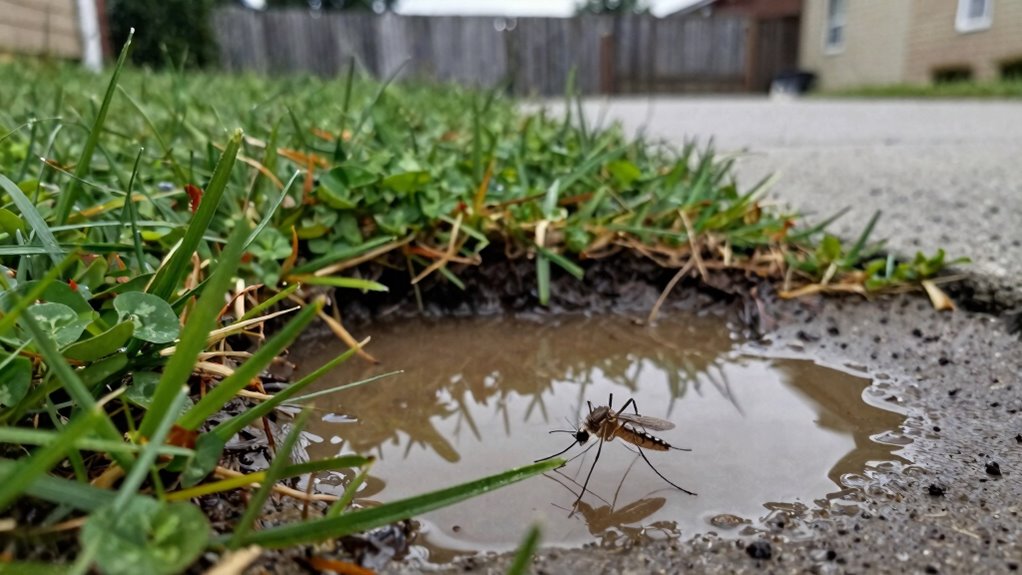
Low spots in your lawn turn into mosquito breeding grounds with standing water. Fixing them is simple but requires some effort.
First, address soil compaction caused by heavy traffic or rain. Loosen it by aerating the lawn to let water drain properly.
For persistent puddles, install French drains to channel water away. These gravel-filled trenches cost around $10 to $20 per foot.
French drains, gravel-filled trenches costing $10–$20 per foot, channel water away from persistent puddles.
Dig a trench, lay perforated pipe, cover with gravel, and add soil. This stops mosquitoes from breeding and keeps your grass healthy.
Fill those low spots, aerate compacted soil, or install French drains. Your lawn and your ankles will thank you.
For added protection, use a thermal fogger to treat dense foliage where mosquitoes hide.
Prevent Standing Water in Gutters and Downspouts
Gutters and downspouts can quietly turn into mosquito nurseries if you ignore them for too long.
Clogged gutters hold leaves and water, giving larvae a perfect home.
The fix is simpler than you would think.
Clean your gutters at least twice a year, or more if you have trees overhead.
A leaf blower works well, or just scoop debris by hand wearing gloves.
Install downspout extensions to carry water at least four feet from your foundation.
These cheap plastic tubes cost just $5 to $10 and prevent puddles that attract pests.
Add gutter guards to block leaves while allowing water to flow through.
They cost $1 to $3 per foot and cut cleaning frequency in half.
Check for sags after heavy rain since a low spot holds water for days.
Straighten brackets or replace sections immediately to stop standing water.
Do this every spring and fall to stop mosquito breeding before it starts.
You will protect your home from pests and foundation damage.
Seal Rain Barrels and Cisterns to Block Standing Water
Rain barrels and cisterns are excellent for saving water, but they can become mosquito breeding grounds if uncovered. A single female mosquito can lay hundreds of eggs in just a cup of still water, so sealing them is essential for pest control.
Cover every opening with a tight fitting lid or a 16 mesh screen. That screen has 16 holes per inch, small enough to block even tiny mosquitoes. For the barrel, use stainless steel or fiberglass mesh, available for about five to ten dollars per roll at hardware stores.
Scrub the inside annually to remove any eggs stuck to the walls. Don’t forget to check overflow pipes, where a simple flap valve or screen stops bugs from getting in. This is a cheap, one time fix that saves endless itching and supports long term pest control solutions. For drains near the barrel, applying a thick enzyme-based gel can also target organic buildup and prevent fly breeding sites.
Check Containers You Might Have Missed for Standing Water

While you have already drained the obvious buckets and birdbaths, the real mosquito breeding grounds often hide in places you would never think to check. A forgotten bottle cap, a crumpled soda can, or the saucer under a potted plant can hold standing water since last spring.
Everyone knows the big stuff, but cryptic larvae thrive in teaspoons of water. Look closer because a single cap can host dozens of mosquito eggs.
Inspect gutter downspout extensions; they trap leaves and hold puddles for days. Flip over children’s toys left in the yard, as a plastic shovel can breed a generation.
Check the rubber seal on your trash can lid. Water wicking into cracks creates a perfect nursery for mosquito larvae.
Look under tarps covering firewood or equipment. Folded edges collect rain and become hidden mosquito sources.
Don’t skip the tiny stuff; it is why you still get bites. For effective mosquito control, hunt every hidden drip to stop them at the source, and consider that eliminating standing water reduces mosquito breeding without chemicals.
Avoid Overwatering to Remove Lawn Puddles
Overwatering your lawn creates puddles that turn your yard into a mosquito nursery. To fix this, adjust your sprinkler schedule. Run it less often but longer, so water soaks in rather than pooling. Additionally, using a liquid formula connects to your garden hose for easy application of grub control products.
Lawn grading, which is simply reshaping the ground to slope away from flat spots, helps drain trouble areas. For persistent puddles, install French drains. These are gravel-filled trenches with perforated pipes that carry water elsewhere.
French drains cost around $10 to $15 per foot installed. That is a solid investment for effective pest control. Let the soil dry between waterings. Soggy grass invites both mosquitoes and root rot.
Check your yard after rain. If you see puddles, you are overdoing it. Water smarter, grade your lawn, and use French drains where needed. Your yard stays dry, and mosquitoes lose their nursery.
Drain Pool Covers and Toys After Every Storm
After every storm, pool covers and toys must be drained immediately, because even a teaspoon of trapped water can host dozens of mosquito larvae.
Leftover dampness on covers or inside plastic toys creates a perfect, hidden nursery for eggs that will hatch in days.
A quick scrub of these items with a brush afterward removes any stubborn eggs stuck to the surface, breaking the mosquito life cycle for good.
For homeowners seeking effective pest control, this simple post-storm routine is a key step in mosquito prevention around your yard.
Check covers for sagging pockets where water collects, and turn toys upside down to let every drop escape.
Using a stiff broom or a dedicated cleaning brush on all plastic and vinyl surfaces helps you target those hard-to-see egg clusters.
This practical habit reduces the need for chemical sprays near your pool area, saving you time and money on professional pest control visits.
If flying pests do persist indoors, non-toxic sticky traps provide a chemical-free backup option for catching adult flies and gnats.
Drain After Each Rain
Vigilance against backyard mosquitoes requires a special kind of forgetfulness that makes you remember the toys and tarps after every storm. Proper drainage timing is critical, because a single rain shower can create dozens of tiny nursery pools for larvae.
The goal is puddle disposal before mosquito eggs can hatch into wrigglers. Flip over plastic kiddie pools, sand buckets, and watering cans the moment the clouds clear.
Use a squeegee to push standing water off trampoline mats and flat pool covers. Store toys on their sides or in a covered bin so they cannot collect water again.
Check for hidden puddles in wading pool rims, toy wheel wells, and inflatable edges. Moments after a hard rain, a quick five-minute sweep prevents a whole mosquito generation.
That is cheap insurance for effective pest control around your yard and playset. Even after draining, consider using botanical oils like citronella in nearby areas for added protection against adult mosquitoes. A simple routine disrupts the mosquito life cycle before it starts.
Remove Trapped Water
A pool cover keeps leaves and dirt out, but after a storm it turns into a mosquito breeding spot. Homeowners must drain trapped water quickly using a pump or pushing puddles off with a broom.
Plastic wading pools and sandbox covers collect water too, so tip them over after each rain. For stubborn areas, combine this with tire removal and ditch clearing for effective mosquito control.
A single bottle cap can breed dozens of larvae, so inspect every crevice. Don’t let a cover turn your yard into a bug nursery; drain it within an hour after the storm ends.
This cheap prevention stops larvae before they hatch and beats spraying insecticides later. Preventing standing water is the best pest control solution for your property. Using a fine nylon mesh net to skim the pool surface helps remove fallen leaves and debris before they decay and clog filters.
Scrub for Hidden Eggs
Scrub the edges of pool covers where water collects and cryptic breeding happens unnoticed. Give toys a bath by flipping them over and brushing every groove. Eggs hide in nooks so rinse thoroughly.
Check trampoline mats after draining because their folds hold dampness just long enough. Don’t forget the slides. Kids leave them outside and a tiny puddle is a luxury condo for larvae.
Every brush stroke breaks a future swarm. This routine pest control keeps breeding spots under control.
Coordinate Weekly Yard Inspections With Neighbors
Coordinate weekly yard inspections with your neighbors to stop mosquitoes before they start. One neglected property can undo all your hard work, so team up for neighborhood patrols every seven days.
Coordinate weekly yard patrols with neighbors to stop mosquitoes before they start.
Shared checklists help spot problem areas like hidden tarps or clogged gutters. It is not glamorous, but a quick scan beats a mosquito invasion.
Divide the routes and have someone check front yards while another handles back alleys. Call out issues plainly, saying things like “bucket under the porch” or “bird bath needs scrubbing.”
A dab of dry humor keeps it light, but stick to the checklist. This coordinated effort slashes breeding spots across your street and saves everyone from stings and sprays.
Pick a day, grab a list, and walk with purpose. For bird feeders, ensure they include drainage holes to prevent water from pooling and creating mosquito breeding sites. Your neighbors will thank you eventually for a pest free block.
Frequently Asked Questions
Can Mosquitoes Breed in Water That Moves Slowly?
Yes, mosquitos can absolutely breed in water that moves slowly. Many species like Aedes thrive in ditches, bird baths, or clogged gutters where water barely flows.
Even a gentle trickle can create stagnant pockets perfect for larvae development. The key factor is water flow; if it is not brisk enough to sweep eggs away, it becomes a breeding site.
Check any spot with a sluggish current, such as neglected fountains or drainage channels. Drain or treat these areas weekly to stop mosquito reproduction and protect your yard.
If the water is not flowing fast, it is a mosquito nursery. For reliable control, use larvicides or mosquito dunks to target larvae before they become biting adults.
Investing in a pump or aeration system can keep water moving and prevent infestations. For persistent problems, consider professional pest control services to eliminate breeding grounds for good.
How Long Does It Take Mosquito Eggs to Hatch in Standing Water?
Mosquito eggs can hatch in as little as 24 to 48 hours in standing water. Warmer water speeds up development, so eggs may hatch within a single day on a hot summer afternoon.
Cooler temperatures slow things down, sometimes taking up to a week for larvae to emerge. That forgotten flower pot saucer or clogged gutter can become a mosquito nursery fast.
For effective pest control, you need to eliminate standing water every two days. Use mosquito dunks or larvicide tablets in rain barrels and birdbaths to stop breeding.
If you want to buy the best mosquito control products for your yard, look for treatments with BTI bacteria. They target larvae before they become biting adults.
A quick rule to remember: if water sits for two days, assume eggs are already developing. Grab a larvicide or drain the container to prevent a full blown infestation.
Do Mosquitoes Lay Eggs in Water That Has Algae or Tadpoles?
Yes, mosquitoes lay eggs in water that has algae or tadpoles, and here is why that matters for your yard. Algae actually attracts female mosquitoes because it provides an instant food source for their hatching larvae.
Tadpoles rarely stop mosquitoes from breeding, since adult mosquitoes will still choose stagnant water even with predators present. While tadpoles might eat a few eggs, they cannot control a full mosquito population on their own.
So do not assume algae or tadpoles mean your water is safe, because standing water is always a mosquito nursery. Draining that water is your first line of defense, and it beats risking a backyard full of biting pests.
For long term mosquito control, consider using larvicide tablets, mosquito dunks, or a reliable insect growth regulator in water you cannot empty. These products target larvae before they become adults, which reduces the need for fogging or sprays later on.
If you want immediate relief, a EPA registered mosquito spray or a portable fogger can knock down adult populations fast. Pair that with removing standing water weekly, and you will cut breeding cycles dramatically.
Remember, pest control starts with habitat removal, then targeted products like traps, repellents, or granules. Check your gutters, plant saucers, and kiddie pools, because even a bottle cap full of water can host dozens of mosquito eggs.
Buyer tip: look for larvicides containing Bacillus thuringiensis israelensis, or BTI, since it kills only mosquito larvae and is safe for pets and wildlife. For outdoor gatherings, add a propane mosquito trap or citronella candles, but never rely on them alone.
Bottom line: algae or tadpoles do not protect you, so drain the water and treat what you cannot remove. A smart purchase today like a larvicide kit or a mosquito net for barrels saves you from itching and potential disease transmission tomorrow.
Is It Safe to Use Bleach to Treat Standing Water in Drains?
Using bleach in drains is a bad idea for pest control. Yes, it kills larvae, but bleach toxicity harms beneficial bacteria and poses risks to pets and children.
Drain pipe corrosion is a real concern, especially with metal pipes. You are essentially swapping mosquitoes for costly plumbing repairs that can exceed $200.
Instead of bleach, scrub drains weekly with a stiff brush and hot water. This physical removal method eliminates eggs without dangerous chemicals.
For long term drain fly control, combine brushing with a bacterial drain cleaner. These products break down organic matter that attracts pests.
Skip the bleach and choose a safer, cheaper solution. Your wallet and pipes will thank you, and mosquito prevention stays effective.
What Natural Predators Can I Introduce to Control Mosquito Larvae?
Dragonfly larvae are natural predators for mosquito larvae in backyard ponds. They’re voracious hunters, eating dozens of larvae daily.
Introduce them by purchasing nymphs online or from pond suppliers, costing around $10–$20 for a starter batch. They’ll need clean water and plants to thrive.
Another option is native fish like gambusia, which prefer still water. These fish keep larvae in check without harsh chemicals.
Just confirm the pond has no predators like larger fish. For a low-maintenance, eco-friendly mosquito control solution, dragonfly larvae are your best bet.
They work like tiny, aquatic superheroes with a taste for pests.


