
Why do I have cockroaches in a clean house? Because a pristine kitchen still offers everything a roach needs: water, warmth, and tiny hiding gaps. You’re not dirty—you’re just unknowingly running a roach motel, since they crave moisture from pipes or pet bowls more than leftover crumbs.
We’ll unpack the five sneaky hiding spots you’re definitely missing, plus the quick, chemical-free fixes that actually work.
Stick with us for the practical shortlist, then check out the top-rated products below to seal it all shut for good.
At A Glance
- Cockroaches need water more than food; tiny leaks sustain them in clean homes.
- Invisible grease, crumbs, and biofilm behind appliances feed hidden roach colonies.
- Cracks as thin as a dime allow roaches entry through walls, pipes, and baseboards.
- Condensation on pipes and appliances provides essential drinking water for roaches.
- Pet food left out or unsealed bags attract roaches even in spotless kitchens.
Why Cleanliness Alone Won’t Keep Roaches Out
A home can sparkle yet still welcome cockroaches. Their flat, oval bodies let them slip into cracks as thin as a dime, ignoring your dusting efforts.
A spotless home can still be a cockroach’s welcome mat.
They naturally seek warmth near appliances like refrigerators. Even a clean countertop next to a warm motor becomes prime real estate for these pests.
Cutting food sources helps, but crumbs hide deep in crevices. Condensation behind sinks also provides moisture they need to survive.
Roaches feed on stray grease drops or the glue from an envelope. A spotless floor does not seal the gaps they use to enter.
Sealing entry points with caulk and fixing leaky pipes is the real solution. Pair sanitation with exclusion for lasting cockroach control. For added defense, consider long-lasting residual sprays that create a barrier in hidden corners and entry points to prevent reinfestation for months.
Otherwise, a clean house simply becomes a comfortable home for uninvited guests.
Check These 5 Hiding Spots You’re Overlooking
Five hiding spots around the home often go unnoticed, even by the most diligent cleaners.
First, check behind major appliances, because that gap behind the refrigerator is a cockroach condo.
Second, inspect inside hollow cabinet doors, where shelter seeking insects squeeze into tiny cracks.
Third, look under sinks, especially where pipes meet walls, because those unsealed gaps are perfect entry points for roach control services to target.
Fourth, examine behind baseboards, where debris collects and attracts pantry pests.
Fifth, peek inside electronics like coffee makers or microwave vents, since warm and dark spaces are irresistible to German roaches.
These overlooked nooks invite roaches regardless of clean counters, so you need a proactive pest prevention plan.
The fix: seal cracks with caulk, clean behind appliances quarterly, and inspect with a flashlight for early pest detection.
Bottom line: a clean house still needs hiding spot sweeps, and professional extermination quotes often start with these exact trouble zones.
Schedule a home pest inspection if you suspect activity, because DIY sealing only works when you find every gap.
Applying gel bait in syringe form to these precise cracks and crevices ensures the active ingredients reach the nest, targeting species like German and American roaches that prefer these hidden harborages.
How a Single Crumb Can Feed a Roach Colony for Weeks
That single crumb under the toaster is a three-course meal for a whole cockroach colony. A female German cockroach can produce 30,000 offspring in a year, and they all share that one tiny, overlooked potato chip fragment. So you are running a non-stop buffet, compliments of your broom-free floor. Even a single crumb can sustain these pests for weeks through rapid reproduction cycles. This is why professional pest control is essential for long term roach prevention. Ignoring small messes invites the need for roach extermination and heavy treatments later. To break the cycle, focus on sanitation and sealing entry points. Effective cockroach control starts with removing food sources and using targeted baits or sprays. Fipronil roach gels typically begin working within 24 hours to a week, providing a powerful tool for full eradication in 2 to 3 weeks.
Microscopic Food Sources
A single crumb, even one too small to see, can sustain a cockroach colony for weeks. The idea of a “clean” home offers little protection against these pests.
Roaches thrive on microscopic food sources, not just a visible buffet. A slimy layer of bacterial biofilm builds up behind stoves and under sinks.
Invisible grease residues collect on cabinet hinges and floor corners. A roach’s antennae detect these traces, and its mouthparts scrape them up like a tiny vacuum.
One crumb breaks down over time, feeding dozens of cockroaches. So while your counters sparkle, these hidden specks remain.
To truly control a roach infestation, wipe down every surface with a degreaser. Focus especially on areas behind appliances where buildup is common.
Accept that complete eradication requires sealing cracks, not just scouring crumbs. Professional pest control treatments can help target these hidden food sources effectively. Applying boric acid powder into these cracks and behind appliances can act as a stomach poison, killing roaches within 72 hours after contact.
Hidden Water Droplets
Even a spotless kitchen can hide cockroaches. The real problem is often something as small as a droplet of water.
A single crumb paired with dampness can feed a colony for weeks. Condensation from a cold soda can on a warm counter creates hidden reservoirs.
Pipe sweating under sinks is another prime offender. It trickles down to dampen dark crevices and attract roaches.
Cockroaches need water more than food. A tiny leak can outlast any crumb you leave behind.
Repairing drips and wiping dry surfaces matters more than mopping floors. A dry home is your best roach deterrent.
Fix those pipes and wipe down counters every day. It is simple: no water means no roach colony survives. For an extra layer of defense, boric acid powder can be applied to dry cracks to kill any remaining pests on contact.
Why Your Kitchen Is a Paradise for Roaches (Even When Clean)
The kitchen is a roach’s version of an all inclusive resort, and it demands no reservation.
Room temperature, that cozy 70 degree sweet spot, keeps them active year round, but seasonal activity spikes in warm months when they breed faster.
Even spotless counters hide a banquet: that single crumb behind the toaster, the grease film on the backsplash, or the starch in a cardboard box.
One study found 220 out of 260 cockroaches in a single kitchen, a sobering stat for any home pest control routine.
They drink from sink drains, snack on pet food left overnight, and nap under the fridge.
So no, you didn’t fail; the kitchen is basically a bug grade luxury hotel.
The verdict? Seal food in glass jars, wipe down surfaces nightly, and run the dishwasher.
Active ingredient efficacy hinges on ingredient transfer through social behaviors like contact and cannibalism, ensuring bait stations can eliminate entire colonies even in clean kitchens.
Bottom line: you can’t evict them with cleanliness alone, so consider professional pest control for long term roach prevention.
The Hidden Entry Points That Let Roaches Inside
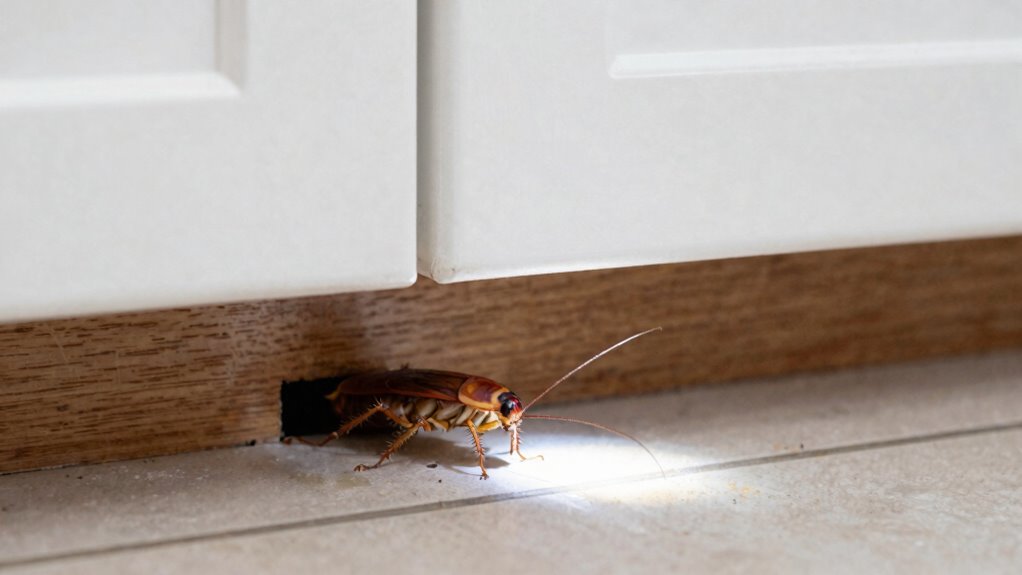
Even the cleanest home has cracks that allow cockroaches inside. They can squeeze through gaps smaller than a dime around pipes and under doors.
Wall crevices create hidden entry points that many homeowners overlook. Ignoring these tiny highways is like leaving the front door open for uninvited pests.
Professional pest control experts know these are common roach entry routes. Sealing gaps with caulk or weather stripping blocks their access.
If you spot a roach, schedule a home inspection to find the weak spots. Fast action prevents a full infestation from taking hold. For added defense around your foundation, apply effective perimeter pest control granules in a 6-10 foot band to create a residual barrier that targets roaches and other crawling insects.
Tiny Cracks and Gaps
Cockroaches are flat-bodied little contortionists that can slip through gaps thinner than a dime, about 1/16th of an inch. That means any tiny crack in your foundation or around pipes is basically a welcome mat for these unwanted guests.
A thorough inspection of baseboards, cabinets, and behind appliances is necessary for spotting these hidden highways.
The real solution lies in sealing gaps and repairing structural cracks to stop cockroach entry. A simple tube of caulk, costing around $5, can block dozens of potential entry points for pest control.
Steel wool stuffed into larger holes adds a scratchy deterrent against roaches and other insects. Though it is tedious, this barrier method is far more effective than just hoping roaches respect your cleanliness. It stops them from getting in, period, making it a smart pest prevention strategy.
For best results, focus on kitchen and bathroom plumbing penetrations first. Sealing these areas is a top priority for effective cockroach exclusion and home pest management.
Open Doors and Windows
Your caulk work is solid, but roaches don’t always need a crack to get in. Open windows, even briefly, are an open invitation for pest entry.
Screen gaps as small as a credit card’s thickness are wide enough for cockroach control issues. A simple left ajar door at night or a missing sweep lets them march right in.
The fix is cheap and fast for home pest prevention. Check window screens for any gap, especially at corners.
Install door sweeps; they cost about $10 and seal the bottom gap effectively. Keep doors closed after dusk, when roaches forage for food.
Repair torn screens immediately with a patch kit running $5. Use weatherstripping on windows; a $15 roll covers two windows.
It is a bit like locking your car but leaving the moon roof open. Technically secure, but not really for insect exclusion.
Close the obvious gaps and you will stop the easy entry. This simple roach deterrent keeps your home protected without expensive treatments. For a long-lasting solution, consider using a residual barrier spray that can keep cockroaches at bay for up to 12 months on non-porous surfaces.
Do Pets Attract More Roaches? (Yes, by 2.6x)
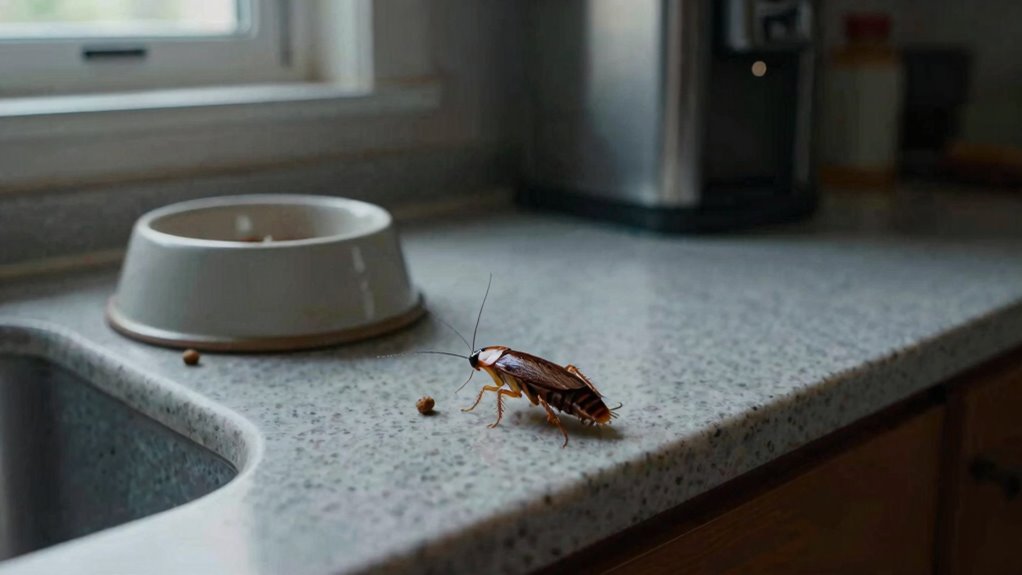
Do pets attract more roaches? Yes, by 2.6 times according to field studies.
A cat food bowl is basically a cockroach buffet sign. The culprit isn’t the animal itself but its accessories.
Poor pet food storage like leftover kibble in open bags creates a smorgasbord. Even litter boxes attract roaches through organic waste and dampness.
Here is a quick breakdown of common pest factors and prevention costs. An open food bowl has high roach attraction and a $12 sealed bin solves it.
A dry kibble bag has moderate attraction and a $5 clip fixes it. Litter box waste has high attraction and a $20 daily scoop prevents issues.
A water dish has low attraction but an $8 spill-proof bowl helps. The fix is simple: seal kibble in airtight containers and wash bowls nightly.
Scoop litter daily to cut roach appeal dramatically. It is not the pet’s fault but the setup.
Tighten that and you will starve the party. For severe infestations, gel bait stations kill entire colonies quickly.
The 4 Diseases Roaches Can Carry Into a Clean Home
Four specific diseases cockroaches can bring into even the cleanest home include salmonella, E. coli, staphylococcus, and Streptococcus.
These pathogens travel via disease transmission pathways. Cockroaches pick them up from garbage, drains, and sewers, then track them across counters, utensils, and food prep areas.
This makes them classic mechanical vector diseases, meaning they don’t infect the roach. They just hitch a ride on its legs and body.
These are classic mechanical vector diseases—the roach isn’t infected, but carries germs hitchhiking on its body.
Salmonella causes severe food poisoning, with symptoms like cramps and diarrhea lasting days.
E. coli can lead to kidney failure, especially risky for kids and the elderly.
Staphylococcus triggers skin infections and foodborne illness, nasty stubborn stuff.
Streptococcus is linked to sore throats and, worse, rheumatic fever.
All spread through droppings, saliva, and shed skins, contaminating surfaces silently.
Frankly, a roach is a six-legged biohazard, not a cleanliness judge. They don’t care about your sparkly counters.
They only care about the tiniest crumb.
Bottom line, these diseases are a genuine risk even in pristine homes. Seal cracks, fix leaks, and call a professional exterminator if you see one.
Your health is worth more than a prideful cleaning routine.
For effective pest control, focus on kitchen sanitation and moisture removal.
A roach infestation requires quick action to protect your family from these harmful pathogens.
Since cockroaches thrive in warm, humid environments, reducing moisture and fixing leaks is just as critical as wiping down surfaces to eliminate their breeding grounds.
How to Roach-Proof Your Home for Good (Without Harsh Chemicals)
Roaches can march disease right past a spotless kitchen, but the fix isn’t to douse everything in poison. Start by denying them a drink, since moisture control is your new hobby.
Fix leaky pipes under the sink and never leave a wet sponge out overnight. Then address pet hygiene, because roaches love an all-day buffet of Fido’s food.
Store kibble in sealed plastic bins and wash dishes without delay. Next, seal cracks around baseboards and cabinets with caulk, which costs under $5 a tube and works wonders.
Declutter cardboard boxes and paper bags, since roaches nest in them. Finally, set out sticky traps in dark corners to monitor activity and catch early signs of an infestation.
These roach prevention tips require no harsh chemicals, just a little effort and a lot of caulk. For long term pest control, repeat this routine monthly and inspect under appliances regularly.
You’ll also want to vacuum baseboards weekly to remove roach eggs and droppings. If you’re looking for roach proofing solutions, focus on blocking entry points around pipes and electrical outlets.
Using silicone caulk for kitchen gaps and bathroom edges is a smart, low cost fix. Pair that with natural roach deterrents like bay leaves or diatomaceous earth in hidden spots, as this mechanical killer dehydrates bugs without chemicals.
Sticky traps also tell you where the roach hotspots are, so you can target your sealing efforts. With these eco friendly pest management steps, you can keep your home roach free for good.
Frequently Asked Questions
Can Cockroaches Come Through Drains or Pipes?
Yes, cockroaches can come through drains or pipes. Plumbing gaps around sinks and showers serve as highways from sewer infestations directly into homes.
These pests navigate damp, dark pipes with ease, emerging through uncovered drains or cracked seals. A single loose pipe joint is an open invitation for a full scale infestation.
Regularly check under sinks for gaps and use drain covers to stop them. It is not about cleanliness; it is about sealing those slimy, uninvited pathways.
Consider a professional grade drain treatment or a foaming pest control gel for long term protection. For a quick fix, install a one way drain valve that blocks entry without blocking water flow.
Look for products labeled for sewer cockroach prevention and use them as part of your home pest control routine. If you see signs of roaches, act fast with a targeted insecticide spray or bait stations near pipe entry points.
Your best defense is a combination of physical barriers and chemical treatments. Shop for drain covers, silicone sealant, and roach killing gels to keep your home safe.
Do Cockroaches Hitchhike in on Groceries or Packages?
Yes, cockroaches hitchhike in on groceries or packages.
Cardboard boxes, especially those holding canned goods or pet food from a crowded warehouse, are prime hidden entryways.
An egg case with 30 nymphs could be stuck under a soda flat.
You provide inadvertent transportation yourself, since who thinks to inspect a six pack of soda?
A quick check of cardboard packaging for droppings or egg casings prevents a nasty surprise.
For effective roach prevention, inspect deliveries before bringing them inside.
Professional pest control services recommend sealing gaps around boxes.
Use roach baits or gel bait treatments near entry points to stop an infestation before it starts.
Need a solution for your home?
Look for a proven roach killer spray or insect growth regulator to tackle hidden hitchhikers.
Can Roaches Live Inside Walls Without Ever Entering the Kitchen?
Yes, cockroaches can live inside walls without ever entering the kitchen. Wall voids offer dark, undisturbed shelter for hidden infestations to thrive.
These pests access wall cavities through tiny cracks near plumbing, electrical outlets, or baseboards. They survive on crumbs, dust, and humidity within the structure itself.
A clean kitchen won’t stop them. The real solution is blocking entry points with caulk, installing door sweeps, and sealing gaps around pipes.
For proactive pest control, consider bait stations in attics or basements. They cost around $10 and target hidden colonies directly.
This approach helps you buy the right prevention product and stop cockroach infestations before they spread. Smart buyers always seal first, then treat with bait.
Why Do I See Roaches Only at Night, Not During the Day?
Seeing roaches only at night, not during the day, directly confirms their nocturnal nature. These pests are hardwired to avoid light and forage for food and water after dark.
They retreat to their hiding spots like cracks behind refrigerators, under sinks, or inside walls before sunrise. Even a clean home provides dark, safe shelters that roaches need to survive.
So, you are not seeing them during the day because they are masters of staying hidden. They wait for nightfall to move around, which is when many people spot them first.
If you want effective pest control, look for roach baits and gels that work while they are active. A targeted treatment plan using roach killer products placed in their hiding spots will break this cycle.
For the best roach prevention, combine exclusion with routine insecticide sprays. This ensures you tackle both the night time activity and the daytime nesting areas.
Will Leaving Lights on Deter Cockroaches From Entering?
Leaving lights on won’t reliably deter cockroaches from entering your home. They’re nocturnal insects, but they aren’t scared of light; they just prefer dark, hidden environments.
Brightness might slow them down slightly, but bulb color like warm versus cool makes zero difference to their behavior. What cockroaches actually care about is access to food, water, and harborage spots, not your lighting choices.
So go ahead and save on electricity, because a dark room is perfectly fine. The real pest control strategy involves sealing cracks, wiping down crumbs, and removing moisture sources.
If you’re dealing with an active infestation, spot treatments and gel baits are far more effective than keeping every light on. For long-term prevention, consider insect growth regulators and professional-grade sprays around baseboards and entry points.
Darkness won’t invite cockroaches if you eliminate their survival needs first. Focus on sanitation and exclusion, then use targeted roach killers only where you see activity.
That way, you’re making a smart purchase based on science, not myths about light aversion. Keep your home clean, dry, and sealed, and cockroaches won’t care whether your lights are on or off.


