
Finding spiders in your home doesn’t mean your house is dirty—just that they’ve found the dark, undisturbed zones they love. Closets, cluttered corners, and storage boxes are prime hideouts, along with gaps around windows and utility pipes.
Behind large appliances like refrigerators, they find cozy microclimates, while black widows nest in damp crawl spaces and brown recluses hitch rides inside cardboard boxes. To track them down, a flashlight along baseboards works well, and adhesive traps offer a low-tech fix.
Sealing gaps helps, but where they actually breed might surprise you. In this guide, we’ll walk through the real hotspots and the simplest steps to keep them out—so you can handle it fast without the guesswork.
At A Glance
- Spiders hide in dark, undisturbed areas like closets, attics, and crawl spaces.
- They lurk behind large appliances such as refrigerators, ovens, and washing machines.
- Cardboard boxes, stacked papers, and stored clutter provide perfect spider cover.
- Gaps around window frames, door thresholds, and utility pipes are common entry points.
- Spiders seek shelter behind furniture, under beds, and in low-traffic rooms.
Why Your Home Has Perfect Spider Hiding Spots
Your home is basically a spider paradise, and you didn’t even realize you were hosting the grand opening. Spiders thrive in dark, undisturbed areas like closets, under beds, and behind furniture, places you rarely touch.
Your home is a spider paradise, and you didn’t even know you were hosting the grand opening.
They likewise love stacks of papers, boxes, and stored items, especially cardboard boxes, which offer perfect cover. Low-traffic rooms, such as spare bedrooms or home offices, become spider sanctuaries.
For effective spider control, start with sealing cracks and reducing clutter, which are proven pest prevention tactics. Don’t ignore natural repellents, as citrus sprays or vinegar work wonders around baseboards. For lasting protection in enclosed areas, consider using pet-friendly pouches that last up to 90 days.
Think of your house as a spider Bed & Breakfast, dark, quiet, and full of hiding spots. To stop a spider infestation, you need to cut their buffet of hiding places by storing items in plastic containers.
Use natural spider repellents near problem zones, like window sills and door frames, for long lasting pest management. The verdict is simple, tidy up, seal gaps, and they’ll check out early, so you can enjoy a spider free home.
5 Indoor Spider Hiding Spots You’re Overlooking
Homeowners often overlook quiet spaces where spiders thrive, like dark corners and closets filled with rarely moved items. Behind large appliances such as refrigerators and washing machines, the warmth and darkness create an ideal, undisturbed retreat for pest activity. For long-lasting protection in these hard-to-reach areas, consider using foggers like Hot Shot that can penetrate cracks and crevices for up to two months.
Spider control efforts should target storage boxes, especially cardboard ones, where spiders can hide after entering before the flaps were closed. These spots frequently cause surprises during spring cleaning, making pest prevention a key part of home maintenance.
To reduce spider infestations, inspect behind appliances and check stacked storage areas regularly. A friendly reminder: a quick vacuum and seal of cardboard box gaps can help keep these hidden spots pest free.
Dark Corners and Closets
Every home has a shadowy geography that goes mostly unnoticed until something skitters across it. Closets and dark corners, with their low traffic and abundant cover, are prime real estate for spiders.
Photographic evidence from pest control studies shows that population density is highest in these zones, particularly behind stacked boxes and hanging clothes. Floor level closet corners attract cobweb spiders because those spots are dusty, undisturbed, and dark.
Shelf crevices in closets invite jumping spiders, as these offer easy ambush spots near stored items. Behind hanging coats, cellar spiders thrive thanks to stable humidity and minimal movement.
A home with undisturbed closets is a spider hotel, and the checkout never comes. The simple fix involves clearing out clutter and sealing gaps to prevent infestations. Placing non-toxic adhesive traps along these baseboards and corners captures spiders as they travel, providing safe pest control without chemicals.
Don’t let that one corner become a cobweb convention. It is not glamorous, but it works for effective spider control and long term pest prevention.
Behind Large Appliances
That same quiet, low-traffic territory extends to the spaces behind large appliances, though the stakes are higher here since warmth and dampness join the darkness.
Friction heat from refrigerators and ovens creates cozy microclimates, but moisture from washing machines attracts prey.
Spiders slip in through gaps around door seals or fractured ventilation grilles.
They find undisturbed webs near compressor units or beneath dishwashers.
Moving an appliance mid-spring can reveal a small colony of cobweb spiders, an unpleasant surprise.
A homeowner once found fifteen behind a neglected fridge.
Seal those cracks, reduce clutter back there, and you’ll cut off prime real estate for pest harborage.
This simple home pest control fix has an outsized payoff for keeping spiders away.
Applying a long-lasting residual barrier spray such as Ortho Home Defense can provide up to 12 months of protection on indoor non-porous surfaces behind these appliances.
Inside Storage Boxes
Before you blame the clutter, consider that it’s not the mess itself: it’s the darkness and security. Storage boxes are basically spider mansions, dark, quiet, and full of cracks.
Cardboard is especially bad, since spiders squeeze right in. Instead, seal everything in plastic containers with tight lids for professional grade pest control.
That’s insect tight storage, no gaps, no guests. Even better, use clear bins so you can spot a stowaway before grabbing that sweater.
Spiders don’t care about your holiday decorations, they care about hiding. Deny them that with airtight plastic storage solutions.
Swap cardboard for plastic, check bins seasonally for spider prevention, and you’ve just evicted eight legged squatters without the drama. It’s not glamorous, but neither is a spider in your scarf.
A quick seasonal inspection of your clear totes will keep your belongings safe from common household pests. For long term spider control, always choose latching lids over flimsy flaps.
Unused corners and basement shelves are prime hiding spots, so rotate your bins twice a year. That simple habit reduces the chance of a web colony forming in your winter gear.
Use silica gel packs inside each bin to cut moisture, which spiders and their prey love. Dry, sealed and visible is your best defense against unwanted roommates.
To maintain a truly spider-free storage system, also consider placing peppermint oil repellent pouches inside each bin for an added natural deterrent.
Black Widow Hiding Spots: Where They Nest Inside Your House
Black widows prefer dark, undisturbed areas inside a house. Think closets and storage cabinets nobody bothers with.
They also slip in from outdoor entry points like cracked foundations or open garage doors. These spots act like welcome mats for pest problems.
Spotting their messy, thick cobwebs low to the ground is the real tell-tale sign. If you find these webs, you likely need home spider control treatment. For lasting prevention, many sprays form a sticky organic acid barrier that remains effective even after drying.
Dark, Undisturbed Areas
Two unwelcoming nooks in your home are prime spots for black widow spiders. Basement spiders thrive in dim corners near water heaters or behind stacked boxes.
They build messy, irregular webs on surfaces that haven’t been cleaned in months. Crawl space webs cling to joists, insulation, and pipes, so check these low-traffic areas.
In fall, spiders move indoors, making inspection even more important. Reduce clutter to break the pest life cycle, because spiders love cardboard boxes and forgotten laundry piles.
Seal cracks in walls and floors, and switch to plastic bins for storage. Dark, undisturbed areas are their fortress, but you can make them well-lit and tidy.
A little maintenance, like using a vacuum in corners, goes a long way. Remember, they seek shelter, not your company. Applying diatomaceous earth in cracks and crevices can help dehydrate and eliminate hidden spiders without harsh chemicals.
Outdoor Transition Spots
Outdoor nesting spots like wood piles against your house and brick or refuse piles create prime real estate for spiders seeking shelter.
Indoor entry risks hide in garage corners, near door edges, crawl spaces, and under porch steps, where pests slip through unnoticed.
Low-growing shrubs and garage window sills or utility boxes are common transition zones that connect outdoor habitats to your living space.
To stop spider infestations before they start, focus on targeted pest prevention and proactive home sealing solutions.
The bottom line is simple: seal gaps around pipes and doors with caulk or weatherstripping to block entry points.
Move firewood away from the house and store it off the ground to eliminate nesting hotspots near your foundation.
Check those garage corners and under porch steps regularly for webs, egg sacs, or existing spider activity.
If you notice recurring signs, it may be time to schedule professional pest control services for thorough spider removal and long-term protection.
Otherwise, you are just running a spider bed-and-breakfast, and every gap becomes a welcome mat for unwanted guests.
Take these practical steps today, and you will cut down on indoor spider encounters without harsh chemicals.
Applying low-odor granules around the foundation in a 6-to-10-foot band creates a long-lasting barrier that targets spiders and other crawling insects.
Brown Recluse Hiding Spots: Check Boxes, Furniture, and Baseboards
Inspect cardboard boxes for shed skins, webbing, or live spiders before unpacking them. This habit helps prevent a brown recluse infestation from moving into your home.
Check furniture seams by looking under cushions and inside recliner mechanics. Also examine behind headboards where spiders often hide.
Scan baseboards daily and focus on dark corners where dust collects. These areas are common brown recluse hiding spots that need regular pest control attention. Pheromone-based traps attract and capture male moths from up to 25 feet away to break the breeding cycle.
Examine stored items such as books, old clothes, or holiday decorations for webs or droppings. Thorough inspection of these items keeps your living space safe and spider free.
Structural Entry Points That Become Spider Hiding Spots
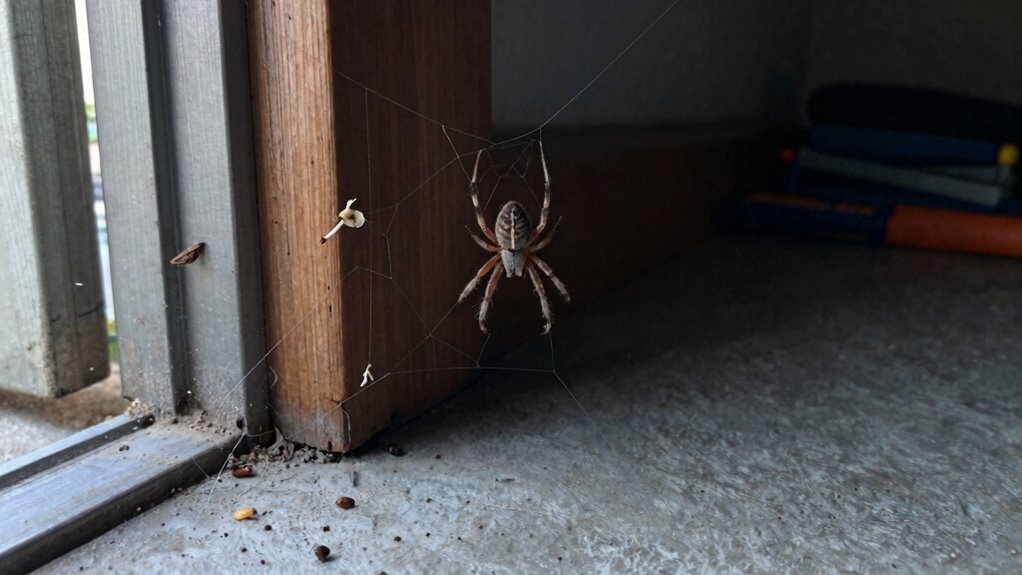
Cracks and crevices in your home’s shell act like a VIP backstage pass for spiders. Tiny gaps around window frames, door thresholds, and utility pipes are prime entry points for pest control issues.
Ventilation gaps, siding holes, and spaces under eaves give spiders direct access from outdoors. These structural flaws let pests slip in undetected, so check foundation cracks and gaps around vents.
Where cables enter walls is another common spider hiding spot. Seal these openings with caulk or weatherstripping for a cheap and effective solution.
Light fixtures and switch plates also hide spiders behind them. A simple fix is to use silicone sealant on baseboards and outlet covers to block entryways.
Preventing access beats chasing spiders later. Block these entry points, and you cut off the party before it starts. For sealing these spots, use rust-resistant stainless steel wool or copper mesh that rodents cannot chew through.
How Spiders Hitch a Ride From Your Yard Into Your House
Two major pathways bring spiders from your yard straight into your living room. The accidental hitchhike and the structural bridge are the main culprits.
Spiders don’t plan indoor invasions. They just get lucky, or unlucky for you.
Landscaping debris like piles of leaves or mulch creates perfect spider staging areas. They crawl onto a branch you carry inside.
Firewood stacks are spider motels. Bringing logs indoors for a cozy fire often welcomes stowaway black widows. Steel wool barriers can block the gaps around your fireplace or door frames where these stowaways might escape after you bring logs inside.
Those cracks you ignore act like spider highways. Gaps under doors or around pipes lead straight from the yard to your baseboards.
Boxes, plant pots, or outdoor gear left on the porch become launchpads. Spiders hop aboard when you grab them to bring inside.
A single stack of firewood can deliver several spiders. Inspect logs before hauling them in to prevent a pest infestation.
The bottom line is simple. If it touches the ground outside, shake it first to stop spider entry before it starts.
Why Your Garage, Attic, and Crawl Space Are Prime Spider Hiding Spots
Those spiders that hitched a ride inside on your firewood or plant pot aren’t just roaming your living room. Your garage, attic, and crawl space are prime real estate for them.
They are attracted by warmth in cooler months, following seasonal migration patterns from the yard. These spaces are dark, undisturbed, and offer plenty of nooks for web building.
Stacked boxes or insulation gaps create perfect hideouts. For attics, warmth rises and draws spiders up in fall.
Crawl spaces are damp and dark with easy entry from foundation cracks. Garages have door gaps and stored clutter that create perfect hideouts.
You are basically running a spider bed and breakfast with unlimited check in. The fix is to seal cracks and store items in plastic bins.
Reduce clutter to cut off their warmth and hiding spots. Bottom line, they will take their eight legged vacation elsewhere.
For a non-toxic solution in these areas, look for plant-based repellent sprays that are safe around pets and children.
Dark Storage Areas That Attract Spiders: Closets, Boxes, and Piles
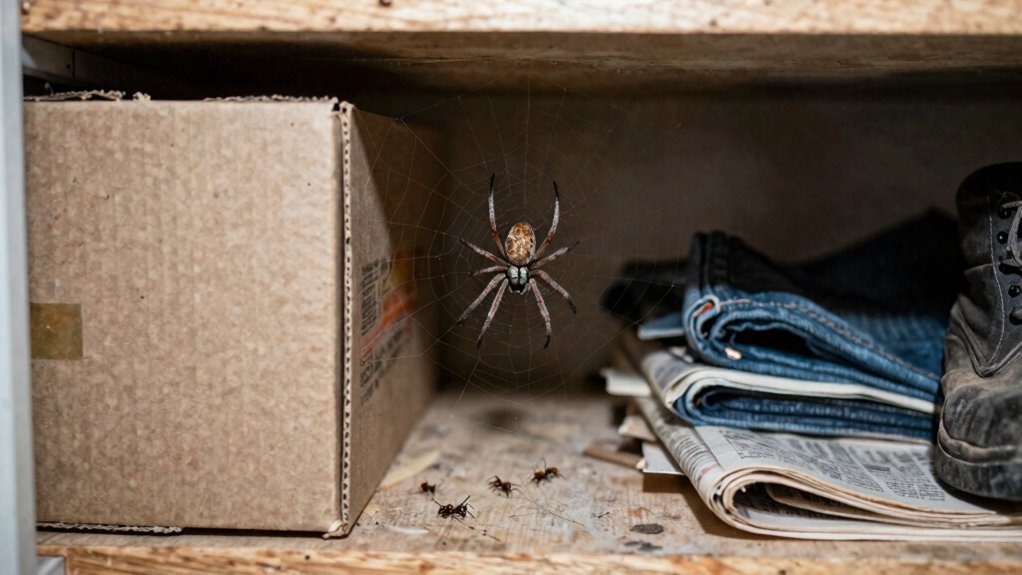
Closets and storage cabinets offer spiders the dark, quiet retreat they love. Start by removing clutter and old cardboard boxes that create perfect hiding spots.
Piles of stored items give pests all the crevices they need to settle in. To get rid of spiders for good, eliminate these cozy hideouts entirely.
Turning dark corners into clean, organized spaces makes your home less appealing to web spinners. Regular pest control efforts like vacuuming and sealing gaps help keep them from coming back.
Focus on decluttering closets and cabinets to reduce spider attractants. This simple step is your best eviction notice for unwanted eight-legged tenants. Applying a plant-based pest control spray around baseboards and entry points can further discourage spiders from re-entering these spaces.
Closets and Storage Cabinets
Spider proofing your closet is more about chemistry than just being neat. Dark crevices and storage cabinets mimic natural spider habitats.
Stale air from undisturbed fabric folds acts like a dinner bell for pests. Spiders hide behind hanging clothing, especially thick sweaters, using them as web anchors and prey shelters.
These spiders are barely four millimeters long, so they vanish into shadows easily. Items left untouched for months create static, dusty air that spiders prefer over breezy areas.
Wool or cotton fabric folds hold dampness, which attracts small insects like booklice. These tiny bugs become easy spider snacks, inviting more eight legged visitors into your storage.
Long sleeves and hoods on hanging clothes offer ready made tunnels for web building. Wooden closet shelves, even cedar, may repel moths but do nothing to deter spider settlement.
To reduce spider encounters, keep closets well ventilated and shake out clothes before wearing. Store rarely used textiles in sealed plastic bins for the cheapest habit change. An OMRI-listed, organic diatomaceous earth powder can be lightly dusted into corners and along baseboards to dehydrate crawling insects and spiders on contact.
Stacks of Cardboard Boxes
Why do spiders find stacks of cardboard boxes so irresistible? They are basically a cardboard colony starter kit for pest control issues.
Those dark, undisturbed gaps between boxes are perfect for building webs and raising spiderlings. Worse, cardboard makes excellent dampness traps, absorbing humidity from basements or garages.
This creates a damp microclimate that insects love, and where insects gather, hungry spiders follow. Leaving boxes stacked for months just invites trouble for your home.
A single infested container can seed spiders throughout a room. The fix is to switch to clear, sealable plastic bins.
They are dry, easy to inspect, and spiders cannot burrow into them. That twelve-dollar investment saves you from a legitimate eight-legged real estate empire.
Bottom line: if spiders could buy property, they would choose your box pile every time. Use plastic bins to prevent spider infestations and keep your storage area pest-free. You can also use products like Cimexa Insecticide Dust to treat dark corners and crevices near these storage areas, as it dehydrates pests on contact and remains effective for up to ten years when kept dry.
Eliminating Clutter and Debris
Once you have cleared out the cardboard boxes, you still have plenty of other spider-friendly clutter to manage.
The less you pile up, the fewer cozy corners exist for a venomous brown recluse or a shy black widow to call home.
They need very little to thrive, just darkness, quiet, and a pile of your old junk.
Avoid storing clothes or blankets in open piles because spiders love burrowing into fabric folds.
Keep closets sparse to reduce pest control risks, as a brown recluse will hide behind a forgotten stack of shoes.
Clear out old magazines and paper stacks since black widows nest in such dry, secure spots.
baiting strategy near ant mounds or foraging routes can also help control pests that spiders prey upon.
Toss any debris piles near the foundation because they are basically welcome mats for spiders.
Taking these steps will make your home far less inviting for unwanted pests.
Behind Furniture and Baseboards: Common Spider Hiding Spots
Furniture and baseboards create a spider’s favorite hide and seek spot, and you are usually the one searching. These arachnids are not fussy about interior design; they just want a dark, undisturbed crack where they can wait for a wandering ant or fly.
Baseboard gaps are prime real estate for cobweb spiders, which spin messy webs to snag prey. Placing sticky spider traps along these edges, especially behind couches and bookshelves, can intercept them before they settle in. Applying boric acid powder in these hidden cracks provides lasting pest control that kills cockroaches and ants within 72 hours.
The table below summarizes key hiding spots and simple countermeasures. Remember: if you cannot see the baseboard gap, a spider can and will use it.
| Hiding Spot | Why Spiders Love It | Quick Fix |
|---|---|---|
| Behind couches | Dark, rarely disturbed | Slide spider traps under the frame |
| Along baseboards | Tiny cracks equal perfect crevices | Seal gaps with caulk or weather stripping |
| Under armchairs | Low traffic, dust free zone | Vacuum weekly, even the underside |
| Behind tall bookcases | Deep shadows, stable temps | Pull out occasionally and check for webs |
Use caulk to seal baseboard gaps and block entry points for crawling pests. Regular vacuuming behind armchairs removes webs and eggs before infestations grow.
Buying spider traps specifically designed for corners helps catch them near baseboards. Pulling out tall bookcases occasionally lets you inspect for hidden webs and droppings.
Room-by-Room Guide to Find Spider Hiding Spots
A room-by-room search might feel like you’re auditioning for a nature documentary, but it’s the most reliable way to find where spiders actually hide.
Each space presents unique traps, demanding a connectivity analysis of how rooms link via cracks, vents, or pipe chases rather than isolated guesses.
Architectural implications matter.
Attics, basements, and garages are prime spider hiding spots, so do not skip spare bedrooms or utility closets.
Check behind wall hangings and light fixtures.
They offer warm, dark perches that attract pest spiders.
Inspect cardboard boxes and paper stacks.
Spiders love the undisturbed fiber for nesting.
Probe window frames, door thresholds, and electrical outlets for gaps.
These entry points are common pathways for household pests.
Sweep under furniture edges and appliance bases.
Dust and silence gather there, creating ideal conditions for spider infestations.
Place sticky traps perpendicular to walls in these dark, moist areas to intercept their movement along baseboards and under appliances.
The verdict is clear.
Thorough, methodical sweeps beat random poking when you perform pest control inspections.
Focus on structural weak points.
You will likely find the culprits or at least solid proof of their absence.
Why Seasonal Changes Drive Spiders Indoors
Seasonal shifts turn attics from quiet storage to prime real estate. As autumn cools, spiders seek warmth, driving them indoors through cracks in foundations and loose windows.
Even creatures with limited spider vision detect temperature drops. They instinctively follow heat gradients toward human dwellings.
Imagine a brown recluse hitching a ride inside a cardboard box. That is not a spider’s vacation, just it cashing in on your central heating.
Inside, they rebuild web structures in dark corners, behind picture frames, or under beds. They set up shop for winter, and attics offer cozy hideouts since they are undisturbed and often less sealed.
If you want to prevent a pest control problem, sealing cracks and checking boxes before storage can help. Spiders ignore eviction notices, so professional exclusion services are your best defense.
When leaves fall, expect eight-legged tenants. They are not malicious, just stubborn renters who need a winter proofing strategy.
And while spiders settle in, ultrasonic devices can emit high-pitched sounds to deter them from specific areas of your home.
Proven Tricks to Remove Spider Hiding Spots for Good
Seal all entry points with caulk or weatherstripping around pipes and windows. A gap as thin as a dime is a spider superhighway for pest entry.
Swap cardboard boxes for plastic bins with tight lids in basements and garages. Spiders love cardboard because it creates dark, undisturbed folds for hiding.
Declutter under beds and in closets like a true minimalist. Remove stacks of papers and old clothes where spiders and their prey nest.
Trim back outdoor vegetation at least two feet from the foundation. Move woodpiles far from the house to eliminate bridges from the yard.
Eliminating clutter and sealing cracks gives spiders no welcome mat. That is the punchline for permanent spider control, clean and simple. Placing pesticide-free glue traps along walls and in undisturbed corners can capture spiders that evade sealing efforts.
Frequently Asked Questions
What Natural Predators Can I Use to Control Indoor Spiders?
Thinking about natural predators for indoor spiders? Honestly, they rarely work as a practical home solution.
Cats and some birds may occasionally snack on spiders, but introducing them won’t target the hidden populations in your walls and cracks.
Even outdoor natural enemies like parasitic wasps can’t be safely released indoors, since they often create new pest problems rather than solving the original one.
Instead of chasing biological controls, focus on exclusion and sanitation for real spider prevention.
Seal entry points around windows, doors, and baseboards to block their pathways.
Reduce clutter and vacuum regularly to remove webs, egg sacs, and the insects spiders feed on.
Sticky traps placed along skirting boards and behind furniture are a proven, low-cost way to monitor and reduce spider activity.
If you need immediate relief, a professional-grade insecticide spray or dust applied to voids and cracks offers more reliable spider control than any predator release.
For targeted home pest control, look for products labeled for crawling pests and apply them safely in crevices.
Buyer-intent choices like glue boards, caulk, and residual sprays give you measurable results without the risks of releasing living organisms.
Bottom line: skip natural predators for indoor spider management, and invest in prevention plus direct treatment methods instead.
That approach outperforms any “natural” control while keeping your living space clean, safe, and spider-free.
Do Spider Repellents Like Peppermint Oil Actually Work Long-Term?
Peppermint oil fails long term because its scent evaporates fast, usually within days. The primary oil potency drops quickly, so spiders just wait it out with no real deterrent.
A $12 bottle might feel proactive, but it’s a week’s fix at best. For real control, seal cracks and clear clutter to achieve permanent spider prevention.
Spray weekly if you enjoy the ritual, but don’t count on mint to evict anyone. The bottom line is a nice smell but a weak strategy for long term pest control.
If you are searching for effective spider repellents, skip the essential oils. Instead, focus on exclusion tactics like caulking gaps and installing weatherstripping as your best spider control methods.
That $12 is better spent on a tube of silicone caulk and a broom. For buyer intent around home pest solutions, invest in physical barriers rather than temporary sprays.
How Quickly Can a Spider Infestation Get Out of Control?
The speed of a spider infestation depends on their reproduction rate. A single egg sac can hatch hundreds of spiderlings, turning a few stragglers into a full blown problem within weeks.
For example, brown recluse populations grow fast in undisturbed clutter like basements or attics. So it’s not an overnight disaster, but it is faster than you’d think.
The verdict is clear: don’t wait to act. If you spot one spider, call a pest control service immediately to prevent a larger invasion.
A small issue becomes a big, creepy one if you hesitate. Professional spider removal treatments stop infestations before they spread to living areas.
For long term protection, combine exclusion techniques with targeted pest control products. This approach keeps your home spider free and gives you peace of mind.
What Specific Smells or Substances Do Spiders Hate the Most?
Spiders strongly dislike citrus peels and vinegar spray, so these are great natural pest control options. Citrus peels contain limonene, a compound toxic to spiders, while vinegar’s acetic acid burns their exoskeleton.
A DIY vinegar spray, made with one part white vinegar and one part water, is cheap and effective for spider repellent. Just spritz corners and windowsills to keep pests away.
Citrus peels placed in closets or near baseboards add a fresh scent, though they dry out weekly. For stubborn spider infestations, pair these with caulk sealing to block entry points.
Bottom line: skip expensive repellents and use either natural option weekly. This approach is practical for homeowners seeking affordable pest control solutions.
Swap citrus peels every 7 days for a pleasant smell that deters spiders. Vinegar spray costs about $2 for a spray bottle and wipes surfaces clean.
Can Spiders Survive in a House With No Other Insects to Eat?
Spiders can survive a surprisingly long time with no other insects, though not forever. A general spider diet includes tiny pests, but without prey, they rely on hydration requirements from condensation or sinks.
That’s it. They will last weeks, maybe months, in a dry house.
They are patient roommates, not demanding ones. For instance, a common house spider might fast for months, but eventually it will need a meal.
If you want to prevent spiders from settling in, start with a thorough home pest control inspection. Seal cracks around windows and doors, and reduce clutter to eliminate hiding spots.
Using a targeted spider repellent or an indoor insect barrier spray can help drive them out for good. For ongoing protection, consider a professional pest control treatment that addresses both spiders and their prey.
Bottom line: they persist, but not indefinitely. If you are looking for effective spider control products, look for options with long residual action and safe indoor use labels.


