
Why are there so many spiders in your house? It’s not because your home is dirty—it’s because spiders thrive in 78.5% of rooms, especially dark corners, clutter, and areas with easy prey like ants or moths. Most spiders you see are lost wanderers, not nesting invaders, and cobweb species show up in every home to hunt. Reducing crumbs and sealing cracks costs under ten bucks and cuts their food supply fast. Spiders also kill cockroaches and termites naturally, so a few can actually help your pest control efforts. Stick around to learn which common species are safe to leave alone and when to actually call an exterminator.
At A Glance
- 100% of homes contain spiders; they are virtually unavoidable indoors.
- Spiders enter homes hunting for prey insects like moths and cockroaches.
- Dark, cluttered basements and attics offer ideal shelter for spiders.
- Carpeted rooms host more spider species due to trapped warmth and insects.
- Autumn spider surges result from males seeking mates, not home neglect.
How Common Are Spiders in the Average Home?
Spiders are virtually unavoidable indoors, and studies confirm they inhabit 100% of homes. They occupy about 78.5% of rooms, ranking as the third most abundant indoor arthropod order.
This spider species diversity is a feature, not a flaw, of a healthy indoor ecosystem. Cobweb spiders appear in every house, with an average of 93 morphospecies per home, and spiders are consistently among them.
These arachnids act as top indoor predators, quietly controlling clothes moths, termites, cockroaches, and even other spiders. They are not pests; they are helpful housemates that keep the arthropod buffet in check.
These arachnids are top indoor predators, quietly controlling moths, roaches, and even other spiders.
Carpeted rooms tend to host more spider types, while basements develop unique communities. For effective pest control, understanding these patterns helps you coexist rather than react.
If you’re seeking spider removal tips, start by reducing clutter and sealing cracks near windows and doors. Professional pest control services often recommend simply leaving corner webs alone, since spiders naturally limit pantry moth and silverfish populations. If chemical intervention becomes necessary, residual barrier sprays can provide up to 12 months of protection on non-porous surfaces.
The verdict is simple: spiders are your unsung security team, common in attics, bathrooms, and kitchen corners. Respect their space, and they’ll handle the bug problem without sprays or traps.
Bottom line, they are calm cohabitants, not a crisis to fix. For thorough spider control, just minimize moist hiding spots and keep firewood outside, and you’ll enjoy a balanced home.
What Attracts Spiders Inside Your House in the First Place?
Spiders usually come inside for three reasons: hunting prey, seeking shelter, or stumbling in by accident. A home with plenty of insects like clothes moths or cockroaches is basically a spider buffet.
Dark corners and cluttered basements offer safe spots to build webs. Even a wandering hunter can slip through a crack under the door, never intending to stay.
They are just looking for a quick meal or a mate. To reduce spider infestations, focus on pest control by sealing entry points and reducing humidity.
Buying a dehumidifier or caulking gaps around windows can help. Maintaining humidity levels between 40-50% is critical to prevent the insects that spiders eat from thriving. Keeping your home clutter free also limits their hiding places.
For professional pest management, consider a targeted spider treatment plan. This will remove both spiders and their food sources for good.
Hunting for Prey
A single moth near a lamp sounds a dinner bell for any hungry spider. Spiders enter homes primarily because of pest availability and food sources.
Your house, with its lights and crumbs, is a buffet for flies, ants, and moths. This drives their food seeking behavior, as they follow the scent of potential meals.
If your home has a fly problem, you have rolled out the welcome mat for spiders. The more bugs you have, the more spiders will arrive to hunt.
They aren’t crashing your home. They are clocking in for work as unpaid pest control.
Want fewer spiders? Tackle the insect buffet first. Eliminating pests is the simplest way to reduce spider populations. Consider using plant-based essential oil sprays to target the insects directly without harsh chemicals.
Shelter and Safety
Four walls and a roof aren’t just for humans, since spiders view homes as prime real estate for shelter seeking.
They’re drawn to quiet, undisturbed corners like attics, basements, and under furniture, where they can build webs without wind or rain ruining their work.
These spaces become safety zones, safe from birds and larger insects.
Cobweb spiders were found in 100% of homes surveyed, not because they love your decor, but because your home mimics their ideal natural hideout: dark, dry, and stable.
So when you spot one in a corner, it’s not personal.
It’s just a spider finding a decent rental with good protection, low rent, and plenty of quiet.
If you need effective pest control for spiders, focus on sealing cracks and reducing clutter in those undisturbed areas.
Regular cleaning and removing webs can help break their nesting cycle and keep your home less inviting.
Using natural spider repellents in low-airflow spaces like closets and basements can provide long-term, low-maintenance protection for up to 90 days.
Accidental Entry
Not all spiders set up camp by choice. Many simply wander in through spider dispersal and human movement.
These tiny travelers balloon on silk threads like eight-legged paratroopers. When they land, your home is often nearby.
Your comings and goings create accidental entry routes for pest control issues. Opening doors and carrying in boxes give spiders a free pass.
A wolf spider chasing prey might dash through a cracked garage door. It was not seeking your warmth, just going for a snack.
Most indoor spiders are lost, not invited guests. They are accidental visitors, not intentional squatters.
To reduce pest problems, gently escort them outside. A quick sweep or cup release keeps your home spider-free.
For persistent issues, place non-toxic adhesive glue traps along baseboards and corners to capture wandering spiders without chemicals.
The Top Reason Spiders Enter Your Home: They’re Following Their Food
Spiders don’t really care about you, they care about your bugs. That is the top reason for their presence: they are following their food.
A house with flies, moths, or cockroaches is basically a buffet. Spider migration happens when prey populations build up, often near windows, lights, or damp areas.
Expert web placement follows, with spiders setting up shop right where insects are most active. They are not invading; they are relocating to the all-you-can-eat joint.
Consider a single cobweb spider. It can eat several clothes moths per night, no pest control needed.
So if you see more spiders, check for more bugs first. Fewer bugs mean less spider interest, which is the simple food chain math. Applying a residual barrier spray can help stop spiders by eliminating their prey at entry points.
Buy a good vacuum and focus on windowsills and baseboards. The bottom line is to starve the prey, and the spiders will not migrate in.
Do Spiders Prefer Certain Rooms or Levels?
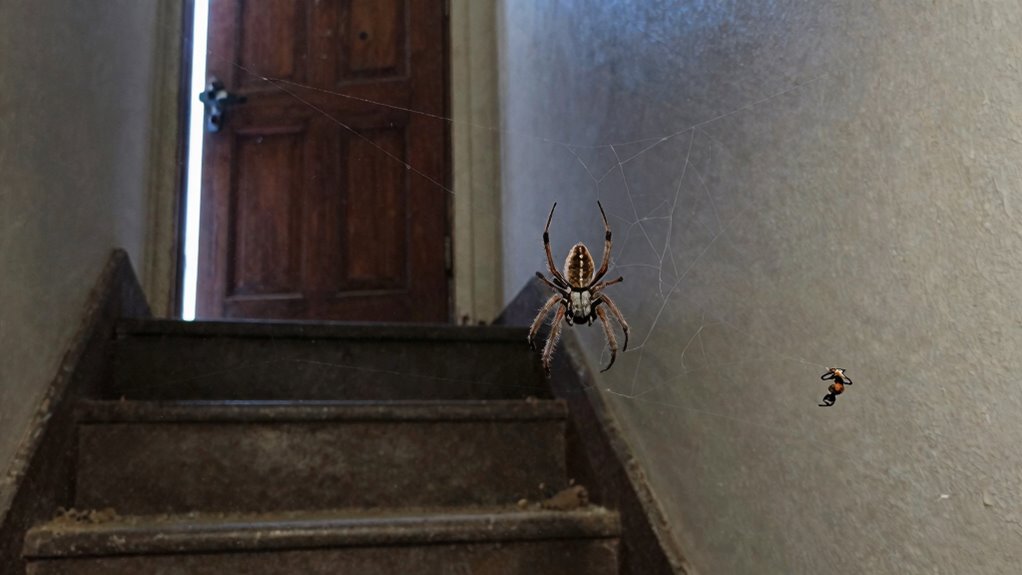
Spiders don’t care which room or floor they choose, they will settle anywhere from the attic to the basement.
Carpeted rooms often attract more pests, including spiders, because fibers provide hiding spots and a steady food supply.
That means a pest control inspection should cover every level, from ground floor to upper stories.
If you spot webs in bedrooms or bathrooms, professional spider removal can reduce the population quickly.
For long term prevention, focus on sealing cracks and reducing clutter in carpeted areas.
Many homeowners turn to pest management services to target hidden nests and interrupt the prey cycle.
Using a plant-based repellent spray can help block spider entry by creating an invisible barrier in these areas.
Room-Level Presence
Every corner of the house turns out to be fair game for spiders, as room type simply does not matter. Studies show spiders in 78.5 percent of all rooms, from attics to basements, since their presence is less about preference and more about opportunity.
Spider migration patterns are simple: they follow food and shelter. A kitchen attracts prey insects, while a bedroom offers dark corners for webs and a basement provides constant humidity.
Web durability factors like temperature and airflow vary by room, but spiders adjust. Cobweb spiders appear in 65 percent of rooms, proving they are not picky at all.
Make no mistake, no single room wins the spider sweepstakes, they are just opportunistic tenants. For effective pest control, focus on reducing their food supply rather than guessing which room they will haunt. To address this opportunism, natural peppermint oil sprays or scent pouches provide a safe, chemical-free, and long-lasting indoor spider deterrent that works regardless of room type.
A professional home inspection can identify hidden entry points and moisture issues that attract spider prey. Regular pest control services help break the spider food chain throughout your entire house.
Carpeted Rooms & Levels
Regarding real estate, spiders seem to care more about carpet than about location. Carpeted rooms host more spider types because fibers trap insects, warmth, and dampness.
A ground level den with shag attracts more prey than an attic without it. For pest control, understanding where spiders thrive helps you target prevention efforts.
Carpet acts like a spider hotel, offering warmer temperatures and higher humidity in basements. These conditions are perfect for web building and spider infestations.
If you want to avoid arachnids, check your floor coverings first during a home inspection. A rug free room upstairs is your best bet, as it lacks cozy hiding spots for creepy crawlies.
Remember that reducing carpet in high traffic areas lowers the risk of spider activity. This buyer intent insight can guide your choice of flooring materials for peace of mind.
Using Picaridin and IR3535 as safe repellents for young children can help reduce the insect prey that attracts spiders indoors.
Which Spider Species Are You Most Likely to Find in Your Home?
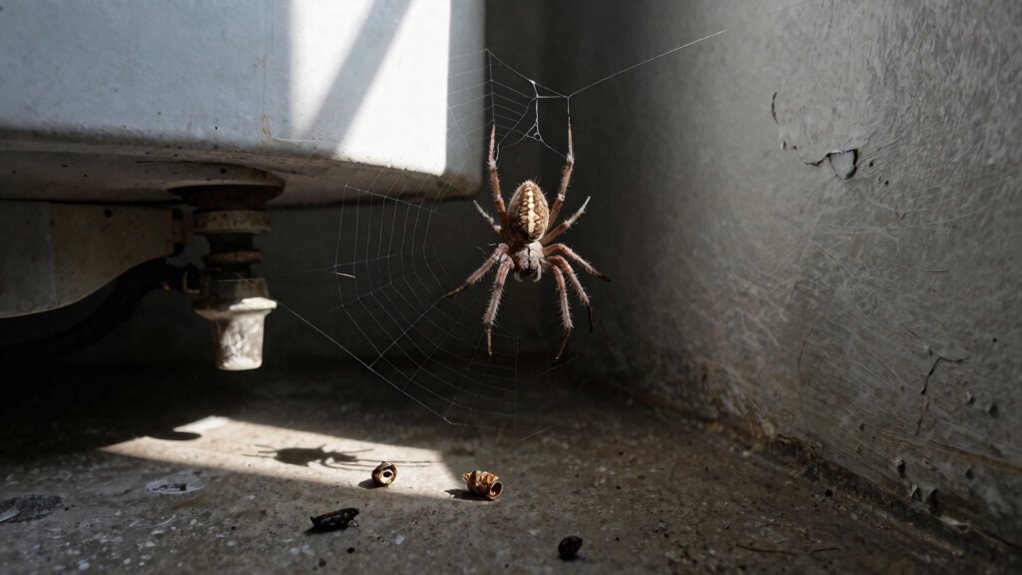
Cobweb spiders, scientifically known as Theridiidae, are the species you are most likely to find in your home. They turned up in 100% of houses surveyed and appeared in 65% of all rooms sampled.
Their spider behavior is largely sedentary, as they build messy, irregular webs in corners and wait for prey to stumble in. These web patterns are chaotic tangles, not the neat orbs you see in gardens, so think less art and more abstract sculpture.
Black house spiders prefer funnel-shaped webs near windows, which is a key sign to check during a routine pest inspection. Huntsmen, meanwhile, don’t bother with webs at all, as they roam actively for food and often startle homeowners mid-yawn.
Spitting spiders take a different approach by using venom squirts to trap prey, a bizarre trick that’s oddly effective indoors. If you’re looking for professional pest control options, knowing these species helps you identify what you’re dealing with before calling an exterminator. For long-term prevention, you can also place natural plant-based repellent pouches in corners and near entryways to deter spiders without using chemicals.
Spitting spiders use venom squirts to trap prey, a bizarre trick oddly effective indoors.
Key patterns to watch for:
- Cobweb spiders: tangled webs, high corners, so check ceiling edges and closet tops.
- Black house spiders: funnel webs, window frames, which are common entry points for indoor pests.
- Huntsmen: no webs, fast movement, so you’ll often see them darting across floors or walls.
Bottom line: cobweb spiders dominate, and expecting them is your first step toward effective home pest management. For long-term relief, consider sealing cracks and reducing clutter, or schedule a targeted treatment with a local pest service.
What Huntsman and Cobweb Spiders Reveal About Your Home’s Health
The same cobweb spiders in your ceiling corners and the huntsmen dashing across your floor are actually giving you a free home inspection.
Their presence and behavior reveal three key things about your home’s health.
Indoor humidity levels are a major clue.
Cobweb spiders thrive in damp spaces, so finding them in basements or bathrooms suggests wetness issues.
Excess humidity can invite mold or wood rot, so consider a dehumidifier for pest control around $40 to $150.
Seasonal migration patterns also matter.
Models with auto or continuous drainage minimize moisture buildup that attracts pests.
When huntsmen appear more often in autumn, they’re seeking warmth as temperatures drop.
This indicates your home may have drafts or gaps letting in cool air.
Sealing windows and doors helps reduce pest entry and improves energy efficiency.
Prey availability is another key factor.
Lots of spiders mean plenty of insects, which suggests crumbs, leaks, or clutter are feeding them.
A clean, dry home reduces both food sources and spider activity.
Bottom line: Spiders are your unpaid, eight legged maintenance crew.
They offer a natural warning about moisture, drafts, and insect problems.
Are These Spiders Dangerous or Peaceful Housemates?
Cobweb spiders have low venom potency and cause only minor local pain with no systemic effects. Black house spiders produce mild redness and itching that lasts a few hours.
Huntsman spiders are very low risk, with slight swelling that is rare. Spitting spiders have low venom and no significant symptoms.
White tailed spider venom is disputed, but symptoms range from mild to moderate with possible skin irritation. Only venomous widow or recluse spiders demand caution, and they are rare indoors.
Let these spiders hunt pests like flies and ants to earn their keep. They help control household insects without posing a real threat.
Let these spiders hunt flies and ants to earn their keep, controlling household insects without posing a real threat.
If you want effective pest control without chemicals, these peaceful housemates are a natural solution. For reliable spider prevention, focus on sealing cracks and reducing clutter. Ultrasonic plug-in repellers provide a silent, chemical-free supplement that can help deter pests from entering your home.
Why You Might See More Spiders at Certain Times of Year
Spider sightings spike when prey populations boom, and an increase in flying insects directly correlates with more web builders prowling the home. This is why you might notice more spider activity right after a warm, humid stretch that brings out mosquitoes and flies.
Autumn is prime season for males leaving their webs to search for mates, which explains why a wandering eight-legged bachelor might suddenly appear on the living room wall. If you need pest control for spiders, this seasonal surge is a common reason for calls from homeowners.
During these times, especially late summer and fall, a spider’s sudden appearance is less about invasion and more about seasonal opportunism. It’s a brief, predictable surge in their natural life cycle, not a sign your home is unusually dirty or neglected.
Understanding this pattern helps you plan ahead, whether you want to seal cracks, reduce outdoor lighting that attracts prey, or schedule a professional spider treatment. Many folks find that a targeted pest control service in early fall keeps those wandering males from becoming frequent indoor visitors.
A few simple home maintenance steps can also make a difference, like keeping windows screens intact and clearing away clutter near doors. If the sightings become frequent, a local exterminator can assess entry points and apply barriers that reduce both spiders and the insects they chase.
The key takeaway is that this timing is predictable, so you don’t have to feel caught off guard. By acting before the peak weeks, you can enjoy your living space with fewer unexpected eight-legged guests. Using non-toxic, chemical-free traps outdoors can also help reduce the flying insect prey that attract spiders indoors.
Seasonal Prey Abundance
House flies peak in late summer, which pushes web-building spiders into tight corners and ceiling edges. This is when you might first notice an uptick in spider activity near windows and light fixtures.
Ant colonies migrate indoors by fall, and that movement attracts hunting spiders like sac spiders and wolf spiders that follow the scent trails. If you want to reduce spider sightings, focus on sealing cracks around doors and baseboards before the temperature drops.
Crickets seek out basements in winter, which lures stealthier, predatory species like cellar spiders and house centipedes into your lower levels. For effective pest control, a proactive approach targeting these prey insects will naturally minimize the spider population.
As spiders gorge on this seasonal buffet, they become more visible and often wander into living spaces. More bugs mean more spiders, so tackling the food source is the most practical first step. Using a slow-acting poison in bait stations ensures worker ants carry the bait back to the colony before dying, which disrupts the entire nest and reduces the prey that attracts spiders.
Your home is just their well-stocked winter pantry, with a side of drafty silence. For long-term prevention, consider scheduling a professional inspection to identify entry points and moisture issues that support this indoor pest cycle.
Mating Season Activity
Seasonal prey drives spider activity, but there’s another reason you might see more of them wandering around: mating season. In autumn, mature male spiders leave their webs to search for females, a journey that often leads them indoors to seek shelter and food.
This peak in spider reproduction means more males blundering into bathtubs, not because they want to, but because evolution says so. If you’re noticing more spiders in your home this fall, it’s time to call a pest control service for seasonal spider prevention.
After mating, females produce egg sacs, and hatchling dispersal sends tiny spiders out on silk threads drifting through open windows. That’s why you’ll find baby spiders in corners come spring: they’re not invading, just commuting through your living space. While you address spider activity, you can employ plant-based repellent balls near entry points to create a scent barrier that deters other pests like centipedes without harmful chemicals.
Bottom line: autumn brings dating spiders, spring brings baby spiders. Neither wants your toast, so let them pass, but if you want to reduce indoor sightings, schedule a home pest inspection for effective spider removal.
How Spiders Help Control Pests Like Cockroaches and Termites
Spiders naturally hunt cockroaches using webs or by chasing them down. They inject venom to quickly stop these common household pests.
Black House Spiders intercept termite swarmers near windows and lights. This prevents termites from starting new colonies inside your home.
These natural exterminators patrol your home around the clock. They require no feeding and their services cost you nothing.
Let spiders stay in corners and basements to do their job. You are just the landlord providing the space for free pest control. For homeowners seeking backup, gel bait stations offer a targeted way to eliminate roaches while spiders handle the rest.
How to Make Your Home Less Inviting to Spiders
Spiders are great roommates for pest control, but not everyone wants them as permanent guests. Understanding spider migration patterns helps because they move indoors when weather turns cold or prey is scarce.
To disrupt this, seal cracks around windows, doors, and foundations with caulk costing $5 to $10 per tube. Use weather stripping on gaps wider than a quarter-inch for effective spider prevention.
Regular web removal techniques are key to keeping your home spider proof. Vacuum corners, ceilings, and window frames weekly to eliminate both webs and egg sacs before they hatch.
Pay special attention to basements and attics for thorough spider extermination. Reduce outdoor lighting near entryways, as lights attract insects and those insects attract spiders.
Trim shrubs and vegetation at least two feet from your home’s exterior for a simple spider deterrent. Store firewood away from walls and keep interior clutter minimal.
Spiders love cardboard boxes and piles of clothes, so a clean home breaks their travel routes. With these professional pest control tips, yours becomes a less appealing stop on their journey.
Applying diatomaceous earth along baseboards and entry points creates a lasting physical barrier that dehydrates and kills crawling insects on contact.
Why You Should Never Kill a Spider in Your Home
Killing a spider in your home is like evicting the only roommate who pays rent in pest control. Spiders are nature’s tiny exterminators, and understanding spider behavior shows they are not out to get you. They are just hunting flies, moths, and cockroaches. With Wondercide Indoor Pest Control, you can also manage pests without harming these helpful predators. Arachnid ecology reveals they are a vital part of the indoor ecosystem, keeping pest populations in check for free. A single spider can eat dozens of insects daily, saving you from sprays or traps. Almost all house spiders are non-aggressive and venomous only to bugs, not people. Fewer insects means less dust mite activity and fewer irritating particles. If you want effective home pest prevention without chemicals, let these harmless hunters stay. Professional pest control services often recommend preserving natural predators inside your home. Spiders help with cockroach control and fly reduction around the house. Spiders are mostly harmless and offer free extermination services year round. Consider relocating them outside instead of killing them for a greener approach to pest management.
Frequently Asked Questions
Why Do Some Homes Have More Spiders Than Others?
Consider climate zones first. Warmer, humid regions support more insects year round, attracting spiders with steady food.
Those outdoor lights at night act like a moth magnet. Windows and porch bulbs invite prey, then eight legged followers move in.
Homes bordering woods or gardens boost spider traffic. You’ll often see more crawling pests near leaf litter and mulch beds.
Inside, cluttered basements offer prime web real estate. Basements host unique species like cellar spiders, while carpeted rooms see more diversity.
Essentially, spiders move where food, shelter, and mates gather. Your home’s setup just makes it a better rental for them.
To reduce infestations, focus on moisture control and sealing cracks. Professional pest control treatments target webs and nesting spots directly.
For long term relief, pair sticky traps with perimeter sprays. This buyer ready strategy cuts down both prey insects and spider populations.
Can Spiders Enter My House Through Drains or Vents?
Yes, spiders can enter your home through drains or vents. Spider migration often happens via pipes and unsealed openings around your property.
To prevent this, install vent screening with 1/16 inch holes, which costs about $5 per roll. Block drainage pipes with fine wire mesh or silicone caulk to stop common house spiders from sneaking in.
Most spiders are small enough to fit through tiny gaps. One pest control expert joked that a spider’s life is just “found a crack, found a snack.”
To keep your home pest free, check vents and drains regularly for gaps. If you skip this step, you may need to buy spider traps or call an exterminator for spider infestation control.
Using spider proof screens on all exterior vents is a smart purchase for long term prevention. Pair this with drain pipe covers and caulk around plumbing to seal entry points for spiders and other pests.
For effective spider proofing, inspect your basement vents, bathroom fan vents, and laundry drain lines. A quick DIY pest control check now can save you from costly spider removal services later.
Do Spiders Lay Eggs Inside Homes and Create Infestations?
Yes, spiders do lay eggs inside homes, and females often hide their egg sacs in quiet spots like behind furniture or in basements. Each sac can contain dozens of baby spiders, which hatch and quickly spread out to find their own hunting grounds.
That sudden appearance of tiny spiders isn’t necessarily an infestation, it’s just a natural part of their life cycle. You are essentially hosting a pest control squad that eats flies, ants, and other bugs for free.
If you want to prevent spider egg sacs from hatching indoors, start with regular vacuuming and sealing cracks in walls and foundations. For a more proactive approach, use a residual spider spray or insecticide dust in attics, crawl spaces, and baseboards.
Buying a quality pest control product like a long lasting spider repellent can stop egg sacs from being deposited in the first place. Many homeowners find that a simple shop vac quickly removes visible sacs and wandering spiders.
If the population feels overwhelming, consider an indoor bug barrier spray that targets spiders and their food sources. The key is to combine cleaning, sealing, and targeted treatments to keep your home spider free without harsh chemicals.
Are There Smells or Natural Repellents That Spiders Hate?
Yes, spiders absolutely hate strong scents, and peppermint oil is the most practical natural repellent you can buy. For a quick DIY spray, mix 10 to 15 drops of peppermint oil with water in a spray bottle for around $8, then apply it to corners, baseboards, and windowsills every week.
This targeted application hits the exact entry points where spiders sneak in, making it a smart first-line defense for home pest control. Alternatively, a vinegar spray made from one part vinegar and one part water disrupts their sensory systems, though the smell can remind you of a salad gone wrong.
Both options are cheap, non toxic, and safe for kids and pets, which makes them ideal for routine spider prevention. While they won’t banish every eight legged guest, they effectively reduce spider activity in high traffic areas like closets and garages.
For buyers looking for a low cost solution, peppermint oil offers the best value and a pleasant scent, while vinegar works as a budget friendly backup. Focus on door thresholds, cracks in walls, and utility gaps, and reapply after cleaning or rain to maintain a protective barrier.
These natural repellents are perfect for eco conscious homeowners who want an integrated pest management approach without harsh chemicals. If you need long term relief, combine these sprays with sealing gaps and reducing outdoor lighting to minimize spider habitats near your property.
Can Spiders Survive Indoors Without Any Food Source?
Spiders cannot survive indoors indefinitely without any food source. Their survival depends on catching prey like flies, ants, or other small insects.
If no food is available, a spider will starve within weeks unless it enters a hibernation-like state called diapause. Even then, without occasional prey, it won’t last long.
Here’s the practical truth for pest control. If you have spiders indoors, you almost certainly have a hidden insect problem.
Think of spiders as your unpaid pest patrol, alerting you to a bigger issue. To get rid of spiders for good, you must first eliminate their food supply.
Use targeted insect baits and sprays to remove the flies and ants they eat. A professional grade spider repellent can then keep new ones from moving in.
Bottom line for homeowners and property managers. No food means no long term spider tenants, so focus on comprehensive pest control.


