
Keeping cockroaches out of your house doesn’t require expensive sprays—just a smart strategy that cuts off their food, water, and hiding spots.
In this guide, we’ll show you how to seal entry points, fix leaks, and use targeted gel baits that actually work, even against resistant roaches.
From silicone caulk and copper mesh to sticky traps and fipronil-based baits, you’ll learn the exact $2-to-$5 fixes that make your home uninviting.
We’ll also cover daily habits like wiping counters and taking out trash that keep these pests from ever settling in.
By the end, you’ll have a clear, budget-friendly plan to reclaim your space and prevent future infestations.
At A Glance
- Seal all cracks and gaps with silicone caulk and stainless steel wool.
- Fix every leaky faucet and pipe to eliminate water sources.
- Store food in airtight containers and take out trash nightly.
- Clean kitchen surfaces and floors daily to remove crumbs and grease.
- Use gel baits and boric acid instead of spray insecticides.
Why German Cockroaches Invade Your Home
The German cockroach isn’t just a pest; it’s a squatter with a résumé. It invades homes for three things: warmth, water, and darkness.
German cockroaches aren’t just pests—they’re squatters chasing warmth, water, and darkness.
Unlike silverfish, which favor damp basements, roaches follow outdoor lighting at night and sneak in through tiny cracks. They are drawn to kitchens and bathrooms, where leaks and clutter mimic their natural habitat.
Their flat bodies slip through gaps as thin as a dime. Once inside, they breed fast, and a single female can produce hundreds in months.
They do not need a welcome mat. Just a damp pipe or a forgotten crumb will do.
The bottom line for effective pest control is to seal cracks, fix drips, and reduce clutter near sinks. This cuts off their entry and shelter, making your home less inviting than a motel with no vacancy.
Remove Food Sources That Attract Roaches
Cockroaches, especially the German variety, are not picky eaters. They are opportunists with a keen sense of smell that feast on crumbs, grease, and even cardboard. Removing their food sources is the key to effective pest control. Sweep or vacuum floors daily to get rid of accessible snacks. Store all pantry items in airtight containers to block scent trails. After feeding your pet, put their food away to eliminate easy meals. Wash dirty dishes immediately to deny moisture and scraps to these pests. Take out the trash nightly, even if it is not full, and use a bin with a tight lid. This cuts off breeding fuel and interrupts the roach life cycle. Fix leaky faucets because roaches need water almost as much as food. Keep counters spotless and store spices in sealing containers. A clean kitchen is your best defense, not just a cosmetic choice. For persistent problems, using a targeted bait like boric acid powder can provide long-lasting control when placed in cracks and behind appliances.
Why Pest Sprays Fail Against German Cockroaches
Many homeowners reach for a can of bug spray first, but those pyrethroid based aerosols are a gamble at best.
The dirty secret is that German cockroaches have built near universal resistance to them.
This insecticide resistance comes directly from roach biology.
These pests breed fast with short life cycles and pass resistance genes to offspring like a nasty family heirloom.
Lab tests show less than 20% of German roaches die after 30 minutes of direct spray exposure.
Lab tests show less than 20% of German roaches die after 30 minutes of direct spray exposure.
The residue barely slows them down.
The sprays take eight hours to five days to kill, leaving plenty of time for survivors to scatter and reproduce.
So that can of spray is mostly just a waste of money.
The bottom line is that consumer sprays fail because roach biology outsmarts them.
For effective German cockroach control, you need targeted gel baits and integrated pest management strategies.
Boric acid sprays can serve as a supplemental topical treatment, but always follow label directions to avoid overuse risks like burning or redness.
Fix Leaks to Stop Cockroach Water Sources
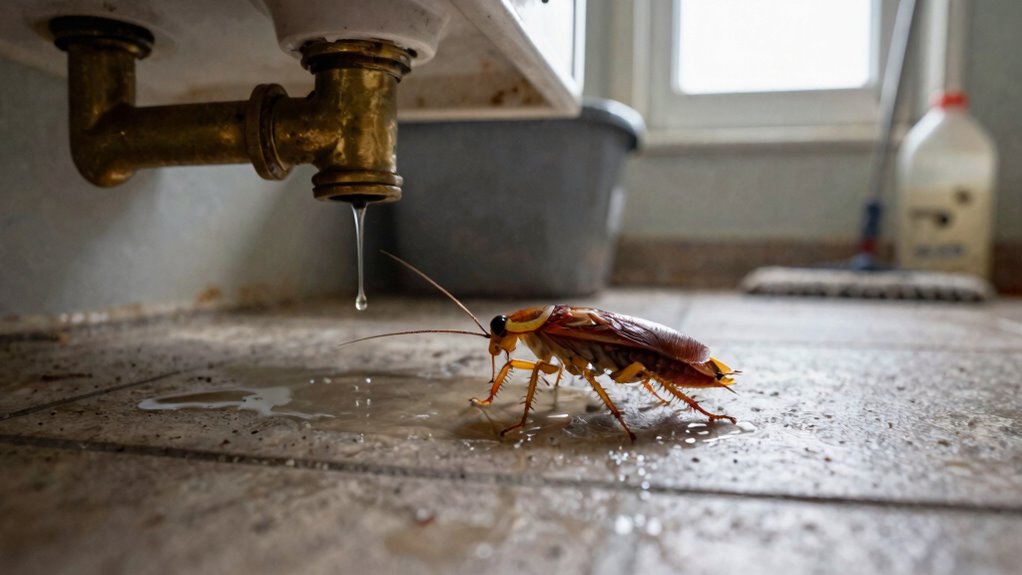
A slow drip under the sink is basically a glowing vacancy sign for cockroaches. They can survive a month without food but only a week without water. Leaky faucets and dripping pipes become an all you can drink buffet for these pests.
Tighten that faucet handle or replace a worn washer for about two bucks. For sweating pipes, wrap them with insulation tape from a hardware store. Check under sinks, behind the fridge, and near the water heater for moisture.
A single leak keeps roaches hydrated and happy, so don’t give them that advantage. Patch it, dry it completely, or call a plumber if needed. Spend five minutes now to save fifty hours of roach stress later. For storing produce, airtight lids with locking buckles can similarly prevent pests by blocking odors and entry.
The bottom line is simple: no water means no roaches.
Seal These 5 Crack Hotspots for Roach Control
Five specific crack hotspots deserve your caulk gun’s full attention.
Start with pipe entry points under sinks, these gaps are cockroach superhighways. For damp areas under sinks, use stainless steel wool for a rustproof seal.
Then, seal along baseboards, especially where flooring meets walls. Even a hairline crack is an invitation for roach invasion.
Next, focus around window frames and door jambs. Look for actual gaps in the caulk, not the weather-stripping.
Fourth, check where cabinets meet walls. These hidden crevices are prime entry points for hungry roaches seeking food.
Finally, don’t forget the corners where walls meet ceilings. It’s a sneaky route for pests to travel undetected.
Effective crack sealing here, using a quality silicone caulk at about $5 per tube, blocks 90% of common entry points. A small weekend project offers a big payoff for peace of mind.
Weather-Strip Doors and Windows to Block Entry
Weather-stripping is the unsung hero of home defense. Doors and windows are basically welcome mats for roaches if even a credit-thin gap exists.
Weather-stripping is the unsung hero of home defense against roaches.
A proper weather stripping replacement fixes this fast. Use materials like V-strip or foam to seal drafts and block pest entry. For a standard 36-inch door, a $15 kit can keep bugs out for years.
Windows need adhesive-backed foam applied around the edges. This costs about $10 per window and easily closes those tiny gaps where insects squeeze through.
Check the bottom sweep of your door too. Worn sweeps let cockroaches crawl right underneath, so replacing them is a simple pest control fix.
This isn’t glamorous work, but it is cheap and effective. Sealing entry points beats spraying poisons that fail to kill the infestation. Effective sticky traps can also be placed near these sealed entry points to catch any roaches that still sneak through.
Bottom line: install fresh weather-stripping on every exterior door and window. You will cut off a major cockroach highway and reduce pest problems fast.
Why Cardboard Boxes Are a Cockroach’s Best Friend

That cardboard box in your closet might look like storage, but to a cockroach, it’s a five‑star hotel with free room service.
These insects love cardboard since it’s dark, warm, and holds their scent, making it a perfect hidden harborage.
They eat the glue and paper fibers too, turning your boxes into a buffet.
Cardboard shelter traps dampness from humidity, creating an ideal breeding ground for cockroach infestations.
Glues and inks in boxes contain starches and sugars that pests actively seek.
Stacked boxes create narrow gaps, giving roaches safe travel routes between food sources.
Cardboard’s porous nature absorbs pheromones, attracting more cockroaches to the area.
For effective pest control, the best practice is to transfer all dry goods into plastic or glass containers with airtight seals that keep pests out.
Throw away empty boxes immediately, because the roach hotel is never checking out on its own.
This simple cockroach prevention tip can stop an infestation before it starts.
Clean Drains for Immediate Cockroach Control
Kitchens and bathrooms turn into all-you-can-eat buffets for cockroaches when drains go neglected.
A quick weekly flush with hot water, followed by a stiff drain brush scrub, clears out the slimy biofilm they love to feast on.
That routine costs less than a fancy coffee and drastically reduces roach attractants.
For extra cockroach control, seal every gap around pipes under the sink with caulk or plumber’s putty.
This cheap, do-it-yourself pest prevention step blocks entry points before bugs wander in.
It beats spraying expensive chemicals into thin air that miss the actual hiding spots.
Instead, target the source with drain maintenance and pipe sealing for immediate results.
You’ll cut off their food supply and travel routes in one afternoon.
Use a flashlight to check for cracks near wall penetrations and cabinet joints, then apply sealant for long-term roach prevention.
Pair that with weekly drain flushes, and you can skip harsh foggers altogether.
Buy a quality drain brush and a tube of silicone caulk from any hardware store for under twenty bucks.
These simple tools give you professional-grade pest control without a technician visit.
Keep the water running hot for two minutes after scrubbing to wash away loosened gunk.
Repeat this habit every Sunday, and you’ll notice fewer roach sightings within a month.
Regular Drain Cleaning
Regular drain cleaning is one of the best pest control steps you can take to stop cockroaches before they start.
Even the cleanest kitchen can turn into a cockroach nightclub if drains are neglected.
Consistent maintenance keeps pipes unclogged and less inviting for roaches.
Sink hygiene means no food debris lingering in the drain trap.
This is a cockroach buffet you need to shut down.
Weekly enzyme treatments break down organic gunk and reduce attractants naturally.
Baking soda and vinegar flushes create a fizzy reaction that dislodges biofilm.
Manual trap removal every two weeks allows for thorough scrubbing of hidden residues.
Use a drain brush to scrape interior walls and remove egg cases and slime.
The payoff is immediate with fewer cockroaches and less odor.
Your pipe will actually drain fast.
This is the cheapest, simplest pest control step and it costs pennies with zero fancy equipment.
Products that dissolve organic buildup in drains eliminate the breeding ground for flies and other pests.
Sealing Leaks and Pipes
| Location | Common Gap Size | Recommended Sealant |
|---|---|---|
| Under kitchen sink | Up to ⅛ inch | Silicone caulk |
| Bathroom pipes | ¼ inch or less | Caulk or expanding foam |
| Water heater lines | Small cracks | Heat-resistant caulk |
| Basement floor drains | ½ inch gaps | Hydraulic cement |
| Laundry room hoses | Tiny openings | Silicone sealant |
Don’t just caulk and forget. Inspect monthly to catch roach entry points early.
It’s like fixing a screen door on a submarine. One tiny hole ruins everything, so seal those pest pathways fast.
For stubborn gaps, use copper mesh stuffed tight, then caulk over it. That blocks rodents and insects from chewing through.
Cost? Under $10 total for a full pest-proofing kit. The payoff? Fewer roaches, peace of mind, and a cleaner home.
Check under sinks and behind appliances with a flashlight every month.
If you see droppings or grease marks, reseal immediately before pests settle in.
Use heat-resistant caulk near water heater lines to avoid fire hazards while keeping bugs out.
Hydraulic cement on basement drains stops both moisture and cockroach invasions at the source.
Simple.
Affordable.
Effective.
Using regular enzyme drain cleaners monthly will gradually digest organic gunk that attracts cockroaches and other pests.
Stop Giving Roaches a Place to Hide Near Appliances
Pull appliances out and vacuum crumbs weekly, especially under the fridge’s cooling coils to remove food debris that attracts roaches. Seal gaps around appliance bases with silicone caulk, since roaches squeeze through cracks as small as 1/16 inch.
Vacuum crumbs weekly and seal base gaps with caulk—roaches exploit cracks as tiny as 1/16 inch.
Store pet food bowls only during feeding time, because leftover kibble invites these pests overnight and gives them a steady food source. Check for empty, corrugated cardboard boxes behind the microwave, as roaches love nesting in those dark, warm layers.
Eliminating hiding spots near heat sources cuts off their supply of shelter and warmth, which makes your home less inviting for pest control. This simple approach reduces the need for costly exterminator visits while targeting roach hotspots where they breed fastest.
For a thorough kitchen pest control routine, focus on appliance crevices and warm motor areas, since those are prime nesting zones. You can also use roach baits near these sealed gaps for extra prevention, but the caulk is your first line of defense against new invaders.
Taking these steps weekly helps stop an infestation before it spreads, saving you money on professional pest removal services. Keep the area dry and clutter free, especially around the stove and dishwasher, to deny roaches both moisture and hiding places.
Use IPM for Cockroach Control That Lasts
No single spray or trap will win a cockroach war. Integrated pest management, or IPM, pairs thorough sanitation with targeted repairs.
This approach hits pests from multiple angles at once. It is less about one magic bullet and more about stacking the odds.
This means roaches find no food, no water, and no way in. For lasting cockroach control, combine cleaning with sealing cracks and gaps.
Focus on eliminating moisture in kitchens and bathrooms. Use gel baits and insect growth regulators as part of your overall strategy.
Think of IPM as your complete solution for roach extermination. It requires consistent effort but delivers results that last.
For targeted chemical support, choose sprays that offer long-lasting residual protection to prevent re-infestation for months.
Sanitation and Repairs
Why start with a spray can when the real problem is a cockroach buffet? Sanitation and repairs are the real heroes in pest control, not chemicals.
Cockroaches need food and water, so cut off the supply first for effective cockroach treatment. Start with food storage by sealing everything in airtight containers.
Never leave crumbs or pet food out overnight to prevent pest infestation. Next, tackle waste removal by taking out the trash daily.
Use bins with tight lids and clean spills immediately to maintain a clean home. Grease buildup is a five-star restaurant for roaches.
Store all food in sealed containers, including pet food and pantry items, for top pest prevention. Take out trash every evening using bins with tight-fitting lids.
Wipe down counters and sweep floors nightly, especially near appliances, for best home pest control. Fix all leaks, even small drips, to eliminate water sources.
A clean, dry home is your best defense against cockroaches. Skip the spray and start here. For persistent problems, pair these efforts with bait stations that use fast-acting ingredients like fipronil to target hidden colonies.
Multiple Control Methods
Integrated Pest Management, or IPM, combines smart tactics like sanitation, repairs, and targeted products. First, identify your foe to choose the right pest control strategy.
A German cockroach is small and loves warm, damp kitchens. The brown banded cockroach prefers drier living rooms and bedrooms.
Different species require different approaches. Gel baits work wonders for eliminating roaches.
Squeeze dime sized dabs near hiding spots under sinks or behind fridges. They eat, return to the nest, and die.
For heavy infestations, use insect growth regulators, or IGRs. These prevent nymphs from maturing, acting as cockroach birth control.
Avoid sprays because German cockroaches resist pyrethroids. Place sticky traps to monitor your success.
If you see fewer roaches each week, you are winning. The bottom line is that IPM means using the right tool for the right roach.
It is not about spraying blindly. It is smarter, safer, and lasts longer for home pest control. Boric acid powder provides an effective fast-acting alternative by killing roaches on contact within 72 hours when applied to cracks and corners.
Weekly Sanitation Checks That Prevent Roach Resurgence
The weekly sanitation check is your best defense against a roach comeback, plain and simple. These weekly inspections act as resurgence prevention, catching small problems before they explode.
Think of it like brushing your teeth: skip it, and things get ugly fast. Wipe down all counters and stovetops, even when they look clean; grease film attracts roaches like free pizza at a party.
Empty and scrub trash cans weekly with a bleach solution, since that leftover spaghetti smell is a five star roach restaurant. Pull out appliances to sweep crumbs behind the fridge; a single cracker crumb can feed a whole colony for days.
Check under sinks for leaks and fix drips immediately, given that roaches need water more than they need your leftovers. This routine pest control check also helps you spot early warning signs before you need professional extermination services.
Staying consistent with these cleaning habits lowers your risk of a full infestation and saves you costly treatment later. For long term prevention, pair this weekly sweep with sealing cracks and using gel baits in high traffic corners.
You are essentially cutting off their food, water, and shelter, which is the core of any roach control plan. If you notice droppings or egg cases during these checks, act fast and schedule a targeted roach treatment.
Keep a simple checklist near your trash bin to track each weekly step, and you will maintain a defensible home. This is hands down the most affordable way to avoid emergency pest control calls down the road.
Make it a non negotiable habit, just like locking your doors at night, and you will stay ahead of the problem. After each check, note any sticky spots or moisture signs so you can fix them before they become a breeding ground.
If the problem escalates, consider using a quarterly fogging schedule to complement your sanitation efforts for long-term control.
Frequently Asked Questions
How Do Roaches Get Inside if All Cracks Are Sealed?
Even with all cracks sealed, cockroaches still get inside through overlooked entry points like gaps around pipes, vents, or drains.
They also hitchhike in on food delivery boxes, grocery bags, or secondhand items, which makes every incoming package a potential roach taxi.
Caulking every gap is smart but not perfect, since tiny openings under sinks or behind appliances often go unnoticed.
A single missed spot is an open door, and roaches can squeeze through gaps as thin as a credit card edge.
For a truly effective roach prevention strategy, pair professional-grade caulk with a targeted gel bait or insect growth regulator near moisture zones.
This combination covers the hidden entry points that sealing alone can’t address, and it directly targets the reproductive cycle.
If you are dealing with persistent infestations, consider a roach spray with residual action for baseboards and pipe entry points.
That residual barrier, combined with routine inspection of your home’s exterior, dramatically cuts the chances of a surprise invasion.
Remember to check your HVAC vents and floor drains, as these are common routes for American and German cockroaches in particular.
Sealing them with fine mesh or drain covers is a practical upgrade that many homeowners overlook.
Finally, inspect any used furniture or appliances before bringing them inside, and shake out cardboard boxes at the garage threshold.
Consistent sealing plus vigilance with incoming items is the real defense, and it saves you from costly exterminator callbacks later.
Can Cockroaches Survive in a Completely Clean Home?
Yes, cockroaches can survive in a completely clean home.
Even with perfect cleaning habits, they find hidden humidity behind appliances or under sinks.
Dark cracks and crevices provide ideal shelter for these pests.
Their survival doesn’t require your crumbs, just a drip or a damp leak is enough.
Think of it this way.
Cleanliness slashes their population but rarely eradicates them entirely.
Bottom line, you need to seal all gaps and fix every leak.
Then monitor regularly with quality pest control products.
A clean home reduces risk but never guarantees immunity.
For total protection, invest in professional grade cockroach bait stations and a targeted insecticide spray.
Are There Any Natural Repellents That Effectively Deter Roaches?
Diatomaceous earth is a fossilized algae powder that shreds roach exoskeletons. It works slowly but reliably for cockroach control and costs about $10 per bag.
This natural roach killer stays safe for pets once it dries completely. You should puff it into cracks and crevices where roaches hide.
Ultrasonic devices are often marketed as the latest pest repellent gimmick. In reality, they are basically overpriced noise makers that fail against cockroaches.
Independent tests show roaches often ignore these ultrasonic pest repellents. The insects have even been found nesting right next to them.
Skip the ultrasonic gadgets and stick with proven roach control methods. Focus on diatomaceous earth, bait traps, and ruthless sanitation instead.
That combined home pest control approach is the only repellent combo that actually pays rent. It stops infestations without costly failures or dangerous chemicals.
What Should I Do if I See a Single Cockroach in My House?
Seeing a single cockroach in your home demands immediate action. This sighting likely signals more hiding nearby, not a lone wanderer.
Inspect dark, warm spots like behind the fridge and under the sink right away. Seal cracks with caulk and eliminate food sources by wiping counters clean.
Set out gel baits costing around $10 for effective cockroach control. They outlast sprays and target infestations at the source.
Don’t panic, but treat the sighting like a warning light for pest treatment. Ignoring it is like leaving one potato chip in the bag, tempting trouble.
If you want a long term solution, consider professional pest control services. For a quick DIY fix, gel baits are our top recommended roach killer.
How Quickly Can a German Cockroach Infestation Grow?
A German cockroach infestation can grow fast, with a reproduction cycle of roughly 50 to 60 days from egg to adult. Their population can double every month or two, meaning a single female can spawn thousands in a single year.
This makes them one of the most efficient breeders among household pests, so one sighting often signals a hidden colony nearby. That is why quick pest control action matters, not a casual wait and see approach.
Ignoring even one cockroach is like ignoring a leaky faucet, it only gets worse and faster than expected. For effective german cockroach treatment, you need professional grade roach baits and insect growth regulators to break the cycle.
Buying a complete cockroach elimination kit can stop an infestation before it explodes into a full blown problem. Don’t wait for more signs, the best roach control starts with the first sighting.


