
Do ant baits work? Yes—but only when you use the right setup for the specific pest.
Argentine ants, for example, need liquid bait, not dry granules, and the poison must be slow-acting so they share it with the whole colony before dying.
In 2025, the best home solutions use a precise imidacloprid dose and plenty of bait stations placed close together.
Below, we cover the top-rated supplies, what to skip, and which products actually deliver results for busy parents.
At A Glance
- Yes, ant baits work when formulated with liquid attractants and delayed-action toxins.
- Liquid baits like boric acid sugar water reduce ant activity by up to 74%.
- Granular baits fail because ants strongly prefer liquids and ignore dry particles.
- Delayed toxicity allows foragers to share poison with queens and larvae before dying.
- Deploy 50–250 stations per acre, refill biweekly, and shield baits from sun and rain.
Do Ant Baits Actually Work?
Precision is the key to effective pest control, and the short answer is yes ant baits genuinely work when you respect the science.
Precision is key to effective pest control: ant baits genuinely work when you respect the science.
A proper feasibility study showed liquid thiamethoxam at 0.0001% reduced vineyard ant activity by up to 74%.
This is not a lucky guess it is data.
An efficacy comparison also matters granular spinosad flopped completely while liquid spinosad crushed ants.
Same toxicant different result.
The lesson is formulation beats enthusiasm.
Your practical takeaway for ant baiting is to deploy 50 to 250 stations per acre.
Refill them biweekly and keep toxicants in the delayed toxicity zone with death in one to four days.
This allows workers to carry the bait home.
For instance, borax is a slow-acting poison that allows foragers to return to the colony before dying, ensuring comprehensive control.
Done right you get colony wide wipeout.
Done wrong you have simply fed the ants.
The bottom line is read the label and measure your coverage.
The bait does the heavy lifting for you.
Always check for homeowner ant control options that match your specific infestation.
Why Do Argentine Ants Prefer Liquid Baits?
Argentine ants strongly prefer liquid food sources. Their natural diet is built around honeydew, the sweet fluid left by aphids and scale insects.
A worker ant’s body is perfectly adapted for carrying liquid, not for chewing dry particles. This is why liquid baits, such as a 0.5% boric acid sugar water solution, work so effectively. The boric acid in these solutions acts as a stomach poison that disrupts the ants’ digestive and nervous systems.
Studies show that these liquid baits can cut vineyard ant activity by up to 74%. For effective pest control, always choose a liquid bait over a granular option.
Liquid Sugar Diet
A sweet tooth is the Argentine ant’s defining trait, and it explains why liquid bait beats solid, every single time. Their ant biology runs on liquid carbs, so workers ignore dry granules entirely.
Sugar preference isn’t a choice; it’s survival. A bait station filled with sugary water gets found fast, thanks to trail pheromones, which is why targeted ant control services rely on this method.
Colony structure helps too, as millions of workers share one giant network, so poison spreads like gossip. Liquid toxicants hit the whole nest, not just the scouts, making them ideal for effective pest management.
Solid bait? They might carry it, but it’s processed by larvae first, slowing things down. For vineyards, that’s a problem, so choosing the right pest control solution matters for crop protection.
Liquid baits, boric acid at 0.5%, cut ant activity by 74%, which is a proven result for professional exterminators. Bottom line: match the bait to the bug, and for Argentine ants, liquid wins hands down. These liquid baits typically achieve full colony elimination within two to four weeks if the bait remains attractive and is replenished regularly.
Honeydew Dependency
Honeydew is the original sugar rush for Argentine ants, and it explains their stubborn preference for liquid bait. These ants evolved sipping the sticky output of aphids and scale insects, so their digestive systems basically expect a sugary drink, not a crunchy snack.
That is why granular baits often flop; workers just walk past them. Honeydew production is constant in summer, so ants never stop needing liquid fuel.
Liquid bait mimics that natural sweetness, making it irresistible to foragers. Bait formulation matters: too thick or dry, and ants ignore it.
A good liquid toxicant rides the same delivery route as honeydew, straight to the colony. The lesson is to skip the solids and give them the syrup they crave.
The whole nest will finally be hit for good. Abamectin-based liquid baits are proven effective against Argentine ants.
What Is the Delayed Toxicity Sweet Spot in Ant Baits?
The delayed toxicity sweet spot in ant baits is a narrow range of active ingredient. For imidacloprid, that sweet spot is 0.00071% to 0.0092% where the poison kills slowly enough for workers to carry it back to the nest. The mortality timing window is the real trick, since ants should die in one to four days.
Immediate death just wipes out foragers while the queen stays cozy and unbothered. That is why the colony impact threshold hinges on that balance, because a dose too low is a free meal and a dose too high acts as a warning sign. Nailing that timing means full nest collapse, which is the whole point of using ant baits for complete colony elimination.
When selecting bait for ant control, focus on that delayed toxicity window to maximize your pest management results. This sweet spot ensures worker ants survive long enough to share the poison with the entire colony. The right concentration makes all the difference for effective long term ant baiting. Selecting EPA-registered products ensures safety, efficacy, and reliable results.
Defining Toxicant Range
The entire trick to ant bait is killing ants slowly, which sounds backwards at first. The toxicant range, or sweet spot, is a precise spectrum of concentrations that allow foragers to survive just long enough to distribute the poison.
This is a tightrope walk in pest control. Too strong, and you kill the delivery system before the job is done.
Overdosing collapses the colony only at the entry point, so it never reaches the queen. Too weak, and ants develop tolerance, acting like they brushed their teeth with the stuff.
The sweet spot for imidacloprid, a common ant killer, sits between 0.00071% and 0.0092%. It is a biological race against time, not a simple kill-switch.
This is less about brute force and more about quantum sensing, calibrating precise lethal thresholds across ionic currents in ant nervous systems. The bottom line for effective pest management is to match the dose to the ant’s pace. For best results, select a bait that matches the ants’ dietary preference, such as dual-formula baits for both sweet- and protein-feeding species.
Mortality Timing Window
Timing is the unsung hero of ant bait science, and the sweet spot for mortality sits between one and four days.
If the toxicant kills too fast, workers die at the station before sharing the meal.
That wasted bait means your colony control fails.
Too slow, and the ants lose interest or the poison degrades from photodegradation exposure.
Imidacloprid breaks down in sunlight faster than a popsicle in Phoenix.
The magic window lets workers haul the poison back to the nest.
Larval trophallaxis spreads it colony wide for effective pest management.
Fipronil roach gels similarly exploit a delayed toxicity, achieving 97 to 99 percent eradication within two weeks in lab tests.
For most commercial baits, aim for 0.00071% to 0.0092% imidacloprid.
Shielding helps protect the bait from sunlight.
Bottom line: check your label, time your deployment, and let the ants do the heavy lifting.
One to four days is your sweet spot for killing an entire colony.
Choose the right timing window to maximize your elimination rate.
Colony Impact Threshold
A single ant’s last meal becomes the colony’s undoing only if the poison waits long enough to be shared. The sweet spot kills in 1 to 4 days, letting foragers spread toxicant to queens and larvae.
Too fast, workers die before sharing the bait. Too slow, ants lose interest in the feeding site.
This Goldilocks zone is critical for colony suppression. Get it wrong, and you are just wasting bait.
Foragers must live long enough to share the toxicant with the nest. Imidacloprid at 0.00071 to 0.0092 percent hits that sweet window. For example, fipronil-based baits kill foragers within hours yet allow colony eradication within days.
Boric acid at 0.5 percent and thiamethoxam at 0.0001 percent gave solid suppression results. Dense bait stations, 50 to 250 per acre, guarantee enough ants get dosed.
Low doses actually kill workers, not just queens. Match delay to station density, or you are just feeding fancy sugar water.
What Happens When Ant Bait Concentration Is Off?
Concentration is a Goldilocks problem in ant baiting. Get it wrong and you are either running a free diner or executing a few foragers while the colony chuckles at you.
Too weak, and you trigger sublethal effects: ants learn bait aversion, shunning the stuff like a bad diner. Too strong, and you kill foragers instantly, leaving the nest intact and amused.
That is why pros aim for delayed toxicity, a dose that knocks ants out in a few days, not seconds. Workers ferry the poison back to the queen and larvae before they drop.
Colony-wide wipeout. Check your label, mix your bait with care, and do not wing it.
Your bait is either a Trojan horse or a takeout menu. Ants will thank you by dying very slowly.
For lasting control, rely on secondary transfer, as poisoned pests carry the toxin back to the nest and spread it to colony members before dying.
How Many Ant Bait Stations Do You Need?
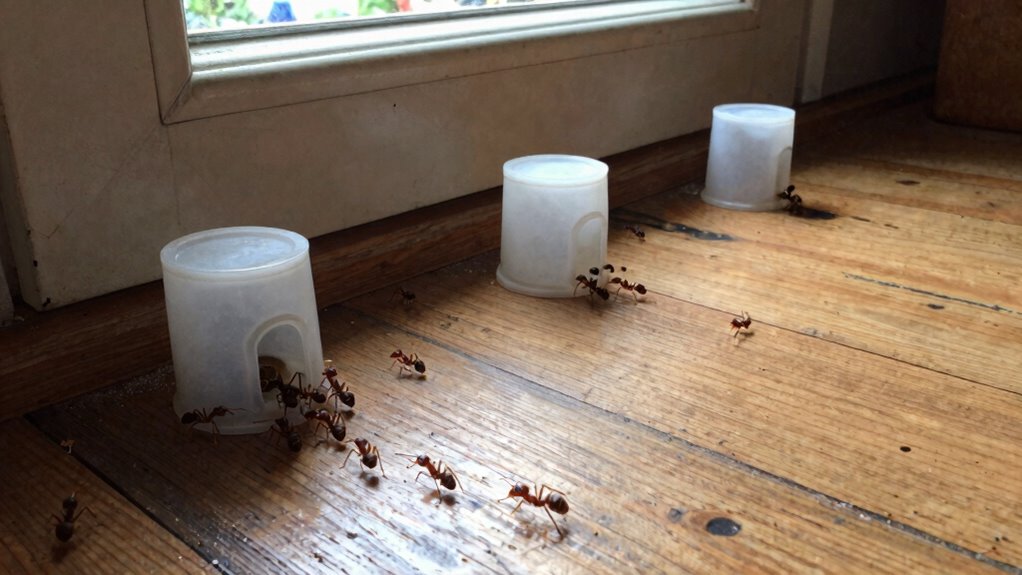
For Argentine ant control, you will typically need between 50 and 250 bait stations per acre. The exact number depends on how heavy the ant trails are in your yard.
Heavy trails require 200 or more stations to stop the infestation. Light invasions can be managed with just 50 stations spaced 20 feet apart.
Place your stations in early spring when ants are hungry and actively foraging. Refill every 14 days because stale sugar syrup just attracts more pests. Spinosad baits take 1 to 3 weeks to eliminate nests through slow colony elimination.
Start dense and watch which stations empty fastest. Adjust your placement based on which ones are getting the most action.
If baits stay full, move them to a better location. If all vanish quickly, you have nailed the treatment. That is the practical, cost effective path to total control.
What About Granular and Gel Baits?
When battling Argentine ants, granular baits are mostly a waste of money. Gel baits can knock out a colony, but only by accident.
Granulars rely on solid bait transport, yet ants prefer liquids. Workers ignore granules because their digesta flow is designed for liquids.
Granulars are a waste—ants crave liquids, and their gut just isn’t built for solids.
Solids get stuck in the infrabuccal sac, halting feeding. Gel baits work via ingestion versus contact toxicity, killing on touch as a fluke.
Bait station design matters greatly. Poor placement disrupts worker recruitment dynamics.
Liquid bait aging makes granules even worse outdoors. The bottom line is simple: granulars are a pass, gels a maybe.
For real ant control, go with liquid bait. Unless you like watching ants walk past your bait.
Don’t waste your cash. That is a solid no.
Save your money for syrup bait. Gels only work if ants touch them, which is rare. For reliable ant prevention, consider using diatomaceous earth as a mechanical barrier.
How Do You Match Bait to Argentine Ants?
In the pest control aisle, matching bait to Argentine ants comes down to one stubborn fact: the ants only drink. So skip the granules and grab a liquid sugar bait instead. These ants crave honeydew like it’s their job, making liquid baits the perfect tool for your home ant control strategy.
The real trick is pairing the right toxicant with the right timing. Bait station density matters, with 50 to 250 stations per acre covering their interconnected network. High traffic areas demand high coverage for effective carpenter ant and Argentine ant baiting.
Delayed toxicity timing is key, killing workers in 1 to 4 days so they spread the poison back to the colony. Use a dose of boric acid or thiamethoxam strong enough to kill queens, not just scouts. Refill every two weeks before sugar ferments and ants turn up their antennae. For example, TERRO’s liquid bait stakes are weatherproof and last up to three months.
When Do Ant Baits Fail?
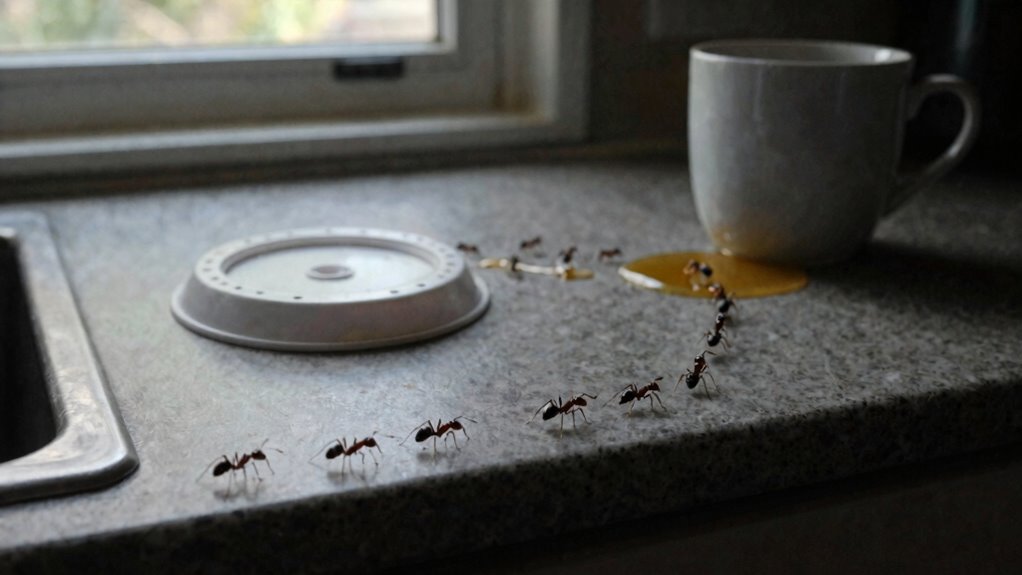
Ant baits fail for a handful of predictable reasons, and they all trace back to ignoring the ant’s biology or the toxicant’s chemistry. Poor bait container design is a classic culprit, as foragers simply cannot get in if the station leaks or the holes are too small for your target species.
That is like locking the buffet door for the whole colony. Then come environmental degradation factors like heat, UV light, and rain that can wreck the active ingredient fast.
A bait that works for two weeks in a lab might die in three days on a sunny patio. Imidacloprid, for instance, photodegrades quickly, so you need to protect your bait stations from direct sun.
Also, the concentration matters a great deal. Too strong kills workers instantly, sparing the queen and wasting your pest control efforts.
Too weak, and it is just a sugar snack that feeds the ants without solving the infestation. To get effective ant control, you should match the bait to the ant species and shield it from the elements.
Check those stations often to ensure the bait remains fresh and appealing. Otherwise, you are just feeding the neighborhood without achieving long term elimination of the colony. Similarly, roach gel baits often rely on colony elimination properties, which means the poison must be carried back to the nest rather than killing on contact, a principle that directly applies to why ant bait placement and non-repellent action are critical for success.
Frequently Asked Questions
Are Liquid Ant Baits Safe Around Pets and Children?
Liquid ant baits are generally safe around pets and children when you choose the right product. Most effective brands use low-toxicity active ingredients like boric acid at just 0.5%, which only becomes a concern if a pet somehow consumes the entire bait station.
The tamper-resistant plastic housing locks the liquid inside, so curious noses and little fingers can’t reach the gel. Place these ant bait stations under cabinets, behind appliances, or along baseboards, always out of paw’s reach and away from toddler play zones.
For a typical six-pack of liquid ant baits, you’ll spend around $8, which is a smart investment for ongoing ant control. These stations won’t win taste awards, but they’re not toxic enough to cause serious harm, unlike some spray insecticides.
When you’re shopping, look for child-resistant bait stations and check the label for “pet-safe” or “low risk” wording. This buyer-intent phrase matters because it confirms the formula won’t trigger vomiting, seizures, or emergency vet visits in most cases.
For long-term pest prevention, pair these liquid ant baits with routine cleaning and sealing entry points like cracks around windows and doors. That combination targets the colony at its source, reducing indoor ant populations without resorting to harsh chemical foggers or dusts.
Always read the full product label before purchase, and store any unused baits in a locked cabinet away from food and medicine. If you have an extra-curious dog or a toddler who puts everything in their mouth, opt for gel baits applied in thin lines inside professional-grade bait dispensers instead.
Monitor the bait stations weekly and replace them once they’re empty or after two months, whichever comes first. That practical maintenance step keeps your ant control routine effective and ensures the active ingredient stays fresh for the whole season.
Ultimately, with careful selection and proper placement, liquid ant baits are a dependable, low-risk solution for household ant infestations. Choose EPA-registered products, follow the dosage instructions, and you’ll keep your family and furry friends safe while eliminating those pesky trails for good.
How Often Should Bait Stations Be Refilled During a Season?
Refill bait stations every two weeks without fail. Sugar ferments quickly, and stale bait gets ignored by ants.
You might think you are saving time, but old bait just becomes ant food. Seasonal monitoring means checking stations weekly, especially in peak spring.
Skipping refills is like leaving pizza out. Eventually nobody wants it.
Mark your calendar, swap the bait, and stay ahead of the infestation. Consistent bait station maintenance is your best defense against stubborn colonies.
For serious pest control results, use a high quality liquid ant bait. Replace it on schedule and watch the population drop fast.
Can I Use Liquid Ant Bait Indoors for Argentine Ants?
Yes, liquid ant bait works indoors for Argentine ants. These pests crave sweet liquids and follow indoor trails like tiny commuters, making sugar based baits a perfect choice.
Place stations along those trails and refill every two weeks since sugar ferments over time. It is not glamorous, but this slow acting ant killer wipes out the entire colony.
One tip: skip granular baits because Argentine ants ignore them completely. The bottom line is that liquid ant bait, placed correctly, stops the invasion fast.
For best indoor pest control results, use a professional grade ant bait product. You want a solution that targets the queen and eliminates the source of the problem.
Do Ant Baits Work During Winter or Cold Weather?
Do ant baits work during winter or cold weather? Usually mostly no, but indoor ants are the exception.
Cold weather migration sends ants deep underground and slows their metabolism. Foragers vanish, so ant bait effectiveness crashes since poison never gets carried back.
You are just leaving out snacks nobody eats. It is like mailing a letter to someone who moved.
Outdoor bait? Wait for spring to use the best ant killer products. Indoor ants stay active and bait works fine there.
Bottom line: Save outdoor bait for warmer months and treat indoor trails now. Do not fight winter lawns with pest control treatments that fail.
What Is the Shelf Life of Commercial Liquid Ant Baits?
Commercial liquid ant baits typically last one to two years unopened. Shelf life depends on factors like toxicant type, sugar concentration, and container seal.
Storage conditions matter most, as heat and sunlight break down the poison. Always keep bottles below 80°F in a dark cupboard for best results.
Opened bait lasts roughly three months, so plan your pest control strategy accordingly. Think of it like milk, but for ants and you need to use it quickly.
Check the expiry date before buying to ensure maximum effectiveness. Store it right, and it will do the job just fine for your home pest control needs.


