
Preventing fruit flies doesn’t require harsh chemicals, just a smarter strategy. Cut off their food supply first by picking up fallen fruit daily—that’s where they lay eggs.
Double-bag infested fruit in plastic and solarize it in direct sun for three days to cook the larvae dead. Remove neglected host trees like rotting mangoes, as they act as an endless buffet.
For living fruit, net trees with 0.8mm mesh after petals drop or bag individual fruit while still green. Harvest early and let fruit ripen indoors to avoid attracting flies.
This method starves, blocks, and traps them without using any sprays. There’s more to the full strategy, and the next parts break down each step so you can get rid of fruit flies for good.
At A Glance
- Collect all fallen fruit daily and seal in plastic bags.
- Solarize infested fruit in direct sun for at least three days.
- Remove neglected host trees to starve pest populations.
- Harvest fruit green and ripen indoors to block egg-laying.
- Use simple traps with apple cider vinegar for early detection.
Clean Up Fallen Fruit to Kill Fruit Flies First
Since fruit flies are lazy, they’ll happily breed in any rotting fruit you leave lying around. The first step is simply cleaning up fallen fruit to stop an infestation before it starts.
Those moldy, bruised pieces are prime real estate for eggs. Collect every last one, especially from under trees where they’re easy to ignore.
Next, double-bag the infested haul in plastic and seal it tight. Then solarize the bags in direct sun for three days minimum, or seven if it’s below 30°C.
Double-bag infested fruit in plastic, seal tight, and solarize in direct sun for three to seven days.
This heat cooks larvae dead, offering a simple fruit fly control method. No need for fancy traps or chemical pest control yet.
It’s cheap, it works, and it stops the next generation cold. Think of it as housekeeping with a scorched-earth twist.
The bottom line is to pick up the mess, bag it, and let the sun do the dirty work. This preventive pest management step is your best fruit fly killer. After cleaning up, storing new produce in fruit fly proof containers with airtight lids and fine mesh screens will prevent reinfestation.
Bag and Solarize Infested Fruit
After cleaning up fallen fruit, the next step is bagging and solarizing the infested haul to finish the job. Bag solarization works like a tiny greenhouse, cooking larvae inside.
For this, double bagging is key. Place the fruit in one plastic bag, then slip that into a second.
Seal both tightly to trap heat and stop pests from escaping. Set the bags in direct sun for at least three days, or seven if it’s below 30°C.
This pest control method is cheap and effective, costing just pennies for bags. Plant-based or chemical-free commercial traps are also safe for use near food prep areas. It’s not glamorous, but it beats letting flies win your garden.
The bottom line is bag it, bake it, and break the cycle. Your compost pile will thank you, probably.
Use Nets and Bags to Block Fruit Flies
Patience has a price, and for fruit flies that price is a net. Netting installation is straightforward: drape fine mesh over trees or supports, sealing edges to keep females out.
Apply it after the first petal drops, but before fruit ripens. Bagging timing is just as critical: slip paper bags or reusable sleeves over individual fruit when they’re still green and hard.
This simple barrier works wonders, stopping flies cold without chemicals. Screen houses cost about $1.20 per square foot, a worthy investment for heavy infestations.
For small gardens, bagging fruit with newspaper is dirt cheap. The trick is to do it early, because timing is everything.
Miss the window, and you have just given flies a free lunch. Bottom line: nets and bags are lazy person solutions that actually work for pest control.
Install and bag on schedule, and you will harvest clean fruit without breaking a sweat. This method blocks fruit flies naturally and keeps your harvest safe. For maximum exclusion, choose ultra-fine mesh with 0.8mm holes to block even the smallest pests.
Harvest Early to Beat the Fruit Fly Peak
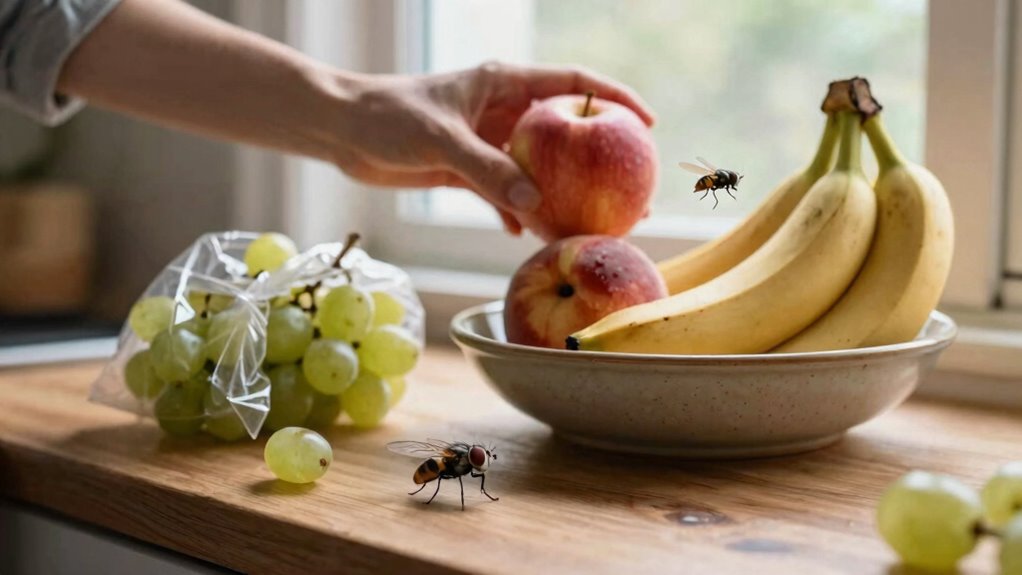
Picking fruit green is the simplest way to outsmart fruit flies before they can lay eggs.
This method effectively denies the pests access to ripening fruit by harvesting it early, then allowing it to ripen indoors where the flies cannot reach it.
It is a straightforward, low-effort tactic that completely bypasses the need for sprays or nets.
This gives the gardener a solid head start against a hungry fly peak.
By removing the fruit before it attracts pests, you stop the infestation cycle naturally.
Indoor ripening keeps your harvest safe and fly free without chemical control.
For best results, check your trees daily and pick fruit as soon as it shows color.
This early harvest strategy is your best fruit fly repellent for a clean, homegrown yield.
Using non-toxic, food-safe sprays on ripening fruit can offer additional protection indoors without risking kitchen safety.
Pick Fruit Green
Since you can’t outrun a fruit fly’s timeline, you cheat by moving the finish line. Pick fruit green, like papayas or ‘Sharwil’ avocados, when they are less than one quarter ripe.
This denies flies a chance to lay eggs, and it pairs well with solid pest monitoring. Traps detect the first adult flies, while careful species identification, such as telling Mediterranean fruit fly from vinegar flies, tells you exactly when to act.
By beating the pest peak, you skip the infestation race entirely, and that means no chemical sprays are needed. This simple timing shift works best for early-fruiting varieties, so you can protect your harvest without extra equipment.
One drawback is that some fruit won’t fully ripen off the tree, so test a small batch before committing to this method. If the flavor or texture falls short, adjust your harvest window by a few days for the next round.
Bottom line: harvest early, harvest green, and let the flies find nothing to fight over. This proactive approach keeps your orchard cleaner and your pest control routine far less stressful.
For additional protection, consider using non-toxic sticky tape to intercept any late-season pests crawling up nearby trees.
Indoor Ripening Method
The indoor ripening method is the loophole fruit flies never saw coming. Pick fruit green, way before it’s soft and sweet, when flies would normally pounce.
Then let it finish indoors, safely away from those pests. This works like a charm for papayas and avocados.
For indoor ripening, container selection is key. Use a plastic bin with a tight lid, or a paper bag, just no holes.
Put fruit inside, check daily, and eat as it ripens. One mushy banana left out ruins everything.
So bag it, bin it, beat the peak. It’s lazy gardening with zero regrets.
The best pest control trick is harvesting early. You can ripen inside and skip the fly drama entirely.
This method stops fruit fly infestations before they start. Anyone wanting a natural way to protect their harvest will love this. Bright yellow sticky traps work great for fungus gnats and fruit flies during indoor pest control.
Reduce Flies With Baited Traps

Trapping fruit flies won’t win the war, but it can hand you a few key skirmishes. Baited traps reduce adult numbers before fruit ripens, lowering infestation risk.
This isn’t a standalone solution, but it buys time whilst you tackle sanitation and exclusion. Here’s what makes baited traps worth considering for your pest control plan.
> This isn’t a standalone solution, but it buys time while you tackle sanitation and exclusion.
Apply liquid protein bait mixed with spinosad (GF-120 NF) to foliage, not fruit. This poisoned bait strategy kills adults during feeding, with low risk to beneficial bugs.
Diversion planting uses non-crop border plants sprayed with bait. Flies prefer them, leaving your crop alone for effective fruit fly control.
It’s cheap, clever, and skips direct fruit treatment. Commercial traps detect first arrivals, timing your spray exactly for maximum efficiency.
No guesswork and fewer wasted shots on your farm. Baits alone won’t stop an infestation, so pair them with sanitation and nets.
Think of it as a tactical assist for your integrated pest management plan. For outdoor fly control, consider non-toxic bait refills that use food-grade ingredients and are safe for kids and pets. It is not a magic wand, but a smart trap system worth adding to your toolkit.
Which Host Plants Attract Fruit Flies and Must Be Removed?
Baited traps are a good first step, but they only catch adults while leaving the breeding source active.
The real culprit is neglected host trees, like rotting mango or guava, which create an endless food supply for fruit fly control.
These unpruned, abandoned plants let pests reproduce nonstop, so removing them is the most effective pest management strategy.
It isn’t glamorous, but neither is finding maggots in your prize peaches, so take action before it’s too late.
Swap those host plants for non host shrubs, such as specific ornamental varieties that offer zero appeal to fruit flies.
The trick is to pull the plants before fruit sets, or at least before ripening begins, to stop the life cycle entirely.
For long-term protection, consider storing any saved clothing or fabrics in moth-proof storage bags to avoid a separate pest issue indoors.
If you keep host trees, you’re simply refilling their plate and inviting another infestation.
For long term fly prevention, eliminate neglected host trees, plant non host shrubs, and watch your yard’s pest population starve.
Stick to this removal guide and you’ll break the breeding cycle without relying solely on insecticides or sticky traps.
Homeowners who follow this host plant removal advice see a dramatic drop in fruit damage within one season.
Set Simple Traps to Spot Fruit Fly Activity Early
On a sweltering summer morning, a single fruit fly can turn a bowl of peaches into a wriggling nightmare. Catching them early is key, and simple traps are your best friend for pest monitoring.
These identification traps let you spot trouble before it explodes. For a homemade option, pour a few inches of apple cider vinegar into a jar, cover with plastic wrap, and poke small holes. Flies enter but can’t escape. Cost is practically nothing.
Commercially available sticky traps are another smart choice. Yellow cards coated with adhesive often include a pheromone lure. Unlike broader glue traps, these dedicated lures target specific pests without snagging non-target bugs. Hang one near fruit trees. A pack of five costs about five dollars.
Protein bait stations use a mix of liquid protein attractant and a tiny bit of spinosad, a low-toxicity insecticide. This targets adult flies before they lay eggs. Traps won’t solve an infestation alone, but they’ll tell you when to act.
Set them, check weekly, and start control methods at the first catch. Early detection stops a fruit fly infestation before it gets out of hand.
Frequently Asked Questions
Can I Compost Fruit That Has Fallen From Trees?
Composting fallen fruit is risky because it often harbors fly larvae and pests. Those pests can overwinter in your soil and cause bigger infestations next season.
Fallen fruit also attracts wildlife like raccoons, rats, and skunks. These animals dig through piles and can create a mess in your yard.
For effective pest control, double bag any infested fruit and seal it tight. Then toss it in the trash instead of your compost bin.
If you still want to compost, solarize the sealed bags in direct sun for three days. This heat treatment kills larvae and prevents pest outbreaks.
The smart purchase here is a durable, heavy duty compost bin with a tight lid. Look for models that keep rodents out and control odors.
Skip the fallen fruit in your open compost pile. Your garden health and your neighbors will thank you for choosing a cleaner approach.
How Long Do I Leave Nets on Fruit Trees?
Netting removal timing windows are key. Leave nets on until harvest, but remove them right before picking to avoid trapping pests inside.
For most fruit trees, apply nets after petal drop, roughly five to six weeks before ripening. Keep them on until you’re ready to pick.
Early removal invites fruit flies in, so delay taking nets off until fruit is fully ripe. Late removal risks damaging your fruit, so do not wait past harvest day.
A good rule is to take nets off only when you are ready to harvest that same day. This protects your crop from codling moths and other borers while ensuring you get clean, intact fruit.
For the best pest control results, pair netting with an organic repellent or trap system. Smart buyers also use net covers as a physical barrier against bird damage and sun scald.
Is It Safe to Eat Fruit Picked Early to Ripen Indoors?
Yes, it is safe, with one big caveat. Early harvest simply means picking fruit before flies get to it, avoiding those ripening risks outdoors.
If you pick it green and let it ripen indoors, you skip the infestation window entirely. However, check for any tiny puncture wounds, those are fly entry points.
No dimples? You’re golden. This method works well for papayas or avocados picked less than ¼ ripe.
Bottom line: safe, but inspect first. A little paranoia beats a mouthful of larvae.
For complete peace of mind, pair indoor ripening with a quality fruit fly trap or pest control spray near your kitchen. This practical prevention step stops any hidden eggs from hatching and keeps your home pest free.
Will Homemade Traps Work Better Than Store-Bought Ones?
Homemade traps can definitely outperform store bought options for small fruit fly or gnat problems. A simple jar with vinegar and a drop of dish soap often catches more pests than you expect, and it costs just pennies to set up.
Store bought traps usually run between five and fifteen dollars, but they might not work any better for a light infestation. The real edge of a DIY trap is that you can refresh the bait instantly, which keeps it effective for daily use.
However, homemade traps need constant emptying and refilling, especially in warm weather. Store bought glue traps or liquid stations can last for weeks without any attention, so they win on pure convenience.
You should choose a DIY bottle trap if you want a quick, cheap fix and you are okay with monitoring it. But for long term pest control, a commercial fruit fly trap will save you time and reduce the hassle of cleaning.
For anyone searching for targeted pest control solutions, think about the size of your infestation first. If you have a few flies near your kitchen sink, homemade bait is your best pest control product for the price.
If you are dealing with a recurring issue, spending a little more on a store bought trap with a pheromone lure gives you stronger pest management. Either way, always place traps near breeding sources like drains, compost bins, or ripening fruit for maximum results.
Before you buy anything, check the trap’s coverage area and how long the bait stays active. A DIY jar works great for one room, but a store bought device is better for an entire kitchen or basement.
The best approach is to start with homemade bait for immediate relief, then switch to a longer lasting option if the problem persists. That strategy keeps your pest control budget low while ensuring you get the best results for your home.
What Do I Do if I Find Maggots Inside My Fruit?
Finding maggots inside your fruit means fruit flies beat you to the harvest, so effective removal is your best move.
Double-bag that infested fruit in plastic, seal it tight, and solarize it in the sun for three days or seven if it’s cooler.
Bury fallen fruit deeply or stash it in an airtight container for four days to kill any lingering eggs.
Natural repellent options won’t help much now, so focus on sanitation instead.
The bottom line is to toss the infected fruit properly, and you’ll break the cycle.
For ongoing pest control, consider a fruit fly trap or organic insecticide spray for your kitchen and garden.


