
Getting rid of pavement ants doesn’t have to be a guessing game. If you’ve spotted tiny black ants marching along your driveway or kitchen floor, you’re dealing with a colony that needs two clear steps: seal their entry points and poison their trails.
This guide walks you through exactly how to do both, from caulking foundation cracks to placing bait stations where they work best. You’ll also get product picks that make the job fast and foolproof.
Keep reading for the tools you need to wipe them out for good.
At A Glance
- Seal cracks around foundation and windows with caulk or epoxy to block entry.
- Place bait stations near active trails for ants to carry poison to the colony.
- Eliminate food sources by wiping crumbs and spills, and storing food in sealed containers.
- Apply diatomaceous earth or soapy water as a chemical-free barrier around entry points.
- Reduce moisture by fixing leaks and improving drainage to remove nesting attractants.
What Are Pavement Ants and How to Spot Them?
Pavement ants are small, dark brown to black insects, measuring 2.5 to 3.0 mm in length. They have a distinct segmented two-node petiole that sets them apart from other common household ants.
These ants forage in trails for sugary and greasy foods, nectar, and seeds. They follow scent trails like tiny commuters, annoying but predictable.
Colonies can live up to five years. Reproduction peaks in late spring to summer when winged males and females swarm to mate.
Females then shed their wings to start new nests. Worker ants remain wingless and leave telltale soil piles near pavement cracks, your first clue for pest control.
Their natural enemies include spiders and birds. For a hands on fix, chemical free methods like sealing cracks or wiping trails with soapy water work wonders.
No need for harsh stuff, just persistence. Spot them early and you save hassle with ant control solutions. Boric acid-based powders provide targeted, long-lasting control for these ants when applied near entry points.
Why Pavement Ants Invade Your Home
Pavement ants enter your home for three simple reasons: food, shelter, and their frantic mating cycles. They crawl through tiny cracks in concrete and pavement, hunting for sugary spills or greasy crumbs.
Their late spring swarming behavior sends winged reproductives flying indoors by accident. Understanding these motives is key to effective pest control and long term ant prevention.
These pests are opportunists, not squatters with a lease. To stop a pavement ant infestation, seal cracks with caulk and remove kitchen crumbs daily.
Professional ant extermination services can target hidden nests under driveways or foundations. A clean kitchen and dry basement are your best home defense against these persistent invaders. Plant-based sprays formulated with peppermint, clove, or citrus oils provide contact ant kill and create a lasting repellent barrier on kitchen entry points.
Food and Shelter Needs
Cracks in a slab or a gap in a window seal might seem like minor annoyances, but to pavement ants they are open invitations. A literal open door policy for pests.
Their foraging patterns are the real culprit; they follow scent trails from their nest straight to your kitchen crumbs. Professional pest control can break these trails and eliminate the colony.
The colony diet is simple: sugars and greasy foods. So a spilled soda or a forgotten pet bowl is basically a four-star buffet for them.
They are not picky, they are practical. Once they find a steady food supply, they send out more workers to recruit the nest.
The result is a steady stream of ants marching across your floor. They invade for one reason: easy meals.
Remove the food source and you remove the invitation. It is that straightforward, embarrassingly simple, and mostly your fault if you ignore it.
For long-term prevention, seal entry points and schedule a home inspection for targeted ant treatment. Slow-acting poison ensures worker ants carry bait back to nest to kill the queen and colony.
Nesting in Pavement Cracks
Nesting in pavement cracks begins where concrete meets dirt along sidewalks and driveways. You can identify dark brown workers just 2.5 to 3.0 mm long with a two-node petiole.
Their colony lifecycle spans up to five years, starting when a queen sheds her wings. She digs in and raises her young under your pavement to start the nest.
Those small soil heaps next to your driveway mark their front door. They invade because your foundation offers warm, protected cracks for nesting and easy access to food.
It is not personal, just practical. Pest control experts recommend sealing cracks and removing food sources to stop their colony growth. For severe invasions, professional treatment may be necessary if DIY methods fail to control large colonies.
Seasonal Swarming Behavior
A runner spotting a pile of ants by the back door in late spring might wonder if they’ve done something wrong. The real culprit is seasonal swarming behavior, which drives pavement ants to invade homes.
Winged reproductives, often mistaken for alien ants, emerge from soil nests to mate and start new colonies. Here’s why this happens.
Mate seeking missions begin after warm rains. Winged ants swarm to find partners from other colonies, sometimes leading to territory disputes.
Competing nests may combine underground, creating larger, more aggressive populations that forage indoors. Concrete slabs trap warmth, drawing ants inside to nest under foundations or in basements.
These swarms are temporary but can signal a larger infestation. For long-term control beyond sealing cracks, applying perimeter bait granules around the foundation can suppress re-infestation for up to four weeks. A quick perimeter crack seal beats shouting “take me to your leader.”
Are Pavement Ants Dangerous? The Real Risks
Pavement ants are not dangerous in terms of bites or stings, as their tiny mouthparts cannot break human skin. The real risk is quieter and involves contaminating your food and slowly unsettling the ground beneath your slabs.
Large colonies can shift soil under driveways and patios, leading to uneven surfaces over time. This slow nuisance and structural nudge, not an acute hazard, is why homeowners seek pavement ant control.
To prevent these pests from entering your kitchen, seal cracks in your foundation and keep mulch away from your home. If you notice ant trails near your patio or driveway, professional pest management can protect your property from long term damage. A topical spray like EcoVenger Ant & Insect Killer offers immediate action using plant-powered ingredients that are safe for people and pets.
Health Risks & Nuisance
The true health risks from ants come from contamination, not bites. Food spoilage occurs as they travel through trash and scamper across countertops, spreading bacteria.
Unsanitary pheromone trails leave invisible residue that attracts more ants and dirt. These trails can lure secondary pests indoors, compounding the need for effective pest control.
Don’t expect a quick fix for an ant infestation. Tackling the source requires patience and a thorough approach.
Store food in sealed containers to prevent ant access. Wipe down surfaces with vinegar to disrupt their scent trails.
Seal cracks and entry points to stop them from coming inside. It is not dangerous, just annoyingly persistent, like a roommate who never cleans up their mess.
For a targeted solution, homemade borax bait combines sugar and borax to attract and eliminate ants by disrupting their digestive system, offering a low-cost alternative to commercial products.
Structural Damage Potential
Often overlooked, the real threat from pavement ants isn’t a bite. It’s the quiet, persistent digging happening right under your feet.
These tiny excavators, numbering in the thousands, displace soil beneath slabs and foundations. That can cause fine cracks in patios, driveways, and even basement floors.
Over time, uneven pavement becomes a tripping hazard. Proper weed control around the foundation reduces hiding spots, but moisture management is key.
Damp soil attracts nests, and a single colony can undermine a concrete walkway. That often leads to costly structural pest control repairs, sometimes hundreds of dollars.
So, though they won’t bite you, they’ll happily undermine your driveway. Keep an eye on soil heaps near cracks; it’s cheaper than a jackhammer.
For homeowners searching for ant extermination services, early detection of these soil piles can save you from major foundation settlement issues.
A professional pest inspection near your slab can confirm if pavement ants are active, and moisture reduction strategies like fixing leaky downspouts will help.
To target these hidden colonies, consider using bait stations that worker ants carry back to the nest to kill the queen and eliminate the source.
How to Find Pavement Ant Nests and Trails
Look for soil piles on driveways or patios, often near concrete joints. These small mounds mark nest entrances for pavement ants.
Follow their trails at dawn or dusk using a flashlight to spot lines of workers. They move toward food sources like spilled sugar or pet food.
Check warm areas near foundations, sidewalks, or baseboards for colony activity. Pavement ants thrive in hidden cracks and crevices around your property.
Focus on these signs and you will pinpoint the nest location. Use imidacloprid ant baits along active trails for the best pest control results.
Do not skip sealing entry points later to prevent reinfestation. This step is essential for long term ant elimination and home protection.
Seal Entry Points (and Where to Look First)
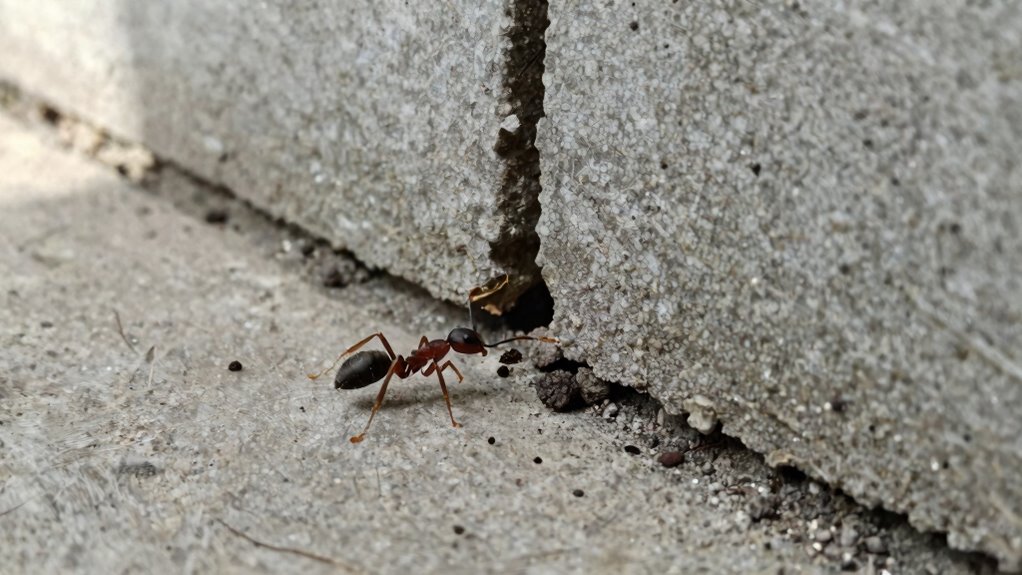
Finding every crack and gap where pavement ants sneak inside can feel like a game of hide and seek you didn’t ask to play. Start at ground level and examine foundation edges, window seals, and utility entry points for gaps larger than a credit card’s thickness.
Squeeze exterior caulk, which costs $4 to $8 per tube, into these openings. But don’t forget interior voids like baseboard gaps that often go unnoticed.
For persistent slab crack access, consider building simple moat barriers with diatomaceous earth or soapy water around indoor pet bowls. This pest control trick is cheap and oddly satisfying.
Infrared treatments, a professional tool costing $150 to $300 per inspection, can spot hidden nest pockets inside wall voids. You can use this service before sealing a single crevice.
Target the obvious first, such as patio expansion joints and driveway cracks near foundation soil. For a durable, long-term fix in these spots, use rust-resistant stainless steel wool to block gaps that ants may travel through. Seal every breach you find, then monitor weekly to see if the ant trail persists.
That stubborn trail will vanish once you block their highways. Use these practical tips to reclaim your home from pavement ants.
DIY Baiting for Pavement Ants: Where to Place Baits
Pavement ant control starts with smart bait placement. Since most DIY ant control fails here, think like a pavement ant to succeed.
These ants follow scent trails from their nest to food. Proper bait placement uses that predictable behavior against them.
Place bait stations directly on active trails where you see ants marching. They will carry the poison back to the colony.
Look for soil mounds near pavement cracks and position bait six inches away. Never put bait on top of the mound itself.
Indoors, ants follow edges along baseboards and walls. Drop bait there instead of out in the open.
Choose between sugary gel for sweet cravings or greasy paste for protein needs. Let the colony decide which bait it prefers.
Try both bait types to see which one attracts more ants. Let them feast, then watch them vanish.
For best results, use boric acid powder placed directly on their foraging trails so ants ingest it during grooming.
How to Disrupt Pavement Ant Scent Trails With Cleaners
Wipe away those invisible ant highways with a simple cleaner, no hazmat suit required. Pavement ants rely on scent trails to march from nests to your kitchen, so disrupting those paths breaks their line of supply.
A mix of vinegar and water works wonders for natural ant control. Spray it directly on trails and entry points, then wipe clean.
For stubborn marks, use a degreasing dish soap. Ants hate the residue, which disrupts their pheromone communication.
Vinegar and water neutralizes pheromone trails effectively. Dish soap breaks down grease trails and repels ants for pest prevention.
Beyond cleaning, focus on moisture reduction for long term home protection. Ants love damp areas near foundations, so fix leaky pipes and improve drainage.
Avoid piling mulch against your home to prevent ant infestations. Instead, maintain a gap and use yard lighting to spot trails after dark.
This simple routine keeps trails from rebuilding and makes baits and barriers far more effective for ant control, such as food-based botanical gels that create an invisible barrier ants dislike.
Treating Pavement Ant Nests Outdoors With Granules or Dusts
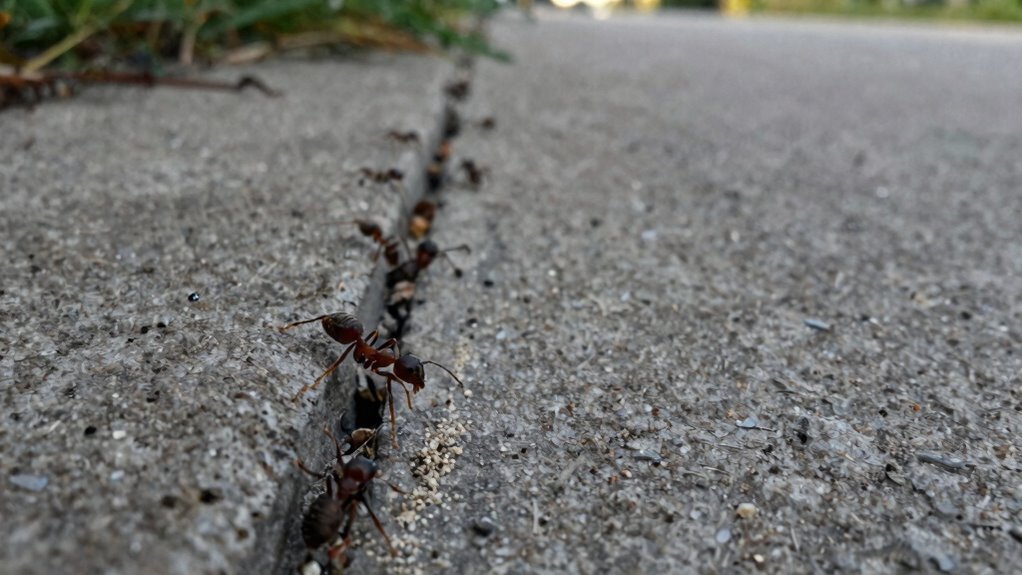
Once the trails are broken and the indoor buffet is closed, the ants’ home field advantage remains. Treating nests outdoors with granules or dusts targets the source directly, and it’s surprisingly straightforward for a DIYer.
Treating nests outdoors with granules or dusts targets the source directly, and it’s surprisingly straightforward for a DIYer.
For best results, apply on a dry day, lightly water granules in afterward, and reapply after heavy rain. Granules work well for perimeter pest control, so sprinkle them around nest openings and along the foundation edge. Apply granules evenly in a 6-10 foot band along the foundation for a proper barrier.
A 5-pound bag costs about $15, covering up to 2,000 square feet, which makes it a budget-friendly option for outdoor ant control. Dusts are another reliable choice, so puff them into cracks and crevices near pavement; they cling to ants’ bodies for deeper colony spread.
For safety, choose bird safe insecticides like spinosad or pyrethrin-based products, which break down quickly and won’t harm feathered visitors. Skip sidewalk pressure washing beforehand, as wet soil dilutes treatments; wait until dry to keep the active ingredients effective.
Bottom line: targeted granules and dusts beat sprays, so grab a shaker and get to work. This direct nest treatment approach reduces ant populations at the source, giving you longer lasting relief from outdoor infestations.
Change Your Yard to Discourage Pavement Ant Nests
Sealing cracks in concrete with a quality silicone caulk like GE Silicone II, which costs about six dollars per tube, blocks the main entry points for pavement ants. Trimming vegetation back at least twelve inches from the foundation and keeping mulch layers under two inches thick removes shelter and food sources near the nest.
These simple yard changes, paired with a little patience, make pavement ants think twice about setting up a colony under your patio.
For lasting pavement ant control, focus on eliminating harborage areas and preventing ant trails from forming near your home. Applying Talstar One Insecticide around the foundation creates a long-lasting barrier that further deters ants from entering.
Concrete Crack Sealing
Cracks in your concrete are more than a tripping hazard; they’re an open invitation for pavement ants to colonize beneath your slab. Sealing them with concrete crack repair methods like epoxy injection provides a permanent barrier against ant infestations and stops soil erosion under patios or driveways.
Start by cleaning and prepping the area: brush out all debris and dust, then apply a silicone-based sealant for hairline fractures. This cost-effective ant control solution runs $5 to $15 per tube and blocks common entry points for most household pests.
For larger fissures, use an epoxy injection kit priced between $20 and $40 to create a hard, ant-proof seal. This durable fill not only deters ants but also stabilizes the concrete against future shifting or water damage.
Don’t overlook expansion joints, which ants love for their loose gaps. Install a backer rod and top it with flexible caulk to complete your pest proofing around the entire perimeter.
This simple DIY pest prevention tactic cuts off their main nesting route, saving you weeks of baiting and repeated ant treatment costs. A weekend spent sealing cracks delivers long-term savings and reduces the need for professional extermination services.
Keep your expectations grounded: the finished look is purely functional, not decorative, but it works. Seal every crevice you find, and you’ll eliminate the highway that brings ants straight to your home’s foundation.
Vegetation Perimeter Control
You’ve sealed the cracks, so now it’s time to step outside and make the yard less inviting. Vegetation perimeter control is the simple art of trimming plants back from the foundation, at least 12 inches.
This denies pavement ants the moisture and cover they crave for nesting near your home. Understanding the ant life cycle helps here.
New queens need sheltered soil to start colonies, and thick vegetation provides perfect hideouts. By clearing it, you disrupt their colony hierarchy before it forms, reducing the chance of worker ants marching inside.
Trim bushes, pull ivy, and keep grass short. Don’t let shrubs touch the siding, ants use them as bridges.
It’s a low cost fix, basically just elbow grease and maybe $20 for pruners. Bottom line, a bare perimeter sends a clear message: no vacancy for pavement ants near your foundation.
Mulch Depth Management
A thin layer of mulch dries faster, making it less attractive for pest nesting. This low depth blocks ants and other insects from digging in your garden.
A bare strip of soil serves as a clear rodent barrier, discouraging many pests naturally. That gap acts as protection against common home invaders.
Proper drainage management prevents the damp soil that pests crave. This improves drainage and keeps your foundation dry.
Think of it as giving your house a dry moat. It is not glamorous, but it works for pest control.
For a few dollars in raking time, you gain real control over ant infestations. Pavement ants want comfort, so deny them that comfort and they will move.
This is a low effort, high impact tactic for effective pest management.
When to Call a Pro (and What They’ll Do)
Why bother calling a pro? DIY fails often with large, hidden colonies so professional ant control is your best bet. They will do a full perimeter inspection and target nests with strategic bait placement or dust applications.
Injecting insecticides into cracks and drilling under slabs may be needed for hard to reach areas. Expect to pay between $150 and $350 for a typical service depending on your home’s size.
Here is what a professional exterminator brings to the job. They have specialized gear like drills, injectors, and dust formulations you cannot buy at a store.
They guarantee results and will re treat for free if ants return within 30 days. There is no guesswork because they find the queen nest, not just the foraging trails.
Bottom line: if you have tried baits twice and ants still march in, call the pros. It is cheaper than replacing a cracked driveway or dealing with structural damage.
Long-Term Maintenance to Keep Pavement Ants Away
Once the colony is gone and the pavement is patched, the real work begins keeping those tiny six legged squatters from moving back in. Long term maintenance is more about smart habits than harsh chemicals.
Focus on these three actions to make your home a no go zone for pavement ants. First, seal entry points.
Check foundations, window seals, and door gaps. Even a crack the width of a dime is an open highway.
Caulk costs under $10 and stops thousands of scout ants before they find your pantry. Second, eliminate food and water.
Store pet food in sealed plastic bins, not bags. During pet care routines, wipe up spills immediately.
Fix leaky faucets. Ants need hydration like they need crumbs.
Third, manage landscaping. Trim bushes and tree branches at least 12 inches from your house.
During mulching season, keep mulch layers under 2 inches thick. Deep mulch is a perfect nest for new colonies.
Stick with these steps, and you will outsmart them without ever calling for backup.
Frequently Asked Questions
Can Pavement Ants Damage My Home’s Foundation?
Yes, pavement ants can damage your home’s foundation by displacing soil under concrete slabs. Their nesting habits gradually create voids that lead to uneven settling or cracks over time.
A single colony contains thousands of workers, each moving tiny bits of dirt to expand their tunnels. This soil erosion weakens the support beneath your slab, even though they don’t chew wood or eat concrete.
If you spot fine dirt piles near your foundation or sidewalk cracks, it’s a clear warning sign. Ignoring these active pavement ant nests risks costly slab repairs later, especially if colonies expand close to your home’s base.
For effective pest control, consider using granular baits or injectable foam treatments directly into nesting areas. Professional ant removal services can also apply long lasting barriers to prevent colony growth and further structural damage.
Taking action early with targeted pest management protects your investment. Smart purchase decisions start with inspecting entry points and sealing gaps to keep pavement ants from settling near your foundation.
How Long Does It Take for Ant Baits to Work?
Ant bait duration varies, but colony elimination speed usually takes one to two weeks.
Baits are slow by design.
Workers carry poisoned food back, share it, and die gradually.
Patience pays off.
Expect visible reduction in 3 to 5 days.
Full nest wipeout may need 10 to 14 days.
Bait stations like Terro cost around $5 to $8 for a six pack.
They work best placed along ant trails.
Don’t squish foragers.
Let them deliver the payload to the colony.
Stick with it, or the ants win.
For the best pest control results, choose a high quality ant bait and stay consistent.
Do Pavement Ants Bite or Sting Humans and Pets?
Pavement ants do not bite or sting humans or pets in a meaningful way. Their mouthparts are too small to break skin, and their venom is negligible, causing only minor irritation at best.
Allergic reactions are extremely rare, so think of these ants as a nuisance rather than a threat. Focus on sealing cracks and using ant baits instead of worrying about venom.
Worry less about painful bites and more about your pantry’s cookie crumbs. For effective pavement ant control, a crack and crevice treatment combined with gel baits works best.
If you need a reliable ant killer, look for products with slow acting formulas that ants carry back to the colony. This ensures the entire nest is eliminated, not just the scouts you see.
Why Do I See Ants Only in My Kitchen?
Kitchens are an ant’s favorite buffet. Ant behavior is driven by food sources, so those pavement ants are hunting for crumbs, sugar spills, or pet kibble near your stove or sink.
The kitchen offers a steady menu of sweets and grease, which beats foraging outside. Your clean countertops? Irrelevant to a hungry colony.
So, don’t take it personally. They are not judging your cooking.
They just have a terrible sense of restaurant review. To stop ants in your kitchen, you need targeted pest control that eliminates the colony, not just the scouts.
Look for an effective ant bait gel that works on grease and sweets. This type of product allows worker ants to carry poison back to the nest for complete elimination.
If you want a long term ant prevention solution, consider a residual spray around baseboards and entry points. Buyers searching for “how to get rid of ants in kitchen” often find bait stations or granular insecticides most practical for stubborn infestations.
Will Killing Individual Ants Stop the Infestation?
Killing individual ants won’t stop an infestation. Worker ants are replaceable, and the real problem is the queen and her reproductive cycles.
Colony survival depends on her, not a few scouts. You will squish ten today, and fifty more will march in tomorrow.
That is like cutting one weed while ignoring the root system. To get rid of ants for good, use ant baits or professional pest control treatment to target the nest.
Otherwise, you are just having a very slow, one sided war. If you want effective ant removal, invest in a product that eliminates the colony at its source.


