
Getting rid of gnats in the kitchen usually starts with one simple move: finding what’s attracting them. Rotting fruit, a slimy drain, or damp plant soil are the usual suspects. Once you track down the source, killing eggs and adults is straightforward with a few common household items.
A hydrogen peroxide soil drench or drying out your houseplants handles the larvae, while scrubbing drains with boiling water clears hidden sludge. For the flying adults, an apple cider vinegar trap with a drop of dish soap works fast. Stick with these steps over two to four weeks, and those stubborn buzzers will finally disappear.
The full guide below walks you through each method in detail, from quick fixes to long-term prevention, so you can pick what works for your kitchen.
At A Glance
- Identify gnat type by hotspot: drain flies in pipes, fruit flies near produce.
- Eliminate food sources by refrigerating fruit and sealing trash daily.
- Let houseplant soil dry two inches deep to kill fungus gnat larvae.
- Clean drains weekly with boiling water and enzyme-based cleaners.
- Set apple cider vinegar traps with dish soap to drown adult gnats.
Where Are Those Gnats Coming From? Common Kitchen Hotspots
Finding the source of a kitchen gnat infestation often feels like detective work, but the clues are usually right under one’s nose. A soggy sponge, a forgotten potato, or a sludge-filled drain can be the culprit.
Drain fly identification is key. These tiny, moth-like gnats with fuzzy wings breed in organic goo inside pipes.
On the other hand, fruit fly differences include their red eyes and attraction to overripe produce. They do not come from drains.
Overwatered houseplant soil hosts fungus gnat larvae feeding on roots. Sticky traps near a drain or plant catch adults, pointing to the hotspot.
So, bottom line: check drains and plants first. Those gnat parents love a damp nursery.
Use targeted pest control methods like drain treatments or apple cider vinegar traps. This helps stop a full-blown kitchen infestation fast.
For soil-dwelling larvae, a soil drench containing Bacillus thuringiensis israelensis can break the lifecycle without harming pets or plants.
Eliminate Food Sources That Attract Gnats
First, storing fruit in the fridge cuts off a key gnat food supply, since overripe bananas and tomatoes act like open buffets for these pests.
Second, taking out the trash daily and rinsing recyclables thoroughly removes sticky residue that gnats love to feed on.
These simple pest control steps eliminate the free food sources that attract gnats and keep them returning.
While this routine may feel boring, it is a highly effective gnat elimination strategy for your home.
Using airtight locking lids on countertop containers also blocks odors and prevents gnats from detecting produce.
Store Fruit in Fridge
The refrigerator is your best gnat deterrent, turning a messy counter into a sealed food vault.
Proper banana storage matters most, so move them to the crisper drawer to stop rapid ripening.
That ripening releases the sweet scents gnats adore, so this simple shift starves adult flies before they lay eggs in drains or plant soil.
Berries, apples, and peaches also thrive in a chilled environment, extending their freshness by days.
A $5 mesh produce bag keeps air circulating while preventing condensation, a minor cost against a full gnat infestation.
Reserve a middle shelf for susceptible fruit and rotate your stock weekly for maximum pest control results.
Cold storage breaks the gnat food chain completely, so your countertops stay clean and your bananas stay firm.
You win this kitchen battle without sprays or traps, just by using your fridge more wisely.
If gnats still appear, UV light traps can silently capture any lingering pests without chemicals.
Take Out Trash Daily
An empty trash can is a gnat-free zone, plain and simple. Daily removal cuts off their prime breeding buffet before it starts.
Trash can placement matters too. Keep bins away from damp corners and under sinks where moisture lingers.
A covered, sealed lid is non-negotiable. Gnats squeeze through tiny gaps, so invest in a tight fit.
Watch that garbage disposal odor. Food sludge there is a hidden feast for pest infestations.
Run the disposal with cold water and citrus peels weekly. This keeps it fresh and stops fly breeding.
Use small liners like 4-gallon kitchen bags. This forces frequent changes and reduces pest attraction.
Tie off bags tightly. Haul them out immediately, not at day’s end.
A nightly trash run breaks the gnat cycle fast. Add a quick disposal rinse for complete pest control.
It is cheap, easy, and oddly satisfying. Do it daily, and you will starve them out.
For added protection, place non-toxic, odorless sticky traps near the trash can to catch any lingering pests.
Rinse Recyclables Thoroughly
Trash duty is done, but another gnat buffet lingers in the recycling bin. Recyclable residue, like sticky soda drips or yogurt smears, is a prime gnat food source.
Container cleanliness directly impacts gnat populations. A single unrinsed jar becomes a breeding station.
Odor attraction is strong. Gnats detect fermenting sugars from feet away.
The fix is simple: a weekly rinse routine. Before tossing cans or bottles, give them a quick swish with hot water.
This step alone improves curbside pickup hygiene. It prevents smells from drawing pests.
A spray nozzle on the sink helps. It costs about $15 at hardware stores.
It’s not glamorous, but neither is swatting gnats mid-meal. For best pest control results, rinse recyclables thoroughly and you cut off their supply. Using airtight flour containers like those with silicone seals and locking lids can also help keep pantry pests such as weevils or moths from breeding.
Dry Out Houseplants to Kill Fungus Gnat Larvae
Since overwatering is the most common way people accidentally invite fungus gnat larvae into their houseplants, withholding water becomes the first line of defense. Letting that soil dry out thoroughly, the top two inches at least, cripples the moisture-dependent larvae.
This drying strategy additionally prevents root rot, a fungal infection that thrives in wet conditions. It also discourages soil mites, which can be a nuisance pest.
But dry soil alone might not suffice for a heavy infestation. The alternative is repotting suspect plants in fresh, sterile potting mix to remove eggs and hungry larvae.
A fan aimed at the soil surface dries it faster and weakens adult gnats. Apply diatomaceous earth on dry soil to desiccate any larvae that hatch, using food-grade options that are safe around pets and provide mechanical dehydration within 24 to 48 hours.
Bottom line: starve them out or start fresh. Stop drowning your plants to keep them healthy.
Clean Your Drains and Disposal to Stop Sewer Flies

Pour boiling water down each sink weekly to loosen the sludge that attracts sewer flies. This simple step removes gunk without harsh chemicals for safe drain maintenance.
Scrub every drain with a stiff brush, chasing all hidden crannies where flies breed. For garbage disposal care, grind ice cubes mixed with lemon peels and a splash of vinegar. This sharpens blades and deodorizes while breaking up buildup.
Drop in a baking soda bomb: half a cup, followed by vinegar. Let it fizz for fifteen minutes, then flush with hot water.
Repeat this clean out monthly to eliminate breeding grounds. Enzyme-based cleaners break down organic waste that attracts maggots and flies without the need for boiling water or vinegar. No more creepy wings rising from the sink when you flip the light switch. Clean drains equal no sewer flies, plain and simple.
Two Easy Traps to Catch Adult Gnats
Two simple traps can catch adult gnats without harsh chemicals. The apple cider vinegar trap works by filling a small bowl with vinegar and a drop of dish soap.
Cover it with plastic wrap poked with holes. The gnats fly in but cannot escape.
Yellow sticky cards, placed near plants or drains, just catch them on contact. Think of them as flypaper specifically designed for household pest control.
These are easy DIY solutions for effective gnat elimination. Use them to achieve long term gnat prevention and stop gnat infestations fast.
For a more comprehensive approach, combine these traps with multi-action life stage control sprays that target eggs and larvae in the soil.
Apple Cider Vinegar Trap
The most straightforward weapon in the gnat-fighting arsenal is the apple cider vinegar trap, a cheap and shockingly effective solution. It works by exploiting the insect’s attraction to the vinegar’s fermentation scent, a natural chemical lure that outperforms synthetic sprays. Homemade traps like this can work as well as commercial ones, especially since food-based liquid bait mimics rotting fruit to attract flies.
For trap placement, set a small bowl near sinks, fruit bowls, or compost bins wherever adults cluster. Add a drop of dish soap to break surface tension, which drowns them instantly. This method costs under two dollars, requires zero skill, and shows results within hours. It isn’t fancy, but it’s relentless. Expect to refresh the bait every few days. Bottom line: this trap wins on simplicity and speed, making it the ideal first strike for a minor infestation.
Yellow Sticky Card Trap
Yellow sticky cards provide a different kind of gnat control simplicity, using color rather than smell.
They are basically fly paper for adults and work as a passive trap without stinking up your kitchen.
Place these sticky traps near plants, drains, or trash cans.
Their bright yellow hue attracts gnats like a neon sign, and they stick on contact.
This yellow sticky trap excels at adult gnat monitoring.
You can see exactly where your infestation is worst without any bait or mess.
Simply peel and stick to start pest control tracking.
They cost about five bucks for a pack of ten and remain reusable until covered.
These are a dry, straightforward tool, perfect for anyone who hates cleaning up vinegar spills.
The bottom line is to grab these for tracking, not for eliminating the source.
These traps use a non-toxic adhesive that is safe around kids and pets.
Treat Soil With Hydrogen Peroxide or Diatomaceous Earth
Treat soil with hydrogen peroxide or diatomaceous earth to stop fungus gnat larvae.
Hydrogen peroxide 3% from the drugstore kills larvae on contact when mixed one part to four parts water and poured into the soil.
It fizzes and releases oxygen, which is deadly to young bugs but harmless to your plant after a few minutes.
Diatomaceous earth, a fine powder of fossilized algae, works by slicing insect exoskeletons and causing dehydration.
Sprinkle a thin, visible layer on dry soil surface. It must stay dry to work, so skip watering for a day or two.
Both pest control methods are cheap, effective, and non-toxic to pets when used correctly.
For a fast one-two punch, start with the peroxide drench and follow up with diatomaceous earth once the soil dries.
Bottom line is to kill the larvae where they live.
Choose an OMRI-listed product to ensure your diatomaceous earth is organic and safe for edible plants.
Fix Leaks and Toss Overripe Fruit to Prevent Gnats
Fix leaks and toss overripe fruit to prevent gnats. Leaky pipes create damp, dark havens where gnats breed, while rotting fruit on counters is basically an all-you-can-eat buffet for them.
That forgotten banana, turning brown and soft, is a gnat magnet you should remove immediately.
To stop the cycle of pest control, check under sinks for leaky pipes and fix them without delay.
Toss any rotting fruit plus overripe potatoes or onions into a sealed trash bag.
Take that bag outside right away to eliminate breeding grounds.
Keep counters dry and wipe up any sticky spills too.
A dry, clean kitchen with secure trash is far less inviting for gnat infestations.
No leaks, no fruit rot, no gnats. It is that simple for effective pest management.
For drains, pour in a gel or enzyme cleaner to dissolve organic buildup and remove hidden breeding sites.
How Long Until Your Home Is Gnat-Free?
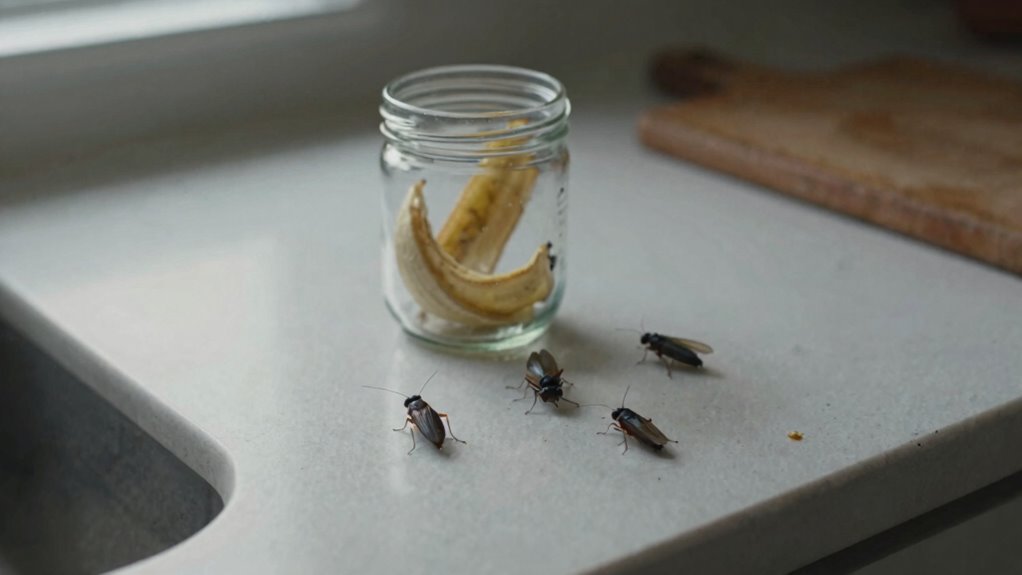
You have dutifully fixed those leaks and tossed that forgotten, fuzzy banana, good work. Now, how long until your home is truly gnat free? Realistically, expect two to four weeks for a full cleanup. Those tiny bugs breed fast, and killing adults does not stop eggs already laid in damp soil or drain sludge. Using natural fly sprays with essential oils like rosemary or peppermint can help repel adult gnats safely while you address the breeding sources.
If you have called pest control for a severe infestation, they might offer a gnat free guarantee, but that usually requires follow up treatments. Fungus gnats: let houseplant soil dry out completely between waterings for two weeks to kill larvae.
Drain flies: scrub drains nightly with a brush, then flush with boiling water for a week. Sticky traps: use yellow cards near plants and drains to catch adults, replacing them every few days. Patience pays off, consistency is key. In about a month, you will notice zero buzzing, just a clean, peaceful kitchen.
What to Do If Gnats Keep Coming Back
Those persistent gnats mean a hidden breeding site has been overlooked. Try the potato slice method first by placing a thin raw slice on soil or near drains overnight.
Check for larvae in the morning to confirm the source. Then increase fan usage to dry out damp areas like houseplant soil.
A small desk fan on low aimed at pots or counters costs around $15 and works wonders. Weak flying gnats struggle in strong airflow.
If they still return after these fixes, inspect under appliances and behind sinks for hidden leaks or rotting food. Pour boiling water down drains weekly to kill eggs and larvae.
Use sticky traps near suspected zones to catch adult gnats. The key is patience because gnats breed fast.
Repeat these steps for three weeks to break the pest cycle. One missed spot restarts the problem, but you have got this. A candle with natural essential oils like citronella or lemongrass can also help repel gnats from the kitchen counter.
Frequently Asked Questions
Can Gnats Damage My Houseplants?
Yes, gnat larvae can absolutely damage your houseplants and stress them out. Fungus gnat larvae live in the soil, feeding on delicate roots and organic matter which slows growth and causes wilting.
Leaves will turn yellow, and a severe infestation can kill seedlings or already weak plants. To stop this pest problem, let the top inch of soil dry out between waterings.
Diatomaceous earth works well as a natural barrier against larvae in the potting mix. You can also apply beneficial bacteria like Bacillus thuringiensis israelensis for targeted control.
Sticky traps catch adult gnats but won’t fix the root issue in your soil. For effective pest control, combine sticky traps with a soil treatment to break the life cycle.
The bottom line is to keep your soil dry and inspect any new plants before bringing them home. Damaged plants need quick action, so check roots and treat with a quality insecticide if needed.
Do Gnats Bite Humans or Pets?
Most gnats do not bite humans or pets, and that’s a relief for most households. Fungus gnats, the common kitchen variety, lack the mouthparts for biting, so they’re just annoying fliers circling your overripe fruit.
Biting gnats like no-see-ums are a different story, and they can leave itchy gnat bite marks, especially near damp areas like potted plants or outdoor compost. If you’re sensitive, a gnat allergy risk exists for people or pets, causing mild swelling or redness at the bite site.
So, unless you’re dealing with a biting species, their main attack is on your sanity, not your skin. To protect your home, start by identifying the gnat type first, since most are harmless biters of fruit, not flesh.
For fruit flies or fungus gnats, a simple apple cider vinegar trap or sticky yellow cards can cut the population fast without harsh chemicals. If you need a stronger solution, look for insect growth regulators or larvicides labeled for gnat control, which target larvae in the soil.
For biting gnats, invest in a bug repellent with DEET or picaridin for outdoor work, and seal cracks around windows and doors to block entry. Always check for standing water or damp mulch near your foundation, since that’s where biting gnats breed.
If you’re buying pest control products, compare between indoor-safe sprays and professional-grade foggers, depending on the infestation size. For persistent problems, a targeted gnat killer with pyrethrins works fast, but read the label for pet and kid safety first.
Smart shoppers also consider electronic bug zappers or UV traps for garages and patios, which reduce adult gnats without chemical exposure. Combine that with regular disposal of rotting vegetation, and you’ll break the gnat life cycle within a week.
Bottom line, most gnats are a nuisance, not a health threat, but knowing the species changes your action plan. For pet owners, watch for excessive scratching or licking after outdoor time, and use a vet-approved flea and tick spray that also deters biting gnats.
Finally, if you’re unsure, a local pest control inspection can identify the exact gnat species and recommend the best buy for your yard or kitchen. That way, you’re not wasting money on fruit fly traps when you actually need a no-see-um barrier treatment.
Are Store-Bought Gnat Sprays Safe for Kitchens?
The short answer is to read the label carefully. Not all gnat sprays are created equal, and kitchen safety hinges on the active ingredients.
Some sprays use pyrethrins, natural compounds from chrysanthemums, which break down quickly. These are usually safe around food prep areas after drying.
Others, like those with permethrin, are synthetic and require extra steps. You must cover counters and wash surfaces afterward, which is annoying but doable.
Avoid anything labeled “for outdoor use only” in your kitchen. Those contain longer lasting chemicals that are not safe near food.
Look for sprays explicitly marked for indoor use around food preparation. The best kitchen pest control products use natural, fast degrading active ingredients.
Always remove food and dishes before spraying. This makes choosing a fruit fly spray safe and effective for your home.
Buy a spray with natural active ingredients for the best results. Check buyer intent phrases like “kitchen safe gnat spray” or “natural pest control for food areas” to find the right product.
Can Gnats Come From Outdoor Garbage Cans?
Yes, gnats absolutely come from outdoor garbage cans. Those bins are prime breeding sites for common household pests like fruit flies and fungus gnats.
Loose or cracked lids let in moisture and decomposing scraps, which create the perfect habitat for gnat infestations. Check your garbage lid seals for gaps or warping, since a tight fit blocks access to these pests.
Take cans out regularly to disrupt breeding cycles and rinse them weekly with water. Keep the surrounding area dry to eliminate the damp conditions gnats love.
A simple DIY solution is to spray the interior with a vinegar solution. For a more thorough approach, consider using a professional grade insecticide or gnat repellent spray.
Seal it, clean it, and gnats lose their outdoor hangout. For long term pest control, invest in heavy duty bins with tight seals or a gnat bait product for outdoor use.
Will Gnats Go Away on Their Own Eventually?
Gnats will not vanish on their own if you leave them alone. Their gnat lifecycle repeats relentlessly indoors, with eggs laid in moisture sources like damp soil, drains, or fruit.
Without cutting off breeding sites and food, they will keep returning like an unwanted houseguest. Even though adult gnats die, new ones hatch quickly to replace them.
So no, patience alone will not fix a gnat infestation. You need to tackle the source, or you will accept permanent roommates in your kitchen.
For effective pest control, start by inspecting drains and overwatered houseplants for organic buildup. Use a targeted gnat killer spray or sticky traps to catch adults on contact.
If you want a long term solution, consider a drain gel treatment or bacterial larvicide to stop eggs from hatching. Professional grade products work best for sealing off breeding sites and breaking the cycle.
The smart purchase is a complete gnat elimination kit that includes both a spray and a trap. This covers fast knockdown and ongoing prevention without harsh chemicals.


