
Where Do Mice Hide During the Day? If you’ve spotted one in broad daylight, your mouse problem is likely bigger than you think. During the day, mice tuck into wall voids, behind stoves, and under sinks—spots with at least two escape routes, because one exit is a death trap to them.
They chase warmth, darkness, and safety from predators, so a hollow door or gap near a heating duct feels like a five-star hideout. Seeing a mouse in daylight usually means your colony is overcrowded, and that’s your signal to act fast. This article covers exactly where to inspect, what signs to look for, and how to seal those hidden entry points.
Keep reading to spot their daytime hiding spots before they multiply.
At A Glance
- Daytime mice hide in wall voids near heating ducts for warmth and seclusion.
- Behind stoves and refrigerators offer heat, food scraps, and dark cover.
- Under kitchen sinks provide dampness, pipe access, and quiet hiding spots.
- Attic insulation is shredded for nesting material, especially during infestations.
- Hollow doors maintain cozy air pockets, acting as quiet, draft-free refuges.
Why Mice Stay Hidden All Day and Come Out at Night
Mice hide during the day as a natural survival instinct, not a choice. This nocturnal behavior is a built in reflex to avoid predators like hawks, cats, and even humans.
Mice hide by day as a survival reflex, not a choice—avoiding predators like hawks and cats.
Their eyesight is poor, so they rely on sound and touch to move around. That is why they prefer dark, quiet corners where they won’t be startled.
If you see a mouse during daylight, it means something is wrong. A serious infestation or a destroyed nest could be forcing them out into the open.
Even then, they will dart quickly rather than stroll. Nighttime is when they forage for food near their hiding spots.
The bottom line is clear. If you spot a mouse at noon, you are not dealing with a bold rebel but a broken hiding game.
This is a pest control problem worth solving. Contact a professional exterminator for a thorough inspection and removal plan. Using single-feed anticoagulant rodenticides like Brodifacoum can eliminate infestations within days to weeks.
The Top 5 Indoor Daytime Hiding Spots for Mice
Indoor daytime hiding spots for mice are like real estate, it is all about location. Mouse behavior favors dark, warm, and quiet areas, making these five spots prime real estate for pest control.
Behind stoves and refrigerators, where heat and food scraps are plentiful, is a top choice. Under kitchen sinks, where pipes offer easy access and dampness, is another.
Wall voids, especially near heating ducts, provide secure nesting sites for rodent infestations. Inside cardboard boxes or stored items, offering insulation and concealment, is a common hideout.
Finally, behind appliances like dishwashers or washing machines, where vibrations and noise mask activity. Olfactory clues, such as musty urine odors, often pinpoint these spots for professional inspection.
These areas match rodent needs for safety and warmth, so check them first for effective removal. Sealing these entry points with rust-resistant copper mesh provides a long-term solution against rodent gnawing. If you suspect mice, inspect these hiding spots immediately to prevent an infestation from growing.
How to Find Mouse Hiding Spots in Attics, Basements, and Crawl Spaces
Attic nesting signs like shredded insulation and droppings near vents often reveal a mouse’s daytime retreat. In basements, check entry points around pipe penetrations and foundation cracks where tiny dime-sized gaps invite unwelcome tenants.
Crawl spaces offer clues through musty odors and gnaw marks on ductwork. This signals a hidden nest that demands a flashlight and patience for a thorough pest inspection.
Look for grease rub marks along walls or beams as additional mouse evidence. For effective rodent control, seal any gap larger than a pencil with steel wool or caulk immediately. Peppermint oil spray applied along baseboards and entry points provides a natural, non-toxic repellent barrier that helps keep pests away.
Attic Nesting Signs
A quiet attic is rarely an empty one. When inspecting, look for shredded attic insulation used as nesting material; mice love its softness and warmth.
Check around wildlife entry points, like gaps where pipes or wires enter. These are easy access routes for rodent control issues.
Droppings, often scattered near insulation or along rafters, confirm activity. Gnaw marks on wood or wires? That’s a definite sign of an infestation.
You might additionally spot greasy rub marks along beams from constant travel. Listen for scratching at dusk to catch active pests.
Pro tip: spot a nest? It’s usually a ball of shredded goods with multiple escape holes. Don’t ignore a musty smell, as urine buildup happens fast.
Bottom line: find the insulation damage and seal entry points tight. You’ve cut off their hideout and need professional pest removal.
Act quick, or they’ll throw a full on attic party. Schedule an attic inspection to stop the damage now.
To block these entry points, use sturdy barriers like steel wool that mice cannot gnaw through.
Basement Entry Points
Basement entry points for mice are often ignored because they hide behind clutter or sump pump gaps. These dime sized gaps around pipes or lids can lead to major problems like gnawed wiring and moldy boxes.
Repairing water damage from ignored entry points can cost hundreds of dollars. A simple pest control inspection of your basement foundation can catch these issues early.
For discreet outdoor protection near these gaps, consider stations with tamper-resistant locks that block pets and children while allowing rodent entry.
| Entry Point | Why Mice Love It | How to Seal It |
|---|---|---|
| Sump pump gaps | Warm, damp, dark escape route | Cover with steel mesh and caulk |
| Pipe penetrations | Easy access from foundation cracks | Fill with copper wool and foam |
| Floor drains | Direct path from sewer lines | Install a one way drain valve |
Check these spots monthly with a flashlight and some steel wool. That whole rodent proofing kit costs under $20, much cheaper than replacing a chewed water heater wire.
Bottom line, seal sump pump gaps first to stop major basement infestations. Then work outward to pipe penetrations and drains for complete mouse exclusion.
Crawl Space Clues
Crawl spaces are basically mouse motels, dark, warm, and rarely disturbed. The obvious clue is droppings, but crawl space dampness creates the real giveaway. Mice need water, and wet insulation or vapor barriers attract them like a leaky faucet draws a thirsty guest. Look for gnaw marks on joists, and pay close attention to ventilation gaps. Those gaps, often covered by flimsy mesh, are their front doors. Check for rub marks, greasy smudges along beams from frequent travel. A pro tip: sprinkle flour near suspected holes. Next day, you will see tiny tracks. Bottom line: if you spot a nest made of shredded fiberglass insulation, do not just patch the hole. Fix the dampness issue and seal every ventilation gap with hardware cloth, and consider using ultrasonic rodent repellers to drive away remaining pests in the area. Otherwise, you are just redecorating for a repeat customer. Professional pest control services can help with long term exclusion.
Why Wall Voids and Hollow Doors Are Prime Hiding Places
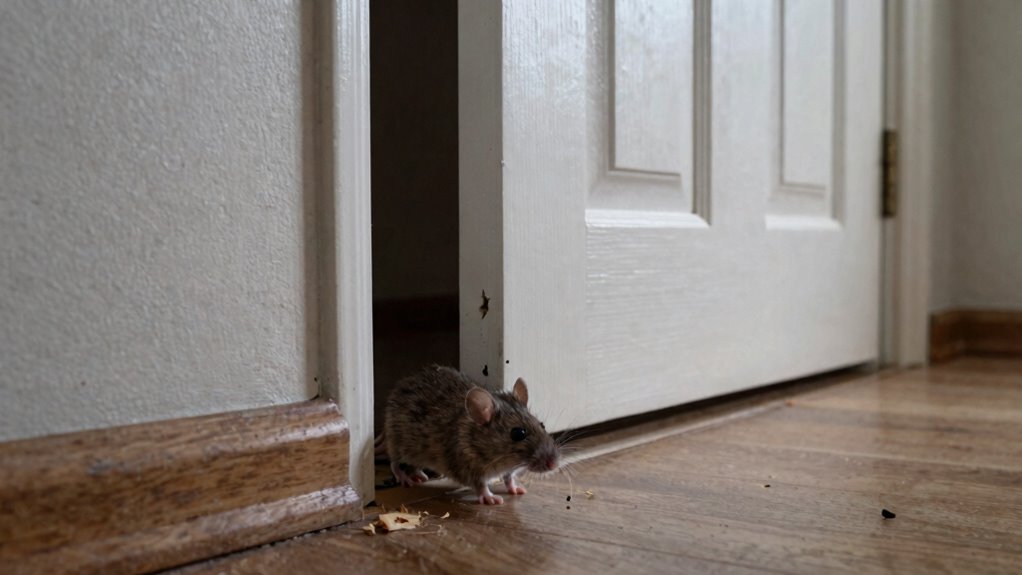
Wall voids and hollow doors act as mouse magnets because they offer warmth and seclusion.
These spaces stay cozy and dark, perfect for a daytime nap, while the hollow structure provides quick escape routes.
If a predator or you get too close, mice can dash out through multiple hidden exits.
Think of it as a tiny insulated panic room with a backdoor, which is why pest control experts target these areas first.
For effective mouse proofing, sealing gaps around baseboards and door frames is a must.
Inspecting these prime hiding places can help you spot an infestation before it gets out of hand.
Using concentrated peppermint oil sprays or pouches in these enclosed wall voids can create a strong scent barrier that naturally repels rodents without harsh chemicals.
Warmth & Seclusion
Two often-overlooked champion hideouts for daytime mice are wall voids and hollow doors. These spots deliver steady warmth and seclusion, making them irresistible for pest control.
Wall voids sit near heating ducts, so mice use them for nest insulation year-round. They adjust their hiding places through seasonal adaptation, moving closer to heat sources in winter to stay safe from cold.
A hollow door’s interior stays consistently cozy, thanks to air pockets and minimal drafts. This offers a quiet refuge where mice feel hidden from light and noise.
They curl up without disturbance in what feels like their private, heated studio apartment. For inspectors, checking these warm, sealed spots is key for effective rodent removal. Using a powder duster with internal ball bearings can help reach deep cracks in these areas to apply treatment effectively.
They are prime real estate for any clever rodent seeking peace and a little warmth. Early detection in these areas helps with long-term pest prevention.
Multiple Escape Routes
Warmth and seclusion may draw mice to wall voids and hollow doors, but it is the multiple escape routes that make these spots truly non negotiable for a savvy rodent.
Behavioral triggers, like a loud noise or sudden light, send them scrambling for cover.
Environmental preferences dictate that a hiding place must have at least two exits, ideally three.
Wall voids connect to gaps around pipes, electrical outlets, and baseboards for easy pest control access.
Hollow doors offer quick entry through tiny cracks at the top or bottom.
A mouse can dart from a void into a cabinet, then behind a stove, before you even grab a broom.
One exit is a trap, but two is a game for rodent exclusion success.
It is less about comfort and more about insurance during an infestation.
For professional pest inspectors, checking every potential exit is key to effective rodent proofing.
Miss one, and the mouse has already won the battle in your home.
Using a tamper-resistant bait station in these areas ensures that any poison placed remains secure and effective without risking accidental contact.
Hidden Evidence: Droppings, Gnaw Marks, and Rub Marks
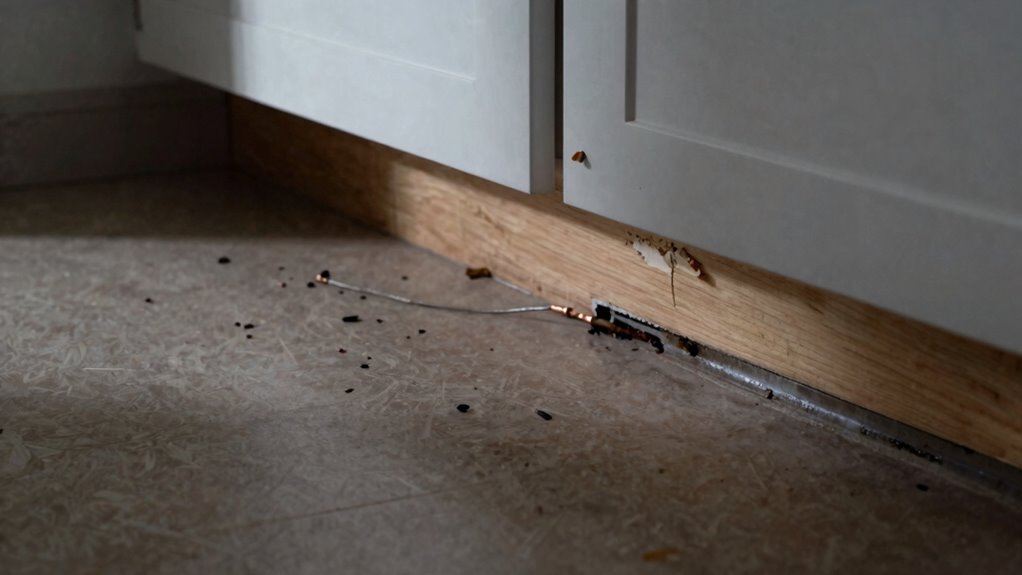
What kind of trail does a mouse leave behind when no one is watching? Look for small, dark droppings like grains of rice scattered near baseboards or under sinks.
Gnaw marks on wires, wood, or food packaging are bite sized signs of teeth at work. Rub marks are greasy smudges along walls from their fur brushing against surfaces.
These clues combined with odor detection from urine trails reveal daytime hideouts. Footprint tracking in dusty corners can confirm which paths they travel during a pest inspection.
These clues, plus urine odor, reveal daytime hideouts during a pest inspection.
Finding fresh droppings daily means you have a persistent neighbor in need of rodent control. Gnaw marks on a cardboard box suggest they are chewing their way closer to your food supply.
If rub marks appear on a baseboard it is a busy runway for mice. Locate these signs and you have found their daytime hotel where extermination services should focus. Reusable snap traps made of tough plastic or stainless steel can be cleaned and reset to catch multiple mice.
Where Mice Hide Outdoors Before Moving Indoors for Winter
Those droppings and rub marks are useful, but they only tell half the story once fall arrives. Before mice invade your home, they stage themselves outdoors in strategic hiding spots.
A woodpile shelter is prime mouse habitat because it stays dry and offers cover close to your foundation. They also dig ground burrows under rocks, tree roots, or sheds for autumn shelter.
Think of these burrows as critter condos for pest control prevention focus. Mice are not picky and will hide in stacked lumber, overgrown brush, or garden debris within 50 feet of your house.
The closer the shelter, the easier their indoor entry. Once temperatures drop, they shift from outdoor nests to indoor walls seeking warmth.
Your job is to clear those outdoor hiding spots before October hits, or you are hosting a rodent housewarming party. Check ground burrows and woodpile shelters first as part of your pest management plan.
Then seal all entry points around the foundation with caulk or steel wool. That simple fix stops the invasion before it starts.
Consider using ultrasonic bat repellers to deter other nocturnal pests from those same outdoor shelters.
Why a Daytime Mouse Means a Bigger Problem
Daylight mice are the pest control equivalent of finding a smoke alarm going off at 3 a.m. It is not the alarm itself you fear, but the fire hiding behind the wall.
A mouse scuttling during the day signals a colony so overcrowded that normal nocturnal adaptation has broken down. These rodents, usually masters of hiding, are forced out by competition for space.
A daytime mouse means a colony so overcrowded that hiding is no longer an option.
This daytime activity often follows indoor seasonal migration, as cold weather drives entire populations deeper into your walls. Consider what this means for your pest elimination needs.
Nests stuffed with shredded insulation can be hidden behind kitchen cabinets. Gnawed wiring with braided copper exposed creates a fire risk nobody asked for.
Urine trails drying into crusty, ammonia-scented highways form along baseboards. Droppings pile like tiny, dark rice grains under the sink.
A single daytime mouse is not a solo act. That is a packed stadium, and you are the venue for serious rodent control. Unlike garden snails, these mice will not be lured by beer-based traps placed in shaded areas.
How to Inspect for Daytime Hideouts
Luck plays a minor role in successful rodent detection; methodical observation does the heavy lifting. Start with an inspection checklist to make the job easier.
Grab a flashlight and a small mirror, since these tools reveal hidden spaces. Check behind the fridge, stove, and dishwasher, because these warm spots are prime real estate for daytime hideouts.
Look for greasy rub marks along baseboards, and they show frequent travel routes. Wear gloves and a mask around droppings to avoid hantavirus, a key safety precaution for any pest control job.
Listen for faint scratching in walls or ceilings at dusk, which often signals active nesting areas. Focus on corners, under sinks, and inside cardboard boxes where rodents seek shelter.
Most daytime signs are subtle, like tiny droppings or gnawed wires, so a systematic sweep beats random guessing. This method turns a headache into a manageable puzzle, but don’t skip the details.
For professional rodent removal, start with a thorough home inspection service to identify problem zones. You can also use bait stations or snap traps near these hideouts for effective pest management.
If you need a pest exterminator, this checklist helps you explain the issue clearly. A careful approach reduces repeat visits and saves on rodent control costs.
What to Do Once You Pinpoint Their Hiding Spot
Once you have mapped out where the mice are hiding, the real work begins. This means sealing gaps, setting traps, and cleaning up their mess to stop the rodent problem for good.
Focus on rodent proofing and exclusion methods that actually work. Seal every gap with steel wool and caulk, since mice cannot chew through it and the materials cost under $10. Xcluder Rodent Control Kit provides a rust-proof, chew-proof stainless steel wool barrier for lasting exclusion.
Snap traps placed along walls near droppings catch them fast. Peanut butter is the bait that never fails for effective pest control.
Remove nests and droppings with gloves and disinfectant. Avoid airborne dust that can spread disease during cleanup.
Block outdoor entry points with copper mesh around pipes and vents. This rules out a return route and strengthens your home pest prevention.
The payoff is immediate when you combine sealing with trapping. The infestation stops without shortcuts, just gritty prevention that delivers results.
Frequently Asked Questions
Do Ultrasonic Repellents Force Mice Out of Hiding?
Ultrasonic repellents do not reliably force mice out of hiding. Their high-frequency sound waves are blocked by walls, furniture, and clutter, so the coverage is far too limited for real pest control.
Mice simply relocate to shielded spots like behind the fridge or inside wall voids, where the sound barely reaches. A $30 plug-in unit might annoy a mouse in an open attic, but it won’t drive rodents out of your kitchen’s hidden nesting areas.
Some mice even grow accustomed to the noise over time, making this a weak supplement rather than a standalone mouse control solution. For effective rodent removal, you need to combine ultrasonic devices with sealing entry points and placing snap traps in high-traffic zones.
If you’re comparing pest control products for home use, think of ultrasonics as a minor deterrent, not a buy-it-and-forget-it fix. The best mouse repellent strategy is integrated: block gaps, remove food sources, and use proven trapping methods for fast results.
For buyers seeking long-term rodent prevention, ultrasonic repellents are only worth adding after you’ve closed off access points and set up monitoring stations. Smart shoppers invest in snap traps and exclusion materials first, then use ultrasonics as a low-priority bonus layer for uneasy areas.
Check product reviews for frequency range and power output before purchasing, and remember that no ultrasonic device will ever replace a thorough home inspection. When mice refuse to leave, professional-grade traps and bait stations remain the top choice for guaranteed control.
Can Mice in Walls Cause Structural Damage Over Time?
Yes, mice in walls can absolutely cause structural damage over time, and it often starts with wiring.
Rodent gnawing on electrical cables is a leading cause of short circuits and even house fires, so ignoring the problem is a serious safety risk.
That gnawing habit also hits your wallet through insulation compaction, where mice flatten and soil your wall insulation, ruining its thermal efficiency.
This directly drives up your heating and cooling bills, which is why homeowners searching for pest control solutions should act before the cold season hits.
Beyond wires and insulation, mice will chew on wood studs and drywall, weakening the internal framework of your home’s walls.
A single mouse won’t collapse a house overnight, but a full infestation over months can compromise door frames, baseboards, and even support beams.
If you’re looking for effective rodent control products, consider tamper-resistant bait stations or ultrasonic repellents that target wall voids.
For serious infestations, professional-grade snap traps or rodenticide blocks placed near entry points are the smart purchase for long-term protection.
The key takeaway is that early intervention beats costly wall repair, so schedule a home inspection or buy exclusion supplies like steel wool and caulk.
Seal every gap around pipes and vents, then monitor with tracking powder or smart sensors to confirm the mice are gone for good.
Bottom line: don’t wait for sagging ceilings or peeling paint to call a pest control service.
Act now, and you’ll save thousands in structural repairs while keeping your family safe from fire hazards and airborne allergens.
How Long Can a Mouse Survive Trapped Inside a Wall?
A mouse trapped inside a wall typically survives only three to five days without a steady food source, so time is critical. Dehydration is the real killer here, as mice need water daily, and a sealed wall offers almost none.
If the mouse finds a crack near plumbing or a crumb-filled gap, that survival window can stretch to a week or more. You will notice frantic scratching for the first two days, but that sound fading quickly is rarely a good sign.
The unmistakable odor of decay usually confirms the worst within a few days, so don’t wait for that smell to guide your next move. Instead, inspect your baseboards, utility lines, and vents for entry holes, then seal them with steel wool and caulk to block future rodent intrusions.
For immediate relief, call a licensed exterminator, because DIY removal from inside a wall often requires cutting drywall or using specialized traps. If you prefer a hands-on approach, snap traps and glue boards placed along the wall’s base can catch stragglers, but only if you locate the exact access point.
Professional pest control services offer thermal imaging or rodent detection cameras to pinpoint the nest without tearing your home apart, which saves you money and repair costs. Rodent-proofing your home with door sweeps and vent screens is a smart long-term purchase, especially after any infestation, to prevent repeat wall invasions.
Remember, the faster you act, the less likely you’ll face odor cleanup, fly infestations, or structural gnawing damage. So, check for droppings around the wall, listen near the baseboard for movement, and prioritize a bait station or rodenticide only if local regulations allow it.
Ultimately, a trapped mouse’s lifespan is short, but your response time determines whether that ends in a stinky DIY project or a quick, professional resolution. Buy a good moisture barrier and sealant kit today, and schedule a pest inspection this week to protect your walls for the long haul.
Do Mice Return to the Same Nesting Spot After Being Removed?
Do mice return to the same nesting spot after being removed? In most cases, they do not come back.
Forced relocation scrambles their homing instinct and they will seek new shelter. Clean removal eliminates scent trails, disrupting their memory of the old nest.
Studies show that mice avoid familiar danger zones after an eviction. Think of it as a mouse eviction, they don’t pack bags for round two.
Remove nests and block entry points to keep them out for good. This simple pest control strategy is effective with no drama.
If you need rodent proofing supplies or professional traps, we have the right products. Your smart purchase keeps your home rodent free and secure.
What Scent or Natural Deterrent Actually Drives Mice From Hiding?
Peppermint oil and cayenne pepper are the most popular natural mouse deterrents, but their effectiveness is modest at best.
The strong menthol scent of peppermint oil can irritate a mouse’s sensitive nose, making a space less appealing for nesting.
However, it won’t evict a stubborn rodent that has already settled in.
Cayenne pepper, when sprinkled into cracks and crevices, creates a spicy barrier that deters gnawing behavior.
Think of these as gentle nudges, not eviction notices.
A determined mouse may simply move to a different corner of your home.
For real results, combine these natural repellents with sealing entry points around your foundation and pipes.
This is a low cost, low drama option for pest control, but it is not a magic bullet.
If you are serious about rodent prevention, pair scented deterrents with professional grade exclusion products.
Buy a quality caulk and steel wool kit to block active mouse holes for long term results.


