
Not sure if you’re dealing with fungus gnats or fruit flies? You’re not alone—these two pests look alike but need totally different fixes.
Fungus gnats are dark, mosquito-like flies that hover near damp potting soil, while fruit flies are tan with bright red eyes and go straight for ripe fruit or drains.
Getting the ID right is the first step to stopping them fast.
This guide breaks down exactly how to tell them apart and which control method actually works for each.
You’ll learn the simple soil-drying trick for gnats and the vinegar trap that catches fruit flies every time.
Stick with this—knowing the difference saves you wasted effort and keeps your plants and kitchen pest-free.
At A Glance
- Fungus gnats are dark, slender, with long antennae; fruit flies are tan, round, with red eyes.
- Gnats hover weakly near damp soil; fruit flies zip directly toward fermenting fruit.
- Fruit flies reproduce in 8–10 days; fungus gnats take about 3 weeks per generation.
- Gnats damage plant roots; fruit flies target rotting fruit and kitchen messes.
- Dry top inch of soil for gnats; remove overripe fruit for fruit flies.
Fungus Gnat or Fruit Fly? Use This Quick Decision Guide
Telling a fungus gnat from a fruit fly can feel like splitting very small, 1/8-inch bugs unless you chase them with a magnifying glass.
Tiny fly identification hinges on color and body shape for quick indoor pest control decisions.
Fungus gnats look like tiny mosquitoes, dark gray and slender with long legs. Fruit flies are tan and plump with big red eyes.
Check pest seasonality for a helpful clue.
Fungus gnats peak in winter and spring, thriving in damp potting soil from overwatered houseplants.
Fruit flies appear whenever ripe fruit or a forgotten potato sits out on your counter.
The key question is where you see the bug.
A weak, hovering flight near a plant’s soil means you likely have a fungus gnat infestation.
A fast, zipping flight around the kitchen counter points to fruit flies.
Use this simple guide to choose your pest control method.
A sticky trap near the plant stops gnats, while cleaning drains and covering fruit handles flies.
For soil-dwelling larvae, you can also use beneficial nematodes or Bti as a soil drench.
How to Tell Fungus Gnats and Fruit Flies Apart
At first glance, these pests look similar, both about an eighth of an inch long. A closer look tells the story for accurate pest identification. Fungus gnats have slender, mosquito-like bodies with long legs and antennae. Fruit flies are rounder and plumper with large, bright red eyes.
Their flight patterns likewise differ for effective pest control. Gnats hover weakly near soil, but fruit flies zip around with more purpose. You will often find gnats near overwatered houseplants or damp potting mix. Fruit flies gather near fruit bowls, kitchen counters, or trash cans.
For a targeted solution, focus on the source of the infestation. Remove breeding grounds to stop these pests for good. Yellow sticky traps work well for fungus gnats, while fruit fly infestations near ripening produce may require bait-based or UV light options.
Appearance Comparison
Though both pests measure about an eighth of an inch, telling them apart is easier than you’d think. The key appearance contrast is shape and color.
Fungus gnats look like tiny, dark gray to black mosquitoes, with slender bodies, long legs, and long antennae. Fruit flies, conversely, are tan to light brown, with round, plump bodies and large, bright red eyes.
For visual identification, just watch one land. A gnat will crawl across soil with a weak, hovering flight; a fruit fly will march around on your banana.
It is a straightforward body‑type test: gnat equals leggy and dark, fruit fly equals stout and bug‑eyed. So, check the body, not just the size.
If you need pest control tips for your home or garden, focusing on the shape and color first will help you choose the right trap or spray. Proper identification is key to stopping an infestation fast. For effective control, place bright yellow traps at soil level to capture gnats as they emerge.
Flight Patterns Explained
Since fungus gnats and fruit flies move in distinctly opposite ways, their flight patterns alone can reveal which pest is buzzing around your space. Fungus gnats exhibit a weak, erratic flight behavior, often hovering near the soil surface as if unsure where to land.
Fruit flies display a stronger, more direct flight, zipping confidently toward fermenting fruit. Think of fungus gnats as the clumsy new driver at the parking lot, drifting aimlessly near the damp dirt.
Meanwhile, fruit flies are the seasoned commuter, speeding straight to the mess. Their hovering patterns make identification a guessing game, but once you notice the weak, soil-bound flight, you are likely dealing with gnats.
For effective pest control, targeting the larvae in moist soil with a proper insecticide stops the infestation at its source. If you need a quick fix for your kitchen, fruit fly traps and baits work best to capture adults near overripe produce.
Distinct Body Features
The flight patterns give you a solid clue, but the real giveaway is in the bodies themselves. A fungus gnat looks like a tiny, dark mosquito with a somber gray or black body coloration.
Its antennae length is remarkably long, making it appear almost delicate near damp soil. For effective pest control, identifying this insect early can stop an infestation before it spreads. By comparison, a fruit fly has a plump, rounded body ranging from tan to light brown. Its eyes are large and bright red, like tiny garnets you need to spot quickly.
Look closely: fruit fly antennae are short, almost stubby. The gnat’s slender, leggy silhouette screams “dirt lover,” while the fruit fly’s stocky frame says “fruit fiend.” That body check is your fastest ID tool for choosing the right trap or spray. Many sprays target gnats at all life stages, including eggs and larvae, to break the cycle.
Why the Difference Matters for Your Home and Plants
Correctly identifying the pest is the first step, since mixing them up means using the wrong control method. Fungus gnats threaten your plant’s roots, whereas fruit flies turn your kitchen into a miniature airshow.
Their reproduction rates are wildly different. Getting the right pest changes your strategy from a simple vinegar trap to targeted soil treatments.
This saves both your plants and your sanity. For effective pest control, choose a soil drench or sticky traps for fungus gnats.
A fruit fly infestation needs a different approach like a commercial attractant or proper sanitation. Buying the right product the first time prevents wasted effort.
Stop guessing and start eliminating pests with the correct solution for your home. Traps using species-specific pheromones can effectively disrupt pest reproduction cycles without toxic chemicals.
Plant Damage Risks
Understanding which tiny winged invader is buzzing around your home matters most when you consider the damage they can actually do. Fungus gnats, in spite of their clumsy flight, are the real plant villains.
Their larvae chew on delicate root hairs, causing root damage that, for seedlings or young plants, leads to wilting and stunted growth. Worse, these feeding wounds invite soil pathogens like root rot fungi into the plant.
It is a double whammy, really. The gnats weaken the roots, and then decay sets in.
Established houseplants usually shrug off a few gnats. But for that fresh batch of basil seedlings, a heavy infestation is basically a slow-motion plant apocalypse.
Fruit flies, by contrast, could not care less about your plants. They want your forgotten banana.
For persistent soil pests, diatomaceous earth applied in cracks and crevices physically damages insect exoskeletons over time.
Pest Reproduction Rates
Two fungus gnat females can lay about 100 eggs each in damp soil, while a single fruit fly female deposits up to 500 eggs on a rotting banana. This lifecycle comparison reveals why fruit flies explode in days, whereas fungus gnats take weeks to develop.
Infestation timelines differ dramatically: fruit flies complete egg to adult in 8 to 10 days, while fungus gnats take roughly three weeks. That means one fruit fly generation can produce several more before a gnat even emerges.
Fruit flies lay five times more eggs per female than fungus gnats. Their lifecycle is also 2 to 3 times faster: 8 to 10 days versus three weeks for gnats.
A single fruit fly can start an infestation in under two weeks. Fungus gnats require consistently wet soil for two weeks to complete their development. Quick-drying, residue-free sprays designed for kitchen surfaces can break the fruit fly cycle before it explodes.
Targeted Control Methods
Identifying which pest you have is not a trivia contest. It is about choosing the wrong weapon for the job.
A vinegar trap for fungus gnats will only catch disappointment. Drying the soil for fruit flies lets them feast on your forgotten banana.
| Target | Fungus Gnat | Fruit Fly |
|---|---|---|
| Weakness | Damp soil | Fermenting fruit |
| Top Weapon | Soil drying methods | Fruit fly traps |
| Sanity Savor | Let soil dry 1 inch deep | Remove all rotting fruit |
Fruit fly traps work by luring adults with a vinegar scent. Then they drown the pests.
For fungus gnats, soil drying methods starve the larvae in damp soil. Letting the top inch dry out kills the next generation.
The bottom line is to pick the right tool. Otherwise you are just hosting a pest party. Keep produce in airtight lids with locking buckles to prevent fruit flies from detecting odors.
Where Each Pest Hides (And Where to Look First)
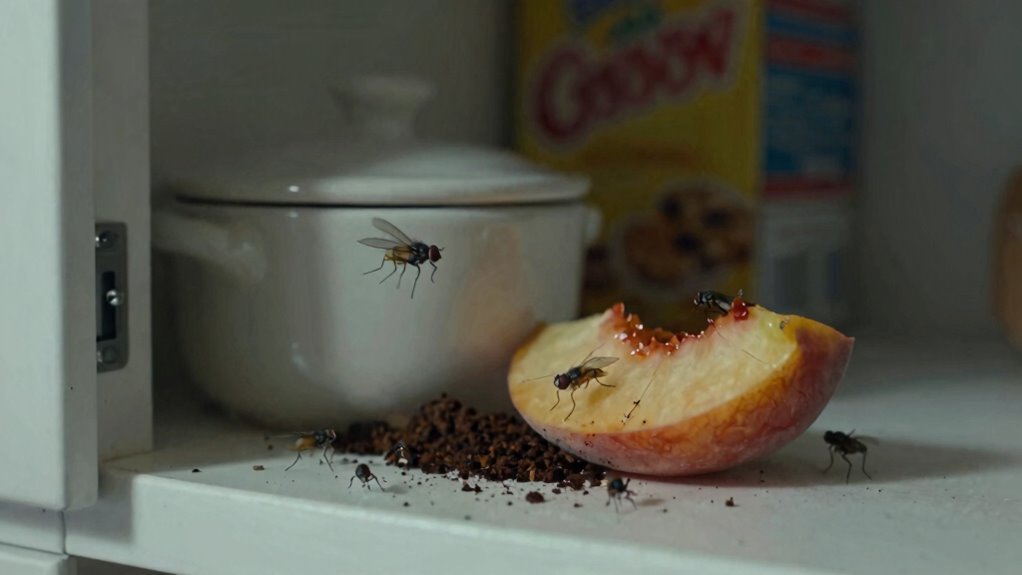
When inspecting for pests, start with the potting soil surface. Gnats hover just above damp soil in houseplants.
Next, check kitchen drains where fruit flies breed in slimy buildup. Overripe fruit in bowls also attracts these pests fast. Using enzymatic products weekly breaks down organic waste that attracts fruit flies, preventing infestations before they start.
Look for indoor drainage issues like leaky pots or sink traps. These damp spots create perfect conditions for gnat infestations.
Fruit flies love the kitchen while gnats prefer the plant corner. Check the soil first, then inspect the sink area.
One pest hides in dirt and the other thrives in rot. Targeting these areas helps control pest problems quickly.
How Fast Do Fungus Gnats and Fruit Flies Reproduce?
Reproduction rates make this a surprisingly unfair comparison. Fruit flies are speed demons with a life cycle from egg to adult in just 8 to 10 days.
Fungus gnats take a sluggish three weeks to mature. This difference in pace directly impacts how quickly an infestation gets out of control.
| Pest | Eggs Per Cycle | Time to Adult |
|---|---|---|
| Fungus Gnat | ~100 | 3 weeks |
| Fruit Fly | ~500 | 8–10 days |
If you notice small pests near drains or overripe produce, you likely need fruit fly control fast. For fungus gnats, you often need to treat damp potting soil to stop larvae development.
A single fruit fly can lay about 500 eggs in one cycle. That means a small problem can become a full blown invasion in under two weeks.
Fungus gnats lay roughly 100 eggs per cycle but take three weeks to hatch into adults. Their slower pace gives you more time to apply preventative measures like yellow sticky traps or soil drenches. For fungus gnat larvae in standing water, Bti-based dunks provide a natural and safe control option that targets only the larvae without harming plants or pets.
For immediate relief, try a vinegar trap or a commercial fogger. Consistent monitoring and removing breeding sites is the best long term pest elimination strategy.
What Fungus Gnats Actually Do to Your Plants
Underneath those delicate wings, fungus gnat larvae are quietly undermining your plants’ foundation, quite literally.
Underneath those delicate wings, fungus gnat larvae are quietly undermining your plants’ foundation, quite literally.
They aren’t feeding on leaves.
They’re gnawing on the tender root hairs and tiny feeder roots, a key form of larvae root damage that starves plants of water and nutrients.
This hits seedlings especially hard, causing sudden wilting and yellowed leaves.
To beat them, you must focus on soil habitat control.
Keep the top inch of soil bone-dry between waterings for effective pest control.
Here’s what they actually do to your plants:
- Chew root hairs, starving plants of water and food.
- Stunt growth, so young plants simply stop getting bigger.
- Wilt leaves, because roots can’t drink enough to stay perky.
- Invite pathogens, as chewed roots let rot diseases sneak in.
Use a targeted insecticide for larvae to prevent root damage.
Yellow sticky traps help monitor adult fungus gnats and reduce their numbers.
Apply food-grade diatomaceous earth to the soil surface to dehydrate larvae on contact.
Stop Fungus Gnats Naturally
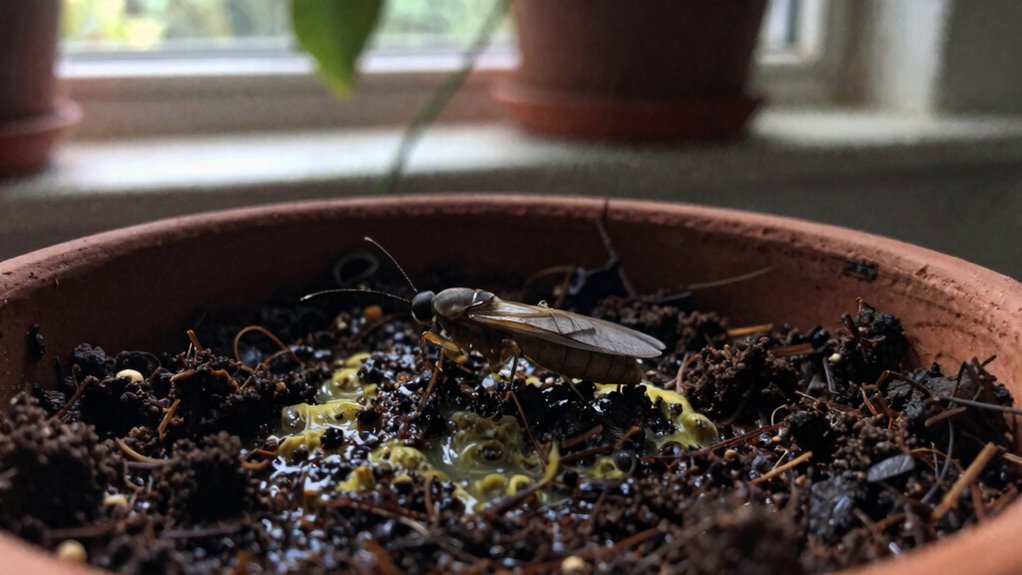
Nature, regarding fungus gnats, offers a full toolbox of low-effort solutions that won’t cost you a trip to the chemical aisle. The simplest trick is to stop overwatering.
Letting the top inch of soil dry out cuts off the larvae’s oxygen supply. These pests literally drown in dryness.
Soil dampness is the real enemy here. Keeping it consistently wet is like rolling out a welcome mat for gnats.
For a heavier hand, enlist natural predators like beneficial nematodes to eliminate gnat larvae, similar to how permethrin-treated clothing creates a barrier against over 55 bugs. These microscopic worms, sold at garden centers for about $15, hunt down gnat larvae underground.
Yellow sticky traps, set near pots, catch adult gnats by the dozen. They look oddly like tiny, modern art.
The bottom line is to dry out the dirt and let the predators go to work. The gnats will vanish without a fight.
Get Rid of Fruit Flies Fast
Fruit flies are less a pest and more a personal insult to your kitchen hygiene. Getting rid of them fast means hitting breeding spots first.
Remove overripe fruit and toss bananas or tomatoes in a sealed bag. They attract flies in hours, so take action immediately.
Apply drain treatment by pouring boiling water or a bleach based gel down kitchen sinks. This kills slime where larvae hide and prevents reinfestation.
Make a vinegar trap with a jar of apple cider vinegar and a few drops of dish soap. Flies drown overnight in this simple pest control solution.
Wipe surfaces daily with disinfectant on counters, trash cans, and recycle bins. This cuts food sources and breaks the fruit fly life cycle.
Fruit flies breed in eight days, so delay costs you more time and frustration. A five dollar bottle of drain gel and consistent kitchen sanitation can break the cycle in 48 hours.
Act on drains and fruit first for effective pest elimination. Diffusing diluted catnip oil also creates a natural, chemical-free mosquito barrier indoors. Traps handle stragglers as a final step in your fast removal plan.
Frequently Asked Questions
Can Fungus Gnats Bite Humans or Pets?
No, fungus gnats cannot bite humans or pets. Their mouthparts lack the necessary bite mechanism, so they are built for sipping dampness not piercing skin.
Unlike fruit flies, which have a different eye anatomy and feeding style, fungus gnats are harmless to living creatures. The real annoyance is their weak, hovering flight near soil, which signals an infestation.
The minor relief is that these pests target plant roots not you. If you are searching for fungus gnat control products, focus on soil drenches or sticky traps for effective elimination.
To stop them from breeding, reduce watering and let the top inch of soil dry out. For fast results, buy a targeted insecticide labeled for soil borne pests.
This practical approach disrupts their life cycle and prevents damage to your indoor plants. Smart buyers choose products with BTI, a natural bacteria that kills larvae without harming pets.
Do Fruit Flies Damage Indoor Houseplants at All?
Fruit flies do not damage indoor houseplants at all, so you can cross that worry off your list. Their fruit fly life cycle revolves solely around fermenting food like overripe bananas, not soil or plant roots.
They ignore houseplant soil impact entirely, focusing instead on that forgotten juice glass or compost bin. These flies are a kitchen nuisance, not a botanical threat you need to treat with an insecticide.
If a houseplant struggles and you see bugs, blame the watering can or fungus gnats, not these little foodies. To get rid of fruit flies, use a kitchen fly trap or attractant spray near your garbage and drains.
For serious infestations, a targeted flying insect killer or fruit fly sticky trap is your smartest purchase. Breathe easy, your plants are safe, and your pest control solution should target the kitchen, not the potting soil.
Will Fungus Gnats Infest Kitchen Cabinets or Pantry Items?
Fungus gnats will not infest kitchen cabinets or pantry items. They need damp soil to lay eggs and feed on organic debris like decaying plant matter, not dry goods.
Sealed containers block them completely, and cardboard boxes don’t attract these pests. A dry pantry is safe from fungus gnat infestations.
If you see gnats near cabinets with no houseplants or moisture source nearby, they migrated from plant soil. Use sticky traps and a soil drench to eliminate the real problem.
For thorough pest control in your kitchen, focus on fixing overwatered houseplants rather than treating pantry shelves. Invest in a quality gnat trap or insecticidal soap for long term results.
Can Fruit Flies Lay Eggs in Unripe or Whole Fruit?
No, fruit flies cannot lay eggs in unripe fruit or whole fruit. The skin is too tough for their ovipositor to penetrate.
They specifically target fermenting, overripe fruit with soft spots, like a bruised banana or a split grape. A whole, firm apple is completely safe from fruit fly infestation.
Think of it as nature’s fruit fly security system. Unripe fruit is locked tight, while ripe fruit leaves the door wide open for pests.
To prevent fruit fly problems in your kitchen, always inspect produce for damage before storing. Use a quality fruit fly trap near your fruit bowl to catch any early invaders.
For long term home pest control, refrigerate ripe fruit or seal it in airtight containers. This simple habit eliminates the breeding grounds fruit flies need to multiply.
Do Sticky Traps Work Equally Well for Both Pests?
Sticky traps work for both pests, but they do not work equally well. Fungus gnats are weak fliers, so yellow traps placed near the soil surface catch them effectively.
Fruit flies are stronger fliers and prefer fruit, so traps need to be placed near kitchens or compost bins. Color effectiveness matters for pest control: yellow draws fungus gnats, but fruit flies often ignore it.
For fungus gnats, a yellow sticky trap near pots is your best indoor pest control solution. For fruit flies, sanitation beats color, so clean up spills and use apple cider vinegar traps.
Buying the right sticky traps starts with knowing which pest you target. Pair yellow traps with vinegar traps to cover both pests in one pest management plan.


