
Tick bites are a real buzzkill for anyone who enjoys spending time outside, but they’re also one of the easiest pest problems to prevent if you know the right moves. You don’t need to nuke your backyard or stay indoors—just a few smart habits can keep these tiny bloodsuckers off you.
The good news is that preventing tick bites comes down to three simple steps: wearing treated clothing, picking the right repellent, and doing a quick body check when you’re done. That’s where this guide steps in, breaking down exactly what to wear, which sprays actually work, and how to handle a tick if one slips through.
You’ll also learn the fastest way to remove an attached tick without leaving the head behind, plus how to make your outdoor gear last longer with permethrin. So, if you’re tired of worrying about ticks on every hike or backyard BBQ, keep reading.
What follows is a straightforward, no-nonsense plan to protect yourself and your family, with practical tips you can use today.
At A Glance
- Wear long pants, long sleeves, and tuck pants into socks.
- Use EPA-registered repellents with DEET, picaridin, or oil of lemon eucalyptus.
- Treat clothing and gear with permethrin for lasting, contact-kill protection.
- Perform daily tick checks after spending time outdoors.
- Keep grass trimmed and create a gravel barrier between lawns and woods.
Tick Prevention: Why It Matters More Than You Think
Stop relying on myths or luck when it comes to tick prevention.
Ticks track warm blood and grassy edges, not your schedule or seasonal stories.
Your only true defense is consistent awareness and physical barriers like long pants and EPA repellents.
Never treat a tick bite as minor, that casual attitude lets chronic illness sneak in.
Gear up with permethrin treated clothing and do daily tick checks after time outdoors.
Ignore old tales about folk remedies or seasonal luck.
Your future mobility depends on smart pest control habits today.
Use professional tick control services for your yard to reduce risk.
Stay vigilant and protect yourself from Lyme disease and other tick borne threats.
Effective permethrin treatments can last up to 70 washes on factory-applied clothing.
What to Wear to Keep Ticks Off Your Skin
Long sleeves and long pants are non-negotiable for tick prevention. Tuck your pants into your socks; it looks ridiculous, but ticks can’t crawl up your leg if there’s no opening. A friend once saw a tick climbing a shoe, and that was enough motivation to cover up properly. Fabric choice matters: tightly woven materials make it harder for ticks to latch on to your clothes. Permethrin-treated gear typically lasts up to 70 washes before protection fades. Layer up, even in heat, with lightweight and breathable fabrics. This helps justify the extra layer for complete tick protection outdoors. Don’t forget your gear. Ticks can hitch a ride on backpacks or hats, so check those too. The bottom line is cover skin and block access to disrupt their path. Use a tick repellent on clothing for added security and buy permethrin treated gear for professional grade defense.
Light Colors and Permethrin: Your Clothing’s Best Defense
Light-colored clothing helps you spot ticks easily, like seeing a coffee stain on a white shirt before it becomes a problem.
Permethrin-treated clothing, whether bought pre-treated or sprayed with a 0.5% solution, kills ticks on contact and stays effective through multiple washes. EPA-registered treatments are safe on plastics and finished surfaces, preventing damage to outdoor equipment.
This combination of visibility and chemical protection gives anyone a practical, low-effort advantage against tick-borne disease.
For reliable pest control, this duo is your best defense for outdoor activities.
Light Colors for Visibility
Wearing the right colors is a simple but effective trick in the tick defense playbook. Color psychology suggests light shades, like white or beige, make ticks pop against fabric. This visual contrast, dark eight-legged specks on a bright backdrop, lets you spot them before they find skin. It’s not rocket science. It’s just making your own clothing a tick detection grid. The trick works on pants, shirts, and socks. Any light colored gear gives you an extra layer of pest control protection. There is no extra cost. Just choose lighter options when shopping for outdoor clothing. For even stronger defense, treating your light-colored fabrics with permethrin spray bonds protection directly to the fibers for lasting repellency. It is ideal for hiking trails or yard work where ticks lurk in grass. These simple prevention tips buy you seconds that matter. Yes, you will look a bit like a tennis umpire. But that is a small price for fewer bites. The bottom line is to lean toward light colors for any tick prone outing. This is a zero cost upgrade your eyes will thank you for.
Permethrin-Treated Clothing
Here’s the practical part. You can buy pre-treated gear or treat your own.
A single bottle of spray costs around $15 and treats several outfits. Treat pants, socks, and boots. Pay special attention to cuffs and ankles.
Let them dry for two to four hours before wearing. Protection lasts about six weeks or six washes, whichever comes first.
Yes, it sounds too good to be true. But science backs it up.
One study showed treated clothing reduces tick bites by over 90%. Just remember that permethrin is for fabric only, not skin.
Pair it with light colors for spotting and you have a solid defense. The bottom line is to spend twenty bucks and save a lot of hassle. However, for longer-lasting protection, factory-bonded permethrin offers up to 70 washes without reapplication.
EPA-Approved Repellents: DEET, Picaridin, and OLE Compared
For adults, DEET is fine up to 30 to 35 percent, but for kids stick to 10 to 15 percent. Picaridin at 20 percent matches DEET’s bite protection against mosquitoes and ticks. Oil of Lemon Eucalyptus offers similar coverage but cannot be used on children under three. The key difference is DEET’s strength, with higher concentrations providing longer duration. Picaridin and OLE trade that for a less greasy feel, which many users prefer. When choosing a repellent, consider how long you need coverage and the feel on your skin. For example, 20% Picaridin provides up to 12 hours of protection against mosquitoes and ticks.
DEET Concentration Guidelines
The good news is you don’t need a chemistry degree to pick the right tick repellent. DEET is the gold standard, but concentration matters for pest control.
For adults, stick with 30% to 35% DEET, which lasts four to six hours. For children, 10% to 15% is plenty. Higher concentrations don’t work better, just longer.
Worried about repellent toxicity? At these levels, DEET is safe when used as directed. Some prefer natural alternatives like Oil of Lemon Eucalyptus, but it’s not for kids under three.
DEET’s trade-off is a greasy feel and mild plastic-melting potential. So don’t spray it on your expensive sunglasses.
Bottom line: 30% for adults, 10 to 15% for kids, and you’re set. No chemistry degree required for your bug spray purchase.
Even at 30% DEET, water-based or eco-friendly options are available that are less greasy and dry quickly for long wear.
Picaridin vs. OLE Efficacy
Effectiveness varies across EPA-approved repellents, not all perform uniformly against ticks. Picaridin and oil of lemon eucalyptus (OLE) both work, but differently.
Picaridin offers longer efficacy duration, often six to eight hours, without feeling greasy. Its low skin absorption means less chemical enters your bloodstream, which is a win for sensitive individuals. Sawyer Premium Insect Repellent Lotion is an example of a 20% picaridin formula providing up to 12 hours of tick protection with a non-sticky feel.
OLE, a natural option, matches picaridin’s bite protection for about two hours less, so reapply more often. For tick control, choose Picaridin for extended outdoor pest protection.
Picaridin has a 20% concentration and lasts up to 8 hours with low skin absorption. OLE has a 30% concentration, lasts up to 6 hours, with higher skin absorption.
The verdict: for long hikes, picaridin wins with set it and forget it convenience. For quick garden duty, OLE is fine, just don’t forget to reapply.
Bottom line: pick picaridin for all-day defense against ticks, OLE for shorter jaunts. Your call on which repellent fits your buyer needs.
How to Apply Repellent Correctly (Reapplication, Kids, and Pets)
To use tick repellent correctly, start by choosing a product with proven ingredients like DEET or picaridin. Apply it evenly to exposed skin, avoiding eyes and mouth.
To use tick repellent correctly, start by choosing a product with proven ingredients like DEET or picaridin. Apply it evenly to exposed skin, avoiding eyes and mouth.
Reapply DEET every two to four hours, and picaridin every six to eight hours, depending on sweat and activity. For kids, use no more than 10–15% DEET and avoid OLE for those under three years old.
For pet safety, never use DEET or OLE on dogs or cats. These ingredients are toxic to animals. Instead, use vet-approved spot-on treatments or permethrin-treated collars.
When applying repellent to a child’s face, spray it onto your hands first. Then dab it gently, avoiding the eyes and mouth. For pets, never spray directly; apply to a cloth and then to the back and neck.
Always follow the product’s label instructions for timing and reapplication. This ensures effective protection against ticks without risking safety. Alternatively, natural repellents like citronella oil concentrates can be used, but they typically require more frequent reapplication and must be diluted properly before skin application.
Sunscreen Before Repellent: The Correct Order
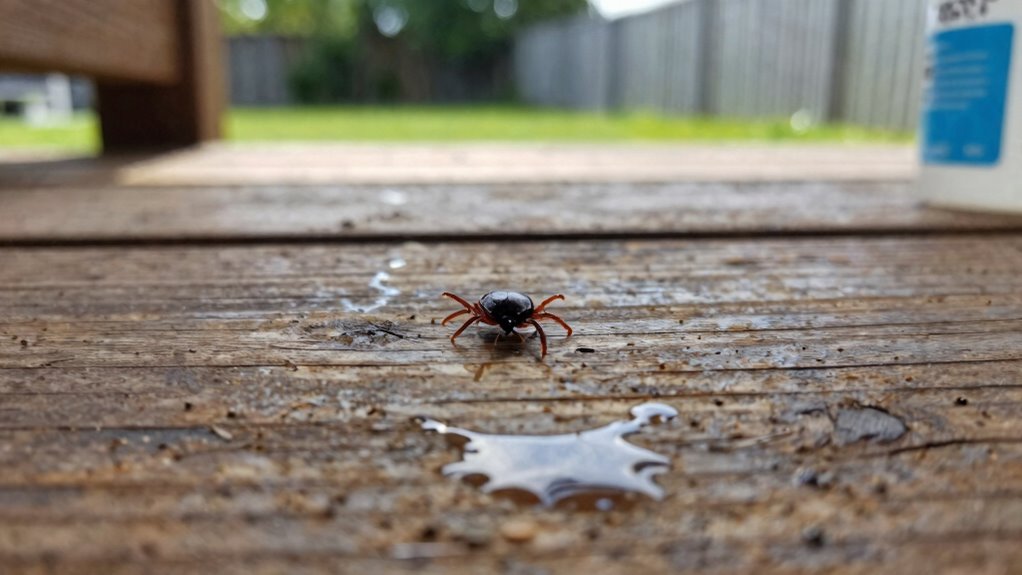
Many people are unsure whether to apply sunscreen or insect repellent first. The correct order is simple: put on sunscreen first, then repellent.
Sunscreen needs full skin contact to absorb and provide protection. Layering repellent on top can reduce SPF effectiveness by up to 30 percent.
Tick season typically runs from April through September. However, mild winters can push tick activity into early February, so year-round preparation is smart.
Choose a broad-spectrum sunscreen with SPF 30 or higher. Let it dry for 10 minutes before applying repellent.
Use an EPA-registered repellent containing DEET, picaridin, or IR3535. Avoid combination products because they often fail to deliver adequate sun protection.
Reapply sunscreen every two hours. Reapply repellent only after swimming or heavy sweating, always after sunscreen.
Remember the bottom line: layer correctly to avoid sunburn and tick hitchhikers. For children, no more than twice daily applications of repellent are recommended for those ages 1 to 10. Staying protected is simple when you follow this order.
Where Ticks Live and How to Avoid Them on the Trail
Ticks stake out a predictable real estate portfolio: grassy, brushy, and wooded areas with leaf litter, especially from April to September. The simplest trail hack is to walk smack‑dab in the center of the path, avoiding that high grass on the edges where ticks wait. Applying a permethrin spray to clothing and gear can provide up to six weeks of protection against ticks.
Knowing these habitat hotspots helps you avoid tick bites and reduce pest control worries. Steering clear of them turns a hike from a tick lottery into a calculated, lower‑risk stroll.
For effective tick control on your property, keep grass trimmed and remove leaf litter. Using a tick repellent spray before you head out is a smart buyer‑intent choice for protection.
Staying on clear trails and checking for ticks after your walk are simple prevention steps. This friendly approach keeps your outdoor time safer and more enjoyable without overcomplicating it.
High-Grass Avoidance
Avoid brushing against tall grass, ferns, or shrubs on trail margins. Step over, not through, dense clumps of weeds.
Picnic on bare earth or gravel, not in thick vegetation. Check ankles and legs after moving through any overgrowth.
Treat clothes with permethrin to kill ticks on contact. This is a proven tick repellent for your outdoor gear. Consider using a product like SaferPak InsectGuard Permethrin Repellent & Insecticide Spray, which provides 6 weeks of protection on treated clothing.
Keep your feet on the path’s center, and resist the shortcut through high grass. Ticks can’t fly or jump, so they wait for you to come to them.
Don’t make it easy for these pests to latch on. Use a reliable tick control spray on socks and pant cuffs before hiking.
Even a quick walk near brush can invite Lyme disease risk, so stay vigilant. Inspect your skin and clothing thoroughly after any trail time.
For deeper protection, consider a permethrin treatment kit for your shoes and backpack. That adds a long lasting barrier against tick bites.
Trail Center Walking
Trail center walking is the most effective zero cost strategy for avoiding ticks. It works without special gear or sprays.
Stick to the beaten path and skip the hairy edges. Ticks wait on grass and brush, not in open trails.
A path width of two to three feet keeps you in the tick free zone. Tall grass edges contain tick habitats you want to avoid.
Leaf litter piles and overhanging shrubs are common tick hiding spots. Stay on packed dirt or gravel to reduce pest control risks.
Step wide of that leafy overhang and you invite hitchhikers on your socks. Center trail hiking is simple outdoor pest prevention.
Bottom line, this is zero effort protection that works. Keep walking down the middle.
For balcony and ledge protection, flexible cut-to-fit spikes install easily on curved surfaces to prevent birds from perching.
Tick Habitat Awareness
Stay away from overgrown field margins where deer mice are common. Avoid log piles and stone walls; they act like tick condos in your yard.
Scan ahead for sunlit, open patches since ticks prefer shade and humidity. Check your socks and cuffs every 15 minutes on high risk trails.
Carry a dedicated tick removal tool instead of tweezers for quick, safe grabs. Assume every grassy spot is a buffet for professional pest control.
Stay centered on the path and keep moving to reduce exposure. After your hike, perform a full body tick check for peace of mind.
Your back will thank you for using topical repellents and routine yard treatments. For safe removal, always use fine-tipped tweezers to grasp the tick close to the skin without squeezing.
5 Yard Modifications That Reduce Tick Habitat
A yard doesn’t have to be a five-star resort for ticks to feel at home. First, swap wet meadows for dry zones by planting tick yarrow, which repels via scent alone.
This herb is a natural tick repellent and costs just a few dollars for seeds. Next, install a 3-foot-wide gravel barrier between lawns and woods; wood chips work too, but gravel lasts longer and resists moisture.
Frequent mowing is your third move, since ticks hate short, sun-baked lawns. Keep grass under three inches to reduce tick habitat and lower the risk of tick bites.
Fourth, stack wood neatly in dry spots, away from house walls, to discourage rodent hosts like mice and voles. This simple step cuts down on tick breeding grounds near your living spaces.
Fifth, pull leaf litter promptly, because it acts as a tick spa during fall and spring. Raking leaves removes moisture and hiding spots that ticks need to survive.
These five changes cost under $50 total, whether you buy mulch or yarrow seeds. For lawn pest control, you don’t need a hazmat suit, just a rake and a gravel bag. To further reduce tick habitat, you can sprinkle natural granules around shaded, damp areas to disrupt the tick lifecycle without harsh chemicals.
Check Your Body for Ticks After Every Outing

Your skin is your first line of defense, but it’s also the exact real estate ticks target for a bite. After every outing, perform a full body check to catch them before they latch on.
A full-length mirror lets you see your back clearly, while a hand mirror handles the tricky spots like your scalp. Hop into the shower soon after coming inside, but not too early, since proper timing is covered in another guide.
Scan under your arms, behind your knees, and in your belly button, because these warm, hidden folds are prime tick hideouts. Check around your ears, along your hairline, and inside your belly button too, using that mirror combo for a complete sweep.
Move down to the spaces between your toes, your waistband, and any skin folds, since these sneaky pests love tight, dark areas. Don’t forget to examine children and pets, because ticks don’t discriminate by age or species.
Use a handheld mirror for the back of your neck to avoid awkward twisting, and make this a non-negotiable routine after every hike, garden session, or park visit. For extra protection, consider a permethrin fabric treatment before you head out, since it bonds to clothing and gear for up to six weeks or six washes, so your body check becomes a backup rather than your only defense.
If you spot a tick, remove it with fine-tipped tweezers immediately, then clean the site with rubbing alcohol and monitor for any rash or fever. For peace of mind, store a tick removal kit in your car or backpack, and always follow up with a professional pest control service if you find ticks near your home or yard.
Build this scan into your habit loop, just like brushing your teeth, and you’ll drastically reduce your risk of Lyme disease or other tick-borne illnesses. Your post-outing check is your cheapest, most effective tick prevention tool, so never skip it, even on quick errands.
Shower Within Two Hours of Coming Indoors
Showering within two hours of coming indoors is one of the easiest ways to dislodge ticks that haven’t attached yet. This simple pest control routine turns a quick rinse into a powerful safeguard against tick bites since ticks often wander for hours before biting.
A thorough scrub with soap and a washcloth can send those tiny hitchhikers down the drain before they find a cozy spot. Wet skin also makes full body checks much easier, helping you spot any leftovers right away.
Timely washing matches the urgent need for tick removal and significantly lowers your disease risk early on. For effective tick prevention at home, this habit is a top choice.
Wash and Dry Clothes to Kill Hidden Ticks
Many clothes pick up unwanted hitchhikers after a walk through tick country. To kill hidden ticks, tumble dry clothing on high heat for 10 minutes. This nukes them even if the clothes are dry. Washing alone in cold or medium water will not work. Hot water is the only way to drown them, so use a pest control strategy that combines heat and thorough inspection.
Toss clothes directly into the dryer on high heat, skipping the wash if they are clean but tick infested. For damp gear, dry on high heat for 20 minutes to guarantee ticks are dead. Inspect clothing closely at tick hotspots like cuffs, collars, and waistbands.
Perform a thorough gear inspection on backpacks, hats, and tents before bringing them inside. Wash clothes in hot water at 130°F or above to kill ticks that survive the dryer.
The verdict is simple: heat kills ticks fast. Use high heat, inspect gear, and you will stop these hitchhikers cold. For best pest control results, always check for tick removal after each step. Buyer intent should focus on proven methods like high heat drying and hot water washing.
Remove a Tick Safely in 5 Steps
Even after a thorough gear check, ticks sometimes sneak past your defenses. Removing one safely takes five calm steps.
First, use fine‑tipped tweezers and grab the tick as close to the skin’s surface as possible. Pull upward with steady, even pressure. Don’t twist or jerk. That can break off the tick mouthparts, leaving them embedded.
Second, after removal, clean the bite area with rubbing alcohol or soap and water. This step in your tick control routine prevents infection.
Third, dispose of the tick by submerging it in alcohol, placing it in a sealed bag, or flushing it down the toilet.
Fourth, monitor the bite for a rash or fever over the next few weeks.
Fifth, wash your hands thoroughly. That’s it. Five steps, no drama, just smart removal for effective pest management.
Frequently Asked Questions
Can Ticks Live in Urban Areas Like Parks?
Yes, absolutely. Ticks thrive in urban parks just as much as in rural areas.
Wildlife like squirrels, raccoons, and birds frequently carry these pests into green spaces.
A patch of unkempt grass or a leaf pile can easily hide ticks. Even a shady bush near a bench may host them.
One study found that 30% of city park ticks carried Lyme bacteria. This makes tick prevention essential for any outdoor visit.
Any green space with animals can have ticks. Do not assume you are safe simply because you are not in the woods.
Check yourself and your clothes after a picnic or walk. Effective tick repellent or permethrin-treated gear can reduce bite risk.
A little caution now is free. A tick bite, however, may lead to costly treatment or long-term health issues.
How Long Does a Tick Need to Be Attached to Transmit Disease?
Most ticks need to be attached for 36 to 48 hours to transmit disease. The transmission time varies by pathogen, but Lyme disease typically requires a full day or two of feeding.
If you find a tick that’s barely attached, you’re probably fine. But if it’s puffy like a tiny grape, that’s when you worry.
Quick removal is key for preventing tick-borne illnesses. Always check yourself after being outdoors.
Don’t let ticks feed long enough to transmit Lyme or other diseases. Use effective tick repellent and perform thorough tick checks to stay safe.
Do Natural or Homemade Repellents Work Against Ticks?
Natural or homemade repellents like citronella oil are simply not reliable against ticks. Their protection is weak and fades fast compared to EPA registered pest control sprays.
A homemade tick spray might only last about 30 minutes, while a proven DEET repellent keeps working for hours. Undiluted essential oils can also irritate your skin, which is a real safety concern.
For the best tick prevention, use a permethrin treated shirt for long lasting outdoor protection. An affordable DEET repellent is another smart buy for your pest control kit.
The bottom line is skip the DIY and stick with proven options that actually stop ticks. You can get a permethrin treated shirt for around $20 or a reliable DEET spray for just $8.
Can Ticks Survive in Cold or Snowy Weather?
Yes, ticks can survive cold and snowy weather, so don’t let winter fool you. Many species, like the black-legged tick, simply go dormant underground or in leaf litter.
Snow actually acts as insulation, trapping warmth and dampness that protects overwintering ticks. A tick buried under snow might survive even subzero conditions.
That means your winter hikes still carry a risk, so always check for ticks after being outdoors. Think of snow as a cozy blanket for these tiny pests, not a death sentence for them.
For year round pest control, you need a proactive treatment plan that targets tick habitats before spring thaw. Products like permethrin sprays or tick specific yard granules can break the winter survival cycle.
Bottom line: stay vigilant all four seasons and invest in reliable tick prevention gear. A smart purchase today spares you Lyme disease worries tomorrow.
What Should I Do if I Find a Tick Crawling on My Skin?
Finding a tick crawling on your skin is no reason to panic since it hasn’t bitten you yet. The risk is very low, so just remove it quickly and calmly.
Use fine tipped tweezers or gloved fingers to grasp the tick as close to the skin as possible. Pull straight upward with steady pressure for safe tick removal.
Immediate removal is always better than waiting, though a crawling tick rarely transmits disease. After removal, wash the area thoroughly with soap and warm water.
Take a moment to check your clothing and skin for any other hidden or attached ticks. For ongoing pest control prevention, consider treating your yard and gear with a reliable repellent.
Protective clothing and permethrin treated items can help you avoid this routine next time. For the best tick control products, shop our recommended sprays and treatments to keep your home and outdoor spaces safe.


