
Does vinegar repel spiders? Not really, despite what you might have read online. Science says no—a 2025 study found it caused zero deaths in Joro spiders, and household vinegar’s 5% acetic acid barely bothers larger species.
It evaporates fast, leaves no lasting barrier, and its scent actually attracts ants and fruit flies, turning your home into a bug buffet. If you’re looking for a quick solution to keep spiders out, vinegar isn’t it.
Skip the pantry staple and try peppermint oil ($8–$12) or diatomaceous earth instead. This article breaks down exactly why vinegar backfires and what actually works for lasting spider control.
At A Glance
- Scientific consensus finds no evidence vinegar effectively repels spiders.
- Vinegar’s strong smell only temporarily irritates small spiders, not larger ones.
- Household vinegar’s 5% acetic acid is too weak for reliable spider control.
- Vinegar backfires by attracting ants and flies, drawing spiders back.
- Proven natural repellents like peppermint oil outperform vinegar as spider deterrents.
Why People Believe Vinegar Repels Spiders
People trust vinegar because it costs about two dollars and sits in every pantry. The fear of harsh chemicals pushes folks toward natural pest control, even when the evidence is thin.
A strong smell must do something, right? Spiders crawl away from vinegar spray, which feels like a quick win against household pests.
A strong smell must do something, right? Spiders crawl away from vinegar spray, feeling like a quick win.
But that reaction is mostly anecdotal, not proof of effective spider repellent. Vinegar sprays are messy, they evaporate fast, and you will need to reapply every few days. For a more reliable solution, natural spider repellent pouches last up to 90 days in low-airflow areas with no need for constant reapplication.
For a mild deterrent, it is a low stakes gamble for pest prevention. As a real solution for spider removal? You are just making your house smell like a salad.
Don’t bet your home defense on this one. Look into better pest management options if you want lasting results.
What the Science Actually Says About Vinegar
So does vinegar actually repel spiders, or is that just a myth that leaves your basement full of webs? The scientific consensus says no, not really.
A 2025 study on Joro spiders found vinegar had the lowest lethality of 11 chemicals, causing zero deaths. Entomologist Nancy Miorelli confirms no scientific literature supports vinegar as a proven spider repellent.
The problem is response variability. Different spider species react differently, and many aren’t bothered at all.
Some tiny spiders might feel discomfort, but for anything bigger, vinegar is just a sour smelling joke. The 5 percent acetic acid concentration in household vinegar is too weak for reliable pest control results. For those seeking a proven alternative, plant-based homemade repellents using lavender, citronella, or peppermint offer a scientifically backed deterrent that mosquitoes and other pests actively avoid.
What Vinegar Does to a Spider’s Body
When vinegar hits a spider, the acetic acid disrupts its nervous system and scrambles the signals that control movement. This reaction makes the spider twitch uncontrollably, which is why some home pest control guides mention it as a quick fix.
The acid also acts as a dehydrating agent, pulling moisture from the spider’s body. For very small spiders, this drying effect can be fatal over time. This dehydration process works similarly to how boric acid kills pests by damaging their guts and eventually causing death.
Nervous System Damage
Direct contact with vinegar can damage a spider’s nervous system, but don’t expect a dramatic spider showdown. The acetic acid seeps in, causing axon damage, which is like fraying the wiring in a computer.
It also triggers nerve signal disruption that scrambles messages between the brain and legs. For a tiny spider, this might slow it down or confuse it.
For anything bigger than a quarter, it is basically a bad smell. You would need to soak the thing, hold it still, and hope the vinegar does not just evaporate first.
For home pest control, this method is mild, messy, and unreliable. It is not a neurotoxin, so trying to kill spiders with vinegar is more of a theoretical buzzkill than a practical spider-killer.
Your best bet for actual spider removal is a targeted spray or a sticky trap. Those approaches deliver real results without guessing if the solution will work.
Dehydration Effects
Dehydration effects on spiders can be dramatic, but vinegar is not a reliable pest control solution. The acetic acid in vinegar disrupts moisture retention, drying out the spider’s exoskeleton over time.
Cuticle dryness leads to fluid loss, eventually weakening and killing the spider. However, this process is slow and inconsistent for most species.
A 5% vinegar solution barely affects a large spider’s hydration reserves. You need direct, soaking contact for any chance of effectiveness, and results vary wildly.
Spraying cracks and corners weekly might deter small spiders, but do not expect a complete elimination. For real pest control, vinegar’s dehydration effect works best as a mild inconvenience.
A glass and a card offer faster, cheaper, and more reliable spider removal. There is zero vinegar smell lingering on your counters with this method. Unlike chemical-free options that dehydrate pests without lingering odors, vinegar’s repellent action is far less potent than the mechanical pest control tools and dusters recommended for consistent indoor targeting.
Why Vinegar Fails Against Most Spider Species
Why does a kitchen staple that seems so promising fall so flat in the spider wars? The answer lies in spider behavior and basic chemistry.
Most spiders don’t rely on smell to navigate. They feel vibrations and touch, so vinegar’s odor barely registers.
Worse, standard acetic acid concentration at just 5% is too weak for effective spider control. It might irritate a tiny spiderling, but larger species like wolf spiders walk away unfazed.
For any pest removal effect, you’d need direct contact. Even then, success is a maybe.
Even with direct contact, vinegar’s success rate in killing spiders is only a maybe.
Vinegar evaporates fast, leaving zero residue for long term spider prevention. You’d be spraying every crack every few days and hoping for the best. Unlike residual barrier sprays that can protect surfaces for up to 12 months with careful application, vinegar offers no lasting defense.
It’s like fighting a fire with a squirt gun. For the price of a bottle at three dollars, you get false hope, not results.
Skip vinegar for better spider repellent solutions. There are more reliable tools for eliminating spiders and keeping your home pest free.
The 5 Essential Oils Proven to Repel Spiders Better
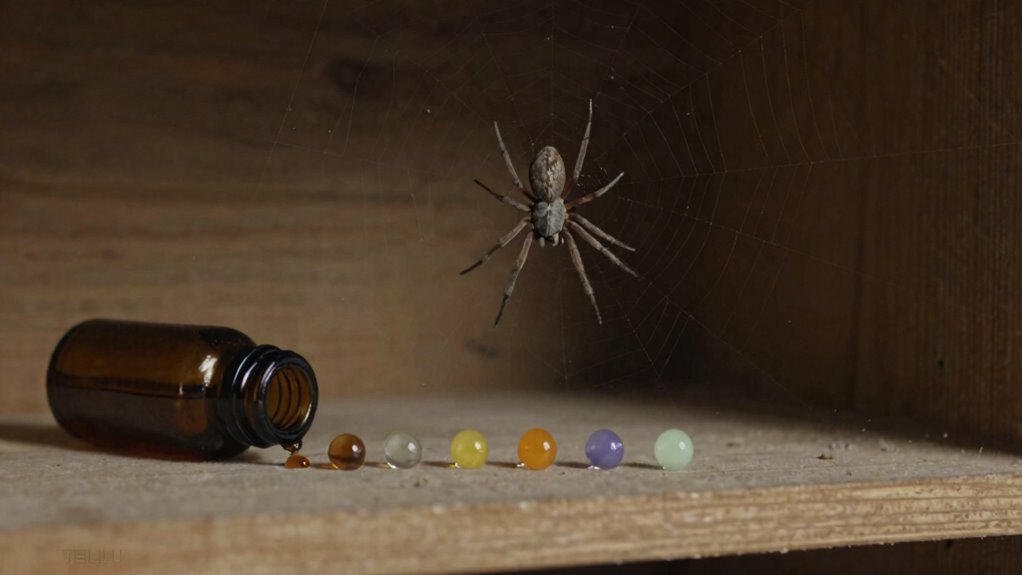
Peppermint oil costs $8 to $12 per bottle. Mix 15 drops with water in a spray bottle and spiders hate the strong menthol. Reapply weekly for the best natural pest control results. For a mess-free alternative, try peppermint scent pouches that last up to 60 days indoors.
Tea tree oil costs $10 to $15. Apply it undiluted to cotton balls and place them in corners. Its pungency confuses spider navigation for days, making it a top choice for home bug repellent.
Citronella oil costs $6 to $10. Spray it around door frames as a cheap and effective spider deterrent. Spiders treat it like a keep out sign, blocking entry points in your home.
These essential oils target spider sensory hairs directly. Vinegar evaporates fast, but oils linger and create a persistent barrier. Swap that kitchen staple for oil based sprays and watch spiders turn tail.
How to Apply Vinegar the Right Way (If You Try It)
If those essential oils sound like too much fuss, vinegar is the budget-friendly backup plan that won’t break the bank. Just don’t expect it to be a miracle worker for serious spider control.
Mix white vinegar with water, but pay attention to the concentration since that changes the effect. A standard 5% acetic acid solution works for most home pest management needs, while full-strength vinegar can tackle tougher cases.
Mix white vinegar with water, but adjust the concentration to match your spider problem.
Spray directly on spiders or their webs, but avoid misting surfaces you treasure. Full-strength vinegar can etch stone and damage certain finishes, so test in an unseen area first.
Reapply every few days because vinegar evaporates quickly and leaves no lasting barrier against pests. For small spiders, direct contact may irritate them, but larger specimens often barely flinch at the spray.
A plain spray bottle is all you need for applying this DIY spider repellent, so skip the fancy misters. This is a low-cost, low-commitment tactic for occasional spider sightings, not a permanent fix.
If you’re looking for a quick knockdown on visible spiders, vinegar offers a temporary solution that’s easy to prepare. But for long-term pest prevention, you’ll want to pair it with sealing cracks and reducing moisture around your home, unlike borate powders which provide dampness resistance for outdoor perimeter control.
Keep your expectations realistic and use vinegar as a spot treatment rather than a comprehensive defense plan. It’s a handy tool in your pest control arsenal, but not the hero that will win the war on spiders.
Where to Spray Vinegar for Maximum Effect
Since vinegar evaporates in minutes and leaves no lasting residue, where you spray matters more than how much you use. A mist on the wrong spot is like a joke nobody hears, pointless.
For maximum spider control, focus on three key areas where these pests actually travel and hide. Start with entry points like door thresholds, window frames, and baseboards near gaps.
Spiders wander in from outside, and a direct contact barrier here stops them cold. Reapply every few days since vinegar’s smell fades fast.
Next, target hiding spots behind furniture, under sinks, and in closet shadows. These are spider lounges, so soak them lightly without drenching.
Excess runs off and leaves nothing behind, so a light mist is best. Finally, hit web zones in ceiling corners and window sill edges where webs appear.
Direct contact knocks out small spiders instantly, but large ones will shrug it off. An $8 continuous spray bottle saves time and effort.
Bottom line: hitting these specific spots beats spraying everything, everywhere, always. Focus your pest prevention efforts for the best results.
To supplement your spray routine, place non-toxic adhesive glue boards along baseboards and corners to capture spiders already in the home.
Why Vinegar Can Backfire as a Spider Repellent

Vinegar’s strong scent may drive away spiders, but it can actually attract ants and fruit flies to your home. This turns your space into a bug buffet rather than a pest free zone.
The acidic nature of vinegar can etch marble countertops and dull limestone floors. That damage is far costlier than any spider web you might be trying to avoid.
So while vinegar seems like a quick spider repellent solution, it often creates bigger household headaches.
For long term pest control, look for proven spider deterrents that won’t invite other bugs. Instead, consider EPA-registered repellents that are safe and effective for outdoor use.
Attracts More Pests
But here is the ironic twist: the vinegar scent that seems like a quick pest repellent actually attracts more bugs.
Fruit flies, ants, and gnats are drawn to that strong, fermenting odor, especially near leftover food crumbs.
Spiders, being patient hunters, follow these pests right back to your walls and rebuild their webs exactly where you sprayed.
That vinegar treatment turns into a dinner bell for spiders instead of a barrier.
Ants and flies love the acetic acid smell, which creates a pest magnet around your home.
More prey means more spiders weaving webs nearby, turning your space into a spider snack bar.
You repel spiders briefly, then attract their food source, creating a counterproductive cycle.
The bottom line is that vinegar’s pest attraction outweighs any temporary spider deterrence.
Skip the spray and focus on sealing cracks and removing crumbs for long term pest control.
For effective home pest management, rely on exclusion and sanitation rather than DIY repellents that backfire.
Instead, consider using plant-based essential oil sprays that naturally repel ants without attracting more pests.
Damages Household Surfaces
If vinegar briefly shooed away spiders only to roll out the welcome mat for ants and fruit flies, the next act is even less charming. It damages household surfaces.
The acetic acid can cause surface etching on natural stone like marble or limestone, leaving a dull, rough patch that costs $50 to $200 to refinish. Countertop discoloration is another risk, especially on dark granite or sealed wood.
Here is a quick reality check for effective pest control around your kitchen and bathroom. Using vinegar as a natural repellent can backfire on these materials.
| Surface Type | Vinegar Damage |
|---|---|
| Marble | Etching, dull spots |
| Granite | Discoloration, sealer breakdown |
| Wood floors | Cloudy finish, raised grain |
| Painted walls | Peeling, faded color |
| Aluminum | Pitting, corrosion |
Instead of DIY vinegar sprays that may damage your countertops, consider sealed gel baits for roach control. For long term spider prevention, focus on sealing cracks and reducing clutter. Broad-spectrum kits cover up to 100 insect species including ants, cockroaches, and spiders for thorough elimination.
A safer approach for cleaning near ant trails is a mild soap and water solution. Protect your investment by avoiding harsh acids on natural stone surfaces.
Proven Natural Repellents That Outperform Vinegar
Skip the vinegar aisle entirely. Vinegar fails because Joro spider tests showed zero deaths from standard acetic acid concentration.
Science backs stronger natural options that work longer and better. Peppermint oil mixed at 1:10 with water is a top pest control solution.
Spiders hate it, it smells great, and an $8 bottle lasts months. Spray weekly on baseboards and windowsills for effective spider repellent.
Catnip oil actually repels spiders better than DEET in some studies. Use a few drops diluted; your cat may go nuts, but webs vanish.
Cedarwood oil mimics natural spider deterring wood. Apply near door frames for a solid passive barrier.
For $15 and ten minutes, skip the smelly, weak vinegar. Peppermint or catnip oil outperform every time as proven natural repellents. For even longer protection, diatomaceous earth provides a physical barrier that dehydrates spiders and crawling insects without harsh toxins.
When Vinegar Isn’t Enough: Call a Professional Exterminator
Peppermint oil works great for most homes, but some spider problems laugh at DIY sprays. When vinegar fails to stop a black widow or brown recluse invasion, professional intervention becomes necessary.
Pest management experts use targeted treatments like residual sprays that last months, not hours. They seal entry points, remove webs, and identify the species triggering the problem.
For small, common house spiders, vinegar can act as a temporary deterrent and rarely needs a pro. But for venomous spiders like black widows, DIY methods are ineffective and dangerous to handle.
Vinegar works for common spiders, but venomous species require professional treatment.
Large, recurring infestations require constant reapplication of vinegar, while a pro offers long term removal for $150 to $300. Hard to reach areas like attics or crawlspaces are difficult to treat yourself, but exterminators use foggers, dusts, or sprays to get the job done. For persistent invaders in these spaces, tamper-resistant bait stations reduce exposure while effectively eliminating pests.
Property damage from webs sees minimal impact from vinegar, whereas a pro provides structural cleaning and exclusion. For serious infestations, skip the bottle and call a team to save time, hassle, and spider bites.
Frequently Asked Questions
Can Vinegar Harm Beneficial Insects or Pets?
Vinegar toxicity is low for beneficial insects like bees or ladybugs, but direct spray can kill them on contact, just like spiders.
For pets, the main risk is vinegar ingestion, and a few licks cause stomach upset, not serious harm.
Larger amounts might trigger vomiting, especially in cats or small dogs, so keep your pest control targeted.
A smart move is to spray only on spider-prone spots, not flowers or pet bowls.
Bottom line: use vinegar cautiously, target cracks, and avoid drenching your garden.
This natural pest control method works best when you apply it precisely for effective spider removal.
Does Vinegar Stain or Damage Painted Walls?
Vinegar acidity can damage painted walls by reacting with the paint finish. This often leads to discoloration, bubbling, or peeling on flat or matte surfaces.
If you are dealing with spider webs, vinegar is a great DIY pest control product for hard surfaces. But using it on painted walls is not worth the touch up cost.
Think of it like a bad life choice that strips away the protective layer quickly and regrettably. Always test a hidden spot first if you must try it.
For smarter pest control around the home, stick to water or gentle cleaners for your painted surfaces. Many professional grade pest control sprays are safe for walls and won’t ruin your paint.
Look for products labeled as paint safe if you need a spray solution. Buyers searching for pest control products for indoors should prioritize finishes that protect both your home and your paint.
How Long Does the Vinegar Smell Last Indoors?
The vinegar smell indoors typically lasts 1 to 3 hours, depending on room ventilation and vinegar longevity. In a well aired space, it fades quickly, but a closed room traps the odor like a stubborn houseguest.
For practical pest control use, spray vinegar near windows or doors and crack them open. The acidic sting then dissipates in under two hours, making it a great deterrent for ants and spiders.
Reapply every few days for ongoing prevention against common household pests. Warmer rooms may speed evaporation but risk staining surfaces, so test first on porous materials.
This natural repellent is a smart purchase if you want a non toxic solution. Just remember that fresh air is your best friend for fast odor elimination.
Can Vinegar Be Safely Used Around Food Areas?
Yes, vinegar can be used safely around food areas, but you need to apply it with caution.
Its residue dries quickly and is non-toxic in small amounts, making it a fine option for countertops if you don’t mind the smell.
That sour scent works like a mild pest deterrent, helping to discourage ants and fruit flies from marching across your kitchen prep zones.
To follow proper food safety protocols, always rinse surfaces after applying vinegar or spray it on baseboards instead.
Vinegar residue won’t contaminate food, but direct contact with dishes, utensils, or cutting boards is a no go.
For kitchen pest control, it’s a decent, cheap solution that disrupts insect trails without harsh chemicals.
If you’re looking for a pest control product to buy, vinegar is not a feast worthy option, but it can support your overall home pest management routine.
Pair it with other natural repellents like peppermint oil for a stronger barrier against cockroaches and spiders.
Is Vinegar Effective Against Spider Eggs or Webs?
Vinegar is mostly useless against spider eggs and webs. A direct spray can cause some web decomposition by breaking down silk proteins, but only with prolonged soaking. Good luck chasing that, since spiders are fast and webs are often in hard to reach places.
The vinegar toxicity is too weak to penetrate egg sacs, leaving spiderlings unharmed. For webs, a water vinegar mix at 50/50 might clean them temporarily. However, webs will return quickly because vinegar does not repel spiders.
Better than nothing? Barely. Overall, vinegar fails as an egg killer or web remover. If you need a lasting solution for spider control, commercial cleaners and targeted pest control products work much faster.
For true prevention, combine a spider repellent spray with web removal tools and crack sealing. These methods are proven, effective, and worth the investment for a spider free home.


