
Getting rid of fleas on a puppy can feel overwhelming, but a consistent routine stops the cycle fast.
Start by using a fine-toothed flea comb daily, dipping it in soapy water to drown the pests you catch.
Bathe your puppy every two weeks with a gentle, puppy-safe shampoo that uses natural oils—never use pyrethrins on dogs under eight weeks old.
A single female flea lays up to 40 eggs each day, so you must vacuum all floors, furniture, and bedding weekly.
Wash your puppy’s bedding in hot water every week to kill eggs and larvae hiding in the fabric.
Full elimination takes about three to six weeks because fleas have a stubborn life cycle with hidden pupae. Stick with the plan, and your puppy will find relief fast.
Next, read on for a step-by-step timeline to break the flea cycle completely.
At A Glance
- Use a fine-toothed flea comb daily on neck and tail base.
- Bathe puppies with puppy-safe shampoo, lathering for five minutes.
- Vacuum daily and wash all bedding in hot water weekly.
- Use vet-approved treatments only for puppies over eight weeks old.
- Repeat treatments at day 14 and day 28 to break the flea life cycle.
Spot Fleas on Your Puppy (And Know When It’s Serious)
Since puppies have almost no immune defense against fleas, even a light infestation can spiral into something serious fast. One mission critical mistake owners make is waiting for obvious signs.
By then, anemia can be a real risk. Watch for intense scratching, hair loss near the tail, or tiny red bumps as that is flea allergy dermatitis.
You will likewise spot flea dirt, which looks like black pepper. Environmental triggers like tall grass or infested bedding often start the problem.
If your puppy seems lethargic or has pale gums, that is a vet visit, not a home fix. For effective pest control, check your yard and wash bedding regularly.
The bottom line is catch it early or you will regret it. Consider buying a flea treatment for dogs from your local pet store to stop the cycle fast. Natural sprays with certified natural oils like clove and cottonseed kill pests on contact without harsh chemicals.
Why the Flea Life Cycle Demands Immediate Treatment
Once those fleas are spotted and scratching or flea dirt is confirmed, the clock starts ticking. A single female flea can lay up to 40 eggs daily, which is an astonishing rate for such a tiny pest.
Those eggs don’t just stay on the puppy. They fall into carpets, bedding, and cracks, where flea egg dormancy can last months. Products like Adams Plus prevent eggs from hatching for about 28 days to break this cycle.
Pupae emergence triggers like warmth, vibration, or carbon dioxide cause them to hatch. This host seeking behavior creates a rapid infestation timeline.
| Stage | Key Risk |
|---|---|
| Egg | Dormancy up to 3 months |
| Larva | Hides in fabrics, feeds on debris |
| Pupa | Emerges in response to host |
| Adult | Bites within 24 hours |
| Cycle | Repeats every 3 weeks |
Reinfestation risk factors multiply daily if you delay flea control for pets. One missed treatment and those dormant eggs restart the cycle immediately.
Immediate treatment isn’t optional. It is the only way to break the chain before your house becomes a flea hotel.
Give Your Puppy a Flea Comb Session (The Right Way)
Combing your puppy for fleas is a strategic pest control task, not just casual grooming.
Focus the comb’s teeth on the neck and tail base, where fleas love to hide and feed.
After every few strokes, dip the comb into a cup of soapy water to drown adult fleas.
This prevents them from jumping back into your puppy’s coat.
For the best flea removal results, choose a fine-toothed flea comb designed for pets, ideally one with rounded, polished teeth to prevent skin irritation.
Always check the comb after each pass to spot any hidden pests.
Comb Placement Secrets
Starting a flea comb session is about strategy, not frantic scratching. The secret is placing the comb at the base of each hair to guarantee thorough egg collection along the neck and tail.
Work from the puppy’s head down using short, firm strokes. This traps fleas before they scatter.
Dip the comb into a bowl of soapy water after every pass. It drowns adult fleas and washes away debris.
Focus on the warmest spots like behind the ears and under the chin. A calm puppy is key, so start with five minutes and reward with a treat.
Slow, deliberate combing beats frantic scratching every time. This method is your best pest control investment for flea removal. For additional protection, a light dusting of food-grade diatomaceous earth on bedding kills fleas within 24 to 48 hours when kept dry.
Soapy Water Dips
The previous trick about comb placement is only half the battle. Soapy water dips finish the job.
After every few strokes, plunge the comb into a bowl of warm, sudsy water. The soap breaks the water’s surface tension, drowning fleas instantly.
This kills adults on the puppy, but it also yanks off eggs and flea dirt. This interrupts the flea life cycle before larvae can scatter into carpets.
That matters because pupae lurk for months in your rug. They wait to hatch and jump right back on your pet.
Daily dips, paired with thorough surrounding vacuuming, are the backbone of reinfestation prevention. Diatomaceous earth treatments on carpets can last for weeks if kept dry, adding another layer of defense against lurking pupae. Seriously, this is the chipotle mayo of flea removal: simple, sticky, and effective.
Bottom line: skim, dip, repeat, and you’ll win the war.
Daily Sighting Checks
Once you have the soapy water dip down, make it a daily habit, not a full grooming event.
Think of it as a quick, low-stakes inspection to catch problems before they spiral.
Each morning, run a fine-toothed metal flea comb through your puppy’s coat, focusing on the neck and tail base.
This targets hidden eggs and larvae, not just adult fleas, so you stay ahead of the pest control curve.
Skipping a day lets pupae mature into new flea traps, undoing your hard work.
These spot checks turn a potential infestation into a five-minute annoyance, saving you from costly treatments later.
Comb over a white towel to see fleas and “flea dirt” clearly against a bright background.
Dip the comb in soapy water after every stroke to drown survivors before they hop back on.
Check the comb’s teeth under bright light for tiny, moving specks that signal active breeding.
Log findings daily; fewer fleas means your environmental cleaning is working, which is key to long-term flea control.
Treat new catches immediately with vet-approved topical drops, not just baths, to break the lifecycle fast.
If you need a reliable flea killer or preventive, buy from a trusted pet supply store for the best results, such as fast-acting options like nitenpyram for urgent needs.
Bottom line: daily combing beats weekly panic, every single time.
Stick to this routine and you’ll save time, money, and your puppy’s comfort.
Bathe With Puppy-Safe Soap or Medicated Shampoo
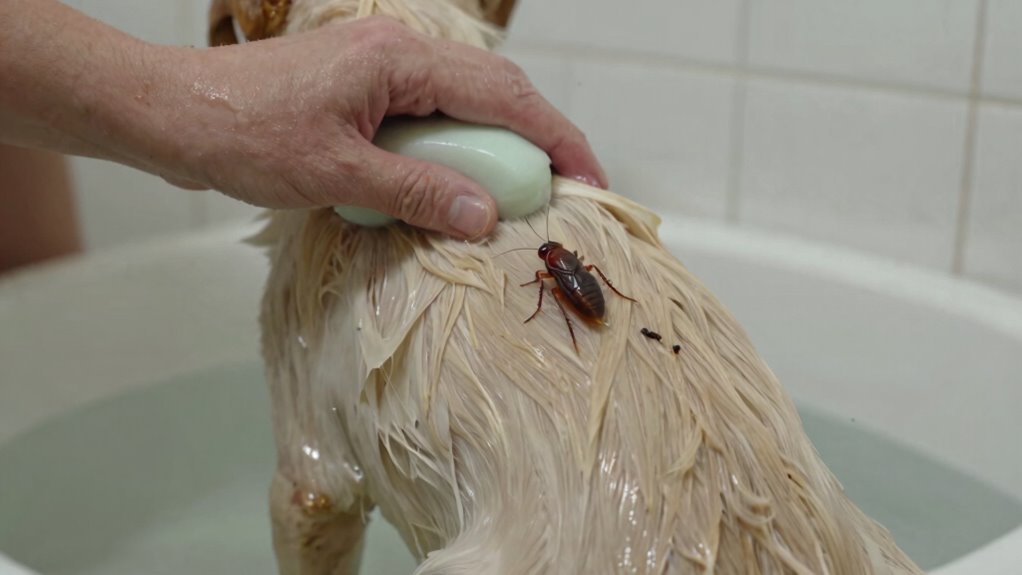
Choosing the right soap or shampoo is the first step because a puppy’s skin is sensitive. Human products can cause irritation, so always use a mild, puppy-safe soap or a medicated shampoo designed for flea control.
Look for formulas containing pyrethrin or natural oils such as cedar or peppermint. These topical pest control ingredients help kill fleas effectively during the bath.
Proper bathing technique starts by wetting the coat thoroughly. Apply the shampoo from neck to tail, carefully avoiding the eyes and ears.
Lather for at least five minutes to drown adult fleas. This step is essential for effective flea removal and pest control.
Rinse completely to remove all residue. Following this routine keeps your puppy comfortable and pest free. Natural oils like peppermint and lemongrass are also used in repellent products that are safe for pets when applied as directed.
Choosing Safe Products
Using a gentle, puppy-safe soap or medicated shampoo is the first step in bathing a tiny flea-infested puppy without turning the experience into a disaster or a trip to the emergency vet. Age checks matter first. Avoid anything labeled for dogs over 12 weeks, as harsher chemicals can harm a puppy’s developing liver.
Dosage safety is not an issue with shampoos because they are rinse-off, but always follow label instructions for contact time. A typical contact time is five minutes. Breed reactions vary. Flat-faced pups like pugs or brachycephalic breeds may have breathing trouble if soap gets near their nose, so keep suds away from the face.
Niche brands like Vet’s Best offer aloe-based formulas for flea control, but they cost about $15 per bottle versus $9 for generic oatmeal shampoos. Stick with what is vet recommended for best results. Check the ingredient list for pyrethrins or permethrins. These kill fleas but can be toxic to puppies under eight weeks, so choose safer pest control alternatives. Instead, look for plant-based natural oils like peppermint or cedarwood, which are effective yet gentle on animals.
Look for products labeled “puppy safe” or “for all life stages” to avoid over concentrated adult formulas. Medicated shampoos with oatmeal or aloe vera soothe itchy skin while killing fleas during bathing. Test a small patch of skin before bathing to spot any allergic reaction. Redness or swelling means switch products immediately.
Avoid flea shampoos that double as topical treatments. They often contain insecticides not meant for repeated use on tiny puppies.
Proper Bathing Technique
With the right shampoo, technique makes the difference between a calm puppy and a soapy wrestling match.
Start by testing water temperature, lukewarm like bathwater, never hot, as puppies have sensitive skin.
Gently wet the coat, avoiding eyes and ears, then lather a quarter-sized amount of puppy-safe soap from neck to tail.
Focus on flea hot spots for effective pest control, and let it sit for five minutes per label instructions.
Rinse thoroughly to prevent irritation from leftover soap.
Fill the tub with lukewarm water, two to three inches deep.
Work shampoo into the neck and tail area first for best results.
Rinse and dry with no residue, using a towel gently.
Bathe no more than once every two weeks to avoid stripping natural oils.
A calm, quick bath kills adult fleas and washes away flea dirt for a solid start.
For ongoing protection, consider following up with a home spray containing natural essential oils to break the flea life cycle.
Choose a Vet-Approved Flea Treatment for Puppies
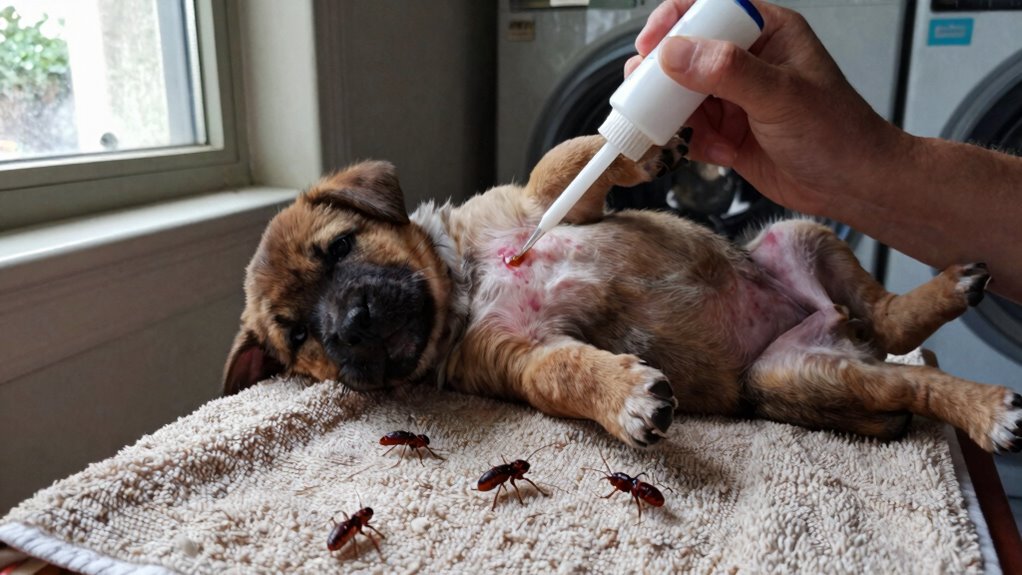
Choosing a flea treatment for a puppy under eight weeks old is like finding a coffee that doesn’t taste burnt. You have to read the fine print carefully.
Once the pup hits eight weeks, oral treatments become the heavy hitters. Credelio Quattro, for example, kills fleas within four hours, proving oral treatment efficacy even for tiny dogs over three pounds.
Flea collar safety gets trickier. Seresto works for eight months but must fit snugly, never loosely, to avoid choking risks on playful puppies.
Topical spot-ons like K9 Advantix II kill fleas within 12 hours. They require precise dosing by weight, so always check your puppy’s exact pounds.
A vet’s prescription is non-negotiable for oral options. Oral treatments offer rapid kill within hours, ideal for heavy infestations.
Flea collars need a two-finger check fit to prevent rubbing injuries. Topicals work in spite of baths if applied 48 hours post-wash.
Verify puppy age and weight on every label. Guessing invites failure when choosing the best flea control.
Combine combing with chemical treatment to confirm flea death counts. This double approach ensures you pick the right flea prevention for your puppy. Many cedar oil sprays are also safe for pets when used as directed.
Flea-Proof Your Home to Break the Reinfestation Cycle
Breaking the flea cycle at home means fighting on two fronts, and your carpet is the main battlefield. Indoor pest barriers like sealing cracks and installing door sweeps stop fleas from wandering inside.
Vacuum daily then toss the bag outside, because flea eggs laugh at indoor trash cans. Seasonal environmental checks matter, so clear leaf piles in fall and treat shady spots with pet-safe spray come spring.
Wash all bedding, yours included, in hot water weekly to kill fleas and eggs. Steam-clean carpets to destroy hidden pupae, as those stubborn little jerks resist other treatments.
Environmental sprays can last up to 7 months, providing long-term relief without constant reapplication.
It’s dull labor but it works, and you are not just killing fleas but evicting their unborn grandkids. No hype, just science and elbow grease, and your carpet will finally win the war.
Expect 3 to 6 Weeks for Full Flea Elimination
Home cleaning is one thing, but patience is another. Full flea elimination runs on a three to six week timeline, not days.
Environmental persistence is the real problem. Pupae hide in cocoons and ignore sprays or vacuuming until vibrations signal a host.
This stubborn stage makes repeated treatments essential for breaking the cycle. Adult fleas die fast, but eggs hatch in waves over weeks.
Pupae can sit dormant for months, mocking your efforts. Daily combing catches stragglers before they lay more eggs.
Consistency beats intensity. One missed dose resets your progress.
Mark a calendar for day 14 and day 28 as critical checkpoints. Stick with the routine and resist the urge to slack off.
You will win by week six if you follow through. Otherwise, you are just renting fleas.
Using a hydroprene fogger indoors can disrupt flea eggs and larvae for up to seven months, reinforcing your cleaning efforts.
Prevent Fleas on Your Puppy Year-Round
Start flea prevention for your puppy at eight weeks old. Year-round treatment stops fleas from turning your pet into a buffet.
Fleas hide in carpet fibers as dormant pupae. They wait for vibration, warmth, or carbon dioxide to trigger a meal.
Skipping winter months is like leaving a cracked window. A single missed dose can start a three week reinfestation cycle.
Oral chews like Credelio Quattro kill fleas within four hours. Monthly doses cost about $30 each.
Seresto collars run around $60 but cover eight months. This is a better deal for forgetful owners.
Treat every pet in the house at the same time. One itchy holdout can reinfest everyone quickly.
Stick to a monthly schedule with no breaks. Non-toxic glue traps can help catch stray fleas in the environment without harmful chemicals. Consistency beats chaos for effective pest control.
Frequently Asked Questions
Can I Use Home Remedies Like Vinegar or Garlic on My Puppy?
Home remedies like vinegar or garlic are risky for your puppy. Garlic is a definite no because it causes garlic toxicity and damages red blood cells even in small amounts.
Vinegar is less dangerous but not a reliable flea killer for dogs. It may irritate sensitive skin instead of solving the flea problem.
Stick to vet approved treatments for effective pest control. Oral medications start around $15 to $30 monthly and work fast with no guesswork.
Flea collars like Seresto offer eight months of protection for $60 to $80. These topical solutions kill fleas on contact and prevent future infestations.
Skip the kitchen cures and choose a proven flea treatment. Your puppy deserves safe, fast acting pest control that protects their health.
Will Fleas on My Puppy Bite Me or My Family?
Yes, fleas on a puppy will absolutely bite you and your family. Adult fleas jump between hosts to feed, so transmission to humans is very common.
Human flea bite symptoms include small, red, itchy bumps, often around the ankles and legs. These bites are annoying but not a serious health threat for most people.
The real solution is treating the puppy, not panicking. Don’t let this ruin your Netflix binge, just stay calm and act fast.
Start by vacuuming daily to remove flea eggs and larvae from carpets and furniture. Then use vet approved treatments like topical flea drops or oral medications for your puppy.
For a quick kill, consider a fast acting flea spray for your home and yard. Look for products with an insect growth regulator to break the flea life cycle.
If you want to buy a complete flea control kit, check for options that include a home spray, a pet spot on treatment, and a flea collar. This combination delivers the best protection for your family.
The fleas won’t stay long if you act fast and follow a consistent treatment schedule. Smart pest control purchases now save you from a full blown infestation later.
How Soon After Treatment Can I See Fleas Dying?
A puppy often shows dead fleas within hours of treatment. Oral meds like Credelio Quattro start working in about four hours, which is pretty fast for a pill.
Topical spot-ons take up to 12 hours to kick in. Immediate effects include fleas slowing down, then dying.
But the treatment timeline matters because pupae in carpets hatch later. New fleas can appear for weeks after you treat, so monthly prevention is the only way to stay ahead.
The bottom line is you will see quick kills, but do not expect instant peace. Consistency beats a single fix when it comes to long term pest control and flea protection.
Do Flea Treatments Expire, and Are They Still Effective?
Yes, flea treatments expire, and their effectiveness drops sharply after the expiration date. The active ingredients like lotilaner or spinosad break down chemically, so they won’t reliably kill fleas or control a pest infestation.
Check the packaging for a dated expiration and avoid using it past that point. An expired spot on treatment or oral tablet can leave your puppy unprotected against a heavy flea outbreak.
You’re better off buying a fresh pest control product, like a topical spot on for about 10 dollars. That small investment costs less than a vet visit for fleas that survived your old supply.
Toss expired flea treatments and don’t gamble on a bargain that might backfire. Always choose a current, effective flea killer to keep your pet safe and pest free.
Can My Puppy Get Fleas From Walking on Concrete or Pavement?
Bottom line: don’t skip prevention just because it’s concrete. Fleas are determined little jerks that can still hitch a ride on your puppy.
They can jump onto your dog from any surface, including pavement, if a flea host recently passed through. A thorough flea prevention plan is your best defense.
Always use a vet recommended topical treatment or oral flea medication monthly. These products target fleas at multiple life stages, which breaks the cycle before an infestation begins.
Look for fast acting flea killers that start working within hours. This is a smart purchase for any dog owner who walks their puppy in urban areas.
Even on concrete, fleas sense carbon dioxide and body heat, so they will leap from a passing squirrel or stray cat onto your pup. That is why consistent pest control for dogs is non negotiable.
Consider a flea collar or a spray treatment for added protection on walks. These barrier methods are easy to apply and give you peace of mind.
Remember that fleas can survive in cracks and crevices of pavement, especially in shaded spots. So always inspect your puppy’s fur and belly after a walk.
If you see any signs of itching or scratching, use a flea comb and a gentle shampoo with natural repellents. For severe issues, a professional pest control service may be needed for your home.
Invest in a quality flea prevention product today. It is the smartest way to keep your puppy happy and flea free on any surface.


