
Cleaning your house after a flea infestation doesn’t require toxic foggers or guesswork—it demands a consistent, step-by-step attack on every life stage.
If you’ve been battling fleas for weeks, you already know the frustration of seeing them bounce back. The real solution is simpler than you think: vacuum daily with a beater-bar machine, wash pet bedding in hot water above 130°F, and seal cracks where fleas hide.
This guide walks you through the exact routine that ends the war, not just pauses it. Stick with it, and your home will be flea-free without the cringe-worthy chemical overload.
At A Glance
- Vacuum daily for two weeks with a beater-bar brush to remove eggs and larvae.
- Wash pet bedding in hot water above 130°F, then dry on high heat.
- Seal baseboard and floor crevices with silicone caulk to block flea hideouts.
- Mop hard floors daily with hot, soapy water to dislodge flea eggs.
- Dispose of vacuum bags outdoors in sealed plastic immediately after each use.
Why Your Cleaning Routine Makes or Breaks the Fight
Your cleaning routine is the decisive battle in the war against fleas, not just an optional task.
Your cleaning routine is the decisive battle in the war against fleas, not just an optional task.
Every day you skip vacuuming, you let eggs and larvae advance, maturing into adults that thrive on poor pet nutrition and damp spots where fungus grows.
A consistent flea control schedule, vacuuming for at least two weeks, removes up to 60% of eggs and 30% of larvae from carpets.
Wash pet bedding every few days in hot water, then dry on high heat to kill all life stages instantly.
Follow up treatments are needed 5 to 10 days later to catch insecticide resistant pupae.
Moderate infestations take months to control, but consistency not chemicals wins the fight.
Skip a day and you are just feeding the enemy.
Bottom line, treat cleaning like a non negotiable shift, not a chore.
Using a spray with an insect growth regulator stops eggs and larvae from maturing, preventing reinfestation for up to seven months.
What Equipment You Actually Need (and What to Skip)
Starting with the right tool is half the battle, and the other half is not buying junk. You need a vacuum with a beater-bar brush; it costs about $50–$100 and physically dislodges flea eggs from carpet fibers.
Skip gimmicky “flea-zapper” attachments, they are overpriced nonsense that won’t target hidden pupae. For pet flea control, a flea comb under $10 and soap for baths are non-negotiable for daily inspection and removal.
Yard flea treatment demands a garden sprayer around $20 for insecticide application on shady, damp spots where larvae thrive. Skip foggers, they miss hidden larvae and leave you with a false sense of pest elimination.
Steam cleaners from $80 to $150 kill fleas on contact on carpets and upholstery, so buy one for immediate home flea treatment. Avoid “all-natural” sprays with no proven active ingredients, they are just expensive water with no real knockdown power.
Bottom line: a good vacuum, comb, sprayer, and steamer win the war against flea infestations. The rest? Leave on the shelf and save your money for targeted flea control products. For dry areas, dust food-grade diatomaceous earth into carpets and baseboards to kill fleas via mechanical dehydration within 24 to 48 hours.
Post-Infestation Vacuuming: Remove Eggs, Larvae, and Pupae
Vacuum every single day for at least one to two weeks after an infestation. This critical step has no exceptions and no room for procrastination.
Use a vacuum with a beater-bar brush to thresh carpet fibers thoroughly. This action exposes up to 60 percent of flea eggs and 30 percent of larvae to suction or insecticide.
Think of it as a daily mechanical wake-up call for hidden flea babies. It forces them out of hiding so they cannot grow up to bite your ankles.
A post-treatment vacuuming routine is essential for breaking the flea life cycle. Daily cleaning disrupts egg, larvae, and pupae development in your home.
For ongoing protection, use a shampoo that prevents flea eggs from hatching for about 28 days to support your cleaning efforts.
Daily Vacuuming Schedule
Since timing matters, daily vacuuming for at least one to two weeks after a flea infestation is non-negotiable. That consistent sweep removes eggs, larvae, and pupae before they mature into biting adults.
Skip a day and you hand them a head start. Pair this with indoor humidity control, since damp air helps fleas thrive.
Keep in mind volatile oil risks. Some DIY sprays can harm pets, so stick to physical removal.
Here is the daily drill. Hit all carpeted zones, including baseboard edges and under furniture.
Vacuum hard floors and cracks to catch stragglers. Empty the canister or bag outdoors, sealing it in a plastic bag immediately.
Repeat every 24 hours for 14 days straight. No breaks and no skips.
Bottom line: daily vacuuming is your cheapest, safest weapon. Stay boringly consistent and you win.
For added protection, apply a pet-safe flea powder like diatomaceous earth to carpets before vacuuming to target lingering eggs and larvae.
Beater-Bar Brush Usage
Not all vacuums handle fleas the same way, especially those pests hiding deep in carpet fibers. A beater bar brush is your best friend here, thrashing fibers to shake out eggs and larvae effectively.
A stick vacuum often lacks this bar, making it weak for flea removal. Your standard upright vacuum with a spinning brush removes up to 30% of larvae and 60% of eggs if you actually use it.
Apply carpet powder first to dehydrate any survivors before vacuuming thoroughly. Dispose of the bag immediately outside, sealed in plastic, with no second chances.
A steam mop works well on hard floors but not on rugs. Want a fun tip? Shine a UV light on carpet after cleaning to spot missed flea activity.
One pass isn’t enough for complete flea control. For sustained results, consider using an electric fly swatter to quickly zap any adult fleas you spot during daily inspections. Vacuum daily for two weeks to break the flea life cycle. That’s the bottom line for effective pest management.
Clean Non-Carpeted Floors and Hidden Crevices
Non-carpeted floors and hidden crevices are far from safe havens after a flea infestation.
Mop all hard floors thoroughly, as the soap and water action will dislodge flea eggs and larvae from tiny cracks and corners.
For maximum effect, sweep or vacuum debris first, then apply a hot, soapy mop to the entire surface.
Pay close attention to baseboards and floor junctions where fleas love to hide.
This pest control treatment step is critical for breaking the flea life cycle.
Using a targeted flea cleaning solution on your hard floors helps ensure no eggs survive.
Don’t forget to seal crevices after mopping for ongoing flea prevention.
Regular mopping with hot soapy water is your best weapon for a flea-free home.
For continued outdoor control, consider applying Bifen LP Granules around entryways and foundations to keep pests from returning.
Mop All Hard Floors
Hard floors hide fleas just as well as carpet, but they need a different approach. Tackle them before crevices become hideouts.
Here’s the plan: use an electrostatic mop daily. A dry mop with electrostatic cloths grabs flea eggs, larvae, and dirt without scattering them. Swiffer or similar works; refills cost around $10.
For weekly mopping, mix a few drops of mild dish soap with warm water. This pH-neutral solution kills adult fleas without damaging tile or wood. The soap disrupts their waxy coating, drying them out.
Rent a steamer for $30 per day or buy a handheld for $50. Focus on baseboards and under cabinets; heat kills all flea stages instantly.
Sweep into a dustpan and toss debris in a sealed bag. Repeat this sealing and sweeping for two weeks to break the flea cycle.
Skip harsh chemicals, stick with these tools, and you’ll win against fleas on hard floors.
Clean Cracks and Crevices
Mop work is done, but fleas hide in cracks and crevices on non carpeted floors where a mop cannot reach. A dedicated crevice inspection is key for effective pest control.
Grab a flashlight and a stiff bristled brush. Sweep along baseboards, under cabinets, and around tile edges.
These spots hide flea eggs and larvae that laugh at your mop. For persistent gaps, use crack sealing with a silicone caulk gun costing around five dollars a tube.
This blocks escape routes and is worth the cost. A single missed crack can restart your entire flea treatment plan.
Pay special attention to corners and where floor meets wall. Use a vacuum crevice tool after brushing to remove debris.
It is tedious but fleas are stubborn jerks. Seal every gap you find to starve them out and eliminate their habitat. For larger gaps that caulk cannot fill, consider using steel wool and mesh products to create a durable barrier against pests.
Wash Fabrics Repeatedly, Not Just Once
A certain stubbornness is exactly what you need when dealing with flea eggs. These eggs can hatch days after the first wash, so one load won’t cut it.
The solution is repetition. Wash on high heat with water at 130°F or hotter to kill adults, larvae, and eggs instantly.
Cold water just gives them a bath. Dry on maximum heat in the dryer to finish the job and zap any survivors.
Skip the air-dry setting here. Use fabric rotation by swapping out washed items with clean ones every few days.
This prevents eggs from maturing on untreated fabrics. For items that can’t be washed, like delicate upholstery, add steam sanitizing.
A handheld steamer (around $40) delivers 212°F heat directly to kill hidden eggs without soaking. Wash everything twice, at least.
Stick with the routine until the infestation is gone. Flea eggs are patient, but a consistent schedule isn’t. Many steamers heat to 221°F for faster results and include adjustable steam levels to protect delicate surfaces.
Handle Pet Bedding Without Spreading Fleas
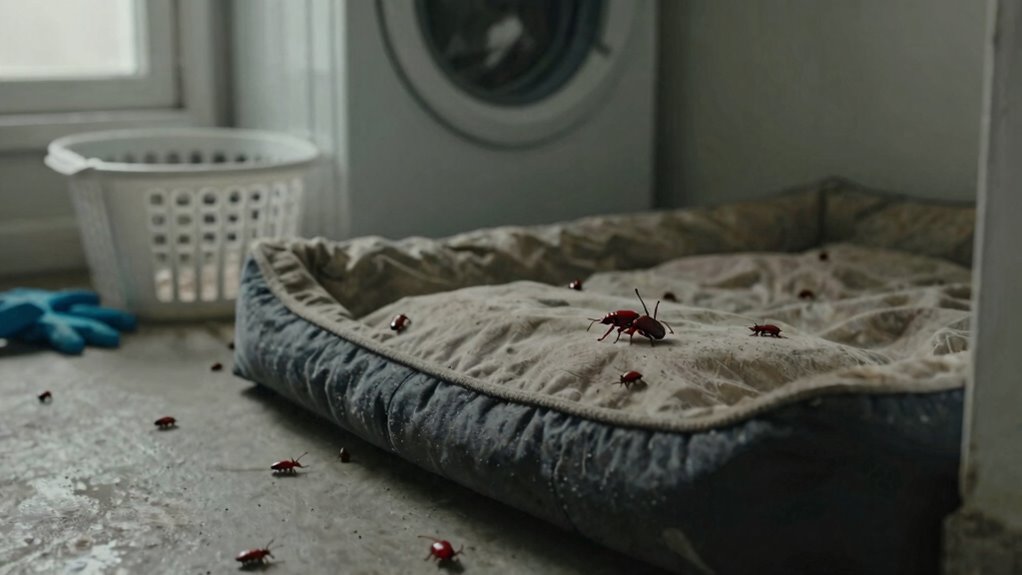
Wash pet bedding in hot water, then dry on high heat to kill every flea life stage hiding in the fabric. Repeat this laundering weekly for at least two weeks, since stubborn eggs can hatch days later and restart the cycle. Skipping even one wash gives those tiny freeloaders a free hotel room, and nobody wants that. For best flea control, use a vacuum with a HEPA filter on carpets and upholstery too. Consider adding a flea spray to your laundry routine for extra protection. This approach keeps your pet comfortable and your home pest-free. Natural repellents like neem and coconut oil can support ongoing prevention in your pet’s environment.
Wash in Hot Water
Washing pet bedding in hot water is a key step in any flea control plan, but since eggs can hatch days apart, this is not a one-time fix.
You should wash all bedding, blankets, and fabric toys your pet touches every three to four days for at least two weeks.
The heat is what truly matters here, so make sure the water reaches at least 130°F to kill all flea life stages.
Before you start, always check the care labels for temperature limits, since delicate items may need dry cleaning or replacement instead.
Use your washing machine’s hot water cycle with a regular detergent, as no special additives are needed for this task.
After washing, run a full drying cycle on high heat for at least 30 minutes, because the heat in the dryer does the actual killing, not the water.
Once the items are dry, bag and seal them immediately to prevent re-infestation from fleas hiding in carpets or furniture.
For fabric care, avoid bleach and fabric softeners, as these weaken fibers over time and reduce the longevity of your pet’s bedding.
Stick to hot water and high heat drying, and repeat this routine until the fleas are completely gone, since skipping a single cycle risks starting the whole process over.
For a thorough flea treatment plan, combine this washing routine with chemical-free flea traps placed in dark corners to capture any fleas that emerge from untreated areas.
If you’re looking for effective flea killers for your home, consider adding a household spray or fogger to target non-washable areas, but always pair that with this hot wash method for best results.
Remember, consistency is your friend, and keeping up with this schedule is the best way to buy flea protection that actually works.
Your fabrics will stay safer too, because high heat and plain detergent are gentler than harsh chemicals, so your pet’s favorite blanket lasts longer.
Stay on track for those two weeks, and you’ll see the flea population drop dramatically, making your home a comfortable space again.
Dry on High Heat
Dry on high heat is the second half of the one two punch against flea life stages hiding in fabric. This is where the actual killing gets done, because water alone won’t finish the job.
The high temperature must be sustained for at least thirty minutes to guarantee no eggs, larvae, or pupae survive. Anything less is just damp laundry.
Set your dryer to the hottest fabric safe setting, such as a cotton or heavy duty cycle. Run for a full cycle, then add ten extra minutes to be certain, since fleas are surprisingly stubborn.
Never take bedding out while it is still damp. Humidity lets them cling to fabric and survive.
Bottom line: skip the dryer shortcut unless you enjoy repeating this whole mess. For complete flea control, high heat drying is your best bet.
Weekly Repeat Laundering
The weekly repeat laundering of pet bedding is where consistency earns its keep, since fleas do not respect a one-and-done approach.
A single hot wash kills today’s bugs, but eggs hatch days later, laughing at your effort.
This bedding refresh cycle, repeated every seven days for at least a month, breaks that loop permanently.
Bag first: carry bedding to the washer in a sealed trash bag, not cradled against your chest.
Fleas jump ship mid-gallop, so this prevents an indoor flea infestation.
Use hot water at 140°F and a hot dryer for 30 minutes on high heat.
That’s kill-zone territory for all life stages, including eggs and larvae.
Also clean the bag by tossing the empty bag in the washer or outdoors.
No flea hitchhikers should survive.
Skip the fabric softener because it coats fibers, but heat already does the heavy lifting.
Do this without fail for effective flea control.
Miss a week and you’re back to square one, scratching your own leg.
For additional defense against surviving pests, you can apply cedar oil sprays to carpets and pet beds after laundering.
Coordinate Pet Treatment With Home Cleaning
Why coordinate pet treatment with home cleaning? The flea life cycle is a stubborn, multi-stage beast.
Why coordinate pet treatment with home cleaning? Because the flea life cycle is a stubborn, multi-stage beast.
Eggs, larvae, and pupae lurk in carpets, not just on Fluffy. Simultaneous treatment of both pet and home is the only way to break that cycle.
Treating one without the other is like mopping the floor as the sink’s still overflowing. So, bathe every pet with soapy water, then comb them with a flea comb.
Get that preventative from your vet too. Meanwhile, vacuum daily, wash fabrics on hot, and apply a targeted indoor insecticide spray for flea control.
Do it all at once. If you treat the dog today but wait until next week for the house, those eggs hatch and laugh at your efforts.
That’s why you need a full home flea treatment plan paired with pet pest control products. The right approach kills adult fleas, larvae, and eggs in one sweep.
Bottom line: treat pets and home on the same day. No exceptions. It’s the only shot that sticks, so book your cleaning and pet care for the same appointment. To maximize effectiveness, consider using a fogger that provides up to 7 months of reinfestation protection for long-term control.
Treat These Yard Hot Spots First
Once you’ve treated your home and pets together, believe me, it’s the only way to win. Then it’s time to tackle the yard for complete flea control.
Fleas love dark, damp, warm hideouts. They don’t roam, they wait.
So you must hit their yard source points first. Start with shady areas under decks, dense bushes, and along fence lines where pets lounge.
Outdoor treatment timing is everything. Apply granular or spray insecticides for flea prevention in early morning or late evening when fleas are most active.
Skip midday heat. Here are the four must treat hot spots for effective yard pest control:
1. Pet sleeping areas and doghouses. 2. Base of trees and shrubs near the home.
3. Under porches, decks, and patios. 4. Along foundation edges and crawlspace vents.
One application won’t cut it. Reapply after 7 to 10 days to break the egg cycle.
The verdict is clear, treat these zones first. Otherwise fleas just re enter from the yard and your indoor work is wasted.
For outdoor treatment, consider a yard spray with hose attachment like Wondercide Natural Yard Insect Repellent Spray, which can cover up to 5,000 square feet and kills fleas and mosquitoes on contact.
When to Call a Pro for Indoor Chemicals
When a flea infestation lingers past three weeks of DIY sprays, the eggs and pupae are likely laughing at your store-bought products. Those cheap chemicals often miss the tough outer shell of flea pupae, so hiring a professional pest control service breaks that cycle.
If your pet starts scratching or shows allergic reactions after you use a store-bought insecticide, that’s a clear red flag. A licensed exterminator uses safer, targeted treatments that won’t irritate sensitive skin.
You’ve sprayed the same carpet, baseboard, and pet bedding twice with no change, which means either your timing is off or you’ve grabbed the wrong product. A pro will inspect, identify the flea species, and apply the correct IGR that stops eggs from hatching for months.
You’ve sprayed twice with no change—a pro identifies the species and applies the correct IGR.
Their $150 to $300 home treatment covers every room, including cracks and upholstery, with insect growth regulators that break the flea lifecycle. So, if your DIY effort feels like feeding the fleas instead of fighting them, search for a local flea control expert and get a free quote today. For families with young children, professionals often use DEET-free formulas safe for sensitive skin.
Flea Hideouts Most People Miss
Flea infestations often seem to vanish before returning with a vengeance weeks later. This happens because you missed the quiet spots where their life cycle plays hide and seek.
Under furniture cushions, flea eggs drop into seams and crevices and develop undisturbed. Toss cushions outside and vacuum every seam weekly to stop the cycle.
Baseboards and floor vents become warm, dusty flea habitats for larvae feeding on organic debris. Run a vacuum crevice tool along every baseboard and vent edge for proper pest control.
Pet carriers and car upholstery can re-infest your home after just a 15 minute ride. Wash carrier liners in hot water, and vacuum car seats, floor mats, and trunk weekly.
Fireplace hearths and window sills are raised surfaces fleas jump onto to wait for hosts. Vacuum them gently or wipe with soapy water to break the cycle of flea treatment. To target fleas in these areas, you could apply Rid Home Lice & Bed Bug Spray with a three-second spritz on nonwashable items and surfaces.
Miss these spots, and your clean home stays a flea nursery. Professional pest control services often target these hidden areas for complete flea removal.
Consistency: The Only Way to End a Flea Infestation
The cleaning schedule you followed for a week can feel like a victory, but flea eggs outlast your vacuum’s capacity. Consistent pest control habits are the only way to break the cycle.
Routine adherence means vacuuming daily for two weeks, even when you are tired. Wash pet bedding every few days without skipping a single session.
Eggs hatch days later, so missing a treatment resets your progress. One missed vacuum pass allows larvae to mature into biting adults.
Stick with it by disposing of the sealed bag immediately. Then steam clean carpets and treat pets simultaneously with a proven product.
Follow-up treatments at day five through ten kill any surviving fleas. Moderate infestations require months of ongoing sanitation effort.
Using a hydroprene fogger as part of a multi-step approach can disrupt flea eggs and larvae for up to seven months, preventing reinfestation.
The punchline is simple. Fleas outlast a sprint, but they never survive a steady march of consistent pest control.
Frequently Asked Questions
How Long Before I See Fleas Again After Cleaning?
You’ll likely see fleas again within a few days to two weeks after cleaning. That’s because flea eggs survive deep in carpets, baseboards, and furniture cracks.
Residual flea spray or insecticide usually stays effective for seven to ten days. But newly hatched adults can still emerge from surviving pupae in their cocoons.
Vacuum every single day to physically remove eggs, larvae, and adults. This step is essential for effective flea control after treatment.
Reapply your chosen flea treatment exactly as the label directs. Think of it like whack a mole; you just have to be slower and more consistent.
Stay on top of your integrated pest management plan for several weeks. Otherwise, those stubborn fleas will throw a bigger party in your home.
For a complete flea elimination strategy, pair vacuuming with an IGR (insect growth regulator) and a fast killing adulticide. Buy products that target both adult fleas and their eggs.
Can I Use a Dust Mop Instead of Vacuuming Every Day?
No, a dust mop won’t do the job for flea control.
A dust mop just skims the surface, but flea eggs and larvae hide deep in carpet fibers.
Vacuuming removes up to 30% of larvae and 60% of eggs every day.
The beater-bar brush is key because it stirs up immature fleas so insecticides can reach them.
Skip the mop and stick with vacuuming.
It’s your best shot at breaking the flea life cycle without extra work.
Will Freezing Infested Fabrics Kill Flea Eggs and Larvae?
Freezing can kill flea eggs and larvae, but only if temperatures stay below 0°F for several days. Most home freezers don’t reach that level, so this method rarely works for fabric treatment.
Fabric heat treatment, like a hot wash and high-temperature dryer cycle, is far more reliable. It nukes all flea life stages in one go, making it a top choice for flea control.
Vacuuming with strong suction also beats freezing for flea removal. It physically dislodges flea eggs and larvae from deep in carpet fibers.
Bottom line: freeze for fun, heat for fleas. A $40 steamer is your real friend here for effective flea extermination on bedding and upholstery.
When tackling a flea infestation, focus on high heat and thorough vacuuming. These flea killer methods target eggs, larvae, and adults without relying on uncertain cold.
For best results in flea prevention, wash infested fabrics in hot water above 130°F. Then dry on high heat for at least 30 minutes to ensure complete flea elimination.
How Do I Clean Flea Debris From My Car Upholstery?
To clean flea debris from car upholstery, start with steam extraction. It uses hot water and suction to kill fleas, larvae, and eggs, plus it lifts embedded dirt from the fibers.
Before you steam, vacuum thoroughly into cracks, seams, and under seats to remove adult fleas and dried blood spots. Then apply a fabric shampoo made specifically for automotive interiors, like a $15 bottle from an auto parts store.
Scrub that shampoo in with a stiff brush to break up flea dirt and reach the base of the fabric. Let it sit for the time on the label, then extract again with your steam machine or a wet vac.
Repeat this full process weekly, because flea eggs can hatch days later and re-infest your car. The real trick is consistency: a one-time deep clean will never beat a routine that breaks the flea life cycle.
For stubborn infestations, pair your cleaning with an insect growth regulator spray designed for upholstery. This prevents newly hatched larvae from maturing, which is key to long term flea control.
If you’re shopping for a steam cleaner, look for one with high temperature output and a strong suction rating. That combination is your best bet for killing fleas on contact while also removing their waste.
Also, don’t forget to treat your home and pets simultaneously, or fleas will just hop back into the car. Investing in a quality pet flea prevention product and a car-safe residual spray will save you from repeat deep cleans.
Finally, dry the upholstery completely with a fan or open windows, since moisture attracts dust mites and mold. A clean, dry car is your best defense against flea debris returning.
Should I Treat My Home if I Only Have Indoor Pets?
Yes, treat your home even if you only have indoor pets. The “indoor only myth” is dangerous because fleas hitch rides on you, visitors, or through cracks.
Skipping treatment creates a reinfestation risk since eggs can hatch weeks later. You need flea control products that stop the full life cycle.
Vacuum daily and wash pet bedding weekly to remove eggs and larvae. Consider a home flea spray like Vet’s Best for carpets and furniture.
It is much cheaper than dealing with a second infestation. The bottom line is simple: treat your home or fleas treat it like a buffet.


