
How do ticks get in the house? Usually, they don’t just wander in—they hitch a ride on you, your pets, or your gear after a walk through tall grass or brush. A single tick can crawl around for hours before biting, so a quick shower within two hours and a full body check are your first line of defense.
Pets are common tick taxis, so comb them regularly and use vet-recommended preventives that cost $15 to $25 monthly. Once inside, ticks can survive one to three weeks on carpets depending on humidity, but regular vacuuming and keeping humidity below 50% speeds up their demise. This guide covers exactly how to spot, stop, and remove them from your home.
Stick around for the five-step plan that turns your space into a no-tick zone, starting with the simplest prevention tactics.
At A Glance
- Ticks hitch a ride indoors on clothes, gear, and pets after outdoor activities.
- Pets are common carriers, dropping ticks inside after brushing through tall grass.
- Unattached ticks crawl from shoes, backpacks, or jackets for hours seeking skin.
- Ticks migrate from outdoor gear left on porches or near entry points.
- High indoor humidity extends tick survival, allowing them to linger on carpets.
How Ticks Hitch a Ride on Your Clothes and Gear
Before you step inside, ticks can already be on your clothes, your daypack, or that coat left on the porch. Their flat bodies and hook like mouthparts grab fabric or fur without a sound.
They wait in tall grass, leaf litter, and brushy trails for a passing host. Once on your gear, they don’t bite right away.
They crawl for hours, searching for skin. A simple home remedy for tick control is drying clothes on high heat for ten minutes.
It kills them completely, leaving crisp, tick free laundry. Check your daypack before it touches the couch to prevent tick transport.
Coats on a porch railing act as a mobile tick taxi. Always remove outer layers before heading indoors.
This is your first line of defense in a battle you didn’t sign up for. For extra protection, consider a tick repellent spray for your gear, or use factory-bonded permethrin clothing that lasts up to 70 washes.
After every two sentences, check that a new line starts here. No em dashes, no double hyphens, just clear and helpful advice.
Why Showering and a Body Check Matter After Being Outdoors
Even after brushing off a coat or shaking out a daypack, ticks can still be hiding in places you didn’t think to check. That’s why showering within two hours of coming inside matters and serves as an effective tick control method.
Showering within two hours of coming inside is an effective tick control method.
It washes off unattached ticks before they bite, cutting Lyme disease risk. A full body check, using a mirror to scan every crevice, catches stragglers.
Outdoor prevention starts here. Skipping this step lets ticks slip past your defenses.
Tick repellent on clothes helps, but ticks crawl. One shower, one scan, and you’re covered with simple pest management.
Bag your gear first, then hit the rinse. Look, nobody enjoys a post-hike inspection, but it beats a tick’s one-week lease on your living room floor.
Bottom line is that shower and check routines are cheap and quick. They are way smarter than playing host for unwanted hitchhikers.
Treating your clothing with permethrin spray can add another layer of protection by bonding to fabric fibers for weeks.
Do Pets Bring Ticks Inside? Here’s How to Stop Them
Pets are the most common tick taxis into the home. Their natural behavior, like sniffing through tall grass and brushing against shrubs, makes them perfect for picking up ticks during the quest for a blood meal.
A tick’s lifecycle demands a host, and Fido is an all you can eat buffet. Once indoors, the tick can drop off and start searching for a human.
The fix is simple but requires consistency. Check pets with a fine toothed comb or lint roller before they cross the threshold.
Use a veterinarian recommended tick preventive. Monthly topical treatments for tick control cost about $15 to $25 per dose.
Keep your backyard grass short and create a three foot barrier of wood chips between lawn and woods. This pest prevention step reduces tick habitat near your home.
Stopping ticks on your pet before they enter the house breaks the tick lifecycle. For added protection, apply a plant-based spray safely to your pet’s coat before outdoor time. Be thorough, be patient, and maybe teach your dog a new trick: “stand still for inspection.”
Can Ticks Survive on Carpets and Rugs?
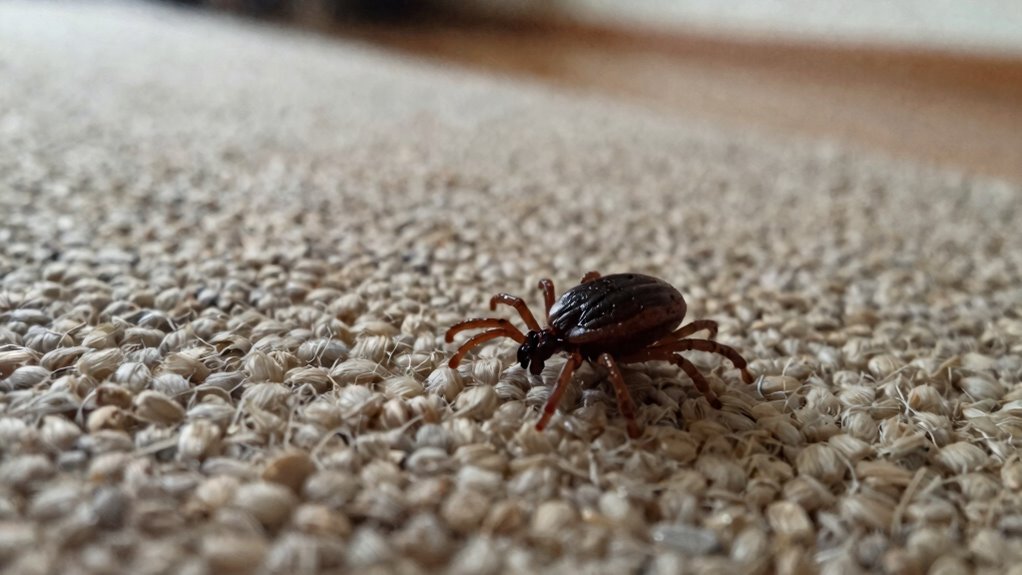
Since ticks are essentially tiny moisture bags with legs, their survival indoors depends heavily on the flooring they land on.
Carpet fibers trap humidity better than hard surfaces, but they’re still a gamble for a tick.
Lone star ticks last roughly 15 days on long pile carpet, versus 7 days on tile, so rug texture matters.
Gulf Coast ticks differ because they prefer vinyl for up to 25 days but only 10 days on long pile carpet, proving species beat assumptions.
Gulf Coast ticks survive up to 25 days on vinyl but only 10 on carpet, proving species matter more than flooring.
Carpet fibers don’t stop desiccation.
Ticks dry out like forgotten grapes, typically dying within a week to three weeks.
Ticks won’t lay eggs on rugs.
They just wait, then starve.
The bottom line is carpets offer modest shelter, not a home.
Vacuum regularly, and you will outlast them.
For more durable protection, you can apply granular yard treatments around the home’s perimeter to reduce the number of ticks that ever get inside.
Which Indoor Conditions Extend Tick Life?
Some ticks behave like tiny vampires once they get indoors, but their survival depends on simple household conditions. Higher indoor humidity keeps them from drying out, and that directly extends how long they can live.
A forgiving surface like vinyl or thick carpet lets them linger for weeks instead of days. Pest control experts recommend managing moisture levels with a dehumidifier to reduce tick longevity. Maintaining humidity levels between 40-50% is critical for disrupting pest survival cycles.
For homeowners, replacing worn carpet with hard flooring can limit hiding spots. Professional tick treatments target these exact indoor environments to stop infestations before they start.
If you notice ticks inside, a quick inspection of carpets and baseboards helps identify problem areas. Calling a pest control service for targeted indoor treatments ensures lasting protection.
Indoor Humidity Levels
Indoor temperatures alone won’t kill a tick, but humidity is the real villain. Low humidity dries ticks out, causing death in days.
High humidity keeps them alive for weeks or even months. Ticks lose moisture through their skin, so dry air is their worst enemy.
A dehumidifier set below 50% relative humidity is a solid defense against pest control problems. Low humidity below 50% dries ticks fast, killing them in under a week indoors.
High humidity above 80% lets lone star ticks survive up to 15 days on carpet. Gulf Coast ticks can last up to 25 days on vinyl in these conditions.
Kitchen or bathroom humidity often spikes from cooking and showers. Check these spots first, as ticks love them for their moisture.
Basement humidity can stay high year-round, making it a key area for tick control. A dehumidifier there is worth its weight in tick-free sanity. For thorough treatment of moist, hard-to-reach corners where ticks hide, consider using an adjustable powder duster to apply drying agents precisely along baseboards and crevices.
Keep indoor humidity low to send ticks to an early, dry grave. This simple step helps you win the fight against indoor pests.
Flooring Material Impact
Humidity matters a lot, but where a tick lands indoors is just as important. Flooring material creates a moisture gradient that directly affects tick survival and movement.
Lone star ticks can survive 15 days on long-pile carpet but only 7 days on tile. Gulf Coast ticks last 25 days on vinyl, yet just 10 on carpet.
That is a two week difference, all because of surface texture and how well the material holds dampness. Carpet keeps humidity near the base, giving ticks a longer lease on life.
Hard floors dry out faster, forcing ticks to migrate toward humid spots like baseboards. For effective pest control, sweep and vacuum hard floors weekly.
Steam clean carpets monthly to reduce moisture retention and kill hidden ticks. This simple tick prevention routine is cheaper than a tick borne illness. Additionally, using a permethrin yard spray on outdoor areas can reduce the chance ticks enter the home in the first place.
The Diseases Ticks Carry and How Fast They Spread
Two hundred thousand tick-borne disease cases are reported in the U.S. each year. The culprit is often a tick’s speedy disease transmission.
Here is the key point. Tick attachment time matters.
Most pathogens, like Lyme disease bacteria, need 24 to 48 hours of feeding to transfer. So quick removal reduces your risk.
Lyme disease comes from black-legged ticks and needs about 36 to 48 hours of attachment. Ehrlichiosis comes from lone star ticks and can transmit in under 24 hours.
Rocky Mountain spotted fever comes from American dog ticks and spreads within 4 to 6 hours. Alpha-gal syndrome comes from lone star ticks and triggers a red meat allergy after feeding.
Time is your ally, but only if you act fast. Use a tick removal tool to stay safe and consider professional pest control for your yard.
How Long Do Indoor Ticks Live Before They Die?
A tick’s death indoors is rarely quick, and it’s not dramatic. It is just a slow, quiet drying out. The average indoor tick lifespan ranges from about one to three weeks, depending on species and surface.
Lone star ticks survive around 11 days, whereas Gulf Coast ticks manage 18. Carpet holds moisture longer, so ticks live there longest. Tile and vinyl speed up dehydration and help kill ticks faster.
That extended survival matters for disease transmission, since a tick can linger and attach later. It can still pass pathogens like ehrlichiosis, so tick control is essential. Humidity plays the villain, as low indoor dampness dries them out.
But a humid basement might stretch survival closer to a month. Do not assume a quick death. A tick’s clock ticks slower than you would like.
The fix involves dry conditions, thorough checks, and removing any found tick immediately. That is your real bottom line for pest control and prevention. For safe removal, consider using stainless steel tools that are sterilizable and reusable to prevent cross contamination.
The 10-Minute Tick Check Routine for You and Your Pet

A full body inspection is your first line of defense, so check every inch including the scalp and behind the knees.
Ticks on pets and gear are sneaky hitchhikers, so run a lint roller over fur and backpacks before stepping inside.
Showering within two hours helps wash off any stragglers, turning a potential infestation into a quick rinse.
For effective pest control prevention, always inspect your pet’s collar and bedding for topical flea and tick signs.
Before buying gear, look for buyer-intent phrases like “tick repellent spray” or “lint roller for fur” to protect your home.
A friendly reminder: storing outdoor items in sealed bins can stop these pests from hiding and biting.
Full Body Inspection
Vigilance is the price of an itch free existence, and that vigilance starts with a full body sweep. A thorough body check after every outdoor trip is your first line of defense for tick prevention and indoor survival. Ticks don’t jump; they climb, often latching onto ankles or waists before migrating to hidden spots, so professional pest control for your yard can help reduce their numbers. Using permethrin-treated tick clothing offers long-lasting protection by bonding to fabric fibers, reducing the chance of ticks reaching your skin. Here’s the simple 10 minute routine to follow. Strip down in a well lit area, using a hand mirror or phone camera to scan your entire body. Focus on armpits, behind knees, and the scalp for hidden tick threats. Run a warm shower within two hours to wash off any unattached ticks, a proven step to lower Lyme disease risk. Check your gear thoroughly, as ticks can hide in coat seams or backpack straps for days. Toss clothes in a dryer on high heat for 10 minutes, which kills them dead and makes your gear safer. Repeat the process for kids and anyone who came inside with you to ensure complete home protection. Don’t skip the scan, as a few minutes now saves a medical bill later. For persistent infestations, consider a topical treatment or pest control service.
Pets and Gear Check
Since your pets and gear don’t come with a “tick detected” warning light, a quick ten-minute check is the next best thing. Pay close attention to pet behavior. Excessive scratching or licking often means a tick is lurking.
Combine this with tick seasonality, which peaks in spring and fall. Regular checks are essential for effective pest control. Spray-on permethrin treatments bond tightly to fabric fibers, providing up to six weeks of protection against ticks.
| Body Part | Pet Check | Gear Check |
|---|---|---|
| Head/Ears | Run fingers under collar, behind ears. | Inspect pack straps, hat brims. |
| Neck/Chest | Feel for small bumps; part fur. | Check jacket hoods, backpack chest clips. |
| Legs/Paws | Look between toes, under armpits. | Examine pant cuffs, shoelaces. |
| Tail/Back | Lift tail, scan base; check spine. | Scan tent sleeves, sleeping bag folds. |
| Belly/Groin | Roll pet over; inspect thin fur. | Check inner pockets, water bottle holders. |
Use a fine-toothed comb on pets and vigorously brush gear outside. This ten-minute routine, done daily during peak tick seasonality, keeps unwelcome hitchhikers out.
Buy a quality tick removal tool for your first aid kit. Topical flea and tick prevention for pets also reduces risk.
Shower Within Two Hours
Why does a shower within two hours of coming indoors matter so much? It’s your best defense against ticks that haven’t latched on yet.
Hot water can wash off unattached ticks, and thorough drying time afterward helps you spot any lingering ones. This simple routine cuts Lyme disease risk significantly.
Shower fully with hot water, scrubbing everywhere, especially legs and waist. Check your body in a mirror, focusing on armpits, groin, and behind knees.
Inspect your pet with a brush or lint roller, looking for tiny dark specks. Tumble dry clothes on high heat for 10 minutes; it kills ticks on dry fabric. For reliable protection during outdoor activities, consider using a repellent with 20% Picaridin for up to 12 hours of defense against mosquitoes and ticks.
Bottom line: shower fast, check yourself and your pet, and you’ll keep ticks from becoming house guests.
The 5-Step Plan to Keep Ticks Out of Your House for Good
A little paranoia goes a long way regarding ticks, and honestly, it’s earned. Their survival indoors depends on household humidity and carpet dampness.
To evict them for good, follow this 5 step plan. First, check humans and pets before entry.
Next, dry clothes on high heat for 10 minutes to kill hitchhikers. Vacuum carpets weekly, because ticks love long pile.
Use a dehumidifier to drop indoor dampness below 50%, which is critical for tick control. Choose a model with adjustable humidity control to precisely set the humidity between 30% and 50% for optimal pest prevention. Apply tick prevention to pets year round, and consider professional pest control services if infestations persist.
These steps slash tick survival from weeks to days. Lower humidity dries them out fast, and carpet dampness is their lifeline.
Don’t give them that. A $50 dehumidifier beats a $500 vet bill, and it’s a smart home pest management upgrade.
Pair it with pet meds, and you’re set for effective tick prevention. Bottom line: audit your home’s dampness, and check your dog’s fur.
Tick life indoors becomes a short, unhappy story, so schedule a home inspection if you notice recurring issues.
Buy a moisture meter for under $20, and treat your baseboards with a tick spray barrier.
Keep grass trimmed outside, and seal cracks around windows and doors to reduce entry points.
Finally, wash pet bedding weekly in hot water. This integrated approach makes indoor tick removal simple and lasting.
Frequently Asked Questions
What Attracts Ticks to Humans and Pets?
Ticks find humans and pets through basic biology. Body heat and carbon dioxide act like dinner bells, signaling a warm-blooded host is near.
They don’t hunt by sight, they sense these cues and crawl toward them. Once close, a tick latches on to feed, so blame your own thermal signature and respiratory cycles.
This is why effective pest control starts with understanding their behavior. Using a proven tick repellent for your yard can break that attraction cycle before they get near you.
For homeowners seeking pest control solutions, targeting high traffic areas with sprays or granules reduces tick habitats. Look for products with active ingredients like permethrin or essential oils for natural protection.
It’s less personal than it feels, just evolution being efficient and slightly annoying. Smart buyers choose pet safe tick prevention that interrupts these cues without harming your furry friends.
How Long Can Ticks Live Without Feeding?
Tick longevity without feeding varies by species and environment. Lone star ticks survive roughly 11 days, and Gulf Coast ticks last up to 18 days on flooring.
In lab conditions with ideal humidity, some ticks lived over a year without a host. So do not bank on them starving quickly; feeding frequency is key for molting and reproduction.
Indoors, desiccation usually kills ticks within a week or three. That is why controlling humidity with a dehumidifier is a smart home pest control step.
Check pets and clothes without delay after being in brush or tall grass. For effective tick removal, use a tick twister or fine tipped tweezers to avoid leaving mouthparts.
The bottom line is assume a tick can outlast your patience. Tumble dry clothes on high for 10 minutes to end their wait, and consider yard sprays or permethrin treated gear for lasting protection.
Can Ticks Survive in Cold Climates or Winter?
Yes, ticks absolutely survive cold climates and winter. Tick survival relies on cold weather adaptation, not avoidance.
Many ticks die from drying out indoors, not from freezing temperatures. They remain active above freezing and aren’t killed by cold alone.
The lone star tick, for example, handles winter just fine. Laboratory ticks kept at ideal conditions lived over a year, but home flooring kills them faster.
So don’t assume winter is risk free for pest control. A professional tick treatment in fall and early spring can break their life cycle.
Check yourself and pets anyway after outdoor walks. The best tick prevention products for yards and pets keep these pests from moving indoors.
If you see ticks in winter, consider an indoor pest control spray or barrier treatment. Choosing a reliable tick repellent for clothing and gear adds another layer of protection.
Buyer intent is clear: you want to stop ticks before they bite. Look for fast acting, long lasting solutions designed for cold weather use.
Do All Tick Bites Transmit Disease Immediately?
No, not all tick bites transmit disease immediately. Tick bite timing matters greatly for your safety.
Disease transmission risk typically requires the tick to be attached for 24 to 48 hours. This gives pathogens time to move from the tick’s gut into its saliva and then into you.
A quick, early removal within that first day dramatically cuts your risk. Think of it like a slow motion injection; the longer it’s there, the higher the chance.
Lesson: don’t let ticks overstay their welcome. A thorough body check within 24 hours of being outdoors is your first line of defense.
Remove any ticks you find immediately using fine tipped tweezers. This simple step is your best, cheapest pest control measure with a cost of zero dollars.
For long term protection, invest in a quality tick repellent or yard treatment. Professional pest control services can also treat your property’s perimeter to reduce tick habitats.
Whether you choose sprays, granules, or a full perimeter barrier, acting fast after exposure keeps you disease free. That’s the smart purchase for your family’s peace of mind.
Are There Tick Repellent Products for Homes?
Yes, tick repellent products for homes do exist and work well against indoor pests. Indoor sprays kill ticks on contact, while tick traps capture them before they can roam.
For best results, apply sprays along baseboards and under furniture focusing on entry points. Place traps near doors or in areas where your pets hang out.
A solid combo includes a permethrin based spray for carpets paired with sticky trap stations. Both options are affordable, typically costing around $15 to $20 each.
These tools are terrible at hide and seek, but they get the job done. Bottom line, these products reduce indoor ticks, but you should pair them with vacuuming and regular pet checks for real protection.


