
Finding ticks in your house isn’t just unsettling—it’s a sign you need to act fast. Ticks can hitch a ride on pets, clothing, or gear, then drop into carpets, furniture, or baseboards to wait for a new host.
Since these pests thrive in tight, dark spaces, knowing where to check saves you time and frustration. A simple flashlight and a slow sweep of fabric folds, pet bedding, and floor corners can reveal them before they settle in.
This guide walks you through the most effective search strategies and basic pest control steps to remove ticks from your home. Stay sharp, because a quick response is your best defense against an infestation.
Keep reading to learn exactly how to inspect every room and stop these pests from becoming a bigger problem.
At A Glance
- Perform full-body tick checks on yourself and pets after any outdoor activity.
- Inspect fabric folds, cushion seams, and dark cracks on furniture with a flashlight.
- Check mattress piping, tufted buttons, and baseboards where ticks wedge into tight spaces.
- Use a low-angle flashlight to spot flat, brown ticks on hard floors and low-pile carpet.
- Run fingers slowly against pet fur grain and check warm spots like ears and neck.
How to Find Ticks in Your House Quickly
Starting with a full body tick check on yourself and your pets is the fastest way to spot them indoors. Look for wild tick signs like those tiny, dark specks that move, often no bigger than a poppy seed. Check pets frequently for ticks, especially after spending time outdoors.
They love warm, hidden spots such as under arms, behind ears, inside belly buttons, and around waistbands. Ticks can hitch a ride on clothing, then drop off later near interior air currents from vents or fans.
Check your pets thoroughly, especially around their neck and ears. A quick visual scan beats finding one later, attached.
Where Ticks Love to Hide on Furniture and Mattresses
Ticks are sneaky, and furniture offers them plenty of cover. They love to wriggle into fabric folds, cushion seams, and the dark cracks where the cushion meets the frame, turning your couch into a tiny tick hotel.
Check those spots carefully, since a tick that hitches a ride indoors might settle into your favorite chair. For effective tick control at home, inspect under throw pillows and along piping, where these pests often wait for a host.
If you suspect an infestation, professional pest removal services can target these hidden zones and treat your upholstery safely. Regular vacuuming of crevices and using a steam cleaner on high heat can also kill ticks at every life stage.
To prevent future problems, consider applying a pet-safe tick repellent spray to furniture and mattress edges monthly. That way, you protect your resting areas and reduce the need for costly furniture pest treatments later.
For extra protection, washing infested fabrics with a plant-based additive can kill ticks at all life stages, including eggs.
Sneaky Fabric Hiding Spots
| Fabric Type | Tick Attraction Level | Key Hiding Locations |
|---|---|---|
| Linen | Low | Tassels, seams |
| Cotton | Medium | Pillow folds, edges |
| Velvet | High | Nap, deep crevices |
| Microfiber | Very High | Weave, cushion sides |
| Wool | Medium | Fringe, small gaps |
Check under throw pillows costing $15 to $50 each and along cushion zippers. Ticks favor microfiber and velvet the most, so inspect these fabrics carefully during pest control checks. A simple flashlight reveals ticks hiding in nap, deep crevices, and weave. Regular vacuuming with a HEPA filter removes both ticks and eggs from your furniture. Focus on dark corners where ticks often settle undetected. The bottom line is to inspect fabric seams weekly to catch small hiding spots. If you find a tick, remove it quickly to prevent an infestation. Prevention beats panic, so stay consistent with cleaning and inspection routines. For mattresses, using a fully enclosed cover with six-sided zippered encasement can block ticks and other pests from hiding in mattress seams and folds.
Cracks in Cushions
Those fabric seams and folds you just checked? Ticks likewise wedge into cushion cracks, especially where the seat meets the backrest.
A routine cushion inspection should run fingers along every crevice, since these pests prefer tight, dark spaces.
On mattresses, check piping and tufted buttons; those little indentations are prime real estate for a tick infestation.
Tick removal from fabric requires patience, not panic, so keep a steady hand and a good light source nearby.
Use fine-tipped tweezers to grasp the tick close to the surface, then pull straight out, no twisting or jerking.
Afterward, vacuum the entire cushion with a HEPA filter model, then toss the bag or empty the canister outdoors.
One overlooked tick can lay hundreds of eggs, so treat this as a weekly habit, not a one-time pest control chore.
The bottom line: inspect cushions methodically, act fast, and you’ll keep these freeloaders from becoming permanent roommates in your home.
For continued protection, consider combining your inspection routine with plant-based sprays applied to baseboards and entryways every few days.
How to Spot Ticks on Carpets, Rugs, and Hard Floors
Since spotting a tick on a hard floor is a bit like finding a stray sesame seed in a sandbox, knowing exactly what to look for saves time and frustration.
For carpet inspection, focus on low-pile areas near baseboards and pet bedding. A flashlight held at a low angle reveals their flat, brown bodies.
Hardwood detection is trickier. Ticks skitter across smooth surfaces quickly, so scan high-traffic zones and under furniture edges. These pests are about the size of a poppy seed, or 1 to 2 mm as nymphs, and are easier to see on light-colored floors.
Use a lint roller on carpets to pick up stragglers.
On hard floors, a sticky tape strip works better.
The verdict is that thorough searching beats panic. Catch them before they climb to prevent a full infestation.
For capturing these tiny pests, non-toxic adhesive glue boards can also be placed along suspected pathways to intercept wandering ticks.
How to Check Your Pets and Their Bedding for Ticks
Inspecting pet fur for ticks requires slow, methodical hands, running them against the grain to feel any hidden bumps. For the best tick prevention, always check your dog or cat after outdoor walks. Tick collars provide continuous protection that can prevent pests from latching on during these outdoor adventures. Pet bedding must be washed in hot water, then tumbled on high heat for ten minutes to kill any stowaways. This laundry routine acts as an effective flea and tick treatment for your home. A quick check now beats a frantic vet visit later. Regular tick control saves you from costly emergency care.
Inspect Pet Fur
How exactly do you check a pet that would rather be doing literally anything else? Start with a calm, thorough fur inspection, using your fingers like a gentle rake to feel for tiny bumps or scabs.
Run your hands slowly, almost like scratching, and pay special attention to the head, neck, ears, and paw pads, where ticks love to latch on. Check pet bedding too, lifting every fold and seam, because flea eggs and tick nymphs often hide there.
Ticks are small, about the size of a poppy seed or apple seed, so look closely under good light and use a fine-toothed comb, especially around fluffy areas like the chest and tail base. Reward the pet with a treat after each session to build a positive routine that makes future pest control checks easier.
If you find a tick, remove it with tweezers, grasping it as close to the skin as possible, and pull straight out with steady pressure. Do not twist or squeeze, as that can leave mouthparts behind or cause infection, and then clean the bite spot with antiseptic.
This inspection takes five minutes, but it is worth the calm routine, and for ongoing protection, consider a vet-approved topical preventive or oral flea and tick treatment. For persistent infestations, call a local pest control service to treat your home and yard, since indoor pests can re-infest your pet quickly.
You can also buy tick removal tools or a fine-tooth flea comb from any pet store, which makes the job faster and safer for your furry friend. Stick to this short, regular check, and you will catch problems early before they turn into vet bills.
Treat Pet Bedding
After your pet inspection, move to the bedding area where ticks often hide to plan their next meal. Wash all bedding in hot water at least 130°F to kill ticks, larvae, and eggs.
Dry on high heat for 10 minutes for effective pest control. Repeat this treatment weekly, especially during tick season.
Pair washing with a daily vacuuming schedule for the bedding area, floor, and baseboards. Empty the vacuum bag directly outside to prevent reinfestation.
Check seams and under cushions with a flashlight for hidden ticks. If your dog uses a plush bed, buy a removable and machine-washable cover.
A hot wash weekly and daily vacuuming break the indoor tick cycle. This routine keeps your home pest free and protects your pet. For persistent infestations, consider using sprays tested by the EPA for additional protection around baseboards and entry points.
Inspect Cracks, Baseboards, and Dark Corners
Feel that creeping dread when you realize a tick could be inches from your sleeping spot, waiting in a shadowy baseboard gap. Imagine the small, panicked prickle of finding one crawling from a neglected corner, a reminder of how easily they invade.
Sense the mild relief when inspecting thoroughly, knowing each clean crevice removes a hidden threat. Use a flashlight to illuminate every joint and seam, paying extra attention where floor meets wall.
A vacuum with a crevice tool works well here, sucking up both ticks and their potential egg clusters. This simple step in pest control helps stop a home invasion before it starts.
Targeting those dark corners is essential for effective tick removal and prevention. A thorough home inspection for bed bugs and ticks alike demands this careful approach.
Using an OMRI-certified diatomaceous earth combo kit allows you to dust into cracks and baseboards for long-lasting pest defense.
What Ticks Look Like: Size, Color, and Movement
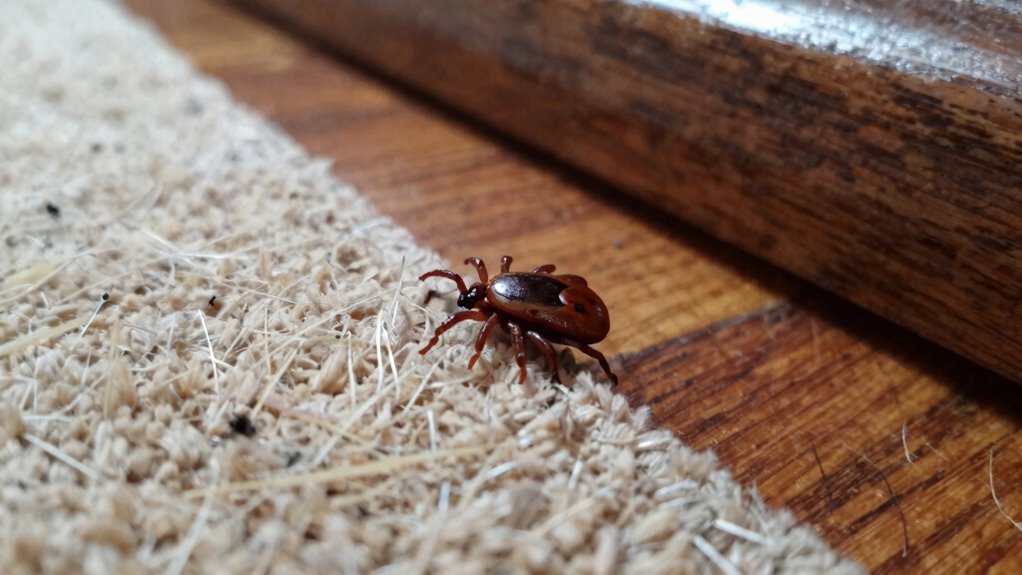
Ticks rarely look like much at first glance, which is exactly why they’re so easy to miss. For accurate tick identification, note that unfed adults are about the size of an apple seed, three to four millimeters long. Nymphs are poppy seed sized, while larvae resemble tiny dust specks. Their appearance depends on species; deer ticks are reddish brown with a dark shield, whereas lone star ticks have a silvery white spot. Color ranges from tan to dark brown, and they darken after feeding. Size is the biggest giveaway, too small for comfort, which is why many homeowners request a professional pest inspection before spending time outdoors. Movement is slow and deliberate, like a tiny, determined robot; they crawl up pant legs or furniture without any dramatic jumps. If you spot a bug that’s flat, small, and moving steadily, it’s likely a tick. For effective tick control, remember they’re not fast, just persistent, like that one relative at a family reunion. If you need yard treatments or natural repellent options, a local pest control service can help you target hotspots before a bite happens. Treating your outdoor clothing with permethrin spray bonds to fabric fibers to kill ticks on contact and lasts up to six weeks.
How to Keep Ticks From Entering Your House
To keep ticks from entering your house, you need to block entry points and reduce attractants.
Indoor humidity above 50 percent helps ticks survive, so use a dehumidifier like a Frigidaire 50 pint unit for around 150 dollars.
Indoor humidity above 50% helps ticks survive, so use a dehumidifier like a Frigidaire 50-pint unit for around $150.
Seal gaps around doors and windows with weather stripping to stop carbon dioxide from humans and pets from drawing ticks inside.
Tumble dry all outdoor clothes on high heat for 10 minutes. A cheap dryer works fine and kills ticks fast.
Shower within two hours of coming indoors to wash away any hitchhikers before they settle.
Treat boots and gear with 0.5 percent permethrin spray for about 12 dollars a bottle. This creates a chemical barrier that repels ticks effectively, and sprays like Sawyer’s bond to fabric for up to six weeks or six washes.
For extra pest control, consider a professional tick treatment around your home’s foundation.
Look for a tick repellent spray for yards to lower the tick population near entry points.
Buyer intent phrases like “best dehumidifier for ticks” and “permethrin spray for clothing” can guide your product searches.
Keeping your home dry and sealed is the smartest way to prevent tick infestations.
How to Reduce Tick Hotspots in Your Yard
Your yard can become a tick buffet, but you can starve them out by removing dampness traps like leaf piles and tall grass. Mow your lawn down to three inches to keep it dry and less inviting to these pests.
A three-foot barrier of wood mulch between your lawn and forest edges will cut tick travel, and gravel works just as well. Deer fencing at least eight feet high blocks the primary tick carriers, though raccoons still sneak in. Nobody’s perfect, so focus on what you can control.
Stack wood neatly in dry, sunny spots to avoid creating moist shelters. Shift playground gear away from yard edges, where ticks often lurk and wait for hosts.
Ticks hate sun and dry conditions, so opening up shaded areas reduces hotspots cheaply. Focus on perimeter defense, because that’s where ticks typically arrive from nearby wildlife.
The bottom line is that tick control is smart landscaping, not chemical warfare. Clear, barrier, fence, and you’ve already won half the battle against tick infestations.
For a targeted approach, consider professional tick control services that inspect and treat boundary zones. Using effective tick repellent granules along mulch lines can boost your yard’s defense with minimal effort.
How Long Ticks Survive Indoors and What That Means for Your Family
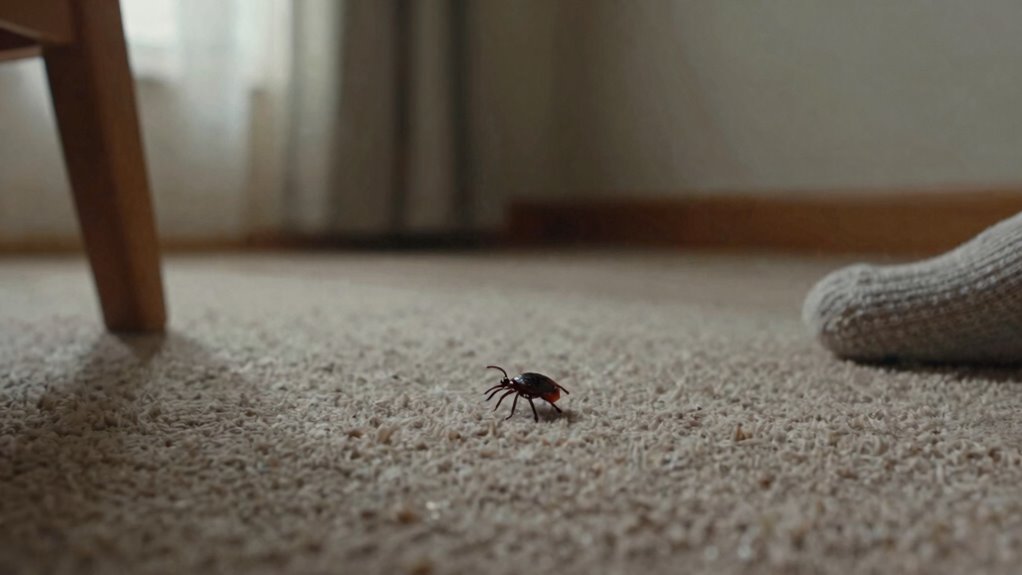
How long ticks indoors survive depends on the species and your flooring, which can quietly raise your family’s risk of Lyme disease.
Lone star ticks linger about 11 days, while Gulf Coast ticks can last up to 25 days on vinyl.
On carpet, both species live longer, hiding in fibers where you walk and sit, so a single tick tracked in from the yard can stick around for weeks.
That’s not a call to panic, but it does mean indoor tick control and home pest prevention deserve your attention.
Check pets after walks, then toss clothes in a high-heat dryer for 10 minutes to kill hitchhikers, and vacuum baseboards and rugs regularly to remove eggs and nymphs.
These simple habits cut their odds, and a tick that survives inside is one more chance at transmitting Lyme, so don’t give them that opening.
For deeper protection, consider a professional indoor pest treatment or a pet-safe spray for entry points, because proactive tick removal services can stop an infestation before it starts.
Your family’s health depends on closing that gap between yard and couch.
Always inspect tool for damage before each use when removing ticks to prevent leaving mouthparts behind, especially in high-risk areas for Lyme disease.
How to Remove a Tick and What to Do After Finding One Indoors
Once a tick is found indoors, the removal method decides if the problem ends cleanly or turns into a medical mess. Use fine‑tipped tweezers to grasp the tick as close to the skin surface as possible. Pull upward with steady, even pressure. Do not twist, squeeze the body, or use matches or petroleum jelly. Those tactics force the tick to regurgitate pathogens into the wound. A kit containing stainless steel tools ensures durable, rust-resistant removal without chemicals.
After extraction, save the tick in a sealed bag or container with a damp cotton ball. This keeps it alive for identification by local health departments or county extensions. They offer free pest control advice and tick identification. Having the tick gives you a concrete answer if a rash or fever appears later. For reliable tick removal and prevention, always follow these steps to protect your home and family from tick‑borne diseases.
Safe Removal Method
Safe removal of a tick is simple with fine‑tipped tweezers. Grasp the tick as close to the skin as possible.
Pull upward with steady, even pressure. No twisting or jerking is needed.
Avoid squeezing the body to prevent fluid injection. The emotional impact is real.
You will feel relief knowing you removed it correctly. This reduces anxiety about disease.
You have control because you acted fast. This prevents further attachment.
Stay cautious, as improper removal risks infection. Dispose of the tick by flushing or sealing it in tape.
Do not use petroleum jelly or heat. After removal, applying an odorless repellent with 20% picaridin can help deter any remaining ticks in the area.
That is all you need for a safe removal.
Post-Removal Tick Care
After correctly removing a tick with fine tipped tweezers, the next step is deciding what to do with the tiny blood sucker. Removal timing matters because the sooner you remove it, the lower the risk of Lyme disease.
For identification storage, place the tick in a sealed plastic bag or a small vial with a drop of rubbing alcohol. Write the date and location of the bite on the bag. This helps your local health department or county extension identify the species and guide pest control decisions.
Save it for 30 days in case symptoms appear. Then clean the bite area with soap and water and watch for a rash or fever. A tick is a tiny hitchhiker, so treat it like a stowaway you are kicking off your ship. If you buy a tick removal kit or professional pest control service, store the tick properly for later analysis. Pre-treated clothing and gear, validated for durability up to 70 washes, can help prevent future tick encounters during outdoor activities.
Frequently Asked Questions
Can Ticks Lay Eggs Inside My House?
Yes, ticks can lay eggs inside your house, which means an indoor infestation is a real possibility. After a female tick takes a blood meal, she may deposit hundreds of eggs in hidden spots like baseboards, carpet edges, or the gaps under furniture.
These eggs need warm, humid conditions to hatch, so they often thrive in dark, undisturbed areas such as closets or behind heavy drapes. While a single tick can give rise to a small home colony, the larvae will die quickly if they can’t find a host to feed on.
That said, indoor tick egg-laying is not common, but it can happen if you bring in a fully engorged female from outdoors. To stay safe, vacuum regularly and reduce clutter, since both actions destroy eggs before they have a chance to hatch.
For effective pest control, consider using a targeted indoor tick spray or a residual insecticide labeled for crevice treatment. If you’re buying products, look for those with IGRs (insect growth regulators) to stop egg and larval development at the source.
For a more hands-off approach, a professional pest control service can treat baseboards, window frames, and pet resting areas with precision. Always inspect pets and used furniture before bringing them inside, as these are prime tick entry points.
If you suspect an infestation, act fast by laundering bedding in hot water and using a steam cleaner on carpets. With the right pest control products and routine cleaning, you can break the tick life cycle and keep your home tick-free.
Do Ticks Prefer Certain Blood Types?
Research does not show a clear blood type preference in ticks. They are attracted to hosts through a mix of factors like body heat, carbon dioxide, and skin chemicals.
That makes human attractiveness factors complex. Think of it like a buffet where ticks aren’t picky about A, B, or O.
They just want a meal. The bottom line is blood type doesn’t matter much for tick control.
Focus on repellents, not your donor card. For effective pest control, choose EPA approved tick sprays and treat your yard with professional grade products.
If you want to buy a reliable tick repellent, look for ones containing DEET or permethrin. These topical entities are proven to reduce tick bites during outdoor activities.
For home pest management, consider barrier treatments around your property. This buyer intent approach keeps ticks away without worrying about your blood type.
Will Vacuuming Kill Ticks on Carpets?
Vacuuming alone will not reliably kill ticks on carpets. The mechanical action can pick up some ticks, but survivors often crawl back out.
For effective carpet pest control, use a steam cleaner. The high heat above 130°F kills ticks on contact, and you can rent one for around $50.
Alternatively, diatomaceous earth is a cheap, messy carpet powder that works well. Sprinkle it on, let sit for 24 hours, then vacuum for best tick removal.
Buyer intent: you want a tick free floor without harsh chemicals. The bottom line is vacuum first, then steam or powder for complete tick elimination.
Can Ticks Survive in Dry Indoor Air?
Yes, ticks can survive dry indoor air, but it is a slow death sentence for them. Humidity has a huge impact because these pests need moisture to thrive and reproduce.
Lone star ticks, for example, can last about 11 days indoors, but starvation happens faster in arid conditions. On tile or vinyl flooring, they lose water quickly and die sooner.
Dry air helps you win the fight, but don’t rely on it alone. For effective tick control, combine low humidity with regular vacuuming and heat drying your clothes.
These simple steps are your best pest prevention tools against ticks in the home. If you are looking for a long term solution, consider a dehumidifier for indoor pest management.
Keep humidity low, but stay proactive with a pest treatment routine. This is the smart way to protect your family and make a smart purchase for your home.
How Quickly Can a Tick Bite Indoors?
A tick bite indoors can happen quickly, often within minutes of contact with your skin. Symptoms may not appear for hours or days, which is why tick identification is so important.
Unfed adult ticks are just 3 to 4 millimeters in size, so you might not even feel the bite. That small size makes professional tick control treatments a smart investment for your home.
Prompt removal reduces your risk of disease, but you should watch for redness or rash afterward. A proper tick removal tool is a must have for any household.
Ticks don’t rush, but they don’t wait either when they find a host. That is why you need to check your skin and clothing immediately after coming inside.
For long term protection, consider a yard spray treatment and indoor pest control solutions. These products target ticks before they can attach and feed on you or your family.


