
Do mosquito coils work? Yes, but not as a simple repellent—they actually release pyrethroids that confuse mosquitoes and block their urge to bite. Think of it as an anti-romance fog rather than a fence.
A Chinese study found one coil slashed malaria infections by 77%, and when placed 0.3 meters away, it cut bites by 86% in close quarters. Pair it with a bed net, and you get up to 94% protection for about $0.50 per night.
That’s a cheap, science-backed layer for your pest control setup. Keep reading for the full breakdown on exact placement tips, health risks, and how to avoid common mistakes.
At A Glance
- Mosquito coils reduce bites by 86% when placed one foot from the user.
- Coils do not repel mosquitoes; they disrupt feeding for up to 12 hours.
- Effectiveness drops sharply beyond a few meters, making placement critical.
- Pairing coils with bed nets boosts protection to 94% against malaria.
- Use coils in well-ventilated areas to minimize respiratory risks from smoke.
What New Research Says About Mosquito Coils and Malaria
For decades, the scientific community dismissed mosquito coils as little more than smoky folk remedies. That changed with a rigorous Chinese trial, the first robust evaluation of transfluthrin coils against malaria.
Results showed they slashed *P. falciparum* infections by 77%. Paired with bed nets, they hit 94% protection, matching nets alone.
The trial showed mosquito coils slashed malaria infections by 77%, and paired with nets, reached 94% protection.
Critics point to coil smoke inhalation and potential respiratory effects. Yes, burning any plant matter releases particles, and studies in Hong Kong flagged health concerns.
But the malaria risk often outweighs that, especially where nets are not perfect. This is not a free pass for using pest control products carelessly.
Use coils outdoors or in ventilated rooms, and never near infants. For travelers or residents in high-risk zones, a $0.50 coil nightly could be a lifesaver, but coils are not completely safe around children and pets.
It is not a cure-all, but the evidence is now too strong to ignore. Consider buying mosquito repellent coils for your next trip or home protection.
How Mosquito Coils Actually Stop Bites (It’s Not Repellent)
Mosquito coils don’t repel bugs at all; they use a different tactic to stop bites. Airborne pyrethroids are the key pest control ingredient released in the smoke.
These insecticides disrupt the mosquito’s ability to feed, delaying blood meals for up to 12 hours. This dose-response mechanism means higher concentrations work better for proven bite prevention.
A concentration like 0.03% transfluthrin is highly effective at delivering this protective effect for your outdoor space. For the best results, look for coils with this active ingredient when shopping for insect control products. Pairing bifenthrin spray with an insect growth regulator breaks the pest life cycle and can enhance long-term control.
Airborne Pyrethroid Mechanism
The active ingredient in a mosquito coil doesn’t actually repel bugs. It messes with their dinner plans by confusing their ability to bite.
Airborne pyrethroids like transfluthrin create a chemical fog that disrupts feeding behavior through spatial repellency. This vapor reduces human-vector contact dramatically without driving mosquitoes away.
Mechanism details show that disrupting feeding stops the biting response. Field data confirms 86 percent less feeding at 0.3 meters.
Spatial repellency keeps mosquitoes confused over a wide area. It works for pest control up to 20 meters away.
Electric coil alternatives use plug in devices with the same chemical. They last 8 to 12 hours and cost about three dollars each.
Effectiveness follows a clear dose response pattern. Transfluthrin coils at 0.03 percent cut infections by over 75 percent in field trials.
Unlike electric alternatives needing a constant power source, classic coils offer portable battery free protection. You simply light and go for practical mosquito control.
For best results, placement matters when buying insect repellent coils. Keep them close to your sitting or sleeping area for maximum protection.
Mosquitoes cancel their dinner reservations with this simple solution. Classic coils remain a top choice for affordable home pest control. For even longer-lasting chemical-free defense in enclosed areas, consider vapor-based insect strips that release odorless vapor for up to four months of continuous protection.
Delays Feeding, Not Repulsion
Scientific trials show mosquito coils are less about scaring mosquitoes off and more about ruining their appetite. The coil smoke doesn’t repel them, really. It just delays their feeding for up to 12 hours.
That’s why you still see them buzzing around, but they don’t bite. Pretty sneaky, huh? This delay, not repulsion, is how the airborne pyrethroids work.
It’s like a bad dinner date: they show up, but never get to eat. But concerns about health risks from breathing coil smoke linger, especially in indoor use. For outdoor use, mosquito repellent incense sticks offer a natural, non-toxic alternative that emits a herbal scent from rosemary, lemongrass, and citronella oils.
Dose-Response Effectiveness
Coils don’t just mess with a mosquito’s dinner schedule. They do it with surprising precision.
Field trials show a clear clinical dose response. More active ingredient means more bite prevention, up to a point.
That 0.03% transfluthrin sweet spot cut feeding by 86% in close quarters. The coil concentration gradient matters a lot.
Effectiveness drops fast beyond a few meters. Placement is your real weapon for pest control.
A coil at 0.3 meters makes mosquitoes stall. They never commit to a bite.
At 10 meters, some stragglers slip through. They are still sluggish and disoriented.
At 30 meters, it is a polite suggestion. It is not a strong deterrent for those biting insects.
Short version: coils work like a bouncer with a short fuse. They are effective up close but useless at the door.
For $3 a pack, buy them. Just sit nearby for best results.
Bottom line: they are not repellents. They are bite blockers with clear range limits. Unlike 20% Picaridin products, which offer up to 12 hours of reliable protection on skin, coils deliver no lasting personal defense beyond their immediate smoky zone.
Do Mosquito Coils Prevent Malaria? A Chinese Trial’s Answer
Pair those coils with bed nets, specifically long-lasting insecticide-treated nets or LLINs, and protection jumps to 94%.
Coils alone performed statistically the same as nets alone in this study.
This real-world evidence is the first robust clinical test of its kind for mosquito coils.
It suggests these coils are not just a camping-store novelty but a legitimate, low-tech malaria tool worth considering.
For anyone seeking practical pest relief, this buyer-intent data shows coils offer an effective alternative to netting.
The study highlights how a coil purchase can be a smart addition to your mosquito defense kit.
Swatting mosquitoes with low-cost transfluthrin coils provides measurable protection against disease.
Each coil lasts 5 to 7 hours for full evening protection, covering up to 10 feet per coil.
77% Malaria Protection
Mosquito feeding dropped by 86% when coils sat just a foot away, working like a tiny invisible shield.
The pest control effect held up to 20 meters and then faded, meaning mosquitoes were smart enough to wait for a gap.
Compliance hit 94% in the trial, with people actually using these bug protection remedies.
Unlike that gym membership you bought in January, this outdoor repellent solution was easy to stick with.
Each coil burns for 5 to 7 hours and covers up to 10 feet, providing instant repellent action with no batteries or sprays.
Coils Plus Bed Nets
That’s the highest magnitude of effect observed, topping LLINs alone at 91%. In historical context, this combination is a revolution for pest control.
User perception often pits coils as inferior to nets. But this trial flips that script completely.
The synergy is simple: nets block mosquitoes while coils repel them. This creates a double barrier for better insecticide coverage.
Cockroach compliance was high, with over 94% using both tools for most of the month. For users, this means you don’t have to choose between methods.
Pair a $3 coil pack with a $5 net for near total protection. It’s not perfect, but it’s close for a practical buy.
If you’re in a high risk area, this combo is your best bet for mosquito control. For treating actual standing water where mosquitoes breed, products like Mosquito Dunks with Methoprene offer a different approach by targeting larvae before they become biting adults. Order your coil pack and net bundle today for peace of mind.
Real-World Trial Evidence
For years, the evidence on mosquito coils and malaria was frustratingly fuzzy. Then came a landmark Chinese trial, the first robust real-world test.
Families in huts used coils smoldering by sleeping mats, with mosquitoes landing but refusing to bite. Transfluthrin coils slashed P. falciparum infections by 77%, outshining a previous Nairobi trial’s vague results.
Community use soared, with 94% compliance, and coils became as routine as stoking the cookfire. This wasn’t a lab gimmick; it was people’s lives at stake.
The trial showed coils alone could cut malaria risk by three-quarters. Whereas a Nairobi trial suggested promise, this Chinese evidence delivered concrete numbers.
For real-world, no-fuss protection, coils now have solid backing. Bti-based biological larvicides offer an alternative for treating standing water where mosquitoes breed. Just don’t forget to light them before dusk for effective pest control.
Mosquito Coils vs. Bed Nets: Which Offers Stronger Protection?
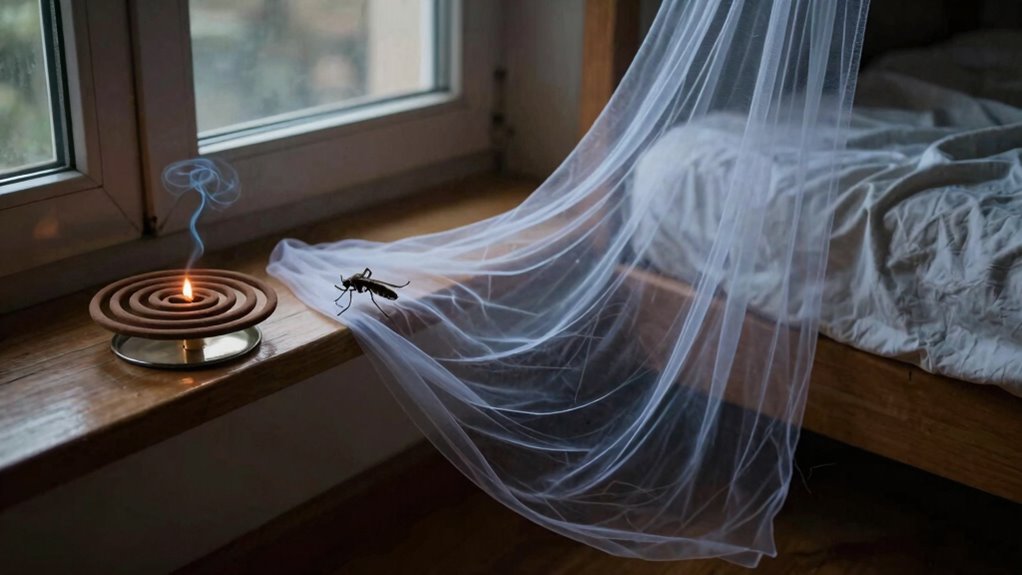
Mosquito coils and bed nets are both effective tools for malaria prevention, but they work differently. A Chinese trial found coils offered 77% protection while bed nets reached 91%. Bed nets with high mesh density block mosquitoes, gnats, and tiny biting bugs effectively.
While coils provide 77% protection, bed nets are more effective at 91% in a Chinese trial.
Combining both methods boosted protection to 94% against mosquito bites. The real key to success is user behavior and consistent use.
Bed nets work best when you sleep under them every single night without fail. Coils require careful placement about 0.3 meters from your body for maximum effect.
Environmental concerns also matter when choosing your pest control solution. Coils produce smoke that can raise respiratory issues, while nets are completely clean and silent.
For outdoor use, coils have a clear flexibility advantage that bed nets cannot match. But if you need reliable indoor protection against relentless malaria, bed nets edge ahead.
If forced to choose just one product for your mosquito repellent needs, nets win on dependable nighttime defense. To buy the strongest protection possible, pairing both tools gives you the best overall coverage.
The Best Way to Use a Mosquito Coil: Distance and Timing Matter
A mosquito coil works best as a point source placed just 0.3 meters from you, about one foot away.
At this distance, it cuts mosquito bites by nearly half, making it an effective pest control tool for immediate protection.
Place the coil 30 meters out and the effect vanishes, since the airborne pyrethroids need proximity to disrupt feeding behavior.
For optimal bug repellent results, keep the coil close to your seating area.
Timing also matters, as exposure can delay normal blood feeding for up to 12 hours.
This means a single lit coil provides a long window of protection, ideal for evening outdoor use.
For the best buyer-intent strategy, use coil placement as a key part of your mosquito control kit.
Combine it with other repellents for maximum defense against biting pests.
For consistent protection in heavily infested areas, select a product with at least 30% DEET to pair with your coil.
Point Source Distance
A glowing mosquito repellent coil, placed 12 inches from your ankle, keeps biting pests away during porch reading. The faint smoky scent rises as the coil burns, with a small orange ember crawling slowly through the spiral.
A missed coil left on the far side of a room offers no protection from that whining buzz. For effective pest control, buy coils and set them close to your seating area.
If you want the best mosquito defense, position the coil within 12 to 18 inches. Otherwise you will waste your repellent investment and still get bitten. Unlike moth repellents, which rely on cedarwood essential oil as a botanical shield against fabric pests, mosquito coils primarily use pyrethroid insecticides to kill and repel mosquitoes.
Blood Feeding Delay
Distance matters, but timing might matter even more for mosquito control. A mosquito coil’s real trick isn’t killing mosquitoes, it’s delaying their blood feeding.
In chamber tests, exposure to transfluthrin coils pushed normal feeding back by up to 12 hours. That buys you a full night’s sleep and reduces bite prevention worries.
But here’s the catch. Once the indoor smoke clears, feeding resumes within 12 to 24 hours.
So light the coil just before bedtime, not hours early. And yes, that smoke raises concerns about respiratory toxicity, especially in small, unventilated rooms.
It’s a trade off. You trade a bit of air quality for a lot of bite protection.
A 0.03% transfluthrin coil, placed 0.3 meters away, reduces feeding by 86%. Bottom line, use it right before sleep, keep a window cracked, and don’t let it linger all day.
Timing wins for effective pest control and safe home use.
For a non-toxic alternative, consider plant-based repellent sprays that mask human scent with essential oils instead of relying on synthetic smoke.
How Long Does a Mosquito Coil’s Protection Last After Use?
The protection doesn’t last forever, and the mosquitoes know it. After a coil burns out, the airborne pyrethroids fade, and feeding resumes fully between 12 and 24 hours later.
This means a single coil offers a window, not a wall. Coil shelf life matters little if user compliance lapses, so using a fresh coil nightly is key, not relying on yesterday’s residue.
Imagine the last ember dies, and mosquitoes, like clockwork, begin their reconnaissance on your ankles. A forgotten, half-burned coil sits on the porch, its effectiveness already evaporated into thin, useless air.
You buy in bulk, but the old stock’s chemicals have degraded, leaving you unprotected. Shelf life is a real thing, so check the expiration date when you purchase mosquito repellent coils.
Bottom line: protection is temporary. For consistent outdoor pest control, use a new coil each evening for reliable results. Pyrethroid toxicity symptoms can also appear in pets if they lick or nibble a coil before it dries.
Why Mosquito Coils Don’t Keep Mosquitoes Away but Stop Bites
Mosquito coils have a dirty little secret: they don’t actually repel mosquitoes. Instead, they spray a haze of pyrethroids into the air, and that stuff messes with a mosquito’s will to bite.
When exposed, the insect gets confused, fails to land properly, and just sort of gives up on feeding for up to 12 hours. This is almost like a micro dose of wine at a boring party.
Their coil aesthetics, including that familiar spiral and slow burning glow, stem from cultural use in Asia and Africa. Homes there often treat them as a nightly ritual for pest control.
Yet the real magic involves a delayed feeding effect, not a physical barrier. The mosquito is still attracted, it just cannot finish its meal.
Think “anti romance” for mosquitoes, not a fence. For effective mosquito repellent, consider insect spray or mosquito traps as complementary options.
This feeding disruption can help reduce the risk of bites and disease transmission. To stop bites entirely, combine coils with screens or outdoor foggers for complete protection. Pyrethrin sprays degrade quickly within hours under sunlight, so they require reapplication every 7–10 days for ongoing outdoor defense.
The Mosquito Coil Dose-Response Effect: Does Higher Transfluthrin Work Better?
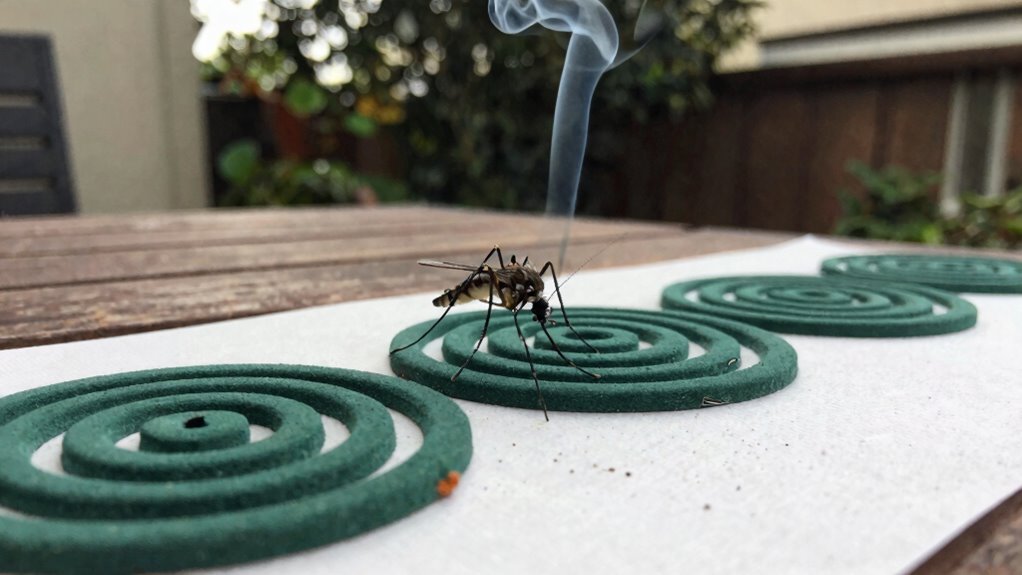
Transfluthrin levels in mosquito coils show that more is better, but only up to a point. The dose response curve reveals protection climbing with concentration, then plateauing around 0.03% transfluthrin.
Beyond that, any gains in mosquito repellent power vanish. Formulation variability, like coil density or burning rate, can skew your results.
A 0.03% coil from one brand might outperform a 0.05% from another in real world pest control. You can spot a coil glowing orange, releasing a faint, sweet smelling haze that hangs in still, humid air.
Mosquitoes hovering near a sleeping form suddenly become sluggish, their feeding delayed for hours. The smoldering ash pile, a spiral of gray, marks the end of another night’s protection.
For most homes, a 0.03% coil hits the sweet spot for effective mosquito control without waste. Stick with that concentration to get the best value and protection for your money. Unlike coils, plug-in diffusers offer up to 280 hours of continuous protection per refill with no smoke or flames.
Can Mosquito Coils and Bed Nets Deliver 94% Protection Together?
Pairing mosquito coils with bed nets creates a powerful one-two punch against malaria. A Chinese study showed that coils plus long-lasting insecticidal nets (LLINs) delivered 94% protection against *P. falciparum*, higher than LLINs alone at 91%.
That extra 3% isn’t huge, but it acts as a nice safety net for your pest control routine. User compliance is key, with over 94% of participants using coils or nets for more than 90% of the month.
A single coil lasts six to eight hours, covering one full night of protection. For best results, place the coil 0.3 meters from your bed net to maximize effectiveness.
The coil smoke may irritate lungs, so ventilate the room if needed. This combo works only if you actually burn a fresh coil every night for full coverage.
Yes, 94% is real, but only if you follow through with consistent use. It’s like flossing: great for your health if you do it, useless if you don’t.
What Past Reviews Got Wrong About Mosquito Coils
Science writing has had its share of embarrassing moments, just like mosquito science. Early reviews dismissed coils as useless for preventing malaria, but they missed key details.
They overlooked real world user compliance, which was over 94% in the Chinese trial. People actually used them consistently for pest control.
They also ignored the subtle respiratory impact of smoke, assuming it was a major deal breaker without proper data. Here is what they got wrong.
A family in a test village, using coils nightly, saw their child’s malaria risk drop by 77%. This happened not through smoke but through airborne pyrethroids that delayed mosquito feeding.
Researchers measured the effect up to 20 meters away. But the coils placed just 0.3 meters from the human cut feeding by 86%.
Users accepted the mild smoke, tolerating it for the protection. This contradicts the earlier assumption that everyone would hate it.
The bottom line is that past reviews were too hasty. They missed the real world story of how coils deliver effective mosquito control, unlike natural repellent patches which typically last only 4 to 8 hours of protection.
Health Risks of Mosquito Coil Smoke: What Two Billion Users Should Know
Though past reviews dismissed coils as useless, they also waved away health concerns without checking the data. Two billion users breathe this smoke nightly, but evidence on respiratory toxicity is mixed.
Studies on Hong Kong Chinese found fine particulate matter from coils comparable to cigarette smoke during extended exposure. That sounds alarming, but real risk depends on ventilation, open windows and not sealed rooms.
The pyrethroids themselves break down quickly in air, so acute poisoning is rare. Chronic effects like asthma aggravation remain uncertain because cheap coil designs vary wildly.
A coil on a breezy veranda differs from one in a stuffy bedroom. For effective pest control, always use coils outdoors or in well-ventilated spaces.
Never burn them overnight in a closed room. The health trade off beats malaria, but it is no free lunch.
Pick mosquito coils with high ventilation ratings for better safety. If you buy coils online, check for brands that emphasize low smoke and continuous protection. For larger outdoor areas, consider a thermal fogger or mist blower that can treat 5,000 square feet in under 10 minutes, offering a more robust alternative to coil smoke.
Should You Rely on Mosquito Coils? Key Takeaways for Vector Control
A flickering mosquito coil protects a family sleeping under an LLIN in a room that smells like citronella. A forgotten match or missed night lets a single mosquito breach the gap like a determined pest.
A doctor warns that mosquito coils are great for extra defense but terrible as your only plan. Use them like duct tape on a leaky roof, not a permanent fix.
The bottom line is to use coils as a sidekick, not the hero. For effective vector control, always combine them with other methods like bed nets and EPA-registered repellents such as DEET or Picaridin.
Frequently Asked Questions
Can Mosquito Coils Be Used Outdoors?
Mosquito coils do work outdoors, but their effectiveness depends on where you place them. Wind can quickly scatter the smoke and slash protection, so positioning matters a lot.
For the best pest control results, set coils within a meter of you. Sheltered spots like patios or campsites are ideal for maximizing their bite prevention power.
However, their reach is short. One coil with 0.03% transfluthrin reduces mosquito bites by 86% at just 0.3 meters, studies show.
That protection drops off fast beyond a few feet. They are not a solution for open spaces or large yards.
Bottom line: use mosquito coils for small, calm areas. They are a helpful tool, not a miracle cure, for your outdoor pest control needs.
Do Mosquito Coils Work Against Other Insects Like Flies?
Mosquito coils are designed specifically for mosquitoes, not flies, so they won’t deliver effective fly control. They lack the attractants or physical barriers that flies respond to, and their airborne pyrethroids mainly just disrupt mosquito feeding.
For fly control, you’re better off with UV light traps or baited sticky traps that target flying insects. When comparing mosquito coils vs traps and insect repellent, traps usually win for non-mosquito pests like flies.
If flies are your problem, skip the coils entirely since they only work for one job. A simple fly swatter or pheromone trap costs under 10 dollars and works far better.
Bottom line, stick to species specific tools for reliable results. That way, you get the best pest control solution for your home.
How Do Mosquito Coils Compare to Electric Vaporizers?
Mosquito coils and electric vaporizers both repel mosquitoes, but coils win on portability and price.
A pack of coils costs less than a dollar, making them a budget friendly pest control choice.
However, coils produce smoke that carries inhalation risks.
Vaporizers use active ingredients like allethrin in liquid or tablet form for a cleaner experience.
Vaporizers often last longer and work well indoors, but they need a wall socket.
This is a dealbreaker for camping trips where power access is limited.
Think of coils as the old faithful sedan and vaporizers as the hybrid.
Both work for mosquito repellent, but one is easier on your lungs.
For budget flexibility and outdoor use, choose coils.
For indoor convenience and cleaner air, pick a quality electric vaporizer.
Make your smart purchase based on where you need mosquito protection most.
Always prioritize safety and effectiveness in your pest control buying decisions.
Are Mosquito Coils Safe to Use Around Babies?
Mosquito coils are not ideal around babies, period. The smoke from pyrethroid insecticides can irritate tiny lungs, though no severe harm is proven.
Think of it like strong perfume: unpleasant and maybe a cough. For pest control around infants, you want solutions without airborne irritants.
Keep your baby at least 3 feet away from any burning coil. Use coils outdoors or in ventilated rooms only.
A better mosquito repellent option for nurseries is a fan paired with netting. For ultimate baby safety, skip coils entirely.
A ten dollar mesh net beats any smoke risk and it’s quieter than a coil’s hiss. This simple pest prevention tool creates a chemical free sleep zone.
If you need portable mosquito protection, look for an electric vaporizer with a baby safe formula. Bottom line: fresh air and physical barriers win for infant care.
Do Mosquito Coils Expire or Lose Effectiveness Over Time?
Yes, mosquito coils do expire, usually within two to three years. Chemical degradation slowly reduces the active ingredient, like transfluthrin, making your pest control products less effective.
A coil past its shelf life won’t burn efficiently, offering less protection for your home. It doesn’t suddenly stop working, it just becomes less reliable like a forgotten flashlight with dying batteries.
For best results, use fresh coils stored in a sealed package away from heat and humidity. Otherwise, expect diminished performance and more mosquito bites, which is why buying new stock ensures you get the best mosquito repellent for your outdoor space.
If you want reliable mosquito protection, always check the manufacturing date before purchase. This simple step helps you avoid weak coils that fail to keep biting insects away during warm evenings.


