
Fungus gnats in houseplants usually mean you’re watering too often, creating a perfect nursery for them. It’s a common frustration, but you can break the cycle without tossing your plants.
The fix combines smart watering habits, targeted traps, and natural pest control—everything you need is covered here. You’ll learn how to stop overwatering with a simple moisture check, then tackle adult gnats and larvae step by step.
We also cover quarantine tricks for new plants and a last-resort spray if the problem persists. This guide gives you practical, ready-to-use solutions so you can get back to enjoying your plants.
Skip the guesswork and follow the clear steps ahead to clear those gnats for good.
At A Glance
- Allow top inch of soil to dry completely between waterings to kill larvae.
- Place yellow sticky traps near plants to catch and monitor adult gnats.
- Apply Bti soil soaks every five to seven days to kill larvae naturally.
- Cover soil surface with coarse sand or fine gravel to block egg-laying.
- Quarantine new plants for two weeks to prevent introducing infestations.
Stop Overwatering to Prevent Fungus Gnats
Why do fungus gnats always seem to throw a party in your houseplants? Simple: their invitation is your watering can. Overwatering creates a soggy, irresistible nursery for these pests, whose larvae thrive in consistently damp soil.
The fix is brutal but effective: change your watering habits. Allow the top inch of soil to dry completely before the next watering. That’s about three to five days for most houseplants, depending on pot size and season.
The fix is brutal but effective: let the top inch of soil dry before watering again.
Dampness monitoring is not optional. Stick a finger in the dirt, or use a cheap moisture meter around ten dollars to avoid guesswork. Letting the soil dry for a week kills most larvae.
Bottom watering keeps the surface dry, making egg laying tough for adult gnats. Stop watering on a schedule and water only when the plant demands it. Your plants will thank you, and the gnats will RSVP “no.” For extra protection, combine this practice with biological controls like Bti to target any larvae that survive in the soil.
Identify Fungus Gnat Adults and Their Larvae
A well-dressed party crasher is a fungus gnat adult at about 1/16 to 1/8 inch long. These tiny, gnat-like flies are the guests you never invited but keep paying for.
They are weak fliers but their erratic adult flight is a telltale sign. You will often see them hovering near soil or a sunny window like they are lost at a houseplant party.
Their slender white larvae with shiny black heads lurk about half an inch deep. They feast on rotting organic matter and root hairs, acting like the messy eaters nobody asked for.
| Life Stage | What to Look For |
|---|---|
| Adult | Tiny flies (1/16–1/8 inch), dark gray, with long legs and antennae |
| Egg | Barely visible, laid in damp soil cracks |
| Larva | White body, black head, up to ½ inch, in top soil layer |
| Pupa | Brown, cocoon-like, in soil, silent before emerging |
The life cycle from egg to adult takes about three weeks in damp soil. If you spot adults flying, your watering schedule is throwing a party for larvae below.
To stop an infestation, reduce watering and let the topsoil dry out completely. Use yellow sticky traps to catch adults and apply beneficial nematodes to target larvae in the soil.
Check new plants for pests before bringing them indoors. For heavy infestations, consider a hydrogen peroxide soil drench or a pyrethrin-based spray for fast control.
Catch Fungus Gnat Adults With Yellow Sticky Traps
Yellow sticky traps are the simplest way to catch adult fungus gnats that dart away from your swatting hand. These bright cards, often sold with stakes for under $10, act as a low-tech monitoring tool that uses color to lure pests in.
The yellow hue attracts adult gnats, who land on the sticky surface and get trapped instantly. For adult monitoring, place one or two traps near the leaves of each infested plant, checking them every few days.
Swap them out when they become full or dusty, since a clean surface keeps the adhesive effective. They won’t kill larvae in the soil, but they give you a clear picture of the flying population, acting as a census rather than a cure.
If you see more than a dozen gnats per trap per week, you have a serious infestation that needs a broader pest control strategy. For buyer intent, these traps are a cheap, effective first step in any gnat battleground, and they pair well with soil drenches or beneficial nematodes for a complete solution.
Keep them near plant canopies to maximize catch rates, and rotate them weekly to avoid gaps in coverage. When you spot that threshold, it’s time to combine sticky trap monitoring with larval treatments, like hydrogen peroxide soaks or Bacillus thuringiensis.
Bottom line: these yellow sticky cards are a reliable pest control tool for tracking adult activity, and they’re a smart purchase for any indoor gardener battling fungus gnats. Start with two traps per plant, and you’ll know within days whether your problem is mild or severe. Many options also feature non-toxic, odorless adhesives safe for pets and children.
Kill Fungus Gnat Larvae With Bti Soil Soaks

Yellow sticky traps count adult fungus gnats, but they do nothing for the larvae destroying roots.
For real control, use a targeted soil soak with Bti, a natural bacterium that stops larvae fast.
Mix Bti with water and drench the top two inches of soil.
Larvae feed on the treated zone, ingest the toxin, and stop eating within hours.
It is safe for people and pets but deadly for gnats.
Repeat the soil soak every five to seven days to catch new hatchlings.
Do not skip doses, or eggs will survive and restart the infestation.
Bti persistence lasts about a week in damp conditions, so multiple applications are needed.
This bacterial agent is EPA-registered and environmentally safe for fish, birds, and plants when used as directed.
For a one and done approach, combine Bti with beneficial nematodes that attack missed larvae.
A typical season supply of Bti costs around ten dollars.
Bottom line, this precise solution stops the hidden root chewers without harming your plants.
Use it as part of a complete fungus gnat control plan to eliminate larvae fast.
Cover Soil Surface to Block Egg-Laying
Bti soil soaks kill actively feeding larvae, but stopping new eggs from being laid is just as important for pest control.
A physical surface barrier like coarse sand, fine gravel, or a mulch layer dries out quickly and discourages adult gnats from landing.
It works like a doormat that says “keep out” to tiny flying pests.
Use about one inch of coarse sand as a top dressing for small pots, often under five dollars.
Fine gravel or aquarium grit also works well, but avoid anything that holds dampness.
Reapply the barrier after watering if it gets displaced by the stream.
A dry top inch forces adult gnats to look elsewhere, breaking the egg laying cycle.
Check the barrier weekly for cracks or gaps where pests might sneak through.
The bottom line is that a simple, dry cover is cheap and easy for stopping new infestations before they start.
This low cost surface treatment is a practical solution for fungus gnat control in houseplants.
Multi-action life stage control sprays can also be applied to the soil surface to target eggs and larvae directly.
Remove Decaying Plant Matter to Starve Larvae
Removing dead leaves and decaying debris isn’t just tidying up; it’s cutting off the buffet line for hungry fungus gnat larvae. Those tiny, white, black-headed worms depend on rotting plant matter as their main food source, so a clean soil surface means they go hungry and die off.
This simple chore is a direct pest control win: rake up fallen leaves, pluck off yellowed ones, and clear out any mulch or dead roots. By starving the larvae before they mature, you break the gnat life cycle without ever needing an insecticide spray or sticky trap.
A tidy top layer also reduces fungus growth and keeps your indoor plants healthier, which lowers the chance of a future infestation. For anyone dealing with recurring gnats, this is the cheapest and most effective home remedy you can start today.
Just grab a trowel and a small bag, and you’re already ahead of the problem. Consistent removal of plant waste is a preventive treatment that stops new eggs from hatching in the first place.
Dead Leaves Removal
Snip off yellow or brown leaves at the stem using clean scissors. Pick off any fallen leaves or flower petals sitting on the soil.
Check under lower foliage weekly and clear out hidden dead debris. Avoid leaving leaf litter in saucers because it stays damp and attracts pests.
Toss all removed plant parts immediately into an outdoor trash bin. This simple free routine cuts their food supply fast with no insecticide needed.
Keep that surface clean and you will notice fewer fungus gnats within a week. A dry top layer of coarse sand blocks new adults from emerging.
Removing decaying leaves denies starving larvae their favorite buffet. You have an effective gnat control method without chemicals.
For larger infestations, a powder duster with extension can apply a fine, precise layer of treatment to the soil surface and hidden crevices, reaching tight spots that are hard to access manually.
Decaying Debris Cleanup
A neglected pot is a buffet for fungus gnat larvae, with damp, decaying debris as their main course. Dead leaf removal and old flower cleanup effectively starve these freeloaders.
Each wilted petal and fallen leaf is a larval meal ticket. Pluck them out and toss them away, this step is essential for pest control.
Do a weekly sweep of the soil surface. Snip off yellowing leaves and pluck spent blooms without delay.
Leaving them is an invitation to infestation. Those white-headed larvae cannot chew fresh roots, they need rot to survive.
Take away the rot, take away their lunch. It is that simple for natural pest management.
A clean pot is a hostile pot for these pests. Pair this with drier soil, and the larvae face a double whammy.
Bottom line, pick up the debris or pick out new plants. Your call, but a clean surface stops gnats fast.
Using enzyme-based cleaners in nearby drains can also prevent organic buildup that attracts other pests.
Quarantine New Plants for Two Weeks
New plants can be a Trojan horse for fungus gnats, sneaking larvae into your home. Strict quarantine protocols work best to prevent pest problems.
Isolate new plants for two weeks in a separate room. This lets you perform a thorough pest assessment before they mingle with your collection.
Check the soil surface for tiny, white larvae. Inspect leaves for any flying adults.
Place yellow sticky traps in the pot to catch any that emerge. Yellow sticky cards are chemical-free and safe for plants and pets. Water only when dry to disrupt larval life cycles.
Keep the plant isolated the full two weeks with no exceptions. A two-week quarantine is simple and costs nothing.
It spares you from a gnat invasion and is the smartest, cheapest step you will take.
Apply Chemical Sprays Only for Severe Infestations
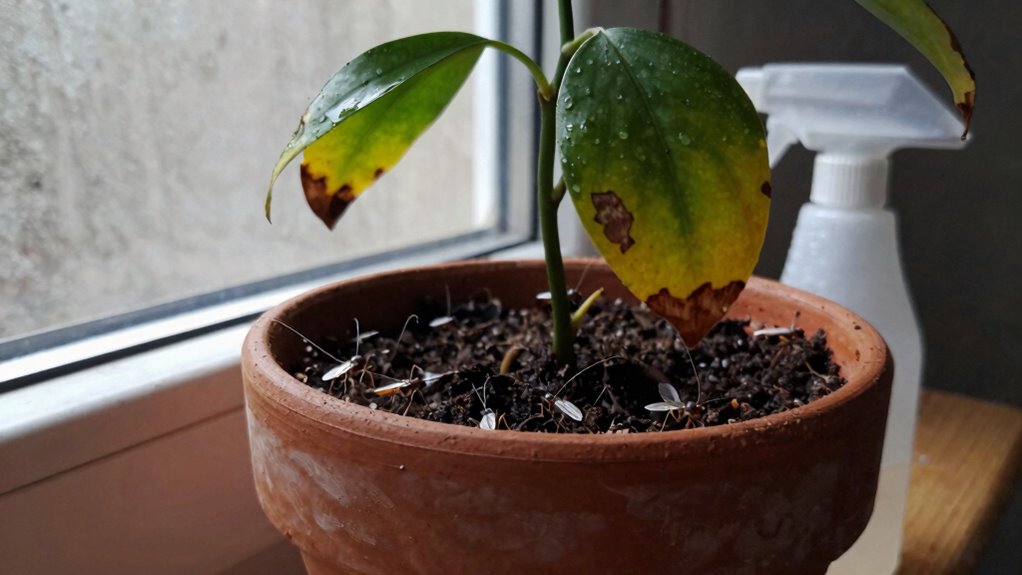
Chemical sprays are a last resort, only for severe infestations that laugh at sticky traps and soil drying. The real target is the larvae in the soil, not the buzzing adults, so sprays must reach the potting mix.
Always pair these treatments with non-chemical methods like watering from the bottom. Sprays alone are just a bandage on a broken pot.
For effective pest control, target the soil-borne larvae with insecticidal drench products. This approach stops the cycle before new adults emerge.
Combine chemical sprays with beneficial nematodes or yellow sticky traps for best results. Purchasing a quality sprayer ensures you get deep soil penetration.
For a low-toxicity option, dusting with boric acid can help eliminate larvae in the soil, as it acts as a stomach poison that disrupts their digestive systems.
Severe Infestations Only
For the rare, truly dire gnat infestation, chemical sprays can step in as a last resort. This is only when every leaf seems to launch a tiny fly and sticky traps are clearly losing the battle.
At this point, non-chemical options have failed, so a professional pest control referral is wise. For DIY, use pyrethrin-based sprays like Bonide’s product, around $10, targeting only adults on the soil surface and foliage.
Remember, these sprays do not kill larvae, so skip any soil drench treatments. Spray only when the infestation is extreme, not for a few stray gnats.
Choose products labeled for indoor houseplants, such as Safer Brand’s pyrethrin spray. Apply at dusk to protect beneficial insects from harm, as pyrethrins harm pollinators if applied incorrectly.
Repeat the application every 5 to 7 days until adult gnat numbers drop noticeably. Always ventilate the room thoroughly after spraying to clear the air.
The bottom line is that chemicals are a hail mary move, not a regular habit. Severe infestations warrant this escalation, but prevention and sticky traps should remain your first line of defense.
Target Soil Larvae
Pyrethrin spray works by paralysing soil larvae on contact. It is best for heavy infestations and should be repeated every 5 to 7 days.
Imidacloprid drench acts as a systemic poison that lasts for weeks. Use it for stubborn cases but avoid applying near blooming plants.
Azadirachtin, the active compound in neem, disrupts larval growth and development. This option is ideal for moderate infestations as it is slower but much safer.
Sprays are a blunt hammer, not a scalpel. Only use them when roots are visually damaged and nothing else has worked. For extreme cases, broad-spectrum kits cover up to 100 insect species including gnats and their larvae.
Combine With Non-Chemical Methods
When chemicals are finally called in, they should work as a cleanup crew, not the main event. This is integrated pest management where you are the boss and sprays are just one tool.
Use pyrethrin-based aerosols sparingly, only after every non-chemical method has failed. They kill adults on contact but won’t touch larvae. Combine them with sticky traps and Bti drenches for a one two punch.
Remember that biological control compatibility matters because chemicals can wipe out beneficial microbes you have worked to establish. Keep your approach layered.
Reserve sprays for extreme, out of control swarms. Avoid broad spectrum killers that nuke the good guys.
Apply at dusk when gnats are active and you are less likely to fry your fern. Rotate with Bti treatments every five to seven days.
Stick to products labeled for indoor use, no outdoor hopium. For severe infestations, choose a total release fogger specific to your enclosed space to ensure thorough, contact-based adult knockdown. Bottom line: chemicals are the pinch hitter, not the starting lineup.
Frequently Asked Questions
Can I Reuse Potting Soil That Had Fungus Gnats?
Yes, you can reuse potting soil that had fungus gnats, but only if you sterilize it first. Bake the damp soil at 200°F for 30 minutes to kill the larvae and eggs hiding in the mix.
Skip this step and you risk a gnat reinfestation the moment you water your plants. It is a cheap fix that saves you $5 to $10 on new potting mix, but it is not foolproof.
If you are lazy like me, just buy fresh soil instead. It is easier than explaining to guests why tiny flies call your plants home.
For the best pest control results, use a soil drench with Bacillus thuringiensis israelensis after sterilization. Pair this with sticky traps for adult gnats to break the life cycle completely.
Bottom line: sterilize or start fresh. Your plants will thank you, and you will avoid the frustration of recurring pest problems.
How Long Do Adult Fungus Gnats Live Indoors?
Adult fungus gnats have a short indoor lifespan, typically living only about seven to ten days. Their main job is reproduction, not causing chaos, though honestly they are pretty good at that last part.
Adult mortality is high without food sources like damp soil or plant debris to encourage egg laying. So if you stop overwatering and let the top inch of soil dry out, those adults quickly die off.
This simple drying method is an effective pest control solution that eliminates the need for harsh chemicals. For best results, combine it with yellow sticky traps to catch adults and monitor for new infestations.
If you want fast fungus gnat control, target the larvae in the soil with a biological insecticide like Bacillus thuringiensis israelensis. This targeted approach breaks the life cycle and stops the infestation at its source.
Do Fungus Gnats Bite Humans or Pets?
No, fungus gnats do not bite humans or pets. This is a common indoor insect myth you can stop worrying about.
Adult gnats are harmless, flitting around plants like tiny, clumsy pilots. They lack the mouthparts needed for biting, so no itchy bites will occur.
Their larvae, by contrast, are the real pests. They munch on roots and can damage your houseplants.
Good garden pest prevention stops them quickly. Letting your potting soil dry out between waterings is a simple, effective solution.
For a long term fix, consider using yellow sticky traps or a biological larvicide. These are smart pest control products for indoor plant care.
So no dangerous bites here, just annoying fliers that love overwatered soil. They are annoying, yes, but dangerous, no.
If you want to eliminate them for good, invest in a soil drench or an insecticidal soap. Your plants will thank you for the proper treatment.
Will Hydrogen Peroxide Kill Fungus Gnat Larvae?
Will hydrogen peroxide kill fungus gnat larvae? Yes, it does, but only on direct contact with the pests. A 3% hydrogen peroxide solution mixed with four parts water works as a soil drench for your houseplants.
Apply it once a week for two to three weeks to break the gnat life cycle. This timing matters because it won’t kill eggs or pupae, which are hidden in the soil.
This cheap pest control fix costs around two bucks a bottle, making it an affordable first step. However, it also kills beneficial soil microbes, so don’t overdo the treatment.
For a targeted gnat infestation, this is a decent first strike, not a complete cure. If you want a long term solution, combine it with sticky traps and proper watering habits.
Can I Use Sand Instead of Gravel for the Top Layer?
Yes, you can use sand instead of gravel for the top layer, but sand needs a finer texture than gravel to work as a barrier for fungus gnat egg laying.
Coarse sand like play sand creates a dry crust when top watered, whereas gravel allows airflow gaps that help prevent moisture buildup and pest infestations.
For the best drainage improvement and fungus gnat control, use a half inch layer of sharp sand. Avoid beach sand which compacts and traps moisture, making it a poor choice for a pest barrier.
A dry surface layer likewise discourages adult gnats from landing and laying eggs in your plant pots.
Bottom line: sand works as a top layer, but pairing it with yellow sticky traps is smarter for long term pest control. These traps catch adults before they can reproduce, making your sand layer more effective.
For a complete gnat management strategy, combine sharp sand with preventative watering habits and targeted insecticide options available at your garden center.


