
Drain fly traps do work, but only as a detection tool—not as a solution. Sticky tape will catch adult flies swarming near a sink, yet it leaves the larvae and the pipe slime they feed on completely untouched.
You’re basically swatting one fly while the colony keeps breeding in the drain’s biofilm. A simple trap over the suspect pipe can confirm where the infestation lives, but it won’t stop new flies from emerging.
That’s why the real fix comes from breaking the breeding cycle, not just catching the adults. In this guide, you’ll learn which traps are worth buying, how to read what they catch, and the exact enzyme treatment that finally eliminates the larvae and the gunk they need to survive.
Stick with the full breakdown below—it’s the difference between temporary relief and a drain that stays clear for good.
At A Glance
- Traps only catch adult flies, not the larvae breeding in pipe biofilm.
- They are effective as monitoring tools to confirm infested drains, not as cures.
- Tape or sticky traps over a drain for 24 hours verify the exact source.
- Traps provide no control over hidden breeding sites like broken pipes or sludge.
- Permanent elimination requires removing biofilm with enzymatic cleaners and scrubbing.
Why Most Drain Fly Traps Fail to Stop Infestations
Most drain fly traps only target adult flies, and adults are not the real problem. That is why these traps almost always fail to stop an infestation.
Eliminating adults is a short-term fix, like slapping one mosquito in a swamp. It feels productive but solves nothing for a drain fly control plan.
Eliminating adults is a short-term fix, like slapping one mosquito in a swamp.
Traps are useful for pest identification and confirming which drain is the source. That is their only real win when dealing with a drain fly infestation.
You might catch a few dozen flies on sticky paper or a UV-light trap. Yet the larvae keep feeding on biofilm deep inside your pipes.
Adult drain flies live 12 to 20 days, and they lay eggs throughout that time. So traps merely monitor the problem instead of fixing it.
They work like a smoke alarm that beeps but never calls the fire department. The bottom line is that traps confirm you have drain flies, but they will not evict them.
For effective drain fly elimination, you need scrubbing and pipe cleaning, not just catching. A thorough biofilm removal is the only way to stop larvae from maturing. Products that break down organic drain scum in drains eliminate the breeding ground for flies to prevent future infestations.
What Drain Fly Traps Catch: and What They Miss
Traps catch only the adult flies that happen to land on them, and they miss the whole problem. These devices cannot reach the larvae hiding in drain sludge, broken pipes, or leaky shower pans.
That is where the real infestation lives and thrives. So a trap is really a monitoring tool, not a cure for drain fly control.
It shows you have a problem without solving the root cause. For a permanent solution, you need to treat the drain biofilm and eliminate breeding sites with a professional grade drain cleaner.
Only then will you stop the endless cycle of adult flies appearing. If you skip this step, a pest management treatment will fail to prevent regrowth. Instead, using a thick, enzyme-rich gel clings to pipe walls to target organic buildup and breeding sites directly.
Monitoring Traps
Monitoring traps are honest about their limitations. They catch adult drain flies but miss the real problem.
These traps work best as a detective tool, not a solution. Place a trap over a suspect drain for 24 hours to confirm the source.
Tape or a sticky cup works fine for this job. A cost comparison shows sticky traps cost about $5 to $10 for a pack of six.
UV-light traps run $30 to $60 but both only nab adults. They are great for checking if your cleaning worked.
They do not stop larvae or hidden biofilm. The table below shows what each trap catches and misses.
| Trap Type | What It Catches | Misses |
|---|---|---|
| Sticky paper | Adult flies only | Larvae, eggs |
| UV-light trap | Adult flies only | Biofilm, hidden drains |
| Tape over drain | Emerging adults | Hidden sources |
| Plastic cup trap | Captures adults | Larvae underground |
| Enzyme cleaner | Biofilm, larvae | (Not a trap, but comparison) |
The bottom line is traps track the problem. Scrubbing drains with a brush or enzyme cleaner is the real fix.
For a complete drain fly solution, combine trap monitoring with drain cleaning. This approach targets both adults and larvae for lasting results.
For a more comprehensive approach, consider using non-toxic sticky traps that are safe around kids and pets for monitoring other flying pests.
Hidden Sources
Why would a clean looking drain still breed drain flies? Traps only catch what emerges into open air, and that is a fraction of the problem.
Hidden sources like broken pipes, leaky shower pans, or sludge in an air conditioning drip tray sit beyond any sticky trap’s reach. A trap might catch a few dozen adults, but larvae keep churning out reinforcements in cracks you cannot see.
That is where a structural inspection earns its keep. You are hunting biofilm, that gelatinous gunk they eat, not just flies.
If infestations recur after weeks of trapping, professional pest control consultation beats guessing. A pro can scope walls, under floors, or inside elevator shafts, places traps never touch.
The bottom line is that traps confirm a problem exists. Finding where it breeds is a job for eyes, not glue.
Instead, enzymatic drain cleaners can break down the organic waste and biofilm in hidden pipes that traps never reach, eliminating the food source for larvae before they mature into adults.
Limitations of Traps
Drain fly traps act like nets that catch adult flies but do nothing to stop the breeding cycle. These traps only snag visible pests, not the larvae hidden deep inside drain gunk and biofilm.
Sticky traps and UV lights can temporarily reduce adult numbers, but they completely miss the real problem. The real job is lifecycle disruption and breeding source elimination, which traps cannot do.
| What Traps Catch | What Traps Miss |
|---|---|
| Adult flies near drains | Larvae in biofilm |
| Visible infestations | Hidden breeding spots like cracks and pipes |
| Short-term population drop | Long-term source control |
A trap is like a smoke alarm that confirms you have a problem, but it does not put out the fire. Without scrubbing drains or applying enzyme-based formulations for several weeks, adult flies keep laying eggs.
You will end up buying traps over and over, stuck in a thankless loop. The real fix is to clean where they breed, not just where they fly.
How a Simple Tape Drain Fly Trap Confirms Which Drain Is Infested
A simple strip of clear tape placed sticky-side down over a drain overnight can confirm an infestation, but it isn’t a magic bullet. This tape trap method works by catching adult flies as they emerge, which visually proves the exact drain is the source for a cheap, satisfying “gotcha” moment.
It’s a practical first step for any homeowner looking to pinpoint the problem before buying drain fly treatments. Yet the trap’s limitations are key: it only monitors adult activity, not the hidden larvae breeding in the biofilm.
So it confirms the issue without solving it, meaning you’ll still need a proper drain fly killer or a professional pest control service for full eradication. Use this tape test as a quick inspection tool, then follow up with enzyme cleaners or foaming drain gels to break down the organic gunk.
That gunk is exactly where the larvae thrive, so targeting it directly is your real fix. For persistent infestations, consider a repeat application of a botanical insecticide or a drain bio-foam to flush out the breeding site. Bright yellow sticky traps work great for fungus gnats and fruit flies during indoor pest control, but for drain flies, focusing on the organic biofilm is more effective.
Confirming Infested Drains
Before you break out the heavy chemicals or call a professional plumber, you need to identify the exact drain causing the problem. A simple tape trap confirms the source of a drain fly infestation without any mess or guesswork.
Place clear tape over the drain opening at night with the sticky side facing down. By morning, trapped adult flies will reveal the infested pipe.
Because adult drain flies only live 12 to 20 days, any fresh flies caught on tape indicate active breeding nearby. This means you are not dealing with stray wanderers but a real infestation source.
Correct trap placement is essential for accurate pest control results. Cover each suspect drain individually, including floor drains and rarely used sinks, to pinpoint the problem.
This method works like a tiny detective with no chemicals or fuss, just a sticky truth teller. Once confirmed, you know exactly where to focus your cleaning efforts and choose the right treatment.
Tape Trap Method Steps
Sticky tape does not confirm just an infestation; it pins the blame on one specific drain.
Place a strip of clear tape, sticky side down, over a suspect drain before you go to bed.
By morning, adult flies stuck to the tape reveal the source of your pest problem.
This tape trap method is a cheap, zero effort verification tool with no fancy gadgets needed.
It tells you exactly where to focus biofilm digestion, the real enemy in drain flies.
You save time by skipping random cleaning and jumping straight to source elimination.
Source elimination starts here, not with spraying adults that fly away.
One trap per drain, one night, and you get one clear answer for your treatment plan.
A roll of tape costs about two bucks and it is a simple pest control buy.
Use it, then move on to actual drain treatment with confidence.
For a more durable option, these traps use UV-resistant adhesive to maintain grip under sunlight.
Limitations of Tape Trap
Tape traps can give you misleading results about a drain fly problem. They confirm which drain is infested, but that is where the help stops.
The adhesive works well on smooth pipes, but it fails on cruddy surfaces where flies slip right past. Overnight coverage only traps the adults that happen to emerge, so it completely ignores eggs and larvae hiding in the biofilm.
These traps provide no real control over the infestation. They catch flies but do nothing to remove the breeding ground, which is the goopy sludge inside your pipes.
Their limited scope means you miss hidden sources like broken pipes or leaky pans. Low catch numbers might suggest success, but flies could be breeding elsewhere, just not in that drain. In contrast, non-toxic, pesticide-free spider traps capture pests without bait or fumes and are safe for children and pets.
The 24-Hour Drain Trap Test for Hidden Breeding Sites
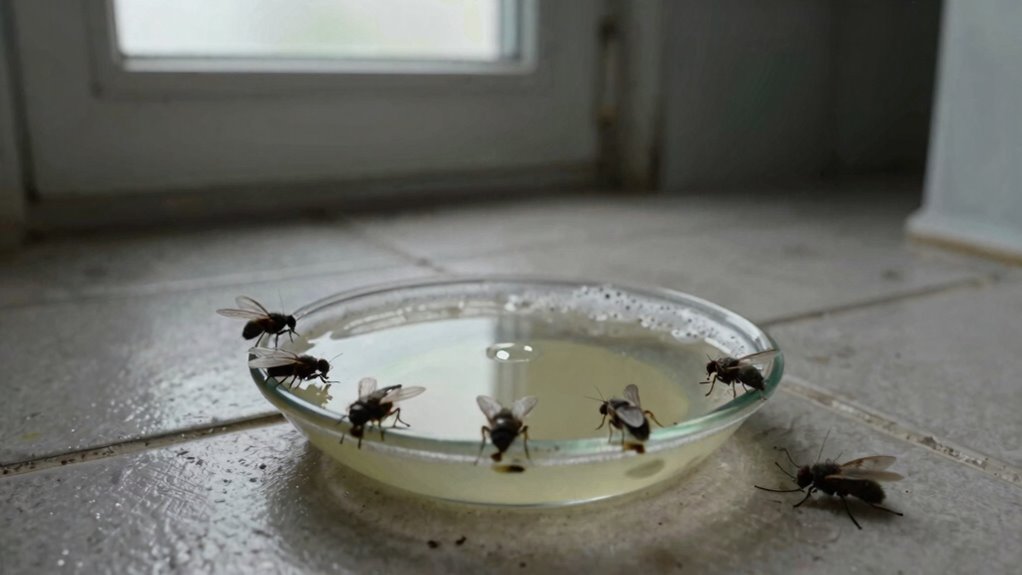
The 24-hour drain trap test is a simple way to confirm if drain flies are breeding in your pipes. Proper trap placement is essential for accurate pest control results.
Cover the suspected drain with clear tape or a plastic cup coated with petroleum jelly. If adult flies stick to it within a day, they emerged from that specific drain. This test detects the hidden larval stage inside the pipe’s biofilm, not just adults flying elsewhere.
Cover the drain with clear tape or petroleum jelly-coated cup; adult flies stuck within a day confirm the source.
Do not assume one trap covers all sources. Check multiple drains, especially slow running ones that may hold more organic buildup. Remember, this trap catches adults, not larvae deep in sludge.
If flies reappear after cleaning, try traps under sinks or near leaky shower pans. Use this test monthly to monitor for hidden breeding sites, but expect to scrub drains for three weeks to truly stop the infestation. Once breeding is confirmed, consider using a vapor-based treatment like TERRO Garbage Guard to kill flies and larvae inside nearby bins for up to four months.
Why Trapping Adult Drain Flies Won’t Kill the Larvae
Squashing adult drain flies feels satisfying, but it does nothing to the larvae hiding in the pipe slime. Those adults are only the visible tip of a much larger problem.
Their short adult lifespan of about two weeks means they will die soon anyway. The real issue is the breeding colony living in the biofilm below.
Traps usually catch only the weakest fliers resting nearby. They miss most of the population hiding in pipe crevices.
Each adult you kill was already near the end of its life. Yet its eggs are hatching into new larvae at this very moment.
Without biofilm destruction through enzyme treatments or scrubbing, the larvae keep feeding and growing. They simply emerge as fresh adults, mocking your sticky traps.
The bottom line is that traps are for monitoring, not for control. You need to kill the slime, not the flies. This is analogous to fighting booklice, where targeting humidity levels below 50% is essential rather than just trapping a few visible adults.
Where Drain Flies Breed Beyond Any Trap’s Reach
You can stick tape over a drain and catch a few adult flies, but they often breed in places a trap will never reach.
These hidden spots include broken pipes, leaky shower pans, or sludge in an air conditioning drip pan.
That moisture creates perfect drainless entryways for larvae to thrive.
They also colonize nonplumbing habitats like damp basement floors or rotting wood near a leaky toilet.
A trap over a sink drain is useless against a colony living in a wall cavity.
If you catch flies but they keep coming back, suspect a hidden breeding site.
You are just monitoring the visible ones, not solving the real problem.
For effective pest control, look for the real source of the infestation.
A fly trap’s reach ends at the drain, but their reach starts where your plumbing does not go.
To stop drain flies for good, inspect and dry out those unreachable breeding areas.
In particular, inspect any hidden moisture sources where biological larvicides containing BTI could be applied to target developing larvae.
The 3-Week Cleaning Routine That Outperforms All Drain Fly Traps
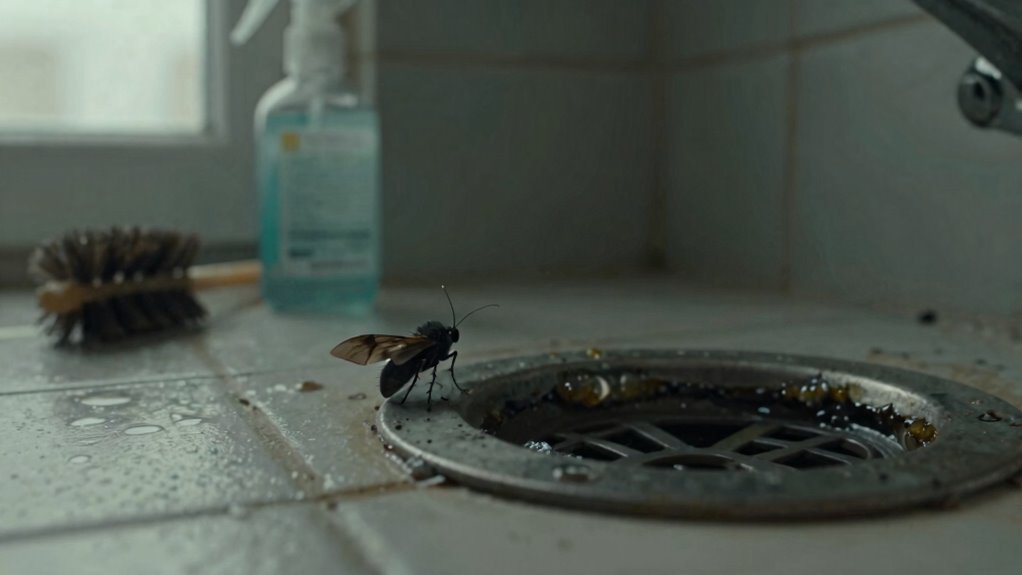
A sticky trap might catch a few adults, but it is a confession, not a solution. A real fix requires a three week assault on the biofilm itself.
Week one: Scrub every drain with a stiff brush and boiling water, then flush with an enzyme treatment to digest the slime where larvae hide. This step targets the root cause of drain fly infestations and eliminates their food source.
Week two: Repeat the enzyme dose and foam it down for better pipe coverage. Seal any drain openings not in daily use to block adult flies from breeding.
Week three: A final enzyme flush, plus a professional inspection to spot hidden breeding sites like cracked pipes. This pest control approach ensures you eliminate all lingering colony hotspots.
Traps only brag about your mess. This routine starves the problem and gives you a permanent solution. Overuse risks include burning or redness if using chemical treatments incorrectly.
Why Bleach Fails but Enzyme Cleaners Dissolve Biofilm
Bleach only kills the surface layer of bacteria on drain fly biofilm, leaving the protective slime intact for larvae to thrive. Enzyme cleaners digest the organic sludge that biofilm is made of, removing the food source completely.
This means bleach is a temporary fix for drain fly problems, while enzymes actually clean the drain for good. For pest control you can rely on, enzyme treatments break down the sludge where flies breed and feed.
Think of it like digesting a greasy pot: enzymes target the root of organic buildup. That makes them a smarter choice for long term drain cleaning and fly prevention.
Bleach vs. Biofilm
Bleach only oxidizes the top of the biofilm, leaving a hard scorched crust that protects the deeper active layers below. It fails to break apart the sticky matrix where fly eggs and larvae hide, so new flies can emerge within days. For real pest control results, you need a heavy duty degreaser that actually removes the biofilm scum. A sanitizer alone will never fix a drain fly infestation at the source. Focus on biofilm removal with a product that dissolves the organic buildup completely. This stops the breeding cycle and keeps drains clean for good. Combined with traps like the bright yellow format of Kensizer 30-Pack Window Fly Traps, you can catch adult flies emerging from drains while the degreaser works on the biofilm below.
Enzymes Break Sludge Down
Enzymes are the secret weapon that bleach simply cannot match. Bleach only sanitizes the surface without penetrating the biofilm where larvae thrive.
Enzyme cleaners digest biofilm layers effectively, breaking down organic sludge into liquid that flushes away. Non-toxic to pipes and pets, they work safely in slow drains.
Weekly enzyme use prevents re-growth and eliminates the larvae’s food source. This starving action stops the next generation from multiplying.
For a sink drain infestation, pour a full bottle of Green Gobbler weekly for six weeks. No scrubbing is required to get rid of drain flies.
Buy enzymes for infestations, not bleach for stains. This pest control solution keeps drains clean and larvae free.
Unlike bleach, enzyme sprays like Farnam Bronco E offer a water-based, non-toxic formula with citronella that safely repels flies on surfaces and animals.
How Drain Fly Trap Counts Verify Your Treatment Is Working
Sticky traps are a monitoring tool, not a chemical cure. Their real value shows in the daily count, which tells you if your drain fly treatment is actually working.
Set traps before any cleaning and record each fly per day; a score of ten signals a solid infestation that needs a professional grade enzyme cleaner.
After two weeks of enzyme scrubs, those numbers should fall to three or four per trap. If they don’t drop, the biofilm layer is still intact and you need to reapply the descaler or switch to a stronger drain maintenance product.
By week six, seeing zero to one fly per trap means your source elimination is on track, but remember that traps alone never fix a drain.
These sticky sheets give you cold, hard evidence for pest control verification. They prove whether your elbow grease worked or you’re just feeding expensive fly paper without solving the breeding site.
Numbers don’t lie; that jar of dead bugs is your truth check, so use those counts to adjust your service interval or call a professional for a deeper biofoam treatment.
However, for targeting drain flies specifically, a product like Raid Essentials Fruit Fly Trap uses plant-based essential oils and is safe for use around food prep areas.
When Should You Call a Pro for Hidden Drain Fly Sources?
If your sticky traps keep filling up week after week despite your best enzyme scrubs, you are likely missing a hidden breeding site. That is the time to call a professional drain fly exterminator.
They will check septic systems where muck in the tank or leach field can host thousands of larvae. They will also inspect plumbing vents on your roof for clogs that trap dampness and organic goo.
A thorough drain fly inspection costs around $150 to $300, but it finds sources you cannot reach. Professionals use borescopes to see inside walls and under floors, locating rotten subfloor or broken pipes.
If you see adult drain flies for more than six weeks in spite of scrubbing, it is time to call for help. Hidden sources will not surrender to sticky tape alone. These traps, however, work differently from reusable non-toxic bottle fly traps that use scent and food-grade bait to attract flies outdoors.
A pro’s eyes and specialized tools save you months of frustration. Bottom line: when traps confirm your work is not working, pay for a professional pest control hunt.
Use Drain Fly Traps Only as Monitoring Tools in Your Control Plan
Traps are useful, but only if you treat them like a speedometer, not the steering wheel. They reveal where flies breed, but never stop the infestation themselves.
Place traps near suspect drains and seal them with clear tape or sticky cups. This catches adult flies overnight and confirms exact problem spots without false hope.
Fly behavior shows adults are weak fliers that rest on surfaces above drains. So traps capture only the visible few, while larvae hide deep in hidden slime.
Sticky traps placed before treatment give baseline counts. Rising numbers in week two prove flushing works, but zero activity at week six confirms cleaning succeeded.
The bottom line is to use traps to map the enemy, not to win the war. While drain traps monitor adults, note that for other pests like rats, first-generation anticoagulants require multiple feedings and have an available antidote, offering a safer option for control. They are your eyes, not your weapon. Pair them with weekly enzyme scrubs for true drain fly control.
Frequently Asked Questions
Can Traps Alone Eliminate a Drain Fly Infestation?
Traps alone cannot eliminate a drain fly infestation. They are for monitoring, not a complete cure.
Their real job is source identification. Sticky cups placed under drains confirm exactly where the flies emerge.
Adult drain flies live only 12 to 20 days. But they lay eggs in the biofilm that traps completely ignore.
Without scrubbing your pipes and using enzyme cleaners weekly for six weeks, the larvae keep partying. Think of traps as a spy, not a soldier.
You need physical cleaning to truly win this pest battle. The bottom line is traps monitor, but treatment solves.
Why Do Drains Still Have Flies After Using Traps?
Drains still have flies after using traps because the ignored larval source remains untouched. Traps only catch adult flies, not the biofilm where larvae feast and breed.
That gooey gunk hides in cracks or leaky pipes, laughing at sticky paper and glue boards. Without scrubbing or enzyme treatments, the fly infestation cycle continues.
Traps are great for monitoring activity, but they won’t fix a breeding ground. Just like a mop won’t fix a flood, sticky traps won’t solve drain fly eggs.
For real drain fly control, you need a professional grade gel or microbial cleaner. Target the gunk itself with a foaming drain treatment or bacterial drain cleaner.
This breaks down the organic film so larvae can’t eat or pupate. Pair that with a preventative drain maintenance spray to stop reinfestation.
Buy a complete drain fly kit today to kill adults and destroy the breeding ground. Stop wasting money on ineffective traps that only scratch the surface.
Do UV Light Traps Work Better Than Sticky Traps?
UV light traps catch more flies than sticky traps, but neither option truly solves the root of a pest problem. The UV spectrum attracts weak fliers only when light placement is right, like near drains and not across the room.
A budget friendly UV trap beats sticky paper for monitoring fly activity, but both methods just bag adult insects. Think of traps as a bandage on a broken pipe in your pest management plan.
Without cleaning biofilm from drains and surfaces, you are just throwing confetti at a parade. For real fly control, combine targeted UV traps with thorough drain treatment and sanitation.
That approach delivers better long term results and helps you choose the best fly killer for your commercial kitchen or facility. If you want to reduce fly populations fast, focus on removing breeding sites first.
Then use the right insect light trap as a monitoring tool to confirm your cleanup is working.
How Often Should I Replace Drain Fly Traps?
Replace them every 30 days, or sooner if the sticky surface looks full. Scented trap brands often lose potency faster, so check weekly for best results.
For monitoring drain fly activity, swap before they get dusty. These traps are not a fix, just a peek into your infestation level.
Think of it like changing socks. Do it too late, and you will know the difference immediately.
Pair sticky traps with an enzymatic cleaner comparison for real drain fly control. Traps alone are a temporary truce, not a victory.
Are There Any Traps That Kill Drain Fly Larvae?
No, unfortunately there are no traps that kill drain fly larvae. Traps only catch adult flies like sticky notes for flying bugs.
Larvae live deep in drain sludge, so traps can’t reach them. Instead, use biological control methods like enzyme based drain cleaners.
These digest the biofilm larvae eat. Pour weekly for 6 to 8 weeks, about $15 per bottle.
Bottom line: skip any so called larvae killing traps; they are a myth. Clean drains instead with professional grade products for effective pest control.
If you want to buy drain fly treatment that actually works, choose an enzyme cleaner. It attacks the organic matter where larvae breed.
For lasting drain fly removal, combine a biological cleaner with regular drain maintenance. This ensures you kill the source, not just the adults.


