
Fly eggs look like tiny white or cream rice clusters, often hiding in damp manure or rotting vegetation. If you spot them, you’re facing a potential maggot explosion—one wet pound can hatch over 1,500 pests.
The fastest way to kill fly eggs is drying manure below 30% moisture by scraping it thin, no more than four inches deep, twice a week. Bleach solution (one part bleach to nine parts water) drenches breeding sites weekly for extra control.
Sampling manure with a trowel tracks hotspots, while natural predators like parasitic wasps or beetles add long-term help. This guide covers these quick fixes and a full prevention plan to stop flies for good.
At A Glance
- Dry manure below 30% moisture instantly kills fly eggs.
- Remove and scatter wet manure in thin layers twice weekly.
- Drench breeding sites with a 1:9 bleach-water solution weekly.
- Release parasitic wasps or predatory mites to target eggs naturally.
- Fix leaky waterers and drainage to eliminate damp breeding spots.
What Do Fly Eggs Look Like and Where Do They Hide?
Fly eggs are tiny white or cream colored clusters about the size of a grain of salt. They hide in damp, messy spots you would rather not inspect, like spilled feed or rotting vegetation.
Wet straw also traps moisture and warmth, making it a prime target for fly breeding. Good farm hygiene is your first defense against a growing fly problem.
Clean up that spilled grain and those damp hay bales without delay. A female housefly lays 75 to 150 eggs every three to four days, so one overlooked pile becomes a factory.
Clean up spilled grain and damp hay now—one overlooked pile becomes a breeding factory.
If you let manure pile up, you are not farming, you are hosting a nursery. Keep surfaces dry and minimize debris types that attract pests.
Dry manure can sit for years without bugs, so fix your pest control habits today. Using enzyme drain cleaners regularly breaks down organic waste that attracts flies and maggots, keeping drains and surfaces pest-free. Take action now or prepare for a full fly infestation tomorrow.
Where to Dig for Fly Eggs in Wet Manure and Moist Debris
The best place to start digging for fly eggs is in wet manure, targeting the spots you least want to reach. Look under crusty edges, in flattened sodden areas, and near spilled feed to find them.
Fly egg identification is simple: they appear as small white rice-like clusters. For physical exclusion, shovel and remove these damp hotspots at least twice a week.
Scatter the material thinly to dry it out, since one pound of wet manure can hatch over 1,500 maggots. Dig around leaky waterers and drainage ditches to eliminate breeding grounds.
Don’t forget rotting vegetation or dead birds, as blow flies love those for egg laying. Your goal is to find the wettest, stinkiest places and break them up.
This pest control method stops the cycle before larvae emerge. Bottom line: dig where it’s wettest, dry it out, and you’ll reduce your fly problem fast.
You can also disrupt fly breeding cycles by applying botanical sprays with natural oils to these hotspots.
Dry Out Manure: The Fastest Way to Kill Fly Eggs
Drying out manure is the single fastest way to kill fly eggs, and it’s far less messy than you would think. Dampness reduction is the key for effective pest control in your stable or barn.
Flies need wet manure to hatch, so getting moisture below 30% makes those eggs shrivel instantly. Drainage tactics make this work for easy fly management.
Install eave troughs to keep rain off your piles and spread manure in thin layers no more than four inches deep. Break up clumps with a rake since dry bits don’t breed flies.
A compost thermometer can verify your dampness level, aiming for a crumbly texture not a swamp. Dry manure is dead manure for long term fly control.
Spend an hour improving drainage and you cut fly eggs by 90% without harsh chemicals. Less mess and fewer flies means you sleep better knowing those eggs are toast.
Complement this drying method by placing baited traps 20-30 feet from manure piles to intercept adult flies before they lay new eggs.
Clean Manure Twice a Week to Destroy Fly Eggs
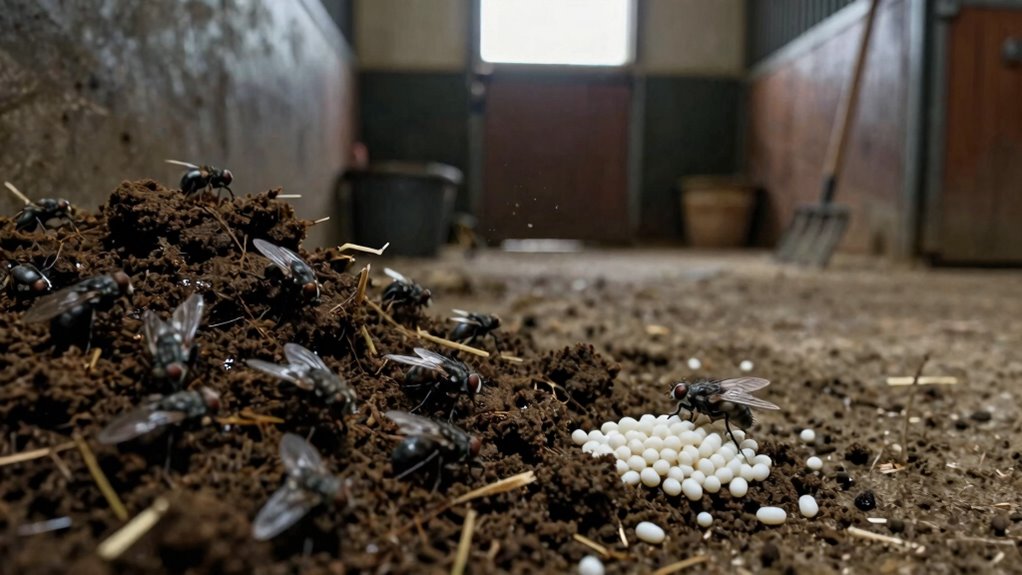
Removing manure on a strict twice weekly schedule breaks the fly lifecycle cold. Houseflies lay clusters of 75 to 150 eggs every three to four days.
Cleaning twice a week guarantees you scoop out fresh eggs before they hatch into larvae. Timing is everything here, and a missed day means a new generation.
Cleaning twice a week scoops out eggs before they hatch. Timing is everything; a missed day means a new generation.
This aggressive cleaning rhythm also attacks manure dampness, which is the real enemy. Wet manure above 30% dampness is a breeding paradise for flies.
One pound of wet manure can host over 1,500 maggots. By scraping and scattering it thinly twice weekly, you dry it out fast.
This disrupts the breeding cycle before it gains momentum. The payoff is fewer flies, less stink, and a barn that feels clean and manageable.
Stick to the schedule without excuses, as it is your best defense for permanent fly control. Using a natural oil-based spray on nearby bins can also target newly hatched maggots before they spread.
Use Bleach on Manure Piles and Carcass Disposal to Kill Fly Eggs
A bleach solution provides an affordable, fast way to kill fly eggs on manure piles and carcass disposal sites. Mix one part household bleach with nine parts water, then thoroughly drench the breeding material.
Bleach runoff can harm soil and plants, so place your piles on concrete or plastic sheeting to prevent contamination. For carcass composting, use bleach sparingly because it can slow decomposition but will instantly destroy blow fly eggs, which hatch within 24 hours.
Apply a fresh solution weekly, not daily, to avoid wasting product and reduce fly breeding pressure. The fumes are harsh, so always wear gloves and goggles for safe pest control application.
A spray bottle or garden sprayer works best for targeted egg kill on hot spots. Remember, this is a cheap and fast tool for manure management and carcass disposal, not a long term fix. For additional fly control around these areas, consider using reusable non-toxic traps that use food-based baits to catch flies without chemicals.
Sample Manure Weekly to Time Your Spray or Parasite Release
Weekly manure sampling puts surveillance right where it counts in the breeding zone.
By tracking larval hot spots in wet flattened areas or fresh piles, you can time your fly spray or parasite release with precision.
This simple habit shifts your pest control strategy from guesswork to science.
You avoid unnecessary applications and keep your control measures effective when fly populations try to double every two weeks.
Regular monitoring helps you target the exact moment for treatment.
That means less waste and better results against tough manure breeding pests.
For example, you can use a thermal fogger to treat dense breeding areas quickly and effectively.
Weekly Manure Sampling
Weekly manure sampling turns guesswork into a real fly control strategy. Grab a trowel, dig into wet patches, and check for wriggling larvae.
This isn’t glamorous, but neither is a fly swarm. Most people wait until flies are thick, but by then eggs have already hatched.
Sampling lets you spot trouble early so you can time insecticide sprays or parasite releases precisely. Think of it as larval hot spot tracking, finding the enemy’s nursery before it explodes.
One scoop can reveal if your moisture management is failing or if your beneficial insects are winning. It is simple: sample often, act fast, and you will stay ahead without wasting product or money. Applying iron phosphate granules to garden perimeters can also prevent earwig invasions that attract flies.
Buy the right manure sampling tools to start your pest inspection routine today. Early detection keeps your livestock area clean and cuts down on chemical use.
Track Larval Hot Spots
Why track larval hot spots at all? One pound of wet manure with that 75–80% moisture content flies love can spawn over 1,500 housefly maggots.
That is a lot of flies from just one stinking pound. Sampling manure weekly with a trowel finds these damp, flattened areas where eggs and larvae thrive.
To break the cycle, focus on those hot spots. Improve manure aeration by turning or spreading it thin to speed drying.
Moisture sensors help you know when manure hits that risky moisture zone. Aim for 30% or less to stop fly breeding.
When you find a hot spot, act fast with pest control. Disturb the manure, break it up, and let air do its job.
Dry manure simply does not support fly breeding. So track those hot spots, aerate, and dry them out for effective fly prevention.
For immediate control on affected surfaces, consider using BASF Alpine Fly Bait Spray which remains effective for up to 30 days.
Targeted Control Timing
By sampling manure weekly with a trowel or hoe, you can time your pest control sprays or parasitic wasp releases to hit fly eggs and larvae when they are most vulnerable. The goal is to catch them before they crawl off to pupate.
Dampness content is your crystal ball here. Wet manure above 70% dampness speeds egg hatching in just hours.
Dry manure below 30% kills eggs outright. Check your samples: if you see white, wriggling larvae in damp clumps, spray immediately.
If the manure is crusty and dry, wait. Releases are wasted on dead eggs, and timing matters because pupal survival drops fast in dry conditions.
Sprays target larvae while wasps focus on pupae. But only when manure dampness is right, so sample, assess, and act.
It’s not glamorous, but it beats a fly swarm. The bottom line: weekly sampling saves effort and your sanity.
Which Natural Predators and Parasitic Wasps Target Fly Eggs?
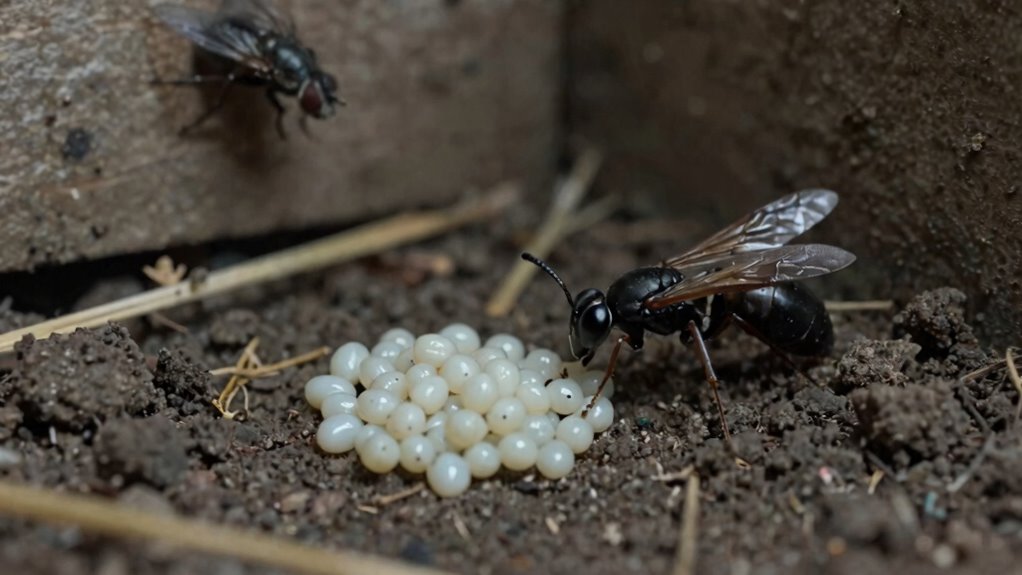
Several natural enemies precisely target fly eggs, offering a low tech and high impact control method. These natural predators and parasitic wasps stop flies before they hatch, but they need dry manure to work well. Wet or messy piles drown their efforts.
Several natural enemies target fly eggs, working best in dry manure.
Parasitic wasps are tiny and stingless fly enemies that lay their own eggs inside fly eggs or pupae. This kills the pest from the inside out. Predatory mites are microscopic round creatures that crawl through manure and chomp fly eggs wholesale.
Beetles like the *Carcinops pumilio* or lesser mealworm beetle cruise manure piles, eating eggs and larvae by the dozen. Dermestid beetles, also called carrion beetles, feast on blow fly eggs near dead animals or broken eggs. Fly predators, a commercial mix of *Muscidifurax* and *Spalangia* wasps, you buy monthly for about $20 per 10,000.
This directly seeds your fly problem with natural fly control. Keep manure dry, and these allies do the dirty work for you. For surface-level fly management, plant oils can also disrupt the life cycle of adult flies and emerging larvae naturally.
Start Your Fly Egg Prevention Plan Before Spring Hits
Preparation is the quiet weapon against fly season chaos. Tackle breeding grounds before warmth awakens dormant larvae.
Eliminate standing moisture near any water source like leaky troughs or soggy feed corners. Damp organic matter is prime egg-laying real estate.
Implement temperature control by ventilating manure storage areas early. Cooler drier piles stay below the 60°F hatch threshold.
Scrape and spread old manure in thin layers then fix drainage issues now. Check for cracked bins and seal them. Flies find cracks faster than you find coffee.
A March weekend of cleanup saves August spray bills honestly. Bottom line: deny eggs a warm damp home and summer’s swarm stays a rumor not a reality. For rapid elimination of adult pests that have already emerged, consider using an electric swatter with a high voltage grid for instant zapping.
Frequently Asked Questions
Can Fly Eggs Survive in Dry Manure Piles?
Fly eggs typically cannot survive in dry manure piles. Dry manure, with moisture at 30% or less, creates a hostile environment that kills eggs and prevents hatching.
Egg viability drops sharply without the dampness flies need. One might say dry manure is a fly egg’s worst nightmare and mean it as a compliment.
Keeping manure dry is the simplest, most effective way to stop fly breeding before it starts. To control flies around barns or poultry houses, focus on reducing moisture with proper ventilation and absorbent bedding.
Our manure management products can help you hit that 30% moisture target fast. Shop our drying agents today and cut off fly reproduction at the source.
Do Other Insects Besides Wasps Eat Fly Eggs?
Yes, other insects besides wasps eat fly eggs. Ground beetles and ants are common predators, snatching eggs from manure piles.
Predatory mites additionally target them, especially in damp, undisturbed areas. These mites are tiny, so they work unnoticed.
One specific parasitoid, like certain wasps, lays eggs inside fly larvae. But beetles and mites do the dirty work on eggs first.
For a dry manure pile, though, beetles are your best bet. They’ll patrol it daily, so keep it crusty and they’ll handle the rest.
Bottom line: don’t nuke the pile with broad spectrum sprays. You’ll kill your natural pest control allies and invite more flies.
How Long Do Fly Eggs Take to Hatch in Warm Weather?
In warm weather, fly eggs hatch in 8 to 12 hours. That is
Will Bleach Harm Beneficial Insects in Manure?
Bleach will absolutely harm beneficial insects in manure. Bleach toxicity doesn’t discriminate, so it kills parasitic wasps, beetles, and mites that naturally control flies.
Any bleach concentration means death for beneficial insects, even in small amounts. This stuff is truly a scorched earth tool for your pest control efforts.
For effective fly control, keep bleach away from manure piles. Let beneficial insects do their job and use targeted larvicides only when you spot those hot spots of eggs.
The bottom line is simple: leave bleach for garbage bins, not beneficial habitat. When you need to buy fly control solutions, choose selective larvicides that preserve your natural pest control allies.
Can Fly Eggs Be Killed by Freezing Temperatures?
Yes, freezing temperatures can kill fly eggs. Their cold tolerance is very low, and eggs usually die below 32°F, especially during extended freezes.
However, some eggs survive winter by hiding in insulated manure heaps. The warm center of a large pile can act like a cozy egg nursery even in a hard freeze.
So a deep freeze is not a guaranteed fly control solution. For reliable pest management, check your manure pile and compost areas carefully.
Combine cold exposure with dampness reduction and regular cleanup for best results. These simple steps help break the fly life cycle and reduce adult fly populations.
Investing in a good manure management product can make cleanup faster and more effective. When you tackle breeding sites, you stop flies before they become a nuisance.


