
Getting rid of flies fast means stopping them at the source, not just swatting them away. Those annoying flies are breeding in hidden spots like drains, garbage bins, or overripe fruit right inside your home.
If you’ve been chasing flies with a swatter with no luck, you’re missing what’s really going on. This guide shows you exactly where to find their breeding grounds and how to destroy them for good.
We’ll cover simple, cheap traps you can make in minutes, plus the cleaning steps that stop flies from coming back. No generic tips or fancy products—just practical pest control that works.
The key is knowing which flies you’re dealing with and targeting their specific hideouts. By the end, you’ll have a clear, step-by-step plan to get rid of flies fast and keep them gone.
At A Glance
- Quickly remove all overripe fruit, trash, and damp sponges to eliminate attractants.
- Use a jar trap with apple cider vinegar and dish soap to kill adult flies.
- Sanitize drains with baking soda and vinegar, then flush with boiling water.
- Spray pyrethrin-based chemical spray to kill visible flies within 15–30 minutes.
- Seal garbage bins and install window screens to block new flies from entering.
What’s Attracting Flies to Your Home Right Now?
Right now, flies are likely in your home because they have found a food source. They are especially attracted to fermenting fruit like that overripe banana you forgot on the counter.
Right now, flies are in your home because they’ve found a food source, like that overripe banana you forgot.
That apple with a soft spot or a forgotten potato in the pantry also draws them in. Even a damp sponge you haven’t replaced can be a breeding ground for these pests.
These tiny insects have sharp senses that detect sugar spills and open drink cans. The gunk in your trash bin is another major culprit for a fly infestation.
Fermenting fruit attracts fruit flies fast, so toss it immediately. Decaying organic matter, such as wet coffee grounds or old veggies, is a breeding buffet you must eliminate. Choosing sprays with plant-based active ingredients can provide safer pest control around kids and pets.
Why You Can’t Treat Fruit Flies and Drain Flies the Same Way
Mistaking a fruit fly for a drain fly is like trying to fix a leaky faucet with a banana. Both involve unwanted dampness, but the fix is completely wrong.
Fruit flies go for fermenting fruit and breed in your banana bowl. Drain flies breed deep in sludge inside pipes, which means a professional pest control treatment often differs for each.
Their behavioral differences are stark. Fruit flies hover near food, while drain flies linger around drains.
Their larval habitats couldn’t be more different. Fruit fly larvae feed on rotting fruit, and drain fly larvae thrive in wet, bacteria-rich biofilm.
Spraying fruit fly traps near a drain won’t fix the problem. You would just waste vinegar instead of eliminating the source.
Identify first with a home inspection. Different flies demand different cleanups for effective fly control.
Combining traps with a drain gel or enzyme cleaner provides long-term control for serious infestations.
Remove Fly Breeding Sites Fast: Overripe Fruit and Garbage
Fruit flies don’t RSVP, they just show up. They are drawn to the sweet, fermenting smell of overripe fruit and forgotten garbage.
The fastest way to evict them is to eliminate their breeding grounds. Stop buying bananas in bulk, check your counter daily, and commit to rotten fruit removal.
Toss any fruit that’s bruised, mushy, or starting to spot. It’s not a suggestion, it’s a necessity for effective pest control.
Toss any bruised, mushy, or spotted fruit. It’s not a suggestion—it’s pest control.
Next, tackle the trash. Garbage bin hygiene isn’t optional, it’s the foundation of a fly free kitchen.
Empty bins every two days, even though they’re not full. Rinse cans weekly with hot, soapy water to dissolve sticky residue.
A clean bin, paired with swift fruit disposal, breaks the breeding cycle. Do that, and you’ll see fewer flies fast.
No vinegar traps needed yet. This simple fly prevention method works immediately. For extra defense, apply an odor-neutralizing deodorizer to the trash can to reduce pest-attracting smells.
Drain Cleaning: The Only Way to Kill Larvae
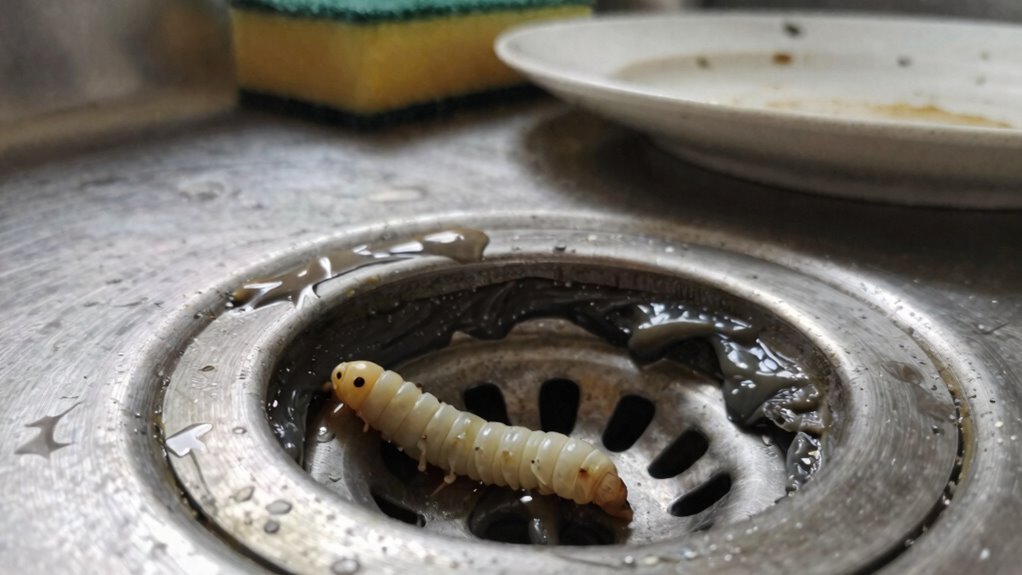
Drains are basically an all-you-can-eat buffet for drain flies and their larvae. The real feast is the biofilm, that slimy organic sludge coating your pipes.
Physical scrubbing is the only sure way to kill drain fly larvae. Chemical drain cleaners just can’t reach or penetrate the protective film.
A stiff drain brush, costing $5 to $10, paired with a long flexible rod, removes the breeding material completely. Once you scrape the biofilm away, the larvae are gone for good.
Adults will die off within roughly 20 days after their food source is eliminated. Boiling water kills some larvae but often misses hidden film deeper in the trap.
Bleach may disinfect but leaves the biofilm intact, so survivors repopulate quickly. Professional hydro jetting blasts biofilm away thoroughly, but costs between $150 and $300.
Enzyme-based formulas instead digest the organic sludge over time, but they require regular monthly or biweekly use to prevent buildup rather than instantly kill larvae.
The bottom line is simple. Scrub the slime, not the symptom, and your drain fly infestation ends.
| Drain Cleaning Method | Why It Works or Fails |
|---|---|
| Physical scrubbing | Removes biofilm and larvae directly |
| Chemical drain cleaner | Only dissolves surface grime, not biofilm |
| Boiling water | Kills some larvae but misses hidden film |
| Bleach pour | Disinfects but leaves biofilm intact |
| Professional hydro jetting | Blasts biofilm, costs $150 to $300 |
Build Traps in 5 Minutes That Catch Dozens
Patience is overrated when flies are invading your kitchen. Build a simple fly trap in five minutes using a jar, apple cider vinegar, and a drop of dish soap.
The homemade bait works because the soap breaks the water surface tension, drowning dozens of pests. For best results, place your trap near trash cans, fruit bowls, or sinks where flies swarm.
You can also lure them with rotting fruit under plastic wrap with small holes poked in it. Replace the bait every two days, or it will smell like a failed science experiment.
These traps cost less than two dollars and use no harsh chemicals. One caveat is they catch adult flies, not larvae, so you must clean first, then trap.
For a quick, cheap pest control solution, this method delivers real results. For long-term control, consider reusable bait traps with refills designed for outdoor placement.
When Chemical Sprays Are Necessary for Severe Infestations
For truly severe infestations, chemical sprays with pyrethrins offer a fast knockdown. This quick kill is satisfying but does not stop new flies from hatching. However, pyrethrins typically kill pests within 15 to 30 minutes, providing immediate relief from active fly swarms.
Pairing it with a spinosad bait provides targeted control that eliminates the breeding population. Spinosad works by poisoning flies that feed on the bait, like GF-120 NF Naturalyte Fruit Fly Bait.
Over time, this combination reduces the infestation at its source. For best results, use this integrated pest management approach in your home or garden.
Pyrethrin Sprays for Quick Knockdown
When a full-blown fly infestation turns your kitchen into a chaotic air show, you need more than a vinegar jar. Pyrethrin sprays deliver that quick knockdown, dropping flies mid-flight with immediate effect.
For severe cases, this is the blunt instrument you need. Pyrethrin safety is straightforward since it’s plant-derived and breaks down quickly, but keep pets and kids away until the mist dries.
Misting frequency matters because a single fogging kills adults, but eggs hatch later. Reapply every few days to catch the next wave of emerging pests.
A 16-ounce spray bottle runs about $10 and covers a standard kitchen with a few targeted bursts. This is a strike, not a cleanup, so don’t expect miracles for breeding sources like trash bins or drains.
For heavy duty infestations, PCO Products Pyrethrin Fogger Bomb combines 1% Pyrethrins and 5% Piperonyl Butoxide for quick knockdown action. Use it, then get back to wiping counters and eliminating fly attractants. That’s the real fix for long-term fly control.
Spinosad Baits for Targeted Control
Spinosad targets the fly’s nervous system, killing both adults and larvae that feed on the bait.
This makes it a strong choice for severe infestations.
Place bait stations near breeding sites like drains or fruit bowls for best results.
Rotating products helps prevent spinosad resistance, so don’t stick with one method forever.
A bottle costs about $15 to $25 and covers several weeks of active control.
Unlike sprays, baits don’t scatter the pests.
They lure flies to their doom for a slow, satisfying end.
Use spinosad when cleaning alone isn’t enough, and pair it with sanitation for a knockout punch.
For heavy infestations, position traps at least 20 feet from living areas to avoid drawing flies indoors.
Seal Entry Points and Screen Windows to Block Flies
First, window screens are a homeowner’s first line of defense against flies. Installing them is surprisingly cheap, with a standard fiberglass screen kit costing about $15 at a hardware store.
Second, tiny gaps around window frames and door thresholds act as VIP entrances for flies. Sealing these entry points with a $5 tube of silicone caulk is a solid investment for pest control. For larger gaps that need a flexible fit, brush seal strips provide a durable, self-adhesive barrier that blocks drafts and bugs.
Finally, once these access points are blocked, the only flies left inside are the ones you personally invited in. This simple approach keeps your home fly free and reduces the need for bug sprays.
Window Screens Installation
If a fly can fit through a crack, it will, which makes window screens the unsung heroes of home defense.
Get the right mesh sizing: 18×16 strands per inch keeps even tiny gnats out without blocking airflow.
For DIY installation, a fiberglass screen roll costs around $15, plus a $10 spline tool.
Cut the mesh an inch oversize, press it into the frame’s groove with the spline, then trim the excess.
Job done in twenty minutes, no power tools required.
Check for existing damage first: pinholes are fly highways.
A patch kit runs $8, but full replacement feels satisfyingly final.
Tight screens beat insecticide any day: fewer chemicals, more fresh air.
Just don’t forget to close the door.
For reliable pest control, a tight screen installation stops bugs before they enter.
Consider using heavy-duty, UV-resistant barrier netting for outdoor areas to withstand squirrel bites and weather damage.
Seal Gaps and Cracks
Window frames are easy to seal with silicone caulk for just $5 to $8, and this blocks common entry points for ants and spiders.
Door thresholds benefit from rubber weatherstripping at $10 to $15, which stops roaches and mice from squeezing under the gap.
Pipe entry holes take expanding foam at $7 to $12, a quick fix that deters silverfish and other moisture-loving pests.
Foundation cracks need hydraulic cement at $10 to $15, giving you a durable barrier against termites and rodents seeking indoor shelter.
Sealing these gaps is cheap, quick, and oddly satisfying, like putting a “no vacancy” sign out for common household invaders.
Bottom line: grab a tube of caulk, make your home airtight, and you’ll cut down on pest control calls before they start.
If you want to prevent infestations before they happen, this simple DIY pest proofing step is a practical first move.
Check every baseboard, vent, and utility line, then apply the right sealant to reduce the risk of recurring bug problems today.
For moisture-prone pipe areas, consider a dual-layer barrier of steel wool and stainless steel mesh to block persistent rodents and insects.
Stop Flies Returning After Cleaning
Cleaning away the flies and their breeding grounds is only half the battle. The other half is making certain they don’t treat your home like a time share resort.
First, swap flimsy trash lids for airtight bins. A twenty dollar investment at most hardware stores keeps fly control simple because flies can’t smell what they can’t reach.
Next, focus on sanitizing drains to remove hidden pest hotspots. Pour a half cup of baking soda followed by a cup of vinegar, let it fizz for ten minutes, then flush with boiling water. For ongoing prevention, regular weekly use of enzyme-based drain cleaners breaks down organic waste that attracts maggots and drain flies.
That gooey biofilm they love is gone for good. For countertops, wipe down all surfaces with a bleach free cleaner because sugary spills are an open invitation for infestations.
Finally, check window screens for tiny tears. A dime sized hole is a five star entrance for flying pests.
Bottom line: make your home smell like a hospital, not a buffet. This fly prevention strategy ensures they don’t return after your cleaning routine.
Quick Checklist for a Fly-Free Kitchen in 24 Hours
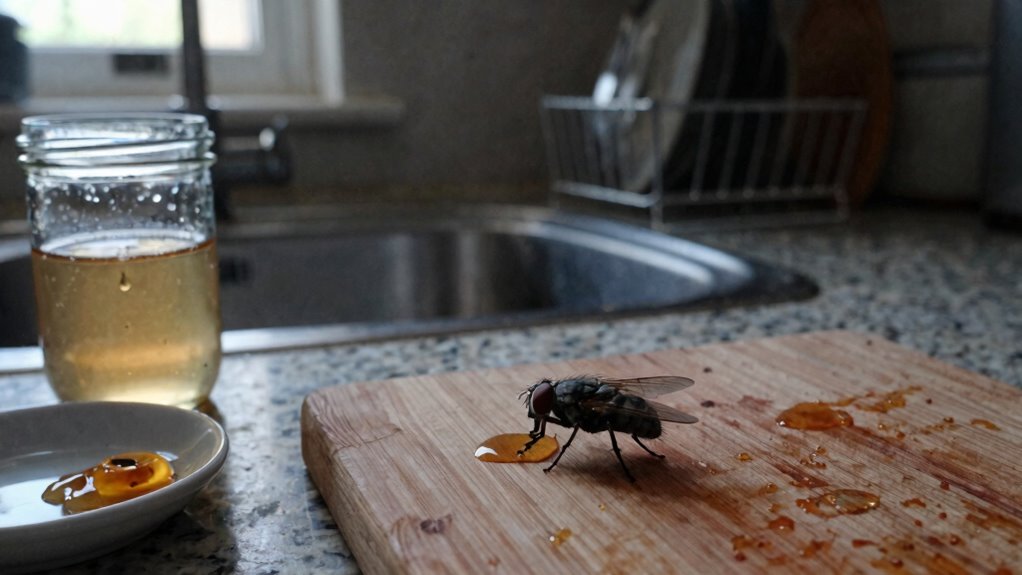
Mom always said you can’t judge a book by its cover, but you can absolutely judge a kitchen by its fly situation.
For a fly-free kitchen in 24 hours, start with trash: empty bins, wipe lids, and spray with diluted bleach for just $3 at any store.
Next, clean drains with a stiff brush to remove organic sludge, a prime breeding spot for drain flies.
Tackle pantry moth prevention by sealing grains and flour in airtight containers, like glass jars or heavy-duty OXO Pop containers costing $10 to $15. For best results, choose containers with silicone gaskets and locking lids to block pests effectively.
Finally, address compost bin maintenance by storing scraps in a countertop bin with a charcoal filter for $20 or freeze them until pickup.
These steps, done in order, kill the cycle fast for effective pest control.
The bottom line is clean everything, seal food, and fix the compost.
No flies, no fuss in your home pest control routine.
Frequently Asked Questions
Why Are Flies Worse During Certain Times of Year?
Flies get worse during certain times of year because of fly migration patterns and population cycles. Warmer weather speeds up their life cycle, so more eggs hatch quickly.
Cooler months slow them down naturally, which reduces their numbers significantly. For example, fruit fly infestations peak in late summer when produce rots faster.
It’s like they follow a seasonal script, just with more buzzing around your kitchen. Timing is key for effective pest control, so clean up early or they’ll outnumber you by August.
A reliable fly trap or indoor insecticide can stop an invasion before it starts. If you’re seeing more flies now, it’s the perfect time to buy a targeted fly solution.
Can Flies Lay Eggs in Clean Drains With No Visible Buildup?
Clean drains with no visible buildup can still host fly breeding. Drain biofilm, a thin slimy layer of bacteria and organic material, forms on pipe interiors even without obvious sludge.
This film, often hidden, provides enough nutrients for larvae. Fruit and drain flies are persistent that way.
So, a sparkling looking drain isn’t necessarily safe. Regular brushing of pipes, not just pouring cleaners, disrupts this hidden breeding ground and stops the cycle.
To protect your home from a sudden fly infestation, you need a good drain cleaner. A high quality enzymatic drain treatment will eat away that hidden biofilm.
Then, using a stiff drain brush weekly is key for control. This consistent pest prevention habit keeps your pipes fly free.
If you already see flies, you need a targeted fly trap to catch adults. Pair that with our recommended drain gel to kill eggs and larvae below the surface.
Click to see our top rated bio drain cleaner for long term drain fly control. It is the smart purchase for any homeowner wanting a guaranteed, fresh smelling solution.
Do Ultrasonic Pest Repellers Actually Work on Flies?
No, ultrasonic pest repellers don’t work on flies, and that’s backed by real scientific studies on fly behavior. Flies simply lack the hearing range these devices target, so the ultrasonic frequencies are completely useless against them.
For $20 to $40, you’re essentially paying for silence, not a single dead fly or reduced infestation. If you’re looking for fly control that actually works, you need to focus on sanitation, exclusion, and targeted treatments instead.
The best fly killer for home use is a combination of removing breeding sites and using proven fly traps or baits. Chemical options like spinosad or pyrethrins are highly effective for serious fly problems, especially around trash bins or pet areas.
Before you buy any pest repellent device, check for fly control reviews and verify if it targets the specific pest you have. Most ultrasonic units are marketed for rodents, and their fly repellent claims are just marketing fluff with zero buyer protection.
If you want to keep flies away cheaply, start with fly screens, sealed garbage cans, and sticky flypaper near entry points. For outdoor spaces, consider a residual insecticide spray or a propane fly trap that covers a larger area.
Ultimately, skipping the ultrasonic gadget will save you money and frustration, and you’ll get faster results with DIY fly control methods. Search for “how to get rid of flies naturally” or “best fly repellent for kitchens” to find practical, proven solutions.
What Scent or Essential Oil Repels Flies Naturally?
Certain essential oils do repel flies, and Lavender oil and peppermint are especially effective. Lavender’s strong floral scent disrupts their navigation, while peppermint’s menthol overwhelms their senses. Think of it as a natural “get lost” signal for these pests.
For a cheap DIY fly repellent, mix 15–20 drops of either oil with water in a spray bottle. Mist it near windows or trash cans to keep flies at bay.
Reapply daily, as scents fade fast and flies don’t have nose blindness. They are stubborn, but this natural pest control solution works well.
To buy the best essential oils for fly control, look for pure lavender or peppermint oils. These are top pest control products that effectively repel flies indoors and outdoors.
How Long Do Fruit Flies Live if Food Sources Remain?
A fruit fly lifespan is roughly 30 days with food present. Lifespan factors include temperature and available breeding sites, as constant food accelerates breeding cycles.
This means a single female can lay hundreds of eggs quickly, creating a cycle that seems endless. Remove the food source, and they vanish within a week.
Without it, they die fast. So, keep that fruit bowl clean to prevent a full blown pest control issue in your home.
If you spot them now, act fast with a targeted fruit fly trap or spray for effective pest management. For long term control, consider our professional grade insecticide that stops breeding sites cold.
Even one overripe banana can trigger a stubborn pest infestation. That is why you need the right fruit fly killer to break the cycle and eliminate the problem at the source.
Want the fastest results? Pair a sticky trap with our fruit fly bait for maximum coverage. Stop buying random products and choose a proven solution that works within days.


