
Mosquitoes can turn a backyard evening into a miserable, itchy affair, but not all “natural” fixes are equal. What plants repel mosquitoes comes down to chemical messaging, not just pleasant fragrance—some species actively scramble a mosquito’s ability to find you. Lantana, for example, forms a dense living barrier that cut indoor mosquito landings by half in real-world trials, without any refills or maintenance. Neem oil burned in a simple lamp delivers 94% protection for a full night, while lemon eucalyptus oil works as a solid topical shield for hours. The real question isn’t which smells best, but which costs least and lasts longest for your specific yard or home.
In this guide, we break down those options head-to-head, covering cost per night, duration, and setup effort so you can pick the one that actually fits your routine. We’ll also show you how to position these plants and oils for maximum effect, and what common mistakes silently ruin their performance.
At A Glance
- Lantana plants create a living barrier that reduces indoor mosquitoes by half.
- Neem oil lamps deliver 94% protection against Anopheles mosquitoes for eight hours.
- Citronella oil at 40% concentration blocks mosquito bites for up to eight hours.
- Clove oil applied pure protects against Aedes mosquitoes for 225 minutes.
- Noni seed oil kills mosquito larvae and offers 120 minutes of bite protection.
How Do Plants Actually Repel Mosquitoes?
Plants don’t so much repel mosquitoes as they ruin their targeting systems. This is an evolutionary adaptation where plants developed volatile emission pathways, chemical release channels, to confuse hungry insects.
Plants don’t repel mosquitoes; they scramble their targeting systems with chemical radar jamming.
When a mosquito gets a whiff, its CO₂ sensors go haywire, making it miss your arm entirely. Think of it as a natural form of radar jamming for effective mosquito control.
The plant isn’t shouting stay away so much as signaling nothing to see here. For example, Lantana uses caryophyllene, a compound that scrambles mosquito navigation for natural pest prevention.
It’s cheap too, about $1.50 per household for a full barrier. Here is the practical part for your yard: you don’t need a jungle.
Just a few plants, 40 cm to 1.5 meters high, placed around walls can cut indoor mosquitoes by half. That is not a miracle for pest elimination; that is chemistry with a green thumb.
Buying these plants is a simple step for professional grade mosquito repellent at home. For those preferring a concentrated solution, citronella essential oils can be used in diffusers or diluted for topical application to enhance protection.
Lantana: The Plant Barrier That Cut Mosquitoes by 50
Lantana acts as a two-way pest control barrier for your home. Its dense growth physically blocks mosquitoes from entering, while the natural repellent caryophyllene actively keeps them away.
In a field test in Tanzania, houses with Lantana saw a 50% drop in indoor mosquitoes. This affordable barrier costs just $1.50 per home, making it a smart buy for effective insect repellent solutions. This plant-based approach offers a DEET-free alternative that is safe for most people and the environment.
Physical Barrier Effect
A quiet, strategic shift in the backyard can turn the tide against mosquitoes, and the numbers from that Tanzanian pilot study make a compelling case. Lantana bushes, planted as a dense wall, reduced indoor mosquito density by 50%. That’s not just luck; it’s a physical barrier effect. The plants block entry points, literally screening homes from biting pests and flying insects.
Dense foliage, 40 cm to 1.5 m high, traps mosquitoes before they reach doors or windows. This natural mosquito control method costs just US $1.50 per home, including maintenance, which works out to 30 cents per person.
Application is simple: plant the bushes around house walls with no fancy gear required. In Tanzania, community acceptance scored broad approval for this cheap, natural approach to mosquito repellent plants.
You can also burn neem leaves or volatilize neem oil in lamps for indoor pest management; just light and forget. For a proven, low cost mosquito solution, lantana is the backyard barrier you didn’t know you needed.
It’s a practical, budget friendly way to reduce biting insect populations around your property. Try it this season for effective yard protection without chemical sprays. For standing water, consider using Bti-based biological larvicides for safe, effective mosquito larva control.
Chemical Repellent Action
Lantana’s key compound is caryophyllene, a botanical repellent also found in cloves and black pepper. In a Tanzanian trial, Lantana reduced indoor mosquito populations by 50 percent, with caryophyllene delivering the chemical punch.
This natural compound works as a quiet predator deterrent. It smells pleasant to humans but confuses biting insects and disrupts their navigation.
Toxicity levels are very low with this plant. Caryophyllene is safe for humans and pets, with no harsh side effects or synthetic chemical concerns.
That quality makes Lantana a solid choice for families seeking safe pest control alternatives. It avoids the drawbacks of typical spray repellents and synthetic treatments.
Seasonal availability is a catch to consider. Lantana thrives in warm months but goes dormant during cool or dry spells.
You may need to replant or use backup measures during winter or drought. For a cheap, natural repellent costing about $1.50 per home, it is a decent pick if you can keep it growing. Oil of Lemon Eucalyptus offers an alternative plant-derived repellent that provides up to six hours of protection against mosquitoes.
Cost and Community Acceptance
First, a small confession: I am not a professional farmer, and my gardening skills end at keeping a basil plant alive for two weeks. Yet, the Tanzanian Lantana study proves this plant is an affordable, low-maintenance game changer for pest control.
At just $1.50 per home, or 30 cents per person, it is a steal for long term sustainability. Community acceptance was high because locals appreciated the natural screening over pricey chemicals.
This is not about perfect gardening. It is about cultural integration, using a familiar plant as a living fence to repel mosquitoes. Many OMRI-listed sprays also use safe sulfur-based barriers that are harmless to edible crops.
Cost per home is $1.50 including labor, a fraction of synthetic repellent prices. It cuts indoor mosquito density by 50% through physical and chemical barriers.
Requiring only 25% wall coverage at 0.4 to 1.5 meters height, it stays easy to maintain. There are no toxic fumes or plastic waste, unlike sprays or coils.
High community approval in Tanzania makes adoption practical and pleasant. The bottom line is that Lantana is cheap, simple, and welcomed by locals. No green thumb required.
Neem: Burn It, Rub It, or Lamp It for Up to 94% Protection
Burning neem leaves gives you 76% protection but only lasts two hours. Rubbing on 2% neem oil lasts four hours yet still misses a third of mosquitoes.
The clear winner is the neem lamp method from Indian studies. Volatilizing 1% neem oil in a kerosene lamp delivers 94% protection against Anopheles and 80% against Culex.
It works like hiring a bouncer for your porch all night long. The active compounds azadirachitin and saponins confuse mosquito senses for cheap full coverage pest control. For organic gardeners, cold-pressed neem oil also controls aphids and mites on vegetables and ornamentals.
Which Basil Species Repels Mosquitoes Best?
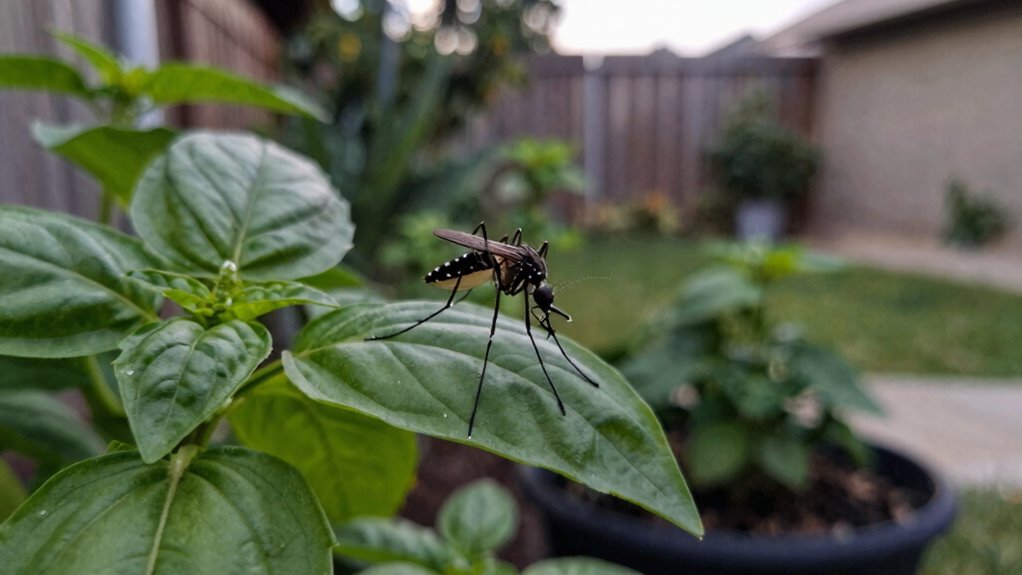
Cost is low: burning dried leaves costs pennies, creating a cheap barrier for home pest control. This makes basil a practical, friendly option for effective mosquito repellent. For those who prefer a ready-to-use option, oil of lemon eucalyptus provides up to six hours of natural mosquito protection.
Moringa and Noni: Two Natural Mosquito Repellents You Haven’t Tried
Moringa and noni are two plants you might know from smoothie bowls, not mosquito coils. They are surprisingly effective natural pest control options.
An ethanolic extract of moringa leaves provided 72 minutes of complete protection against Anopheles gambiae mosquitoes in lab tests. Even better, mosquito larvae cannot survive exposure to the plant’s compounds, making it a dual threat for pest management.
Noni’s secret weapon is its seed oil. Noni seed oil delivered 120 minutes of complete protection at a 308% concentration in the same study.
It also kills mosquito larvae, giving you a one-two punch for outdoor relief. For topical application, moringa leaf extract offers 72-minute protection.
Noni seed oil provides 120-minute protection plus larvicidal action. Both are non-toxic, biodegradable, and cost pennies compared to DEET-based repellents. However, for longer protection during extended outdoor activities, DEET at 98.11% concentration fends off bites for up to 10 hours.
The bottom line is this. If you want a quirky, effective backup repellent for your summer routine, these are worth blending into your pest control arsenal.
Citronella, Clove, and Eucalyptus: Topical Oils That Repel for Hours
For those who prefer a direct approach over potted plants or leaf smoke, certain essential oils offer serious, measurable protection when applied to the skin. These are the heavy hitters, the undiluted champions of personal pest control.
They work best as spot treatments, not as a replacement for unscented plants, but as a powerful, portable shield. Citronella oil, at 40% concentration, blocked Anopheles stephensi for 7 to 8 hours in a lab, a full workday of protection.
Clove oil, applied pure, gave 100% protection against Aedes aegypti for 225 minutes, almost four hours. Lemon eucalyptus oil at 30% PMD repelled 96.88% of mosquitoes for 4 hours in a Bolivian field test.
Neem oil, at just 2%, provided 56.75% protection for 4 hours, decent but not top tier. For a plant-based alternative, catnip oil at a 5-10% concentration can rival DEET in effectiveness. These topical oils beat leaf smoke for convenience, just don’t forget to reapply for lasting defense.
Bottom line: For quick, portable protection, these topical repellents are the clear winners for your outdoor needs.
Which Method Costs Least and Protects Longest?
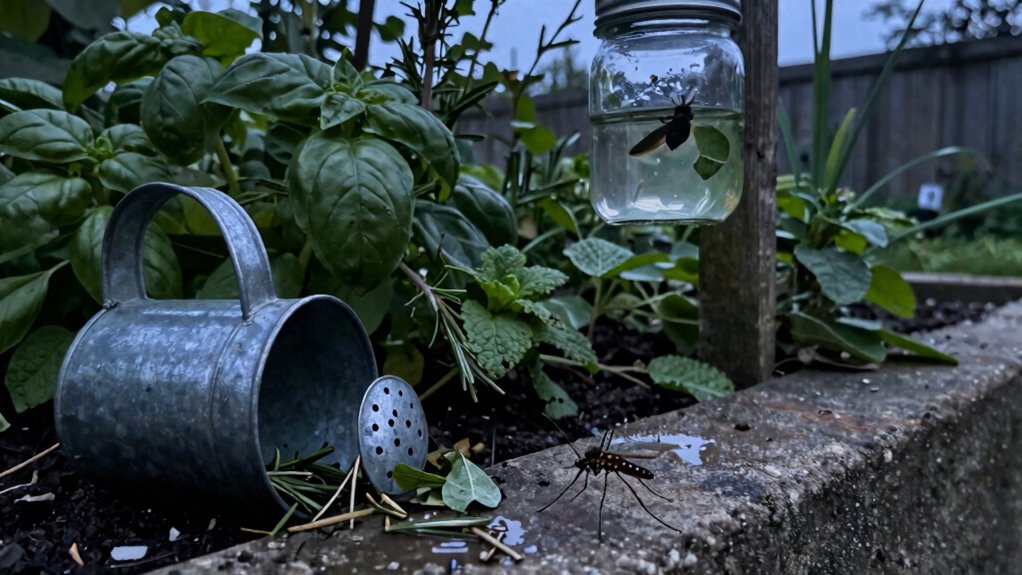
For pest control on a budget, Lantana camara is the best choice. A one-time cost of $1.50 per home cuts mosquito populations by half with no refills needed.
Topical repellents like citronella oil require constant reapplication to work. A potted plant barrier offers lasting protection without daily effort, making it the lazier option.
If you want to buy a simple solution, this plant eliminates the need for sprays. It guards your yard long term, so you can relax outdoors without worry.
For those seeking a ready-made supplement, natural flea collars provide up to four months of pest prevention, complementing your plant barrier with extended, hands-free coverage.
Low Upfront Cost
Low upfront cost makes Lantana camara the best choice for budget-conscious mosquito control. It costs just $1.50 per home including labor, or thirty cents per person.
This is a one-time purchase, unlike sprays or candles that need constant refills. Each home gets coverage over 25% of wall space from 40 cm to 1.5 m high.
Studies show it reduces indoor mosquitoes by 50%. As a perennial plant, it keeps growing year after year.
No refills, batteries, or fuel are needed. For a cheap and effective mosquito barrier, Lantana is the clear winner.
Longest Protection Time
For long lasting pest control, neem oil in a kerosene lamp offers up to 94.2% protection from Anopheles mosquitoes for a full night. That covers an entire sleep cycle with no reapplication needed. This method uses cold-pressed neem oil to retain maximum potency for effective pest control.
This mosquito repellent solution costs about 30 cents per night. It outperforms charcoal burning methods like Hyptis suaveolens smouldering on coals, which only last two hours.
Charcoal burning works as a quick backyard trick but fades fast. Neem’s lamp trick scores high on community adoption in India, where people use it routinely with no fancy gear.
You simply add one percent neem oil to any kerosene lamp. The downside is the smell, which resembles garlicky earth instead of lavender.
For eight hours of solid defense against Anopheles and Culex mosquitoes, it is the cheapest long haul bet. Spend a dime a night and sleep untouched.
Frequently Asked Questions
Are Any of These Plants Toxic to Pets?
Yes, some of these mosquito repellent plants are toxic to pets. Neem, lantana, and moringa can cause vomiting or lethargy if dogs or cats ingest them.
For vet safety, avoid planting these toxic varieties where pets roam freely. Smart plant placement matters: keep potted lantana and neem out of reach on high shelves or in fenced off corners.
Basil and citronella are safer natural pest control options, but always research before introducing any repellent flora. It is a simple precaution to deter mosquitoes without risking a sick pet.
When shopping for yard pest control, choose non toxic mosquito repellent plants or secure toxic ones safely. This buyer intent strategy ensures you protect your garden and your furry friends.
Can I Plant Lantana Indoors to Repel Mosquitoes?
Can you plant lantana indoors to repel mosquitoes? Technically yes, but it’s a poor choice for pest control.
Most lantana varieties reach four feet tall and crave intense, direct sunlight. Indoor light conditions rarely meet that demand, so you’ll end up with a leggy, weak plant that won’t produce its natural repellent oils effectively.
Proper drainage in potting soil is critical, yet indoor pots often stay soggy. That moisture attracts fungus gnats and other indoor pests, which defeats your original mosquito control goal entirely.
The repellent power of lantana shines when it’s planted as a dense outdoor barrier. As a lone houseplant, its volatile compounds simply don’t disperse well enough to keep mosquitoes away from your living space.
For real indoor mosquito protection, focus on proven pest control products instead. Neem oil lamps, citronella candles, or a quality indoor mosquito repellent spray will outperform lantana every time.
If you’re set on houseplants, consider basil, rosemary, or marigolds. These herbs and flowers offer mild repellency and tolerate indoor pots much better than lantana.
When shopping for mosquito control solutions, look for EPA-registered repellents with picaridin or oil of lemon eucalyptus. Those buyer-intent purchases give you measurable results, not just a pretty but unhappy plant.
Skip the lantana project indoors, and save your energy for a targeted mosquito barrier outside. That’s the smart, practical way to reclaim your patio or bedroom from biting pests fast.
Do These Plants Repel Ticks and Other Insects Too?
These plants are primarily marketed as mosquito repellents, with only a few like neem and lantana offering any spillover tick control.
Research on tick repellency is thin, while mosquito plant effectiveness has far more studies behind it.
Neem oil provides some temporary tick protection, but the evidence is limited and not robust enough for heavy woods use.
Lantana contains caryophyllene, which might irritate ticks, yet no solid proof confirms it repels them in real field conditions.
Basil and eucalyptus show weak tick activity, mostly from lab tests, not practical outdoor trials.
For tick prevention, your best bet is permethrin-treated clothing and gear, which is a proven pest control solution.
So verdict: these plants work okay for mosquitoes but are weak for ticks.
If you are planning a hike or camping trip, stick with EPA-registered tick repellents like DEET or picaridin.
Buying specialized tick control products, such as permethrin sprays, gives you reliable protection where plants fail.
Use these plants as a pleasant garden addition, but never rely on them alone for tick safety.
How Long Do Potted Plants Need to Grow Before Effective?
Potted plants take about 6 to 12 weeks after the seedling stage to create a useful barrier. Sunlight impact is key because it boosts growth and volatile chemical production, making them more repellent.
For Lantana, reaching 40 cm to 1.5 m high takes three to four months with good sun. Neem or basil are quicker options, around eight weeks, for your pest control arsenal.
Lantana costs $1.50 per home and takes 3 to 4 months to mature. Basil offers roughly 40% protection in about eight weeks.
Neem works well for leaf burning in two months, but it is not ideal for potted use. The bottom line is that sun speeds things up, so plan ahead for effective pest control around your home.
To get the best garden pest control results, start your plants in full sun early in the season. This buyer ready strategy ensures your natural repellents work when pests arrive.
Will These Plants Harm Pollinators Like Bees?
These repellent plants can harm bees, but risk depends on placement. Lantana and neem, for example, produce repellent compounds that deter pollinators up close.
Bee safety mechanisms are better with potted plants since you can move them away from flowers. Mosquito repelling efficacy stays strong whereas pollinator attraction distance is just a few feet.
So keep pots near doors, not gardens. Bottom line, use potted Lantana or neem for natural pest control.
Shift for bloom season to protect beneficial insects. That way bees live and your mosquito repellent plants work effectively.
For best yard protection, pair potted neem with other organic pest control solutions. Smart buyers choose potted repellents to balance pollinator safety with pest free outdoor living.


