
Where do cockroaches hide during the day? In the tight, dark, damp spots you rarely check—cracks, crevices, and behind appliances. If you’ve seen one scuttling at night, dozens more are likely squeezed into gaps narrower than a coin during daylight hours, hiding from light and vibration.
Whether it’s German roaches near stove heat or tropical ones in tree crevices, knowing their nesting habits is half the battle. Keep reading for the exact signs to look for—droppings, smear marks, and more—plus a lineup of the best products to kick them out for good.
At A Glance
- Cockroaches hide in millimeter-wide cracks along baseboards, hinges, and drawer sliders during the day.
- They seek dark harborage inside cabinets near dishwashers, sinks, and under gaskets for humidity.
- Behind appliances like refrigerators and stoves, roaches find warmth from motors and condensation.
- Electronics such as televisions, gaming consoles, and recliners provide warm, dark crevices.
- Upholstery like plush sofas absorbs spills, creating hidden dampness ideal for daytime hiding.
Why Cockroaches Avoid Light and Stick to the Dark
Cockroaches almost never come out in the daylight, and that’s no accident. These creatures are negatively phototactic, which means they are repelled by light because it exposes them to predators and depletes humidity from their bodies. Most activity occurs at night, when they forage for food and mates, then scurry back to dark harborage before dawn. Their favorite indoor spots are wall voids and under sinks, where warmth and humidity thrive. Outdoors, they favor compost piles, which offer both darkness and decay. This nocturnal lifestyle isn’t just a quirk, it’s survival. Shine a light, and they vanish, proving their tiny success is built on hiding. For effective pest control, focus on eliminating these dark, damp refuges. Block entry to wall voids with caulk or foam sealant to stop cockroach infestations. Remove outdoor debris like compost piles and leaf litter to reduce harborages. Without darkness, cockroaches lose their only edge. To protect your home, target these hidden spaces with exclusion and moisture control strategies. Applying a bifenthrin spray around baseboards and entry points creates a long-lasting barrier that kills cockroaches on contact for weeks.
How Their Flat Bodies Let Them Squeeze Into Tiny Cracks
To get into the tightest spots, cockroaches have a body built like a pancake. This dorsoventrally flattened shape, meaning they are squished from top to bottom, is no accident. It is their evolutionary origin for survival. Biomechanical modeling shows these bugs can compress their exoskeleton, reducing height by up to 40% without injury. Their flattened tergites and pancake like femurs create a tight seal against cracks. This blocks predators and prevents dampness loss, making them tougher to control. A cockroach’s head is tiny too, acting like a wedge. So when you flip a light and see nothing, they are already flush inside a gap smaller than a coin. The bottom line is that flat body isn’t just weird. It is a master key to your walls, and a prime reason you need professional pest control to seal entry points. For effective cockroach treatment, focus on crack and crevice elimination. Boric acid powders last for weeks if kept dry, making them a reliable option for indoor crevice treatments. Targeted insecticide application in these hiding spots can stop an infestation fast.
Top Indoor Hiding Spots: Cracks, Crevices, and Cabinets
The average kitchen is a fortress of solitude for roaches, and your cabinets are the VIP lounge. They slip into millimeter wide cracks along baseboards, behind drawer sliders, and inside hinge gaps, any dark seam that fits their flattened bodies.
Your kitchen is a fortress of solitude for roaches, and your cabinets are their VIP lounge.
These spots accumulate frass and aggregation pheromones, creating a chemical roadmap for other roaches. Trail mapping follows these scent paths, but pheromone decay gradually weakens old trails, forcing them to refresh their signals daily.
Cabinets near dishwashers or sinks are prime real estate since they offer warmth, humidity, and food crumbs. A single overlooked crevice can host a dozen nymphs by afternoon.
Check hinges, corner joints, and under sink gaskets. If you smell oil or see speckled droppings, you have found their hideout.
Act fast or they will redecorate your kitchen. Use a professional roach bait gel to break the chemical trail and block their harborages. For effective elimination, apply a Fipronil-based gel into these cracks to ensure residual protection lasting months.
Behind Appliances: Where Warmth and Darkness Meet
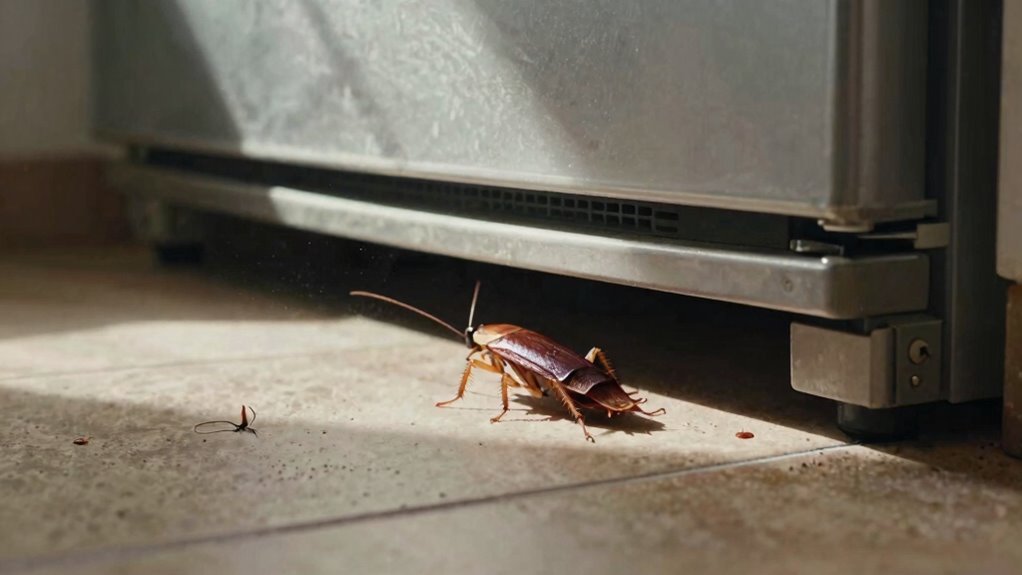
Behind appliances, a cockroach paradise forms. The steady heat from refrigerator and oven motors combines with condensation from pipes to create warmth and dampness. When using boric acid sprays for pest control, follow instructions carefully to avoid overuse risks like burning or redness. This tight, undisturbed space is ideal for hiding. Their flat bodies slip into crevices we cannot reach, making these spots perfect daytime harborage. For effective pest control, target these hidden zones with gel bait or dust. Sealing gaps with caulk helps eliminate entry points and reduces cockroach infestation risks. Inspect behind your fridge and stove regularly for signs of activity. Professional pest management can treat these hard to reach areas thoroughly.
Heat From Motors
Many cockroaches find a perfect daytime refuge behind refrigerators, ovens, and dishwashers. Motor attraction is strong, as these appliances run warm motors all day.
Cockroaches are heat seeking creatures, and a refrigerator’s compressor feels like a cozy radiator to them. The warmth signals safety and energy savings, meaning no need to burn calories to stay warm.
They snuggle into the dusty, dark gaps near the motor, often squeezing into spaces just a few millimeters wide. It is like a roach spa, minus the cucumber water.
These hiding spots are prime real estate since the motor’s gentle heat is constant. If your kitchen feels calm, it might actually be a lively cockroach resort.
To prevent an infestation, check behind the fridge before you unpack those groceries. Targeted pest control around appliance motors can stop heat seeking roaches from settling in. Applying boric acid powder in these cracks and behind appliances provides continuous residual control.
Professional inspection of warm appliance zones is a smart step for long term roach prevention. Use a flashlight to spot droppings or egg cases in those narrow gaps.
Moisture Traps
Moisture traps are no joke for a homeowner finding roaches behind the fridge. They use a cockroach’s desperate need for water to draw them out of hiding.
Key dampness sources include leaky pipes, dripping faucets, and even condensation from a cold glass. Trap placement is critical for effective roach control. Put them directly where you see droppings or near wet spots like under the sink or behind the washing machine. A good brand like the “Catchmaster” glue trap costs about $4 for a six pack. It’s a cheap buy for a pest control solution, but don’t expect instant glory. Check it weekly to monitor for cockroach infestations. A full trap means you found the hangout. Silence the problem with a caulk gun on that leaky pipe. If you skip that step, you are just giving them a drink. Bottom line for homeowners: stop the water, stop the party. For a more comprehensive approach, consider pairing glue traps with bait stations that use fipronil for systematic colony elimination.
Tight Crevice Access
The quiet comfort of a warm motor is a siren song to a cockroach, and the gap between your fridge and the wall is their five-star resort. These pests exploit any crack width, often just a millimeter or two, using extreme body compression to flatten themselves like a living pancake.
They slip into spaces that seem impossibly thin, finding darkness and heat in perfect balance. A fridge motor provides steady warmth, and the gap offers protection from light and predators.
Cockroaches press their dorsoventrally flattened bodies against surfaces, sealing themselves in. So, when you slide out that appliance for cleaning, expect a few scurrying guests.
Your best defense is to seal every gap wider than a credit card’s edge with caulk or weatherstripping. This is a key step in effective pest control for your kitchen. For targeted treatment, consider using bait stations placed in these hidden spots to eliminate the entire colony.
Bottom line: tight crevices are their fortress. Make them yours by eliminating entry points and blocking cockroach hiding spots.
Under Sinks and in Bathrooms: Moisture Draws Them In
Moisture is a major draw for cockroaches, and bathrooms and under-sink areas offer just that. Hidden pipe leaks create a humid environment, while dark cabinets provide perfect daytime shelter.
This combination of dampness and darkness makes these spots prime real estate for any roach looking to avoid the light. For effective pest control, start by fixing those slow drips under the sink.
A simple moisture check can reveal if you need professional pest treatment. To prevent a roach infestation, seal gaps around pipes and use a dehumidifier in the bathroom.
These practical steps make your home less inviting for cockroaches seeking water and shelter. You can use a dehumidifier to maintain humidity levels between 50 and 60 percent, which reduces the chances of silverfish and similar pests staying in your home.
Moisture Attracts Cockroaches
Humidity is not just for tropical vacations. It acts like a dinner bell for cockroaches in your home.
These pests are drawn to natural dampness from leaky pipes and wet sponges under sinks. They detect humidity gradients with sensitive antennae, guiding them straight to bathrooms and kitchen cabinets.
A cockroach’s exoskeleton loses water fast. A wet environment means survival, not luxury.
That is why they cluster near drains, around toilet bases, and under vanities. One leaky faucet can support a whole colony.
What they love includes damp towels and condensation on pipes. They also rely on standing water in drip trays.
Why it matters is simple. Without moisture, they die in days.
The bottom line is fix drips, dry sinks nightly, and seal gaps. Remove the humidity and you remove the roaches.
Use a dehumidifier in basements and check under sinks for slow leaks. Professional pest control treatments work best after eliminating moisture sources. For long-term prevention, a residual barrier spray can keep cockroaches from returning after moisture is removed.
Hidden Pipe Leaks
Cockroaches can survive weeks without food but die without water. That tiny leak becomes a five star hydration station for pests.
They squeeze into tight spaces under the sink cabinet to find dampness. Once they locate moisture, they set up a permanent home base.
Check pipe connections monthly for signs of trouble. If you spot condensation or slight discoloration, you likely have a hidden leak.
Fixing the leak removes their primary water source. This pest control step makes your home far less inviting.
No standing water means no roaches. It is that simple for effective pest prevention. Adding natural repellents like citronella essential oil around pipes can further discourage their return.
Dark Cabinets Provide Shelter
That leaky pipe under the sink does double duty as a water source and a welcome mat.
Dark cabinets, especially under sinks and in bathrooms, become prime real estate since moisture draws roaches in.
Cockroaches leave feces trails that contain aggregation pheromones.
These chemical signals attract more roaches to the same spot and turn a single hiding roach into a full blown colony.
The darkness provides cover from predators and light, which they avoid.
A damp, undisturbed cabinet is basically a roach motel with free water and neighbors.
They will squeeze into any crack around pipes or cabinet backs.
The moral is to fix that leak and seal every gap for effective pest control.
Otherwise you are just offering them a dark, damp, pheromone scented timeshare.
Gel baits with reproductive inhibitors can help prevent a resurgence by stopping roaches from breeding.
Professional roach extermination services often start by eliminating moisture and entry points.
Inside Electronics and Upholstery: Surprising Hideouts
Several overlooked electronic devices and upholstered furniture can become daytime cockroach hideouts. Televisions, gaming consoles, and recliners offer warm, dark crevices that mimic their natural habitat.
Heat from electronics attracts roaches, but it creates exposed wiring dangers. They chew through insulation and cause short circuits, so this is a key pest control risk to address. Harris Liquid Insect Killer Spray offers weeks-long residual protection that is odorless and non-staining for treating these areas.
Plush sofas absorb spills and sweat, leading to hidden dampness damage roaches adore. Inspect seams and vents since these pests squeeze into gaps thinner than a dime.
Droppings near outlets signal an infestation before visible bugs appear. Regular vacuuming of furniture and compressed air dusting of devices disrupts their nesting.
These hideouts are silent threats that blend comfort with risk. Check them early to avoid a costly repair from a small problem.
The Pressure Method: How to Inspect Without Scaring Them Deeper
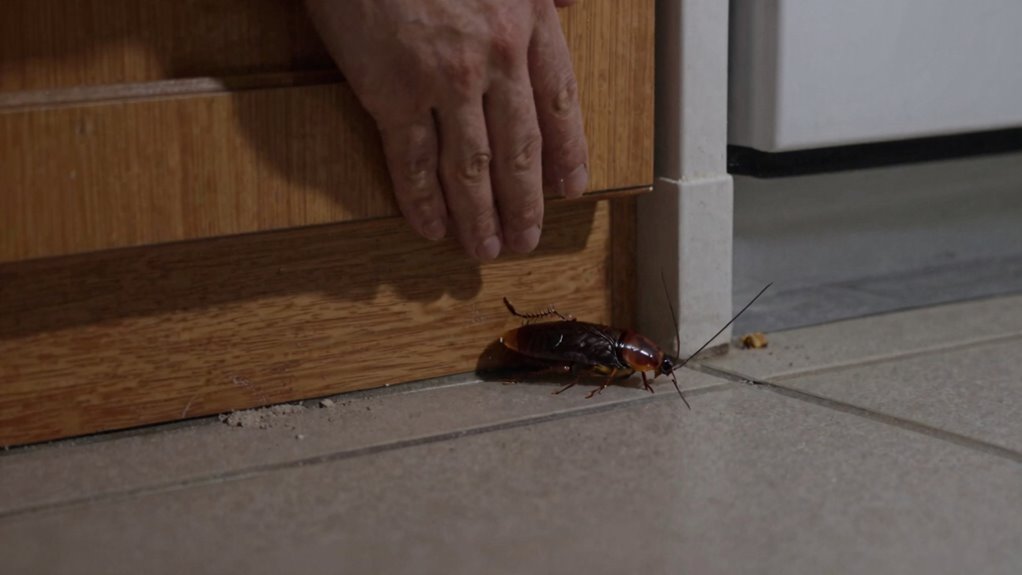
The Pressure Method relies on a calm, slow approach rather than frantic prodding.
Spotting shallow hiding signs, like a single antenna or leg tip protruding from a crack, indicates the cockroach is near the surface.
Using stealthy movement techniques, such as shifting weight gently and pausing between steps, prevents startling them deeper into concealment.
This approach is ideal for targeted roach removal in tight corners or behind baseboards.
For effective pest control, patience beats speed every time.
A slow stance also reduces dust and noise, which keeps the insect from bolting further into wall voids.
When you need professional-grade cockroach treatment, combine this method with bait placement or crack sealing for lasting results.
If you’re planning a full home inspection, this technique helps you locate harborage points without losing track of the colony.
Remember, the goal is not to chase, but to observe and then act with precision.
Booking a routine pest prevention service can make this method easier by catching problems early.
Stay quiet, stay low, and you’ll often find the easiest entry point for targeted pesticide application.
A swift final move, only after you’ve pinpointed the exact spot, gives you the best shot at a clean kill.
This pressure-free tactic works especially well during daylight hours when roaches are least active.
Pair it with sticky monitors to confirm hotspot locations before you invest in broader extermination options.
With practice, you’ll read subtle signals like slight leg twitches or debris shifts, which point to a nearby hiding roach.
That’s when you gently lift the crack cover or apply a gel lure directly, without driving them deeper.
So keep your motions fluid, your breathing even, and your flashlight beam low.
This calm inspection routine is a cornerstone of effective cockroach control and a must-have skill for any DIY pest solver.
For precise application after spotting a hiding roach, consider using a powder formula with puffer tips for mess-free dusting into tight spots.
The Pressure Method Principles
Since cockroaches are so attuned to light and vibration, the classic pest control approach of stomping into a kitchen and yanking open cabinets actually does more harm than good.
The pressure method flips this, using slow, deliberate movements and targeted air bursts to flush them out without triggering their escape instincts.
Think of it as a quiet interrogation, not a raid.
Pressure principles rely on patience, so move like a sloth on sedatives.
Harsh motions send them scattering into walls, but gentle pressure like opening a drawer an inch per second forces them to reveal their hideouts naturally.
Pressure fieldwork requires gear, including a $15 flashlight with a red filter because cockroaches see red poorly and a $10 can of compressed air.
A short, aimed puff mimics a predator’s breath, nudging them into the open without scattering them.
Execution demands consistency, so inspect cracks weekly for four weeks.
Miss one session and they will rebait the site with pheromones, so stick to this routine.
It is cheaper than a $200 exterminator call.
The bottom line is that slow pressure beats brute force.
Buy the flashlight and ditch the stomp for effective roach control.
You can also use plant-based sprays with essential oils to kill roaches on contact after they emerge.
Spotting Shallow Hiding Signs
Before a single cabinet gets nudged, the red beam of a flashlight becomes your quietest pest control ally.
It glides along baseboards to reveal faint scuff marks and tiny smears, the shallow signs of recent roach activity.
These are not deep hiding spots, just surface level evidence of nocturnal movement.
A quick snap of photographic evidence with a cheap phone camera captures the pattern for later comparison.
Targeted dusts only work if you know where roaches are lurking.
Spotting these signs early saves you from chasing them deeper into your home.
Look for specks of frass near corners or behind the fridge.
That is your cue to apply treatment before an infestation grows.
Your red beam is a detective’s best friend for pest inspection.
It is cheaper than replacing a stove and far more effective for early detection.
Stealthy Movement Techniques
Why does a roach scatter the instant a shadow falls across the floor? It feels vibrations and air pressure changes, triggering a panic sprint.
The Pressure Method avoids this by using slow, gentle pest control techniques. Instead of stomping or slamming a cabinet, press a flashlight beam into a crack and hold still.
You are not forcing them out. You are inviting a peek without triggering their escape.
Silent crawling tells you they are near. But sudden dashes mean you have pushed too hard, too fast; back off and wait.
Apply light at a low angle. It mimics dawn’s dimness, keeping them calm enough to reveal their hiding rim.
Listen for rustling behind baseboards. If you hear a stop, you have frozen their exit; good, they are still shallow.
Bottom line: slow pressure, not panic, finds them first. This is the best way to eliminate roaches safely.
How Cockroach Poop Attracts More Roaches to Hiding Spots
Two things explain why a single cockroach often means dozens more hiding nearby, and the first one is surprisingly gross. Cockroach poop, or frass, is loaded with aggregation pheromones that signal safe, cozy hiding spots.
These chemical scents create pheromone trails, guiding other roaches straight to the same crevice. The table below shows how this works for pest control professionals and homeowners alike.
| Frass Component | Effect on Roaches |
|---|---|
| Aggregation pheromones | Triggers social aggregation, gathering groups |
| Trail pheromones | Marks paths to food and water sources |
| Cuticular hydrocarbons | Helps roaches identify familiar colony odors |
| Fecal odor gradients | Attracts roaches from increasing distances |
To stop a roach infestation, focus on removing frass and all food sources. This breaks the chemical signals that lure more roaches to your hiding spots.
Thorough cleaning with enzymatic sprays can eliminate pheromone trails for good. For long term pest prevention, seal cracks and crevices where roaches enter.
Professional roach control services often target these aggregation sites directly. The faster you clean up frass, the fewer roaches will find their way inside.
Outdoor Hiding Places: Leaf Litter, Rotting Wood, and Stones
Leaf litter, rotting wood, and loose stones in your garden create ideal daytime refuges for roaches.
Beneath beech trees, a thick carpet of leaves stays cool and humid, helping roaches avoid midday sun while conserving moisture.
Rotting wood softens with decay and forms natural crevices that roaches easily exploit.
Loose stones act like movable roofs, often flipped by pets or weather, yet still shielding these flat bodied pests from birds and dehydration.
These organic clutter spots stay damp, which is critical since roaches lose water rapidly in dry air.
Aggregation pheromones in their droppings mark these locations, turning scattered hiding spots into a communal daytime convention.
Only at does nighttime foraging begin, with roaches venturing out to scavenge near compost piles or pet bowls.
For effective pest control, inspect your yard’s organic clutter and remove leaf piles, old wood, and loose stones.
Bottom line: check your yard’s hiding places to stop roaches from migrating indoors. Reducing these refuges near your foundation is a key step in cockroach prevention and home pest control.
German Cockroaches: Their Favorite Spot Under the Stove
German cockroaches love hiding under the stove for several reasons. The motor heat creates a warm spot that helps their eggs develop faster.
German cockroaches love hiding under the stove because the motor heat helps their eggs develop faster.
Tight cracks block easy extermination and keep them safe. Food debris from cooking spills provides constant, easy meals.
The dark, undisturbed space protects them from light and disturbance. Fecal trail markers guide other roaches to this ideal location.
This microhabitat is a fortress for a growing infestation. The heat from the stove keeps eggs warm and the food source makes it self-sustaining.
A simple cleanup will not cut it for effective pest control. You must seal the gap to prevent future cockroach entry.
Using a silicone caulk or steel wool for crack sealing is a smart step. Pair this with a gel bait treatment for professional grade roach elimination.
Tropical and Desert Species: Different Hiding Strategies
Desert and rainforest cockroaches take drastically different approaches to daytime concealment, shaped by their extreme habitats.
Desert burrowing species like the sand cockroach dig into loose soil to escape scorching heat and dryness.
Tropical canopy refuge seekers such as the giant cockroach hide high in tree crevices, among bromeliads or epiphytes, for humidity and shade.
These natural pest control strategies are survival masterclasses.
Desert cockroaches create vertical tunnels for thermal regulation, avoiding 50°C surface temps.
They seal burrows with a plug to retain dampness, making them hard to find without targeted treatment.
Tropical species rely on collective camouflage under dead leaves, leveraging their flattened bodies to wedge into tight canopy forks.
If you are dealing with an infestation, knowing these hideouts helps you choose the right pest control approach.
Both avoid light, but desert types risk dehydration above ground.
Tropical ones face predators like ants, and their hiding spots are tailored to these trade-offs.
Bottom line is that habitat dictates hideout.
Know your environment to find them and apply effective pest control solutions.
Daytime Clues: Droppings, Smear Marks, and Shed Skins
Most people never see a live cockroach during the day, but the bugs still leave clear evidence behind.
Look for dropping patterns first, those tiny black specks that look like pepper.
Look for dropping patterns first, those tiny black specks that look like pepper.
These droppings cluster near baseboards, cabinets, or food sources.
Check for smear marks next, dark irregular streaks left as roaches scuttle along walls and corners.
Their oily bodies brush off dirt and create these marks.
Don’t forget the shed skins, because molt timing reveals how large your pest control problem is.
Young roaches shed frequently, leaving translucent insect-shaped casings behind.
If you spot any of this, you have daytime hiders in your home.
You do not need to see roaches to know they are there.
The evidence is just messy, and it signals you need professional pest removal.
Frequently Asked Questions
Can Cockroaches Hide Inside Walls and Travel Between Rooms?
Yes, cockroaches hide inside walls and travel between rooms. Wall voids and interior gaps are perfect highways for them, as they squeeze through cracks around pipes or wiring.
Their flattened bodies let them slip into spaces thinner than a dime. They’ll scuttle from a kitchen wall void to a bathroom gap, following food or moisture.
It’s like they’ve got a secret subway system. The bottom line is you need to seal those gaps or they’ll commute freely.
For effective pest control, target these hidden pathways with caulk or foam sealant. Use cockroach baits and insect growth regulators inside wall voids to break their life cycle.
If the infestation is severe, consider hiring a professional exterminator for wall void treatments. A thorough inspection and sealing can stop them from using your walls as a highway.
Do Cockroaches Return to the Same Hiding Spot Every Day?
Yes, cockroaches often return to the same hiding spot daily, thanks to spot marking.
They leave chemical cues (aggregation pheromones) in feces, creating a scent map.
Other cockroaches then engage in trail following, using these odor gradients to navigate back to preferred crevices.
It’s less about memory and more about chemistry, like leaving a crumb trail but grosser.
This behavior guarantees they find food, water, and shelter without wandering into danger.
So if you see one, expect friends later.
For effective pest control, break that scent trail by cleaning droppings and using bait stations or gel baits.
Professional grade insect growth regulators (IGRs) can also disrupt their reproduction cycle.
Target their harborage areas with residual sprays to eliminate the aggregation pheromones.
To stop re infestation, seal cracks and apply dusts like diatomaceous earth in voids.
Buyer intent tip: Look for products labeled for cockroach control with long lasting residual effects.
These ensure the chemical cues are neutralized and returning roaches are killed.
Are Cockroaches More Active in Certain Seasons for Hiding?
Yes, cockroaches are more active in certain seasons, and their hiding behavior shifts with temperature. Hot weather boosts their foraging and movement, so they hide less during activity but still seek dark crevices by day.
Cold weather slows them down; they retreat deep into warm, indoor cracks, under appliances, or in wall voids. Think of it like this: they’re summer road-trippers and winter hermits.
So expect more visible roaches in heat, fewer in chill, but they’re always hiding near food or humidity. Bottom line: seasonal shifts change their hide-and-seek game.
To keep them out year-round, target their entry points with caulk and use bait stations or gel baits in hidden corners. For persistent infestations, a residual spray along baseboards and under sinks can break the cycle.
How Long Can a Cockroach Stay Hidden Without Food or Water?
Cockroaches can survive hidden without food for about a month, but water is a bigger deal. Without it, survival duration drops to roughly one week, since dehydration impacts them fast.
These insects are tough, certainly, but not invincible. Their flat bodies slip into tiny cracks, yet they still need a drink.
Deny them water, and their hiding game ends quickly. That’s the arid truth.
If you want to starve out roaches, focus on eliminating all moisture sources and fixing leaks. For a professional pest control solution, consider gel baits that attract and kill hidden colonies fast.
Pair that with crack and crevice treatment for long term roach elimination. Smart buyers choose products that target both food and water access to end an infestation.
Do Cockroaches Hide Together in Large Groups on Purpose?
Yes, cockroaches hide together in large groups on purpose. They use communal cues like pheromones in feces and body oils to form these groups.
These chemical signals create odor trails that guide others to the same dark, narrow crack. This behavior is a survival strategy, not a social club.
Numbers help with humidity retention, shared warning of danger, and easier access to food. So they pile in because group hiding simply works better for pest survival.
If you see one roach, you likely have an infestation hiding nearby. Professional cockroach treatment is the most effective way to break this cycle.
Using gel baits and insect growth regulators targets the entire group at its source. For complete pest control, focus on eliminating the pheromone trails and sealing entry points.
Consider buying a cockroach bait kit with IGR for long term results. A targeted spray for cracks and crevices will also disrupt their hiding behavior.


