
How do mice get inside a house? Often through gaps no bigger than a dime—around a quarter inch—by flattening their skulls to squeeze through. A quick pencil or business card test can show you exactly where your weak spots are.
Foundation cracks, gaps around utility pipes, and worn door sweeps are the usual entry points. Mice also climb rough siding to reach roofs and unsealed chimneys with ease.
We’ll cover the best materials like steel wool, copper mesh, and concrete to seal those holes for good. But before diving into the details, start by checking your thresholds—that’s where the problem often begins.
At A Glance
- Mice squeeze through gaps as small as a quarter inch, like a pencil’s diameter.
- They gnaw through foam, so seal entry points with concrete or metal mesh.
- Mice climb rough surfaces like brick or stucco to reach roofs and vents.
- Common entry points include foundation cracks, utility gaps, and door thresholds.
- A business card sliding under a door or window signals a mouse-sized opening.
How Small a Gap Can a Mouse Squeeze Through?
Mice are the escape artists of the rodent world when it comes to entering a home. A mouse needs a hole only slightly larger than a quarter inch, roughly the diameter of a pencil. Any crack wider than that, especially around a pipe, becomes a potential entry point for a pest control problem. Even a floor gap under a cabinet that is barely visible gives them plenty of space. They can compress their flexible skulls and rib cages to squeeze through with surprising ease. That tiny crack in your foundation is not tiny to them, it is a welcome mat for rodent infestation. Check any opening near utilities first for mouse proofing. If your thumb fits through it, so does a mouse, so seal those gaps immediately. For lasting protection in damp areas, choose rust-resistant stainless steel or pure copper mesh instead of standard steel wool.
Where Do Mice Usually Sneak In Through Your House?
Three places mice sneak in are foundation cracks, utility gaps, and door thresholds. Foundation cracks, even hairline ones, widen over time and allow mice to squeeze through.
Their home range is only 10 to 30 feet, so they stay close to these entry points. Utility gaps around pipes or vents are common because mice exploit nocturnal exploration habits.
Door thresholds with worn sweeps leave easy access for rodent intrusion. A mouse can fit through a gap as small as a quarter inch.
| Entry Point | Typical Size | Why Mice Use It |
|---|---|---|
| Foundation Cracks | 1/4 inch or more | Provides shelter, close to food sources |
| Utility Gaps | 1/4 inch or more | Warmth, easy climbing surfaces |
| Door Thresholds | 1/4 inch or more | Low lying entry, nocturnal activity |
| Wall/Vent Gaps | 1/4 inch or more | Vertical climbing access |
Steel wool works for temporary plugs, but seal with concrete or metal for permanent pest control. Rough vertical surfaces let mice climb, so check all levels during your home inspection.
Bottom line: seal these three spots to keep your house mouse free. For reliable rodent proofing, inspect foundation cracks, utility gaps, and door thresholds first. For ongoing prevention, consider using ultrasonic rodent repellers to drive away mice that bypass seals.
Gaps Under Doors and Window Seals That Let Mice In
Neglect is a welcome mat for mice, and nowhere is that more obvious than under doors and around windows. A gap the width of a dime, just a quarter of an inch, is plenty for a mouse to squeeze through.
They flatten their little skulls and bodies, a disquieting talent for any homeowner. Door sweeps are cheap, effective, and the first line of defense for mouse control.
Install one with a tight seal. Mice won’t bother trying if there’s no gap.
Windows are trickier for pest proofing. Seals degrade over time, especially on older frames or at roof eaves where weather exposure is constant.
A common entry point is where a window meets its sill. Once inside, mice find sanctuary in wall voids, nesting in insulation and gnawing wires.
That small, forgotten gap under the front door could be the highway straight into your walls. Bottom line for rodent prevention: check every door and window.
If you can slide a business card under, a mouse can get in. Install quality weatherstripping or a door sweep to seal those entry points for good. For persistent rodent problems near ledges, consider applying a humane deterrent option that uses a sticky, uncomfortable texture to discourage climbing and entry.
Can Mice Climb Walls to Reach Roof Vents and Upper Floors?
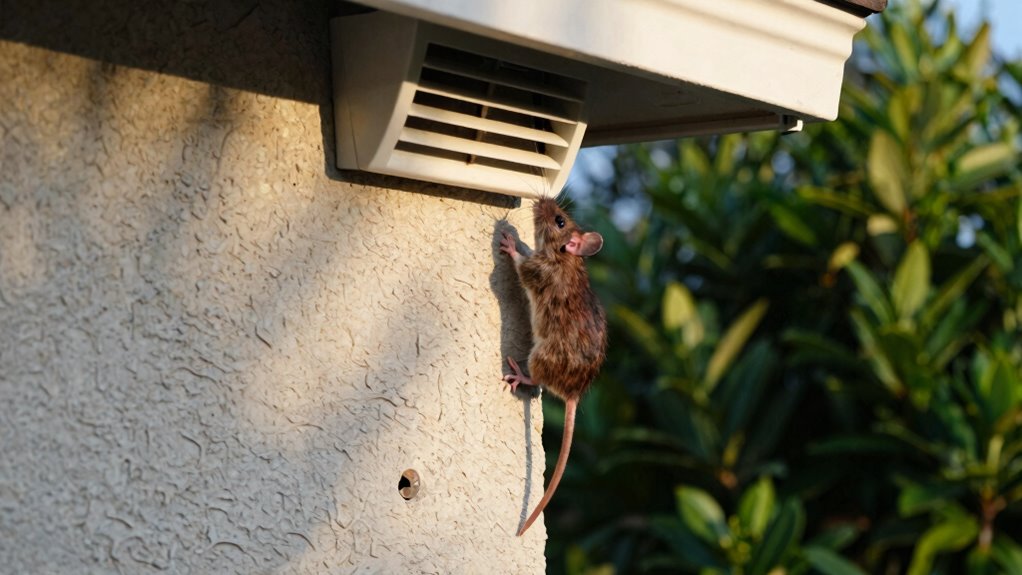
Yes, mice can climb walls to reach roof vents and upper floors using their small claws and gripping ability. Their rough feet give them traction on brick, wood, stucco, and even drywall seams.
This climbing skill, combined with a 12 inch standing jump, makes upper openings vulnerable to rodent entry. Homeowners concerned about pest control should seal all roof vents with heavy duty mesh or metal flashing. For long-lasting protection, use stainless steel steel wool that is rust-proof and weather-resistant.
For effective rodent prevention, inspect your attic and upper floors for gaps around pipes or wires. A determined mouse can exploit even small cracks to gain indoor access.
Using exclusion techniques like weather stripping and caulk keeps these tiny intruders out of living spaces. Professional pest control services can also identify hidden entry points on upper levels.
Rough Vertical Surfaces
Mice can climb walls to reach roof vents and upper floors, but only if the surface is rough enough. A smooth painted wall offers no grip, while stucco, brick, or wood siding becomes a perfect climbing gym for rodents.
Their tiny claws latch onto every imperfection, letting them scurry upward like tiny unwelcome mountaineers. This is why roof vents and second story windows are not safe by default.
Mice will exploit rough siding to bypass ground level defenses and entry points. The solution is to inspect your exterior for any rough texture that connects to upper openings.
Seal those gaps with metal mesh or caulk for reliable rodent control. Remember, a mouse does not care about your home’s aesthetic, it cares about grip.
Rough surfaces act as its elevator, so eliminating that pathway is key to pest prevention. Focus on rough vertical surfaces during your home inspection for long term exclusion results. For maximum security, use 1/4 inch mesh to block even the smallest rodents from squeezing through.
Jumping and Climbing Skills
Jumping and climbing skills turn a mouse into a tiny, four-legged ninja. That’s not hyperbole; it’s a survival spec sheet.
A mouse can leap 12 inches straight up from a flat floor, about six times its body length. For a human, that would mean clearing a two-story house in a single bound.
But the real trick is vertical navigation. Rough surfaces like brick, wood, or stucco give their claws purchase, so they scramble up walls like they’re on a ladder.
That’s how they hit roof vents and second-story gaps, which is why pest control experts focus on sealing entry points. Claws grip any texture with a grain, even tiny cracks.
Horizontal wires or cables become high-speed highways for rodent travel. During nocturnal exploration, poor eyesight is a non-issue; whiskers and touch guide every move.
So yes, they climb walls, and your upper floors are fair game. If you need a rodent exterminator, remember that every vent and soffit gap must be sealed.
Applying peppermint oil sprays or pouches around these entry points can create a strong scent barrier that naturally repels rodents without harsh chemicals.
Bottom line: seal every vent and soffit gap, or expect company from these nimble intruders.
What Entry Points Do Mice Use on Your Roof and Chimney?
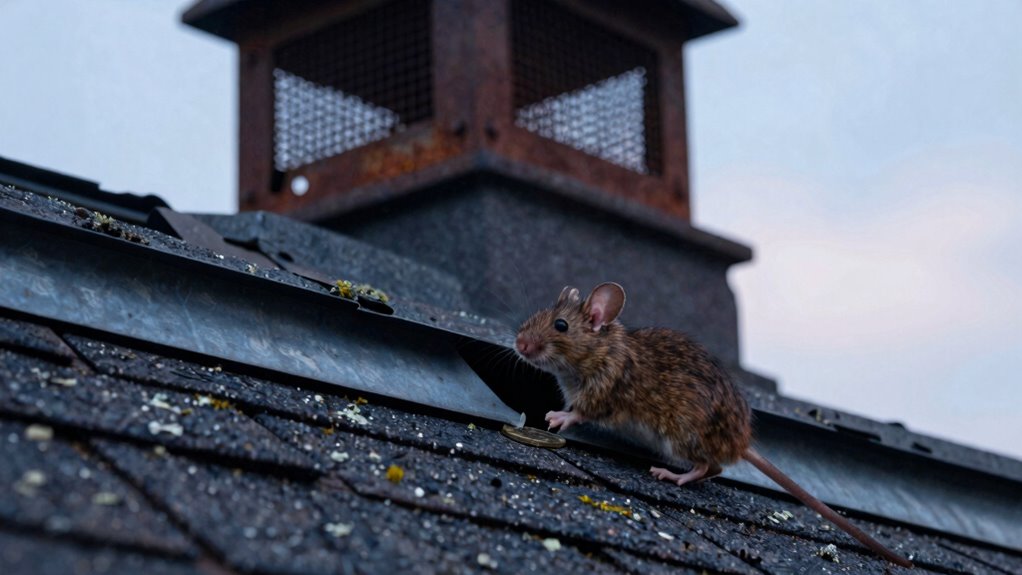
Roofs and chimneys are a prime target for mice, with three main entry points being cracks, climbing surfaces, and unsealed chimney caps. A gap wider than a quarter inch around a vent or soffit is an open invitation for a rodent invasion. Once inside, choosing a bait like bromethalin can provide quick and reliable control for an infestation.
Rough wall textures like stucco, brick, or old wood let mice climb straight up like tiny mountaineers. Without a snug cap, your chimney is essentially an open door for pests to enter your home.
Sealing these access points is a key part of effective pest control and home exclusion. Inspect your roofline for any gaps and use steel wool or caulk to block potential entryways.
Cracks and Small Gaps
The first batch of unwanted visitors typically arrives not through the front door, but via a surprisingly small gap you probably never noticed. Mice only need a crack wider than a quarter-inch to slip through, so your foundation line or roofing eaves are prime real estate for these tiny acrobats.
They are not picky about the entrance since their food preferences lean toward easy crumbs. Their nesting behaviors favor cozy, dark voids near walls.
Check utility pipe penetrations because gaps here are classic entry points. Seal with concrete or metal, not foam because they chew foam.
Steel wool works as a quick patch but it rusts over time. Hunt for hairline cracks along your roofline or chimney flashing and seal them fast.
That is your cheapest defense for pest control entry prevention. A professional rodent exclusion service can also inspect these areas for you. After sealing, applying a peppermint oil spray can create a long-lasting natural barrier that deters future entry.
Climbing Vertical Surfaces
A mouse doesn’t need a door when it can climb a wall. Those rough brick, stucco, or wood surfaces are basically a free ladder.
This athletic ability lets them reach your roof and chimney with ease. Once up there, they invade through gaps where rooflines meet siding, or holes near vent pipes.
It’s not about strength; it’s about grip. Why risk it?
Considering a mouse’s diet, which often includes seeds, crumbs, and pet food, those food sources frequently sit on upper floors. And their nesting behavior?
They love attic insulation and quiet corners near chimney flues. So your roof becomes a highway to a cozy, food-rich home.
For effective rodent control, inspect your roofline for any gap larger than a dime. Seal every one with metal mesh or caulk to stop mouse entry.
Chimney gaps require a different approach, often a cap or heavy-duty wire cover. If you need professional pest control services, that’s when you call an exterminator for a home inspection.
But that’s a different story. Start with the roofline today, and you’ll cut off their main access route. For non-lethal indoor management, try non-toxic glue boards that trap mice without poison or harsh chemicals.
Unsealed Chimney Caps
Mice can climb nearly any rough vertical surface, so a missing or unsealed chimney cap turns your home into an open invitation. That unsealed cap acts like a rodent welcome mat, letting pests drop straight into your living room.
A properly fitted metal cap costs between $30 and $100, but the need for chimney repair becomes urgent once a nest blocks your flue. Ignoring this gap invites a whole family of mice, which means droppings and a serious fire hazard.
Metal caps with quarter-inch mesh keep mice out while still letting smoke escape, so you don’t have to sacrifice function. DIY installation is possible, but hiring a pro ensures no gaps remain and gives you peace of mind.
A simple cap fix beats tearing out a nest later, and it’s far cheaper than emergency pest control services. Chimney repair urgency is real, and unsealed chimney caps are the top culprit for rodent infestations.
Act before the mice redecorate with your insulation, and you’ll save yourself cleanup costs and structural damage. Sealing that cap now is a smart, low-cost step toward long-term pest prevention and home safety. When placing bait stations near entry points like an unsealed cap, always use tamper-resistant bait stations to protect pets and children from accidental access.
What Attracts Mice to Your House and Keeps Them Coming Back?
Keeping mice out of a house is a worthy goal, but understanding why they come in the first place is the real battle. It comes down to two things: human food sources and structural vulnerabilities.
Think of your home as an all-you-can-eat buffet with an open back door. A single mouse eats only about eight pounds of food per year, but they are nibblers.
Think of your home as an all-you-can-eat buffet with an open back door.
They sample everything, preferring high-fat, high-protein, or sugary items. Your pantry, pet food bowl, or even a crumb under the fridge is a welcome mat for pest control issues.
Meanwhile, structural weaknesses like cracks in foundations and gaps around pipes are open invitations for rodent entry. Seal these entry points to stop mice from finding a way inside.
Remove the easy meals and patch the holes. That is how you stop playing host and truly solve your mouse problem. Using peppermint oil repellent products offers a non-toxic, humane alternative that deters rodents through strong botanical scents.
How to Spot the First Signs of a Mouse Intruder
Mouse droppings, fresh gnaw marks, and tracks are active indicators of a mouse intruder. These signs appear near food sources, along walls, or in dark corners.
A musky, ammonia-like odor likewise confirms their presence, whereas gnawing or scurrying sounds in walls or ceilings suggest activity. Ignoring these clues risks larger infestations, so consider an emergency exclusion plan to seal entry points like foundation cracks and pipe gaps.
Start by checking for small, dark droppings near food and cleaning them up. Then monitor for fresh ones to see if the mouse is still active.
Look for rough edges on wood, plastic, or wires as gnaw marks. Seal those gaps and inspect for nests to stop damage before it spreads.
Use a flashlight to trace dusty footprints or smudge marks along walls. This helps you find where the pests are traveling.
Listen for squeaks or scratching at night inside walls or ceilings. If you hear these sounds, call a professional pest control service right away.
A stale, urine-like odor means a mouse has been active nearby. Locate the source and set mouse traps in that area for quick removal.
A professional inspection costs $200 to $400 and identifies entry points you missed. That investment is worthwhile before you find chewed wiring or a full blown infestation.
Physical barriers like stainless steel wool provide rust-proof walls without chemicals to block such entry points.
Where Do Mice Build Nests After They Get Inside?
Under appliances, within wall voids, and inside attic insulation are typical nesting spots after a mouse slips inside. A mouse builds its nest using shredded paper, cloth, or fibrous materials, whatever soft stuff it finds.
Key shelter locations include the warm, dark area behind a refrigerator or stove. The hollow space inside walls near pipes is also a favorite, as is the fluffy insulation of an attic corner.
These spots offer protection and quick access to food. The nest itself is a messy ball of shredded material, often hidden inside a box or under a cabinet. Since a single mouse can produce dozens of offspring in a year, a nest that goes unnoticed can quickly become an infestation requiring multiple reusable snap traps for effective control.
Mice prefer tight, undisturbed spaces where they can chew and shred freely. So, if you hear rustling in the wall or find a pile of shredded paper behind the washing machine, congratulations. You have got a tiny, unwelcome tenant that likely needs professional pest control to remove.
Steel Wool, Copper Mesh, and Concrete for Mouse-Proof Sealing
Steel wool, copper mesh, and concrete are the three amigos of rodent proofing. The hardware store sells them for this exact purpose of stopping mice from entering.
Steel wool works great for temporary, tight gaps. Mice may gnaw through it eventually, but it buys you time. Copper mesh is far more durable and resists rust and chewing for years. It is ideal for sealing vents or pipes where moisture is a concern.
Concrete permanently seals foundation cracks, but you need to allow a full day for curing. For small holes, stuff steel wool firmly and then seal with caulk. For larger openings, cut copper mesh to size, staple it in place, and cover with concrete for a long term fix. A 20 foot copper mesh roll costs around 15 dollars, while steel wool pads are about 5 dollars. Self-adhesive seal kits with EPDM rubber offer an additional tool-free option for blocking pest entry points around doors and windows.
The bottom line is use copper mesh for longevity, steel wool for quick fixes, and concrete for structural gaps. This approach ensures effective mouse proofing for any home.
Frequently Asked Questions
Can Mice Jump From the Floor Onto Countertops?
Yes, mice can jump from the floor onto countertops. Their vertical jump height reaches up to 12 inches, and their landing accuracy is surprisingly precise for such small animals.
This ability lets them bypass low obstacles entirely. Mice do not need countertops to be low, only within their jumping range.
A countertop just 10 inches high is an easy hop for a mouse. They will land square on it without slipping.
If you find droppings up there, do not blame the floor. Blame physics and a determined rodent that your current home pest control failed to stop.
You need effective rodent proofing and quality traps or bait stations. Look for professional pest control products designed to block these agile intruders from reaching your kitchen surfaces.
Buying a complete mouse exclusion kit ensures you seal entry points and counter these jumps. Stop buying quick fixes and invest in long term rodent management solutions today.
How Far Do Mice Travel From Their Nest to Food?
Mice rarely travel far from their nest, with a typical foraging range of just 10 to 30 feet. Proximity to food is key, so they prefer sticking close to reliable sources like a pet bowl or pantry.
A mouse might nibble about 3 grams daily, sampling fats or sugars, but it won’t roam deeper than two or three rooms. If food is scarce, they will expand their range, but generally these pests are lazy gourmands.
Keep crumbs near counters and you have practically invited them to set up a bed and breakfast inside your wall. That is why effective rodent control starts with sealing entry points and removing easy food access.
For professional pest control solutions, look for snap traps or electronic deterrents that target these short travel patterns. Placing bait stations within 30 feet of suspected nest sites dramatically increases your success rate.
Understanding mouse behavior helps you choose the right rodenticide or exclusion products. Smart pest management means cutting off their safe, short trips between nest and food source.
Do Mice Enter Homes During the Day or Only at Night?
Mice absolutely enter homes during the day, but their nocturnal activity patterns make nighttime their preferred time. They are mostly creatures of habit, with strong light avoidance behavior keeping them hidden in walls and attics when the sun is up.
That said, if a mouse is desperate or there is a heavy infestation, it will scurry across a kitchen floor at noon without a care. Daytime sightings signal a big problem, not a new schedule.
The bottom line is that night is prime time for rodent activity, but a day sighting means they are bold. If you spot a mouse during the day, you likely need a professional pest control inspection to assess the extent of the infestation.
For effective rodent control, focus on sealing entry points and placing bait stations or snap traps along walls where they travel. Buying high quality rodent bait and a good set of exclusion materials can stop daytime intrusions fast.
Act quickly if you see a mouse in daylight, because it often means nests are overcrowded or food sources are scarce. This is a clear buyer intent signal that you need targeted pest control products now.
Will Keeping a Cat Completely Prevent Mice From Entering?
No cat will ever give you 100% rodent proofing. A feline is a strong deterrent but not a complete pest control solution.
Mice can squeeze through gaps as small as a quarter inch. Those entry points are far too narrow for a cat to reach or block.
Even the best mouser cannot seal your foundation cracks. It also cannot close off openings around pipes and vents.
A cat will reduce mouse activity inside your home. However, determined rodents will still find a way in if they smell food or warmth.
For total rodent prevention, you need a two step defense. Pair your cat with professional grade exclusion materials and thorough home sealing.
Remove all accessible food sources and clutter. Then inspect your entire perimeter with a caulk gun and steel wool.
The bottom line is that a cat helps with active mice. But structural repairs and gap sealing are mandatory for long term rodent control.
How Quickly Can a Mouse Infestation Grow After Entry?
A mouse infestation can explode in under two months. A single pair produces a litter every three weeks, and their young start reproducing at just six weeks old.
This population doubling happens fast, shockingly fast. You might start with two mice, but within a year you could be facing hundreds of rodents.
Each mouse eats about 3 grams of food daily, and that adds up quickly. That is why professional pest control is essential the moment you spot even one mouse.
To stop an infestation before it spirals out of control, act within days not weeks. Contact a rodent exterminator or buy a high quality snap trap and bait station immediately.
You need a full exclusion strategy to seal entry points and remove food sources. This is the smartest investment for long term mouse control and peace of mind.


