
Maggots in your trash mean a pregnant fly found a quarter-inch gap, crawled in, and laid eggs on rotting organic waste you barely noticed. One female can deposit up to 900 larvae, and summer heat over 30°C turns your bin into a nursery in under 12 hours.
The good news is you don’t need harsh chemicals to stop them—just a few practical changes to block access and remove what attracts them. This article walks you through exactly how to break the cycle, from sealing entry points to managing waste so flies never get a chance.
You’ll get clear steps to fix your current problem and keep maggots from coming back. Let’s dive into the simple fixes that actually work.
At A Glance
- Female flies lay 75–150 eggs per visit on damp organic waste in your bin.
- Warm temperatures above 30°C (86°F) cause eggs to hatch in 8–12 hours.
- High humidity inside the bin keeps eggs damp and accelerates breeding.
- Gaps larger than ¼ inch in lids or seals allow flies to enter and deposit eggs.
- Rotting meat, fruit, or damp cardboard release ammonia and fatty acids that attract flies.
What’s Actually Attracting Flies to Your Trash?
Flies don’t randomly show up to your trash can out of boredom. They’re drawn by the chemical equivalent of a dinner bell: ammonia and fatty acids from rotting meat, fruit, or damp cardboard.
A single female housefly can lay 75 to 150 eggs per visit, and she’ll repeat that up to six times, potentially 900 eggs from one fly. Without proper waste management, your bin becomes an all‑you‑can‑eat buffet.
To stop flies in your kitchen, start with pest control basics. Loose lids or cracked seals invite infestation.
Bag all wet waste in sealed plastic bags, and rinse containers before tossing them. This simple fly trap prevention step is cheap, a roll of bags costs a buck.
Trust me, it beats battling maggots later. For effective fly infestations treatment, seal every entry point.
Using enzyme drain cleaners regularly breaks down organic waste that attracts flies and maggots in nearby drains.
How Flies Get Into Your Bin and Lay Maggot Eggs
Why do flies seem to have a sixth sense for finding your trash? They are actually pros at detecting ammonia and fatty acids from rotting food, smells we barely notice.
A single pregnant housefly can slip through any gap bigger than a quarter inch, like a loose lid or cracked bin seal. Once inside, she deposits 75 to 150 tiny eggs directly on damp organic waste.
That is where the fly lifecycle really kicks off. High humidity inside the bin keeps those eggs damp and viable, while warmth speeds things along.
At 30°C, eggs hatch in just 8 to 12 hours, fast enough to surprise you after one missed trash day. The female repeats this up to six times, potentially laying 900 eggs total.
For effective pest control, you need to seal all bin gaps tightly. Bag wet waste thoroughly to stop maggot infestations before they start.
Using thick garbage bags with a secure knot eliminates food sources and odors. A tight lid with a rubber seal is a smart home pest solution that blocks entry points.
Catching the problem early is key to long term pest prevention. Always take out smelly scraps regularly to keep flies from breeding.
Using vapor-based treatments can kill both adult flies and larvae inside the bin, offering long-lasting protection for up to four months.
Summer Heat and Humidity: Conditions That Trigger Infestations
During the sweltering summer months, your trash can becomes a five-star hotel for flies, all because of heat and humidity. When temperatures climb above 25°C, waste degradation speeds up and releases potent odors that act like dinner bells for pregnant flies.
During the sweltering summer months, your trash can becomes a five-star hotel for flies.
Humidity levels above 70%, like Kansas City’s 85%, keep organic matter damp and prevent fly eggs from drying out. This moisture also turns your bin into a luxury spa for egg-laying, so pest control starts with managing that dampness.
Seasonal triggers like summer cookouts add extra meat and fruit scraps, which are prime targets for fly infestations. Closed lids trap heat and moisture, creating a greenhouse effect that accelerates maggot development in your bin.
These conditions are a perfect storm for rapid egg hatching, but you can break the cycle with simple waste management steps. For effective fly control, take out trash daily, rinse bins with vinegar, and keep lids cracked to reduce trapped humidity.
If you’re seeing maggots or adult flies already, apply a targeted insecticide or use diatomaceous earth for a non-toxic solution. Proactive fly prevention here means scheduling weekly bin cleaning and sealing bags tightly before disposal.
How Fast Do Fly Eggs Hatch in a Warm Trash Can?
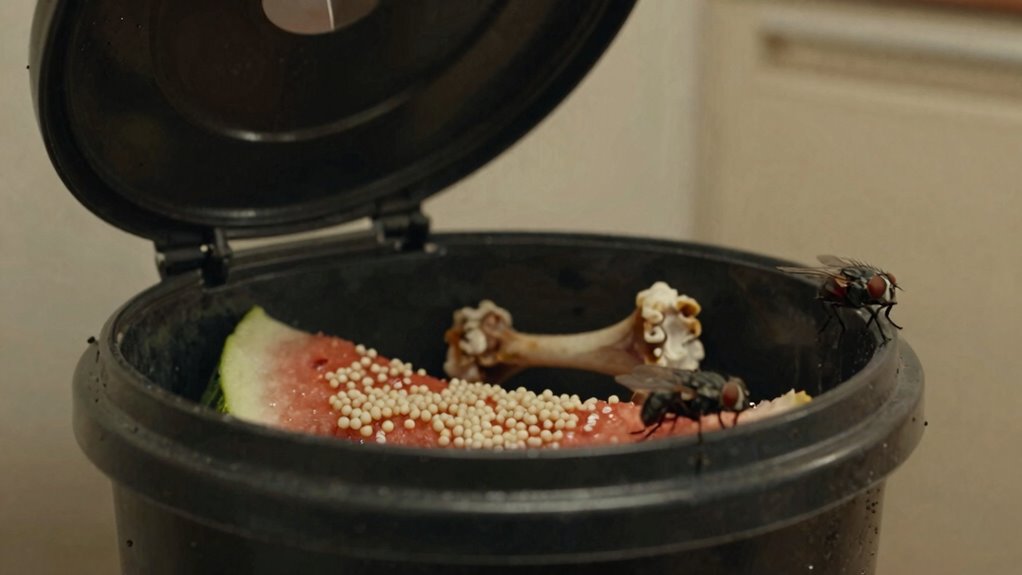
In a warm trash can, fly eggs can hatch in as little as 8 to 12 hours when the temperature hits 30°C (86°F). The combination of heat and humidity levels above 80% creates an ideal nursery, turning that forgotten banana peel into a maggot infestation.
This rapid development means you need effective pest control to stop the breeding cycle quickly. If you spot the first signs of flies, professional removal services can prevent a full blown outbreak.
The trash bin feels like a sauna, so those eggs are checking out fast. For immediate action, use a targeted fly killer spray or a larvicide treatment to break the life cycle.
Removing the food source and sealing the lid are your best prevention strategies. A clean, dry bin is the first step in long term fly management. For maximum effectiveness, hang traps 20 feet from the house to discreetly draw flies away from living spaces.
Heat Accelerates Hatching
That trash can in the summer sun might as well be a five‑star nursery for flies. At 30°C (86°F), their eggs hatch in just 8 to 12 hours, a speed that makes scavenger behavior a non‑stop buffet.
Warmth removes oviposition barriers, letting flies deposit eggs directly on decomposing waste without worry. A single female fly can lay up to 150 eggs per batch, and repeat this up to six times.
Eggs are tiny, about 1.2 mm, and blend into rotting food instantly. Below 15°C (59°F), hatching slows to a crawl, so summer is prime time for pest control intervention.
Loose lids and broken seals are open invitations for flies to start the cycle. The takeaway is simple: keep bins shaded and sealed to prevent fly infestations.
Slowing heat means slowing maggots, and that’s a win for your trash can. Invest in tight-fitting lids and consider a bin shade for effective waste management.
For persistent indoor issues, plug-in diffusers can complement sanitation by creating a pest-free zone, though they require a stable power source to work reliably.
Ideal Humidity Levels
Heat and humidity create the perfect breeding ground for fly eggs, especially in a Kansas City summer where a trash can can turn into a breeding zone. At 85% humidity, those tiny eggs don’t just survive. They thrive, making pest control a top priority for any homeowner. Since booklice also cannot tolerate humidity below 50 percent, maintaining humidity levels between 40-50% effectively prevents their reproduction in nearby storage areas.
Moisture management becomes critical since damp waste releases more of those enticing gases flies love. Without proper humidity control, sealed bins turn into steam rooms, speeding up hatching dramatically. A dry bin slows things down. A wet one fast-tracks the whole messy show.
The fix isn’t complicated. Double-bag soggy scraps to reduce moisture exposure. Wring out food containers before tossing them to cut down on liquid waste. Keep lids cracked just enough to vent steam and prevent condensation buildup.
Smart dampness management keeps your trash can a place for garbage, not a nursery. Following these pest control tips helps you maintain a cleaner home and avoid fly infestations.
8 to 12 Hours
A single female fly can lay up to 150 eggs at once, and warm trash accelerates the hatching process.
At 86°F (30°C), maggots can appear in as little as 8 to 12 hours.
That is faster than a pizza delivery, so neglecting bin sanitation for just one hot day can turn your trash into a wriggling nursery.
Summer heat dramatically speeds up egg hatching, making July a prime time for fly infestations.
Loose lids or broken seals invite flies to deposit eggs directly on waste, creating a hidden danger.
Hatched larvae carry harmful pathogens like Salmonella and E. coli, according to WHO data.
To stop the cycle, bag wet waste and rinse containers to cut down food residue.
Consistent bin sanitation and cool storage keep those 12 hour windows from becoming a full blown pest control emergency.
Treat your trash can like a hot zone and stay ahead of the problem.
Maggot Behavior: What’s Happening Inside Your Bin Right Now
The sheer speed of it all is the unsettling part. In just days, tiny eggs become writhing larvae feeding in a frenzy.
You might notice maggot migration as they crawl away from the waste. They are seeking a dry spot to pupate, which is a critical time for effective pest control.
Pupation timing means they will transform into flies in about 5 to 11 days if conditions are warm. They are not malicious, just efficient at breaking down organic waste.
Think of them as nature’s cleanup crew working overtime in your bin. It is gross, certainly, but it is pure biology you are seeing.
Think of them as nature’s cleanup crew working overtime in your bin.
They will feed on meat scraps and fruit peelings, anything organic you toss in. Then they crawl up the sides looking for a dark corner.
That is when you see them, not planning a revolt but just following instinct. Unfortunately, your trash can is their ideal nursery for fly elimination using an electric zapper with at least 3000V to kill them instantly.
Can Maggots in Your Trash Make Your Family Sick?
If you ask maggots whether they are a health hazard, they will not answer because they are too busy eating. The real question is what they leave behind, as their presence signals serious health risks.
Flies that laid them carried pathogens like Salmonella and E. coli. These germs are tracked from garbage onto your counters, creating a core contamination concern.
The maggots themselves do not bite, but they arrive with bacteria. Flies transfer germs during egg laying, so infested bins often host live bacteria.
Spilled juices from infested trash can soak into floors, spreading microbes. Kids or pets touching contaminated bins face the highest exposure risk.
The smell alone warns of bacterial buildup, even when maggots are not visible. To protect your family, treat a maggot outbreak as a contamination red flag.
Clean the bin thoroughly, and keep food waste sealed. For professional pest control help, consider a botanical blend of peppermint and rosemary spray that is safe around kids and pets after drying.
Your family’s health is not worth the gamble. Taking action now prevents a larger infestation and keeps your kitchen safe.
Boiling Water, Vinegar, and Sprays That Kill Maggots Instantly
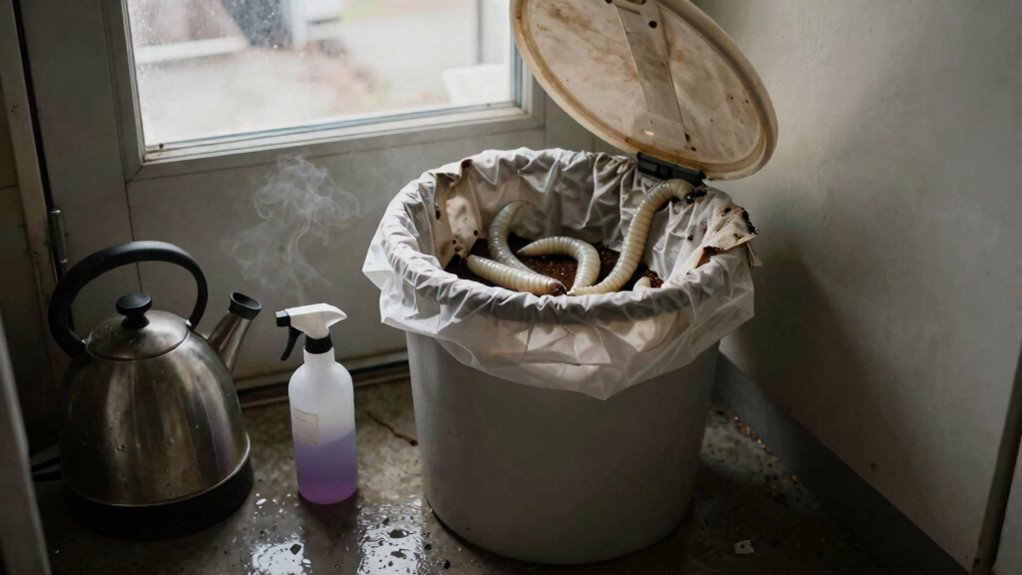
Household maggots meet their end with three kitchen staples: boiling water, vinegar, and common insect sprays. A quick pour of boiling water, perhaps with a splash of bleach treatment, kills them on contact, no waiting required.
Vinegar works nearly as fast, especially malt vinegar, drowning and dissolving the larvae. For targeted action, insect sprays deliver immediate results.
| Treatment | How It Works |
|---|---|
| Boiling Water | Kills instantly; add bleach for extra sanitation |
| Vinegar | Drowns and breaks down maggot bodies |
| Insect Spray | Neurotoxic; kills on direct contact |
Beyond killing, a citronella deterrent helps keep flies away after cleanup. Spray it around bin lids for long-term prevention.
No need for fancy equipment, just hot water, acidic vinegar, or a can of spray. A dad joke: maggots hate a hot bath.
Stick with these options, and the infestation stops cold. For long-lasting prevention, consider a spray that offers up to 16 weeks of residual protection against future pests.
How to Clean and Sanitize a Bin After an Infestation
Once the maggots are dead, the real work begins by cleaning the bin so thoroughly that no fly would ever want to return. Empty the bin completely, then scrub all surfaces with hot, soapy water, paying special attention to corners and the lid seam where eggs hide.
Rinse, then spray with a solution of one part bleach to nine parts water, letting it sit for ten minutes. Dry the bin in direct sunlight, since flies hate dry, bright spaces, and a clean, dry bin is the foundation of long-term maggot prevention.
Scrub every inch with a stiff brush and hot, soapy water; leftover residue attracts flies faster than a forgotten lasagna. Bleach spray at a 1:9 ratio kills lingering bacteria and eggs, so let it soak for ten minutes before rinsing.
Dry thoroughly in sun; dampness invites future infestations, so aim for bone-dry surfaces. Use a fine-mesh bird netting for garden over the bin opening as a temporary barrier during cleaning to keep flies away. Seal it tight after cleaning by checking lid hinges and replacing cracked bins, because loose lids are an open invitation for flies to return.
Bin maintenance is not glamorous, but it is the only way to keep your trash can from becoming a fly motel. For pest control that lasts, use professional grade bin deodorizers and insect growth regulators to break the fly life cycle.
Natural and Chemical Treatments That Kill Maggots on Contact
Pouring boiling water mixed with a small amount of bleach kills maggots on contact and sanitizes the bin in one go.
For those who prefer gentler options, natural treatments work well.
For those who prefer gentler options, natural treatments work well.
A generous sprinkle of salt or a dousing of malt vinegar desiccates and dissolves these pests within minutes.
There are no toxic fumes, just a mild tangy odor that may linger.
When infestations are stubborn, chemical sprays offer a faster harsher solution.
A standard fly spray containing permethrin kills maggots instantly on contact.
A single can costs around six dollars at most hardware stores.
Simply spray directly onto the writhing cluster, wait ten seconds, then sweep them up dead.
However, because permethrin is highly toxic to aquatic life, spraying near ponds or streams must be avoided.
The verdict is that natural treatments work for small outbreaks.
But chemical sprays are the go-to choice for heavy infestations.
Seal Lids and Bag Waste to Block Fly Entry
Killing the maggots is only step one; stopping the reinfestation is what actually wins the battle. Fly control starts with two weak points: the lid seal on your trash can and the way you bag your waste.
A garbage bin with a loose or damaged lid is basically a neon sign for flies, inviting them straight to the buffet. Check for warped lids or broken hinges, because a gap of just 2mm is plenty for a determined fly to squeeze through.
Always double-bag wet kitchen scraps like meat trimmings or fruit peels in sealed plastic bags; this takes about 30 seconds and costs pennies. Rinsing cans and jars before tossing them removes the sticky residue that draws pests in the first place.
If your bin lid is cracked or doesn’t sit flush, replace it for around $15, which is far cheaper than dealing with a repeat fly infestation. Sealing your trash bags kills the odor trail that attracts flies from a distance, while blocking lid gaps cuts off their direct access route.
Do both of these pest prevention steps, and the flies will simply move on to an easier target. Tight lids and sealed bags are your best low-cost defense for long term pest control around your home.
Every time you take out the trash, do a quick lid check and confirm the bag is tied shut; this habit keeps fly breeding sites from forming. For budget friendly pest management, two dollars on a tight fitting lid beats spending twenty on sprays later. Additionally, treating the garbage area with Permethrin-treated clothing repellents can provide lasting protection against flies and other pests on contact surfaces.
Weekly Routines That Keep Maggots Out for Good
Consistency is the real hero when it comes to keeping maggots out for good. Stick to a weekly schedule, like bagging wet waste every Sunday and rinsing bins on Wednesday, to break the fly lifecycle before it starts.
Bin location matters too, so move your trash to a shady spot away from direct heat. This slows egg development and makes your bin less inviting to pests.
During summer, do seasonal checks every few weeks to catch loose lids or cracks early. These small repairs stop flies from sneaking in and starting an infestation.
Odor traps work wonders for fly control, and you can make them cheaply with citronella sachets or vinegar-soaked rags hung inside the lid. These mask rotting smells that attract pregnant flies from blocks away.
A clean bin, a shaded spot, and a simple weekly rhythm are your recipe for long term pest prevention. Without this routine, you’re just hosting a magnet for maggots and inviting a full-blown nuisance.
For homeowners dealing with recurring issues, pairing this schedule with a professional grade fly repellent offers extra peace of mind.
And if you want to buy time between cleanings, sprinkle a thin layer of diatomaceous earth at the bin’s base to dehydrate larvae on contact. This food-grade powder kills fleas and larvae by mechanical dehydration within 24 to 48 hours when kept dry, without using harmful chemicals.
Stay consistent, check your surroundings, and you’ll keep your waste area maggot free all season long.
Just remember, the goal is to interrupt the cycle early, not react after you spot wriggling pests.
Make these weekly habits a non negotiable part of your waste management, and you’ll never scramble for a cleanup emergency again.
Frequently Asked Questions
Can Maggots Survive in an Empty Bin With No Food?
No, maggots cannot survive long in an empty bin with no food. Their maggot lifespan is only a few days without access to organic waste, since they need constant feeding to develop.
Empty bin hygiene is critical here because without damp, rotting material, the larvae quickly starve or dry out. A clean, dry can breaks the pest life cycle completely, so you avoid repeat fly infestations.
Think of it like a tiny, grim desert where nothing edible exists for them. For effective fly control, you need to scrub bin walls and lids weekly, then seal all cracks and vents.
If you’re dealing with an active larvae problem, consider a targeted maggot killer spray or a microbial bin cleaner. These pest control products work fast, and they’re safer than bleach around pets and kids.
Buying a bin with a tight-fitting lid and a drainage tap is a smart purchase for long-term prevention. Pair that with a monthly enzyme treatment to dissolve any hidden organic residue that attracts flies.
Do Maggots Attract Other Pests Like Rodents or Cockroaches?
Yes, maggots attract other pests because the scent of decay signals a food source. Rodents like rats and mice follow that smell right to your trash.
Cockroaches are also drawn to the same rotting organic matter maggots feed on. They share a taste for waste, so their presence often overlaps.
Think of maggots as a neon sign for pests, not the main event. The real win is breaking the maggot lifecycle with proper pest control.
Seal trash in heavy duty bags to block access. Keep bin lids tight and clean your trash containers weekly with a disinfectant.
If you skip these steps, you are hosting a full pest party for rodents and roaches. The bottom line is simple: stop the rot, stop the guests.
For fast relief, use a targeted fly bait or a surface spray near the bin. This helps you buy time while you fix the sanitation issue for good.
How Long Can Maggots Live Without Food or Moisture?
Maggots can survive without food for only a few days, but lack of moisture is much more critical. Without moisture, desiccation effects kick in quickly, drying them out within 24 to 48 hours.
Their maggot lifespan is short anyway, lasting 5 to 11 days total. Without food or water, they starve or shrivel fast. Moisture is key for survival.
High humidity buys them time, while dry bins turn them into crispy little raisins. For effective pest control, fixing leaks and sealing trash forces them to die on their own.
No chemical treatment is needed, just simple sanitation steps. If you want a long term solution, consider airtight trash cans and dehumidifiers for problem areas.
Are Maggots Dangerous if Touched by Pets or Children?
Maggots themselves aren’t toxic if touched, but there are real pet ingestion risks and child hygiene concerns.
A pet eating a maggot might get an upset stomach or bacteria like salmonella.
Kids touching them then putting fingers in mouths is the bigger worry.
Wash hands thoroughly after any contact with infested areas.
Think of maggots as gross, not deadly.
They are more “ew” than “ER visit,” but a good scrub and clean bin solve it.
If you spot maggots near your trash, you likely need a professional fly control solution.
Our pest control products target the root cause, not just the surface.
For pet owners, look for a pet safe insecticide that kills fly larvae without harming your dog or cat.
Buying a quality bin seal or fly trap can prevent re infestation entirely.
Your best move is to identify the source of the infestation.
Then use a targeted pest control spray to eliminate eggs and maggots before they spread.
Can Maggots Climb Out of a Sealed Trash Can on Their Own?
No, maggots cannot climb out of a sealed trash can on their own because they lack the leg strength and grip to scale smooth plastic or metal walls.
However, if your bin has sealed lid gaps, tiny spaces where the lid doesn’t fit flush, maggots can squeeze through, especially when packed tightly.
Bin material type matters too: rough, textured bins offer more grip for them to inch upward, which is why upgrading to a smooth-sided trash can is a smart pest-proofing move.
A tight, gap-free lid on a smooth bin stops them cold, making it your first line of defense for fly larvae control.
For effective waste management and home pest prevention, always check the lid seal before buying a new garbage container.
If you’re already dealing with an infestation, look for insect growth regulators or fly bait products that target maggot stages near the trash area.
Professional-grade pest control supplies, like larvicide powders or sealed bin liners, can reduce breeding sites and keep your outdoor space clean.
Shopping for a rodent-proof and fly-proof trash can? Focus on models with rubber gaskets and latch-lock lids, which deliver both odor containment and maggot exclusion.
Remember that maggot activity peaks in warm weather, so routine bin washing and drying after each pickup disrupts their lifecycle.
With the right sealed trash can and a few preventive sprays, you’ll avoid maggot escapes and keep your garage or yard hygienic.


