
How fast do termites cause damage? Fast enough that a small, unnoticed colony can quietly destroy a critical support beam in under a year. A mature nest of 300,000 termites chews through nearly a pound of wood daily—that’s a 2×4 pine stud gone in six to twelve months.
Damp wood from a single leaky crawlspace speeds that timeline up tenfold, slashing years of safety down to just months. Worst of all, the damage stays hidden for years, with no obvious signs until the structure is compromised. That makes annual inspections your cheapest and most effective defense against costly repairs.
We’ll break down the exact timeline of termite damage, from the first tiny nibble to full structural failure. You’ll learn what speeds it up, what slows it down, and the simple steps to stop it before it starts. Keep reading—the details might save you thousands.
At A Glance
- A small new colony causes little damage, but 300,000 workers consume nearly a pound daily by year five.
- A 100,000-worker colony can destroy a 2×4 pine stud within 6 to 12 months.
- Damp wood over 20% moisture content accelerates termite consumption up to ten times faster.
- Hidden damage from a mature colony can hollow joists within three years, showing no visible signs.
- Annual inspections catch early warning signs before structural failure and expensive repairs occur.
How Fast Do Termites Actually Eat Wood?

Termite feeding is less a frantic chew fest and more a slow, steady grind. Worker termites, the colony’s primary consumers, process wood through specialized digestion, relying on gut microbes to break down tough cellulose.
This efficient, methodical feeding means a single termite consumes roughly 0.105 milligrams of wood daily. That number sounds laughably small until you do the math.
A colony of 100,000 workers can chew through a 2×4 pine stud within 6 to 12 months. For mature, established colonies, that adds up to one pound of wood per day.
Individually pathetic, collectively devastating. Early detection with professional pest control inspection is your best defense. For ongoing protection against these feeding colonies, homeowners can use bait stations with Novaluron to eliminate termites at the source.
Targeted termite baiting in year one remains your most cost effective treatment option. The bottom line is simple: don’t wait for visible sag or structural damage.
Inspect your property early and act faster to prevent costly repairs. Schedule a termite treatment quote today to protect your home.
How Colony Size Dictates Damage Speed (Hundreds to Millions)
A tiny colony is like a single kid nibbling a cookie. It barely makes a dent in your pantry.
A mature colony turns your home into a full‑fledged food fight. Bigger colony size dictates faster damage speed, plain and simple.
That small nest of hundreds might go unnoticed for weeks. But a population of hundreds of thousands can chew through drywall overnight.
If you spot even a few termites, you need professional pest control immediately. Delaying extermination service lets millions of pests destroy your property’s structure.
Tackle the infestation early to protect your home’s value. Effective pest removal strategies hinge on treating the colony before it explodes in size.
Regular inspections every three to six months are key for early termite detection of an expanding colony.
Why Moisture Makes a Slow Infestation Speed Up Fast
Moisture is the biggest reason a termite infestation speeds up fast. Damp wood with over 20% moisture content can be eaten up to ten times quicker than dry, cured lumber.
This turns a small colony into a rapidly growing threat. Chronic plumbing leaks soften the wood and create the perfect entry point for termites.
A leaking pipe effectively rolls out the welcome mat for a full scale attack. Termites can chew through a 2×4 stud in a fraction of the usual time when moisture is present.
Homeowners with hidden water damage should schedule a professional termite inspection right away. Catching damp wood early can prevent costly structural repairs later. Using a pinless moisture meter allows you to scan finished surfaces without leaving marks to identify problem areas.
Moisture Accelerates Feeding
Damp wood is not just a snack; it is a five course meal. Termite workers already chewing 0.105 milligrams daily will triple their pace on wood with 20 percent plus moisture content. One leaky crawlspace can cut a 2 year damage timeline down to 6 to 8 months. Chronic leaks create moisture that doubles colony growth spurts. Damp wood is softer, so mandibles cut through easier and faster. Subterranean species seek damp zones, boosting local populations. Feeding cycles speed up, meaning more poop, more tunnels, more chaos. Moisture meters detect wet spots early, saving thousands in repairs. Using a borate-based sealant can kill termites on contact and prevent future invasions after you fix the leaks. Bottom line: fix leaks fast, or termites will feast. Schedule a pest inspection now to stop structural damage before it accelerates.
Damp Wood Softens Faster
One surprising fact is that wood soaked to 20% or more dampness becomes, for a termite, like a soft serve cone compared to a stale cracker. Those moisture thresholds don’t just make wood wet. They reduce its physical integrity.
Wood hardness plummets when moisture content rises above 20%. This turns structural lumber into something a termite colony can chew through up to ten times faster than dry, cured wood. This is less a feeding increase and more a texture upgrade.
A large colony of 300,000 workers faces minimal resistance against softened lumber. Damp wood means faster tunneling and less energy spent per bite. This significantly accelerates damage, turning a year long timeline into months.
The bottom line is that dry wood resists while damp wood surrenders. Control moisture to control the speed of termite activity. For effective pest control, focus on reducing dampness to protect your property. Using a dehumidifier to maintain humidity levels between 50-60% creates an environment that keeps wood dry and termites at bay.
Leaks Trigger Rapid Damage
A slow plumbing leak doesn’t need to be a flood to cause trouble. Just a hidden drip behind a wall can turn a minor termite problem into a major one in about 12 months.
These damp spots soften wood, making it irresistible to pests. Termites chew through damp timber up to ten times faster than dry wood.
What started as a small infestation can suddenly threaten your joists or sills. You could face thousands in repair costs before anyone even notices.
A slow drip can double termite feeding speed in just months. Dampness traps under sinks or in crawl spaces create termite superhighways.
Soft, damp wood is easier to eat, so colonies expand faster than expected. Using a targeted foam spray on active tunnels can reach hidden pests without tearing apart walls. Hidden leaks often go unseen until doors start sticking or floors sag.
Fixing leaks quickly can stop rapid damage and save major repair bills. The bottom line is a tiny drip today could be a huge headache tomorrow, so dry it out.
Year 1 vs. Year 5: How Termite Damage Speeds Up
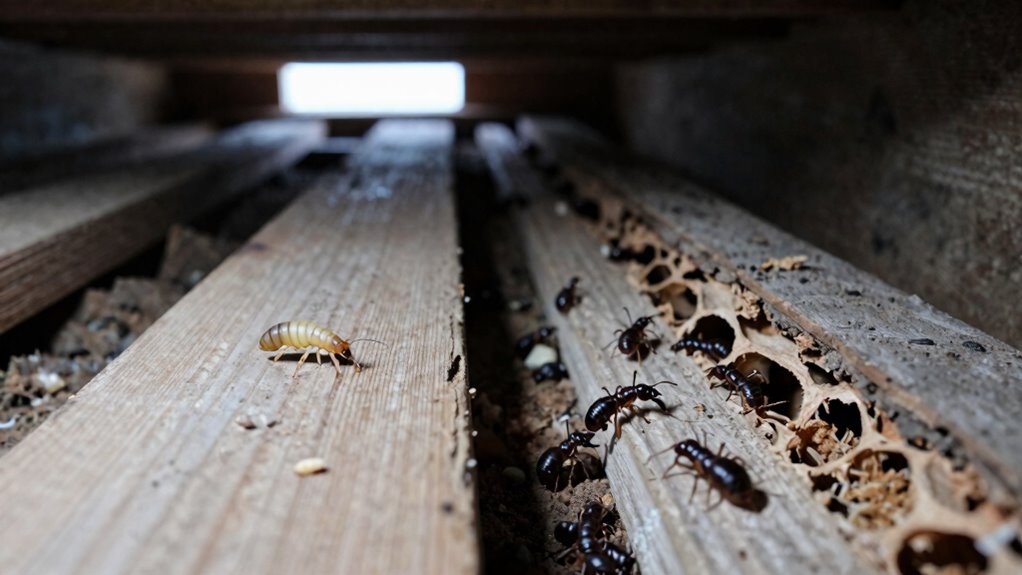
Year one termite damage is barely noticeable, like a few surface scratches on a door frame. A new colony starts with only a few hundred workers, each chewing about 0.105 milligrams of wood daily.
By year five, that same colony matures into a powerhouse of 300,000 plus workers, consuming nearly a pound of wood every single day. This rapid wood destruction turns a minor nuisance into a serious structural threat, often leading to hollowed joists or a sagging ceiling.
By year five, a mature colony consumes nearly a pound of wood daily, turning minor issues into structural threats.
Moisture detection is your first line of defense, since leaks soften wood and make it far easier for termites to chew through. Softened wood accelerates consumption up to ten times faster, which then fuels the colony lifecycle and speeds up their reproduction.
If you catch an infestation early, a simple localized termite treatment can solve the problem affordably. But if you delay, you will face costly structural repairs, often exceeding thousands of dollars for foundation work or beam replacements.
Homeowners who schedule annual termite inspections catch these warning signs before they escalate into emergency pest control situations. Proactive moisture control and wood repair are the smartest ways to prevent termite damage from ever reaching that fifth year. For ongoing protection, you can apply foams with expansion ratios up to 30:1 for deep infiltration into cracks and voids.
The bottom line is straightforward: act fast, because termite damage speeds up dramatically over time. Call a licensed pest control professional for a thorough termite inspection today, and you avoid surgery later.
Softwood, Hardwood, and Treated Lumber: Does It Matter?
All wood is not created equal, and termites know that better than your home inspector. In simple terms, softer woods are eaten faster, harder woods buy you time, and treated lumber is a real deterrent for pest control.
Softwoods like pine are a termite buffet where a mature colony can destroy a 2×4 stud in 6 to 12 months. Hardwoods like oak offer better timber hardness, slowing interior destruction to 18 to 36 months for a 50,000-worker colony.
Plywood resistance varies widely because thin layers and gaps give termites easy access, especially if damp.
Pressure-treated lumber contains chemicals that significantly slow feeding, making it a smart choice for ground-contact framing.
Water-damaged wood is softer and more attractive, so fixing leaks is a surprisingly effective first line of defense. If you want to slow termites down, choose hardwoods or treated lumber to protect your home investment.
Selecting materials with higher resistance helps ensure long-term pest prevention by blocking access and slowing structural damage.
Why Homeowners Miss Damage for 2–5 Years
Most homeowners don’t notice termite damage for two to five years, and it’s not because they’re not paying attention. Termites are basically the ninjas of the insect world, and their behavior is built on stealth.
They chew wood from the inside out, leaving a thin intact outer shell. The hidden damage grows silently with no obvious signs for years. A small colony of a few hundred workers might eat only 0.1 milligrams of wood daily each, which is barely noticeable.
By year three, that same colony can be 100,000 strong, hollowing out joists and framing without a single mud tube in sight. Homeowners might see a stuck door or slightly sagging floor, but they attribute it to humidity or settling.
By year three, a colony of 100,000 can hollow out joists without a single visible mud tube.
Termites exploit this assumption, and that is the trick. By the time someone taps a wall and hears that telltale hollow sound, the damage is already entrenched. Catch them early and remediation costs a few hundred bucks.
Miss them for five years, and you’re looking at thousands in structural repairs. This is why regular termite control inspections are critical for protection. Don’t wait for visible proof, schedule a pest inspection today.
Professional pest management can save you from costly hidden infestations. Early detection is your best defense against termite damage.
What Termite Damage Looks Like at Early, Established, and Critical Stages
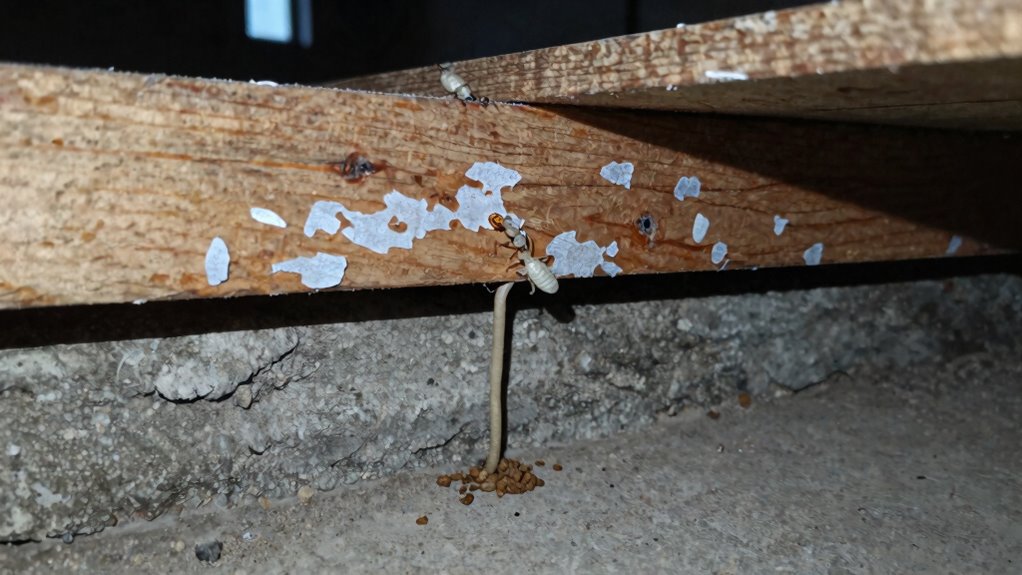
During the first six months, early termite damage usually stays superficial with faint mud tubes or slight surface scoring resembling dirty pencil marks.
If you notice these signs, calling a pest control professional early can save you money on repairs.
By the established stage, between six and eighteen months, termites hollow out internal tunnels that make wood sound hollow when tapped.
You might also see door frames begin to warp slightly, which is a clear indicator of structural termite damage.
At the critical stage, after eighteen months, large sections of wood can collapse and ceilings may sag visibly.
Doors often stick stubbornly at this point, meaning full joist or beam replacement is likely needed.
Early Stage Signs
Termite damage is a slow and sneaky process that follows a predictable timeline. In the early stage, spanning about six months, damage stays superficial. A single colony with just a few thousand workers chews through roughly 0.105 milligrams of wood per day each. That is barely noticeable at first.
Look for these clues to catch an infestation early. Mud tubes are pencil thin highways on foundation walls, their only visible path to dinner. Swarm season brings winged termites near windows or lights in spring. Tiny, pinpoint holes may appear in drywall or baseboards. Wood that sounds hollow when tapped gently is a major red flag. Frass or discarded wings near sills or doorframes are also warning signs.
Catch it now and targeted baiting costs under 500 dollars. Let it slide and that colony balloons in size.
The verdict is simple. Inspect annually especially after swarm season and seal any mud tubes immediately. Early action saves real money on professional pest control.
Established Stage Damage
If those early stage signs were missed, and let’s be honest they often are, the colony has likely settled into the established stage by months six through eighteen.
By now, the colony genetic blueprint drives aggressive tunneling, and the foraging range expands into framing, joists, and sill plates.
Damage isn’t just cosmetic anymore.
Internal galleries riddle load‑bearing wood, often hollowing it from the inside.
A 100,000‑worker colony can compromise a 2×4 pine stud within a year, leaving it fragile.
“Hollow‑sounding” wood becomes common, especially near dampness leaks.
Water‑damaged pine gets eaten ten times faster, so that slow drip under the sink is practically a dinner bell.
At this point, a baiting or liquid treatment costs $1,200 to $2,500, still manageable but not a bargain.
Bottom line: catch it now, or next stage gets ugly.
Contact your local pest control professional for an inspection before structural damage requires costly wood replacement.
For ongoing monitoring, consider snap traps as an affordable, quick option to address any secondary pest issues near infested wood.
Critical Stage Collapse
Walls may look sturdy but sound hollow when tapped during a termite inspection. Sagging floors or ceilings often point to serious joist damage from hidden infestations.
Doors and windows suddenly sticking for no reason is a common red flag. Visible mud tubes on foundations or walls confirm termite activity nearby.
Wood trim easily crumbles under slight pressure, showing advanced decay. At this point, termite repair costs jump into the thousands for joists, sill plates, and support beams.
Homeowners then face major renovation or even potential condemnation of the property. The bottom line is to catch termites early or pay dearly later with pest control treatments.
Can You Slow Termite Damage Once It Starts?
Yes, you can absolutely slow termite damage once it starts, but it requires quick, decisive action. Think of it as hitting the brakes before the car hits the garage wall.
Termite biology is the first thing to understand; these insects eat slowly until a colony matures. Dampness speeds everything up significantly.
So, what are the best prevention tactics? Fix leaks immediately, as damp wood is consumed up to ten times faster than dry wood.
Remove wood to soil contact, eliminating their highway into your home. Apply a liquid soil treatment around the foundation for around $5 per linear foot.
This chemical barrier slows their advance and buys you critical time. Install termite baits, costing $300 to $500 annually, which target the colony directly.
The bottom line is to act on dampness and soil contact first. Then treat professionally to buy time for full termite eradication. You can further slow damage by applying perimeter pest control granules that create a lasting barrier against crawling insects around the foundation.
Frequently Asked Questions
How Fast Can Termites Destroy a Whole House?
A full house collapse happens when a mature termite colony meets the structural threshold of your home. Colonies with 300,000 workers can consume a pound of wood daily, but this damage builds slowly over time.
A whole house isn’t destroyed overnight; it takes four to six years of steady, unchecked feeding. Think of it like a slow motion demolition crew working from the inside out.
Damp wood speeds up their destruction, while dry wood slows them down. If you suspect a termite infestation, professional pest control inspection is the first smart move to prevent costly structural damage.
Looking for effective termite treatment products can stop these hidden destroyers before they reach your home’s foundation. Many homeowners opt for liquid termiticides or bait stations as a long term prevention strategy.
To protect your property, consider a termite damage repair plan alongside regular wood treatment. Making a smart purchase of a quality termite barrier today can save you thousands in future repairs.
Do Termites Eat Faster in Summer Than Winter?
Termites do speed up in summer, but it’s not about temperature alone. Warmer months boost colony size and feeding activity, especially when wood is damp from a leaky AC or rain splash.
Winter slows them down, but not to a stop. Heated homes keep them nibbling, so termite control is a year round need.
A mature colony might eat a pound daily in July versus half that in January. Humidity matters more than the calendar, so fixing leaks should be your first step.
That pound a day in summer means accelerated damage to your home’s structure. You’ll want to schedule a termite inspection before the heat peaks to catch early signs.
In winter, their activity drops but doesn’t pause. If you have crawlspace moisture or a clogged gutter, they keep feeding slowly.
The key takeaway is that summer ramps up destruction, but winter is no vacation from termites. Professional pest control products like liquid termiticides or bait stations work season round.
Can Termites Damage Concrete or Brick Foundations?
No, termites cannot damage concrete or brick foundations. Their jaws are designed for wood, not stone.
However, subterranean termites are master foundation tunneling specialists. They exploit tiny cracks in concrete or mortar to reach wood inside your home.
Think of the foundation as a highway, not a meal. The real threat is that they bypass detection entirely.
Concrete stops chewing, but not tunneling. That is why annual pest control inspections are essential for early termite detection.
Look for mud tubes along your foundation walls every spring. These tubes are a clear sign termites are traveling from soil to wood.
If you suspect activity, contact a professional for a termite treatment quote. Effective barrier treatments or bait systems can protect your home investment.
Smart homeowners pair concrete slab integrity checks with routine pest control services. This dual approach stops termites from turning your foundation into an access point.
Schedule a free termite inspection today to ensure your home stays protected. Don’t let silent tunneling lead to costly wood damage repairs.
How Long Does It Take for Termites to Reach the Attic?
It depends on a few critical factors, but a termite infestation in your attic can take years to form naturally. A brand new colony with only a few hundred workers simply won’t travel that high quickly.
However, a mature colony of 300,000 termites chewing through one pound of wood daily can tunnel into your attic within 12 to 18 months under ideal conditions. The structural timeline is heavily driven by seasonal variance, with warm and wet weather speeding up their feeding and cold weather slowing it down.
Think of it as a slow, quiet elevator ride directly to your roof. For professional termite control services, catching these pests early is essential to avoid costly structural damage. If you suspect an active infestation, schedule a termite inspection now to protect your home.
Do Termites Ever Stop Feeding on Their Own?
Termites, in a single colony, do not stop feeding on their own unless the entire colony dies.
Subterranean colony death from starvation, flooding, or pesticide exposure ends feeding for good.
Otherwise, they keep consuming wood-based materials around your home nonstop, only pausing briefly for annual reproductive swarm flights.
Think of them as relentless demolition crews working 24/7, so they never retire or take a break on their own.
A thriving termite colony actually grows larger each year, which means they eat more structural lumber and cellulose debris over time.
That is why homeowners searching for termite control solutions should act fast, because waiting only increases damage and repair costs.
If you are seeing mud tubes, hollow-sounding wood, or discarded wings, you likely need professional pest inspection and targeted termite treatment.
Buyer-intent phrases like “termite extermination near me” or “best termite bait stations” point to people ready to invest in protection, not just curiosity.
For DIY options, liquid soil barriers and foam treatments can work, but they require precise application and ongoing monitoring.
For long-term results, termite bait systems and borate wood treatments are popular choices that disrupt colony activity effectively.
The smart purchase decision is to combine a thorough termite inspection with a preventative maintenance plan, since colonies never self-limit their appetite.
No matter what, you cannot rely on termites to simply stop chewing, so make your move before the next swarm season arrives.


