
Finding termite wings indoors doesn’t automatically mean your home is collapsing, but it does mean a swarm has landed nearby. That’s your cue to act fast, not panic, because those wings are the first clear sign of an active termite problem. Grab a zip-lock bag and collect a few wings or whole swarmers without crushing them—then note where you found them, like a windowsill or floor.
Snap a quick photo and call a pro for an inspection, because ignoring wings is like ignoring smoke in your house. Skip the spray or paint over the area, since that hides the evidence pest pros need to pinpoint the colony.
This guide covers what those wings really mean, how to handle the find without mistakes, and the best steps for treatment and prevention to keep your home safe.
At A Glance
- Collect shed wings in a zip-lock bag; label with date and location.
- Photograph the discovery spot without disturbing the area for the inspector.
- Call a professional immediately; wings signal an active, mature termite colony.
- Avoid spraying insecticides or painting; it hides critical evidence for treatment.
- Schedule a professional inspection; costs around $50–$100 versus up to $5,000 in repairs.
Why Finding Termite Wings Means You Need to Act Fast
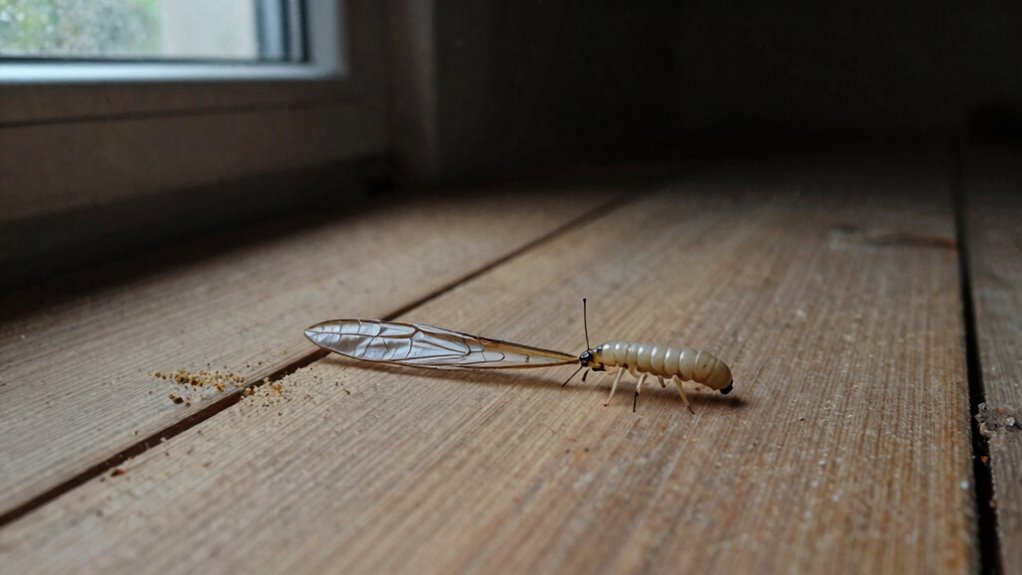
Finding termite wings indoors means you have a mature colony actively reproducing in your home. Those wings are a clear sign of swarmers leaving the nest to mate, which only happens after years of hidden wood damage.
Finding termite wings indoors means a mature colony is actively reproducing in your home.
Termite wings have four identical wings, all the same size and shape, unlike ant wings. You will often spot them piled up near windowsills or light fixtures like tiny, creepy confetti.
This is not a small problem; it proves a thriving, damage causing colony is established. You would not ignore smoke in your house, so do not ignore these wings.
Schedule a professional termite inspection and treatment immediately. Applying a foam with non-repellent active ingredients can stop the infestation on contact and prevent reinfestation for months. Early removal can stop costly structural repairs and protect your home’s value.
Termite Wings vs. Ant Wings: 4 Quick Checks
Mistaking ant wings for termite wings is common, but you can tell them apart in seconds. Use these quick identification checks for professional pest control needs.
First, check wing shape. Termite wings are identical in size and shape, like matching twins. Ant wings have a noticeably longer front pair, like a lopsided suit.
Second, inspect antenna type. Termite antennae are straight and bead-like, resembling a tiny string of pearls. Ant antennae are elbowed and bent at a sharp angle, as if pointing you toward the answer.
Third, look at the waist. Termites have a broad, uniform body, while ants have a pinched waist like a wasp in a corset.
Fourth, find the wings. Piles near windowsills or floors suggest termite infestation, as ants rarely shed indoors. Collect a sample in a bag for a professional inspection. For complete protection, pair your visual check with moisture monitors to sense the dampness that attracts termites.
If you are unsure, call a pest control pro for immediate treatment. Knowing these signs helps you take fast action against termite damage.
What to Do Immediately After Finding Termite Wings
Now you know how to spot termite wings versus ant wings, which is half the battle. First, do not panic. Swarmers don’t eat wood, but the real threat is the colony they came from.
Grab a zip-lock bag and collect a few wings or dead insects. This sample is vital for pest control pros to confirm the termite species.
Grab a zip-lock bag and collect a few wings or dead insects—this sample is vital for pest control pros to confirm the termite species.
Note the exact spot you found them, like a windowsill or doorway. Then, call a pest control company for a free inspection to check for mud tubes and other signs.
Remember that those wings mean an active colony is nearby. Acting fast stops costly termite damage later.
The sample and location notes help technicians work smarter, not harder. Contacting a local exterminator promptly can prevent structural issues and save you money.
Consider using a BASF Termite Bait system for ongoing monitoring after the inspection.
Don’t Spray, Paint, or Disturb the Area: Yet
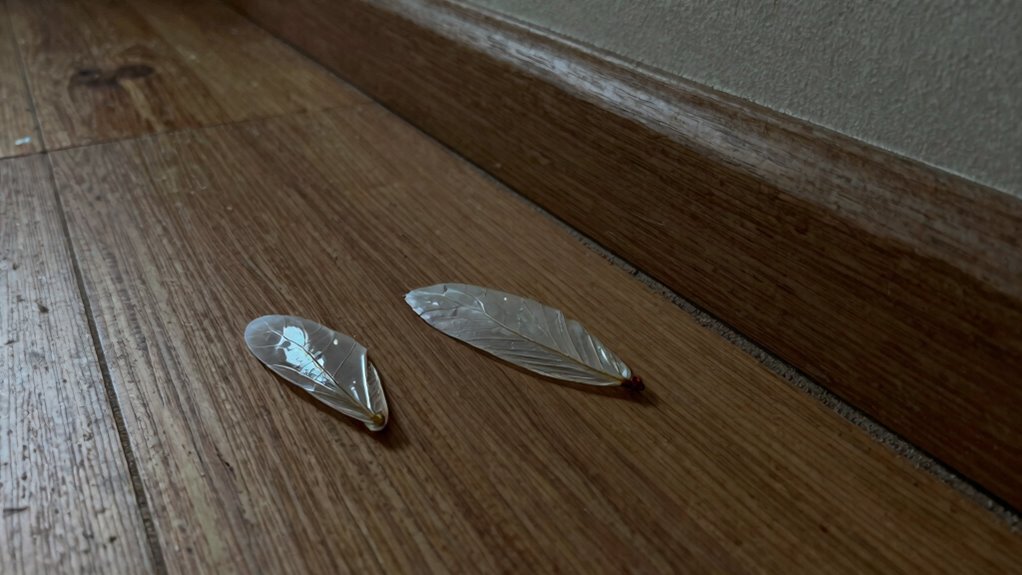
The instinct to grab a spray can or paint brush is strong, but hold that impulse and put the can down.
Spraying random insecticide just scatters evidence, and painting over the area seals in clues.
This messes with the disturbance timeline pest pros need to estimate how long swarmers have been emerging.
A fresh coat of paint can hide mud tubes, making their job harder.
Contractors might have to re-inspect or retreat later, causing delays and extra fees of roughly $150 to $300 per revisit.
So leave the spot untouched.
Photograph it, note the location, and back away slowly.
If you later choose to apply a treatment, a targeted foam spray can expand up to 30 times its original size to reach hidden pests in walls and crawlspaces without disturbing surface evidence.
Bottom line: patience now saves money and hassle later.
How to Collect a Sample for Professional Identification
To give a pest controller a fighting chance at identifying the termite, place any shed wings or whole swarmers into a zip lock bag. Note the exact location where the wings were found, as this gives them a starting point for the inspection. If the sample is from common subterranean termites, a proactive monitoring system using chemical-free wood inserts can help detect activity before further damage occurs.
Gray areas include a bagged sample and a clear location. These are the two pieces of intel they need to confirm the species and schedule targeted termite treatment.
Use Zip Lock Bags
Use zip lock bags as your go to tool for collecting termite wings and insects.
Finding termite wings usually means a colony is active nearby, so a proper sample is key for pest control identification.
Carefully scoop up the wings or any insects without crushing them because they are fragile.
Seal the bag immediately to trap the evidence for professional inspection.
Labeling is critical for accurate pest identification.
Write the date and a brief note like “wings from living room floor” directly on the bag with a permanent marker.
This small step saves an expert from guessing, and guessing costs time and money.
Your goal is not to become a bug detective but a reliable courier for your pest control specialist.
A clean sealed bag and a legible label are all you need for an accurate ID.
No drama is required, just a simple process that helps prevent costly termite damage.
For ongoing monitoring, non-toxic traps can be placed under furniture legs or in corners to catch any stray pests.
Record Exact Location
Once you have your sealed zip lock bag with wings, record exactly where you found them. Write down the room, window, or door near a light fixture or sill.
This location gives a pest control professional a starting point for inspection. Termite wing morphology, with both wings equal in length, helps confirm the species during swarming season.
Do not just pocket the bag and forget it. Note the floor type, such as carpet, tile, or wood, and any nearby wooden structures.
Mark whether the wings are clustered together or scattered. Piles of wings suggest a recent emergence, which is a key sign for termite control.
Snap a quick photo of the spot for reference. Applying essential oil repellents around these entry points provides natural, ongoing protection from future pests. It is a small step but saves a technician from hunting blindly.
Precise location data turns a wing sample into a clue, not just a curiosity. This helps you get faster termite treatment and a more accurate inspection.
What Termite Swarmers Actually Mean for Your Home
Why do termite swarmers matter if they don’t chew through your floorboards themselves? Since swarmer behavior is the canary in the coal mine for your home’s structural health.
These winged termites are the colony’s reproductive scouts, emerging to mate and start new nests. Spotting them indoors means a mature colony is nearby, likely chomping through your framing behind the walls.
Think of it this way: swarmers are the symptom; the workers are the disease. That flurry of wings you found isn’t just bad luck—it’s a postcard from the colony life cycle saying, “We’ve been here a while.”
Ignoring it won’t help. A pro termite inspection costs around $50 to $100, which is a bargain compared to $5,000 in repair bills.
Bottom line: swarmers mean action time. Call a licensed pest control inspector, bag those wings, and keep your foundation intact.
If you do find swarmers, consider using a kit like the TERRO Home Pest Defense Kit featuring a two-way nozzle for precise crack-and-crevice application to target hidden entry points while you wait for professional help.
The 3 Critical Signs a Pro Checks for Inside Your Home
A professional pest control inspection always starts with moisture checks and wood contact. Termites thrive in damp conditions and will attack any wood touching the soil.
Look for mud tubes on foundation walls and frass near baseboards. Mud tubes are tiny dirt highways termites build while frass looks like sawdust droppings.
Finally inspect for cracks around windows and doors. These small entry points give termites direct access to your home’s structure.
Since termites are burrowing pests, castor oil granules can be spread around your foundation to create an underground barrier that naturally irritates their tunnels.
Moisture & Wood Contact
Termite inspectors earn their paycheck by playing a game of hide-and-seek with dampness and wood contact, and they almost always win. They start by hunting for decaying wood, often near bathrooms or leaky pipes, since soft, wet lumber is a termite buffet.
Next, they check foundation gaps, where wood meets concrete or soil. That junction is a perfect highway for these pests, and catching it early can save you from costly termite treatment.
A pro uses a moisture meter, costing around $150, to detect hidden dampness behind walls. Even a small leak, say a slow drip from a faulty valve, can create prime conditions for an infestation.
They’ll additionally probe baseboards with a screwdriver; if it sinks in easily, you’ve got trouble. This simple test is a smart way to identify termite damage before you call for a pest control inspection.
The verdict: control moisture and seal every wood-to-ground contact point. Dry wood is safe wood, so fix leaks fast and keep soil at least six inches below siding to reduce termite risk.
For lasting protection, schedule annual termite inspections and address any damp crawl space with a dehumidifier, which should maintain humidity levels between 40-50% to prevent booklice reproduction. That practical step, combined with removing wood debris near your foundation, will keep your home off their menu.
Mud Tubes & Frass
Once you’ve managed moisture and wood contact, the real detective work begins with mud tubes and frass. Mud tubes are easy to identify as pencil thin dirt tunnels along foundation walls or floor joists.
Subterranean termites build these covered highways to reach wood safely. If you break one open and spot pale workers moving, you have found your colony.
Frass removal is simple if it comes from drywood termites. Frass looks like tiny, hexagonal wood pellets often kicked out of kick out holes in wooden trim.
Professionals sweep a sample into a bag for inspection. Do not confuse frass with sawdust. Frass is uniform and crushable between your fingers.
Spot either sign and you have a solid lead for termite control. Call a pro for mud tube identification before sealing anything.
Never attempt frass removal without confirming the species first. This step protects your home from further infestation. For ongoing pest prevention, consider discreet bait stations that target entire colonies indoors.
Cracks & Entry Points
Small openings in a home’s foundation, walls, or around plumbing act as highways for termite entry. Professionals zero in on these cracks during an inspection to stop an infestation before it starts.
Wing cracks, those thin gaps where termites push through after swarming, are a dead giveaway of recent activity. Foundation gaps like the space where concrete meets wood become prime real estate for these pests.
A pro will check for these entry points especially around utility lines and basement floors. Ignoring them is like leaving the front door open for termite colonies.
A single crack as thin as a credit card can let hundreds of termites into your home. Seal these entry points with caulk or expanding foam for under $10, a cheap fix that saves thousands in damage. For a more durable barrier against gnawing pests, consider using stainless steel wire mesh to block these gaps.
Don’t wait for more wings to pile up. Address cracks now to stop a future termite treatment from costing you time and money.
Liquid Barrier or Bait Station? How to Decide

Since a termite infestation means war, your first strategic decision is choosing between a liquid barrier or a bait station. Liquid barriers involve trenching and drilling soil, applying termiticide to create a continuous shield. A typical cost comparison shows $4 to $8 per linear foot for this approach.
> A termite infestation means war, and your first strategic choice is between a liquid barrier or bait station.
Bait stations are placed in the ground and use slow acting poison consumed by workers that is shared with the entire colony. When speed matters, liquids work fast and often stop new termite entry within days.
Bait stations take months to fully eliminate a hidden colony. For coverage, liquids protect the whole structure as a reliable barrier treatment.
Bait stations target specific colony locations instead. In terms of cost, liquids average $1,500 to $3,000 for a home.
Bait stations run $1,200 to $2,500 but require monthly monitoring fees. Application methods differ greatly. Liquid application is disruptive, involving trenching, drilling, and cleanup.
Bait stations are clean, with small caps placed discreetly in the yard. For active infestations, choose a liquid barrier for immediate defense.
For ongoing monitoring without yard destruction, bait stations win. Remember to consider your specific pest control needs and budget before deciding. Regardless of choice, always avoid overspray near water sources as these chemicals can harm fish and bees.
How to Prevent Termite Wings From Ever Returning
To prevent termite wings from ever returning, you must treat the swarmers as a warning sign, not the problem itself. Sweeping up those tiny piles is only the first step in a broader pest control strategy.
The real solution starts with foundation repair and sealing every crack or gap where moisture collects, since damp concrete is a magnet for subterranean termites. Remove any wood to soil contact, such as firewood stacks or mulch pressed against the siding, because that is an open invitation for colony establishment.
For a long term termite barrier, hire a licensed applicator to treat the soil with liquid termiticides at about $4 to $8 per linear foot, or install bait stations that run $300 to $500 for setup plus yearly monitoring. Pairing a bifenthrin spray with an insect growth regulator breaks the pest life cycle for an added layer of defense. Annual termite inspections, at $100 to $150, let a professional catch early signs of activity before wings show up inside your home.
The bottom line is simple: stop the dampness, fix the foundation, and get a pro involved for regular termite control. No wings, no worries, and no repeat infestations.
Frequently Asked Questions
Do Wings Mean Termites Are Already in My Walls?
Those wings mean swarmers likely entered your walls, but that’s not a guaranteed sign of an active nest inside. Pale, whitish wings often point to a recent molt, while dark, pigmented wings suggest older, mature termite swarmers.
Spring swarms usually come from established colonies nearby, so timing gives you a useful clue. Finding wings indoors is a strong warning sign, yet it doesn’t confirm wall damage or an infestation.
For peace of mind, call a licensed pest control inspector to check moisture levels, mud tubes, and hollow wood. They’ll use thermal imaging or moisture meters to give you a definitive answer before you buy any termite treatment products.
If you’re seeing wings repeatedly, that’s a buyer-intent moment to compare termite baits, liquid barriers, or spot treatments. Act fast, because swarmers indoors often mean mature colonies are within 50 to 100 feet of your foundation.
A pro can also tell you whether you need preventive soil treatment or just targeted bait stations. Never ignore wings near windowsills, door frames, or baseboards, as they’re a classic entry-point signal for termite activity.
Your smartest move is scheduling a free inspection from a local exterminator who can confirm colony location and recommend a safe, effective plan. That way, you avoid guessing and spend only on the exact solution your walls actually need.
Can I Vacuum up the Wings and Ignore the Problem?
Vacuuming up wings is like sweeping smoke. It cleans the symptom, not the cause.
Admittedly, vacuuming effectiveness is real for removing visible debris. But wing identification matters more, because those equal sized wings signal swarmers emerged from a nearby colony.
Ignoring the problem lets worker termites munch wood for months. So collect a sample in a bag and call a pro.
The verdict is simple. Vacuum after inspection, not instead of it.
How Long After Finding Wings Does Damage Start?
Damage starts long before wings appear. Those wings signal an established termite colony that has been chewing wood for years.
The swarm timeline depends on colony size. Larger colonies swarm earlier, meaning you could already have extensive hidden damage.
By the time wings are found, structural damage is already underway. There is no grace period to call a termite control expert.
The clock started ticking when the colony matured. Not when the wings were vacuumed up.
Act now, not later. A professional termite inspection is your smart purchase to stop costly repairs before they grow.
Will My Homeowners Insurance Cover Termite Treatment?
Standard homeowners insurance will not cover termite treatment, as pest damage is classified as preventable maintenance.
Your policy likely excludes insects, rodents, and gradual decay, leaving you responsible for the full cost.
If you file a claim for termite damage, insurers typically deny it as a “maintenance issue” or a “preventable infestation.” That means treatment and repair become an out of pocket expense for you.
For example, a typical subterranean termite cleanup costs between $1,000 and $3,000. You might also spend around $500 each year on a bait system to keep colonies away.
Before spending anything, get a professional pest inspection for $50 to $100 to confirm the species and the scope of the infestation. This small upfront cost helps you budget accurately for the right termite treatment solution.
The bottom line is to read your policy’s fine print carefully. It is far cheaper to know your coverage than to receive a denial letter.
Do Termite Wings Always Appear in Spring?
No, termite wings do not always appear in spring. While spring is a classic swarm season, many species trigger swarms after warm, humid rain in fall or summer.
You might find termite wings on a cozy summer morning or a damp autumn afternoon, not just during cherry blossom season. Stay observant year round because termites don’t follow a strict calendar.
Checking suspect piles of wings any month is smart. If you see small, translucent wings near windows or doors, schedule a termite inspection immediately.
Professional pest control services can confirm the species and recommend effective treatments. Look for local termite bait systems or liquid barriers if you spot swarmer wings.
Early detection saves you costly structural damage. Always verify with a licensed exterminator before buying any DIY termite product.


