
Spider egg sacs can look like tiny pillows, cotton balls, or even miniature paper plates. Most are white or off-white, but some blend in as brown or green to match their hiding spots.
If you’ve found a strange silk bundle in your basement or garage, you’re probably wondering if it’s a pest problem. The size ranges from a pencil eraser to a dime, and house spider sacs hold 60 to 80 eggs each.
Knowing what spider egg sacs look like is key for effective pest control before those eggs hatch. In this guide, we’ll cover how to identify them by texture, color, and location.
You’ll also learn exactly where to search—because the sneaky hiding spots are what make these sacs so easy to miss. Keep reading to get the practical steps you need to handle them.
At A Glance
- Spider egg sacs are typically round, disc-shaped, or irregular fluffy masses.
- Most sacs start white or off-white, aging to yellow or gray.
- Sizes range from 2.5 mm to 25 mm, often like a pencil eraser or dime.
- Texture varies from smooth and waterproof to spiky or bumpy with debris.
- Camouflage colors like dull brown or green help sacs blend into habitats.
What Does a Spider Egg Sac Look Like?
Spider egg sacs aren’t exactly something you’d want to trip over, yet they’re surprisingly varied in appearance. They range from round, compact balls to fluffy, irregular masses, or disc-like shapes that resemble tiny paper plates.
Some species, like the nursery web spider, craft flattened disc-shaped sacs suspended from a thread, whereas others produce sacs that look like upside-down hot air balloons. Coloring isn’t guaranteed either; exposed sacs often weave in debris for camouflage, appearing dull brown or green.
That outer silk layer serves a dual purpose: it offers egg sac defense against predators, but unfortunately it also fails against parasitic wasp predation. Those wasps can detect the sacs and lay their own eggs inside, turning the sac into a nursery for the invaders.
So, looks can be deceiving, and survival is a gamble. If you spot a suspicious sac near your home, call a local pest control service for a free inspection and safe egg sac removal.
Professional spider control targets both adult spiders and their hidden nursery sacs, reducing the chance of a future hatch inside your walls. Ignoring one sac could lead to hundreds of tiny spiders crawling out within weeks, so early intervention is your best defense.
Check corners, under eaves, and near outdoor lighting where spiders prefer to anchor their sacs. A quick vacuum or brush can remove exposed sacs, but for hidden clusters, a licensed exterminator will use targeted treatments to prevent re-infestation.
How Big Is a Spider Egg Sac?
Spider egg sacs vary widely in size, from just 2.5 millimeters up to 25 millimeters across. Think of the difference between a poppy seed and a large pea. A common house spider’s sac is usually 8 to 15 millimeters wide, while an orb weaver can produce one up to 25 millimeters. That larger sac can hold up to 300 eggs, which is a lot of potential spiders. No sac is ever bigger than the spider that laid it, so these are small packages. For effective removal, choose non-toxic glue traps that are safe for children and pets.
If you spot an egg sac in your home, pest control experts recommend removing it quickly before it hatches. Effective spider treatment often targets both the sac and the adult spider to break the lifecycle.
For homeowners dealing with sacs around windows or sheds, a professional inspection can identify the species and the best removal method. Friendly reminder, a single sac can lead to hundreds of spiders, so early action is key for pest management.
Size Range Overview
A typical spider egg sac is small enough that most people could mistake it for lint or a piece of popcorn. Using relative size helps with identification, and most sacs measure from 2.5 mm for tiny spiders to 25 mm for larger ones.
An average sac is about the width of a pencil eraser, not much bigger than a grain of rice. A large orb weaver sac might match a dime in diameter, yet still feel surprisingly lightweight.
Some sacs are smaller than a single pea, so spotting them requires sharp eyes when inspecting for pest control. A nursery web spider’s disc sac feels like a heavy, flattened button, roughly the size of a thumbnail.
No sac is ever larger than the spider that laid it. So if you find a popcorn sized lump, it is likely lint, not eggs.
When checking your home for spider removal, keep your expectations small and look for coin sized clusters. This helps you target the right areas for effective pest control treatment using a long-lasting residual barrier spray that provides protection for up to 12 months on non-porous indoor surfaces.
Dimensions By Species
Most people are surprised to learn that a single spider species can lay egg sacs that vary from the size of a peppercorn to that of a grape. Size here isn’t random, and it hinges on two key quirks of spider biology that pest control professionals often note.
Sexual dimorphism plays a role, as larger females like those of the golden orb weaver produce bigger sacs. Geographic variation further matters, because a spider in a lush forest might craft a plumper sac than its desert cousin where resources are lean.
When you find spider egg sacs in your home, understanding their size helps with removal decisions. Take the common house spider, for example, its sacs measure a modest 8 to 15 mm across and hold 60 to 80 eggs.
Meanwhile, an orb weaver’s sac can bulge to 20 to 25 mm and pack up to 300 eggs. So when you spot a sac during routine inspections, remember that its size is a snapshot of its mother’s world and not just a random marble.
If you need to eliminate these pests for good, professional treatment targets both mothers and their unhatched brood. Always check attics and basements where sacs often go unnoticed until they hatch. Ultrasonic pest repellers offer a chemical-free way to target and drive away spiders and other pests using multiple sound frequencies.
Why Are Some Spider Egg Sacs Smooth and Others Spiky?
Some spider egg sacs are smooth because species like orb weavers spin a tight, waterproof silk mat. This protective layer keeps eggs safe from rain and predators in exposed webs.
Orb weavers spin tight, waterproof silk mats, shielding eggs from rain and predators in exposed webs.
Spiky sacs from foliage spiders use loose, fluffy silk packed with debris. This clever disguise mimics bird droppings or thorny fruit, which helps fool hungry ants looking for food-grade diatomaceous earth pest control solutions.
Bumpy sacs from nursery web spiders feel heavy and rough to the touch. They are reinforced with multiple silk layers so they can survive being carried around by the mother spider.
Fluffy sacs from running foliage spiders look like woolly chimney sweeps. They blend perfectly into leaf litter while still allowing airflow, making them hard for common household pests to detect.
Smooth or spiky, each sac is a custom-built fortress designed for that spider’s specific habitat. If you find these sacs near your home, contact a professional pest control service for safe removal.
What Colors Do Spider Egg Sacs Come In?
Most spider egg sacs start off white or off-white, plain as a blank sheet of paper.
Many species add a quiet touch of camouflage, weaving in dull browns, greens, or russet silk.
This helps the sac blend with leaves or bark, which is smart for pest control if you are trying to spot them in your garden.
A few, like the raft spider’s grey sac or the cave spider’s pure white one, go their own way color-wise.
Knowing the color can help you identify which spider egg sacs to remove when handling a home infestation.
When you find an egg sac during pest control inspection, its color gives clues about the spider species and where it might hide.
Indoxacarb baits are effective for eliminating the roaches that might compete with or prey on spider egg sacs in an infestation.
White or Off-White
White spider egg sacs are the default, the vanilla of the spider world. Most spider species produce these pale, off-white bundles, their silk texture ranging from papery smooth to softly fluffy.
The color comes from plain, unmodified silk proteins, no added camouflage for pest control. A freshly laid sac often gleams slightly, like a tiny pearl.
Older sacs yellow or gray as they age, but stay basically white. Cave spider sacs hang pure white, easy to spot against dark stone.
Many nursery webs and orb weaver sacs match this shade exactly. This brightness does make them visible to predators, though.
You would think spiders would learn, but evolution takes its sweet time. For a gardener spotting eggs, white sacs are the easiest to recognize, no guesswork needed.
If you see one while inspecting plants, that is likely a clean, standard job. Removing them early can prevent a full infestation from hatching. These traps use a bright yellow color to attract flying pests like fungus gnats.
Camouflage Browns and Greens
For spiders that leave their egg sacs out in the open, plain white silk is a death sentence. These mothers instead weave a dull brown or green outer layer, a tactic called cryptic coloration, basically nature’s camouflage.
This habitat blending lets the sac vanish against bark, soil, or leaves. Orb weavers, for example, produce sacs in russet tones that mimic dead foliage.
Running foliage spiders add leaf debris to their greenish sacs for extra disguise. Wolf spiders, which carry sacs, use mottled browns that match the ground.
These colors aren’t accidental; they’re evolved to thwart ants, birds, and wasps. A brown sac on a twig looks like a bump, not a meal.
If you spot a fuzzy, dirt-colored sphere, admire it. It’s a spider’s survival tactic, quiet and effective.
If you ever see such a sac near your home and want pest control help, call a professional. They can identify and remove spiders without harming your property. Broad-spectrum kits cover up to 100 insect species including ants, cockroaches, and spiders.
Grey and Pure White
Not all spider egg sacs wear camouflage. Some go for stark contrast with grey and pure white.
Grey and pure white sacs stand out deliberately in dim habitats where blending is pointless. Raft spiders produce pearl-grey sacs, a distinct color that warns predators of their wetland home.
Cave spider egg sacs are pure white, suspended from cave roofs and glowing faintly in darkness. This bold coloration actually helps spiders monitor sacs for trouble like parasitic wasp predation, which is easier to spot against a light background.
If you’re dealing with unwanted spider populations, knowing these traits helps with pest control planning. After spiderling emergence, the empty white sac often remains as a ghostly reminder of the brood. For monitoring after emergence, glue traps offer chemical-free tracking of spider activity in attic spaces.
Grey and white sacs sacrifice concealment for visibility. This trade-off works for spiders dwelling in low-light niches.
They prove that not every spider needs to hide its nursery. For effective home pest management, watching for these bright sacs can help you identify raft spiders or cave spiders early.
Where Do Spiders Hide Their Egg Sacs?
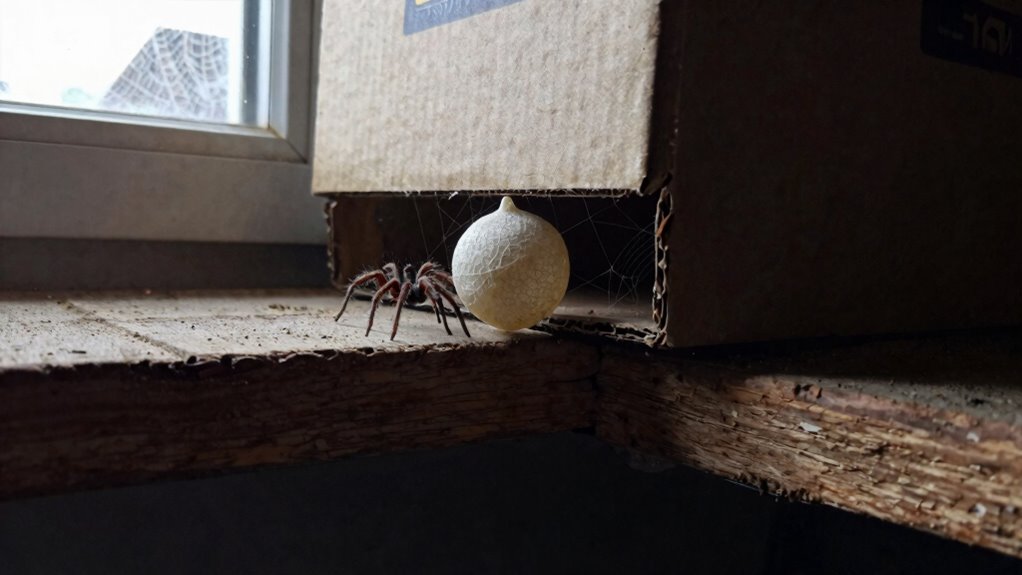
Secrecy is a spider’s first line of defense for protecting its eggs. They stash egg sacs in burrows, under bark, inside curled leaves, or hidden within their webs.
Some species like wolf spiders simply carry the sac attached to their spinnerets. This tactic is mobile, but it risks egg sac predation by wasps or ants.
Many orb weavers abandon sacs among leaf litter or shallowly buried in soil. They bet on camouflage over protection for pest control in your garden.
A few species guard them until spiderling dispersal begins. That is basically a spider’s version of kicking the kids out.
Trapdoor spiders seal sacs inside silk lined burrows for safety. The trade off is that guarding cuts predation but limits dispersal range.
Smart behavior, but not foolproof for total prevention. Bottom line: location is a calculated gamble between safety and mobility.
If you spot an egg sac near your home, professional pest control services can safely remove it. Taking action early stops spider infestations before they spread. Placing yellow jacket bait stations 4 to 5 feet high targets these common spider egg predators without harming beneficial insects.
How Spiders Attach Their Egg Sacs to Leaves, Webs, or Their Bodies
Spiders use glue-like silk or simple mechanical shaping to secure their egg sacs. Some species guard their sacs with fierce dedication, and wolf spiders carry them like a tiny silky backpack until the eggs hatch.
This amazing commitment often puts human parenting to shame. If you spot unsightly egg sacs around your home, professional pest control services can safely remove them.
Knowing spider behavior helps prevent infestations before they start. Regular inspections and sealing entry points keep these arachnids from laying sacs inside your living space.
For effective home defense, always check dark corners and window sills. A quick pest control solution can stop spider populations from growing.
For lasting protection, pouches in sealed spaces can keep working quietly for up to 90 days without needing frequent reapplication, unlike sprays that may fade quickly.
Attaching Strategies
A few key strategies define how spiders attach their egg sacs, ranging from silken suspension to literal body-carrying. Some species glue them to a leaf underside, others weave them into webs, and a few become mobile nurseries.
Orb weavers hang sacs from a strong thread, dangling them like a tiny, silk-wrapped piñata. This allows airflow for humidity regulation, which can help prevent mold issues in your garden.
Wolf spiders and water spiders strap the sac to their spinnerets, toting it everywhere. This dedicated mobile nursery offers predator resistance, making local pest control efforts more challenging.
Black house spiders weave the sac directly into their web’s center. They camouflage it with prey debris for extra concealment near your home’s exterior.
Leaf curling spiders seal the sac inside a rolled leaf. They stitch it shut with silk to deter ants and other egg thieves from invading your yard.
Attachment isn’t random. It’s a survival trick that homeowners should watch for when inspecting for spider infestations. Effective barriers such as copper foil tape can block the small entry points spiders and other pests use to access your home.
Guarding Behaviors
Some spiders abandon their egg sacs right after making them, but many species stay close to protect their young. Female wolf spiders carry their egg sac attached to their spinnerets like a heavy fuzzy backpack, dragging it everywhere they go.
She will defend that sac with her life, which is a natural form of spider pest control in your garden. Huntsman spiders guard their flat disc-shaped sacs under bark until the spiderlings hatch.
Nursery web spiders take a different approach by hanging their flattened egg sac on a silk line and building a protective nursery web around it. Mom stands guard nearby like a silent eight-legged bouncer ready to fight off threats.
This dedicated guarding behavior helps prevent ants and parasitic wasps from raiding the sac. If you see a spider cradling an egg sac, never touch it because she is not just holding it.
She is owning it as a vital part of her survival strategy. For effective spider pest control solutions, applying a natural pumice dust in cracks and crevices can kill crawling insects and eggs within hours without harsh chemicals. Contact a professional to manage nests without harming beneficial guardians.
Which Spiders Carry Their Egg Sacs Around?
Not all spiders stay home to raise their young. Some species carry their egg sacs everywhere, turning motherhood into a literal mobile operation for effective pest control.
Wolf spiders attach the sac to their spinnerets, dragging it behind like a fluffy trailer. This design helps wandering moms keep their eggs safe while hunting for household pests.
Nursery web spiders carry the flattened disc in their jaws, then build a web tent for hatching. If you need natural pest management in your garden, these spiders are helpful allies.
Daddy long legs spiders hold the sac in their chelicerae, looking like nervous janitors. They prefer quiet corners for web building and can reduce flying insect populations.
Water spiders tote their sacs underwater inside a diving bell, spinning air bubbles for protection. Their portable nursery keeps spiderlings safe from predators and environmental stress.
These moms rarely put the sac down. It is either glued on or clenched, making early spider parenting surprisingly portable.
How Many Eggs Are Inside a Spider Egg Sac?
An orb weaver spider egg sac usually contains 100 to 300 eggs, making it quite a family gathering. The number varies wildly across species, from just 8 eggs in a cave spider’s sac to 600 in some wolf spider clutches.
House spider sacs typically hold 60 to 80 eggs, while small cobweb weavers produce only a dozen. The silk barrier is for protection, not nursery capacity, and it keeps predators out whether the sac holds 10 or 300 eggs.
A tiny sac often means fewer eggs, but a big sac does not guarantee a crowd. Measuring a sac’s diameter gives a rough clue, but the species matters more for accurate pest control planning.
For common garden spider infestations, expect 50 to 300 eggs per sac. While pheromone traps specifically target adult male moths rather than spider eggs, knowing the exact species is crucial since they are not interchangeable. Always check the species to get the real number and decide on the best removal strategy.
How the Silk Layers of a Spider Egg Sac Protect the Eggs
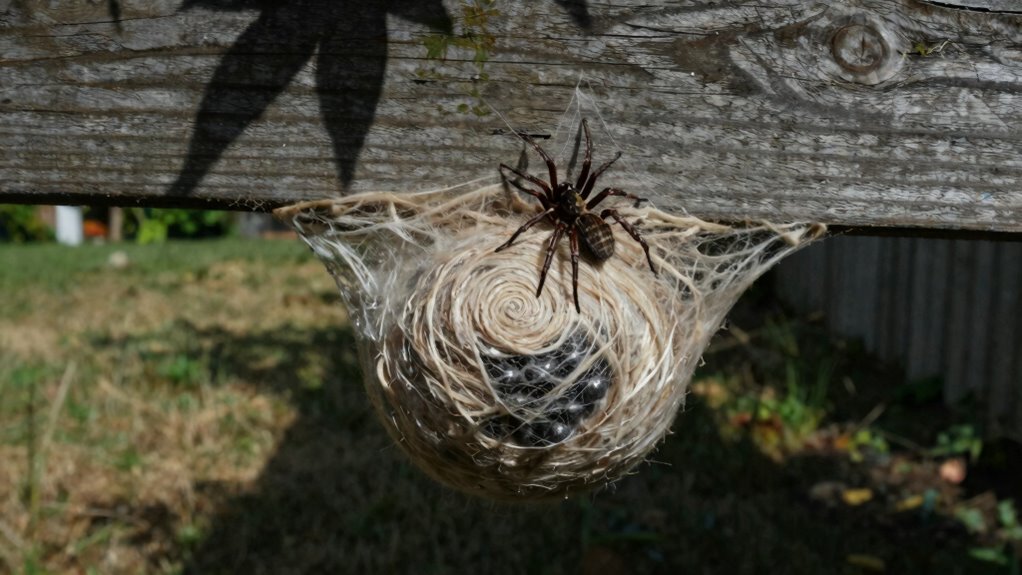
A tough outer shell resists ant bites and bird pecks, like a Kevlar vest for embryos. This first line of defense is essential for pest control around your yard.
The inner cushion cradles eggs, preventing breakage when the sac gets jostled. It provides a cozy buffer so spiderlings develop safely.
A camouflage layer with leaf debris fools predators into walking past instead of nibbling. This natural trick reduces the need for chemical pest treatments.
Moisture control from that waterproof silk stops fungal growth or desiccation. Humidity regulation keeps the eggs viable without extra intervention.
Bottom line: two silk skins keep spiderlings safe until they are ready to bust out. One tough and one cozy layer work together for effective egg protection.
Which Spider Egg Sacs Are Most Common in Homes?
Three spider egg sac types turn up most often inside homes. These come from cellar spiders, black house spiders, and huntsman spiders.
Cellar spiders have long, spindly legs and tend to produce flimsy, loosely woven sacs tucked into corners and basements. Their pale sacs are small, often no bigger than a pea, and require a careful pest inspection to spot.
Black house spiders construct denser, disc-shaped egg sacs camouflaged with debris. This makes egg detection tricky, so a flashlight is essential for any professional pest control sweep.
Huntsman spiders glue flat, papery sacs under furniture or inside curtain folds. For effective spider pest management, check ceiling corners and behind headboards with patience.
Spotting a white or grey silk sphere is your goal. Think of it as an Easter egg hunt, but one that demands a vacuum for immediate spider removal.
If you see one sac, you are likely hosting a spider family reunion. Schedule a pest extermination visit to prevent a full infestation from hatching. Reapply earwig spray every two to four weeks for best results, as this interval works for spider egg sac prevention too.
Frequently Asked Questions
Can Spider Egg Sacs Move?
No, spider egg sacs cannot move on their own. They are inert silk bundles, not living organisms.
However, spider transport is real and matters for pest control. Mothers like wolf spiders drag sacs attached to their spinnerets, while daddy longlegs carry them in their jaws.
That is egg defense in action, not locomotion. The sac itself just sits there, waiting, cozy, stubborn, and about as mobile as a pebble.
If you spot a sac near your home, professional pest control treatment can safely remove it. Contact a local exterminator to inspect for hidden egg clusters before they hatch.
It is a rare case where the nursery does the babysitting, not the walking. For long term spider prevention, use exclusion tactics like sealing cracks and reducing clutter where sacs hide.
How Long Does It Take for Spider Eggs to Hatch?
Spider egg hatching times vary wildly, from a few weeks to several months. Incubation periods depend heavily on species and temperature effects, with warmer conditions speeding up development while cold can pause it.
Most common house spider eggs hatch in 2 to 4 weeks, which is why indoor pest control sprays often target the sac stage before hatch. If you spot a sac in a corner, acting fast prevents a sudden spiderling explosion.
Orb weaver eggs might take 6 to 8 weeks, especially outdoors in cooler spring weather. Wolf spiders carry their sacs on their back, and those eggs hatch in around 3 weeks, giving you a narrow window for effective spider prevention.
The real bottom line is to check the species and the thermometer, because patience is key since spiders don’t rush their parenting. For quick results, use a residual insecticide labeled for spider sacs, and pair it with a vacuum to remove the sacs physically.
That combination tackles both the eggs and the newly emerged nymphs, which is exactly what you want for long-term spider control. If you’re buying pest control products, look for ones with IGRs (insect growth regulators) to stop juveniles from maturing.
For indoor infestations, a crack and crevice aerosol with a straw applicator lets you treat behind baseboards and under furniture where sacs hide. Outdoor treatments around windows, doors, and eaves cut down the egg-laying sites before they become a problem.
Always read the label for residual duration, since some formulations last 30 days while others only 10. And if you’re dealing with a heavy infestation, a professional-grade fogger or dust works faster than sprays alone.
Do All Spider Egg Sacs Look the Same?
No, spider egg sacs do not all look the same. Color variation is huge, from white to brown to grey, often matching their surroundings for camouflage.
Size differences are just as dramatic, with tiny 2.5 mm sacs from cave spiders and larger 25 mm orb weaver sacs. Shapes too vary wildly. Some are round discs, others look like tiny wine goblets with stalks.
A few are fluffy silk masses. So expecting uniformity is like thinking all shoes are sneakers.
For pest control, identifying these sacs is key to effective spider removal. If you spot a suspicious web cluster in your home, you need the right product to eliminate both the sac and the parent.
Look for a spray that penetrates silk and targets eggs directly. Many homeowners use a residual insecticide around baseboards and attic corners for best results.
Always check the label for egg kill claims before buying. A professional grade spider killer can save you from a full infestation.
What Happens if I Touch a Spider Egg Sac?
Touching a spider egg sac is usually harmless, but a few things can happen. If the sac breaks, dozens of tiny spiderlings will scatter, which is startling but not dangerous.
Some people notice mild skin irritation or redness from the silk, which is a minor allergic reaction. If a protective mother spider is nearby, she may bite defensively.
For pest control, this contact can release spiderlings into your home, creating a new infestation. Professional spider removal or targeted spider repellents are the best options to prevent egg sacs from hatching.
Call a pest control expert if you spot egg sacs in hard to reach areas like attics or basements. Safe spider elimination products, like sprays and powders, can treat those spots before eggs hatch.
To avoid bites and spider problems, always leave egg sacs alone and let a specialist handle them. Buy a trusted spider control kit now to keep your home spider free.
Can You Tell the Spider Species From Its Egg Sac?
Yes, you can often identify a spider species from its egg sac, and that skill is useful for pest control. The texture and shape of the sac are your key clues for choosing the right treatment.
A stalked sac that looks like a goblet usually belongs to a running foliage spider. A fluffy, papery disc points to a nursery web spider needing spider spray removal.
The size range also helps you narrow it down, from 2.5 mm to 25 mm across. Think of it like a fingerprint, not foolproof but a solid start for a keen observer.
If you spot a suspicious sac, inspect common hiding spots in your home for pest prevention. For heavy infestations, consider professional pest control products or a targeted spider exterminator.
Knowing what you are dealing with helps you select the best spider repellent or insecticide. That way, your spider management plan is both practical and effective.


