
You open the pantry for a cup of flour and spot tiny brown bugs crawling through the bag—that’s the moment you need to know how to get rid of weevils in flour fast. The good news is that this is a common kitchen problem with a straightforward fix, and you don’t need harsh chemicals to solve it.
The key is catching the infestation early and acting decisively, which means tossing what’s ruined and treating what’s still safe. Sifting might remove the adults you can see, but it’s the invisible eggs that will cause a comeback if you skip the freezing step. Below, I’ll walk you through the exact process—from discarding the bad bag to cleaning every crack—and then show you the simple storage tricks that keep weevils out for good.
Stick with me, and you’ll have your pantry back to normal by the end of this guide.
At A Glance
- Seal infested flour in a plastic bag and discard it in outside trash.
- Vacuum and wash all pantry shelves with warm, soapy water after removal.
- Sift flour through a fine-mesh sieve to remove adult weevils and eggs.
- Freeze sifted flour for 48 hours to kill any remaining weevil eggs.
- Store new flour in airtight containers to prevent future infestations.
How to Spot the First Signs of Weevils in Your Flour
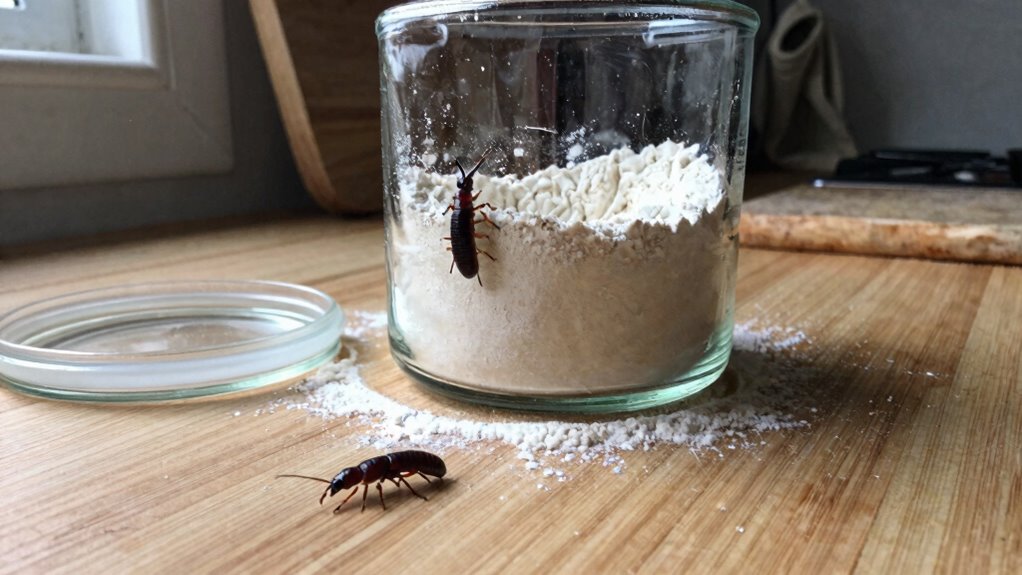
Weevils are tiny pests that never RSVP and definitely overstay their welcome in your pantry. Spotting them early means understanding their lifecycle: females lay invisible eggs in flour, which hatch into tiny, worm like larvae.
Check for a cobweb like coating, molted skins, or a foul, musty odor. Clumped, powdery flour is another red flag for an active infestation.
Natural repellents like bay leaves can help deter weevils, but they won’t fix a problem that’s already underway. Don’t rely on sifting alone, because it misses the eggs.
Natural repellents like bay leaves can help deter weevils, but they won’t fix an active infestation.
Instead, inspect all dry goods including cereal and pasta for these signs. A quick sniff test works wonders for catching trouble early.
If you see any trace, assume the worst and take action. The bottom line is to catch it early or prepare for a full pantry purge. For ongoing protection, consider using pheromone-based traps that attract adult weevils and interrupt their reproductive cycle effectively.
What to Do Immediately After Finding Weevils
Once the first signs of infestation appear, hesitation only gives the bugs a head start. Immediate disposal methods are non-negotiable: seal the infested flour in a plastic bag, tie it tight, and toss it in the outside trash.
Leaving it open invites weevils to migrate to other packages. Next, enforce pantry quarantine steps by removing all nearby dry goods.
Inspect each bag for telltale clumps or webbing. Suspect items get bagged and discarded too, no playing favorites.
Vacuum every crack, shelf-pin hole, and drawer track to suck up stray eggs. Dump the canister outside promptly to prevent re-infestation.
Avoid pesticide sprays, as they just make flour smell strange. Clean shelves with soap and water, then let them dry completely.
Hold off restocking until the area is spotless. One messy bag can wreck an entire cupboard. Consider using a natural weevil killer from a spray bottle to treat empty shelves before restocking.
How to Salvage Lightly Affected Flour by Sifting and Freezing
Not every bag of flour needs to be thrown away. For lightly affected flour, sifting with a fine-mesh sieve removes adult weevils and their eggs.
This catches the visible pests right away. But eggs can remain, so freezing is essential for complete pest control. Pop the sifted flour into the freezer for 48 hours to kill any lingering eggs.
Sifting catches the visible pests, but freezing for 48 hours kills any lingering eggs.
The cold also helps with odor removal by neutralizing that musty weevil scent. After thawing, the flour is safe to use for baking. For ongoing protection, a light dusting of food-grade DE can be applied to dry storage areas to prevent reinfestation.
Think of this as a second chance for your pantry staple. No need to toss it yet. Just sift, freeze, and proceed with confidence.
Discard Heavily Infested Flour Right Away

Some flour simply crosses the line. When a bag swarms with live weevils, larvae, or foul odors, it’s beyond saving.
Salvage attempts fail since eggs hide deep in the powder. The only sane move is to discard infested flour immediately.
Seal the infested bag in a plastic trash sack, tie it tight, and toss it outside. Otherwise, those little hitchhikers will colonize your entire pantry.
Watch for webbing, clumps, or a musty, sweet smell. That’s the bug equivalent of a “do not eat” sign.
Don’t feel guilty about wasting a few dollars. Replacing a $5 bag of flour beats dealing with weevils in every box of cereal for months.
For effective pantry pest control, take the sealed bag straight to your outdoor bin. This prevents grain beetles and flour moths from spreading to other stored goods.
Consider using pheromone-based traps to break the breeding cycle of any moths that may have already escaped.
If you need quick pest prevention tips, remember that airtight containers and regular shelf checks are your best defense. But once infestation signs appear, no home remedy or freezing trick will save that batch.
No regrets. Bottom line: if it’s crawling or smells off, it’s garbage, not groceries.
Act fast to protect your kitchen from a full-blown infestation. A clean sweep now saves you from buying new cereal, pasta, and rice later.
Clean Your Pantry After a Weevil Infestation: Vacuum and Wash
After the infested flour is gone, the emptied pantry becomes your battlefield. This pantry reset will decide your fate.
Begin the shelf deep clean by pulling out every jar, box, and stray crumb. Attack the corners with a vacuum crevice tool to remove eggs and weevil carcasses.
Pay special attention to shelf pin holes and drawer tracks. After vacuuming, wash every surface with warm, soapy water for a thorough pest removal.
Rinse, then dry completely because dampness invites new problems. Dispose of the vacuum bag outside immediately to prevent re-infestation.
Skip chemical sprays as they linger on food packages. A thorough scrub wins this war against pantry pests.
The bottom line is vacuum, wash, dry, and repeat if you spot stragglers. Your pantry survives since you did the dirty work with effective pest control.
Consider installing brush seal strips around pantry door gaps to block future weevil entry.
Why Freezing New Flour Kills Weevils and Eggs
Freezing new flour for 24 to 48 hours kills any hidden weevil eggs before they have a chance to hatch. Think of it as a tiny, cold apocalypse for pantry pests.
This simple step prevents the entire bag from turning into a wriggling, cobweb coated nightmare later on. As a bonus, that deep freeze additionally zaps germs and keeps the flour fresh for up to a year. For long-term storage, consider using airtight lids to block any surviving pests from infesting other pantry items.
Freezing Kills Hidden Eggs
The freezer is your secret weapon against weevils, even though you cannot see their tiny eggs hidden deep inside a fresh bag of flour.
Understanding freezing basics means knowing that sustained sub‑32°F temperatures halt egg survival entirely.
Those microscopic eggs, often laid in the flour’s core, simply cannot develop at such cold.
Imagine pulling out a bag of flour, then placing it in a freezer set to 0°F for 48 hours.
Any hidden eggs become sterile, unable to hatch.
Picture the cold penetrating every grain, reaching the dust‑like eggs that would otherwise go unnoticed for weeks.
Visualize the flour emerging from the freezer perfectly fine, with no damage to its texture or baking properties.
This low‑tech trick costs nothing but a bit of freezer space.
It is far cheaper than tossing a $3 bag of flour later.
For complete flour pest control and weevil prevention, freeze all new flour for two days.
Then store it as usual in a sealed container.
The best grain storage solution uses your freezer to kill eggs before they ever become a problem.
Prevents Weevil Hatching
A fresh bag of flour from the store can already hold weevil eggs too tiny for a magnifying glass to see. Freezing the bag for 24 to 48 hours after purchase kills those eggs instantly.
The cold mimics winter, tricking bugs into a hibernation they never wake from. No hatching, no mess.
This simple pest control step prevents weevil infestations before they start. Buyers seeking a bug free pantry should freeze all new flour. For long-term storage, transfer the flour to an airtight container with a silicone gasket and locking lid to prevent any pantry pests from reentering the container.
| Why Freezing Works | What It Does |
|---|---|
| Kills weevil eggs on contact | Stops new bugs from hatching |
| Halts adult activity | No further egg laying occurs |
| Avoids freezer burn in sealed bags | Keeps flour texture fine |
Freezer burn is the dry, crusty damage from air exposure. Sealing the bag tightly before freezing avoids that problem entirely.
You do not need oxygen absorbers for this. The cold alone suffocates the eggs.
Just seal, freeze, and forget. After a couple days, move the bag to an airtight container for long term storage.
Bottom line: freeze every new flour bag you bring home. Watch for zero weevils and skip the panic later.
Extends Flour Shelf Life
A single bag of all-purpose flour, left unopened on the shelf, can quietly turn into a weevil nursery within weeks. Freezing new flour for 48 hours halts this cycle, killing eggs and extending shelf life up to a year.
This cold shock additionally slows rancidity, preserving freshness and keeping your baking staples ready for any recipe. For long-term storage, follow these practical tips to protect your investment.
To prevent freezer burn, seal flour in heavy-duty freezer bags, pressing out all air to avoid icy patches that ruin texture. Vacuum sealing with a chamber sealer or a simple FoodSaver ($40–$80) on glass jars removes oxygen, which stops pantry pests and oxidation.
Label clearly with the date and type, such as “King Arthur AP, 1/25/25,” so you never mistake frozen flour for forgotten leftovers. This simple habit saves time and prevents accidental waste during busy baking sessions.
Bottom line: freezing kills weevils, saves flour, and keeps baking stress-free. You can buy flour in bulk with confidence, knowing that a quick cold treatment and proper sealing will keep it fresh for months.
For pest control at home, this method is your first line of defense against hidden eggs and larvae. It is a low-cost, high-impact way to extend shelf life without chemical treatments.
After thawing, use the flour within a few days for best results, or keep it frozen and scoop as needed. Always check for any off smells or clumping after long storage, but with this routine, you will rarely face those issues.
Remember to rotate your stock, using older bags first, and you will always have reliable flour for bread, cakes, and pastries. This approach works for whole wheat, gluten-free blends, and even specialty flours like bread or pastry types.
To further protect your pantry, you can also dust the storage area with food-grade diatomaceous earth, which physically dehydrates crawling pests like weevils without harsh chemicals.
Long-Term Containers That Keep Weevils Out of Your Flour
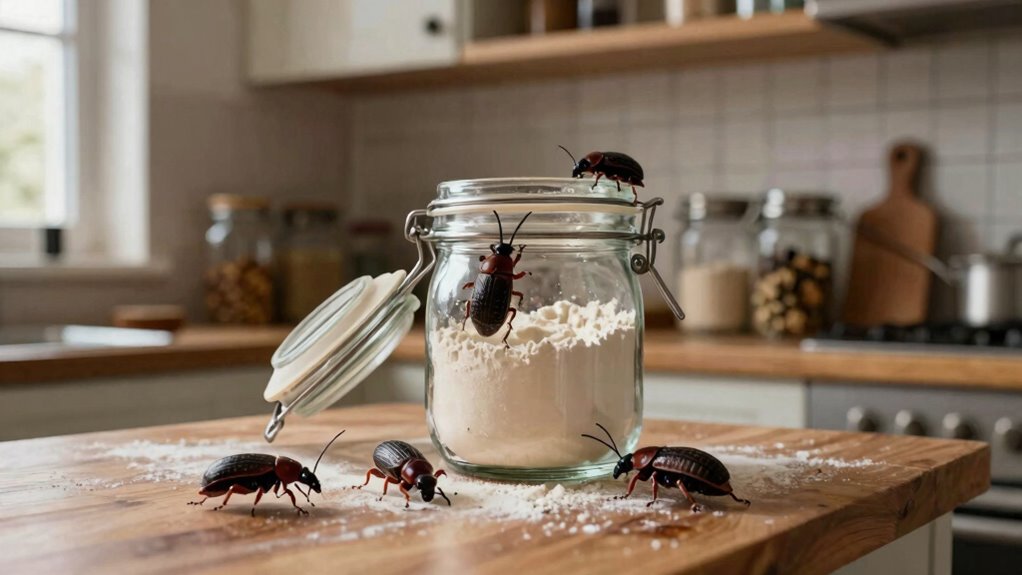
Long-term containers are the only true defense against weevils. Forget flimsy bags, these storage solutions use rigid materials like glass, thick plastic, or metal with airtight seals.
Climate control matters too. Store them in a cool, dry pantry because heat and dampness invite bugs.
Glass jars with rubber gaskets cost between ten and twenty five dollars. They are transparent, so you can easily spot weevils moving inside.
Food-grade plastic buckets in five gallon sizes cost fifteen to thirty dollars. They are stackable and heavy duty, great for bulk pest control for flour.
Mylar bags with oxygen absorbers run twenty to forty dollars for ten. These blocks oxygen to kill weevil eggs, giving you total long term food storage peace of mind.
Glass jars let you see if anything moves. Plastic buckets survive a drop, unlike my dignity.
Mylar bags with oxygen absorbers starve weevil eggs completely. Pick what fits your shelf, just confirm the lid seals tight.
Bottom line is simple. Any airtight, hard sided container beats a torn bag for keeping your kitchen pest free.
Opt for stackable, space-saving designs to maximize pantry organization and keep flour accessible without clutter.
Simple Tricks to Prevent Weevils From Coming Back
Preventing a weevil encore is mostly about cutting off their food supply. Two tricks do most of the heavy lifting: airtight containers and a quick freeze for new dry goods.
Those little eggs can be hiding in any bag of flour from the store. Popping it in the freezer for a couple days is a cheap pest control insurance policy that costs nothing but time.
Then, transfer everything to sealed jars or bins. A pantry that smells like a bakery but stores an open bag of grain is basically a weevil welcome mat. Consider storing delicate woolens in cotton garment bags to avoid trapping moisture that attracts pantry pests.
Airtight Container Storage
The simplest trick, and the one that actually works, is to deny weevils a welcome mat. These pantry pests need an entry point, so seal your flour the moment it comes home.
Move it from its original bag into something weevil-proof right away. First, repack flour into airtight containers made of thick glass, rigid plastic, or metal with snug lids.
Weevils can’t chew through solid walls, and the seal stops them from smelling a free meal. For longer storage, use Mylar bags with oxygen absorbers to create a vacuum that suffocates eggs and adults.
That method keeps flour fresh for over a decade, which is a solid long-term pest prevention win. Always label containers with purchase dates, then stack them in a cool, dry pantry.
Warm, damp spots invite weevils like a free buffet, so keep your storage area consistently cool and dry. If you’re looking for a reliable pantry pest solution, investing in these weevil-proof storage containers is your best first step.
Bottom line: spend a few dollars on proper containment and you’ll never see those little brown hitchhikers again. It’s cheaper than tossing out a ten-pound bag of flour, and it saves you the hassle of a full infestation cleanup.
For anyone searching for how to keep weevils out of flour, this airtight container method is the proven answer you can trust. Just be sure to keep the area consistently cool and dry, as warm and damp spots invite weevils like a free buffet.
Freeze New Dry Goods
Freezing new dry goods is a cheap, almost lazy way to stop weevils before they start. Pop that bag of flour or rice straight into the freezer for a minimum of 72 hours.
That’s the magic freeze duration, enough to kill eggs, larvae, and adults alike. No special gear is needed, just cold air doing the dirty work.
After the deep chill, don’t rush the thawing process. Let the package sit sealed at room temperature for a full day to prevent condensation from sneaking in.
That moisture would invite mold and ruin all your good intentions. Then transfer to an airtight jar, and you’re done.
This small ritual beats tossing a $5 bag of oats and scrubbing shelves later. For long term pantry pest prevention, freeze every new purchase, every time.
It’s a simple kitchen hack that saves you from costly infestations and messy cleanup. Additionally, applying food-grade diatomaceous earth around pantry cracks can dehydrate any weevils that escape your frozen goods. Bottom line: freeze everything new, every time, and sleep easy.
Do Bay Leaves Really Keep Weevils Away?
So, do bay leaves actually keep weevils away? The short answer is yes, but with a catch. Bay leaf potency is real. Their strong scent masks food odors, confusing weevils looking for a meal. Think of them as a mild, pleasant-smelling bouncer for your flour.
A whiff of dried bay leaf, that herbal and almost medicinal smell, floats through the container. This natural grain weevil repellent makes the flour less detectable to a weevil’s antennae. A single leaf tucked inside the flour bag works like a tiny, lazy guardian. It offers a passive defense with no spraying and no fuss.
Replacement every few months keeps the scent fresh for effective pantry pest prevention. Old leaves lose their punch and become just shriveled decor. Bay leaves are a gentle natural repellent, not a kill shot for an active infestation. They work best as a backup for airtight containers and freezing grains.
They are cheap, non-toxic, and smell like soup, which is a bonus for home insect control. Are they a miracle cure for weevils in rice? No. Are they worth a try for kitchen pest management? Absolutely, especially for the cost of a few leaves.
For long-term garden pest defense against tougher bugs, consider adding natural repellent plants like lavender or marigolds as a complementary barrier.
Seal Pet Food and Bird Seed to Stop Weevils
Storing pet food and bird seed in their original bags invites weevils to hide and multiply. Transferring these items into airtight containers, like plastic bins with locking lids or metal canisters, stops a pest infestation before it starts. Place these containers flush against walls and in corners to take advantage of non-toxic glue traps that use physical stickiness instead of harmful chemicals.
Before sealing, a quick inspection for existing bugs can save a batch from becoming a breeding ground. For effective pest control and grain weevil prevention, always use stackable airtight storage.
This simple step keeps your pet food seed fresh and weevil free. Choose containers that seal tightly to block common household pests and protect your supplies.
Pests Hide in Bags
Pet food and bird seed often bring hidden weevil eggs or larvae into your pantry without warning. Their flimsy bags are easily torn or chewed, turning into five star hotels for these pests.
Torn bag seams act like open doors, inviting female weevils to deposit dozens of eggs directly in the food. Warm pantry temperatures around 75°F speed up hatching, turning a bag into a nursery for tunneling larvae.
Pet food dust at the bottom of bags provides a feast for young weevils, who then crawl to nearby flour to restart the cycle. Sealing these bags inside airtight containers stops the pest spread instantly. Stainless steel wool or copper mesh can also block weevils from creeping through gaps in pantry walls or cabinet joints, creating a physical barrier against their spread.
A $10 bin is a cheap fix that beats replacing all your pantry staples. Bottom line: do not let torn bags be a weevil welcome mat.
Sealed Container Storage
Stop using those flimsy bags for good. Approved methods mean airtight containers like glass jars, rigid plastic bins, or metal cans with snug lids.
These block weevils from entering or escaping your pantry. Storage myths, such as thinking a twist tie is enough, waste your time and flour.
Pet food and bird seed are just as vulnerable. Keep them in sealed bins too, not ripped sacks.
A five gallon bucket with a gasket lid, about $15 at hardware stores, works wonders for pest control. Dry goods stay bug free for months, maybe a year.
Freezing is a good backup, but airtight storage is your first line of defense. No flimsy bags or half open boxes allowed.
Spend a few bucks on proper containers to skip the hassle of tossing infested food. You can enjoy flour that stays weevil free and fresh.
For comprehensive indoor pest control, select foggers with effect duration up to 7 months to reduce the need for re-treating your pantry.
Inspect Before Storing
Every trip home from the grocery store is a potential weevil adoption event. That is why inspecting before storing matters more than any fancy container.
A quick check at the counter beats a full pantry purge later. Hold bulk foods up to light, looking for tiny holes or dust that signals eggs.
Check pet food bags for tears, crimped seams, or live bugs crawling near the fold. Give bird seed a sniff; a musty, sour odor means trouble already brewing.
Those ten seconds save you a weekend of sifting flour and chasing beetles. After inspecting, transfer everything into sealed jars or bins, especially pet food and seed.
A torn bag is an open invitation for pantry pests. Skip the guesswork, spend the minute, and keep weevils out before they settle in.
How to Store Flour Safely for Years Without Infestation
Airtight containers, preferably glass or heavy-duty plastic with rubber gaskets, are the foundation of long-term flour storage. This simple barrier stops weevils cold and preserves flavor by blocking oxygen.
For years of safety, cold storage tips matter. Freeze new flour for 48 hours, then keep it in a fridge or freezer to eliminate any hidden pantry pests.
Frozen flour stays bug-free for up to a year. Thawing causes condensation, so seal it tight to avoid moisture damage.
Mylar bags with oxygen absorbers extend shelf life past a decade. A kit costs roughly $20 and crushes out air, suffocating eggs and larvae for total pest control.
Rotate stock and label dates with a marker. A half-open bag left in a cupboard is a weevil welcome mat.
Bottom line: choose airtight, cold, or oxygen free storage. Your flour stays uninvaded for years, saving you from costly replacements.
Frequently Asked Questions
Can I Eat Flour That Had Weevils if I Sift It?
Can one eat sifted flour that had weevils? Technically yes, but it’s not recommended. Sifting removes visible bugs and some leftover eggs, but tiny eggs and taste changes can remain.
Weevil poop and odd smells often linger, making the flour unappealing. Freezing first kills eggs, but honestly, replacing the flour is easier and safer.
A five pound bag costs a few bucks. It’s not worth the risk of crunches or off flavors.
To prevent future infestations, use airtight pantry containers and consider pheromone traps. For an immediate fix, a thorough pantry pest inspection and cleanup is the smart move.
Bottom line: toss it and invest in proper pest control storage. Your food safety and peace of mind are worth more than a cheap bag of flour.
Do Weevils in Flour Pose Any Health Risks to Humans?
Weevils in flour do not pose direct health risks to humans. They are not toxic, and accidentally eating them won’t make you sick.
Infestation detection relies on spotting signs like webbing or tiny bugs and maintaining good pantry hygiene. These simple pest prevention habits stop bigger problems before they start.
Although their presence is gross, weevils are more a texture and taste issue than a safety concern. Think of it as extra protein, not poison, in your flour.
If your flour looks heavily infested, the best pest control solution is to toss it immediately. For lighter cases, freezing the flour for a few days kills weevils effectively.
Many homeowners looking for pantry pest control ask if sifting or replacing flour is necessary. You will survive eating a few, but sifting or replacing is wise for your sanity and your family’s confidence.
For long term pest management, use airtight containers and check expiration dates regularly. If you need a professional grade grain weevil treatment, consider pantry insect traps or diatomaceous earth to protect your kitchen staples.
Your smart purchase starts with knowing when to throw away infested food and when a simple freezing method works. Remember, a clean pantry and smart storage habits are the best pest control products for keeping weevils out of your flour.
How Long Do Weevils Live Inside a Sealed Container of Flour?
A sealed container doesn’t stop weevils; it just traps them inside with your flour. Adults live for two to four months, but that’s only part of the story.
Eggs and larvae can pause in a dormant state, surviving weeks without food or air. Inside that sealed bag, they’ll keep breeding, eating, and dying until every last crumb is gone.
Think of it as a tiny, self-sustaining apartment building, except nobody pays rent and the pantry is the eviction notice. If you’re looking for long term pest control, freezing the flour for 72 hours kills all life stages instantly.
For airtight storage that actually prevents new infestations, use heavy duty containers with rubber gaskets, not the original packaging. Don’t trust that sealed bag to be a morgue, it’s more like a nursery in disguise.
When you spot weevils, toss the infested food immediately and vacuum the shelf to remove hidden eggs. Then wipe surfaces with vinegar or soapy water to break the lifecycle for good.
Buying flour in smaller quantities reduces your risk, and rotating stock so older bags get used first is smart pantry hygiene. For proactive buyers, invest in food safe diatomaceous earth or pheromone traps designed specifically for grain pests.
These tools give you hands on control without harsh chemicals, and they’re cheap insurance against a ruined baking stash. Remember, the sealed container only delays the inevitable, so pair it with freezing and regular inspections.
Your smartest purchase is a combo of glass jars, a freezer thermometer, and a few pantry moth traps to monitor activity. That way, you catch weevils early before they turn your flour into a breeding ground.
Stay ahead of the problem, because once those dormant larvae wake up, they’ll multiply fast and ruin more than just one bag. Clean, inspect, and seal with confidence, and you’ll never have to ask how long weevils live again.
Can Weevils Chew Through Plastic or Cardboard Flour Bags?
Yes, weevils can chew through cardboard flour bags with their strong mandibles. It’s a slow process for them, but they often find tiny gaps in creases to start gnawing.
Plastic seal integrity matters more, but thin plastic is not a fortress against stored product pests. Weevils will chew through weaker seams, so don’t rely on store packaging alone.
Freezing kills eggs and larvae, so do that first to stop an infestation in its tracks. For the best pest control solution, transfer flour to glass or rigid plastic containers.
That’s your real defense, not flimsy bags. If you need to buy airtight storage, look for heavy duty containers with tight lids to prevent pantry pests from invading.
For active infestations, consider food safe diatomaceous earth or pheromone traps. These professional grade pest control products can help you monitor and eliminate weevils for good.
Why Do I Keep Finding Weevils Even After Cleaning Everything?
Those persistent weevils likely come from hidden infestation sources you missed. Maybe a forgotten box of pasta, pet food, or open birdseed served as their hotel.
Recontamination pathways like crumbs in shelf pin holes or a dusty vacuum bag also invite them back. You cleaned the flour, certainly, but did you check every crack in your pantry?
They are stubborn little hitchhikers that require a targeted pest control approach. Next time, toss suspicious goods, vacuum every crevice, and empty the canister outside.
This kitchen pantry pest removal method is tedious, but it works for long term weevil prevention. For serious infestations, consider using food grade diatomaceous earth or sealed storage containers to buy for lasting protection.
Always inspect bulk grains and birdseed before bringing them home. A smart purchase of airtight glass jars can stop recontamination for good.


