
Getting rid of furniture fleas means targeting the 90% hiding off your pet, not just the ones you see. That’s why vacuuming couch seams daily with the crevice tool is your first step—then empty the canister outside immediately.
A water-based spray that combines an adulticide with an insect growth regulator, like pyriproxyfen, stops eggs from maturing and breaks the cycle. Skip any permethrin if you have cats—it’s toxic to them—and wash pet bedding in hot water at 130°F on the sanitize cycle.
Treat your pet and furniture on the same day for results, and if fleas return weekly after two treatments, consider professional heat treatment for $150–$300. Here’s exactly what you’ll need in the product guide below.
At A Glance
- Vacuum upholstery daily with crevice tool to remove eggs and stimulate pupae emergence.
- Treat furniture with an insect growth regulator spray like pyriproxyfen to stop egg maturation.
- Use only cat-safe sprays (avoid permethrin) in homes with feline allergies.
- Wash pet bedding in hot water (130°F minimum), then dry on high heat for 45 minutes.
- Steam clean cushions at 130°F to kill eggs and pupae buried deep in fabric.
Why Furniture Fleas Are So Hard to Kill
Fleas turn your couch into a fortress, but the real challenge is their life cycle. A single female lays up to 25 eggs daily, which roll into deep fabric crevices where sprays cannot reach.
A single female flea lays 25 eggs daily, deep into fabric crevices where sprays can’t reach.
Those eggs hatch into larvae that hide from light and feed on organic debris. Then they spin into dormant pupae, silk cocoons that resist most chemical pest control treatments and can wait for months.
Vacuuming actually wakes them up, which sounds backwards but is the trick. You are not just cleaning, you are forcing hatchlings out of hiding and making them vulnerable to your next pass.
This is a numbers game, and the couch is winning until you understand the timeline. To win against furniture fleas, use a targeted flea treatment spray on all upholstery and follow up with repeated vacuuming every few days.
Breaking the cycle requires patience and the right pest control products. Focus on killing the eggs and larvae hiding in cushions, then treat the adult fleas as they emerge. For furniture, food-grade diatomaceous earth kills fleas on contact via mechanical dehydration and can be safely dusted into cracks and crevices where sprays cannot reach.
The #1 Mistake That Brings Fleas Back
Treating only your pet while leaving the environment untouched is the #1 mistake that brings fleas back. Adult fleas on the animal account for just 5% of the total population.
The remaining 95% exist as eggs, larvae, and pupae deep inside furniture, carpets, and crevices, and these stages are immune to any treatment applied to the pet alone. Skipping the upholstery and floors means dormant pupae, protected in their cocoons, simply wait for the right vibration or warmth to emerge and restart the cycle.
For a lasting flea control solution, you need to pair pet treatment with a thorough home spray treatment that targets those hidden life stages. Focus on vacuuming carpets, washing pet bedding in hot water, and applying an insect growth regulator to break the flea life cycle. Sprays containing insect growth regulators target flea eggs and larvae without harming animal companions.
Without addressing the indoor environment, any flea elimination effort will fall short, and you’ll likely see reinfestation within weeks. Make sure to treat all resting areas, including baseboards and under furniture, where flea larvae and pupae thrive.
A complete pest management approach covers both the host and the habitat, which is what buyers looking for effective flea treatment options should prioritize. Pairing spot-on products with home foggers or sprays gives you the best chance to stop the cycle permanently.
Treating Pets, Not Home
The most common way people try to win the war on fleas is by washing their dog and hoping for the best. That visible 5% of adult fleas on Fido is just the tip of the flea iceberg. Hydroprene foggers disrupt the flea life cycle by preventing larvae and eggs from maturing, stopping reinfestation without harsh poisons.
Pet neglect, ignoring the other 95% in your couch, guarantees failure. You need an environment focus, not just a dog wash.
| Mistake | Result | Fix |
|---|---|---|
| Wash the dog only | Fleas return in 3 days | Treat home same day |
| Use topical spot on alone | Eggs hatch in fabric | Add home spray plus IGR |
| Vacuum once per week | Pupae stay dormant | Daily vacuum for 2 weeks |
| Skip couch crevices | Larvae survive deep | Blow dust out with compressed air |
Concurrent treatment of pet and furniture is the only real cycle break. Bathe Spot, spray the sofa, and repeat next week.
Skip either half, and you just bought yourself a flea reunion. A targeted flea control plan includes both pet and home treatment for lasting results.
Ignoring Environmental Pupae
They resist standard insecticides, so targeted flea control requires vacuuming or heat to force emergence. Pupae hide in couch seams, under cushions, and in carpet fibers, making these the hotspots for a hidden nest.
Daily vacuuming for 2 weeks, plus steam cleaning, breaks the cycle and removes stubborn pupae from deep fibers. Wash all bedding weekly in hot water at 130°F minimum to kill eggs and stop re-infestation at the source.
Use an IGR spray like NyGuard to prevent pupae from maturing into biting adults, which is essential for long term pest elimination. For a complete flea treatment plan, pair this with a professional grade insecticide to target adult fleas on pets and floors. This IGR provides residual control for up to seven months, ensuring pupae that emerge later are still affected.
Fleas are patient, but outsmarting them means targeting the hidden nest, not just the visible ones. Focus your extermination efforts on undisturbed areas like baseboards and pet resting spots to ensure the pupae never get a chance to emerge.
Buyer intent often leads to foggers, but those miss these secluded pupae, so stick to direct sprays and physical removal for best results. Regular inspection of furniture seams and carpet edges will catch new pupae before they hatch, saving you from a repeat infestation.
How to Vacuum Upholstery and Pet Beds to Remove Eggs
Vacuuming upholstery and pet beds is the single most effective way to physically remove flea eggs before they hatch into larvae. Focus on couch cushion seams, where eggs and debris accumulate.
Use the crevice attachment to dig into those tight gaps. It’s like giving your furniture a dental cleaning but with more satisfaction.
Move slowly and overlap each pass. Eggs are sticky, so the suction needs time to yank them loose for complete flea egg removal.
Empty the canister outside immediately. Otherwise, you’re just running a flea nursery indoors.
Wash pet beds in hot water with a proven flea killer detergent. Then dry on high heat to eliminate any remaining pest eggs.
Do this daily for a week to break the flea life cycle. It is tedious, yes, but cheaper than hiring an exterminator.
And it is far less embarrassing than explaining to guests why your couch is hopping with live fleas. This targeted pest control method protects your home without harsh chemicals.
For additional monitoring, consider placing interceptor traps under furniture legs to catch fleas migrating from carpets or upholstery.
How to Choose a Safe Flea Spray for Furniture
Choosing a safe flea spray for furniture starts with matching the product to everyone in your home, especially cats and dogs. Read every label carefully before you buy, because the fine print matters more than any bold promise on the can.
If any cat lives indoors, skip any spray with permethrin, as this ingredient can trigger severe neurological seizures in felines. Instead, look for an insect growth regulator like pyriproxyfen, which stops eggs and larvae from maturing without harsh chemicals. Combining pyriproxyfen with an adulticide targets both young and mature fleas in one application.
> Cats indoors? Ban permethrin sprays—they can trigger seizures. Choose pyriproxyfen instead to halt flea eggs safely.
Water based formulas are gentler on fabric and less likely to stain your couch, unlike petroleum based options that can leave oily marks. For long lasting control, pick a product with a residual effect of at least two weeks, so you avoid repeated applications and keep your patience intact.
Always test the spray on a hidden corner of the furniture first, since a bleach white spot on a navy sofa is a nightmare you don’t want. After testing, apply with calm, even strokes, focusing on seams and crevices where fleas hide.
For peace of mind, choose a flea treatment that’s safe for all pets, avoid cat toxic ingredients, and reapply only when the label says it’s needed. This way, you protect your furniture, your furry family, and your own sanity from the start.
How to Treat Your Pet and Furniture on the Same Day
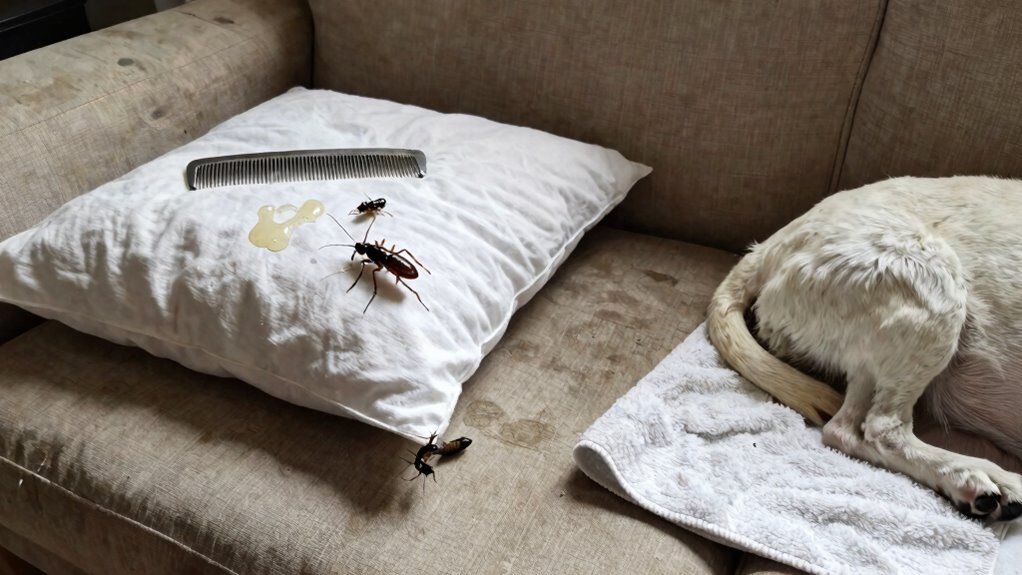
Treat the pet first, then the furniture on the same day to break the flea cycle. This method stops fleas from jumping back onto your pet after you clean your home. Use a mild soap for the pet bath and apply a fast acting oral flea treatment, such as nitenpyram which kills fleas within 30 minutes. Then spray all upholstery and carpets with an insect growth regulator to prevent reinfestation.
Pets First, Then Furniture
Treat the pet, then hit the furniture. Break the cycle before it spins, using a furniture spray for long term pest elimination. For a safe and effective alternative, consider a rosemary oil repellent that repels fleas naturally without harsh chemicals.
Synchronized Treatment Timing
Why coordinate both fronts on the same calendar day? Since fleas play dirty.
Treating only the pet while ignoring furniture is like mopping a floor while a leaky pipe sprays water everywhere. Simultaneous treatment breaks the cycle in one clean sweep.
For homes with feline allergies, avoid permethrin sprays entirely. Cat-safe formulas cost about $12 to $18 per can.
Different carpet types absorb sprays unevenly. Thick shag traps larvae deeper, requiring extra misting.
Vacuum all upholstery first, then apply an adulticide plus insect growth regulator. Bathe your pet with mild soap, then use a fast-acting oral pill (nitenpyram, roughly $3 per dose).
Wash bedding in hot water. Keep pets off furniture for 30 to 45 minutes until dry.
You will see stray fleas for weeks. That is normal, not failure.
Bottom line: Pick a Saturday, treat everything in one go. It is tedious but works.
Always seal outdated spray containers in a sturdy bag for proper disposal to avoid contaminating soil and water.
Like flossing: nobody enjoys it, but your sanity and couch will thank you.
What to Do If Fleas Keep Appearing After Treatment

It is frustrating when fleas keep appearing after you have already vacuumed, sprayed, and washed everything in sight. The real problem is usually survivors hiding in the environment, not a faulty product.
Start by double checking heat activation. Steam clean your cushions at 130°F to kill eggs and pupae buried deep in the fabric, which also triggers them to emerge and face treatment.
Steam clean cushions at 130°F to kill eggs and force hidden fleas to emerge.
Next, look for insecticide resistance. Many over the counter sprays lose their punch, so switch to a product with a different active ingredient, such as an insect growth regulator that breaks the flea life cycle.
Repeat vacuuming daily to physically remove eggs and stimulate dormant pupae. This exposes them to your residual flea control spray and makes each pass more effective.
Wash all bedding in hot water using the sanitize cycle. Then dry on high heat for 45 minutes to kill any lingering fleas that survived the wash.
Treat your pet again even if you think they are clean. A single missed flea can restart the entire infestation, so use a vet approved topical treatment and check for flea dirt regularly.
The fix is simple: combine heat, persistence, and a smarter spray. For long term relief, invest in a professional grade flea bomb and target baseboards, under furniture, and pet resting areas.
Keep monitoring for two weeks after treatment. You will see new fleas emerge, but they will die quickly if your spray and IGR are active.
For outdoor areas, consider traps that use non-toxic, food-grade bait to safely reduce biting flies without harming pets or livestock.
When to Call a Professional for Stubborn Infestations
| Sign | Do-It-Yourself | Professional |
|---|---|---|
| Fleas seen weekly | Likely missed eggs | Targets all stages |
| Pets scratching daily | Topical drops used | Heat-treatment viable |
| Bedding re-infested | Washed again | Diatomaceous earth fogged |
| Furniture untouched | Sprays applied | Deep couch steam clean |
Pest pros use industrial-grade gear like thermal foggers. These treatments cost between $150 and $300 per visit.
They kill 100% of pupae in a single pass. Call when you’ve tried everything twice.
Otherwise you’re just feeding the flea family reunion. If you still spot fleas after weekly cleaning, you missed the eggs.
When pets scratch daily despite topical drops, professional heat treatment is viable. For bedding that gets re-infested after washing, a diatomaceous earth fogger works.
And if furniture remains untouched by sprays, a deep couch steam clean is your best bet. Don’t waste money on repeat DIY methods.
Instead, hire a licensed exterminator for stubborn flea infestations. Choose a cedar oil spray to kill fleas on contact before calling a professional.
Frequently Asked Questions
Can Fleas Survive in Furniture Without Pets Around?
Yes, fleas can survive in furniture even without pets. The flea lifecycle means 95% of the population—eggs, larvae, and pupae—lives in carpets and couch crevices.
With no host around, dormant pupae can wait months to hatch, triggered by vibrations. So a furniture infestation persists silently.
Vacuum daily and treat with an IGR spray; it’s like setting a “we’re closed” sign for fleas. Don’t assume an empty home is a safe home.
Is It Safe to Use Flea Spray on Memory Foam?
Yes, it’s commonly safe to use flea spray on memory foam, but caution is key. Memory foam is sensitive, so check the spray’s label for any solvent warnings. Some solvents can cause a foam degradation risk, ruining your mattress over time. For chemical residue safety, confirm the product is pet-friendly and dries fully before use.
A water based option like Vet’s Best ($12) is a smart choice for pest control on memory foam. A quick test in a hidden corner helps avoid surprises and protects your investment.
For the best flea treatment, target the spray directly on infested areas. Covering the mattress with a protector afterward is a smart move for long term foam care.
How Long Do Flea Eggs Survive in Vacuum Bags?
Flea eggs can survive inside a vacuum bag for a few days, sometimes stretching to a week when conditions are warm and humid. However, their longevity is limited because they need consistent warmth and moisture to keep developing toward hatching.
Once sealed in that bag, the dry environment quickly dehydrates them, which stops the lifecycle in its tracks. But don’t get complacent: dumping that vacuum bag indoors can release viable eggs back onto your carpets and rugs.
The smartest move for effective flea control is to seal the bag tightly, then freeze it overnight to kill any surviving eggs and larvae. Alternatively, toss the sealed bag directly into an outdoor trash bin to keep pests out of your living space.
This method works best with a high-efficiency vacuum designed for pet hair and pest debris, so check for HEPA filters and strong suction when choosing a model. For ongoing flea prevention, pair vacuuming with a quality insect growth regulator spray or flea powder to break the breeding cycle.
Buying a bagless vacuum might seem convenient, but emptying the canister indoors can re-infest your home, so stick with disposable bags for easier disposal. If you’re tackling a serious infestation, combine this vacuum strategy with a professional-grade flea treatment to protect your family and pets.
Should I Treat My Furniture if Fleas Are Only on the Pet?
Yes, absolutely treat the furniture. Thinking “pet only fleas” is a classic trap that leads to endless re-infestations.
Those visible adults on your pet are only about 5% of the actual problem. The other 95% are eggs and larvae hiding deep in couch crevices, carpet fibers, and pet bedding.
If you skip a furniture flea treatment, those hidden stages will hatch into new biters within weeks. That’s a guaranteed sequel you don’t want, so act fast with a targeted approach.
Start by vacuuming every crack, seam, and cushion daily to remove eggs and stimulate hatching. Then apply an insect growth regulator (IGR) spray specifically labeled for upholstery and fabrics to stop larvae from maturing.
Wash all pet bedding and removable covers in hot water weekly to kill any lingering stages. For best results, pair your furniture spray with a home flea fogger or an indoor flea killer that targets both adults and pre-adult life stages.
Buyer-intent tip: look for products containing pyriproxyfen or methoprene as the IGR ingredient. These are proven for long-term flea control in sofas and carpets.
You don’t need to treat every room, but focus on the pet’s favorite lounging spots. Rotate your vacuum bag or empty the canister outside immediately after each pass.
Repeat the spray treatment every 7 to 14 days for at least three rounds. This breaks the flea life cycle, which is the smartest purchase you can make for a flea-free home.
Will Washing Pet Bedding in Cold Water Kill Flea Eggs?
No, washing pet bedding in cold water will not kill flea eggs. Cold water simply lacks the heat required to destroy them.
Temperatures above 120°F are necessary to eliminate flea eggs during laundry. That means hot water and high heat drying are your best pest control tools.
A cold wash may make the bedding smell fresh, but it leaves flea eggs intact and ready to hatch. For effective flea prevention, skip the cold cycle entirely.
Use hot water and a dryer on high heat to ensure you kill fleas, eggs, and larvae. This simple laundry routine stops infestations before they start.
If you want the best flea control for pet bedding, pair this method with a quality flea treatment product. Your smart purchase today saves you from a bigger problem tomorrow.


