
Flea eggs are tiny, pearly white ovals that look like grains of salt and often hide in your pet’s fur or your carpets. Finding them early is key to stopping an infestation before it takes over your home.
This guide on how to find flea eggs covers the exact spots to check, which tools you need, and the simple tests that work. You’ll learn how to spot them on your pet, on bedding, and in warm, humid corners where they thrive.
Ready to protect your pet and your home? Keep reading for the complete breakdown and step-by-step methods.
At A Glance
- Check neck, back, and tail base where eggs gather and drop off.
- Use a fine-toothed flea comb with teeth spaced 1.0 mm or less.
- Brush fur onto a white towel; eggs appear as tiny, off-white salt-like specks.
- Press clear sticky tape on bedding or carpet to confirm intact oval eggs.
- Examine with bright light or 10x loupe; eggs are smooth, pearly, and uniform.
What Do Flea Eggs Actually Look Like? (Size, Color, and Texture)
Flea eggs are tiny, oval shaped specks roughly 0.5 millimeters long, about the size of a grain of salt. Their smooth, non sticky shell is pearly white to off white, so they’re easy to mistake for dry skin flakes or dandruff.
Unlike flea dirt, they are not dark or crumbly. They simply fall off the host like a tiny, lazy parachutist.
Egg development is rapid, with hatching within 2 to 14 days under warm, humid conditions. This means early detection is key for effective flea control.
These eggs are surprisingly fragile, and that smooth shell is more for easy escape than defense. A fine toothed flea comb is your best tool here.
Brush firmly through the fur and you will spot these specks on a white towel. If you see them, you are not just finding eggs but timing their lifespan.
The bottom line is to check for these pale, salt like grains to stop an infestation before it starts. Professional pest control can help if you spot them early.
For treating indoor environments, iron phosphate pellets offer a pet-safe alternative to chemical sprays.
Where to Check Your Pet for Flea Eggs: Neck, Tail, and Back
Check your pet’s neck and back first, as these are top flea hiding spots. The tail base also traps eggs close to the skin for easy inspection.
Contrary to a common myth, flea eggs do not latch onto fur. They drop off quickly, so regular checks are essential for pest control success.
Inspect these zones weekly with just a comb and good light. No special gear is needed to spot early signs of an infestation. Fine-toothed combs with teeth spaced 1.0mm or less are ideal for trapping flea eggs and adult fleas during these inspections.
How to Use a Flea Comb to Collect Eggs From Fur
Choosing the right flea comb is step one, so look for fine, closely spaced metal teeth under 0.3mm apart with a comfortable handle for under $10. A quality flea treatment kit often includes such a comb, and for pest control at home, this tool is your best first line of defense against flea eggs.
Brushing technique matters, so part the fur in small sections and comb from skin to tip. Wipe the comb onto a damp paper towel after each stroke to catch eggs, and this also helps you see live fleas and flea dirt clearly.
Inspect the collected debris closely, since those tiny, white, oval eggs resemble salt grains or dandruff. A magnifying glass helps you spot them before they fall off or hatch, and this is key for breaking the flea life cycle.
For thorough flea removal, repeat this process daily for two weeks, and pair it with a flea spray for carpets or a vet-approved topical treatment. This method works well for cats and dogs alike, and it is gentle enough for weekly maintenance checks.
If you want to buy a flea comb online, search for “fine tooth flea comb for cats” or “pet flea egg remover” to see buyer-intent options. These tools are affordable, reusable, and far more precise than using a brush alone for flea egg collection. Pair this combing with chemical-free plug-in traps that use light and heat to capture fleas without exposing your pets to harsh scents.
Comb Selection Criteria
For effective egg removal, a flea comb with tightly spaced metal teeth around 0.3 mm apart is essential. This narrow tooth spacing catches eggs and fleas without snagging your pet’s fur.
Plastic combs flex too much, letting pests slip through, while stainless steel teeth stay rigid and durable. Investing in a quality pest control tool saves time and frustration during grooming sessions.
Look for a comb with an ergonomic rubber handle to reduce hand fatigue. You’ll be brushing for a while, so comfort matters for thorough flea treatment.
Budget about $8 to $15 for a reliable model like Safari or Hartz. These budget-friendly options deliver professional results without breaking the bank.
A light dusting of food-grade diatomaceous earth on your pet’s bedding can help kill fleas on contact within 24 to 48 hours.
Brushing Technique Steps
Patience is the quiet secret to winning the war against flea eggs. Begin by parting the fur at the neck, then slowly drag the flea comb down toward the tail.
Use short, firm strokes, pausing after each pass to check the teeth. Depress the comb’s release button to flick debris onto a white paper towel, which avoids mess.
Focus on the lower back and tail base, where eggs gather. Repeat this environment grooming session for ten minutes, two or three times daily, because consistency beats speed.
For stubborn clumps, apply a heat treatment with a warm, damp cloth to loosen eggs without harming the coat. Rinse the comb under hot water between strokes to prevent re-depositing eggs.
The comb costs around $8, a small price for sanity, and it works well with your flea prevention spray routine. Bottom line: slow, methodical brushing wins every time, and pairing it with a topical flea killer for cats ensures egg control from every angle.
For buyers seeking a full pest control kit, add a fine-tooth nit comb and a pet-safe enzyme cleaner to break the flea life cycle. You will save money on costly vet treatments by staying ahead of each hatch, so keep your grooming sessions consistent.
Inspecting Collected Debris
All that careful brushing means nothing if the collected debris is just ignored. The key is eggs versus dust for effective flea control.
Flea eggs are oval, about 0.5mm, and pearly white. They are not dark or crumbly like flea dirt which is irregular and gray.
Egg shape identification is simple. Real eggs look like tiny grains of salt, smooth and uniform.
If you see these white ovals during pest inspection, act fast. Empty the comb onto a white paper towel for contrast.
Use a magnifying glass or bright flashlight to spot the oval shape. A quick water test helps confirm your findings.
Place suspicious specks on damp paper. Flea dirt turns rust-red because it is dried blood, but eggs do not smear.
Don’t assume it is just dirt during your home treatment routine. If you see those tiny white ovals, you have found the breeding ground.
It is time for immediate flea treatment products to stop the infestation, such as those containing pyriproxyfen as an insect growth regulator to prevent eggs from developing into adults.
The White Towel Trick: Making Tiny Eggs Visible During Grooming
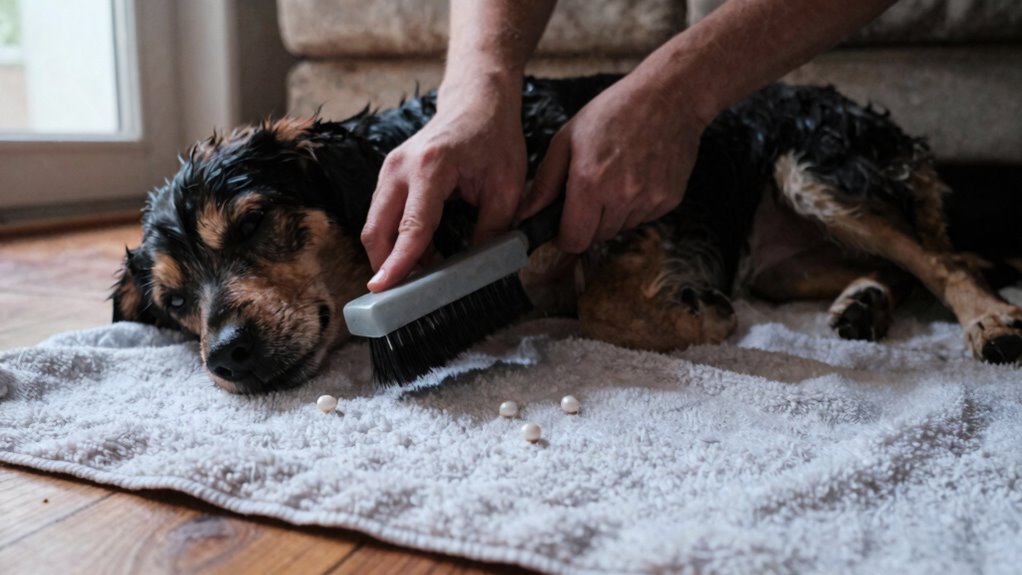
The white towel trick makes tiny flea eggs visible during grooming. You simply place a bright towel under your pet before brushing.
This high-contrast background helps you spot off-white specks easily. The light shade reveals what your eyes would normally miss against dark fur.
For effective pest control, this simple method helps you detect problem areas early. It is a practical way to check for flea eggs and dander during routine pet care.
If you are looking for pet grooming tips to manage infestations, this trick is a must. It turns a casual brush into a reliable inspection tool for pest management. Combining this detection method with a natural repellent spray can help break the flea life cycle by targeting eggs and larvae after they are found.
Why It Works
Flea eggs are tiny and translucent, barely half a millimeter across, so they blend into almost any surface. Spotting them during grooming feels like searching for invisible rice. The white towel trick works because it creates extreme contrast. Those pale eggs suddenly pop against a bright, uniform backdrop. Traditional flea combs struggle with egg collection, even fine-toothed ones. Eggs slip through gaps or get lost in dark fur. The towel catches what the comb misses. It turns a frustrating hunt into a simple sweep for pest control. Without the towel, visibility is nearly invisible. With it, you see stark white dots on the fabric. Collection without the towel means missed eggs. With the towel, they are captured directly. Speed without the towel is slow, with rechecking each strand. With it, you get a quick one pass view for flea prevention. Peace of mind without the towel means doubt and worry. With it, you gain clear confirmation of your treatment success. This cheap trick transforms a tedious chore into a reliable inspection for home pest control. No special tools are needed. After locating eggs, using an effective carpet powder like HARRIS Food Grade Diatomaceous Earth provides a non-toxic way to kill them on contact. Just a clean towel and honest work will help you find flea eggs fast.
Best Brushing Techniques
The white towel trick is a proven method for effective flea control, turning a blind search into a visible sweep.
Place a plain white towel under the pet, then brush with a fine-toothed flea comb, focusing on the neck, tail base, and lower back since those are common hotspots.
Contrary to egg adhesion myths, flea eggs are not sticky. They simply fall off onto the towel below. This method proves essential during seasonal flea peaks, like late summer, when egg production skyrockets.
A female flea lays up to 50 eggs daily. The contrast of white eggs against the towel makes them pop, no magnifying glass needed. Work in short, gentle strokes, checking the comb after each pass.
For long haired breeds, part the fur first to expose skin lines. It is not glamorous, but it beats guessing if those specks are dandruff. Bottom line: this trick turns grooming into a reliable egg hunt that helps you spot flea eggs and debris for better pest removal. For a more thorough approach, sprays with insect growth regulators stop eggs and larvae from developing into future infestations.
Inspecting the Towel
A flea comb’s usefulness hits its peak the moment you inspect the towel beneath your pet. That plain white towel, spread before grooming, turns tiny specks into glaring evidence.
Flea eggs, those pearly ovals, are near invisible on dark fur, but against white cotton, they pop like salt grains. Brush firmly, then pause, squint, and tap the comb’s teeth over the fabric.
Eggs fall freely, their smooth shells shaking loose without sticking. This peek matters since the egg lifecycle can stretch for days, and spotting them early lets you time your spray.
Pair that with growth regulator timing, and you numb the next generation before they hatch. Miss them, and you’re playing hide-and-seek with invisible invaders.
A cheap towel gives you a big payoff for flea control, with zero guesswork and no costly inspection tools. Check for live fleas, fecal debris, and larvae right on the cotton to confirm your treatment plan.
If you see speckles, act fast with an insecticide and an IGR to break the cycle. This simple trick helps you decide when to reapply your flea prevention, saving you from repeat infestations.
Keep this white towel handy for every grooming session, because early detection is your best defense. That quick look tells you whether your pest control routine is working or needs a boost.
Many cedar oil sprays kill fleas on contact and also target eggs, larvae, and adults to stop the lifecycle.
Where Flea Eggs Hide in Your Home: Carpets, Furniture, and Cracks
Carpets, upholstered furniture, and tiny cracks in floors form the holy trinity of flea egg hideouts. Their hatching timeline varies from two to fourteen days, depending on warmth and humidity.
The egg survival period can stretch for weeks in cool, damp spots, meaning those overlooked crevices become ticking time bombs. Female fleas drop up to fifty eggs daily, so a single pet can seed hundreds into your rug fibers or sofa cushions.
Female fleas drop up to fifty eggs daily—those cool, damp crevices turn into ticking time bombs.
Check under couch cushions, along baseboards, and in pet beds. These are prime real estate for flea eggs, which look like tiny white grains easily mistaken for dandruff.
A flashlight helps spot them against dark surfaces. Ignoring these zones guarantees a fresh generation of larvae, turning your home into a silent nursery. To break the flea life cycle, focus targeted pest control on these areas with a vacuum and insect growth regulator, similar to how solar-powered devices use enclosed grids and weatherproofing to prevent pests without chemical residue. Professional flea extermination services often recommend treating these hotspots first for lasting results.
Why Vacuuming Reveals Flea Eggs: and How to Inspect the Contents
Vacuuming does double duty by sucking up adult fleas and, more importantly, dislodging their eggs. The agitator brush vibrates deep into carpet fibers, shaking those tiny pearls loose.
The strong suction carries everything, eggs, dandruff, and debris, into the bag. Now inspect the contents carefully.
Look for tiny, white, oval specks about 0.5 mm long. They resemble salt grains or dry skin flakes.
Distinguish them from flea fecal pellets, which look like dark pepper specks that turn reddish when wet. Always perform vacuum bag disposal outdoors to prevent survivors from crawling back inside.
Inspect with a magnifying glass and good lighting. If you spot those white specks, you’ve found the nursery.
Pro tip: use a flashlight on dark surfaces next. The bottom line is that vacuuming and inspecting is cheap detective work for any pest control treatment plan. Once identified, treat the area with Bifen LP Granules for up to 90 days of protection.
Use a Flashlight to Spot Flea Eggs on Dark Surfaces

Grab a flashlight to spot flea eggs on dark surfaces like carpet or furniture. Those tiny, pearly eggs will practically glow under the beam.
A bright light works perfectly, even a small 100 lumen keychain light will do. Scan the area slowly and the eggs reflect back as off white dots, similar to scattered sugar grains.
Tilt the beam low to create shadows that make detection even easier. This method is brutally effective for flea infestation inspection without a magnifying glass.
Sweep the light methodically across dark fabric to find flea egg clusters. The stark contrast saves you from crawling around blind during a pest control check.
A ten dollar flashlight beats squinting any day for this basic search. For a quick and reliable flea prevention routine, this trick is the clear winner.
High-voltage electric models can double as a targeted tool to eliminate adult fleas you spot during this inspection, zapping them instantly before they lay more eggs.
How to Tell Flea Eggs From Dandruff and Salt Grains (3 Quick Tests)
Distinguishing flea eggs from dandruff or salt grains comes down to two simple tests.
Start with the visual clues test, which is exactly what it sounds like.
Flea eggs are oval and smooth, while dandruff is flaky and irregular.
Salt grains are perfectly square by comparison.
Use a magnifying glass check for a closer look at the texture.
Flea eggs have a uniform, slightly glossy shell that reflects light.
Dandruff appears dry and cracked under magnification.
Salt grains remain hard and crystalline.
For effective pest control, identifying flea eggs early is crucial.
This helps you take action before an infestation grows.
A flea treatment plan works best when you can confirm what you are seeing.
Visit our store for reliable flea prevention products today.
For plant lovers dealing with mites in addition to pests, products like Captain Jack’s Neem Oil target similar small pests at all life stages.
Visual Clues Test
How can you tell if those tiny white specks on your pet are flea eggs, dandruff, or just salt grains? A visual clues test is your first, simplest tool for effective pest control.
Flea eggs are oval, smooth, and dry, about 0.5 mm, similar to salt but with a subtle egg size variation. They are slightly larger and less uniform than dandruff flakes, which is a key topical entity to spot.
Dandruff is irregular, flaky, and often sticky, while salt grains are crystalline, hard, and don’t stick to fur. For a shape check, flea eggs are uniformly oval, dandruff is jagged, and salt is cubed.
A texture test shows eggs feel dry and brittle, dandruff feels greasy, and salt dissolves in water. Location clues help too, as eggs cluster at the pet’s base, like the back and tail, while dandruff scatters anywhere and salt appears only after spills.
For only $4.99, a flea comb is a must have buyer intent tool that reveals the truth. Bottom line, oval plus dry plus clustered equals flea eggs, so you can take action fast.
Magnifying Glass Check
Since you have completed the visual clues check, a magnifying glass check is the next step when those tiny specks remain unclear.
Flea eggs are oval, about 0.5 mm long, and pearly white, unlike dandruff’s irregular flakes or salt’s cubic shape.
Squeeze one: eggs are soft and pop, while dandruff crumbles and salt stays hard.
This matters for egg timing and ideal hatching because if you miss eggs, larvae emerge in 2 to 14 days at 70 to 85°F with 70% or higher humidity.
A 10x loupe like the Carson MicroBrite for $10 to $15 works well for proper flea identification.
Collect samples on sticky tape from pet bedding or carpet to confirm flea eggs.
Magnification prevents misidentification, saving you from wasted flea control treatments.
Dad quip: “Don’t egg-nore the clues.”
Bottom line: Use a loupe for certainty and act fast to break the flea life cycle.
This pest control step ensures you target the right stage for effective flea removal.
How to Confirm You’Ve Found Eggs With a Sticky Tape Test
A sticky tape test is the simplest way to confirm if those white specks are flea eggs or just dry skin. Press clear tape onto a suspicious area, like a pet bed or carpet, then lift it to see what sticks.
Flea eggs appear as smooth, oval specks. Dry skin flakes are irregular in shape. For effective flea control, place sticky traps in warm, dark crevices near pet resting spots.
A well-placed trap can capture eggs before they scatter. If the eggs look intact and pearly white, they are likely viable. Gently crush them between the tape to release a yellowish fluid.
Dead eggs are dry or misshapen. Keep a piece of tape with known flea dirt nearby for comparison. Flea eggs won’t smear red-brown like flea feces.
This test is quick, cheap, and definitive. If it confirms eggs, your infestation is active. Move on to pest treatment without delay to protect your home.
Where Flea Eggs Survive Longest (Hint: Warm, Humid Spots)
The sticky tape test confirms you have flea eggs, but knowing where they survive is the key to solving the problem. These eggs need warm, humid spots with temperatures between 70 and 85 degrees Fahrenheit and 70 percent humidity to hatch.
Your best bet is to focus on your sunlit carpets, pet bedding in stuffy rooms, and that cozy spot under the couch. The egg incubation period can be as short as two days in these sauna-like microclimates.
Prioritize vacuuming those heated, steamy zones like baseboards, rugs, and upholstered pet thrones. Your cool, dry hallway will leave those eggs dead from boredom.
Hunt the humidity to cut their survival odds fast. Use a dehumidifier in problem areas to disrupt the flea lifecycle.
Why Catching Flea Eggs Early Saves Your Pet’s Skin
Catching flea eggs early is not about winning a tiny scavenger hunt. It is about stopping a skin damaging domino effect before it starts.
The eggs themselves are mostly harmless. But the larvae they hatch into chew and burrow, triggering allergic reactions and raw, infected patches.
Protecting your pet’s skin health means breaking the cycle at the most vulnerable point. Each hatched egg adds more larvae, whose saliva causes flea allergy dermatitis.
This leads to scratching, hair loss, and secondary infections. That is why reducing the itch cycle risk is a key pest control strategy.
Eggs roll off pets into carpets and bedding. This turns quiet corners into infestation warning signs and hidden hotspots.
Early removal with a flea comb stops this quiet explosion. A $15 flea comb and a $10 insect growth regulator spray are affordable topical solutions.
They beat a $200 skin infection treatment every time. Bottom line: find the eggs, save the skin, skip the drama.
Frequently Asked Questions
Can Flea Eggs Survive on Human Skin or Clothing?
Flea eggs cannot survive on human skin because they simply cannot stick to smooth surfaces like ours. Humans lack the dense fur where eggs naturally cling, so your body is not a host for flea reproduction.
On clothing, eggs can cling to fabric for a short time but die within days without warm, humid conditions. Washing garments in hot water above 130°F kills flea eggs instantly, making laundry a simple pest control fix.
For effective flea removal, focus your flea treatment on pet bedding and carpets instead of human attire. The bottom line is that human skin offers no survival zone, and clothing is a low risk area for infestations.
Do Flea Eggs Look Different on Black Versus White Pets?
Flea eggs themselves don’t change color, but the visual contrast is key. On a white pet, those pearly, off-white eggs blend in like salt on snow, nearly invisible.
On a black pet, they pop out like tiny, misplaced pearls. Pet fur texture matters too, smooth coats let eggs slide off, but fluffy fur traps them, making detection easier.
For effective pest control, a fine toothed flea comb is your best tool. Sweep it through their fur, and those little specks reveal themselves, regardless of the pet’s shade.
If you spot flea eggs, act fast to prevent a full infestation. Look for a quality flea treatment spray or topical solution for instant results.
You can also buy a flea comb designed for fine hair to catch these eggs. Choose a product with proven buyer intent, like a fast acting flea killer for home use.
How Long Can Flea Eggs Stay Dormant in a Cold Room?
Flea eggs can stay dormant in a cold room for weeks, but they rarely survive past two months below 55°F. Dormancy triggers are mainly temperature drops, slowing their development but not killing them outright.
Cold survival is limited; prolonged freezing temperatures will eventually kill them, though insulated areas like carpets offer some protection. So, a chilly room just delays the hatch, it doesn’t end the party.
Vacuuming and heat treatments are still your best bet for effective flea control. If you need a powerful flea killer, look for products with insect growth regulators that target dormant eggs.
Can You See Flea Eggs With the Naked Eye?
Yes, the naked eye can see flea eggs, but barely. They’re tiny, about 0.5 mm, like a grain of salt.
Visual identification is possible, but comparing them against a white background helps greatly. On dark fur, they are nearly invisible.
You might easily mistake them for dandruff, which is frustratingly common. To confirm an infestation, grab a fine-toothed flea comb and a bright light.
That will make spotting them less of a squint-fest. It’s doable, just not easy without the right pest control tools.
What Happens if You Miss a Single Flea Egg During Cleaning?
Missing a single flea egg during cleaning isn’t a catastrophe, but it’s a tiny time bomb. That one egg follows its lifecycle, hatching within its typical 2 to 14 day timeline.
One overlooked egg becomes dozens of larvae, then pupae, then biting adults. You’re not doomed, but you’ve just handed the next generation a free pass.
Vacuuming and washing bedding weekly stops this; skip it, and you’re basically running a flea nursery. You can break the flea lifecycle with a quality insect growth regulator spray.
For best results, combine vacuuming with a professional grade flea treatment for carpets. This is where a home flea control kit makes a smart purchase, covering eggs, larvae, and adults.
Don’t let one egg become fifty tomorrow. Act now with targeted pest control products to stop infestations before they start.


