
If you want to get rid of ants without killing them, you’re not alone—more families in 2025 are choosing gentle, chemical-free solutions. The trick isn’t poison, but making your home so boring that the colony packs up and leaves on its own.
This guide covers the best supplies, practical scent recipes, and simple sealing tricks that actually work. We’ve tested what’s worth buying and what to skip so you save time and frustration.
Below, find our honest roundup of non-lethal tools and products to help you stay patient and ant-free.
At A Glance
- Relocate small colonies gently with a bucket and shovel to a nearby wooded area.
- Wipe pheromone trails with a 1:1 vinegar-water mix to confuse and redirect ants.
- Spray peppermint or cinnamon oil along entry points to repel ants without harm.
- Deny food and water by storing dry goods airtight and fixing leaks to make your home boring.
- Apply petroleum jelly or chalk powder on legs and entry points to block climbing routes.
Why Killing Ants Won’t Get Rid of Them
Squashing a few scout ants feels satisfying, but it won’t solve your pest problem. Those scouts are just messengers following pheromone trails back to the colony.
Squashing scouts feels satisfying, but it won’t solve your pest problem; they’re just messengers.
Kill one, and the trail fades, but the colony simply sends more replacements. This is why professional pest control services focus on the nest, not the individual foragers.
Ignoring the queen and thousands of workers means you’re only annoying the reconnaissance team. The colony responds by increasing scouting activity, like a call center after a dropped call.
Without bait, barrier treatments, or a feedback loop, your effort is purely cosmetic. Squashing is a temporary ego boost, a tiny win in a losing war.
It’s like paying only the minimum on a credit card; the debt remains and grows. Stop swatting and start observing where the trail leads, because that path points to the colony.
Follow those ants to their entry point, then apply a gel bait or a granular insecticide. Spinosad baits specifically work through ingestion and contact to eradicate the nest. For a lasting ant control solution, consider a perimeter spray or a professional inspection.
That trail leads to the real source, so track it and treat it. This is how you break the cycle and finally get rid of ants for good.
Remove the Food and Water That Lure Ants Inside
Scouts might be the messengers, but the message they carry is a glowing review of your kitchen snack selection. Removing the free buffet cancels that review and stops ant infestations before they start.
Dry goods go in airtight containers, not original bags. This keeps out pantry moths and denies pantry pests their favorite food sources.
Counters get wiped daily, and sweeping under the fridge removes abandoned crumbs. Sticky bait is a fix only if food is gone, so denying crumbs works better for long term pest control.
Outdoor drainage needs checking, because clogged gutters make puddles that serve as an ant water cooler. Drips under sinks need fixing to eliminate moisture that attracts ants.
Wall voids and hollow spaces behind drywall trap dampness. Insulating or ventilating them helps control humidity and prevent ant colonies from nesting inside. For extra protection, peppermint oil sprays create a scent barrier that discourages ants from entering while remaining pet-safe.
No water, no snacks, no ants. Not glamorous, but cheaper than calling an ant exterminator for recurring treatments.
A clean, dry home earns a boring scout report. That boring report is the best pest prevention you can get.
Seal the Cracks and Gaps Ants Use to Enter
Along with ditching crumbs and fixing drips, sealing cracks and gaps is the second half of the ant prevention equation. Grab a five dollar tube of silicone caulk and a putty knife to get started.
Walk your foundation, windows, and utility pipes. Ants squeeze through gaps thinner than a credit card, so seal them completely.
Walk your foundation, windows, and pipes—seal gaps thinner than a credit card to block the ant parade.
Use a flashlight to find entry points. Focus on corners and cable lines for the best results.
This isn’t just about a clean kitchen. It forces ant colony relocation outdoors, where they belong.
The ecological impact means fewer indoor ant deaths, less pesticide residue, and more pollinators thriving. Caulk dries fast, but steel wool plugs larger holes around pipes. For a more robust barrier, consider pairing it with stainless steel mesh.
Check weather stripping yearly for gaps. It is tedious like flossing, but your future self will thank you.
Bottom line: seal now to avoid the ant parade later. Professional pest control products can also help with stubborn infestations.
Erase Ant Trails With a Vinegar Spray (No Poisons)
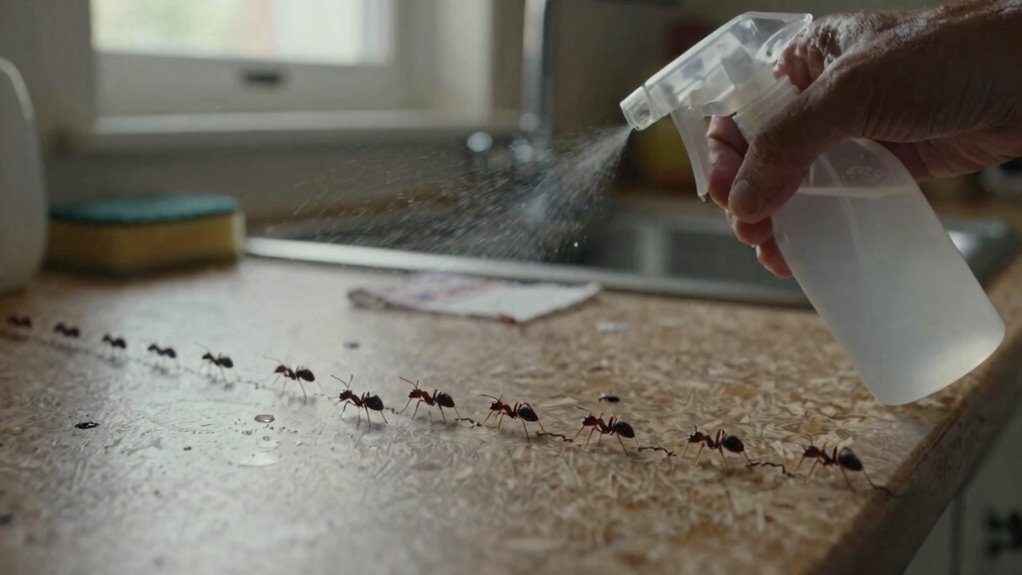
Once every crack is sealed and every crumb is gone, a stray ant might still wander in for old times’ sake.
Mix one part vinegar with one part water, and you’ve got a budget-friendly eraser.
Douse the trail, wipe it up. Ants follow scent chemicals called pheromones; you’re wiping the map clean.
Vinegar disrupts the scent trail instantly, making it a top pest control solution for kitchen ant problems.
It costs pocket change, maybe a dollar, and you can reapply after mopping.
Petroleum jelly on legs makes a slippery moat, while copper mesh blocks gaps permanently.
This ant repellent method uses no poisons and leaves no dead bodies.
Just confused ants wandering off. It’s not magic, but close.
Your kitchen stays ant-free and your conscience guilt-free.
Bottom line: keep a simple vinegar spray handy for effective ant prevention.
Pair it with petroleum jelly and copper mesh for a nice solid fortress.
This DIY ant control strategy is a friendly, practical way to defend your home.
Which Scents Keep Ants Out Without Killing Them?
Peppermint and citrus oils are popular deterrents, but plain vinegar is the real hero for ant control. It erases the scent trails ants use to call their buddies to the snack table.
That trail is a chemical breadcrumb called a pheromone, and vinegar’s acidity wipes it clean. The strong aromas of peppermint and lemon just make the area smell like a hostile mint grove, discouraging entry without hurting a single six-legged critter. For a longer-lasting, hands-off approach, slow-release pods diffuse plant oils to create a scent barrier that lasts for months.
None of these are lethal, just confusing, so your kitchen stays ant-free and your conscience stays clean. For a natural ant repellent solution, keep a spray bottle of vinegar handy.
The ants might leave a passive-aggressive review on Yelp, but your home pest management goals are met. This non-toxic method is perfect for anyone seeking effective ant prevention without harmful chemicals.
Peppermint and Citrus
Peppermint effectiveness springs from concentrated oil, overwhelming ant sensory receptors and making trails undetectable. Citrus repelling ants works alike with limonene compounds that confuse their navigation.
Neither scent kills ants, they simply escort foraging parties elsewhere. For best results, mix 10 to 15 drops of peppermint oil in a spray bottle.
Rub citrus peels like lemon or orange along entry points. Reapply every few days because scents fade fast.
Focus on windowsills, door thresholds, and baseboards. Always test a small area first to avoid damage.
Both pest control methods cost under ten bucks and smell better than harsh chemicals. These natural oils create a scent barrier that bugs hate, making it harder for ants to find their way inside. The bottom line is skip poison, accept aromatherapy, and find ants a fragrant home.
Vinegar Disrupts Trails
Vinegar disrupts ant trails by erasing the pheromone signals they rely on. It does not simply mask their scent but removes it entirely.
Both white vinegar and apple cider vinegar work for pest control at standard 5% acidity. Mix one part vinegar with one part water to create a budget-friendly spray.
Wiping the path destroys the map for the colony. Repeating this daily for a week is wise since ants re-mark routes quickly.
The solution dries safe on counters with no health worry. A quick patch test on a hidden area remains smart.
For ant control that does no harm but shows no mercy, vinegar stands as the clear recommendation. This natural method gives you a safe and effective home defense. Peppermint oil is a natural scent that repels ants without harming them, making it a safe alternative.
Watch Out for “Natural” Killers Like Diatomaceous Earth
Diatomaceous earth is often sold as a natural pest fix, but that label hides a fatal flaw for ants. The powder’s microscopic fossilized shells, sharp as broken glass, slice into an ant’s exoskeleton and drain its body fluids. This leads to dehydration and death, a real “sandpaper exfoliation” you don’t want for your six-legged visitors.
This mechanical kill method works through physical abrasion, which means it remains effective as long as the powder stays dry and undisturbed.
To genuinely avoid killing them, choose true repellents like vinegar or peppermint oil. These natural ant control products simply scramble their scent trails. They send the ants packing without a single casualty.
Deceptive Natural Label
The word “natural” gets tossed around like confetti, but it often hides a lethal truth. Diatomaceous earth, made from crushed fossil shells, sounds harmless yet shreds ant exoskeletons.
That is greenwashing: eco friendly claims masking a killer product. Watch for these five red flags before you buy any pest control spray or ant killer powder.
“Plant-based” labels can omit active toxins, so check the ingredient list for hidden poisons. “Barrier” wording glosses over mortality, while “safe for pets” fine print admits harm is possible.
“Eco-friendly” packaging often ignores collateral insect damage, and reviews praising “effectiveness” usually mean death. You want a repellent, but you may get a tomb instead.
Read every label carefully, not just the slogan on the front. If it kills ants, it is not a repellent, it is an exterminator in disguise.
Treat any natural product with skepticism, or you will end up with an ant graveyard. For true pest prevention, look for non-lethal deterrents like citrus oils or vinegar barriers. For example, oil of lemon eucalyptus is a plant-based repellent that can deter insects without harming them.
Ask for specific active ingredient names and test on a small area first. Buyer beware: a friendly label can still be a death sentence for beneficial bugs.
Your goal is to keep ants out, not to create a massacre. Choose products that repel without killing, and always verify the fine print.
A helpful pest control strategy is to seal cracks and remove food sources first. That way, you avoid relying on questionable “natural” solutions entirely.
Final advice: trust lab reports, not marketing buzzwords. Your home should have a barrier, not a burial ground for insects.
Fatal Dehydration Effect
Diatomaceous earth kills ants by causing fatal dehydration through microscopic cuts to their exoskeleton.
This silica dust from fossilized algae scrapes their coating like tiny glass shards.
The ants slowly dry out from the inside over one to two days.
It is an effective killer but not a gentle bouncer for your pantry.
Even food-grade DE that is OMRI-listed for organic gardening kills ants through the same fatal dehydration.
Desiccation side effects include sweeping up crispy ant husks for a while.
The powder also clumps when wet, so a dehumidifier becomes part of your pest control plan.
A five-pound bag costs about fifteen bucks, making it a cheap home remedy for ant infestations.
The bottom line is it works, but it is purely lethal.
For truly nonlethal ant removal, skip the dust and choose a real repellent instead.
This buyer intent is simple: get ants gone without a drawn-out death.
Choose True Repellents
Choose natural repellents that deter ants instead of killing them. Peppermint or cinnamon oils mixed with water create a spicy no-fly zone in your kitchen.
This non-toxic pest control solution costs about eight dollars and lasts for weeks. Spray along baseboards, windowsills, and counter edges for effective ant barrier maintenance.
Reapply after cleaning since scents fade fast. Some commercial plant-based sprays, however, offer a residual effect for up to three months. Rotate scents weekly to prevent ants from adapting to the barrier.
Test small areas first to avoid stained walls during non lethal barrier testing. Wipe away pheromone trails with vinegar before applying any repellent.
Ants hate surprises so a fresh-smelling kitchen wins every time. Skip the powder and grab the peppermint to send them colonizing elsewhere.
Set Up Non-Toxic Barriers Around Ant Climbing Routes
Ants follow fixed trails, so even a seasoned homeowner can see a countertop become a busy highway in minutes. The most reliable fix is to block the climb with a physical barrier that defeats their tiny legs.
Ants follow fixed trails, but a physical barrier defeats their tiny legs.
A thin smear of petroleum jelly on table legs, costing under two dollars, turns climbing into a slippery defeat. Double-sided tape also works, though it gathers dust and needs frequent replacement.
For scent masking, wipe the entire trail with vinegar to erase pheromones, which causes instant trail confusion among the colony. Then, apply chalk or cinnamon powder as a non-toxic barrier wall that ants avoid during routine pest patrols. One natural alternative is diatomaceous earth mixed with peppermint oil, which repels ants safely around kids and pets.
Remember that barriers fail if ants discover an alternate route around them, so inspect weekly for new tracks and gaps. This method is cheap, safe for pets and kids, and delivers effective ant control without harsh chemicals.
For long-term results, pair these barriers with sealing cracks near baseboards and wiping counters daily. You get targeted pest prevention, a child-safe solution, and the quiet satisfaction of watching them march away in defeat.
Distract Ants With an Outdoor Feeding Station
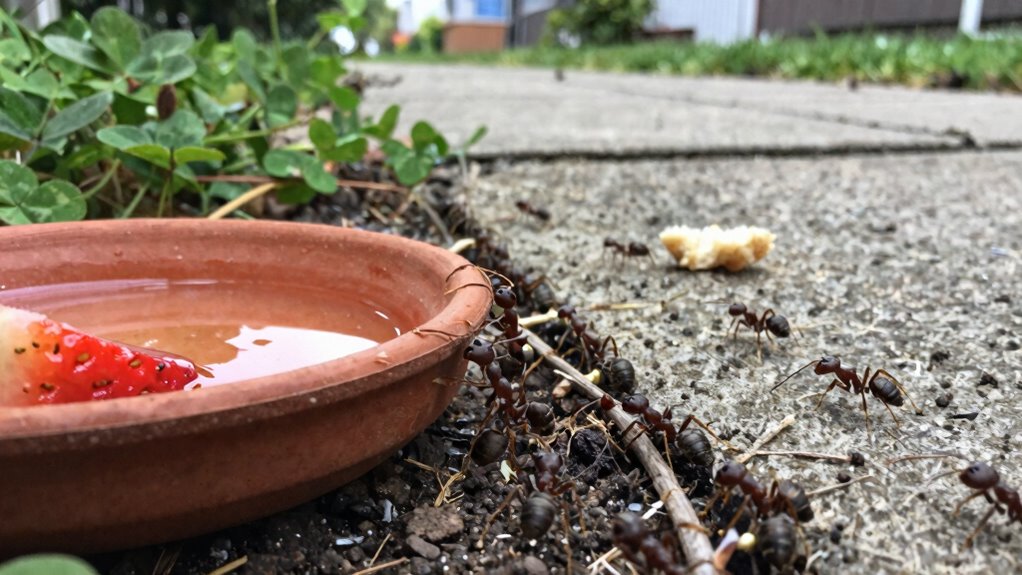
An ant’s tiny brain cannot tell a kitchen counter from a backyard snack bar. So a smart homeowner gives them a backyard snack bar instead.
Outdoor baiting offers something sweeter than the sugar bowl inside, placed far away. Perimeter feeding keeps the buffet line outside, which is an effective pest control strategy.
Set up a shallow dish with sugar water plus peanut butter for protein lovers. Just refill it daily to stop ant infestations before they start.
Ants get fed, the kitchen stays clean, and nobody gets squished.
A good feeding station needs a jar lid that is easy for ants to climb.
Place a pebble inside to provide a dry escape route. Position the station near their trail, about ten feet out, for best results in ant control. Positioning several stations along walls and foundations at this spacing helps create a perimeter shield against new invaders.
Use fresh bait each morning to maintain effectiveness. Be patient, since ants are creatures of habit and need time to switch trails.
The bottom line for ant prevention is to feed them outside. Then your counters stay clear and your home stays protected.
Find the Nest and Handle It Without Spraying
Patience is the cheapest tool in any pest control kit. Finding the nest beats chasing worker ants all day.
Outdoor nest mapping starts with watching trails at dusk. Ants are most active then, so follow them to the source. That source could be a patio crack, a fence mound, or a rock you have been meaning to move.
Once located, handle it without spraying. Ant colony relocation works best with a bucket and a shovel.
Scoop the nest gently, then move it to a wooded area 50 feet away. Use a wide, flat shovel to avoid crushing the colony. They have had a rough day. This approach is ideal for small colonies that haven’t yet spread throughout the yard.
Wear gloves since ants get cranky. Water the new spot gently to help them settle.
No chemicals, no guilt. Ants get a fresh start and you get your yard back.
Create a Non-Lethal Ant Prevention Routine
A non-lethal ant prevention routine is like a morning coffee ritual. Skip a day, and everything goes sideways.
The goal is simple: make a home boring, not a crime scene. Consistency beats intensity, which is the difference between prevention and pest control.
Set up outdoor baiting with sugar stations a few feet away. This way ants feast outside, not inside your kitchen.
For nest relocation, scoop up colonies gently with a jar and lid. Everyone moves, and nobody dies from this humane ant removal method.
Seal gaps by caulking cracks around windows and doors. Ants are tiny salespeople, so block their entrance routes.
Wipe trails daily with vinegar to erase their chemical scent trails. Without those pheromones, they get lost completely.
Fix dampness throughout your home, because a dry house is a boring house. Repair leaky faucets to eliminate pest attraction points.
Stick with the whole routine daily, and the guilt trip just disappears. Your proactive ant control plan keeps infestations away without harsh chemicals. For a non-lethal deterrent, consider using peppermint oil sprays that repel ants without harsh chemicals.
Frequently Asked Questions
What Should I Do About Ants in My Car?
First, stop panicking. Ants in your car are a nuisance, not a permanent infestation.
The fix is simple and uses non toxic repellents like vinegar spray. Spraying vinegar wipes out their scent trails, instantly confusing them.
Natural deterrents such as peppermint oil on cotton balls work wonders under seats. Place them near ant entry points for a long lasting pest control solution.
You should also park away from ant hills and check for crumbs. A quick vacuum and soapy wipe down eliminates the food sources they seek.
Keep your car clean and use these scents to repel ants naturally. The bottom line is that no harsh chemicals are needed, period.
If you want a ready to use ant deterrent, look for a peppermint based spray from a trusted pest control brand. Many buyers find this an effective, eco friendly ant killer for vehicles.
How Can I Keep Ants Away From Pet Food Bowls?
The moat method is your best bet for effective pet food ant control. Place each bowl in a shallow dish of soapy water, as ants can’t swim and it’s a cheap solution.
For extra insurance, set bait stations nearby to lure them with poison free sugar water away from the food. Expect to refresh the moat daily, though, since it evaporates quickly.
This ant proof feeding setup is a bit of a chore, but simpler than dealing with a pet ant farm. For long term pest prevention, pair this with outdoor granular ant baits around your home’s perimeter.
If you want a hands off option, consider buying a raised pet feeder with built in ant guards. These insect deterrent products save you time and keep your pet’s food safe from infestations.
Are Ants Causing Damage to My Home’s Structure?
Rarely do ants cause structural damage to your home. Unless you see sawdust piles, there is no reason to panic.
Ants typically nest in damp, already rotting wood, not sound lumber. The real threat is moisture, so fix leaky pipes, seal cracks, and wipe ant trails.
For colony relocation on a budget, place a shallow dish with sugar water and a stick. The ants will move the queen for free, saving you a pest control service call.
Cost? Under five bucks for the sugar and dish. The verdict is clear: check for termites, not six legged carpenters.
Bottom line: fix moisture issues and ignore the ants. If you need expert pest control products or professional termite inspection, focus on water damage solutions first.
How Do I Identify the Ant Species Before Treating?
Start with a 10x loupe and a small vial of live worker ants for a clear view.
Ant identification hinges on size, color, and antennae shape, not guesswork.
Catch workers only, never queens, and avoid squishing them so you can see the body clearly.
Check for bent elbow antennae and a single node bump between the thorax and abdomen, which separates ants from other pests.
A $8 jeweler’s loupe beats relying on memory, and a free online ant chart works for quick field checks.
Pest taxonomy, the science of naming these critters, is your shortcut to matching the right treatment plan.
Wrong identification means wasted money on non-lethal baits or sprays that workers ignore.
For carpenter ants, look for a smooth, rounded thorax and uneven heart-shaped abdomen; for fire ants, check the two-segment petiole and reddish-brown color.
If you are buying pest control products, target the species-specific bait or residual spray after confirming the ant type.
That means searching for “carpenter ant killer” or “fire ant mound treatment” only after you see the node and antenna shape, not before.
Keep your sample alive in the fridge for ten minutes to slow them down, then photograph them from the side and top.
Most local extension offices or pest control supply stores offer free ID help if you send a clear image.
Treating blindly is a common DIY mistake, so invest ten minutes in ID before you open your wallet.
A precise match between species and product, like gel baits for odorous house ants or granular bait for pavement ants, is what gets results and keeps you from buying twice.
What About Ants in Potted Plants Without Harming Soil?
Ants in potted plants are a common nuisance, but natural pest control methods keep your soil healthy.
First, relocate the plant indoors to a garage or patio to break their scent trail effectively.
Once moved, apply natural ant deterrents like cinnamon powder or peppermint oil spray around the rim.
These safe solutions won’t harm roots or beneficial soil microbes.
Keep the topsoil dry, since ants avoid arid ground in their search for moisture.
For buyer intent, you can find effective peppermint oil sprays or ant repellent powders at any garden center.
No toxic drenches are needed, just these savvy tweaks to stop the infestation.
Bottom line: relocate first, deter second, and your potting mix stays in perfect condition.


