
Why Do Spiders Keep Coming Back After Spraying? You spray, they disappear, and then—like clockwork—they’re back. That’s because most sprays kill the adults, but not the eggs hidden inside waterproof silk sacs, which hatch one to four weeks later.
Add unsealed cracks and a steady supply of flies or ants, and you’re basically running a rotating spider motel. The spray itself dries up fast, leaving no lasting protection.
So what actually works? Physical removal, sealing gaps, and an insect growth regulator (IGR) stop the cycle for good. Stick around—the three-step fix is easier than you think.
At A Glance
- Spraying cannot penetrate waterproof egg sacs, allowing spiderlings to survive.
- Hidden egg sacs in corners or voids hatch weeks after spray residue fades.
- Spiders re-enter through unsealed gaps in foundations, windows, and pipes.
- Clutter and humidity provide shelter where spray cannot reach spiders.
- Food sources like ants or flies attract new spiders after spraying.
Why One Spray Can’t Kill Spider Eggs Inside Hidden Sacs
Spider egg sacs are tiny fortresses, and your spray isn’t a battering ram. That silken bundle is engineered for egg protection, sealing its contents from the outside world.
Spider egg sacs are tiny fortresses, and your spray isn’t a battering ram.
Most common pesticides lack the chemical resistance to penetrate that woven barrier. They simply bead up and roll off, leaving the developing spiderlings untouched.
Sacs are hidden in corners, under furniture, or in wall voids. Those are places your spray misses entirely.
Timing is everything. Eggs can hatch one to four weeks later, making it seem like new spiders appeared.
Residue isn’t foolproof. Some hatchlings die on contact, but many scuttle into untreated shelters.
Think of it as a tiny, fuzzy safe deposit box. A single spray just won’t crack it.
You need either a direct hit on the sac itself or a follow up treatment a couple weeks later. To deal with hatched spiders, you can place non-toxic adhesive glue boards along known travel routes to capture them without further chemical use. Bottom line: one spray is never enough for eggs.
The Real Reason Spiders Keep Hatching After Treatment?
Even after a thorough spray, those eggs are the real survivors. Hidden deep inside their silky sacs, tucked away in corners or behind cabinets, they remain untouched by most pesticides.
That is why a second, and sometimes a third, treatment is usually needed to catch the next generation as they hatch. For effective pest control, you need to plan for a follow-up visit once the egg sacs begin to open.
Targeting the hatchlings before they mature and reproduce is the key to long term spider control. Most professional exterminators will recommend a reapplication window of two to three weeks, so ask about a recurring service plan. Since many store-bought sprays require reapplication every three to five days, professional intervals may still miss newly hatched spiders, making ultrasonic pest repellers a useful supplement for continuous, chemical-free pressure between visits.
This approach stops the life cycle in its tracks, preventing future infestations from taking hold. If you are looking for a reliable spider treatment quote, insist on a package that includes larvacidal and residual sprays.
Persistent Egg Survival
One often overlooked reason for post-treatment spider activity is the egg sac. These silk-wrapped bundles are like tiny, chemical-proof bunkers.
Most sprays simply slide off the protective casing, leaving dozens of future problems inside. When conditions warm up, usually one to four weeks later, hundreds of hatching spiderlings emerge.
They scatter into shadowy corners, avoiding the dry residue on exposed surfaces. A single missed egg sac can restart the entire cycle.
Residual poison may kill some, but many survive in untreated shelters. That is why a second spray two weeks later is often necessary for effective spider control.
It targets the newly hatched generation. Think of it as a sequel to your first treatment, less exciting but far more helpful.
Ignoring the egg sac stage means you are only fighting half the battle. A targeted pest management plan ensures you break the cycle completely.
Applying a residual dust in cracks and crevices can eliminate hatching spiderlings and their eggs on contact, providing longer-lasting control than sprays alone.
Hidden Egg Locations
Frustration often lingers long after the spray dries. The real culprit is rarely the spiders themselves but where their eggs are hidden.
Spider mothers stash egg sacs in the most inconvenient spots behind baseboards or under furniture. Pesticides coat surfaces but rarely penetrate these silken pouches.
Seasonal patterns like warm humid weather accelerate hatching. A fresh wave of pests emerges weeks later if you miss the sacs.
Check crevices and corners near window frames and door jambs. These prime areas for egg sacs are often missed during routine pest control spraying.
Clutter zones like cardboard boxes or stacked firewood create dark nursery beds. Seldom moved storage bins are perfect for spider egg sacs.
Outdoor eaves such as ledges and gutter joints trap insects. These spots draw spiders to lay sacs just beyond indoor treatment reach.
Inspect these hidden egg locations for effective pest management. It is cheaper than re spraying your home. To stop this cycle, reapply a long-lasting residual barrier spray every 2 to 4 weeks to catch newly hatched spiders before they mature.
Multiple Spray Cycles Needed
You sprayed, waited, and felt proud, then new spiders appeared anyway.
The real issue is that egg sac residue often outlasts your spray entirely.
Those tough pouches hide in corners or behind baseboards, and many repel standard pesticides completely.
Weeks later, spiderlings hatch from that untreated residue and wander into areas where the chemical breakdown has already run its course.
Your first application typically wears off within two to four weeks, especially in sunlight or humidity.
This is why a professional pest control treatment plan always includes a follow-up visit.
You need a second or third wave to target hatchlings that emerge after the initial poison fades.
Think of it like weeding a garden: one pass misses the seeds, so a follow-up three weeks later catches the next generation.
Without multiple spray cycles, you’re only mowing the lawn while the roots stay safe.
For lasting spider prevention, schedule a recurring service that re-treats every few weeks.
That extra visit is your best defense against a recurring infestation, and it saves you from endless frustration.
Buy an extended treatment package now, and you’ll stop the cycle before spiderlings ever get a foothold.
Plant-based options like those with peppermint oil require reapplication every few weeks, so follow-up sprays are essential to maintain protection.
How Indoor Insects Are Secretly Feeding Your Spider Problem?
Without proper pest control, spraying webs only removes the plates, not the kitchen. Flies, mosquitoes, and ants are spider magnets; each one is a tiny walking meal ticket.
Spraying webs only removes the plates, not the kitchen—the flies are the real meal ticket.
A single undetected ant colony can feed a whole spider family, negating any spray treatment. Even dead insects, if left uncleaned, attract scavenger bugs that spiders love to eat. Using plant-based sprays with peppermint or clove oils provides an immediate repellent barrier that targets these insects at their source.
For effective home pest management, focus on eliminating the food source first. A professional pest control service can break the cycle by targeting both ants and flies.
Stop feeding the spider problem; remove the insects and the spiders will follow.
Gaps and Cracks: The Entry Points Spraying Can’t Fix?

Though you seal up every crack in sight, spiders will still find a way in. A proper gap analysis reveals that structural vulnerabilities like poorly fitted window frames and unsealed pipe entries provide constant reinfestation routes.
Foundation gaps often thinner than a match head are the entry points spraying simply cannot fix. Spraying kills spiders inside, but it cannot mortar those voids with caulk.
New gaps appear after weather shifts, such as rain shrinking wooden frames or hurricanes rattling siding. Think of it as patching a tire while nails keep falling on the road for lasting pest control.
For permanent spider prevention, conduct a thorough inspection then seal all openings with silicone caulk or expanding foam. Focus on where utilities enter the home to stop the influx at its source. For damp or outdoor gaps, opt for rust-resistant stainless steel or copper mesh to ensure the seal lasts.
Without sealing those structural gaps, spraying alone is just throwing money at a screen door. Remember that crack sealing is the true foundation of any integrated pest management plan.
Why Clutter and Humidity Make Spider Control Harder
Even when the spray hits its mark, clutter and humidity turn a clean kill into a waiting game. Spiders thrive in messy, damp spaces where poison can’t reach them, hiding behind boxes and under stacked clutter.
Clutter reduction removes the spider’s shelter and egg laying spots. Without it, spiders simply retreat deeper into piles, resurfacing after the spray dries.
Humidity control keeps moisture down, which spiders need to survive. A dehumidifier in basements or closets dries out their preferred hideouts. Maintaining humidity levels between 40-50% prevents the moist conditions that also attract booklice and other spider prey.
Combined, these two steps force spiders into open areas where residual spray contacts them. This turns a partial fix into a real solution for long term spider control.
Think of it like this. Spraying a cluttered, damp room is like wiping a countertop with crumbs still on it.
Clean up first, then spray for better pest management results. Reduce hiding spots and moisture to make every treatment count.
Do Ultrasonic Devices or DIY Sprays Actually Work?
Plastic plug-in boxes claim to blast spiders away with sound waves, but science doesn’t back that up.
Studies show these ultrasonic devices fail against spiders, which feel vibrations through their legs, not airborne frequencies.
Any temporary relief is likely coincidental, maybe a cold snap moved in instead of a sonic blast. So save your $30 and skip the gimmick.
DIY sprays offer poor residual pest control. That pyrethrin-based mix smells like a garden center, but it only kills on contact.
Once dry, it’s useless, and spiders just walk right over it. You’re better off vacuuming webs daily or sealing cracks.
These methods are cheaper and actually work for pest management. Bottom line: skip the gimmicks and buy caulk for effective spider control, or consider using long-lasting chemical barrier sprays like Ortho Home Defense to keep spiders away for up to 12 months.
How to Break the Spider Life Cycle in 3 Steps
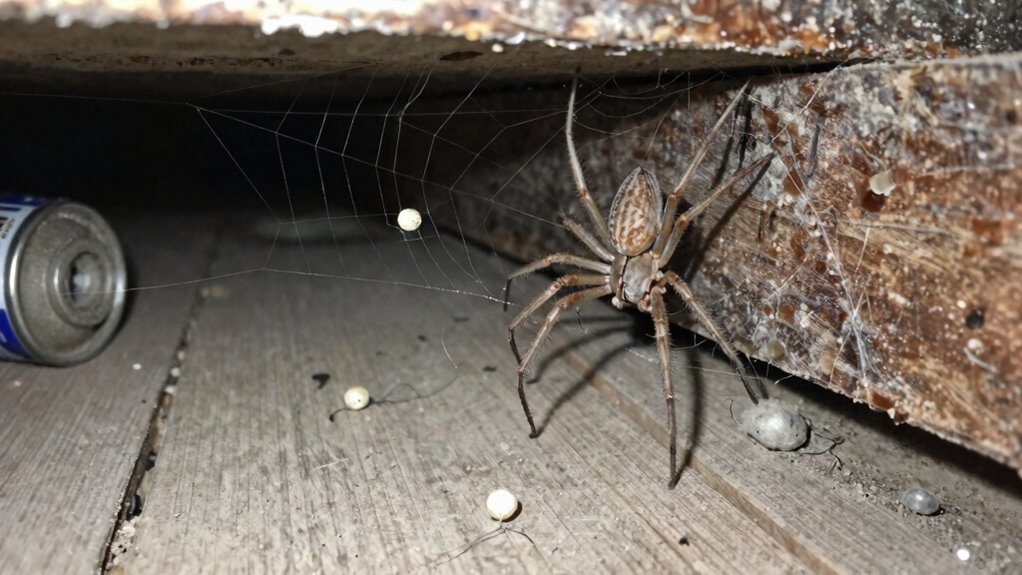
Covering spider eggs with spray often fails because the sacs are waterproof. To truly break the spider reproduction cycle, you must target each stage of those egg cycles head-on.
Start by physically locating and removing egg sacs. Use a vacuum with a crevice tool, which costs about 30 dollars, to suck them from corners and baseboards. Dispose of the bag immediately, sealed tightly outside.
Next, apply an insect growth regulator or IGR. These cost around 15 dollars and are cheaper than repeated sprays for spider control. IGRs prevent spiderlings from maturing, halting future generations effectively. Many IGRs receive EPA reduced risk labels for safer human and environmental use.
Finally, repeat the treatment after 14 days. That gap catches newly hatched survivors from concealed eggs for lasting spider prevention. Think of it as a two-round knockout, not a one-punch fix for pest management.
This three-step strategy stops the endless cycle of home infestation. Without it, spiders keep returning like unwelcome houseguests who don’t take hints.
When Cleaning and Sealing Beat Any Spider Control Spray
Cleaning and sealing are simply a better long-term spider control strategy than any spray can offer. This one two punch method tackles the root cause by removing webs, egg sacs, and the prey spiders feed on.
A thorough vacuuming session clears out their food source and hiding spots, while caulking gaps around doors and windows blocks their entry points. It might take an afternoon of work, but it stops the cycle of recurring infestations without needing another chemical treatment. For homeowners who still want an added layer of defense, natural plant-based repellent pouches offer chemical-free, long-lasting deterrence in hard-to-reach areas.
This pest prevention approach beats paying for a second or third spray that only postpones the inevitable spider reunion. For homeowners seeking effective pest control solutions, this method offers lasting protection.
Cleaning Disrupts Habitats
Since spiders are masters of real estate, not just pest control, a clean home is actually their eviction notice. Spraying kills what’s visible, but it leaves the messy, cluttered corners that spiders love.
Deep cleaning, that thorough scrubbing behind the fridge and under the sofa, removes the webs, egg sacs, and the tiny insects that serve as a spider buffet. This is habitat modification at its finest. You’re not just poisoning them. You’re removing the whole neighborhood.
Think of it this way. Vacuum regularly, especially baseboards and window tracks. It physically removes spiders and their silk, which deters future visitors.
Declutter storage areas like boxes and bins. Fewer hiding spots mean fewer spiders feel secure. Dust and mop weekly to cut down on prey insects, cutting off the spider’s food supply chain.
For a more passive approach, placing plant-based repellent pouches in these cleaned, low-airflow areas can offer up to 90 days of additional protection.
The bottom line is a clean home is a spider’s “For Sale” sign. Keep it tidy, and they’ll pack up.
Sealing Blocks Entry Points
| Entry Point | Sealing Method | Cost (Materials) | Difficulty |
|---|---|---|---|
| Door gaps | Weatherstripping | $15–$25 | Easy, 15 min |
| Window cracks | Caulk | $5–$10 | Moderate |
| Pipe penetrations | Expanding foam | $10–$20 | Moderate |
| Foundation fissures | Masonry filler | $15–$30 | Advanced, tool needed |
Once sealed, spiders can’t sneak in after spraying. The fix is permanent, not temporary.
This block-and-seal approach works as a long-term spider prevention strategy for your home.
Spray kills what’s already inside, but sealing entry points stops new spider infestations before they start.
You’ll get reliable pest control results without needing to reapply chemicals every week.
For door gaps, weatherstripping is a quick fix that also improves energy efficiency, a practical bonus.
Window cracks need caulk, which is cheap and easy to apply for most DIY homeowners.
Pipe penetrations are best filled with expanding foam, a smart way to close off hidden access routes.
Foundation fissures take more effort and a masonry filler, but this advanced step is worth it for thorough exclusion.
Buying these sealing supplies upfront saves you money on repeated spider exterminator visits later.
If you’re searching for how to keep spiders out permanently, this sealing tactic is the real answer.
Pair it with a residual spray inside, and you’ve created a complete barrier against common house spiders.
Remember, chemical treatments alone only offer temporary relief, so focus on blocking those gaps.
Check your attic, basement, and garage for overlooked cracks, as those are prime spider highways.
After you finish sealing, do a final walkthrough to confirm every gap is closed tight.
This two-part method, spray plus seal, gives you lasting peace of mind and fewer spider sightings.
Start with the easy wins like door gaps, then move to tougher spots as your skills grow.
Your home stays cleaner, safer, and far less inviting to eight-legged intruders all year round.
For pets with sensitive skin, consider natural, non-toxic ingredients in any pest collar used as an additional layer of defense.
Frequently Asked Questions
Can Spiders Lay Eggs Inside My Walls After Spraying?
Yes, spiders can absolutely lay eggs inside your walls after spraying, and this is a common frustration for homeowners. The spray doesn’t magically seal off those gaps; it only kills the spiders and insects that come into direct contact with the treated surface.
Egg sacs tucked deep into wall voids are the real culprit, because most pesticides can’t penetrate the protective silk layer. Those hidden sacs hatch weeks later, which is why you’ll often see baby spiders after a professional pest control treatment.
This is the spray resistance problem, and it’s not a sign your product failed. Think of it this way: spraying kills the visible adult spiders, but hidden egg sacs are a waiting game that requires a different tactic.
Vacuuming up any visible egg sacs is your first smart move, because it physically removes the future hatchlings. Sealing cracks and gaps around baseboards, outlets, and pipes is also critical, since that blocks new spiders and prevents re-entry.
For long-term spider control, pair your spray with an insect growth regulator, which stops nymphs from maturing. Look for a residual insecticide labeled for crawling pests, and reapply every 30 to 60 days, especially in dark corners and attic eaves.
Don’t rely on spray alone, because stragglers are almost guaranteed after treatment. Check basements, garages, and closets weekly, and focus on corners, window frames, and door thresholds where sacs hide.
If you’re buying a pest control spray, choose one with a long-lasting residual formula and a targeted nozzle for crack and crevice application. Many top-rated spider killers include actives like bifenthrin or deltamethrin, which work well on both adults and late-hatching nymphs.
Bottom line: expect a few new spiders after spraying, and re-treat those same areas to break the cycle. For best results, combine spraying with physical removal and exclusion, because that’s what professional exterminators do.
Remember, egg sacs can survive even strong chemicals, so your best purchase is a multi-step spider control kit, not a single spray. Check product labels for “egg hatch suppression” or “ovicidal” claims if you want the most complete protection.
Stay consistent with your routine, and you’ll finally stop the cycle of spider resurgence. That’s the practical, no-nonsense approach that saves you time, money, and creepy surprises later.
Will Turning off Outdoor Lights Stop Spiders From Coming Back?
Yes, turning off outdoor lights helps but with one big caveat. Lights attract insects, which are spiders’ main food source, so fewer insects means fewer spiders.
Light pollution is essentially an insect attractant buffet, so cutting it starves the menu. A motion sensor fixture costing between $20 and $50 works better than a permanent dark yard.
Pair this with sealing gaps, and spiders lose both dinner and the door. For the best home pest control results, combine dark walls with a thorough exterior sweep.
Bottom line: dark walls, dry humor, and fewer arachnids. That means you can reduce spider infestations without harsh chemicals or expensive exterminator visits.
How Often Should I Reapply Spider Spray for It to Work?
Every two to four weeks is the real answer for spider spray to work consistently. Spider resistance isn’t really a thing, but spray frequency matters because residues break down over time.
Most sprays with cyfluthrin or deltamethrin last about two weeks on surfaces, less in dusty or humid spots. So, hit corners, windows, and baseboards every 14 to 30 days for reliable spider control.
Missed a week? Spiders move back in fast, especially if their food source like ants or flies is around. Think of your spray as a temporary barrier, not a magic wand, so regular reapplication is key.
For best results, pair your perimeter spider spray with indoor crack and crevice treatments using a targeted aerosol. That combo covers both active trails and hidden nesting spots, which is a smart purchase if you want long-term home pest prevention.
If you live in a high-humidity region or near heavy vegetation, bump up the schedule to every two weeks, not four. Dusty attics and garages also degrade insecticide faster, so check your product label and adjust accordingly.
When shopping, look for residual spider killer with active ingredients like bifenthrin or lambda-cyhalothrin for longer-lasting protection. Always reapply after heavy rain or cleaning, since water and soap wash away the chemical layer that keeps spiders out.
For a truly proactive approach, combine spray with spider webs removal and sealing gaps around doors and pipes. That cuts down on reapplication frequency and gives you cheaper, more effective pest management in the long run.
Does Vacuuming Really Help More Than Spraying for Spiders?
Vacuuming is often more effective than spraying for spider control. Sprays only kill what they hit, but they miss egg sacs and hidden webs.
A vacuum physically removes live spiders, eggs, and prey in one clean sweep. This makes it a stronger solution for heavy infestations in cluttered basements.
For lasting pest management, combine vacuuming with sealing cracks and gaps. If you are choosing between home pest control methods, vacuuming offers a non chemical alternative.
It targets the whole problem, not just the surface. Smart buyers looking for spider control products should prioritize a good vacuum over a can of spray.
Can Sealing My Home Keep All Spiders Out Permanently?
Sealing a home can’t keep all spiders out permanently. Wall cracks shrink with weather, and door sweeps wear down over time.
Spiders squeeze through gaps smaller than a match head, so caulking windows costs just $5, that’s fine.
But you open a door for pizza, and hello, spider. They’re persistent hitchhikers that ride in on packages and clothing.
Humidity, clutter, and prey insects still attract them indoors. That’s why a solid pest control plan matters more than just sealing.
Bottom line: sealing helps massively but isn’t a permanent force field. Pair it with regular cleaning and spider repellent products for best results.
For long term spider prevention, combine caulking with door sweeps and window screens. Then use a quality insecticide spray around entry points to keep buyers like you from calling an exterminator next week.


