
Pantry moths won’t bite, sting, or spread disease—they’re clumsy fliers, not tiny vampires, so the real problem isn’t your health, it’s your food. What they leave behind—feces, shed skins, and webbing—can turn your flour into a damp, clumpy mess that ruins meals and lingers for weeks.
If you’ve spotted them near your pasta, cereal, or even birdseed, that’s a clear sign to toss any open packages right away, since a $5 box isn’t worth the cleanup. Skip mothballs entirely—they’re toxic near food and useless against larvae, so focus on sealing dry goods in glass jars instead.
This guide breaks down exactly where these pests hide, how to spot an infestation early, and the fastest way to clear them out without harsh chemicals. Stick around—we’ll walk you through each step so you can reclaim your pantry in one afternoon.
At A Glance
- Pantry moths do not bite, sting, or transmit diseases to humans.
- Accidental ingestion of larvae causes no harm to health.
- Contact with moth scales can trigger mild allergic reactions in sensitive people.
- Infested food risks mold growth from webbing, potentially causing nausea or headaches.
- Mothballs are ineffective and toxic, contaminating food and air near pantries.
Do Pantry Moths Bite or Spread Disease?
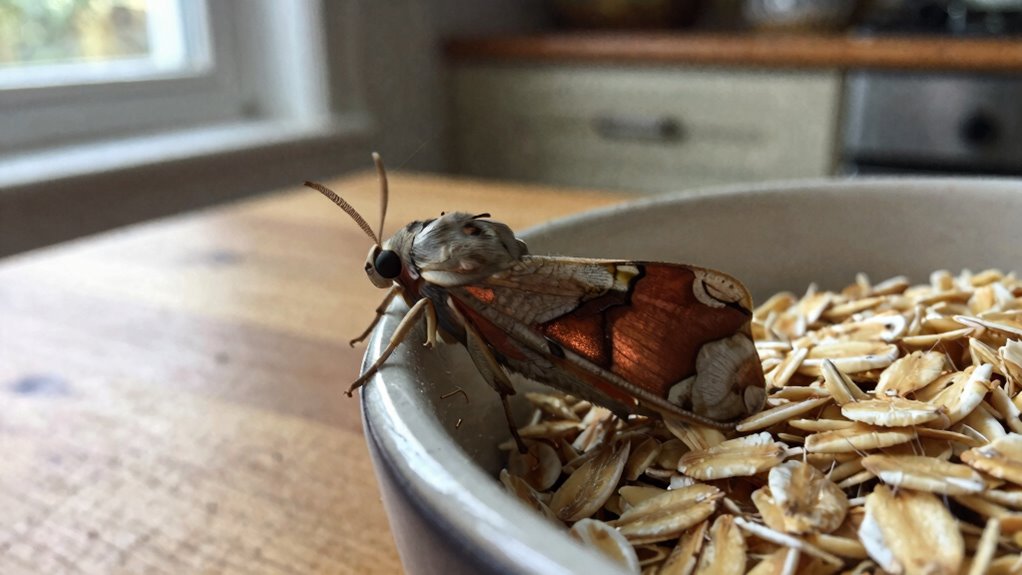
You can breathe easy: pantry moths are not in the business of biting, stinging, or making you sick. They lack mouths adapted for piercing skin and do not carry bacteria or viruses. Accidental ingestion of larvae, which are high in protein, causes no harm. The real issue is poor pantry hygiene. Crumbs, spills, and open bags invite these pests, making larval prevention your frontline defense. Clean shelves with warm soapy water, vacuum crevices, and seal cracks. A bag of flour forgotten for months is a five-star hotel for moths. Keep dry goods in glass or hard plastic containers, a small investment that saves food waste. No toxins needed, just vigilance. Non-toxic and chemical-free traps can help monitor for these pests without risking contamination near food storage. You will not get sick from them, but you will certainly get annoyed. Bottom line: they are a nuisance, not a health threat. Focus on cleanliness, not panic.
How Do Pantry Moths Contaminate Your Food?
Contamination is the real crime here, and pantry moths are surprisingly thorough offenders. They don’t just nibble a bit of flour and move on.
Instead, they leave behind feces, shed exoskeletons, eggs, larvae, and adults plus silky webbing that glues everything together. Pathways of infestation often begin when larvae chew through plastic bags or thin cardboard, sneaking into unopened packages of cereal, pasta, or dried fruit.
Once inside, they reproduce quickly, turning a single bag into a whole mess. The economic consequences add up fast, every contaminated box from a $3 bag of flour to a $10 bag of birdseed must be tossed.
This isn’t a poison risk, but it’s a wallet wound. Bottom line, seal dry goods in glass or hard plastic containers and never trust that flimsy bag again. Using pheromone-based traps can help monitor and prevent moth reproduction without chemicals.
For professional help with pantry moth control, contact a pest management service to inspect and treat your kitchen. Simple prevention steps like using airtight storage can stop an infestation before it starts.
Pantry Moth Signs You Shouldn’t Ignore
Noticing the mess pantry moths make often starts with a ruined bag of flour, but catching them early requires a sharper eye.
Noticing the mess pantry moths make often starts with a ruined bag of flour, but catching them early requires a sharper eye.
The first sign is silk webbing, a fine sticky net on grain or cereal surfaces.
Larvae, cream-colored and up to half an inch long, crawl along package seams.
Adult moths, about 3/8 inch long, fly erratically near pantry lights.
This moth behavior signals a growing infestation timeline: eggs hatch in days, larvae feed for weeks, and adults emerge to mate.
Small holes or tears in packaging confirm larvae chewed through.
Clumped flour or grains indicate larval movement and webbing.
Ignoring these signs means the problem compounds, requiring total disposal of affected goods.
The bottom line: catch it early, toss infested items, and store new food in sealed glass or hard plastic containers.
You can stop pantry moths before they spread by checking for these signs weekly.
Placing pheromone traps in cabinets and storage areas can help detect early infestations and break the breeding cycle without using toxic chemicals.
Which Foods Are Most Vulnerable to Infestation?
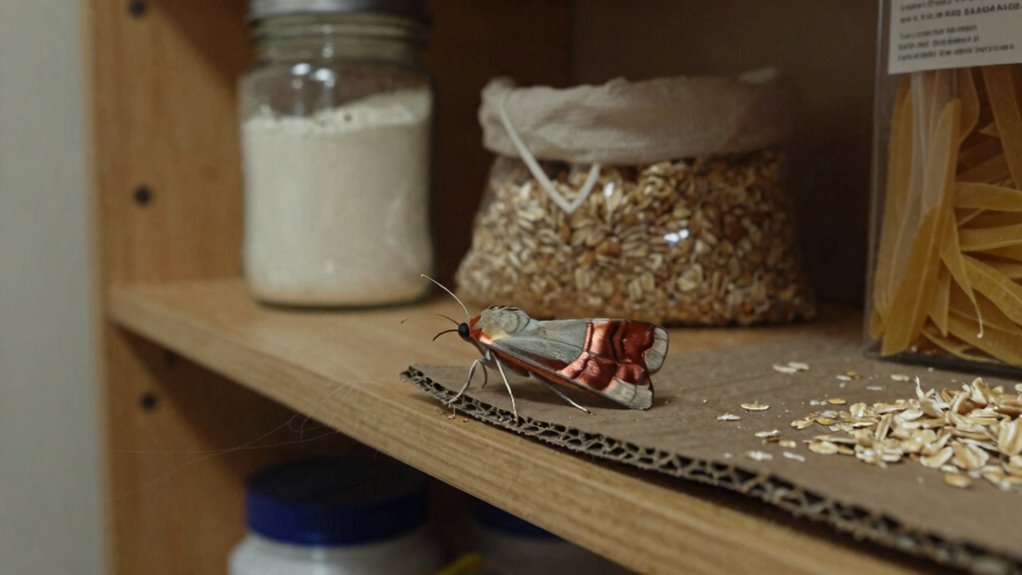
Pantry moths won’t send anyone to the hospital, but their menu is frustratingly broad. Knowing which items they target first can save a lot of wasted money and ruined snacks.
The economic impact hits hardest with grain-based goods. Cereals, flour, pasta, and crackers are prime real estate for larvae.
They chew through thin plastic and cardboard, causing structural damage to packaging. Bulk bin items and pet food are additionally vulnerable, as are dried fruits, nuts, chocolate, and spices.
Though not toxic, infested bags become webbed and clumped trash. A 5 pound bag of flour costs around $3, but the waste adds up fast.
Once a moth colony gets established, it’s cheaper to toss everything than to salvage suspect items. For effective pest control, protect flour and cereal first with thick glass or hard plastic containers.
This simple pantry protection step stops larvae from chewing through packaging and saves your snacks. If you see webbing or tiny moths, act fast to prevent an infestation. Applying a light dusting of food-grade diatomaceous earth to dry storage areas can also deter weevils and similar pantry pests effectively.
Pantry Moths: Health Risks Explained
Pantry moths do not bite or sting humans, so that fear is unnecessary. The real health concern is food contamination from their droppings, shed skins, and webbing.
These infestations make stored goods unpleasant and can attract harmful bacteria over time. Proper pest control removal is key to stopping mold growth on spoiled food.
Mold exposure from infested items is a minor risk, but rarely leads to serious illness. A thorough pantry inspection and cleaning will eliminate these hazards. Using airtight side-locking lids with silicone gaskets provides a secure, pest-proof seal that prevents moth infestations from starting.
Biting and Stinging Risk
Although they might look like tiny winged menaces, pantry moths are not out to get you. They lack the mouthparts or stingers needed for biting or stinging.
So no, they will not attack you as you reach for cereal. Still, for some people, contact with their scales or shed skins can trigger moth allergies.
This might show up as mild skin irritation or a sniffle, but nothing serious. Think of it as a minor nuisance, not a medical emergency.
They are more interested in your flour than your flesh. So relax, you are not on the menu.
These moths are pests, not predators. Their real crime is spoiling food, not drawing blood.
For effective pest control, focus on sealing cracks and storing dry goods in airtight containers. A professional insecticide treatment can eliminate infestations before they spread.
If you are sensitive, just keep antihistamines handy. Bottom line: zero bite risk, low allergy risk.
However, to catch and monitor these pests, you can use pheromone traps that specifically target pantry moths without harmful chemicals.
Food Contamination Dangers
The real trouble with pantry moths isn’t a bite or a sting. It’s the mess they leave behind.
These pests contaminate food with feces, exoskeletons, eggs, and silken webbing. This can clump flour or grain together.
Although not toxic, infested items become aesthetically unacceptable. They often attract bacteria from other environments, threatening food safety.
Contamination from feces and webbing causes an unacceptable appearance. It can also lead to potential mold growth.
Larval movement chews through packaging and clumps dry goods together. This makes it harder to spot an infestation early.
The economic impact adds up quickly. Replacing ruined cereals, pasta, and pet food wastes money.
Storing goods in thick glass or hard plastic containers prevents future headaches. Toss infested items, clean thoroughly, and invest in airtight storage to kill pantry moths and stop recontamination. For persistent infestations, a plant-based insect killer like Dr. Killigan’s can be used safely around food storage areas.
Mold Exposure Potential
Under a microscope, the real risk of pantry moths isn’t the bug itself. It’s the mold their webbing invites.
That silken mess traps dampness in grains and flour, creating a perfect breeding ground for fungi.
Over weeks, mold toxicity symptoms like headaches or nausea can appear if someone eats that spoiled food. This webbing dampness risk is the hidden danger, turning harmless moths into a mold delivery system.
The fix is simple: toss any webbed food immediately. No tasting, no saving.
Then freeze new grains for a week to kill eggs. Store them in glass jars with tight lids and vacuum pantry cracks weekly.
Pheromone traps catch adults but miss the real problem. Regular drain treatments that dissolve organic scum can also prevent hidden breeding sites from fueling infestations. Bottom line: fight the web, not the moth.
Why Mothballs Are Dangerous: and Useless: for Pantry Moths
Many homeowners reach for mothballs as a first line of defense. But against pantry moths, that choice is both dangerous and useless.
Mothballs contain naphthalene or paradichlorobenzene, toxic pesticides that sublimate into a gas. That gas won’t kill off pantry moth biology because larvae simply crawl away from it, deeper into your flour.
Worse, the fumes permeate food and make it unsafe to eat. The Environmental Protection Agency explicitly bans their use near stored food.
Silent infestation signs like webbing or clumped grains won’t be solved by these poison cakes. You would just contaminate your pantry with chemicals that can cause headaches, nausea, or worse, especially in kids or pets. Traditional moth balls also release volatile organic compounds that pollute the air and environment.
Mothballs cost around $5 to $8 per box, yet for pantry moths they are a total waste of cash. The bottom line is to swap them for proper container storage and pheromone monitors.
Save the mothballs for your winter sweaters, if you dare. For effective pest control, choose airtight containers and targeted pantry moth traps instead.
How to Get Rid of Pantry Moths Fast
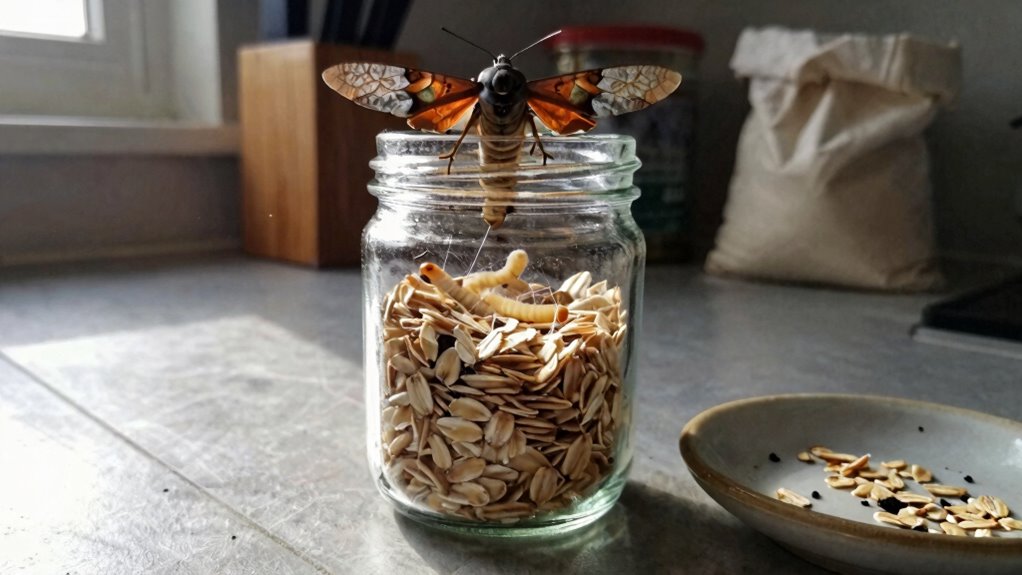
Fast action beats perfect technique when moths are fluttering around your flour. First, toss every infested package with no mercy.
Then vacuum shelves and crevices, disposing of the bag outside. For a quick fix, freeze suspect grains for a week to kill eggs and larvae without fuss.
Wipe shelves with vinegar or soapy water. This deters moths but does not eliminate them.
For lasting control, store all dry goods in thick glass or hard plastic containers. Moths can chew through bags, so sealing is critical.
Pheromone traps catch adult males and reveal hot spots. However, traps alone won’t end an infestation.
A $10 set of traps plus a weekend cleanup cuts the problem fast. The bottom line is discard, vacuum, and seal.
Skip mothballs. They are toxic and useless near food.
With these steps, pantry moths vanish within days, not weeks. You gain immediate home pest control without harsh chemicals.
For best results, place traps near infested grains or pantry corners and replace them every 30 to 60 days to maintain consistent protection.
Frequently Asked Questions
Can Pantry Moths Live in a Refrigerator?
Pantry moths cannot live in a refrigerator. Their cold tolerance is very low, so survival is impossible below 40°F.
Larvae and eggs stop developing, then die within days. The chill simply stops them cold.
So you do not need to worry about a fridge infestation in your crisper drawer. For absolute peace of mind, freeze suspect grains for a week before storing them.
That kills any stowaways and guarantees your pantry stays moth free. For a long term solution, check out pheromone traps and pantry moth killer sprays we recommend for home use.
These pest control products catch adult moths before they lay eggs. Using a targeted moth spray can also eliminate hidden larvae in cracks and shelves.
Buyers looking for a comprehensive moth elimination kit will find all the top rated options in our pest control store. Stop an infestation before it starts and protect your dry goods with proven prevention methods.
Do Pantry Moths Only Infest Food in the Pantry?
No, pantry moths do not only infest food in the pantry. Their lifecycle stages let them colonize any dry storage area in your home.
Seasonal infestations often begin in garage birdseed or basement pet food. They will chew through plastic bags in cupboards or even under the sink.
So, even though the pantry is prime real estate, these moths are opportunists. Any unsealed dry goods anywhere in your home is a potential buffet.
To stop pantry moth infestations, always inspect bulk birdseed and pet food before bringing them indoors. You should seal all dry goods in airtight containers to eliminate food sources.
If you need effective pest control solutions, look for pantry moth traps with pheromone lures that capture adult males. These traps are ideal for monitoring and breaking the breeding cycle.
For a comprehensive treatment, use a pyrethrin based aerosol spray on cracks and crevices. This targeted pesticide kills eggs and larvae hiding in hard to reach spots.
Buying a complete pantry moth kit gives you both traps and spray for total home defense. Smart shoppers choose products labeled for indoor food storage areas to avoid contamination.
Can Pantry Moths Infest Pet Food Stored in the Garage?
Yes, pantry moths can absolutely infest pet food stored in the garage, and garage storage is a prime target for these persistent pests.
Bags are often left open or stored in thin plastic, which makes it incredibly easy for larvae to chew right through the packaging and start breeding.
Pet food contamination happens fast, so don’t be surprised if you spot webbing, droppings, or tiny caterpillars inside the kibble within days.
The good news is that infested food isn’t toxic, but it is definitely gross and totally unappetizing for your furry friend, so you’ll want to toss it immediately.
The real risk here is wasted money, and a $50 bag of kibble ruined by moths is a painful hit to your wallet that a simple storage fix can prevent.
To stop pantry moths in their tracks, invest in a thick, airtight plastic bin with a locking lid, and never rely on the original bag alone for pest control.
If you already see signs of moths, clean the garage thoroughly, vacuum cracks and corners, and consider using pantry moth traps or pheromone lures to catch adults before they lay more eggs.
For smart buyers, look for food-grade storage containers that are chew-proof, and pair them with a residual insecticide spray labeled for indoor use around the perimeter of your pet food area.
Remember to inspect new bags at the store for tiny holes, and transfer kibble into the bin immediately after purchase to break the moth life cycle.
You can also freeze new pet food for 48 hours before storing, which kills any hidden eggs or larvae and gives you peace of mind without harsh chemicals.
Ultimately, proactive storage is your best defense, so don’t let a garage pantry moth invasion turn into a repeat problem.
Seal it up, set a reminder to rotate your stock monthly, and you’ll save money while keeping your pet’s meals fresh and safe.
If you need products, search for “pantry moth proof pet food container” or “moth killer for garage” to find targeted solutions that match your needs.
Act now before those moths turn your premium kibble into their favorite protein snack, because a little prevention goes a long way in pest control.
How Long Do Adult Pantry Moths Live?
Adult pantry moths live only one to two weeks. Their entire goal is reproduction, not snacking.
The pantry moth lifespan is brief but busy. Females lay hundreds of eggs before dying.
This short adult moth reproduction cycle means infestations explode fast if overlooked. So, though those fluttery moths seem harmless, they are on a tight egg laying schedule.
Don’t let their fleeting presence fool you. Act quickly to nip a pantry moth infestation in the bud.
A week of neglect can mean weeks of cleanup. The best pest control strategy is rapid response with pheromone traps or targeted sprays.
Are Pantry Moths Attracted to Lights at Night?
Yes, adult pantry moths are attracted to lights at night. This is classic moth behavior you can observe in your own home.
That’s why you’ll find them fluttering around ceiling fixtures or lamps. Light traps exploit this natural attraction very effectively.
These traps use a UV bulb to lure adults in and catch them on a sticky board. You can find quality pantry moth traps for about $10 to $20 each.
They won’t solve an active infestation on their own. However, they are excellent tools for monitoring and early detection of moth problems.
Think of a light trap as a free nightlight that also catches pests. For homeowners looking for pest control products, this is a smart, low cost first step.


