
Getting rid of cockroaches in an apartment is ruthless, but a smart strategy wins the war. Start by cutting their water supply—fix leaks and run a dehumidifier below 50% humidity, since roaches die in days without water but can last weeks without food.
Then, place gel baits like Combat Max in dark travel zones, not random spots, and seal dime-sized gaps with cheap caulk. Stick with sticky traps to track activity before you poison, so the attack removes survivors. This guide covers the full plan, including neighbor-proofing and rotation.
At A Glance
- Seal all gaps and cracks with caulk or foam to block entry routes.
- Use gel baits instead of sprays to spread poison through the colony.
- Fix leaks and use dehumidifiers to eliminate water sources.
- Store food and pet food in sealed containers to remove access.
- Rotate bait active ingredients every three months to prevent resistance.
Where Do Cockroaches in Apartments Actually Come From?
Cockroaches in apartments usually come from two sources: hitching a ride or finding their own way inside. The first source is grocery introductions. German cockroaches often sneak home inside infested shopping bags, beverage cartons, or secondhand furniture. It is not the food itself but the container they rode in.
The second source is outdoor species entry. American and Oriental roaches crawl indoors through gaps around windows, doors, vents, or utility openings. They do not need an invitation, just a quarter inch crack. Whether they are stowaways from the store or bold adventurers from the yard, those first arrivals are rarely your fault.
The verdict is simple. Check bags before bringing them in and seal exterior gaps with caulk to stop the initial invasion cold. For long term pest prevention, focus on exclusion and regular monitoring. If you catch an infestation early, professional pest control services can target the problem precisely.
This approach saves money and reduces the need for repeated treatments. Store groceries in sealed containers and inspect secondhand items outside. By controlling entry points and hiding spots, you keep your apartment cockroach free. For existing infestations, consider using boric acid powder as an effective natural option to eliminate pests.
Why Clean Apartments Still Get Roaches From Neighbors
Even the cleanest apartment is not a sealed fortress against cockroaches. They travel through shared walls, plumbing chases, and tiny gaps in search of food and moisture.
A cockroach can squeeze through a space as thin as a dime. That means your neighbor’s pest problem can quickly become your own.
Sealing cracks around pipes and baseboards is your best line of defense. Using caulk and foam pest control barriers helps block these hidden superhighways.
Regular roach prevention treatments, like bait stations and gel bait, add extra protection. Applying a gel with a non-repellent formula allows roaches to feed and then carry the toxin back to their nest, killing the colony. This practical approach keeps your unit safe from an unwanted infestation.
Inspect the voids under sinks and behind appliances for any entry points. A little effort now saves you from a major cockroach control battle later.
Shared Wall Migration
The shared wall is a silent conveyor belt for cockroaches, and it’s why your spotless kitchen can still end up hosting uninvited guests.
Hidden gaps, less than a millimeter wide, let them stroll right through cockroach control is all about finding those entry points.
Shared wall caulking is your first defense.
Seal every crack around baseboards, outlets, and light switches with a quality silicone or acrylic latex caulk, about $8 a tube.
Inter unit barriers, like foam backer rods stuffed into larger voids, block the deeper highways.
Those barriers won’t fix a neighbor’s mess, but they’ll choke off the direct route for pest prevention.
Think of it as a moat for a very tiny, very determined enemy.
Caulk everything, then sleep slightly better knowing you bought a reliable pest control solution.
The bottom line is seal the wall to slow the invasion.
A few dollars and an hour of work can drastically reduce the shared wall pest problem.
For larger gaps in those shared walls, consider adding a brush seal strip with dense nylon bristles that flexes to fill uneven spaces where roaches might otherwise slip through.
Plumbing Chase Pathways
| Weak Point | Roach Advantage |
|---|---|
| Gaps around drain pipes | Easy crawl space |
| Unsealed under-sink holes | Direct kitchen access |
| Loose pipe escutcheons | Hidden entry tunnel |
| Shared hot water risers | Warm travel route |
| Ceiling pipe penetrations | Inter-floor highway |
Spot every opening under sinks, behind toilets, and near water heaters. A $5 tube of caulk or a $10 can of foam beats hundreds in exterminator bills. Roaches don’t care if your countertops gleam. They just need a gap to start an infestation. Seal those plumbing chase pathways with the right pest control materials. You stop their travel routes and eliminate easy entry points for good. Focus on leaky pipe boots and unsealed escutcheons. Those are common structural pest entry points in any home. For a durable, weather-resistant fix around these damp areas, apply a copper barrier tape with strong industrial-grade adhesive to close off residual gaps. Act now to prevent a cockroach problem before it grows. A simple crack sealing job saves you serious money on professional pest control. Remember to check your water heater closet and shared risers for gaps. Closing these access points is your best pest exclusion strategy.
Entry Through Voids
Plumbing chases and wall voids create hidden highways for cockroaches to move between apartments. Those tiny gaps behind cabinets and under appliances are perfect entry points, even in clean homes.
A cockroach can squeeze through a crack as thin as a dime. So a neighbor’s infestation becomes yours fast if voids are not sealed.
Use caulk or foam to close gaps around pipes and baseboards for effective cockroach control. Check under sinks and behind stoves as these are common trouble spots for pest entry.
Copper mesh works well for sealing larger openings around plumbing. For durable, long-term sealing in damp areas, consider stainless steel wool which resists rust and rodent gnawing. Do not forget electrical outlets where insecticidal dust can provide extra protection inside walls.
Clean apartments do not attract roaches, but voids invite them inside. Bottom line is to seal every gap you find or you are just hosting a roach reunion.
The First Step: Cut Off Roaches’ Water Supply
Water matters more than food for cockroach survival. They can last weeks without a meal but only days without a drink.
Fixing leaks and drying damp areas hits them where it hurts. A slow drip under the sink or a sweaty pipe in the bathroom is basically an all you can drink buffet.
Cutting that water supply forces them to seek moisture elsewhere or die. This makes professional pest control treatments far more effective for long term roach elimination.
You can start with a simple home pest control check of your pipes and faucets. Sealing these moisture sources is a key step in any roach control strategy.
If you are serious about roach removal, eliminate their drinking spots first. Then you can target them with baiting and sprays for a complete solution. Using a dehumidifier to maintain humidity levels between 50-60% can further dry out the environment, making it unsuitable for pests like roaches and silverfish.
Moisture Outranks Food
There’s a dirty little secret about cockroach control that most people never hear. Water beats food, every single time.
A roach can survive weeks without a crumb, but only days without a drink. So dampness monitoring isn’t optional. It’s the first offensive move for pest management.
Grab a couple of cheap humidity gauges for about ten dollars each at any hardware store. Place them under the kitchen sink and behind the fridge.
Anything above 50 percent humidity is a roach watering hole. They will gather there, sipping condensation and thriving.
Dry that out, and they panic. No water means no breeding, no loitering, no staying.
Target the damp spots like drippy pipes, sweaty walls, and leaky dishwasher seals. Fix them, then check those gauges weekly.
Drop humidity below 45 percent, and you have cut their lifeline. Food is a bonus, but water is survival.
Cut that first, and the rest of your cockroach treatment gets easier. For a pest control service, this is a buyer’s first step toward a dry, roach free home. A dehumidifier that maintains humidity levels between 40-50% directly prevents their reproduction.
Inspect for Hidden Leaks
Most households miss the real enemy, which is a slow drip behind a wall or beneath a cabinet. That hidden dampness keeps roaches alive longer than any forgotten crumb.
Hidden leak detection requires a moisture meter, a $30 tool that reads dampness in drywall and wood. Press it against baseboards, under sinks, and near pipes.
A reading over 15% means a leak is present, despite the fact that nothing looks wet. Cockroaches can smell that water from feet away.
So grab the meter, find the drip, and fix it. No leak, no drink, no roaches.
It’s that simple. Kill their water supply first, and the rest gets easier.
For best results, choose a pinless moisture meter to avoid damaging finished surfaces during inspection.
Why Gel Baits Kill Roaches Faster Than Sprays
Gel baits outpace sprays by hitting roaches where they live: their digestive systems. When a roach eats the gel, it dies within one to three days, not just when it walks through a wet spot.
The active ingredient stays active longer, giving you that essential bait longevity for effective roach control in a sticky apartment. Sprays, by contrast, often just scatter the survivors and drive them deeper into hiding.
Worse, sprays contribute to resistance management nightmares because roaches breed fast and sprays breed super-roaches. Gels bypass that entirely; they are a slow-acting poison that gets passed to the colony via cannibalism.
You don’t need to soak every crack or baseboard, just a few pea sized dabs in high traffic zones. The math works in your favor: each poisoned roach becomes a delivery vehicle for the next generation.
For fast roach elimination and long term colony kill, gel bait placement targets the nest, not just the surface. Sprays are a bandage for visible pests, but gels are a funeral for the whole infestation.
Use them near pipes, under appliances, and along wall voids for maximum reach and no messy overspray. If you want a quicker knockdown and proof against hiding survivors, switch to gel bait today.
Products like Combat Max Roach Killing Bait provide quick-response gel containing Fipronil that starts working within hours for immediate and long-term control.
Where and When to Use Gel Baits for Best Results
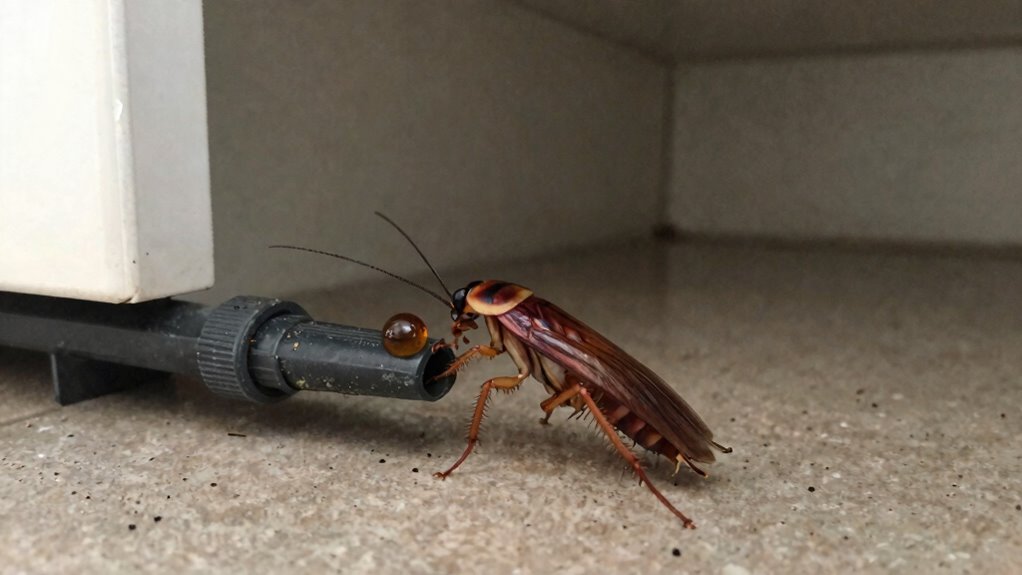
Gel baits can last for weeks, but they dry out fast near heat or drafts. For best roach killer results, apply them in cool, dark, hidden zones like cracks behind the fridge.
Use pea-sized dabs every few inches under the sink lip and along cabinet hinges. Too much bait will make roaches avoid the area entirely.
Timing is key for effective pest control. Apply gel baits at night when roaches forage for food.
Reapply after two weeks if you spot new droppings. For under $12, a syringe of Advion gel covers a typical apartment.
Place bait where roaches walk, not where you think they might go. This simple strategy is how you win the battle against roach infestations.
A slow-acting poison ensures worker ants carry bait back to the nest, share it with the colony, and cause colony collapse.
Why Sticky Traps Are Your Best Tool for Tracking Roaches
- Cost: Prices range from $5 for a multi-pack to $20 for professional-grade glue boards.
- Use: Leave traps for 3 to 7 days before checking to establish a baseline. Use them before applying baits to avoid repellent interference.
Don’t expect traps to solve the infestation. They reveal its character instead.
One trap can catch dozens, mapping the truly infested zones. That data is something no spray can provide.
For any lasting control, tracking first is non-negotiable. This method helps you target roach hiding spots with precision.
You can then apply insecticide bait or gel bait only where needed. It saves time and money on pest control products.
Professional exterminators often start with glue boards. They know sticky traps offer the clearest picture of activity.
For a reliable cockroach monitoring system, these boards are your best first step. Pair them with a quality roach killer later.
Unlike these traps, peppermint oil repellents provide a non-toxic, plant-based alternative that is safe around humans and pets.
Seal Every Crack, Gap, and Pipe Opening Roaches Use
Seal every crack, gap, and pipe opening that roaches use to get inside.
Use silicone caulk to seal gaps under cabinets and along baseboards for effective cockroach control.
Use silicone caulk to seal gaps under cabinets and along baseboards for effective cockroach control.
Fill spaces around windows, vents, and electrical outlets with caulk to block roach entry points.
Seal openings where water and gas pipes enter walls with foam or caulk for complete pest proofing.
Skip this step and you are just feeding them, not stopping roach infestations.
Seal it tight and they stay out for good home pest prevention.
For thorough inspections, a 395nm wavelength UV light can reveal hidden roach trails and droppings that indicate active entry points.
How Building-Wide Plans Stop Roaches From Coming Back
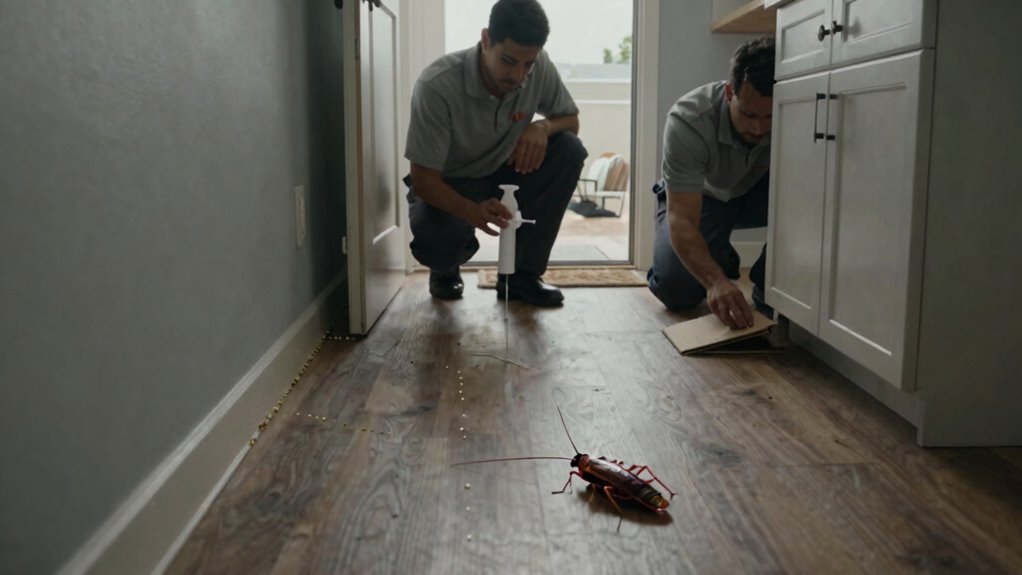
Sealing every crack keeps the roaches out, but a truly roach-free apartment requires a building-wide approach. Think of your unit as one slice of a roach-infested loaf; if the neighbors aren’t on board, the pests just move next door.
Resident cooperation is critical for successful pest control. Neighbors must report leaks, stash food properly, and let pest pros into their homes for treatment.
Building-wide plans likewise rely on smart municipal policies. Many cities now require landlords to hire licensed IPM professionals, who use sticky traps and gel baits over harsh sprays.
Regular building inspections every 6 to 12 months catch problems early. A quick, coordinated approach stops roaches from bouncing back.
It is like herding cats, but with fewer legs.
How to Keep Roaches Out for Good After Treatment
Elimination is only halftime; the real game is keeping it that way. Long term prevention requires staying on guard. Roaches are stubborn houseguests who will try sneaking back in.
Seal every crack and crevice with caulk or copper mesh around pipes, windows, and baseboards. A roach can fit through a gap the thickness of a dime. Do not give them a welcome mat.
Deny food and water by wiping counters, fixing leaks, and storing pet food in sealed bins. Vacuuming debris weekly removes crumbs and egg cases. Your vacuum becomes a stealthy ally.
Use eco friendly alternatives like gel baits that target nests without fumes. Rotate baits every three months to prevent resistance. It is like switching passwords for pests.
Persistence beats pesticides for keeping roaches out after pest control treatment. Keep your place dry, clean, and sealed. Roaches will find the welcome mat rolled up.
Consider placing sticky traps in dark corners and along baseboards to monitor activity and catch any returning pests.
Frequently Asked Questions
How Long Does a Cockroach Live?
A cockroach’s lifespan varies by species and environment. German cockroaches, common in apartments, live about 100 to 200 days.
This spans their life cycle stages, including egg, nymph, and adult. Indoor survival factors like access to food and water dramatically affect longevity.
Without humidity, they die in days. With ideal conditions, they thrive.
So, although an individual roach may not live long, its colony can persist indefinitely. This is a sobering thought for any renter.
If you spot one roach, it likely signals a larger infestation requiring professional pest control. For effective roach elimination, look for gel baits and insect growth regulators that target both nymphs and adults.
A fast acting cockroach killer can stop a colony in its tracks. Always pair chemical treatments with exclusion techniques to seal entry points and reduce moisture.
Buying a quality pest control product now can save you weeks of frustration later. Regular monitoring and sanitation are your best long term defense against recurring roach problems.
Can Cockroaches Climb up Through Drains?
Yes, cockroaches can climb up through drains. They squeeze through pipes and enter via sewer entry points, especially if traps are dry or cracked.
Water stops them, but a dry U-bend is an open highway. Fix leaks, seal gaps around plumbing, and pour vinegar monthly.
It’s a cheap habit, less than $5, and beats sharing your sink with a hissing roommate. For lasting pest control, consider a professional drain treatment or a one-way drain cover.
These simple steps block common roach entry points effectively. Keep your plumbing in good shape to prevent recurring infestations.
Do Ultrasonic Pest Repellers Actually Work?
Ultrasonic pest repellers are mostly a bust for real results. Research shows they rarely drive cockroaches out of your home.
The sound waves weaken over distance and are easily blocked by walls and furniture. That is the core ultrasonic myth: they seem like a neat fix but fail in real apartments.
Pest repellent safety is fine since no chemicals are involved. For maybe 30 dollars, you will hear a faint hum and still see droppings.
Bait gels and sealing cracks beat this gadget hands down. Save your cash for glue traps instead.
Is It Safe to Use Bug Bombs in an Apartment?
Short answer: No, bug bombs are not truly safe or effective in apartments. They spread chemical residue everywhere, including on your dishes and couch.
Worse, fogger safety issues include explosion risks from pilot lights and minimal penetration into hiding spots. That means roaches stay alive in walls, so those $10 cans are a wasted pest control investment.
Chemical residue coats surfaces you touch daily, like kitchen counters and sofa fabric. This forces a full home cleaning routine before you can safely cook or relax.
Foggers also have ineffective reach, because the mist misses cracks, behind appliances, and inside cabinets. Professional pest control experts rely on targeted treatments for a reason, and DIY fogging just doesn’t cut it.
Safety hazards are real, since aerosol propellants can ignite near gas stoves or water heaters. A single spark from a pilot light can turn a quick fix into a costly emergency.
Bottom line: use gel baits and crack sealing instead, which target roaches directly without soaking your home in pesticides. These methods offer longer-lasting cockroach control and reduce repeat infestations.
For apartment dwellers, choose bait stations, insect growth regulators, and silicone caulk for entry points. This approach is safer for kids and pets, and it’s what smart buyers look for in preventive pest management.
If you need immediate relief, look for roach gel with a syringe applicator and place small dots near harborage areas. Pair that with diatomaceous earth in wall voids for a non-toxic, budget-friendly defense.
How Do I Know if My Infestation Is Completely Gone?
Determining if an infestation is completely gone requires patience and monitoring.
No more droppings and silent nights are good signs, but they aren’t proof.
Stick around for two weeks without seeing a single roach before you start to relax.
Use sticky traps as your main monitoring tool, since they cost under $5 and work well when placed under sinks and behind appliances.
If those traps stay empty for four weeks, victory is likely and you can feel confident.
A single sighting after that means the war isn’t over yet; you need to repeat baiting with gel baits to finish the job.
Yes, it’s tedious, but thoroughness beats false confidence every time.
Then, and only then, can you finally relax and trust your pest control is complete.


