
Getting rid of cockroaches in the kitchen doesn’t start with a spray—it starts with a bait. Sprays and bug bombs only push roaches deeper into your walls, costing you money while making the problem worse.
The most effective approach uses gel baits with active ingredients like Fipronil or indoxacarb, placed in tiny dabs along cracks and under appliances.
Roaches eat the gel, carry it back to the nest, and die within days—without scattering the colony.
Below, you’ll find the exact products and a simple step-by-step plan to clear your kitchen fast.
At A Glance
- Use gel baits in tiny dabs along cracks, not sprays that scatter roaches.
- Apply boric acid dust as a thin layer in wall gaps and under appliances.
- Focus bait in kitchens and bathrooms, near moisture and food sources.
- Seal food in containers, fix leaks, and wipe counters daily to remove attractants.
- Call professionals for severe infestations costing $150–$500 per visit.
Why You Can’t Just Spray (And What to Do Instead)
The urge to grab a spray can and blast every visible cockroach is tempting and briefly satisfying, but it is a strategy that backfires. Sprays only kill the few roaches you see, scattering the colony deeper into your walls and making future infestations worse.
Effective cockroach control requires a broader approach, so start by scheduling a professional pest inspection or, if you go the DIY route, treat multiple rooms at the same time. Baits are your real weapon here, not sprays. Place gel bait, which is a slow acting poison mixed with a food attractant, in tiny pea sized dabs along cabinet edges, under the fridge, and near the stove.
Skip the spray in these areas because cleaning agents and residual insecticides repel roaches from the bait. Death takes one to three days for each roach, and colony collapse happens within weeks as they carry the poison back to the nest. Focus your treatment on kitchens and bathrooms where moisture and food gather, not random baseboards in living rooms.
Bottom line: sprays are for show, but baits are for a permanent fix. For serious infestations, look into integrated pest management services or ask about targeted cockroach baiting programs that include follow up visits. Alternatively, boric acid works as a powerful alternative with no resistance buildup over time.
Where Cockroaches Hide (And How to Find Them)
Grab a flashlight and get ready to look like a detective in your own kitchen, since cockroaches are masters of hide-and-seek. They prefer warm, dark, tight spaces near food and humidity.
Check electrical panel gaps, ceiling light fixtures, and the backs of appliances for effective pest control. You will find these pests hiding in damp, dark areas with pipe gaps for entry under sinks and cabinets.
Behind the refrigerator, the warm motor, food crumbs, and tight crevices create a perfect roach haven.
Inside toaster ovens, the heat attracts them, and they squeeze into tiny slots.
Wall cracks and baseboards give them easy access to multiple rooms via wall voids, so seal these entry points.
Look for droppings that look like black pepper, shed skins, or a musty odor to confirm a roach infestation.
They are not just in the kitchen, they travel through electrical panel gaps and ceiling light fixtures.
Focus on these dark, cluttered areas first to spot signs of roaches and target your pest control efforts.
For an even more thorough inspection, a UV light with a 395nm wavelength can make hidden pest droppings and shed skins glow.
How to Kill Roaches With Baits and Dusts
Bait placement is the secret to success, and it is all about quantity over quality here.
Gel baits applied in many tiny pea-sized dabs along cracks and corners outperform the plastic stations that sit in the open.
The key rule is simple.
If you spray cleaner nearby, the roaches will ignore the bait.
Keep things dry and let the gel do its slow steady work.
For effective roach control, remember that bait stations work best in undisturbed zones.
Use dusts like boric acid or diatomaceous earth in wall voids and under appliances.
These fine powders cling to pests and provide long lasting treatment options.
For colony elimination, bait stations with double-sided tape can be discreetly placed behind appliances to target the nest.
Placement Strategy Tips
Two key rules for bait and dust placement are using more tiny dabs instead of big globs, and placing them out of sight but directly in roach paths.
Think of cockroaches as shy, hungry roommates; they will avoid piles you can see but will happily investigate thin smears along cabinet edges, under the fridge, or where pipes enter walls.
Pea-sized dabs of gel bait work much better than thick lines.
Dusts like boric acid need only a whisper-thin layer, because roaches will not walk through a flour-like drift.
Place these treatments near dark corners, baseboards, and appliance gaps.
Skip spots where you spray chemical repellents, as those repel bait.
For a gentler touch, natural deterrents like peppermint oil can help but they will not kill roaches.
The bottom line is to spread small, hidden doses along roach highways and refresh them weekly.
This pest control strategy wins the war one dab at a time.
Professional exterminators recommend checking kitchen and bathroom entry points for best results.
Buy gel bait and boric acid dust online for targeted home pest control treatment.
Follow these placement strategy tips to eliminate infestations fast.
For long-term results, apply high-purity boric acid to cracks and crevices for continuous residual control.
Bait Station vs. Gel
Since bait stations and gel baits both kill roaches, the real question is which one fits your life and your patience level.
Gel application wins for precision, letting you squeeze tiny dabs into tight cracks where roaches hide, like under the fridge hinge.
Station placement demands more thought. You must shove them flush against corners or edges, or roaches ignore them. It is like giving a cat a bed in the middle of the room.
Gel needs a steady hand and a syringe; stations are ready to use plastic squares.
Gel costs around $15 a tube for 50 placements; stations run $10 for six, which last weeks.
Gel works in 1 to 3 days; stations need longer, a week or more, for full kill.
Gel reaches hidden spots; stations only cover floor edges and corners.
Gel dries out if forgotten; stations stay fresh, self contained, no mess.
For deep crack action, pick gel for targeted roach control.
For simple, set and forget ease, stations are a dandy solution for ongoing pest prevention.
Gel baits provide residual protection up to three months when applied correctly and kept dry.
Boric Acid vs. Diatomaceous Earth: Which Works Best?
Why mess around with dusts that don’t deliver? Boric acid wins hands down against diatomaceous earth for roach control.
It kills after they groom particles off their legs, and it stays potent forever if kept dry. Diatomaceous earth loses its edge once it contacts moisture, clumping into useless goo.
For boric acid safety, it has low toxicity to pets and humans when applied as a fine, barely visible layer. Roaches avoid piles, so use it in cabinet crevices, wall-floor junctions, and plumbing gaps.
Diatomaceous earth works only in bone-dry spots, like behind a rarely moved fridge. Bottom line: boric acid is cheaper, longer-lasting, and more reliable.
Skip the powder that hates humidity. When applying, wear gloves and a mask, and keep treated areas dry for effective pest control.
Why Bug Bombs Make Things Worse
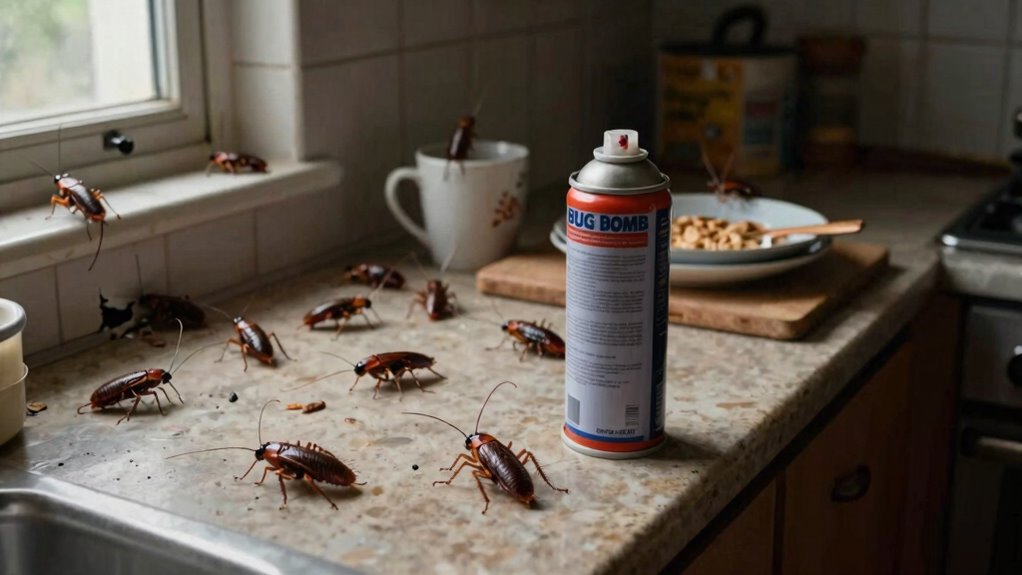
Bug bombs, also known as total release foggers, often scatter roaches instead of killing them. This drives the pests deeper into walls and neighboring apartments where they are harder to reach.
The foggers fail to penetrate the hidden cracks and crevices where cockroaches actually harbor. This makes them mostly ineffective against established infestations in your home.
Perhaps worst of all, the spray residues from bug bombs can contaminate bait placements. This ruins the slower, more strategic approach that professional grade roach baits rely on to wipe out a colony.
For effective cockroach control, you should skip the foggers and focus on targeted baiting and crack and crevice treatments. Always consider integrated pest management strategies for long term results.
Scatter Roaches Instead
Bug bombs often make roach problems worse instead of solving them. The fog cannot reach under stoves, inside cabinets, or behind walls, so roaches simply scatter to new hiding spots.
These scattered roaches then move into neighboring apartments or bedrooms, making the infestation harder to detect. You also end up with visible pesticide residue on countertops and floors, creating a cleanup headache for days.
Roaches learn to avoid the chemical cloud, building resistance over time. Ineffective bombs waste roughly $15 per can, while gel baits costing $12 last for weeks. Additionally, foggers cannot reach hidden or deep-seated roach nests, leaving the colony intact in walls and appliances.
Targeted roach baits and insecticide dusts actually work by letting pests carry poison back to their nest. For long term roach control, choose professional grade products that eliminate the colony instead of spreading it.
Ineffective Hidden Harborage
A common misconception in pest control is that bug bombs can reach cockroaches hiding in kitchens. They cannot. These aerosol clouds merely deposit a thin film on exposed surfaces, leaving roaches snug in cracks behind cabinets or under dishwashers.
This turns any half baked traps into worthless decorations and fails as a real roach treatment. Worse, the sudden mist often scatters roaches deep into walls, spreading the colony to new hiding spots.
Scented repellents inside foggers can also contaminate food prep surfaces, leaving chemical residue on tomorrow’s sandwich. Save your twenty bucks.
Instead, apply gel bait in pea sized dabs directly into crevices, because that is where roaches actually forage. Skip the fogger, and you might not need to worry about cockroach related extermination failures.
Bottom line: bug bombs waste money and time, but direct targeting with professional pest control products works, and opting for a fast-acting gel with ingredients like Fipronil or indoxacarb can wipe out entire colonies within hours.
Sprays Ruin Bait Strategy
Spraying your kitchen with a store bought aerosol or bug bomb actually sabotages the roach baits that could work.
Bug bombs scatter roaches into walls, while residues repel them from gel baits and cause feeding disruption.
Broad sprays accelerate insecticide rotation resistance, making future pest control treatments weaker.
Aerosol residue lingers on surfaces, masking bait attractants and confusing roaches.
Foggers push roaches deeper into hiding spots where baits cannot reach.
Sprayed roaches become bait shy, ignoring food lures for weeks after exposure.
Insecticide rotation requires using different chemicals, but sprays burn through that advantage fast.
You waste fifteen dollars on a bomb, then need forty dollars in baits anyway.
Skip sprays entirely for effective roach control.
Apply gel baits in tiny dabs, wait a week, and let the roaches do the dying.
Your kitchen and your wallet will thank you for this simple bait strategy. Safer alternatives like peppermint oil sprays from the natural repellent options provide non-toxic indoor pest control without sabotaging bait effectiveness.
Simple Kitchen Habits That Keep Roaches From Coming Back
Stop bringing cockroaches home in grocery bags. Inspect paper bags and beverage cartons before setting them on the counter.
Roaches hitchhike in, then settle into a kitchen with poor food storage and dampness control. The daily routine matters more than you’d think.
Store dry goods like flour, cereal, and pet food in sealed plastic or glass containers. Roaches can chew through cardboard and thin plastic bags, so switch to airtight pest-proof storage. Four-sided locking lids with silicone gaskets block air and water to keep pantry pests like weevils and moths out.
Fix leaky faucets and dry out sponges overnight. Dampness is their main drinking source, so eliminating moisture is a key step in professional pest control.
Wipe down counters, sweep crumbs, and don’t leave dirty dishes in the sink overnight. Take out trash regularly, especially if it contains food scraps.
A clean, dry kitchen won’t feel inviting to them. It’s not dramatic, just boringly effective for roach prevention.
They will get the hint and move elsewhere, leaving your home free of these resilient pests for good.
When to Call a Professional Exterminator
You will know it is time to call a professional exterminator when the roach count in your kitchen passes the “I’ve lost track” stage. That is the point when DIY baits and dusts just are not cutting it anymore. Professional treatment usually costs between $150 and $500 per visit. It handles signs of severe infestation like roaches visible during daylight, droppings in every drawer, or a musty odor that lingers. Exterminators use industrial grade gels, dusts, and insect growth regulators that stop roaches from breeding. For less severe issues, you might consider indoor bug zappers as a maintenance tool. You might see roaches scatter when you flip a light switch, hiding behind the fridge or inside your toaster. If you find dead roaches in your coffee maker, or worse, alive ones in the sugar bowl, that is a clear sign. The cost of professional treatment often beats replacing appliances, which runs into thousands of dollars. Egg casings called oothecae appearing in corners mean new roaches hatch weekly. Your neighbors might complain, since roaches travel through walls between units. The bottom line is simple. If you have tried every DIY method and they are still winning, a pro is cheaper than a new kitchen.
Frequently Asked Questions
Can Cockroaches Come Back After Professional Treatment?
Yes, cockroaches can return after professional treatment. Professional pest control effectively kills the current infestation, but re infestation prevention depends on you.
Seal cracks, clean crumbs, and stop bringing in infested boxes. Think of the treatment as a reset button, not a force field.
The pros blast the bugs, but if you leave a welcome mat of crumbs and gaps, the roaches will RSVP yes. Stay diligent, or they will throw a reunion party.
Do Roaches Climb Into Beds or Other Rooms at Night?
Yes, roaches climb into beds and other rooms at night, and this is a common pest control problem. These nocturnal pests travel through walls, pipes, and wires, searching for food, moisture, or warmth.
A kitchen infestation rarely stays contained, so roaches will investigate bedrooms, furniture, and even mattresses. Don’t worry, they are not after you, just crumbs, sweat, or damp spots near your bed.
Still, that fact does not make it less gross, and it signals a need for effective home pest control. To stop roaches from entering your bedroom, seal cracks around baseboards, windows, and pipes.
Keep your bedroom food free, vacuum regularly, and address any moisture under sinks or near the bed. For a real fix, treat the entire home with a professional grade roach bait or gel, not just the kitchen.
How Long Does It Take for Boric Acid to Kill Roaches?
Boric acid kills roaches based on how quickly they ingest the powder. After crawling through a fine dust layer, roaches groom it off their legs and swallow a lethal dose.
Most roaches die within one to three days of ingestion. A full infestation collapse usually takes a couple of weeks as the poison spreads through the colony.
Patience is essential with this roach killer, since it works by slow attrition. For best results, apply boric acid in thin, even lines along baseboards and behind appliances.
This pest control powder is ideal if you want a long term solution for cockroaches. Consider pairing it with gel baits to speed up elimination and target resistant populations.
Professional exterminators often recommend boric acid for hard to reach nesting spots. It remains effective for months as long as you keep it dry and undisturbed.
Buyers seeking affordable roach treatment often choose boric acid for its low cost. Just be sure to keep it away from pets and children during application.
Can Cockroaches Survive in a Refrigerator or Freezer?
Can cockroaches survive in a refrigerator or freezer? Yes, but only briefly because their cold tolerance is low. Most cockroaches die below 15°F within hours, so a standard freezer set at 0°F kills them fast.
However, a refrigerator running at 35 to 40°F only slows them down. They can survive for days if food scarcity forces them to hide inside.
Roaches often hide in motor compartments for warmth rather than the main storage areas. If you need effective pest control, freezing infested items is a reliable extermination method.
But don’t count on your fridge as a roach trap. It is more of a chilly rest stop than a long term solution.
For real cockroach control, look for professional grade bait stations or gel treatments. These products target egg sacks and nymphs that survive cold temperatures.
Will Leaving the Lights on Keep Cockroaches Away?
Leaving lights on will not keep cockroaches away. They have a light sensitivity, but it is a behavioral aversion, not a death sentence.
Roaches just scurry to darker cracks when a bulb flips on. They will wait there, hungry, then come right back out.
You are basically giving them a nightly workout routine. For actual pest control, skip the light show and use gel baits in corners and boric acid dust.
Lights are for you, not them. Bottom line: save the electricity.
Invest in professional grade cockroach bait stations for long term results. These products target the colony where the roaches hide during the day.
If you want to buy the best roach killer for your home, look for slow acting formulas that roaches carry back to their nests. That is how you truly break the infestation cycle.


