
Getting rid of mice in the basement starts with understanding how they actually get inside. Those tiny dime-sized gaps near pipes and vents are open highways for mice, even if you think your foundation is sealed.
Because mice have collapsible collarbones, they slip through holes as small as a quarter-inch without any struggle. The fix isn’t complicated, but it does require the right materials and a precise technique to block them permanently.
This guide walks you through the exact steps to seal entry points, remove attractants, and set traps that actually work. You will learn why copper wool beats foam every time and why poison causes more problems than it solves.
If you want a dry, mouse-free basement without expensive odor removal later, these practical methods cover everything. Let’s get started with the most critical step you cannot skip.
At A Glance
- Seal all gaps larger than 1/4 inch with copper wool and caulk.
- Place snap traps flush along walls with peanut butter bait.
- Store all food in metal or thick plastic airtight containers.
- Remove clutter like cardboard boxes and stacked firewood near foundation.
- Avoid poisons; use traps to prevent dead rodents in walls.
How to Find Every Mouse Entry Point in Your Basement
Mice don’t need a front door. They just need a hole the size of a dime or about 1/4 inch to slip through.
Their collarbone lack lets them flatten and squeeze into gaps you would think impossible for pest control.
Inspect entry points after dark when they are active nocturnal investigators. Grab a flashlight and a ruler for your basement rodent inspection.
Look along foundation walls at every pipe, vent, and wire entry. Gaps hide where concrete meets framing and behind stored items.
Check for droppings and grease smears as clear signs of mouse activity. Pay close attention where utility lines enter around gas or water pipes.
Move slowly and check methodically to find every dime sized hole. One overlooked crack means sealing all entry points is your best rodent proofing step. For long-lasting results in damp basements, choose rust-resistant stainless steel wool or copper mesh to block these gaps.
Finding every gap is tedious but beats sharing your basement with uninvited guests. A thorough home pest control inspection now saves you from a full infestation later.
How to Seal Every Crack, Gap, and Hole in Your Basement
Now that every dime-sized hole is mapped out, the real work can begin. Seal them all because mice flatten their skulls through quarter-inch gaps.
Use hardware cloth or galvanized steel sheets for permanent mouse exclusion. Copper wool is your best choice for plugging gaps around pipes, vents, and foundations.
Cover the copper wool with caulk or plaster to create a rodent proof seal. Caulk runs about five dollars a tube and works well for utility lines.
Check your attic and crawlspace for additional entry points as well. Skip flimsy foam since mice chew through it easily.
Every sealed crack cuts off their winter highway and stops pest infestations. Do it right and those tiny trespassers find no welcome mat. For smaller gaps, consider using copper barrier tape with strong adhesive to seal cracks mice might exploit.
How to Eliminate Food and Shelter That Attract Basement Mice
Without food and shelter, mice simply won’t stay. Start by removing clutter like cardboard boxes, old newspapers, and stacked firewood, which offer perfect nesting spots.
Seal all food in metal or thick plastic containers to prevent rodent access. Never leave trash accessible, or you are essentially running a rodent bed-and-breakfast.
For effective mouse prevention, inspect your basement for gaps and cracks that serve as entry points. Seal these openings with steel wool or caulk to block shelter.
Store pet food and birdseed in airtight containers as well, since these attract mice quickly. Consider professional pest control services for a thorough exclusion plan.
Keep firewood at least 20 feet from your home to reduce harborage near the foundation. Regular cleaning and decluttering are key steps to eliminate food sources and hiding spots. For an additional chemical-free defense, place repellent balls in corners and storage rooms to deter rodents with a long-lasting scent.
Remove Clutter Sources
Cardboard boxes are a magnet for mice, since they chew through them in no time and turn your storage into a breeding ground. Switch to plastic totes with tight lids to keep rodents out and your belongings safe.
Stacked firewood against your wall acts like a five-star rodent hotel, offering warmth and hiding spots. Instead, store it outside and raise it off the ground to remove that inviting shelter.
Old furniture, like a forgotten couch, gives mice a perfect hideout where traps can’t reach them. Haul it out or break it down for disposal to eliminate these clutter sources for good.
Recyclables like cans and bottles often hold food residue, which attracts pests looking for an easy meal. Rinse them thoroughly and keep them in sealed bins, never in loose piles around your home.
A clean floor and open walls deny mice their cover, forcing them into the open where traps work best. This simple pest control step boosts your rodent prevention efforts and makes treatment more effective. For added protection, consider placing ultrasonic rodent repellers in the basement to emit high-frequency sounds that disrupt pests’ nervous systems without using chemicals.
Seal Food and Trash
Mice don’t need a feast, just a few crumbs will keep them coming back for more. They’ll chew through cardboard, plastic bags, and even thin metal to reach pet food or garbage.
Prioritizing sealing means storing dry goods in thick plastic or glass containers, not flimsy boxes that mice can gnaw through. For trash, use a metal can with a tight lid, since plastic lids get chewed off fast.
Proper waste sorting likewise matters, so separate food scraps into sealed bins and compost only in rodent-proof tumblers. Remove old fruit or vegetable peels daily, making this a simple nightly routine.
This small habit starves out potential squatters and reduces the need for repeated rodent control treatments. Bottom line: lock down every edible crumb and sniff-worthy scent, or expect returning guests.
If you’re dealing with an active infestation, start with exclusion sealing to close entry points, then upgrade your storage to pest proof containers. For persistent problems, consider professional pest management services that target nesting sites and food sources.
Effective pest prevention is all about removing attractants before you ever see a mouse nose. A clean pantry and a tight-lidded trash can are your first line of defense against costly extermination calls.
Choose containers with silicone gaskets and locking lids to block pests and humidity effectively.
The Best Traps for Basement Mice and Where to Set Them
For basement mice, the snap trap remains the undisputed champion. It is cheap, effective, and about as complicated as a paperclip.
Trap placement is everything. Set them flush along walls near droppings or gnaw marks with the trigger side facing the wall.
Trap placement is everything. Set them flush along walls with the trigger side facing the wall.
Peanut butter works best for bait, but a dab of bacon grease is also fine. Place traps every three to five feet along baseboards where mice scurry.
Use two traps per spot facing opposite directions to catch mice coming from either side. Put traps near holes, pipes, or utility lines like a tiny deadly welcome mat.
Secure bait with thread or a twist tie so mice cannot steal it without tripping the snap. Check traps daily and reset after each catch.
That is it. Simple, safe, and surprisingly effective for rodent control during basement pest inspection. For even better results, consider combining snap and glue traps to cover different pest behaviors and pathways.
How to Set Snap Traps So They Actually Work
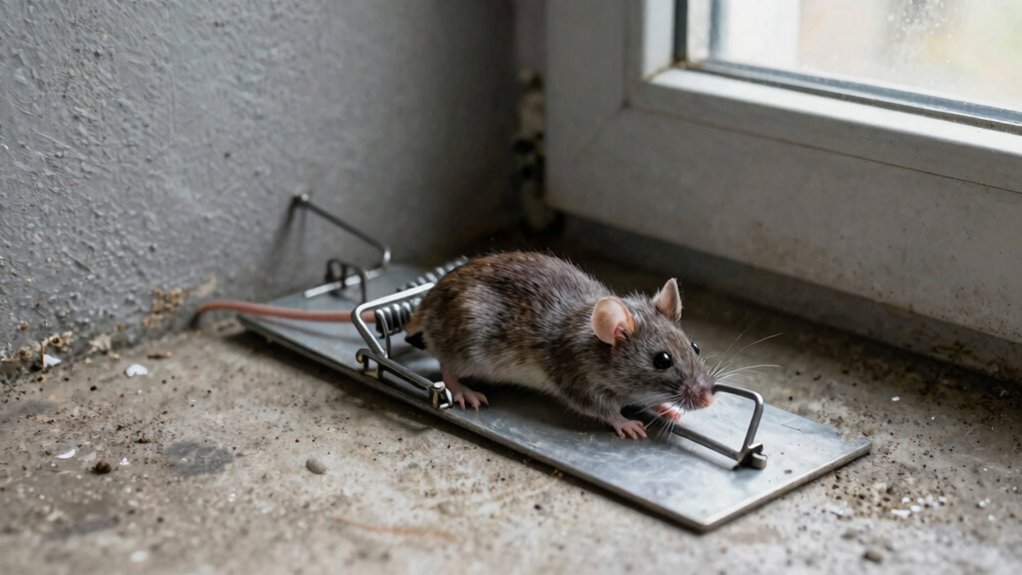
The snap trap’s secret isn’t in the bait, it’s in the setup. For indoor rodent control, position traps flush against walls where mice run, with the treadle facing the baseboard.
Use two traps back-to-back, pointing opposite directions, to catch mice coming from either side. Trap spacing matters for effective pest prevention: set one trap every 10 feet along active areas.
Peanut butter works fine for mouse bait, but the real trick is a light touch. Too much bait lets them steal it, so use just a small dab to force a trigger.
Check traps daily for dead rodent removal; dead mice attract more problems like beetles or odor. Good setup beats good bait for successful rodent extermination.
It’s not glamorous, but it works for home pest control. Buy quality snap traps and place them strategically for the best results. For extra bite force, choose traps with double springs for faster, more reliable captures.
How to Dispose of Dead Mice in Your Basement
Dead mouse disposal is a grim task that separates a clean basement from a smelly problem. Always wear rubber or nitrile gloves to prevent disease transmission during pest cleanup.
Double bag the dead mouse in plastic grocery bags, twisting each shut to lock in odor. Drop the bagged mouse into a tight lidded metal trash can to keep out scavengers.
Spray the trap area with a bleach water mix at a 1 to 9 ratio. Let it sit five minutes before wiping down with paper towels.
Toss those towels into the same trash bag for complete waste removal. Never touch the mouse bare handed, even if it appears harmless.
This simple rodent disposal step saves you from regret and health risks. Glove up, bag it tight, and toss it fast for effective pest control. Always use tamper-resistant bait stations to prevent non-target access when placing baits in the basement.
Why Are Poisons a Bad Idea in Basements?
Poisons are a bad idea in a basement, plain and simple. Rodents that consume them often crawl into wall voids or under floors to die, and that leads to a serious odor problem that can linger for weeks.
The only fix is often cutting into drywall to remove the decaying carcass. Worse, these baits pose a very real danger to curious kids and pets who might find the pellets before a mouse does.
Instead of using rodenticides, consider trapping as a safer pest control method. Snap traps or live traps give you a clean removal and avoid hidden carcasses.
Basement odor elimination is far easier when you control where the rodent dies. For a long-term solution, seal entry points with stainless steel wool and caulk to prevent reinfestation.
This approach keeps your family and pets safe while effectively managing the mouse problem. Professional pest control can also offer non toxic solutions for persistent infestations.
Poisons Risk Children & Pets
Two big reasons curious kids and snooping pets make poison a terrible idea for basement mouse control. Poisons are a gamble with lives you actually care about.
Young children investigate every corner, and pets will sniff or taste anything new. The risks are concrete. Kids might grab colorful bait blocks, mistaking them for candy. Pets can ingest poison directly, causing seizures or internal bleeding. Secondary poisoning also threatens pets that eat a poisoned rodent, as anticoagulant types like difethialone require Vitamin K1 as an antidote for accidental contact.
Even if an animal avoids the bait, it can suffer secondary poisoning by eating a poisoned mouse. Mice that survive the first taste develop bait shyness, making them avoid future baits entirely.
Traps are cheaper, simpler, and safer with no hidden hazards. A snap trap costs about a dollar. Your basement stays kid friendly, pet proof, and pest free, without a trip to the emergency vet. Bottom line: skip the poison, set the traps.
Rodents Die in Walls
When poisoned rodents crawl into walls, attics, or under floors before dying, a foul odor can linger for weeks in a basement that is already hard to air out. Rodent decomposition creates a smell that is stubborn and persistent, often requiring you to cut into drywall for proper odor removal. That hassle costs real money, with professional wall repair and cleanup ranging from 200 to 600 dollars. Even after that, the stench can return if the carcass is not fully removed. Poisons cause a slow death, giving mice time to hide in hard to reach spots. Odor removal is rarely complete without tearing out sections of wall or ceiling. Traps, by contrast, keep the dead rodent in plain sight and avoid this entire mess. For effective rodent control, skip the poison and use snap traps to save yourself a nose cringing headache. Unlike neurotoxins such as bromethalin, which have no antidote and pose higher risks if accidentally consumed by pets or children.
How Do You Mouse-Proof Your Basement Permanently?
Permanent mouse-proofing isn’t glamorous, but it’s the only way to truly end the rodent game for good.
You need meticulous exclusion: seal every gap larger than 1/4 inch to stop mice from squeezing through.
This isn’t a one-weekend fix; it’s a steady, boring victory that pays off with lasting peace of mind.
For a complete rodent control strategy, start by sealing all entry points with 1/4 inch hardware cloth or metal sheets, and caulk around pipes.
Remove all clutter like cardboard, firewood, and old boards, since these are cozy shelters that invite mice to stay.
Improve sanitation by eliminating crumbs, compost, and any welcome mat for pests, because a clean space signals no food source.
Set traps proactively even without visible signs, focusing on placement along walls with high-traffic bait options.
Proper trap placement uses two back-to-back snap traps at right angles to walls, which guarantees quick kills and reduces suffering.
Pair this with smart bait choices; peanut butter works better than cheese, surprising many homeowners who assume otherwise.
Good sanitation alone fails, but when combined with sealing and trapping, it forms an impenetrable defense against future infestations.
For pest control services, you might also consider professional inspection to catch hidden cracks in foundation or utility lines.
Bottom line: do the boring work now, skip the rodent damage and cleanup drama later, and enjoy a mouse-free basement year-round.
As an extra layer of defense, consider using natural peppermint oil sprays on baseboards and entry points to deter mice without harsh chemicals.
6 Signs of a Mouse Infestation in Your Basement

A basement mouse problem usually announces itself before you ever see a live rodent. Droppings are the first clue: small, dark pellets about ¼ inch long, scattered along walls or near food storage areas.
Droppings are the first clue: small, dark pellets about ¼ inch long, scattered along walls or near food storage.
Next, listen for scratching or scurrying at night, which is typical rodent behavior as mice travel hidden routes behind drywall or under shelves. Gnaw marks on wires, wood, or plastic signal active chewing; fresh damage looks light-colored, while old damage turns dark and brittle.
Greasy rub marks along baseboards or pipes reveal frequent travel paths from entry points, so check corners where pipes meet walls. Nests made of shredded paper, fabric, or insulation often appear in hidden corners near appliances or storage boxes.
Finally, a musky odor from urine trails becomes noticeable in enclosed spaces, and this smell often intensifies near nest sites or feeding spots. Spotting any sign means it’s time to act: seal foundation cracks, install door sweeps, and set snap traps before a single pair turns into a hundred.
For a fast pest control response, combine bait stations with exclusion work, and inspect monthly for new droppings near utility lines. Professional rodent removal services can also perform a thorough attic and crawlspace audit if you prefer guaranteed elimination.
Acting quickly saves you from costly wire repairs and contamination risks, so call a local exterminator for same-week service if you see multiple signs. Early intervention keeps your basement safe, clean, and free from breeding pairs that multiply within weeks. Tamper-resistant bait stations prevent pets and kids from accessing rodenticide while keeping the bait dry and effective for the full 15-day feeding period mice require.
Frequently Asked Questions
Can Mice Climb Walls to Get Into a Basement?
Yes, mice can climb walls to get into a basement. Their climbing ability lets them scale rough surfaces like brick, wood, or drywall using tiny claws for grip.
For basement entry methods, mice additionally squeeze through gaps as small as 1/4 inch around pipes or vents. A snap trap placed along a baseboard, set at a right angle, catches them mid climb.
Better seal holes with hardware cloth or caulk. Think of it as denying them their tiny parkour course.
If you want to stop rodent infestations, focus on rodent proofing your foundation. Cracks in concrete or loose siding are common access points for mice.
For a long term mouse control solution, combine exclusion with interior trapping. This is the best way to handle a basement rodent problem.
You can also install a door sweep on your basement door. It blocks the gap that allows mice to scurry right under.
Need professional mouse removal? Look for a pest control service that offers crawl space sealing and integrated pest management.
Buying the right snap traps or electronic repellents saves you time and money. Just remember to inspect your attic and basement walls monthly for signs of gnawing or droppings.
How Often Should I Inspect Basement Entry Points?
Inspect basement entry points monthly. Set a phone reminder so you never forget this simple pest control task.
Check basement drain covers for gaps. Also make sure foundation crack sealing holds tight against rodents.
Mice squeeze through holes as small as 1/4 inch. A quick visual inspection saves you from a full infestation later.
Seal any new cracks with concrete or metal. Caulk alone is a snack for mice, so choose rodent proof materials.
Combine this with regular trap checks. This routine helps you stay ahead of any pest problem.
A little monthly maintenance beats cleaning up after a hundred mouse babies. Smart pest control purchases like steel wool and metal mesh pay off fast.
Will Ultrasonic Repellents Work for Basement Mice?
Ultrasonic repellents rarely work on basement mice. The high pitched sound they emit can easily be blocked by clutter or walls.
Poor placement, like pointing them away from mouse paths or behind boxes, kills any chance of success. One unit might cover 200 square feet, but a typical basement needs three or four units at $30 each.
Mice eventually ignore the noise, so don’t waste your money on these pest control devices. For a smart purchase that actually works, use snap traps along baseboards.
They cost just $2 each and consistently catch the culprits. Stick with proven rodent control methods to eliminate your mouse infestation for good.
What Scent Keeps Mice Away From the Basement?
Peppermint oil is a common deterrent because its strong scent overwhelms mice. However, it is not a reliable fix and you must reapply it every few days.
Strong ammonia mimics predator urine, but those fumes fade fast. Both are short term tricks, like wearing a raincoat in a storm. They help but do not seal the roof.
For real results, block entry points and use snap traps or electronic traps. Scent alone rarely solves a mouse infestation. It just masks the problem with a whiff of optimism.
If you need long term rodent control, invest in exclusion materials and professional grade baits. Stop relying on scents and start sealing gaps for a permanent solution.
Can Mice Chew Through Copper Wool or Steel Wool?
Mice can chew through copper wool, but steel wool is the real barrier that stops them cold. Copper wool’s softer metal gives those gnawing teeth an easier win, while steel’s toughness blocks their entry effectively.
Steel wool’s rust factor is a downside, especially in damp basements where it deteriorates over time. Yet for an immediate rodent defense, its metallic strength beats copper wool every single time.
For anyone dealing with a mouse problem, this is a top pest control tip to remember. You need a durable rodent exclusion method, and medium-grade steel wool is your best bet for sealing gaps.
Pack it tightly into cracks and holes, then cover it with caulk for a permanent fix. This simple DIY pest control solution costs little but delivers the long term protection you want.
Buyer intent matters here: choose steel wool over copper wool for effective mouse proofing. It’s a small chore that pays off by keeping your home rodent free.


