
Wondering how long it really takes to get rid of ants? Most people expect it to happen overnight, but the honest answer is two to four weeks.
The slow-acting bait is what does the job—foragers carry it back to the nest, and you might even see an “ant flush” in the first 48 hours, which actually means it’s working. By week two, trails shrink by 60 to 80 percent, so patience really wins this war.
We’ve rounded up the best ant-killing supplies for 2024, with helpful notes on what’s worth buying and what to skip. From species-specific timelines to essential dampness pitfalls, this guide keeps it practical and quick for parents who want results.
Keep reading for the product roundup below.
At A Glance
- Typical ant colony die-off takes two to four weeks with slow-acting baits.
- Most infestations are functionally resolved by weeks two to three, leaving stragglers.
- Professional treatments often require two to three visits over several weeks.
- Stubborn species like carpenter ants can take 6–12 weeks; pharaoh ants 8–16 weeks.
- No significant progress by week four indicates treatment failure or wrong approach.
How Long Does It Really Take to Get Rid of Ants?
So, how long does it really take to get rid of ants? The straightforward answer, for most typical infestations, lands between two and four weeks.
That feels like forever, but it is the real timetable for full ant colony die off. Bait works slowly and deliberately.
Worker ants transport the poison back to the nest. They feed the queen and her young, which directly attacks colony health. The active ingredient’s concentration is a critical factor in this timing.
Expect a sudden spike in ant activity during the first few days. That is a feeding frenzy, not a failure.
Week one: numbers dwindle. Weeks two through three: visible progress.
Typical pest control treatments cost $120 to $180 per visit. Most jobs need two or three visits for complete ant extermination.
Patience beats panic here. Deep breathing helps.
If ant activity persists past day thirty, follow ups are usually covered. For persistent ant problems, professional ant removal services are your best bet.
Why the Species Determines Your Treatment Timeline
Since the species dictates the timeline, there is no single “ants are gone” countdown that works for everyone. First, species identification sets the baseline for your pest control estimate.
Carpenter ants, for example, demand six to twelve weeks since they nest deep inside wood. Fire ants take four to eight weeks, thanks to their sprawling mounds. Using a fire ant bait that kills all life stages can speed up colony control, though complete removal still depends on mound size and location.
Carpenter ants: six to twelve weeks. Fire ants: four to eight weeks.
Pavement ants need two to three weeks, making it an easier treatment. Pharaoh ants can stretch things to eight to sixteen weeks, requiring a whole different level of patience.
But species identification isn’t the whole story. Colony location also plays a huge role in your treatment plan.
Ants nesting behind a wall or under concrete stay out of reach, slowing down treatments. So don’t expect a universal timeline for complete ant removal.
Knowing the enemy sets your ant control budget. Pest control pros base their timeline estimates on both species and colony location.
The Baiting Truth: Patience Is Required for Colony Kill
Knowing the ant species and nest location tells you who you’re fighting. But your baiting method becomes the battle plan, and that plan almost always includes a waiting period.
Bait persistence means slow-acting gels stay potent for weeks. This lets workers carry poison deep into the nest for a complete colony kill. Using dual-formula baits targets both sweet- and protein-eating ants, which can speed up the colony elimination process.
The colony lifecycle demands every ant, from queen to larva, ingest the dose over time. Expect two to four weeks for Argentine ants, four to eight for fire ants, and up to twelve for carpenter ants.
Spraying kills scouts but spares the nest. That is pruning one weed and calling the garden done.
Refresh bait weekly and resist spraying. Let the bait do its very quiet work for the best pest control results.
Bottom line is to budget for a month or two. Then the nest goes silent and your treatment plan is finished.
Why You Might See More Ants in the First 48 Hours
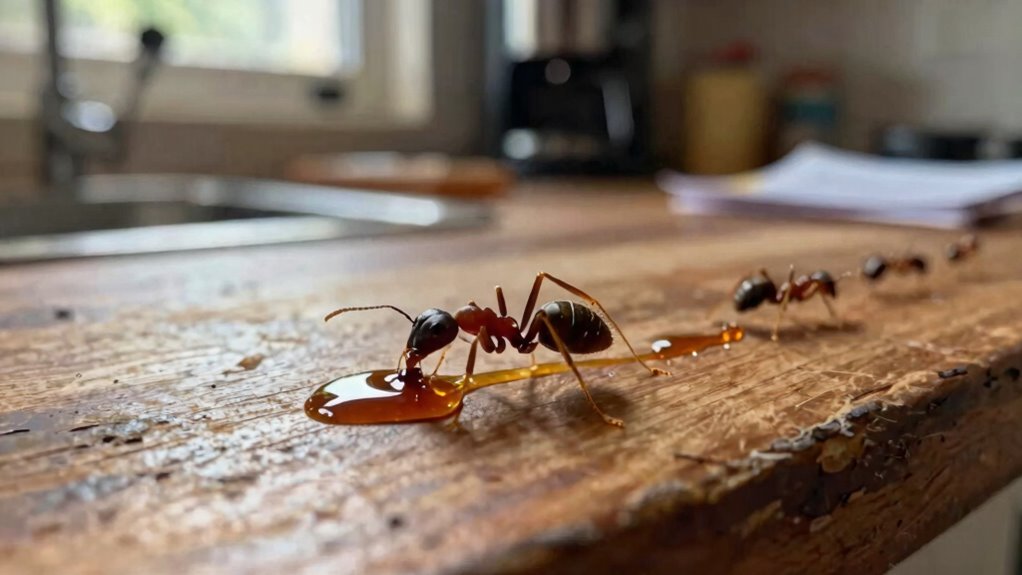
Watching a frantic parade of ants march through your kitchen after a fresh bait application might feel like your plan backfired, but it is actually a sign the system is working.
That frenzied activity is the “ant flush,” an initial surge driven by detection, not a colony explosion.
Workers find the bait, love it, and recruit every sibling, cousin, and queen-adjacent neighbor to the feast.
They are not multiplying, they are just showing up en masse, like uncles at a free buffet.
The bait kills slowly and deliberately.
It needs workers alive long enough to ferry poison back to the nest, where they feed the queen, the larvae, and everyone else.
Your payoff requires about a week of patience for effective ant control.
Complete eradication can take two to four weeks for stubborn colonies.
Within roughly a week, activity plummets, and your kitchen settles down.
Track Progress Week by Week After Treatment
Week one usually brings a noticeable decline, but panic is unnecessary if a few stragglers appear. That is just the bait doing its slow, nasty work against the colony.
By the end of that first week, worker ants that fed on the bait have died off. The colony’s foraging trails start to look like a ghost town.
Weeks two and three are where the real gains happen as the bait reaches the queen and brood. This pest control treatment often cuts activity by 60 to 80 percent for common species like Argentine ants. To keep this progress going, reapply every three to four weeks to ensure the colony never rebounds.
Week One Decline
| Day | Expected Activity | Homeowner Action |
|---|---|---|
| 1–2 | High activity spike; ants foraging more | Leave bait undisturbed |
| 3–5 | Activity remains steady, but less frantic | Resist spraying over bait |
| 6–7 | Noticeable decline; fewer trails visible | Trust the process, keep monitoring |
Those first frantic days are the poison working, not failing. Workers are carrying the lethal meal back to the queen.
Give it the full week; you are watching the colony eat its last supper. Stick with it, and you will see the ant control results you hired us for.
You are not failing; the bait is working. The delayed action is what allows every worker to share the toxic dose before die-off begins.
This is a classic slow-kill pest control strategy, and it is highly effective against colony structures. Keep monitoring entry points and resist any aerosol spray, because surface repellents will ruin the bait transfer.
By day six or seven, you should notice fewer trails and less foraging near kitchen counters. That decline is the colony collapsing from the inside out.
If you still see stragglers after the full week, contact us for a targeted inspection and possible reapplication. Your patience now saves you from a bigger infestation later.
After the colony is gone, a thin line of diatomaceous earth can be placed along entry points to keep any new ants from reestablishing a trail.
Weeks Two-Three Gains
Most ant problems are functionally finished by weeks two and three, even when a few stragglers wander across the kitchen counter like confused tourists. The colony itself is toast, but workers still chase crumbs. By this point, slow-acting baits have typically delivered complete colony elimination, leaving only lingering foragers.
Weekly checks matter, confirming no new trails form. Additionally, bait rotation is key for lasting results. Exterior baits lose half their punch after fourteen days, so swap gels or granules.
For Argentine ants, success comes in two to four weeks. Pavement ants are often done by week two.
A homeowner might pay $120 to $180 per visit, but by now that’s it. One or two treatments fully clear the job.
Expect a noticeable drop in activity by now. Bottom line: stay patient, rotate bait, and by week three the ant spray just sits unused.
How Many Professional Treatments Are Actually Needed?
Most professional ant infestations require two to three visits for complete elimination, though the standard answer sounds like a punchline: “however many it takes.” Colony size drives the exact count, so a massive nest may need four treatments while a small one can wrap up in just two.
Bait station placement also influences the timeline, since poorly positioned stations waste gel and force extra trips. Professionals return every two weeks, allowing insect growth regulators and slow-acting baits to spread through the entire colony before evaluating progress. For example, abamectin baits work through a delayed-action formula that lets foragers carry poison back to the nest before dying.
That patience pays off with fewer callbacks and more effective pest control results. Each service visit ranges from $100 to $250, depending on your region and how stubborn the ant species happens to be.
Many pest control quotes include a follow-up visit at no extra charge, so ask for that during your initial consultation. Budget for at least two or three professional ant treatments, and don’t panic if ants seem busier right after the first application.
That spike in activity simply means the bait is working, and it’s essentially their going-away party before the colony collapses. For long-term prevention, request a perimeter barrier treatment during your final visit to stop future re-infestations.
Full Eradication Timelines by Ant Species (Fire, Carpenter, Pharoah)
Fire ants require about one to two months for full colony elimination with baiting. For fire ants, bait products containing hydramethylnon can kill the queen in as little as 48 hours.
Carpenter ants stretch the timeline to three months due to their larger nests.
Pharaoh ants are the real challenge, needing up to four months of careful baiting and monitoring.
That last one tests your patience and your budget for ongoing pest control services.
Fire Ant Duration
Fire ants are the aggressive bullies of your backyard, but full eradication takes four to eight weeks of commitment. Proper species identification is tricky but crucial, because fire ants require broadcast baits and mound drenches, not sprays that just annoy them.
Colony elimination demands patience. Workers carry slow acting bait back to the queen, so you lose the whole nest, not just a few foragers. For maximum effectiveness, follow a two-step plan that combines mound treatments with lawn care.
| Week Range | Typical Sign | Under the Hood |
|---|---|---|
| 1–2 | Ants party harder | Bait is spreading |
| 3–4 | Activity fades | Queen is dying |
Use pest control products labeled for fire ant treatment to get lasting results. For best results, apply bait when ants are actively foraging and the ground is dry.
Carpenter Ant Timeline
Since carpenter ants nest inside the wood frame of your house, full eradication takes six to twelve weeks. This is a slow process, so patience is key.
Wood nesting means they are chewing through your studs, not just visiting the kitchen. Treatment challenges multiply because you cannot simply spray the surface. While contact sprays last about a month, dust formulations provide up to eight months of residual protection, which is crucial for this extended battle.
Professionals drill and inject bait into those galleries, and satellite colonies can hide elsewhere. The timeline stretches as bait must spread from queen to queen.
You will see less activity by week three, but do not celebrate too soon. A follow up visit costing $300 to $800 is practically mandatory.
Think of it like a stubborn houseguest who needs two eviction notices. Drill and treat framing is not a weekend DIY project.
Bottom line is six to twelve weeks, but your framing survives. That peace of mind is worth the wait for effective carpenter ant removal.
Pharaoh Ant Period
Pharaoh ant infestations require a different kind of patience compared to carpenter ants. Traditional sprays only make the problem worse, causing colonies to scatter and form dozens of new ones.
The timeline for complete control is eight to sixteen weeks. That is not a mistake; pharaoh ants have multiple queens and hide their colony inside walls or behind appliances.
Forget about using traditional sprays. They cause budding, where the colony splits into separate groups.
Bait station placement is the most critical step. Tiny gel dabs should go near foraging trails and the suspected colony location. For other ant species, spinosad baits typically eliminate nests within one to three weeks.
Expect a professional pest control technician to return every two to three weeks. They will refresh the bait until the queens stop producing.
Patience is key; there is no miracle cure after just one month. If nothing changes in four weeks, recheck the bait placement, as that is the usual hiccup.
The bottom line is to assume a full sixteen weeks for elimination. Hire an IPM professional who specializes in pharaoh ant treatment.
What Delays Ant Eradication? Moisture and Structural Repairs
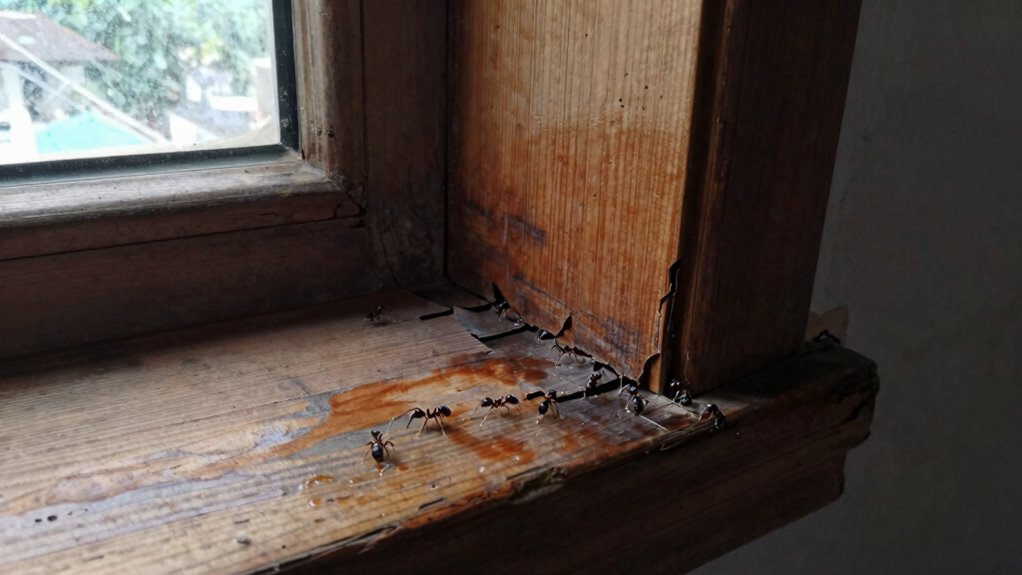
Underneath most ant eradication schedules lies a hidden culprit: dampness. It’s the silent saboteur, everyone.
Without moisture remediation, your timeline stretches like taffy. Carpenter ants, for instance, don’t care about your bait if their wood is wet.
They’re already home. Structural damage is another beast.
Water leaks create rot, giving ants a highway and a nesting zone that sprays simply can’t reach. Treating dry wood whilst moisture persists is like putting a Band-Aid on a leaking pipe.
It fails. Add $200 to $500 for moisture fixes, extending your 6 to 12 week carpenter ant timeline significantly.
Moisture meter readings? Trust them. A pro will pinpoint it.
Bottom line: fix the damp, patch the rot, then expect realistic progress. Only then should you apply a granular treatment in a 6-10 foot band along the foundation and water in granules to activate the active ingredients. Skipping this means you’ll be feeding ants for a spell, not eliminating them.
Does Cost or Warranty Change Your Outcome?
Spending more doesn’t speed up ant digestion, but it does buy you a guarantee that someone shows up if the first round flops.
Even without a service plan, food-grade diatomaceous earth kills ants within 24 to 48 hours of contact.
For instance, that $120 Argentine ant spray gives you a two-week hope, but a $450 carpenter ant package with a 30-day warranty covers a six-week wait plus a free re-treat.
This is like getting a rain check on pests. So the warranty is the real hero here, since a pest control expert who promises free follow-ups is just a nice way of admitting ants are stubborn.
Cost vs. Timeline
When evaluating ant control expenses, the price tag rarely dictates how fast the pests disappear. The timeline is set by the species and the method used, not the invoice.
Cost comparison shows carpenter ants, at $300 to $800, take six to twelve weeks. Pavement ants, a real bargain at $120 to $180, wrap up in just two to three weeks.
Budget planning starts with knowing your enemy, not your bank balance. Argentine ants run $120 to $180 and clear out in two to four weeks.
Fire ants cost $150 to $250, with a four to eight week extermination window. Pharaoh ants range $200 to $400, but be patient, they need eight to sixteen weeks.
Carpenter ant treatment is the priciest at $300 to $800, yet still takes six to twelve weeks. Paying more doesn’t speed up biology, people.
You’re buying thoroughness, not a fast-forward button for colony elimination. Cheap sprays might kill visible ants, but the hidden nest just sits there, laughing at your patience.
For long-term ant prevention, focus on baiting strategies and moisture control, not just the upfront quote. A professional inspection will match the right treatment plan to the species, saving you both time and repeat visits.
Warranty Guarantees
A warranty won’t speed up pest elimination, but it does protect your wallet if the first ant treatment fails. Most reputable companies offer service guarantees for 30 to 90 days, meaning free re-treatment if live pests persist.
That safety net is crucial for tricky species like Pharaoh ants, which can take eight weeks or more to fully control. Service guarantees vary widely, so ask upfront about what is covered.
Many warranties include scheduled follow ups, not just reactive calls. Some exclude moisture related carpenter ant issues, so check the fine print carefully.
Does cost change your outcome? Not much honestly. A pricier plan with strong service guarantees beats a cheap, one and done job every time.
Pay for the warranty, not the promise. It is the difference between a done deal and a “we will try again next month.”
Look for These Signs of Success by Week Two
Two weeks in, the ant situation should look different. Not perfect, but different.
A homeowner spots two signals: visible decline in trails, and bait refusal. By day 14, the colony’s feeding system is breaking down.
Bait refusal is not failure. It means fewer workers are around to eat.
That sounds grim, but it is actually the goal. Here is what success looks like.
Ant trails shrink to scattered stragglers instead of steady lines. Bait consumption drops because there are fewer mouths to feed.
Dead ants appear near application sites, meaning the poison is spreading. The kitchen counter stays clean for three days straight.
That is a small miracle. If these signs hold, your pest control timeline is on track.
Most ant species need two to four weeks for full elimination. Be patient, friend.
Progress is happening, and your bait treatment is working as designed.
Ants Still Active? What to Do if the Timeline Passes
The calendar says week four, but the kitchen counter still has a parade of six-legged commuters. That means it is time for diagnosing treatment failure.
Maybe the bait aged out. Exterior gels lose half their punch after fourteen days.
Or the species laughs at your plan. Pharaoh ants need eight to sixteen weeks, patience, and zero sprays.
Try reapplication strategies. Swap old gel for fresh bait stations.
Check dampness spots. Carpenter ants love damp wood.
If you skipped perimeter treatment, Argentine ants just walk around the bait. Consider professional help.
Many companies offer free re-treatment if pests persist past thirty days. Bottom line: do not panic.
Reapply and reassess. If week six still brings ants, call a pro.
Your kitchen will eventually be yours again.
Frequently Asked Questions
Are Baiting Products Safe for Pets and Children?
Yes, baiting products are safe for pets and children when you follow proper bait placement safety. The active ingredients are low dose, slow acting poisons, so ingestion risks for kids and pets are real but manageable.
Think of it like leaving a tiny, spicy snack not appetizing but possible. For effective pest control, place baits in inaccessible cracks, under appliances, or inside lockable bait stations.
Childproof gel bait costs $8 to $15 per syringe while stations run $5 to $10. If Fido eats a blob, he might get a tummy ache, not a costly vet bill.
The bottom line is follow label directions and keep baits out of reach. When you purchase the right rodent bait and install it correctly, you get safe, reliable pest management.
Does Cleaning Affect Ant Bait Effectiveness?
Yes, cleaning absolutely affects ant bait effectiveness. Ants rely on scent trails to find food, so harsh residues like bleach or lemon sprays can mask the bait completely.
Place your bait near ant trails, not on freshly mopped spots. Always clean the area first, then rinse thoroughly and let it dry completely before applying bait.
If you skip that step, ants will walk right past a gourmet bait because the surface smells like a chemistry lab. For the best results with any gel or granular ant bait, remove all competing food sources and residues.
Choose a professional grade ant bait like Terro or Advion to kill the colony. Just remember to skip harsh cleaners near your bait stations so ants can detect the attractant clearly.
How Can I Prevent Ants From Returning?
Preventing ants from returning is all about sealing entry points and using natural repellents. Grab a tube of caulk and seal tiny cracks around windows and pipes. A $5 tube of caulk is far cheaper than a $400 pest control visit.
Wipe down counters with a vinegar and water solution, or sprinkle cinnamon along baseboards. Ants absolutely hate the smell, so it acts as a great natural barrier. Refresh your ant bait stations every two weeks or the effectiveness drops fast.
Don’t forget to fix leaky pipes and faucets, because damp wood attracts these pests. They are not paying rent, so a thorough eviction is warranted. Blocking their paths and using scent deterrents guarantees they stay gone for good.
Can I Treat a Large Outdoor Colony Myself?
Yes, you can treat a large outdoor area yourself, but only if you’re honest about the size of the job.
A DIY colony assessment is step one, because if the mound is bigger than a dinner plate, you’re in for a fight.
Natural options like diatomaceous earth work slowly, while chemical granules costing $15 to $30 kill faster.
Expect to reapply barriers every two weeks, since bait degrades quickly outdoors.
Honestly, for a big colony, you’ll probably end up chasing it for a month.
Bottom line: go DIY for small surface nests, but call a pro for the real heavy lifting.
Do Temperature or Rain Delay Ant Treatment Results?
Yes, temperature and rain absolutely delay ant treatment results. Cold snaps slow ant metabolism, making them sluggish and slowing bait spread.
Rain washes outdoor bait away, wrecking the bait breakdown rate. Exterior bait loses half its punch after just 14 days.
So a rainy week can easily add days to your treatment timeline. Fire ants normally need 4 to 8 weeks, but a cold, wet stretch extends that further.
Your best bet is to time treatments for dry, mild days. Then plan a follow up visit to finish the job.
For effective pest control, always check the forecast before applying granular bait or liquid ant killer. This ensures your pest management investment works as intended.


