
Dealing with ants in the yard can feel overwhelming, but a simple two-step plan knocks out the whole colony for about ten dollars a season. In 2025, the most effective approach uses a granular bait broadcast over the lawn, then targets survivors with a mound drench a week later.
This guide covers the best supplies to buy, helpful notes on timing and safety, and what’s actually worth your money. Whether you need to protect kids or just want a clean yard, we’ve got the quick fix.
Read on for the product roundup below.
At A Glance
- Identify the ant species before choosing any control product.
- Broadcast granular bait over the entire yard first.
- Wait seven days after baiting before treating individual mounds.
- Drench large mounds with liquid insecticide or dust directly.
- Deny ants food and water to eliminate foraging trails.
Identify the Ant Species Building Mounds in Your Yard
That dusty cone erupting from your lawn is an ant mound, but not all mounds signal the same problem.
Before you use any ant control product, proper mound identification is essential for success.
The red imported fire ant builds loose, crater-like piles that flatten after rain.
These troublemakers deliver painful stings and require targeted fire ant bait for elimination.
For large, established mounds, slow acting baits allow worker ants to carry poison back to the colony, killing the queen and the source of the infestation.
Pyramid ants build neat, pencil-thin towers instead.
Pyramid ants build neat, pencil-thin towers instead.
They do not sting, and they do not sting; they actually hunt fire ants for lunch.
Hundreds of ant species build mounds in the Southeast.
Your choice of ant bait depends entirely on which species you are facing.
Product labels list specific targets, so match the label to your mound.
Check the mound’s shape, texture, and location for accurate identification.
Fire ants prefer sunny, open turf areas.
Get this step right, and absolutely everything else gets those for effective pest control.
Spare the Beneficial Ants That Hunt Fire Ants
Why would a homeowner deliberately spare a mound of ants that looks just like the enemy? Since not every mound is a fire ant fortress. Pyramid ants, for example, build similar mounds but hunt fire ants as prey. Kill them, and the yard loses a natural ally, leaving a vacancy fire ants happily claim.
To protect beneficial insects and preserve ant diversity, identification matters more than impulse. Proper species identification is vital because resistant species require gel baits or specialized formulas. Consider these plunge stakes for your pest control approach.
Beneficial ants suppress fire ant queens before colonies establish. Native species compete for food, starving invasive invaders. Broad-spectrum killers wipe out pollinators and soil aerators. Diverse ant communities resist reinfestation naturally, saving cash and effort. Spare the good guys.
They work free, they work hard, and they never leave a receipt. That is the kind of help worth keeping in your yard.
Master the Two-Step Method for Treating Ant Mounds
The two-step method is straightforward: broadcast granular bait over the yard, then wait seven days. After that week, hit the remaining mounds directly with a liquid drench or dust.
The first step uses poisoned food that foragers carry back to the queen. It takes about a week to work, so patience is key. Think of it as a slow-cooker approach to ant extermination.
After that week, apply a mound treatment like acephate dust or a liquid concentrate mixed with water. Apply it directly on each active mound for best results.
For huge mounds over 18 inches across, skip the bait and go straight to the drench. Bait alone won’t cut it for those large infestations, so use a strong liquid treatment.
Broadcast Granular Bait
Broadcast granular bait is the ideal first step for the two-step ant control method. It turns the ants’ own foraging instincts against them to eliminate the colony. The delayed action of the bait allows worker ants to carry it back to the nest, spreading the toxin to the queen and brood.
Apply the bait at a rate of 1 to 2 pounds per acre for full coverage. Bait freshness is critical, stale bait is ignored by the target pests.
Store bait in an airtight container in a cool spot, as oils go rancid fast. The application is simple and effective for your yard.
Spread granules evenly over the entire lawn, not just the mound. Use a hand spreader for small yards and a broadcast spreader for large areas.
Skip watering for a full day after application, rain ruins the effect. Verify the label to ensure the bait matches the right ant species.
The goal is to eliminate the queen, not just the workers. This broadcast treatment handles the whole yard for complete pest control.
Wait Seven Days
Seven days feels like a lifetime when you’re staring at a fresh mound, but patience here is the secret weapon. That’s the magic number in the two-step method, everyone.
You’ve broadcast your granular bait; now worker ants haul it to the queen, a slow, delicious rescue routine. Give them time, trust me.
Within a week, the bait turns toxic, forcing a quiet colony relocation or total collapse. Don’t poke the mound or pour anything on it yet.
That’s next week’s job. After seven days, the mound should look sunken and quiet.
That’s the bait working. Still active? Then you’ve got stubborn guests, but resist the urge to nuke them.
Let the poison work. Bottom line: just wait the full week.
Your ankles will thank you, and your lawn pest control strategy stays on track for long term ant removal.
If you’re shopping for fire ant killer or a professional grade granular insecticide, this waiting period is your best investment. Many effective granular killers provide six months of protection against re-infestation.
A quiet mound means the colony is breaking down, so don’t rush the elimination process.
Patience now saves you from repeat treatments and costly mound drenching later.
Direct Mound Treatment
Why wait a full week just to watch a mound go quiet? Direct mound treatment skips the bait waiting game, targeting the colony right where it lives.
This two step method works best for huge mounds that bait alone can’t crack. Use either liquid or powder for a swift, decisive hit.
Mound drenching uses a liquid concentrate mixed with water, poured directly on the nest. It kills workers and queen within a day, if the ground is dry.
Acephate dust, applied as a powder, clings to ants as they move. This spreads the toxin colony wide over a few days. For example, using a product with 75% acephate starts killing in hours and continues working until the colony is wiped out.
Use treatments in the late afternoon or evening, when worker traffic peaks. Always re check mounds after a week, as reinfestation happens fast.
For immediate relief, drenching wins on speed. Dust wins on stamina. Pick your poison, literally.
When Should You Drench Mounds Instead of Baiting?
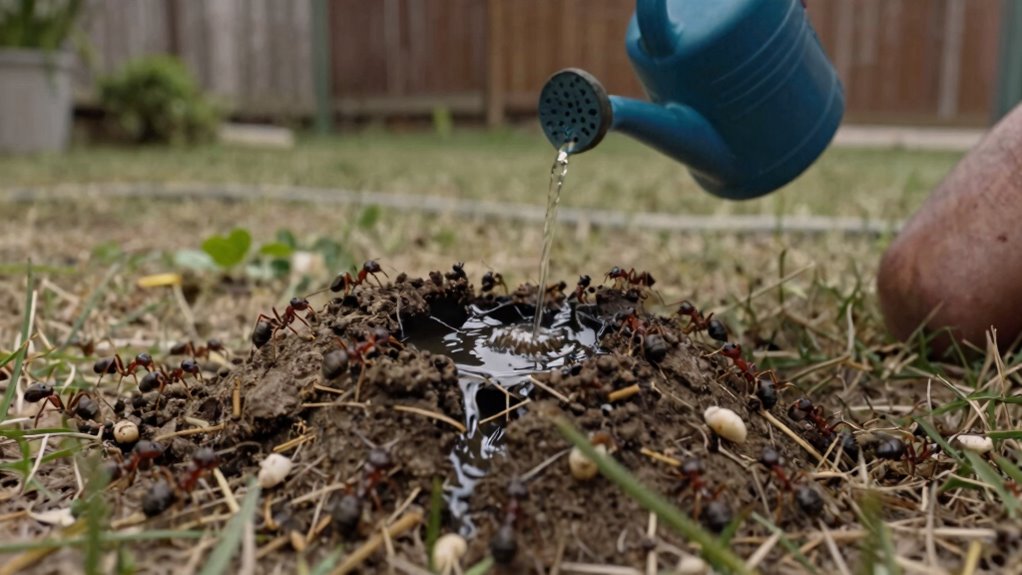
Mound dampness matters. Dry, crumbly soil lets liquid insecticide penetrate deep, while soggy mounds just cause runoff.
Ground temperature should be above 60°F for ants to stay near the top. Cooler temps drive queens deep, wasting your ant control mix.
A mound that has erupted into a sprawling, foot-wide crater is your cue to skip the bait and grab a liquid drench. Big active mounds mean the colony is too large for bait to spread fast enough.
Drenching delivers knockdown within a day for that direct fire ant treatment. For fast knockdown, lambda-cyhalothrin acts within 24 hours but leaves no lasting protection. Mix a concentrate per label, then pour slowly around the base of the mound.
You will see fewer ants within hours of this mound treatment. Baiting still works for scattered colonies, but for a crater that big, drenching is the reliable, satisfying move.
It is the direct fix you are after. Check conditions first to ensure the liquid penetrates deep into the nest.
Skip the Folk Remedies That Never Get Rid of Ants
Skip the folk remedies that never get rid of ants. When someone grabs grits or essential oils, they are throwing a tiny picnic for the ants, not a funeral.
These home remedies fail because they never reach the queen deep underground. Boiling water sounds tough but rarely penetrates deeper than a few inches.
Boiling water barely scratches the surface; the queen stays cool and deep.
The colony just shrugs and rebuilds next week. Here is the honest scorecard for common ant control attempts.
Grits: Ants eat the swollen particles and die of dehydration? No, they digest them and keep marching.
Boiling water: It kills surface workers and scorches your grass. The queen, safe in her chamber, laughs at your kettle.
Essential oils: A pleasant scent for your patio but a negligible inconvenience for an army of 200,000. Dish soap sprays break surface tension and drown a few foragers.
This is like bailing a lake with a teaspoon. Unlike these home remedies, residual barrier sprays kill on contact and protect for months. The bottom line is to skip the kitchen experiments.
Buy a real granular bait and deliver it correctly. You will get back to Sunday without an ant problem.
The Safe Way to Kill Yard Ants Without Harming Birds
Homeowners should pick methoprene baits, not carbamates or organophosphates. Those older sprays can poison birds that eat the ants.
Methoprene is an insect growth regulator that stops ant larvae from maturing. Methoprene breaks down quickly in sunlight and water, reducing its impact on non-target organisms. Carbamates like carbaryl and organophosphates like acephate are toxic to birds and linger in the environment.
The bottom line is to grab a methoprene product for safe yard ant control. It protects your feathered neighbors so you won’t need to apologize to a blue jay.
Select Methoprene Products
In the endless turf war between people and fire ants, the insect growth regulator methoprene is the quiet diplomat that actually works. It stops baby ants from becoming adults, a solid career move for everyone, birds included. Unlike borax-based ant killers, methoprene works through a different mode of action that is safer for non-target species. For product selection, check granular baits listing methoprene as the active ingredient. A one-pound container runs about fifteen dollars and covers half an acre, almost pizza money that won’t fix your ant problem. Application timing matters most.
Spread bait in spring and fall, when ants are actively foraging, around eighty degrees with no rain for two days. Read labels carefully and confirm methoprene is listed as a key ingredient.
Check dates since stale bait fails to control fire ant colonies effectively. Apply early in the morning or evening to avoid heat and drying. Seal leftovers in a dry spot to keep bait fresh for future use.
Methoprene works quite slowly on ant development. Patience beats panic when treating your yard for fire ants.
Avoid Carbamate Insecticides
A carbamate insecticide is a chemical that kills ants quickly but tends to be harsh on birds. This trade-off wins the ant war while losing a few songbirds.
Carbamate toxicology works through ant neurotoxicity pathways, overstimulating nerves until the colony twitches out. That same mechanism hits feathered visitors just as hard.
You might knock out a mound in a day without question. But a robin snacking on dying ants gets the same poison, and that is not a win.
Skip the carbamates entirely. Safer options like methoprene baits target queens without collateral damage. For instance, fipronil-based baits offer a long residual activity of 30–90 days, reducing the need for frequent reapplications.
They cost a bit more and take longer, but your yard keeps its chorus. Birds will not thank you, but they will stick around.
Bottom line: trade fast-kill for bird-safe pest control every time.
Skip Organophosphate Sprays
Skip the organophosphate sprays. They are like overachieving bullies in the insecticide world, killing ants and everything else in the blast radius.
Organophosphate toxicity is not picky. It hits songbirds, beneficial insects, and even your dog with equal enthusiasm.
These chemicals linger in your yard, turning it into a mini hazard zone. Spray drift exposure can silently poison neighboring gardens, no breeze required.
Here is why they are a bad deal for effective ant control. A single granule is enough to kill a chickadee, roughly the size of a golf ball in poison.
Drift drama happens with even a light wind sending particles 50 feet away. Your targeted mound treatment becomes a neighborhood event.
Residue persistence means the soil stays toxic for weeks. Kids and pets end up playing on a chemical carpet.
Collateral damage wipes out natural predators that keep ant populations in check. The bottom line is simple.
Use baits with insect growth regulators instead for safe pest control. For best results, space bait stations 10 to 20 feet apart along walls and foundations. They are cheaper, safer, and you will still win the war without a mass casualty event.
Remove Food and Water to Prevent Ants in Your Yard
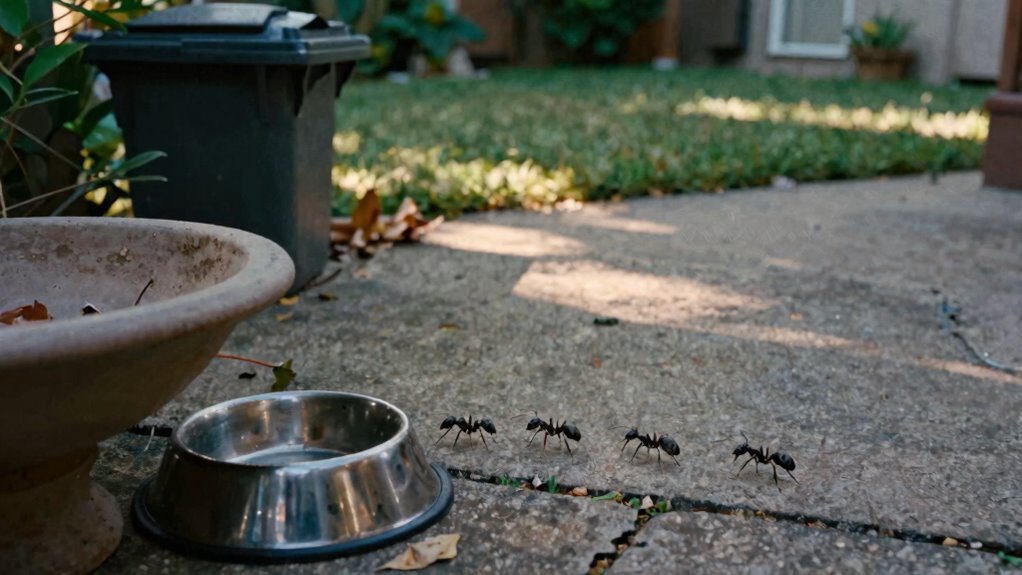
Cutting off food and water removes the ant colony’s lifeline. Without easy meals, foraging trails vanish quickly.
Clean up fallen fruit, empty pet bowls, and fix dripping faucets. Natural predators can help, but they won’t stay if your yard is an all-you-can-eat buffet. If ants still find a way, natural repellents such as peppermint oil sprays or diatomaceous earth offer safe, chemical-free backup.
Soil composition matters too. Ants love sandy, dry spots, but they still need dampness.
Eliminate standing water, even under potted plants. It’s simple math: fewer snacks means fewer ants.
You’ll save money on bait and pest control products. A five-minute cleanup beats a twenty-dollar insecticide run.
Seriously, go check that birdbath. Your yard will thank you, and so will your neighbors.
The bottom line is to deny them the basics. The colony then packs up or dies.
That is your first and cheapest line of defense. No need for expensive ant killer sprays when prevention works best.
Mow Often and Treat Early to Stop Yard Ant Colonies
Regular mowing is your first cheap weapon against yard ants, knocking down fresh mounds before they harden into fortresses. After broadcasting, water in granules to activate the active ingredients and ensure they penetrate the soil. Treating early in the season, usually when soil temperatures hit 55°F, lets a broadcast granular bait at 1 to 2 pounds per acre eliminate the queen before her population nears 200,000.
This saves the yard from a laborious two-step mound drench later. A mowed-over mound is a thoroughly confused mound, though the blades rarely slay those 18-inch artillery pieces.
Those stubborn mounds still demand a direct dust treatment of acephate for a clean finish. For best results, apply the bait and dust early to stop ant colonies from spreading.
Mow Frequently
Frequently mowing your lawn is the cheapest, most underrated weapon in the ant war. A short, well-trimmed turf exposes their developing mounds to harsh sunlight and heat, disrupting nest-building before colonies gain traction.
This simple practice also supports healthy grass, which naturally outcompetes weeds and creates a less hospitable environment for nesting pests. For homeowners seeking natural pest control, regular cutting reduces the need for chemical ant treatments.
Cutting grass below 3 inches forces ants to constantly rebuild, wasting energy and preventing mound size from exploding. This directly targets ant colony prevention, as smaller mounds are easier to spot and treat early.
Dense grass roots crowd out ant-friendly bare soil patches, making it harder for queens to establish new nests. Thick turf also limits the open ground where ants prefer to dig their entry points near your lawn.
Regular mowing right after spring overseeding keeps the lawn thick, but always wait until new grass is 3 inches tall before the first cut. This timing supports lawn care services advice and ensures young roots stay intact.
Aerating in spring opens soil, but mowing immediately after helps level those cores and discourages ants from using the holes as new highways. A clean, even surface also reduces moisture pockets that attract invading pests. For ants that still invade, spraying plant-based sprays along entry points like baseboards and doorways provides a contact kill and a long-lasting repellent barrier.
For do-it-yourself pest control, this method is zero-cost and repeatable weekly. Keep the blade sharp to avoid tearing grass, which can stress turf and invite ant activity.
Bottom line: keep that blade sharp and the grass short. It’s free, safe, and oddly satisfying, and it directly reduces your need for professional ant extermination services.
Treat Early Season
Since timing is everything, the early season is the only window where a little effort saves a lot of chemical warfare. Winter scouting is the secret handshake of professional pest control.
Walk the yard in late winter and look for flattened, dusty patches. Those are dormant colonies you can target now.
Early detection means you catch them before they hit 200,000 strong. A single broadcast bait application of about 1 to 2 pounds per acre works wonders now.
The ground is still cool, so ants are sluggish, but they will carry the poison home. Do this before spring rains, and you will skip the mound drenching later.
It is like fixing a leaky faucet before the basement floods. The bottom line is scout in winter, bait in early spring, and save your back and your wallet from summer digging.
Disrupt Mound Growth
A lawnmower is your first line of defense against an ant colony. Regular mowing physically disrupts mound incubation, which is critical for managing larval temperature.
Ants shift eggs up and down the mound like a tiny thermostat. A weekly cut destroys their careful work and keeps their numbers in check.
It’s the cheapest ant control method you will find. And it smells like victory.
Mow every 5 to 7 days. Keep grass at 3 inches because tall turf hides mounds from view.
Treat early in the season with granular bait in spring when colonies are small. This pest control tactic stops infestations before they grow.
Direct treat survivors with a dust or drench on mounds that reappear. Use spot treatments for concentrated fire ant control.
Team up with neighbors since ants travel 25 feet. Coordinating yard care boosts your pest management efforts.
Don’t let ant mounds incubate unchecked. A few minutes mowing saves hours of chemical warfare later.
Cheap, effective, and oddly satisfying. It’s a simple low tech approach that works for long term ant elimination.
Plus you get a nicer lawn as a bonus. That is a win win for any homeowner.
Why Broadcasting Bait Works Better Than Spraying
Spraying an ant mound is like high-fiving a hornet, you get a sore hand and a bunch of angry survivors. Spraying only kills surface ants, so the queen stays safe below.
With an ant colony size up to 200,000 and an egg laying rate of 1,600 daily, survivors rebuild quickly. That’s why a quick fix for ant control never solves the real infestation problem.
Broadcast bait works differently because foragers carry poisoned granules back to the nest. They feed the queen and larvae, which is a targeted pest treatment that ends the colony from within.
It’s slower, but it kills the whole nest, not just the visible workers. For long term ant elimination, bait is the smarter choice for DIY pest management.
| Spray | Bait |
|---|---|
| Surface only | Reaches queen |
| Kills in hours | Kills in days |
| Misses tunnels | Covers all chambers |
| Reapply weekly | Lasts months |
| $8 a can | $15 per bag |
A $15 bag covers 5,000 square feet, which is a better value for full yard coverage. Spray costs more over time and misses the source, so you keep buying cans.
Bottom line, bait targets the colony, not just the ants you see, and that’s how you get lasting relief. For professional grade results at home, use broadcast bait for complete nest removal.
Time Your Baiting to Outpace Reinfestation
Usually, the smartest move in ant control is to set a calendar reminder, not just a trap. Ants return fast, often within six to eight weeks. That is your reinfestation window. If you wait until mounds reappear, you are already behind. Behind means bigger colonies, tougher fights, and more money spent on pest management.
Mark a quarterly schedule on your calendar, every three months, before colonies rebuild. Use fresh bait each time; stale bait is just expensive ant food. Broadcast bait when workers are actively foraging, usually on warm, dry evenings. Recheck high risk zones like sunny turf edges, two weeks after each baiting. A quarterly schedule keeps you ahead of the reinfestation cycle. You might feel obsessive, but consistency beats heroics. Bottom line: bait on a timer, not on a whim.
Coordinate With Neighbors to Banish Yard Ants for Good
Few battles are won alone, and the ant war is no exception. Your yard is a tiny island in a sea of sprawling colonies that can easily travel 25 feet from your neighbor’s lawn into yours.
Yard ant colony sharing, meaning swapping mound maps, turns guesswork into strategy. A seasonal treatment calendar, synced across both properties, attacks queens before they spread.
Treat your half and they skip theirs. Reinfestation wins every time.
Instead, broadcast granular bait together, one to two pounds per acre, during the same sunny week. Seven days later, drench each visible mound with a targeted liquid ant killer.
Cost is about ten bucks per yard, split over a season. Dad quip: ants don’t respect fences, but neighbors can respect a plan.
Bottom line: coordinate now for effective yard ant control. Otherwise, you’ll be waving a shovel at their picnic later.
Frequently Asked Questions
Will Ant Bait Harm My Pets if They Eat It?
Most ant baits won’t kill a pet, but the risk is still real. Lawn safety depends on the specific toxicity of the ingredients used.
Baits contain only tiny poison doses, so a few bites might cause drooling or vomiting. However, if a pet eats a whole packet, a vet visit is necessary.
Always place stations under covers, away from curious noses and paws. Store any excess bait where pets can’t reach it.
Watch your pet for 24 hours after application, since labels often warn of delayed effects. Ignoring these labels can lead to expensive vet bills.
The bottom line is to keep bait contained and pets supervised. Avoid a costly mistake by following all safety directions.
Can I Treat Ant Mounds During the Winter?
Yes, you can treat ant mounds in winter, but it is often a waste of bait and cash.
The winter ant colony hunkers deep underground, and foragers stay hidden instead of feeding.
Freezing mound temperatures will kill surface workers, but the queen survives below the frost line.
So your ant killer granules or bait stations simply sit there without being carried down to the colony.
If you want to save money on pest control supplies this season, skip the winter mound treatment.
Instead, focus on sealing cracks around your foundation and clearing debris where ants might nest later.
The real win comes in early spring, when ants emerge hungry and bait gets trafficked straight to the queen.
That is the moment to deploy liquid ant bait, granular insecticide, or a targeted mound drench for maximum colony elimination.
For smart buyers, winter is the time to research and stock up on fast-acting ant baits for a spring assault.
Then you get effective ant control with zero wasted product, which is exactly what DIY homeowners want.
How Do I Locate Underground Nests Without Visible Mounds?
Ant tracking is the simplest method to locate underground nests without visible mounds. A worker carrying food can be followed directly to a hidden hole in your yard.
Humidity detection pays off since nests favor leaky pipes or damp mulch. Probing soft ground with a screwdriver works well; sudden sinking reveals an entrance.
Checking after rain helps spot fresh entry holes about 1/4 inch wide. These holes are ringed with tiny dirt pellets that stand out on wet ground.
No mound means you are playing a game of ant detective which is totally fine. Gentle digging solves it and lets you apply targeted pest control treatments right where the colony lives.
For the best results, combine tracking with a good granular bait or a liquid insecticide. This buyer intent method saves time and avoids guesswork on your lawn care routine.
What Should I Do With Dead Mounds After Treatment?
Dead mounds after treatment are harmless, but a tidy yard calls for action.
Rake them flat and compost the loose dirt elsewhere for a clean finish.
Bag large piles for disposal, or scatter small amounts thinly across grass.
For mound repair, mix in topsoil and grass seed to restore your lawn.
Rain will settle everything within a few weeks, so patience pays off.
Don’t dig deep, as that only disturbs old tunnels and invites new pests.
Honestly, ignoring the mounds works too, since they’ll erode by next season.
Either way, you’re done with post treatment cleanup and ready to enjoy your yard.
If you want lasting results, pair your mound repair with a quality pest control bait.
Buying the right product now saves you from repeat treatments later.
Is It Safe to Mow Over an Active Ant Mound?
No, it is not safe to mow over an active ant mound.
Mowing over a mound invites mower blade damage because dirt clods are hard as bricks.
It also causes massive ant colony disruption, sending thousands of angry fire ants up the operator’s legs.
The main drawbacks are painful stings and a ruined lawnmower blade.
Treat the mound with a professional bait or liquid drench and wait a full week.
For the best fire ant control, use a fast acting granular bait or a ready to use mound drench from a trusted pest control brand.
Then mow the area safely.
Your lawn and your ankles will thank you.
Final verdict: mow later, not now.


