
Getting rid of ants in the garden doesn’t have to mean harsh chemicals—most infestations are harmless until they start farming aphids or ruining your lawn.
This 2025 guide covers the safest, most effective fixes, from vinegar sprays that erase scent trails to nematodes that hunt larvae underground.
We’ve rounded up the best supplies, practical notes on what actually works, and honest advice on what’s worth buying (and what to skip).
If you want quick, kid-and-pet-friendly solutions that don’t invite new queens, keep reading.
Below is the full product roundup to help you pick the right tools for your yard.
At A Glance
- Locate the nest by following ant trails, then target the entry point directly.
- Use a 1:3 vinegar-water spray to disrupt pheromone trails and repel workers.
- Pour boiling water down nest holes for a quick kill on paved areas.
- Apply nematodes (Steinernema feltiae) to damp soil for biological colony control.
- Set borax bait stations to eliminate the entire colony from within.
Know If Garden Ants Are a Real Problem
Before reaching for the spray, ask whether those ants are actually causing harm. Most UK ants, like the black garden ant, do little direct damage to plants.
Their soil heaps make lawns bumpy, but healthy plants usually shrug it off.
The real trouble begins with aphids, which ants farm for honeydew.
Ants protect these sap-suckers from ladybirds, boosting aphid damage on prized roses.
Yet their ecological role matters: they eat other pests like caterpillars and fly eggs.
Destroying a colony often invites new queens to move in, making the problem worse.
Weigh the hassle: a few anthills are cosmetic, but a nest burying plants is not.
For pest control near flower beds, try ant bait stations or physical barriers before harsh sprays. For a gentler approach, homemade ant deterrents with essential oils or vinegar are worth trying.
Tolerate them when practical, and save professional pest control for genuine infestations.
The RHS agrees: control only when ants are truly ruining a once-tidy garden.
That is a fact worth remembering for any home pest management plan.
Follow the Ant Trails to Find the Nest Entrance
To stop ants fast, you need to find the nest itself, and that starts by reading the trails they leave behind.
Watch a few busy workers for about ten minutes and note which direction they head, since these routes are almost always direct lines to food or home.
Once a clear highway forms, simply follow it back to the mound, a crack in the soil, or a gap under a slab.
That pinpointed entry point is your real target for any ant killer, bait station, or professional pest control service.
If you’re dealing with a recurring infestation, tracing those trails is the smartest first step before you spend money on sprays.
A reliable ant treatment plan only works when you hit the colony directly, so don’t just sweep the workers away.
Follow the line to the source, then apply gel bait or dust right at the nest entrance for lasting results.
The key is that slow-acting poison allows the foraging ants to return to the colony and distribute the bait before dying.
This method saves you time and stops the cycles of ants returning day after day.
Remember, the trail tells you everything, so stay patient and let the insects guide you to the problem’s core.
Once you’ve located that hole or mound, you’re ready to exterminate the whole colony, not just the visible stragglers.
Observe Trail Patterns
Patience becomes the real pest control device here, because spraying the ants you see is like trimming the leaves of a weed. The root remains hidden, and the column’s movement matters most.
Foraging workers follow a tidy, determined line with no wandering. That discipline comes from the colony’s social hierarchy. Scouts lay scent, workers follow, and the queen never leaves.
Line thinning or widening often reveals the entrance. Flight behavior deserves no attention here. Those winged swarms are mating, not housing.
Ground level traffic, the steady back and forth, matters most. A trail that stays busy for ten minutes points to a busy nest.
A fading trail suggests a temporary food run. Marking exactly the busiest spot locates the target for effective ant control.
It is not glamorous work, but it beats guessing. Observation always wins for finding the nest.
Trace Worker Routes
Once the observation phase is complete, the next move is to follow the trail itself. Trail mapping means noting every turn and pause, since worker ants don’t wander aimlessly. They follow pheromone breadcrumbs for effective pest control.
Speed tracking reveals urgency by timing how fast a worker moves over a fixed distance. A brisk pace often signals a well-worn path back to the nest. Mark trails with chalk or string for accuracy.
Track for 10 to 15 minutes, and avoid crushing stragglers. Panic disrupts the route and ruins your ant bait placement strategy. Bring a magnifying glass to spot tiny clues. You will feel like a detective without the trench coat.
This tracing method beats guessing where to dump bait. It is cheap, effective, and oddly satisfying for DIY pest control. Bottom line: trace patiently, and you will save time and frustration later. Just do not trip over the garden hose.
For long-term prevention, apply residual barrier sprays along the marked entry points to keep new colonies from establishing.
Pinpoint Nest Entrance
Tracing workers gives you a map to their underground city. The real prize is the entrance to their colony.
Those two word trails of busy ants zigzag across your patio and always converge somewhere specific. Follow them patiently and you will spot the real opening.
It is usually a small hole surrounded by excavated soil. Sometimes it is hidden under a rock.
The entrance location matters more than you think. Pouring boiling water or ant bait directly into it works best.
Timing is everything for effective pest control. Early morning or evening when ants return home is prime time. For targeted pest control, apply food-grade diatomaceous earth in thin, dry layers around the nest entrance and along the ant trails.
Fancy gadgets or sprays are not relevant here. Those are discussion ideas for other sections of this guide.
Bottom line: pinpoint that nest entrance and treat it directly. You have won half the battle.
Spray Vinegar Solution to Break Up Ant Scent Trails
The classic recipe, one part white vinegar to one part water, works wonders for confusing ants, but it’s not a colony killer, just a trail eraser.
That spray breaks down the pheromone trails ants lay down like breadcrumbs, so they wander around lost instead of marching to your peonies, which is both hilarious and effective for pest control around your garden.
For safe application, douse the entry points and walkways on a dry day, but keep it away from plant roots, since vinegar’s acidity can burn them faster than a bad joke at a family dinner.
This DIY ant treatment is perfect for homeowners looking for a non-toxic pest control solution that targets ant foraging behavior without harsh chemicals.
Use a spray bottle with a fine mist to coat baseboards, window sills, and door thresholds where you see ant activity.
It’s a reliable ant deterrent for indoor perimeter treatment, but you’ll need to reapply after rain or heavy dew for lasting results.
If you want to buy ant control products that break trails more permanently, look for gel baits or granular repellents that target the nest directly.
The vinegar spray is your go-to for immediate ant odor masking, but pair it with a professional-grade insecticide for complete colony elimination.
For a natural alternative, Orange Guard Pest Control Spray uses orange peel oil to repel ants safely around plants and pets.
Vinegar Solution Recipe
A simple spray bottle of vinegar outperforms many chemical sprays in the garden aisle. Vinegar disrupts ant behavior and costs pennies to make. Mix one part white vinegar with one part water. Pour into a spray bottle set to a fine mist.
Spray along doorways, cracks, and any ant trail you see. The vinegary smell fades fast, taking the ants’ confidence with it. Rain washes it off, so reapply after a storm. This homemade pest control solution will not kill the colony. It simply reroutes the workers away from your space. For longer-lasting defense, consider plant-based sprays with peppermint or clove oils.
Keep a spray bottle handy near the patio for quick ant control. Use a cheap sprayer, as fancy ones are unnecessary. This vinegar solution recipe is a reliable low-cost garden fix. It works for ant prevention and natural pest management. Bottom line, mix, spray, and repeat. Period.
Neutralizing Pheromone Trails
A single squirt of that homemade vinegar mix does more than just smell like a sad salad bar. It erases the ants’ internal GPS by wiping their pheromone trails clean instantly.
No trail, no procession. This homemade ant spray breaks the signal, so workers wander off confused instead of marching to the peonies.
It’s a classic among natural repellents, cheap and easy. Vinegar’s sharp scent confuses their sensors, and it lingers just long enough to matter.
Spray it along baseboards, cracks, and visible pathways. Reapply after rain to keep the disruption active.
It won’t kill the colony, just disrupts the highway. Good for quick fixes, not full-scale warfare, so pair it with baits for complete control. For broader yard defense, perimeter treatments can create a chemical barrier lasting up to six months.
Bottom line: choose the vinegar spray for fast, harmless trail disruption, and combine it with a targeted bait station for lasting pest control.
Safe Application Tips
Spraying vinegar solution safely requires a few unglamorous but vital habits. Skipping them turns a helpful tool into a garden mistake.
Always test a hidden leaf first, since vinegar burns foliage. Wear gloves and goggles, especially on windy days.
Keep the mix at one part vinegar to three parts water. Stronger isn’t better for effective pest control.
| Do | Don’t | Why |
|---|---|---|
| Spray trails | Drench soil | Kills roots |
| Target entries | Coat leaves | Burns foliage |
| Reapply after rain | Mix bleach | Toxic fumes |
| Use warm days | Near boiling water | Heat stress |
Use spray trails to target ant trails and other pest entries. Avoid drenching soil, as it kills roots and disrupts soil health.
Always target insect entry points on the plant. Coating leaves with vinegar solution burns foliage and stresses the plant.
Reapply after rain to maintain pest repellent action. Never mix vinegar with bleach, as it creates toxic fumes harmful to you.
Choose warm, sunny days for application to speed drying. Avoid spraying near boiling water, as the combined heat stress damages plants.
For larger infestations, broadcast treatments block new mounds for up to six months.
Pour Boiling Water Down the Hole for Fast Knockdown
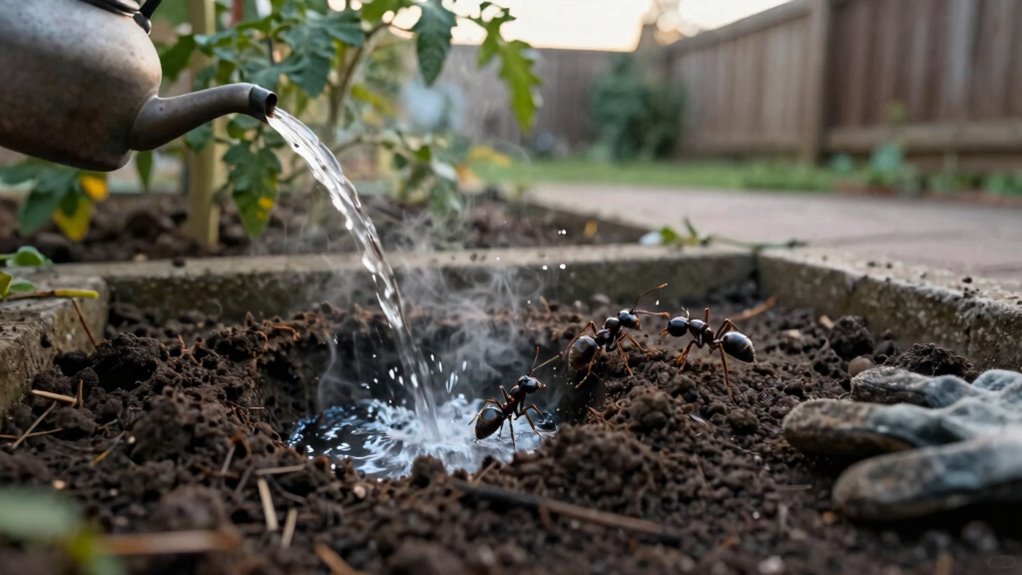
Pouring boiling water down an ant hole gives a crude but satisfying knockdown that is fast and cheap. This home pest control technique floods the tunnels with scalding liquid, killing worker ants on contact.
It is a quick fix for visible nests but not a precise treatment. Boiling water safety is important around kids and pets, so keep them clear.
The main trade off is potential hot water damage to plant roots, which do not recover like ants. Best used on paved paths or bare soil patches where prized perennials are safe.
One full kettle should work for a small nest. For larger colonies, survivors dig sideways and this signals it is time to try ant baits. Alternatively, fast-acting granular killers provide contact knockdown and up to six months of extended protection.
For a cheap afternoon fix against visible pests, this DIY method pours nicely.
Apply Nematodes to Attack the Colony Underground
Nematodes are microscopic worms watered into soil to provide natural pest control for ant colonies. These beneficial predators actively hunt ants underground, offering an effective ant treatment solution.
The soil must remain consistently damp for these nematodes to survive and eliminate the infestation. A dry garden renders them useless, so plan your pest management around a rainy week.
Water them in during damp weather for reliable ant colony destruction. The colony then meets a slow, soggy ending as the nematodes complete their work. For stubborn infestations, consider using abamectin baits to target colonies from above.
Water Into Soil
One genuinely underrated approach for ant control is watering beneficial nematodes into the soil where ants are active. Steinernema feltiae, the species you need, gets mixed with water and poured directly onto those fine soil heaps the ants keep excavating.
This is soil drenching at its finest. The nematodes swim down, hunt grubs and ant larvae, and kill them from the inside.
Disturbing? Slightly. Effective? Very.
Root soaking is a bonus: it hydrates plants as the worms do their dirty work. This method is safe for pets, kids, and your lawn’s ecosystem. Unlike contact-only sprays that require reapplication twice weekly, this soil drenching approach targets the colony directly.
The cost is about £15 for 50 square meters, lasting two weeks. Timing works best through spring and summer.
Bottom line: skip the sprays. Drench those mounds, and let the microscopic cavalry handle the underground apartment block.
Just don’t expect a thank you letter from the queen.
Moist Soil Needed
Since these microscopic assassins are largely aquatic for their working life, the soil needs to stay damp for them to travel at all. Dry dirt is a death sentence for beneficial nematodes.
That is why humid soil testing is not optional; it is the whole game. A quick poke with your finger works, but soil moisture meters give you reliable numbers, costing about $15 at any garden center.
Trust the meter, not your gut, for pest control success. Water the area thoroughly the day before, sinking it to a depth of three inches.
Apply nematodes in the evening or on a cloudy day to avoid sunburn on the little guys. Keep the soil wet for two weeks after, watering lightly every morning.
Check for standing water, because puddles mean you have overshot and they will drown. Stay damp, period, for effective nematode pest management. Maintaining humidity levels between 50-60% helps keep other moisture-loving pests like silverfish away, but for nematode success the soil must stay wet.
Set a Sugar and Borax Bait to Wipe Out the Workers
The sugar and borax bait acts like a Trojan horse for garden pests. Ants carry it home thinking they found a food source, and they are correct in a deadly way.
Mix one part borax with three parts sugar, dissolve in warm water, and soak cotton balls. Workers transport this sweet poison back to the nest to feed the queen and larvae.
Within a week, the colony collapses completely. Unlike boiling water, which only kills visible workers, this method targets the entire hidden nest.
The bait is cheap, easy, and brutally effective against infestations. Place it on busy ant trails and refresh weekly for best results.
Use this DIY ant killer to wipe out whole colonies at the source. It is a proven pest control solution for home and garden use. This bait also offers low toxicity and causes less harm to beneficial insects like bees and ladybugs compared to harsh chemical alternatives.
Dust Diatomaceous Earth to Desiccate Ants on Contact
When ants march through a fine layer of food-grade diatomaceous earth, their fate is sealed. This powder, from fossilized algae, slices their exoskeletons, causing dehydration. It is a slow but satisfying end for pest control success. Ensure you choose an OMRI Listed product to guarantee it is free from synthetic additives and fillers for safe garden use.
Use on dry soil only because moisture ruins everything. Reapply after rain to keep the ants in check.
Dust trails, nest entrances, and warm paths but skip flowers to spare bees. For safe application timing, choose early morning or dusk when kids and pets are indoors.
Wear a mask during treatment and use a light coat. A garden duster helps you spread the powder precisely where ants travel.
A 500 gram tub costs about a fiver and lasts for years. The ant population collapses within days after application.
The gardener will sweep up a little dust, but it is a small price for a mound free lawn. This gritty stuff earns trust and is an honest ant control solution for homeowners.
Seal Food Sources and Cracks to Prevent Future Ants
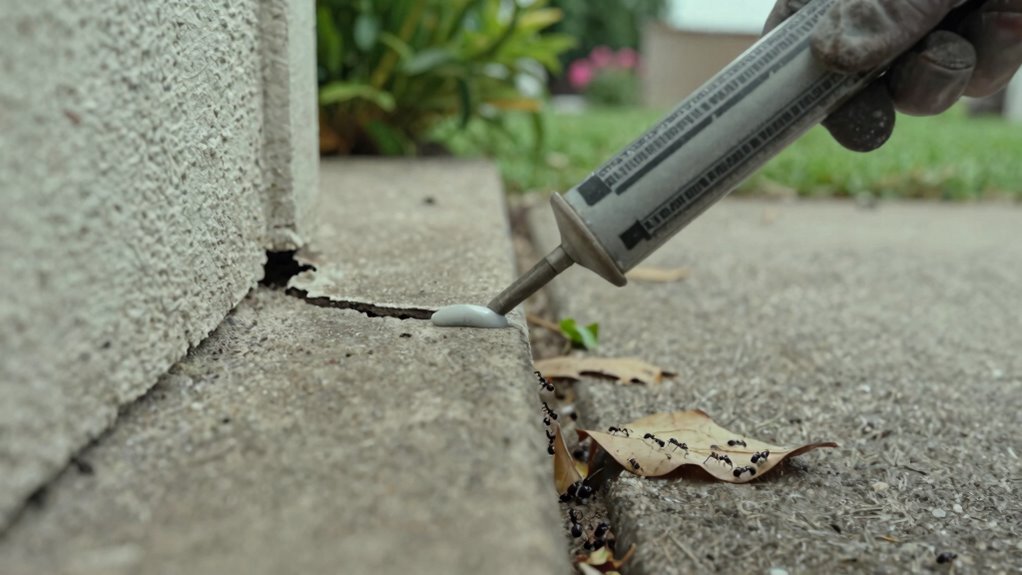
Once gardeners realize ants are just opportunistic neighbors after a free meal, prevention becomes a simple matter of boardings and cleanup. Start there.
Simply seal airtight compost bins. A loose lid is pretty much a buffet sign.
Fix leaky irrigation lines too, since moisture attracts scouts looking for a drink.
Subsequently caulk every crack around patios, foundations, and planters. Ants squeeze through gaps thinner than a dime.
Sweep up fallen fruit, wipe sticky spills, and store pet food indoors. No free snacks, no scouts, no colony.
It is really basic bouncer work for residential pest control. It sounds obvious, but most infestations trace back to lazy habits.
The bottom line, honestly, spend ten bucks and an afternoon to seal, dry, and tidy. Then watch ants move elsewhere.
Fix Uneven Lawns and Ant Hills Before They Spread
Ant hills are the garden equivalent of a shrug from nature, harmless at first but they pile up into a proper headache. Left alone, they bury grass, dull mower blades, and turn a tidy lawn into a bumpy mess.
Ant hills start as nature’s shrug, but left alone they bury grass, dull mower blades, and turn lawns bumpy.
Fixing them early saves a weekend of hard labor later. For effective pest control, brush away mounds on a dry day, simple but oddly satisfying.
Lift and relay turf where hills have sunk, this allows for root relocation and resets the surface. Level low spots with a soil mix, improving soil aeration whilst evening things out.
Overseed bare patches to knit the lawn back together. For extreme unevenness, peel back the sod, remove excess earth, and roll it smooth.
The verdict is act before the hills spread and your mower will thank you. Professional ant removal and lawn leveling services can prevent costly damage.
Hire a Pro for Persistent Ant Infestations
For infestations that laugh off home remedies and return with reinforcements, it’s time to call in a BPCA-certified pest control technician. Hiring criteria matter: verify certification, ask about non-chemical options, and check for a guarantee.
These pros bring targeted treatments, colony-killing gels, and professional-grade dusts that stores won’t sell. Now, the cost analysis. Expect £150 to £300 per visit, depending on property size and nest severity.
That’s steep, but cheaper than a summer of losing plants. Most jobs take one or two treatments, with follow-ups included.
Shop around, but cheap isn’t always better. You want the colony dead, not just annoyed.
The bottom line: if baits and boiling water failed twice, skip the DIY frustration. Pay the expert, and enjoy a lawn that’s ant-free.
Your back and your patience will thank you.
Frequently Asked Questions
Why Do Ants Protect Aphids in My Garden?
Ants protect aphids because they rely on them for a steady sugar supply. Aphids produce honeydew, a sweet liquid that ants love to collect.
This arrangement is essentially a farming partnership. Ants get their sugar fix, and the aphids get protection from predators.
Ants will even carry aphids to fresh plant leaves to keep the honeydew flowing. That means your garden becomes a miniature livestock operation for them.
It is clever behavior, but infuriating when you want healthy roses. If you are dealing with an aphid infestation, you likely need ant control first.
Getting rid of the ants in your garden is the most effective pest control strategy. Without ants, natural predators like ladybugs can handle the aphids for you.
Look for granular ant baits or liquid ant killers that target the colony. These products stop the farming cycle and protect your plants from damage.
For a direct aphid solution, use insecticidal soap or neem oil spray. Combine this with ant bait stations for a complete, buyer ready pest management plan.
You cannot blame the ants for being hungry, but you can outsmart them with the right products. A targeted approach saves your roses and restores balance to your garden.
Are Ant Stings a Serious Health Risk?
Generally, ant stings like those from red ants cause only a minor itchy bump with no serious health risk. Fire ant venom is the outlier, but fire ants are not common in UK gardens.
The real risk comes from allergic reactions, so pest control awareness matters.
For non allergic people, a simple ice pack and antihistamine work fine.
Severe reactions affect under 1% of people, making professional ant control a smart preventive step.
If swelling spreads rapidly or breathing tightens, that is an emergency; call 999 immediately.
Check your personal history and carry an EpiPen if prescribed for severe allergies.
The bottom line is ant stings are not dangerous for most, but you should know your own thresholds.
That is the stinging truth, and why choosing the right pest control product for your garden keeps you safe.
Will Killing a Colony Attract More Ants?
No, killing a colony won’t attract more ants unless the job is botched. Scent trails from dead workers still scream “prime location” for any scout.
Colony relocation is a thing, and new queens eye real estate. So use a borax bait to poison the queen.
Skip sprays that scatter the nest. Remove leftover nest material.
Do it right, or the gardener is sending a group invite. Bottom line: complete kill, no vacancy.
Is It Safe to Leave Ants in My Compost Heap?
Yes, it’s safe to leave ants in your compost heap. They don’t hurt compost health. They’re more like tiny recyclers, breaking down scraps and helping with organic waste management.
Heap disturbance is minimal, too. Of course, they might move soil, but nothing that damages the pile. In fact, killing them could backfire, since new queens may move in.
So let them stay. Bottom line: leave the ants alone. They’re basically free labor for your outdoor pest control efforts.
If you’re worried about nearby ant infestations in your home, consider using a targeted ant bait or granular insecticide. That way, you keep your compost safe while managing indoor pest pressure.
Using a diatomaceous earth barrier around your bin can also deter nesting without harming the pile. For serious ant problems in the garden, look for a long lasting ant killer that won’t contaminate your compost.
When Do Ants Become Active After Winter?
Ants become active when spring temperatures climb, typically March or April in the UK. Colony emergence hinges on warmth, with ant activity ramping up as soil thaws.
They’re not early risers. Think of them as garden teenagers, stirring only when it’s cozy.
Once the mercury hits 10°C, workers start foraging. That warmth triggers a need for food and water, so an effective ant bait station placed near entry points can stop them before they invade your kitchen.
A bit lazy, admittedly, but that’s why a warm snap catches them off guard. If you’ve spotted scout ants in late February, it’s time to order your ant killer spray or granular bait for early season control.
For fast, targeted relief, use a residual insecticide around doors and foundation cracks. Then follow up with a gel bait to eliminate the colony from the inside out.


