
Where do mosquitoes lay eggs? The short answer is still water—but the real story is more specific than that. Different species target different spots, from stagnant ponds to damp soil just above the waterline. Knowing exactly where they breed is the first step to stopping them before they become biting adults. A single bottle cap of standing water can turn into hundreds of mosquitoes, so prevention starts with spotting these hidden nurseries. In this guide, I’ll cover the most common egg-laying sites, how to identify them around your home, and the practical steps to eliminate them fast. Keep reading to break the mosquito life cycle before it ever takes flight.
At A Glance
- Mosquitoes lay eggs in or near standing water.
- Still water is essential for egg survival and larval development.
- Aedes mosquitoes lay eggs on damp soil above the waterline.
- Culex mosquitoes deposit egg rafts directly on stagnant water surfaces.
- Floodwater mosquitoes lay dormant eggs in dry soil awaiting rainfall.
Why Mosquitoes Are Picky About Egg-Laying Sites
Why mosquitoes are picky about egg laying sites is a matter of survival. A mother mosquito’s choice of real estate can mean life or death for her offspring.
Different species have very different tastes. For example, some Aedes mosquitoes need damp soil above the waterline. They lay eggs that wait for floodwater, sometimes for years.
Anopheles species prefer laying eggs singly on sunlit water surfaces. These surfaces are often sheltered by vegetation. Culex mosquitoes go for stagnant, artificial containers like old tires or pools. This is important for pest control since these containers are common breeding grounds.
These choices are driven by chemical and visual cues. Mosquitoes also use water vapor to find the right spot. Anopheles flocks to moisture, while tall river plants scare them off.
A mosquito’s habitat selection is not random. It is a survival strategy. Pick the wrong damp soil or clear water, and her eggs never hatch. That is why a mother mosquito is like a tiny, buzzing real estate agent.
She specializes in waterlogged rentals with no time for fixer uppers. For homeowners, knowing these preferences helps in mosquito control. Targeting their preferred egg laying sites can reduce pest populations effectively. Bti-based biological larvicides offer a safe, natural way to kill larvae in these standing water sites without harming fish, pets, or plants.
The One Thing All Mosquito Egg Sites Share
Despite their picky preferences, every mosquito egg site shares one non-negotiable feature: water contact. Whether it’s a single egg floating on a pond or a raft stuck to a damp bottle cap, that moisture is critical for the larva to hatch and wriggle free. Products containing BTI offer a safe biological control that targets only mosquito larvae without harming fish, birds, or mammals.
It’s a simple rule, really. No water means no wigglers, which means no mosquito problem for you. This is why professional pest control always starts with eliminating standing water around your property.
Common mosquito breeding grounds include clogged gutters, bird baths, and old tires. For effective mosquito prevention, you can treat these areas with larvicides from a trusted pest control supply store.
When you target egg sites directly, you stop the next generation before they become biting adults. That is the most practical, friendly approach to long-term mosquito control for your yard.
Water Contact Necessity
Water contact is an absolute necessity for every mosquito species, no matter where they choose to breed. Some prefer tree holes, while others pick tin cans or tire piles for their eggs.
But the one rule that never changes is that eggs need constant dampness to develop properly. Without that moisture, female mosquitoes simply cannot complete egg maturation.
After hatching, larvae require aquatic respiration, meaning they breathe through siphons or gills when submerged in water. Even species like Aedes vexans lay eggs on damp soil and rely on future flooding to trigger hatching.
For effective pest control, remember that eliminating standing water is your best defense. Whether it is a pristine pond or a grimy bottle cap, if there is no water contact, there is no mosquito. For yards with persistent water issues, portable propane-powered foggers like the Burgess Propane Insect Fogger can help target adult mosquitoes after breeding sites are removed.
This universal deal breaker matters whether you are treating a backyard or a commercial property. Every mosquito mom follows this one rule that no treatment plan should ignore.
Subtle Site Selection
The one thing all mosquito egg sites share is subtlety. A female mosquito doesn’t need a lake, she’s content with a bottle cap, a clogged gutter, or a damp tire track.
These aren’t grand water features, they’re tiny and overlooked puddles often hidden from plain sight. This specific site selection directly impacts egg viability and your pest control efforts should target these spots.
A shallow, sunny puddle might warm eggs just right, but a site that dries out too fast kills them. So females seek habitat permanence, a spot holding water long enough for larvae to hatch and mature.
They’re not looking for a swimming pool, just a reliable, temporary nursery. For effective mosquito control, inspect your yard for any container that can hold water.
A tin can works. A saucer from a potted plant works.
A lid left on the ground is perfect for breeding. Mosquitoes, it seems, are masters of the miniature, so removing these tiny sites is key to stopping them. Choose plant-based sprays with non-toxic, biodegradable properties to safely treat nearby areas where mosquitoes might rest, such as patios and garbage cans.
Why Still Water Attracts More Egg-Layers Than Moving Water
Still water wins the mosquito egg-laying contest every time, and it’s not even close. The main reason is stability: a calm pool doesn’t wash away eggs or drown larvae like a fast current would, which is a solid survival deal for the next generation. That makes stagnant water a top target for pest control. Homeowners looking to reduce mosquito populations should drain or treat any standing water, and can also use UV light traps as an effective ongoing prevention method for adult flies indoors. On top of that, females read chemical cues and olfactory signals from stagnant water. These basically scream “safe nursery here,” whereas moving water scrambles those scent trails into useless noise. For effective pest management, focus on eliminating these breeding sites. A simple yard check for clogged gutters or old tires can stop egg-layers in their tracks.
Still Water Stability
Most mosquitoes prefer laying eggs in a forgotten glass of tea on your porch rather than a fast-flowing stream. Still water provides the stability that moving water cannot guarantee, making it a perfect breeding ground.
A stagnant pool barely ripples, giving female mosquitoes a calm surface to deposit their eggs without disruption. This stillness keeps egg rafts intact and larvae safe from currents that would wash them away.
Mosquitoes have a very low tolerance for ripples. They avoid even gentle flows that can topple Culex egg rafts or wash Aedes eggs downstream.
In still sites, those eggs float undisturbed and the water level stays predictable. A forgotten bird bath, for example, can hold steady water for days, creating an ideal nursery.
The lack of movement also means fewer predators like fish that thrive in flowing streams. For effective pest control, dumping any standing water is a simple and powerful step.
Still water is a reliable nursery for mosquitoes, while moving water is a risky gamble. Consider using solar bug zappers as an additional pest control method to target adult mosquitoes near these breeding sites. To reduce mosquito problems around your home, eliminate all sources of standing water, even that old tea.
Chemical Cue Preference
Chemicals drifting from water act like invisible dinner bells for female mosquitoes. Still water sends out stronger and more consistent scent signals than moving water because its surface stays calm.
Stagnant ponds and birdbaths develop layers of organic debris like bacteria and rotting leaves. This buildup creates a chemical signature that clearly tells mosquitoes to lay eggs there.
Moving water disperses these cues too quickly. The dinner bell gets lost in the currents, making it unreliable for mosquito breeding.
Female mosquitoes are practical about protecting their offspring. Still water offers a stable nursery where eggs won’t get swept away.
If you want to stop larvae in your yard, dump out any standing water every week. This cheap pest control trick works better than any fogger or spray.
Target stagnant spots like plant saucers, clogged gutters, and old tires. Eliminating these simple breeding sites keeps mosquitoes from multiplying in your landscape.
Natural essential oils can also be effective at masking the chemical cues that attract egg-laying mosquitoes.
Olfactory Attraction Signals
The real secret behind still water’s appeal to female mosquitoes comes down to smell. Stagnant pools release strong olfactory cues, chemical vapors from bacteria and decomposing leaves, that act as scent markers for ideal egg-laying sites.
Moving water disperses these signals, making it nearly invisible to a mosquito’s antennae. Think of it like a noisy restaurant versus a quiet one, the loud creek drowns out the dinner bell.
Female mosquitoes prefer calm, rank water since those scent markers guarantee food for larvae. So, if you want fewer eggs and need effective pest control, keep water circulating.
A simple fountain or aerator costs around 30 dollars and scrambles these olfactory cues. This easy mosquito control trick turns your birdbath from a five-star nursery into a no-fly zone.
Disrupt the smell, stop the spawn. For better pest prevention, check out affordable mosquito repellent for yard or buy a solar fountain to protect your backyard. For extra protection around the outdoor dining area, consider combining this with citronella candles or incense that release natural, chemical-free scents to deter bugs.
The Specific Places Mosquitoes Check Before Laying Eggs
Before a female mosquito commits to laying eggs, she runs a tiny, high stakes real estate inspection. She scans for still, shallow water like stagnant puddles, clogged gutters, or forgotten birdbaths.
Egg laying timing is precise; she avoids open, sun baked sites, preferring shaded, organic rich pools. Egg placement depth matters deeply: many species deposit eggs directly on the water’s surface, while others, like floodwater mosquitoes, press them into damp soil just above the waterline.
She checks for mineral content, bacterial film, and predator presence. Anything off triggers a retreat, so common inspection spots include tree holes, old tires, and the rims of plant saucers.
It’s a fussy, non negotiable ritual. For pest control success, skip the chemical sprays and eliminate standing water within a 100 foot radius. High-density mesh barriers, like those found in protective nets, offer a chemical-free alternative for guarding sleeping areas and strollers.
That’s the only inspection she fails every time, making it your best mosquito prevention strategy.
Where Culex Mosquitoes Deposit Their Floating Egg Rafts
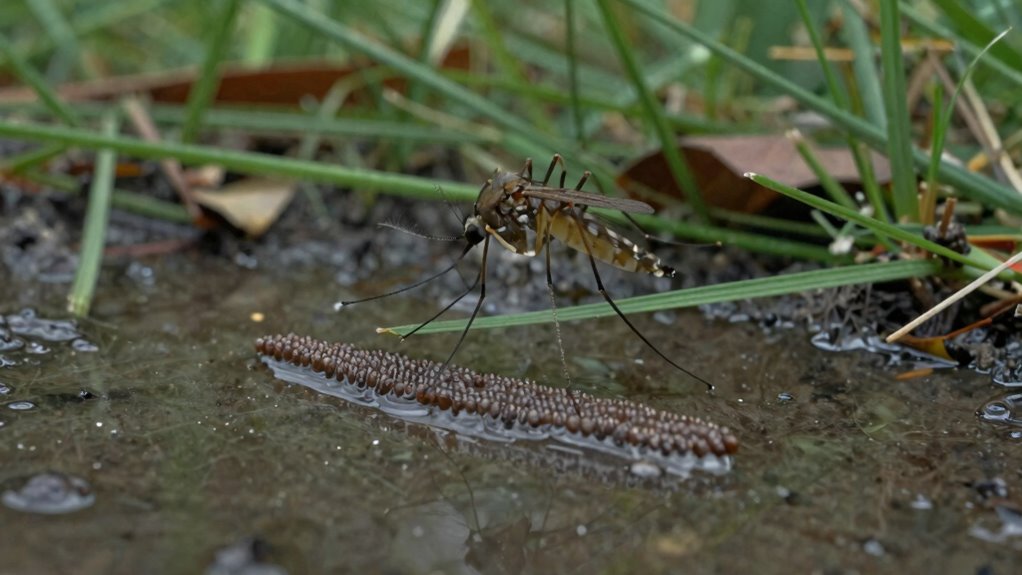
Unlike the fussy floodwater mosquitoes that tuck eggs into soil, Culex females take a more communal approach. They deposit egg rafts directly on the water surface, preferring stagnant water in ditches, catch basins, or backyard ponds.
Vegetation shelter is key for these rafts. They are often wedged near cattails or floating debris, providing shade and protection.
The raft holds 100 to 300 eggs and resembles a speck of soot. It hatches in 24 to 48 hours almost in unison, like a mosquito flash mob.
For effective pest control, target these stagnant water sources. High organic content in ditches and runoff makes them prime breeding sites. When treating adult mosquitoes nearby, consider using a picaridin spray for up to 12 hours of defense.
Calm, fresh water in ponds or pools also attracts Culex. So do warm, shallow spots like wheel ruts or buckets.
If you spot a dark fleck floating near your birdbath’s edge, you have found Culex’s nursery. Clear it out before the kids start buzzing to prevent an infestation.
Why Aedes Mosquitoes Prefer Damp Soil and Tiny Containers
Aedes mosquitoes are highly selective about where they lay their eggs. Their preference for damp soil is a survival trick that allows eggs to wait months for floodwater.
This strategy completely avoids the risks of open water. But their targeting of tiny containers is a sneaky pest control challenge.
A bottle cap, a forgotten plant saucer, or a crumpled soda can can hold just enough moisture. These miniature hideouts become prime real estate, while big ponds are avoided due to predators.
A bottle cap can become prime real estate for mosquitoes, while ponds are avoided.
Eggs only hatch when conditions are right, like a timed lottery. That is why checking your yard after rain is a critical step for mosquito control.
Flip, drain, or toss anything that holds water. This simple yard maintenance tactic is your winning move against these stealthy strategists. Natural ingredient patches offer a degree of protection for light mosquito exposure during yard work.
Anopheles Egg-Laying: Single Eggs on Vegetation-Sheltered Water
Anopheles mosquitoes take a simple approach by laying single eggs directly on the water surface. They choose sheltered water near vegetation, like marshes or pond edges, to protect the eggs from wind and pests.
This single egg method differs from the rafts laid by Culex mosquitoes, making each egg rely on its own. The sheltered location significantly boosts survival chances and is a key consideration for pest control in breeding grounds.
Targeting these specific sites with larvicides can help manage mosquito populations effectively. For a friendly tip, reducing standing water in vegetation reduces egg laying opportunities.
To prevent infestations, focus on eliminating these sheltered water sources around your property. Professional pest control services can identify and treat these hidden spots with precision. Additionally, aquatic life can be harmed if permethrin-based larvicides runoff into nearby waterways.
Sheltered Water Selection
Shady nooks keep water cooler and reduce evaporation naturally. Plant roots create hidden shelters where mosquito wrigglers thrive.
Still surfaces allow eggs to rest without drifting away. Algae-rich muck provides a buffet for larvae growth.
This is a practical, low-key strategy from nature. It is like choosing a cozy corner booth over a noisy bar.
The bottom line is clear. If you see dense vegetation near water, assume it is a nursery for pests.
To target these breeding zones, use larvicides or introduce mosquito fish for biological control. Inspect your property weekly for stagnant water and overgrown banks.
For long-lasting control, apply BTI-based larvicides that kill mosquito larvae for 30 days per dunk.
Single Egg Deposition
Female Anopheles mosquitoes lay single eggs directly onto vegetation-sheltered water, avoiding the crowded rafts used by Culex species. This solo deposition method increases egg viability by cutting down competition for oxygen and space.
Each egg floats alone and hatches in two to three days, precisely timed with warm, still water conditions. For effective mosquito control, you need to scout hidden pockets like pond edges shielded by tall grass, not just open water. To achieve full protection against adult mosquitoes indoors, consider using a plug-in diffuser with a 15-minute activation time.
The female uses chemical cues to dodge predators, choosing calm, private nurseries that help larvae thrive. Targeting these discrete deposits requires careful inspection of sheltered spots where single eggs are laid.
How Backyard Debris Becomes an Invisible Mosquito Nursery
A forgotten soda can or a clogged gutter can become an invisible mosquito nursery. Even a single bottle cap holding just a tablespoon of water can breed hundreds of wriggling larvae.
A forgotten bottle cap can become a mosquito nursery hidden in plain sight.
An old tire collecting rainwater hatches thousands of mosquitoes each season. This hidden army waits to emerge from your own backyard.
A clogged gutter overflowing with leaf-stained water creates a stagnant swamp right above your head. A child’s forgotten plastic shovel left in the rain holds enough water to launch a new generation.
These are not dramatic swamps but quiet, small habitats you can easily eliminate. Professional pest control services recommend clearing debris and draining standing water to break the breeding cycle.
Routine mosquito control around your property stops these cryptic sites from becoming a problem. Take action today to protect your family from backyard infestations. Applying water-resistant granular insecticides can help repel pests like mosquitoes and fleas for up to 8 weeks, even after rain.
How Floodwater Mosquitoes Time Eggs for Mass Hatching
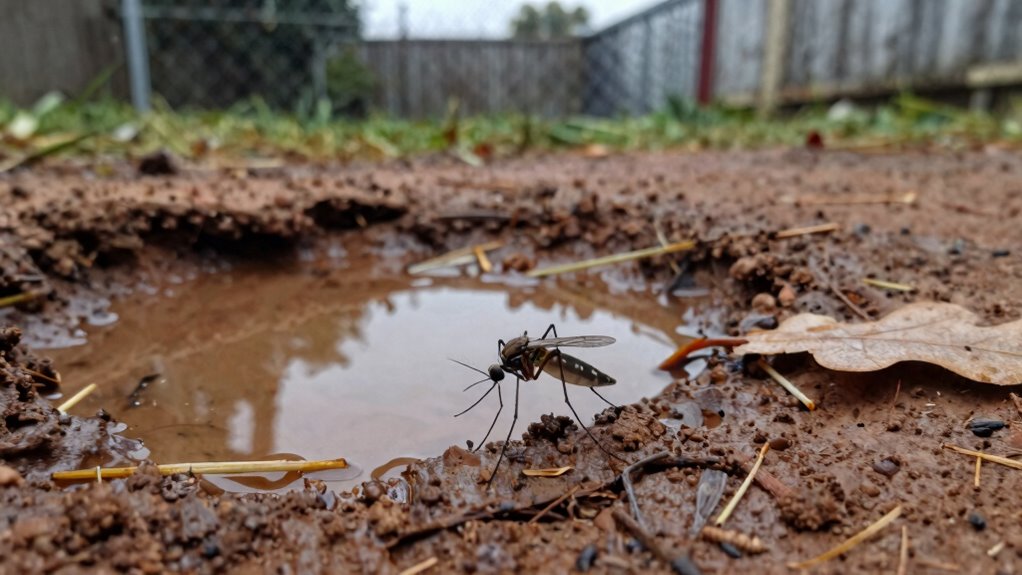
Floodwater mosquitoes play a long game, timing their eggs for a mass hatching event that can turn a quiet neighborhood into a buzzing nightmare overnight. Their egg timing is a survival masterpiece, staying dormant in dry soil for months, waiting for a perfect flood.
When hatching cues arrive, warm, turbid rainwater triggers a synchronized explosion of larvae. This strategy creates a seed bank in the soil, so not all eggs hatch at once.
A single flood can unleash millions of larvae per hectare, making a pond turn into a 100 million egg nursery. It is nature’s way of saying you will wish you had drained that birdbath.
For pest control, identifying and removing standing water is the most effective way to prevent these mosquitoes. Homeowners should inspect gutters, toys, and tarps for water collection after heavy rain.
Using larvicides in birdbaths and rain barrels can stop the egg hatching cycle early. Professional mosquito treatment services often target soil seed banks to reduce future outbreaks.
The table below shows the key hatching cues that drive these mass hatch events. Knowing these triggers helps you time your pest control steps for maximum protection.
| Hatching Cue | Trigger | Effect |
|---|---|---|
| Water level | Heavy rain | Floods eggs |
| Temperature | 70 degrees F plus | Activates embryos |
| Turbidity | Muddy runoff | Speeds hatching |
| Oxygen drop | Stagnant pool | Signals danger |
Applying a barrier spray around your yard before the rainy season can intercept adult mosquitoes before they lay eggs. This practical step keeps your outdoor space safe and comfortable all summer long. For long-lasting protection, consider using a pyrethroid concentrate that provides quick knockdown and residual effects for weeks.
What Happens to Mosquito Eggs Immediately After Egg-Laying
Eggs laid in water start hatching gently within a day or two, while those on soil sit vulnerable and wait for rain.
If you notice standing water around your home, treating it quickly can stop mosquitoes from hatching.
Eggs stuck in a bottle cap remain cramped and dark, desperate for a single drop.
Those lost in dry debris become forgotten potential, absorbing only sorrow.
It’s a roll of the dice for each tiny raft, which is why professional mosquito control focuses on eliminating stagnant water.
For effective pest management, inspect gutters, birdbaths, and containers weekly to break the cycle.
Why Some Mosquito Eggs Survive Months Without Water
Mosquito eggs can survive without water for months due to a special survival mechanism called egg diapause. This process halts their metabolism, preserving energy and allowing them to wait out dry seasons.
Drought tolerance comes from a hard shell that resists water loss, so the eggs can wait months for floods. Delayed hatching ensures that multiple floods trigger staggered hatch times, which guarantees survival even if one flood fails.
This seed bank strategy lets eggs accumulate in soil over years, producing millions of larvae when conditions improve. Flood survival is precise, as eggs only hatch when the water is right, avoiding cold or clear water that could harm them.
The punchline is that this evolutionary trick lets Aedes vexans bounce back after droughts. It turns a dry ditch into a mosquito hub within days, making pest control treatments essential before heavy rains.
Homeowners should target these egg banks with larvicides or source reduction to prevent outbreaks. Using barrier sprays and eliminating standing water are key steps for long term mosquito control.
Frequently Asked Questions
Can Mosquitoes Lay Eggs in Salt Water?
Yes, some mosquitoes can lay eggs in salt water. Saltwater species like certain *Aedes* mosquitoes actually prefer brackish or salty habitats.
They breed in coastal marshes, crab holes, and even roadside ditches with high salinity. Inland breeding also happens in salty pools from irrigation or de icing runoff.
Most mosquitoes avoid salt, but these tough species thrive in conditions that kill others. That means your backyard birdbath is still a prime target for common pests.
But if you live near a beach or use road salt, you may face saltwater mosquitoes too. To control them effectively, look for larvicides labeled for salt marsh applications.
Using a targeted mosquito treatment around breeding sites can stop them before they bite. For the best pest control results, choose products that kill larvae in both fresh and salt water.
Do All Mosquito Eggs Need Water to Hatch?
Not all mosquito eggs need immediate water to hatch. Some, like those of *Aedes* and *Ochlerotatus*, are laid on damp soil or above the waterline.
Egg hydration happens later when floods arrive, which is a delayed hatch strategy that boosts mosquito survival during dry spells.
Other species, like *Culex*, lay egg rafts directly on water and hatch within days.
So water is critical for hatching, but its timing and form vary widely.
If you’re fighting mosquitoes in your yard, this means standing water control alone won’t stop *Aedes* eggs hidden in soil or plant pots.
For effective pest control, use larvicides in water bodies and treat dry zones with insect growth regulators.
Buy a residual spray for outdoor surfaces to kill adult mosquitoes before they bite.
Professional grade products like a backpack fogger or granular larvicide can target both egg types.
How Many Eggs Does a Single Mosquito Lay?
A single mosquito lays between 100 to 300 eggs at a time, though the exact number depends on the species. For effective mosquito control, knowing where they breed is key to stopping an infestation.
Culex mosquitoes deposit rafts of 100 to 300 eggs directly on water, while Aedes lay single eggs on damp soil. These single eggs can survive drought for months, so professional pest control products can target both standing water and dry areas.
After hatching, larval development unfolds in water, whether in a pond or a bottle cap. To prevent biting adults, use larvicides and adulticides from trusted brands to break the life cycle right where it starts.
Bottom line: egg counts vary, but they always guarantee future biting if you leave breeding sites untreated. For complete mosquito control, invest in yard sprays and foggers with proven active ingredients.
What Season Do Mosquitoes Lay the Most Eggs?
Mosquitoes lay the most eggs during peak breeding season, which typically runs from late spring through summer. Warm, humid conditions above 70°F significantly boost their flight activity and egg-laying frequency.
Cooler temperatures slow them down, while extreme heat over 95°F can actually suppress reproduction. Most species prefer still water in containers, marshes, or damp soil for depositing eggs.
So the bottom line is that warm, wet months are prime time for mosquito infestations. If you’re serious about mosquito control, start removing standing water in spring and summer before populations explode.
For lasting protection, consider larvicide treatments in ponds or rain barrels, plus adulticide sprays around patios and entry points. When shopping for pest control products, look for EPA-approved options that target both larvae and adult mosquitoes.
A smart purchase includes a residual barrier spray or a mosquito dunks kit, which stops breeding at the source. Pair that with routine yard maintenance, like clearing gutters and trimming tall grass, to deny them shelter.
Act early and consistently, because peak egg-laying can double their numbers in just a week. That’s your most effective strategy to keep your outdoor space livable all season long.
Do Mosquitoes Lay Eggs Inside Homes?
Yes, mosquitoes do lay eggs inside homes, though it’s not their first choice. Indoor breeding sites are typically small, overlooked water sources like pet bowls or dripping AC trays.
Even a bottle cap can hold enough standing water for species like *Culex* or *Aedes* to reproduce. You don’t need a pond, just a few millimeters of water to attract them.
Check your plant saucers weekly for hidden moisture to stop mosquito larvae in their tracks. This cheap prevention method is a key part of any home pest control plan.
Empty any still water indoors immediately, or you may end up hosting a free nursery. Dry spaces win the battle, so invest in a dehumidifier or waterproof sealant for crawl spaces.
For targeted mosquito control, consider larvicide tablets or an indoor insecticide spray labeled for mosquitoes. Smart pest control buyers always prioritize removing breeding sites first, then use products like foggers or repellent traps as backup.


