
Where do flies go at night? If you’ve ever noticed them vanish after sunset only to reappear at dawn, you’re not alone—and knowing their hiding spots is key to pest control. During the day, flies are active and annoying, but at night they enter a light torpor, clinging to ceilings, curtain rods, or under leaves. This nightly retreat helps them avoid predators like spiders and bats, not you.
For effective pest control, understanding these resting habits is crucial. A simple dim red flashlight after midnight reveals their roosts, unmoving and easy to target. We’ll cover exactly where to look indoors and outdoors, plus how to use this info to break their cycle. Stick around to turn their sleep into your advantage and keep your space fly-free.
At A Glance
- Flies rest at night in vertical spots like walls, leaves, and ceiling corners.
- They seek tight shelters such as leaf undersides, tree bark, and grass blades.
- Indoor flies hide in attics, crawlspaces, and dark corners near food sources.
- Nightly migration helps flies evade predators like bats, spiders, and geckos.
- Cold weather drives flies into structural gaps and indoor crevices for warmth.
Why Do Flies Disappear When the Sun Goes Down?
Why do flies vanish as soon as the sun dips below the horizon? It’s not a magic trick, though their disappearance can feel that dramatic.
The short answer is they are cold‑blooded, and their entire evening routine is about dodging predators while saving energy. When light fades, droves of flies engage in a nightly migration, shifting from open foraging zones to tight, hidden micro shelters like the undersides of leaves, cracks, or tall grass.
This relocation is not random; it is a strategic retreat. But it is also tied to life cycle changes, since many species rest during the darker hours to fuel next‑day mating or egg laying.
So they are not gone gone, just bunkered down. That is a decent trade‑off for survival over a late‑night snack.
If you spot flies indoors at dusk, it often means you have a nearby breeding site or an entry point. Regular pest control inspections can identify these problem areas before a full infestation takes hold.
Sealing cracks and removing outdoor compost or pet waste near your home helps cut off their nighttime hiding spots. For persistent issues, professional fly treatment offers a targeted solution that disrupts their daily and nightly routines. Additionally, using BTI-based larvicides in nearby standing water can kill fly larvae without harming fish, plants, or other beneficial insects.
What Happens to a Fly’s Body at Night?
At night, a fly’s body temperature drops sharply to match the cool air. This helps the insect conserve energy and survive colder conditions.
At night, a fly’s body temperature drops sharply to match the cool air, conserving energy.
Heart rate and breathing both slow down dramatically. Oxygen consumption is reduced by nearly half during this restful state.
The fly’s leg muscles lock into a tight grip on the surface. This death grip hold keeps it secure and prevents falling while resting.
Nervous system activity dials down significantly. External stimuli are barely registered, which makes the fly less aware of threats.
Digestive processes nearly halt to store resources. This energy saving allows the fly to resume its frantic search for trash at dawn.
While not sleep as humans know it, this deep torpor is key to pest control management. Understanding fly behavior helps with effective pest elimination solutions that use bifenthrin sprays to create long-lasting barriers.
Where Do Flies Actually Sleep Outdoors?
Outdoors, flies choose sheltered spots like the underside of leaves or tall grass to sleep. They also rest on tree bark to stay hidden from nocturnal predators like spiders and bats.
If you notice flies gathering around your home at night, it may indicate a nearby breeding site you need to address for pest control.
Keeping your yard trimmed and removing leaf litter helps reduce these fly sleeping areas.
A simple survival trick for flies is picking a safe snooze spot, but this can lead to unwanted home invasions.
For effective fly prevention, focus on sealing entry points and managing outdoor debris, ideally using a broad-spectrum kit to quickly eliminate flies and other common pests that may be active nearby.
Nighttime Outdoor Habitats
At least 31.4% more insects are active at night, but flies rely on sensory adaptation to navigate dim environments. Their tweaked antennae and eyes help them find safe outdoor sleeping spots for comfort and protection.
Flies often perch on the undersides of leaves to hide from moonlight and rain. Tree bark crevices offer urban camouflage in both city parks and forests.
Long grass blades let flies cling motionless, avoiding detection from predators and pest control efforts. Fence posts or walls give vertical surfaces for quick takeoff if disturbed.
Under rocks or logs, flies escape wind and cold temperatures. These sites are chosen for minimal vibration and low light, maximizing rest while minimizing exposure.
Think of it like choosing a shady bench over a busy sidewalk. This simple survival logic explains why targeted outdoor treatment focuses on these hidden resting areas. An effective approach to reducing flies in these spots involves using beer-based traps placed in shaded, moist areas to attract and capture them without chemicals.
Shelter From Predators
A fly’s best defense is often just staying out of sight. Nighttime is when that strategy gets serious.
To avoid becoming a bat’s midnight snack or a spider’s next meal, flies seek dense cover. They tuck into the undersides of leaves, beneath bark crevices, or inside hollow stems.
This fly sleep strategy is pure predator avoidance. Outdoor flies don’t enjoy a good night’s rest in the open.
Instead, they anchor themselves with tiny leg pads, hanging upside down under a leaf. It’s like sleeping while clinging to a ceiling fan, uncomfortable but safer.
Grasslands offer fewer hiding spots, so flies there endure 75% lower nighttime abundance. Solid shelter beats a scenic view.
For effective pest control, knowing these hiding spots helps target treatments, and applying a product like Web Eater Spider spray can dissolve webs and leave a long-lasting barrier against spiders that prey on flies. Any dark, hidden, vertical nook where predators can’t easily follow is prime real estate for a six-legged survivalist.
A licensed exterminator can seal these cracks and crevices. Reducing daytime clutter also cuts down on fly harborages near your home.
Do Flies Come Inside to Sleep in Your Home?
Yes, house flies often come inside to sleep, turning attics, crawlspaces, and quiet corners into their nighttime indoor havens. That buzzing around a light bulb at dusk is no accident.
Lights attract them since they mistake the glow for an escape route or a safe spot to land after a day of scavenging. So when you turn off that lamp, you’re not just saving electricity.
You’re dimming their GPS to your bedroom, which is a simple pest control trick for keeping flies out at night. For best results, combine this with sealing cracks and using a professional fly bait station. Outdoors, place traps at least 20 feet from living spaces to avoid drawing more flies toward your home at night.
If you have a major infestation, consider calling a pest control service to inspect your attic and crawlspace for breeding sites. Regular prevention, like cleaning up pet waste and food crumbs, also helps stop flies from settling in overnight.
Nighttime Indoor Havens
Three main reasons explain why flies seem to vanish indoors after sunset, and none of them involve a cozy guest bedroom. Most houseflies seek out hidden cracks, curtain folds, or ceiling corners.
These spots offer warmth and protection, not your pillow. Their nighttime strategy revolves around conserving energy for the next day’s scavenging.
Microclimate selection means they target humid, sheltered spots near food sources, like under kitchen cabinets. Roosting behavior has them hanging upside down to rest their flight muscles.
Reduced activity sees metabolic rates drop, making them sluggish and invisible. Fly migration leads some species to move into structural gaps near windows during cooler months.
Winter survival drives them to choose indoor crevices to escape frost, not to socialize. For effective pest control, sealing those entry points and cracks is a smart first step.
Inspecting dark corners and curtain folds can reveal hidden roosts. Removing food crumbs and moisture under cabinets stops them from settling in for the night. Placing traps near fruit bowls or trash cans indoors can intercept flies before they find their nightly hiding spots.
Why Lights Attract Them
Flickering porch lights and kitchen bulbs at night don’t just attract flies, they confuse them. Artificial light messes with their internal compass since flies rely on natural moonlight to navigate.
This confusion is called phototaxis disruption. Their instinct to fly toward brightness gets hijacked by a sixty watt bulb instead of the moon.
So they circle endlessly, their circadian misalignment kicking in as they should be resting, not buzzing. Do flies come inside to sleep? Only accidentally, they’re stuck, exhausted from the confusion, and likely crash in a corner.
That fly buzzing at your window at 2 a.m. is not looking for a bed. It’s lost, tricked by your porch lamp.
Why it matters: light pollution lures them indoors, disrupting their sleep cycle and yours. For effective pest control, consider motion sensor lights or yellow bug bulbs to reduce indoor fly infestations. Holographic fans and other visual deterrents offer a chemical-free way to keep these disoriented flies from lingering near entry points.
These simple home pest control changes can stop flies from circling your windows. If you need a professional pest removal service, they can identify entry points and recommend fly repellent solutions.
A quick fly extermination treatment will restore your peace and quiet. You don’t have to live with constant buzzing or tired pests inside your home.
What Time Do Flies “Wake Up” in the Morning?
Flies don’t “wake up” like people do, they simply react to light and temperature changes. Morning activity begins when sunrise triggers their internal clock, driven by the same circadian rhythm genetics that control your sleep.
Most house flies start moving 30 to 60 minutes before sunrise, when light reaches about 1 to 10 lux. They need air temperature above 50°F to become active, below that they stay put and shiver metabolically.
Adult flies emerge from pupae at dawn, a timing that maximizes survival before predators wake up. Blow flies stir later around 7 to 9 a.m., while fruit flies are earlier risers.
Their morning routine starts with preening wings, then hunting for food or mates, no coffee required. If you need pest control for flies, weatherproof formulas like Absorbine UltraShield EX can provide up to 17 days of protection around barns and stables, targeting entry points and using light traps near windows can cut down morning infestations.
For effective fly removal, focus on sealing cracks and removing decaying organic matter before dawn. Expect fly activity right after dawn, earlier if it is warm and sunny.
How Temperature and Weather Change Fly Nighttime Behavior
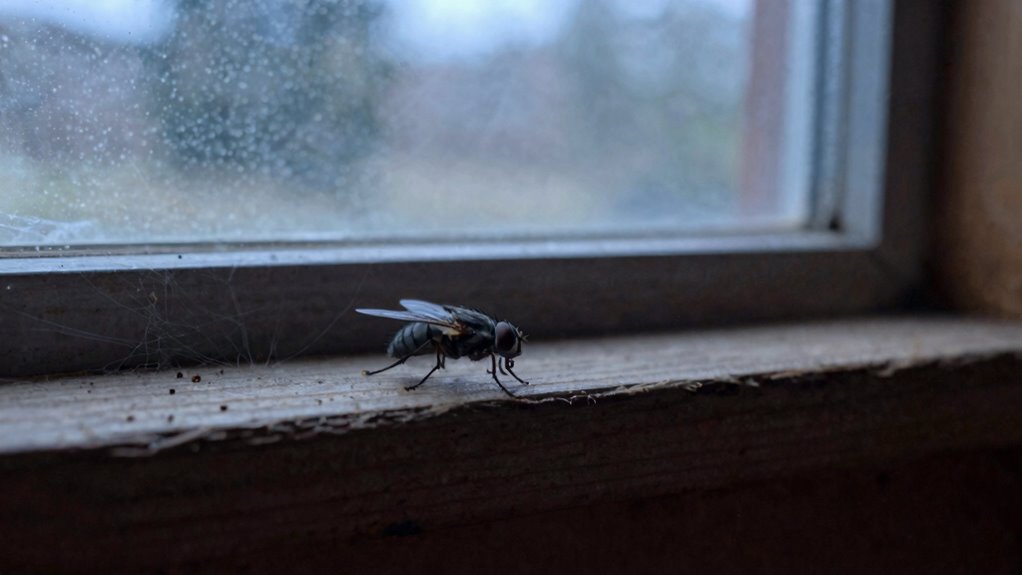
Temperature controls how active flies become at night. When the weather stays warm, flies stay out later searching for food and mates in the dark.
Temperature controls how active flies become at night. When the weather stays warm, flies stay out later searching for food and mates in the dark.
Colder temperatures or rain force flies to hide in sheltered spots like wall cracks, under leaves, or inside homes. This helps them save energy and avoid getting stuck on wet surfaces.
If you need pest control for flies inside your house, sealing cracks and removing attractants can reduce indoor activity. For professional help, many homeowners call an exterminator when flies linger near windows or lights.
Climate warming extends the nighttime window for flies, pushing entire populations toward more nocturnal habits. This shift means property owners may notice more fly activity after sunset during warmer seasons.
Light pollution disrupts fly internal clocks, causing them to hover near streetlamps instead of resting. This wastes their energy and exposes them to predators, which can actually help with natural fly control in your yard.
A fly’s night is a careful balance between opportunity and risk, with temperature and weather deciding the outcome. Understanding these patterns helps you time your pest control efforts for the best results.
Catron IV Animal Wound Spray controls flies, ticks, and maggots with 0.5% permethrin for livestock wounds that may attract flies at night.
Does Light Pollution Make Flies Change Their Sleep Spots?
Light pollution doesn’t just confuse flies. It actively rewrites their nighttime routines, including where they choose to sleep.
In urban ecology, artificial lights cause circadian disruption. Flies abandon natural shelters for lit surfaces, which exposes them to predators.
Flies shift sleep spots from dark foliage to lamp posts, walls, and signs. This rewiring of behavior reduces their normal rest periods by hours.
Urban ecology studies show flies aggregate near lights, not safe crevices. Circadian disruption from constant glow scrambles their internal clocks.
Sleep spot changes can lower survival. A fly dozing on a streetlight is an easy target for pest control measures. For homes seeking control, using an ultrasonic pest repeller can silently disrupt such insect activity without chemicals.
Do Different Fly Species Have Different Nighttime Habits?
Why would a housefly and a horse fly ever agree on bedtime? They wouldn’t. Taxonomic variation drives wildly different nighttime habits among fly species.
Research shows flies, as a group, lean toward higher nocturnal abundance, but that’s a broad average. Look closer: houseflies often rest on ceilings near light, whereas horse flies may roost in vegetation. For effective pest control, know that houseflies prefer indoor daytime activity, while horse flies are more aggressive outdoors at dusk.
Aquatic flies, like lake flies, swarm at dusk, exploiting the 242.5% nighttime insect spike in rivers. But parasitic flies track host activity, which means some stay nocturnal, others diurnal. If you need fly elimination, choose a treatment plan based on host behavior, not a general schedule.
The key is context. Flies aren’t a one-size-fits-all pest; their nightlife depends on species, habitat, and prey. So if you’re chasing a fly at 2 AM, remember that it might be a night owl by design. For targeted fly removal, identify the species first. For example, using a spot-on application can provide up to 12 weeks of continuous protection for horses against flies and other pests, including those active at varying times.
What Predators Hunt Flies During Their Nighttime Rest?
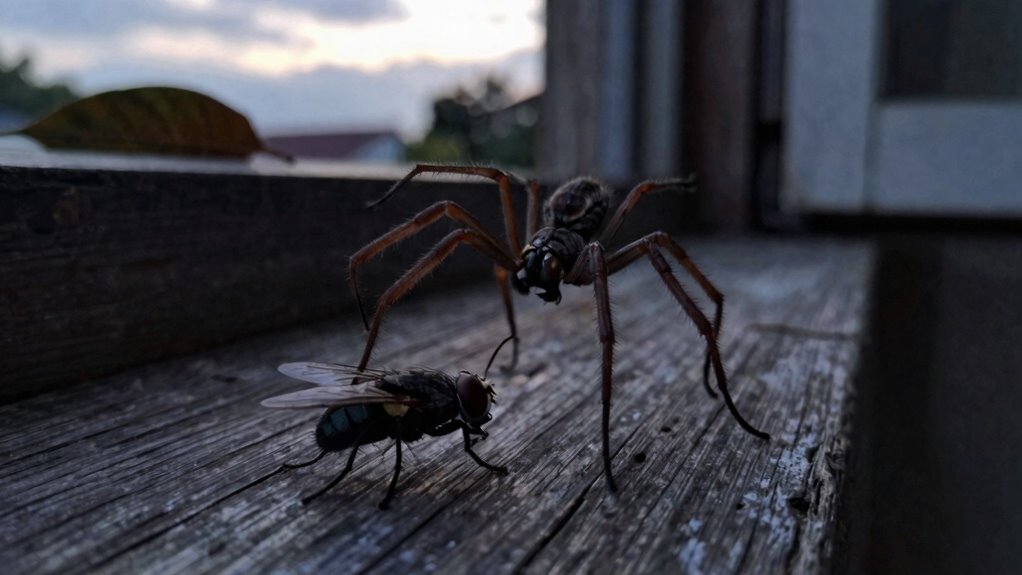
Flies resting at night become vulnerable targets for specialized predators. Orb-weaver spiders and certain bats use stealth to hunt them in the dark.
Moonlight helps these predators spot motionless flies on leaves or walls. This makes controlling your home’s fly population even more important for nighttime pest relief.
Effective pest control services can reduce fly breeding sites near your property. Targeting resting areas like walls and vegetation limits where predators find their prey. UV light traps silently capture these flies indoors without attracting other pests.
Nighttime Predator Tactics
Orb‑weaver spiders weave sticky, nearly invisible webs near fly roosts, trapping them mid‑nap. Jumping spiders quietly stalk sleeping flies, pouncing with precision before the fly wakes.
Robber flies are aerial assassins that snatch dozing flies from leaves, injecting quick venom. Some wasps, like the sand wasp, dig small pits near fly sleeping sites, then ambush them at sunrise. UV and blue-violet light attracts over 3,600 insect species, including many fly predators.
Geckos and small frogs, hunting in the dark, tongue‑flick resting flies off walls and fences. The bottom line is that flies face a covert army of predators during their nightly rest. Unless they find truly hidden spots, their sleep is a gamble.
Ambush Hunters Under Moonlight
Under the cloak of darkness, ambush hunters turn fly roosts into deadly feeding zones.
Spiders, geckos, and even some bats stake out these nocturnal refuges with patient precision.
Their visual adaptation to low light makes flies easy pickings.
The flies cannot see them coming.
Orb weavers spin sticky traps near favored leaves.
They catch flies mid snooze.
Geckos lurk on ceilings using their large eyes to spot the slightest movement.
You might think a fly would pick a safer spot, but comfort beats caution.
Studies show these predators slash fly populations by 20% at night.
If you are dealing with a fly problem, natural pest control starts with understanding these nighttime habits.
Check for hiding spots around outdoor lights and dense foliage.
For effective nighttime pest prevention, seal cracks and remove clutter that invites flies to roost.
So if you are a fly, maybe rethink that cozy leaf.
For professional pest management, consider targeted treatments that disrupt these nocturnal feeding zones.
Combining this with oil of lemon eucalyptus can help repel insects during outdoor activities.
What Makes Fly Nighttime Rest Different From Other Insects?
Flies have nighttime habits that set them apart from other insects in subtle but important ways. Unlike bees or ants that stay active inside their hives, flies enter a lighter state of rest called torpor to conserve energy.
This rest is easily disturbed, especially by artificial lights that confuse their circadian rhythm. Flies prefer to rest on vertical surfaces like walls or leaves instead of hidden nests.
They tuck their legs in and lower their body temperature slightly while staying motionless. This exposed posture makes them easy targets for nocturnal predators, unlike insects that hide away.
For homeowners dealing with fly control, this fragile rest means a simple light switch can rouse them. Professional pest management often targets these resting sites to break the fly life cycle. Physical air movement from fans can also disrupt their landing and feeding instincts near gathering areas.
This on edge pause leaves flies vulnerable, which is why effective fly extermination focuses on their resting areas. Unlike beetles or moths that enter deep torpor, flies remain ready to flee at any moment.
How to Observe Flies’ Nighttime Behavior at Home
Observing flies’ nighttime behavior at home is a simple way to identify hidden pest problems.
You only need a dim red light and patience, ideally after midnight when indoor lights are off.
Flies don’t vanish; they gather at communal roosting sites like ceiling corners or curtain rods.
> Flies don’t vanish; they gather at communal roosting sites like ceiling corners or curtain rods.
Use a red flashlight to scan these high, undisturbed spots without startling them.
You’ll see flies resting motionless, gripping tight and facing downward, ready to flee.
This instinctive pose helps them escape threats, a neat trick for survival.
Tracking their nighttime clusters reveals breeding zones for targeted pest control.
If you find dozens nightly, you’ve located an infestation area that needs cleaning.
Observing patterns for a week confirms their hideouts.
Then, clean those roosting spots to disrupt their lifecycle and prevent future infestations.
This practical method beats buying expensive equipment.
A cheap flashlight and late night snooping help you tackle fly control effectively, avoiding that awkward “caught staring” moment.
Consider using a heavy duty leather fly swatter for manual elimination at these roosting sites.
Frequently Asked Questions
Do Flies Sleep When It’s Dark?
Flies don’t sleep like humans when the sun goes down, but they do enter a rest state called torpor that drastically slows their activity.
This isn’t a lazy nap, it’s a smart survival move that cuts down on nighttime risks like spiders, bats, and the energy cost of flying in the dark.
Their daytime hustle, feeding, mating, and egg-laying, all pauses, yet they stay alert enough to react if a threat gets too close.
Think of it as strategic downtime rather than a deep slumber, so no snoring, but yes, they’re definitely catching a few bug-sized Z’s.
If you’re dealing with a fly problem in your home, knowing their dark-hour habits helps you target treatments when they’re least active.
That’s why professional pest control services often recommend applying indoor fly sprays or setting out fly traps in the evening for better knockdown results.
For effective fly control products, look for fast-acting formulas with residual action that work overnight while flies are in torpor.
Buying a quality fly killer or an indoor insecticide fogger can give you the upper hand before their morning activity cycle kicks back in.
So while flies may not truly sleep, their dark-time stillness makes them easier to catch and eliminate with the right pest management tools.
Whether you choose DIY traps or a professional pest control treatment, timing your purchase and application around their rest period boosts success.
Can Flies See in Complete Darkness?
Flies cannot see in complete darkness. Their compound eyes lack the specialized nocturnal vision of owls or moths.
Instead, flies rely on eye adaptation to dim light. They need at least some ambient glow like moonlight, starlight, or artificial light to navigate.
When it is truly pitch black, they simply settle and wait. So, no night vision goggles for them; they wait for dawn like a forgetful parent searching for keys under a streetlamp.
If you want to spot one indoors, keep a nightlight or use a targeted pest control spray. For effective fly elimination, consider a quality indoor insect trap or a residual insecticide.
The bottom line is that darkness buys you time. But to prevent infestations, invest in fly baits or exclusion screens for your home.
Do Flies Wake up if You Turn on a Light?
Yes, turning on a light usually wakes flies up. Flies have strong light sensitivity, and a sudden burst of artificial light signals danger or a new day.
Their nervous systems react fast, jolting them from rest into active mode. Think of it like a cheap alarm clock. It works, but they might not thank you.
So if you flick the switch, expect sleepy flies to stir. This is why professional fly control products often use light traps.
For effective pest control, a UV light trap is a smart buy. It lures flies in and eliminates them without chemicals.
When you need quick fly removal, consider electric fly swatters or sticky traps. These tools work with the fly’s natural phototaxis.
A sudden light can disorient flies, making them easy to catch. For a complete fly control solution, pair light traps with bait stations.
Shop for pest control supplies that target flies at rest. Look for fly sprays or foggers with fast knockdown power.
Buying a fly light trap for your kitchen or barn will cut infestation risks. It keeps flies from breeding and spreading bacteria.
For persistent problems, invest in a professional grade insect light trap. That purchase saves you time and keeps your space fly free.
How Long Do Flies Sleep Each Night?
Flies sleep roughly 8 to 12 hours each night, though their rest patterns vary. Their sleep cycles include REM sleep, a light stage with twitching legs and wings.
Unlike humans, they don’t get a solid eight hour block. They nap in short bursts, especially in cooler, dark conditions.
Think of it as a series of power naps rather than a deep coma. If a fly seems groggy, it’s probably just catching up on its rest.
This behavior is useful for pest control. Knowing flies seek dark, cool spots for sleep helps you target infestations with the right fly traps and sprays.
If you want to eliminate flies fast, consider using a high quality indoor fly trap. Many homeowners buy a UV light zapper or sticky glue board to catch flies during their rest periods.
For long term control, combine a residual insecticide with a fly bait station. These products target flies where they sleep and feed, which is a smart purchase for effective pest management.
Why Do Flies Not Sleep During the Day?
Flies do not sleep during the day because their internal 24 hour clock, or diurnal rhythm, tells them daytime is for feeding and mating.
This circadian adaptation means they evolved to be most active when it is warm and bright, then rest at night when it is safer and cooler.
If you notice flies buzzing around your kitchen during daylight hours, you are seeing their natural pest behavior in action.
For effective pest control, you need to target them when they are awake and feeding.
That is why daytime treatments like fly baits, sticky traps, or residual sprays work best for fly infestations.
Smart pest control buyers know that matching treatment timing to fly activity is key to buying the right product.
Think of flies as being wired for the breakfast buffet, not the midnight snack.


