
Keeping flies out of your house starts with cutting off what’s drawing them in, not swatting at the air. A clean kitchen and sealed entry points do more than any spray ever could.
Bag food scraps tightly, rinse recyclables, and clean drains weekly to remove breeding sites. Patch torn screens and seal gaps under doors so they can’t get in from outside.
Sticky traps and UV lights catch stragglers, but they won’t fix a dirty sink or a trash can near the door. If traps fill up fast, it’s time to call a pro.
The rest of this guide breaks down the exact steps, from sanitation tricks to long-term prevention, so you can keep your home fly-free for good.
At A Glance
- Seal gaps under doors with sweeps and repair torn window screens.
- Store food scraps in sealed bags inside covered trash cans.
- Fix leaky drains and clean under sinks weekly to remove slime.
- Remove pet waste daily and keep compost bins far from doors.
- Use sticky traps near ceilings and UV lights away from competing sources.
Why Flies Keep Getting Into Your House?
A single female fly can lay hundreds of eggs on a forgotten potato peel or pet bowl residue. Those eggs hatch fast, reinforcing the fly infestation cycle in your home.
When you see a fly, it is not just one fly. It is a messenger from a breeding site you missed during pest control efforts.
The real fix is to cut off those three reasons before they settle in. No food, no water, no shelter equals no flies for effective fly prevention.
Simple steps for fly control can make a big difference. Always seal trash cans and wipe down countertops to remove attractants.
Install screens on windows and doors for long term pest management. Check for standing water under plants or in drains as a breeding ground.
Take action today to stop flies from returning. Your home will stay fresh and pest free with consistent habits.
For extra protection around outdoor trash areas, place baited traps 20-30 feet from the house to draw flies away from your living spaces.
7 Sanitation Habits That Remove Fly Attractants
Seven everyday sanitation habits can starve flies out of your home better than any trap or spray. The key is odor control and trash hygiene, cutting off their food supply before they smell it.
Bag all food scraps tightly in plastic bags before tossing them into a covered, lidded can. No loose apple cores or takeout containers left naked, because this traps odors and denies flies a landing pad.
Bag food scraps tightly in sealed bags before tossing them into a covered can to trap odors.
Rinse all cans, bottles, and plastics before recycling or discarding. A quick swish of water rinses away sticky residue that attracts flies like a free buffet sign, which beats a swarm later.
Clean under sinks and drains weekly, especially around leaky garbage disposals where food slime builds up. A dry, clean surface means flies get zero invitations to breed and helps with pest prevention. Using an enzyme drain cleaner from the sink breaks down organic waste that attracts maggots and drain flies naturally.
Trash hygiene and odor control, done daily, starve flies out and reduce fruit fly infestations. No spray needed, just boring, effective habits that keep your home fly free.
Eliminate Fly Breeding Sites in Yard and Home
The yard and home can become a fly’s all inclusive resort if you ignore breeding sites. Outdoor odor sources like rotting fruit or compost piles are five star buffets for flies.
Garbage can placement matters to keep flies away. Keep cans upwind from doors to avoid laying a scent trail straight inside.
Move them at least ten feet away for better fly control. A tight lid is essential for preventing access to food waste.
Pet waste and leaky drains are prime real estate for fly larvae. Scoop droppings daily and fix drips immediately to eliminate breeding.
Inside your home, rinse cans and bottles before recycling. Food residue gives larvae free real estate to develop.
A dry, clean yard kills the party for pests. Bottom line is to remove the buffet and flies will check out, though for persistent infestations, hang bait traps at least 20 feet from living spaces to draw filth flies away discreetly.
Seal Windows, Doors, and Cracks That Let Flies In
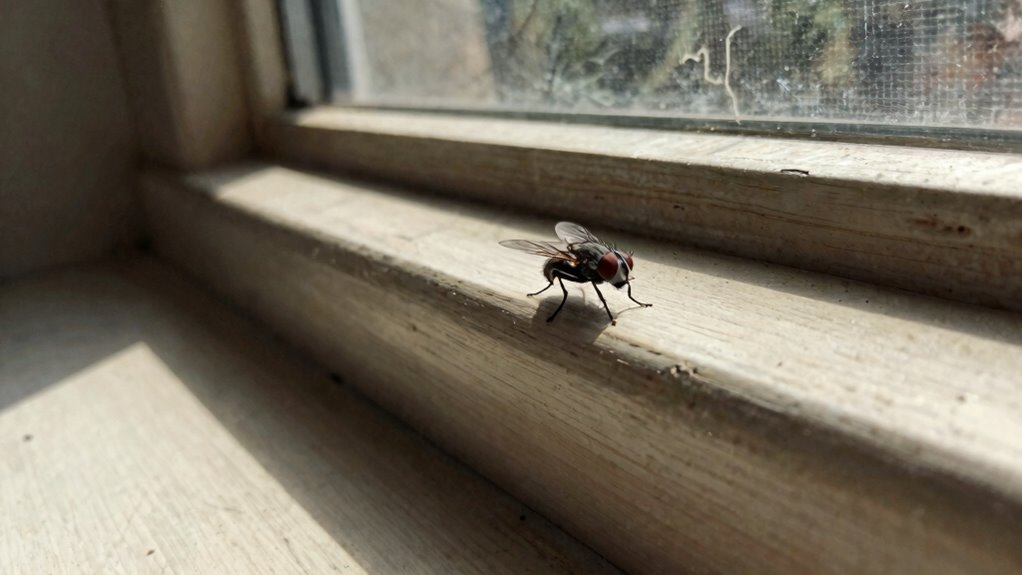
Even after evicting flies from their breeding grounds, you still have to keep them from marching right back in through every open window and loose crack. The key is a fortress like seal around entry points, starting with door sweeps that block the half inch gap under exterior doors, a common fly highway.
Then, tackle windows and vents. Inspect screens for pinholes. A five dollar tube of clear silicone caulk seals them fast, no replacing needed.
Apply weather stripping around door frames. Use adhesive foam tape, eight dollars at hardware stores, to create a snug fit. Caulk foundation cracks and gaps around pipes with silicone. Spending fifteen minutes on sealing gaps that let in both flies and drafts is a smart move.
Focus on door sweeps first, they are cheap and easy and stop the biggest flow. A tight home is a fly free home. For larger gaps around pipes or vents, use a heavy-duty pest barrier like steel wool to block entry points that flies and other pests might exploit.
Non-Chemical Fly Control: Traps, Swatters, and Sticky Paper
Effective fly swatters work best when you aim about 1.5 inches behind the fly. This targets its natural backward takeoff instinct for a successful hit.
Sticky paper placed near ceilings catches flies during their resting periods. Be sure to avoid unscented models, as they fail to attract pests.
Choosing the right trap depends on your goal for pest control. Use ultraviolet light traps to monitor fly populations or baited stations for immediate removal.
Buyer intent matters when selecting a fly control solution. Swatters and sticky paper offer affordable, chemical free options for home use. For those seeking a more powerful solution, electric fly swatters deliver high-voltage shocks between 3,500V and 4,100V to instantly eliminate flies, mosquitoes, and gnats.
Using Swatters Effectively
Strike the surface just behind the resting fly, not the fly itself. This prevents alerting it with your swatter’s shadow or wind.
Bring the swatter down parallel to the tabletop, not at an angle. A flat approach avoids pushing the fly away with a breeze.
Press briefly after impact to guarantee contact and a clean kill. A glancing blow only stuns the pest, allowing it to escape.
One solid kill beats ten near misses every time. Patience plus a clean, flat swatter wins against common household pests.
For better pest control results, aim with precision and use a steady hand. Buyer intent matters: a well-placed strike reduces the need for repeat swatting.
For those seeking an alternative, pairing a fan with steady airflow naturally discourages flies from landing without requiring any physical contact.
Sticky Paper Placement Tips
Three key tips for placing sticky paper will save you from a ceiling full of dead flies.
First, ideal placement heights matter. Hang strips six to twelve inches below the ceiling, where flies naturally rest. This exploits their habit of landing high, not mid air.
Second, ceiling proximity methods work best near light fixtures or windows. Flies congregate there, so avoid corners with poor air circulation. Sticky paper near a ceiling lamp catches more flies than one tucked behind a curtain. Trust me, this is a proven pest control tactic.
Third, replace strips every two weeks or when full. Otherwise they look like a horror movie prop. Sticky paper works silently, needs no power, and costs about two dollars per roll. Place it out of reach of pets and drafts for safe fly management. For an eco-friendly option, choose traps made from paper-based materials that reduce plastic waste.
Bottom line: hang high, near light sources, replace often. These sticky paper placement tips deliver effective fly control without electricity.
Selecting The Right Traps
UV traps work best for heavy-duty fly control. Place them 3 to 5 feet high away from competing light sources for maximum effectiveness. These devices often use UV light attraction along with high-voltage grids or fan suction to eliminate insects on contact.
Baited traps are a cheap option at around five dollars. They use scent to attract filth flies but smell bad and need frequent replacement.
Window traps are clear stick on sheets that catch flies resting on glass. They require low effort and work well for small infestations.
The bottom line is that UV traps provide non chemical control for serious fly problems.
Remember that no trap can replace a clean kitchen in your pest management plan.
When to Call a Pro: Chemical Treatments for Flies
Even the most diligent fly swatter and sticky paper enthusiast eventually hits a wall. When flies keep returning despite spotless sanitation and sealed doors, it is time to consider professional pest control.
A pest control expert can apply targeted chemical treatments that tackle stubborn infestations at their source. This step is best saved for when all other fly control methods have failed. These professionals may use Alpine Fly Bait which remains effective for up to 30 days on surfaces.
Sanitation Importance
Cleanliness is next to godliness, and it is also your first step toward effective pest control. A fly free home starts with proper waste storage, because without it nothing else works.
Store trash in sealed, plastic lined cans kept upwind from doors. This keeps odor trails from leading flies directly inside your home.
Rinse cans, bottles, and containers before discarding them. Eliminating sticky food residue removes what flies love to feed on.
Remove pet feces from yards without delay and clean the area thoroughly. Even a tiny pile becomes a perfect breeding site for house flies.
Fix leaky drains and garbage disposals right away. Wet food scraps attract flies like a neon sign for pest problems.
Seal waste, dry everything, and deny flies their brunch. For severe infestations, consider using a commercial-grade fly bait spray that offers residual power lasting up to 30 days. That is the friendly, practical way to keep your home fly free for good.
When to Call
The final line of defense is chemical, but it should never be the first. If non chemical methods like sanitation and fly traps fail for weeks, call a pro.
They know which indoor sprays won’t harm pets and when outdoor baited traps outshine sticky paper. Signs it’s time: you’re killing dozens daily, finding maggots, or traps fill in hours.
Professionals use residual sprays lasting 4 to 8 weeks and bait stations placed far from doors. They additionally spot hidden breeding sites you’ll miss, like under a porch or inside a wall void. Many professional-grade products use pyrethrin with an IGR to stop eggs and larvae from developing for up to seven months.
Try first: replace fly traps weekly. Move baited traps away from living areas.
Call if: you see clusters near windows. Traps catch 50 or more flies per day.
Calling early saves frustration and money, about 150 to 300 dollars for a typical treatment. Bottom line: chemical pest control is a last resort, not a first impulse.
Build a Weekly Fly-Proofing Routine
Since flies rarely respect “do not enter” signs, a reliable weekly routine is the real gatekeeper of a pest‑free home. A schedule crafted like a checklist keeps your fly defense sharp without overwhelming you.
Start with a sanitation sweep. Empty all indoor trash cans, rinse recycling containers, and scrub sticky residue from drains with a brush. One missed banana peel can breed 500 flies in a week, so this is your first line of defense.
Next, perform a screen patrol. Inspect window and door screens for tiny tears, and seal any hole bigger than a pencil tip with clear silicone caulk. A $5 tube of caulk beats a $200 exterminator, making this an affordable pest control investment.
Finish with a breeding site hunt in your yard. Scoop pet waste and check compost bins for exposed food scraps, then relocate garbage cans upwind of doors to block odor trails. Natural fly repellents typically last 2 to 4 hours outdoors, so consider pairing this routine with a physical fan or barrier for extended coverage. Stick to this routine, and flies learn your home is permanently closed for business.
Frequently Asked Questions
Can Flies Enter Through Pet Doors?
Yes, flies can enter through pet doors because the opening is often large and unsealed. A flimsy plastic flap practically invites flies and other flying pests straight into your home.
Gaps around the flap let flies slip through, especially if it does not seal tight. Even a rigid flap can be pushed open by a breeze, creating a clear path for pest entry.
To stop flies from getting in, try a magnetic flap that snaps shut instantly after your pet passes. You can also add a self-closing screen door for an extra layer of defense against household pests.
Sealing the pet door properly is a smart purchase for any homeowner battling fly infestations. For better fly control, choose a durable, tight-sealing model designed to block insects effectively.
Do Certain Houseplants Attract Flies?
Some houseplants do attract flies, but usually not the kind you think. Overwatering gnats, those tiny annoying flies, love damp soil.
That is a dampness problem, not a plant problem. Letting the top inch of soil dry out fixes it.
Interestingly, carnivorous plants like Venus flytraps actually eat flies. They are a stylish, self-solving option for natural pest control.
Stick to dry tolerant plants and water less, then you are mostly fly free. The best pest control solution is prevention: skip the swamp and keep soil crisp.
For stubborn infestations, consider a soil drench with a safe insecticide. That is a smart purchase for long term indoor pest management.
What Scents or Plants Repel Flies Naturally?
Certain scents and plants do repel flies naturally, making them a great first step in pest control for your home. Lavender oil, applied near entry points, creates an aroma flies avoid because it is pleasant for people but offensive to them.
The basil plant, placed on windowsills or near doors, likewise deters flies with its strong scent. These natural repellents work best alongside good sanitation habits.
A drop of lavender oil on a cotton ball placed by a garbage can provides a simple, effective barrier without chemicals. A potted basil plant by the kitchen sink offers ongoing fly protection you can use fresh in cooking.
For the best results in your integrated pest management plan, combine these natural deterrents with proper waste sealing and regular cleaning. If you need a more powerful solution for a serious infestation, consider pairing these scents with a proven indoor fly trap or insecticide spray.
Are There Flies That Breed Indoors Year-Round?
Yes, several fly species breed indoors year round. Drain flies, for example, thrive in indoor moisture sources like clogged pipes or leaky drains, laying eggs in the slimy film inside.
This creates winter breeding risks, as warm interiors sustain their lifecycle in spite of cold weather. Fruit flies likewise persist near overripe produce or damp sponges.
The key to natural pest control is eliminating standing water and organic residue. Fix leaks without delay and scrub drains weekly to prevent drain fly infestations.
Ignoring these minor habitats invites a persistent, unwelcome indoor fly population. For a long term fly control solution, consider using a microbial drain cleaner or a targeted fly trap to break the breeding cycle.
If you need professional grade pest control products, focus on brands that target the larval stage in drains. This buyer intent strategy stops the problem before adult flies emerge.
How Long Do Common House Flies Live?
Common house flies live about 15 to 30 days. That short lifespan is deceiving because their reproduction cycle is relentless.
Each female lays up to 150 eggs per batch, so new flies appear daily. A single fly won’t bug you long, but constant breeding means you need professional pest control solutions.
To stop infestations, keep your trash sealed and drains clean. If you skip prevention, you will be playing whack a fly all summer long.
The best fly control strategy is to kill them fast with targeted insecticides. Then focus on sanitation and exclusion to break the breeding cycle for good.
For a lasting solution, consider insect light traps or residual sprays for high traffic areas. Smart buyers invest in both prevention and fast acting products to protect their home.


