
Ultrasonic spider repellers sound like an easy fix, but do they actually work? The short answer is no, and the research backs that up. Spiders don’t have ears—they sense vibrations through surfaces, not airborne sound waves.
So those high-pitched frequencies do nothing to scare them off. Even if the device worked at all, walls and furniture block the signal within days. You end up paying around $30 plus electricity costs for a plug-in placebo.
This article covers why they fail and what pest pros recommend. Stick around for real, low-cost solutions that actually stop spiders for good. No gimmicks, just common-sense methods you can use right now.
At A Glance
- No peer-reviewed study proves ultrasonic spider repellers effectively deter spiders.
- Spiders lack ears and cannot process airborne ultrasound as a threat.
- Spiders habituate to the sound within days, resuming normal behavior.
- Ultrasound cannot penetrate walls or furniture, creating dead zones.
- The FTC has warned manufacturers for decades about unsubstantiated marketing claims.
The Verdict: Ultrasonic Spider Repellers Don’t Work
The verdict is in, and it’s not pretty: ultrasonic spider repellers, those little plastic boxes you plug into the wall, are a dud. Scientific studies, including a 2007 Cochrane review, show zero evidence they work for pest control. Some models use variable frequency ultrasonic technology to prevent pest adaptation, but this does not help against spiders.
The verdict is in, and it’s not pretty: ultrasonic spider repellers are a dud, with zero evidence they work.
Spiders just don’t care about airborne sound. They feel vibrations through surfaces instead.
So these devices are basically overpriced nightlights with no real spider deterrent effect. Electronic interference can mess with your Wi-Fi and other gadgets, adding annoyance to failure.
A typical unit draws 5 watts, costing you about $5 a year for nothing. Seasonal spider drops or fewer bugs trick people into thinking the device works.
But controlled tests prove otherwise. Save your cash and spend it on caulk for cracks or a broom instead.
Why Spider Senses Ignore the Sound
Spider senses vibration through their legs and webs, not airborne sounds like humans do. This means ultrasonic repellers simply produce noise that a spider’s nervous system ignores completely.
If you are looking for effective pest control solutions, these devices are not a reliable option. They are like shouting at a deaf cat, buzzing at empty air without any real impact.
For home pest control, focus on spider prevention methods that actually work, such as using pouches in sealed spaces that last up to 90 days. Sealing cracks and removing webs addresses the problem directly at the source.
Spider Vibration Detection
Spiders don’t have ears, so they rely on surface vibrations rather than airborne sound to make sense of their surroundings. Their legs are covered with sensory hairs that detect tiny tremors in webs, floors, or plants, which makes them experts at feeling, not hearing.
This is a tactile process, like sensing a knock through a wall instead of hearing it in the open air. Ultrasonic pest repellers send high-frequency noise through the air, but spiders simply don’t process that medium at all.
They are built to pick up a cricket’s footsteps, not the squeal of a plug-in device. So that gadget becomes just background static, which spiders ignore completely, and it ends up being a wasted purchase for homeowners chasing pest control solutions.
If a spider moves, it’s because it felt your weight or your approach, not because it heard your new tech. For effective spider control, your money is far better spent on sealing cracks and using a broom to remove webs and egg sacs.
Caulking gaps around windows and doors is a practical, long-term fix that addresses entry points, while ultrasonic devices offer no proven deterrent for these arachnids. So skip the gimmick and focus on simple, hands-on exclusion methods that actually work, such as using scent pouches placed near entry points for a natural, mess-free alternative.
No Auditory Perception
A fundamental misunderstanding drives the whole ultrasonic spider repeller industry. Spiders lack the specialized hearing organs that respond to airborne ultrasound, making these devices biologically irrelevant.
Their sensory world is built around vibration detection through legs and webs, not sound waves traveling through air. This is a clear case of evolutionary trade offs: spiders evolved keen tactile and chemical senses for hunting, not auditory perception for fleeing.
From a behavioral ecology perspective, their entire survival strategy relies on feeling surface tremors, not hearing noises. So when a repeller emits its high pitched shriek, a spider simply doesn’t notice.
It’s like shouting at a stone. The device might as well be a paperweight that costs $30 and plugs into a wall. Instead, consider proven methods like natural, plant-based sprays that safely deter spiders without relying on irrelevant sound.
Bottom line: for effective pest control, your money is better spent on caulk and screens. Those are the real solutions for managing spider infestations and sealing entry points.
How Fast Spiders Adapt: Days, Not Weeks
Spiders won’t pack their bags when you turn on an ultrasonic repeller. In fact, they adapt in just days, not weeks.
This means the noise becomes background static, like a fridge hum. Your pest control solution quickly loses its punch.
The habituation timeline is shockingly short for these eight legged tenants. Within days, their tolerance threshold rises and they ignore the sound.
They learn the ultrasonic noise carries no real threat. So they resume hunting, mating, and web building right next to your device.
Pest studies show pests return to baseline activity after that initial startle. This proves ultrasonic repellers are more a novelty than a long term solution.
Don’t expect a spider to flee from your home. It’s far more likely to just ignore the racket and set up a permanent residence.
Walls and Sofas Block the Ultrasound
Ultrasound, like your Wi‑Fi signal on a camping trip, just can’t get through walls. A device in the living room is completely inaudible to a spider lurking thirty centimeters away in a wall void.
So, whereas the emitter might make a fine nightlight for the sofa cushions, it creates plenty of dead zones behind furniture. These blind spots hide the termites, roaches, and mice that travel along baseboards and cabinets.
To achieve effective pest control, you need coverage in every corner where real pest travel happens. Placing emitters near common entry points and in open areas helps, but you still won’t stop an infestation behind a heavy dresser.
For a full household pest solution, consider combining ultrasound with traps or bait stations. Getting rid of rodents and insects requires treating the dark voids, not just the couch. Many devices use variable frequency features to prevent pests from becoming immune to the sound.
Wall Blind Spots
Shadow zones form behind couches, cabinets, and appliances. Sound literally cannot reach these spots during pest control treatment.
Muffled ultrasound occurs when signals pass through drywall. A repeller in one room is silent in the adjacent wall void.
Sofas and thick curtains absorb the energy of ultrasonic devices. This turns a 1,200 sq ft claim into maybe 200 usable sq ft for pest prevention.
The bottom line is that furniture creates sound dead zones. Spiders simply relocate behind the nearest armchair to avoid coverage.
Do not expect coverage beyond line of sight. Physics always wins when you need effective rodent or insect control.
Several models claim coverage of up to 1,600 sq ft, but obstacles block sound waves so real-world performance is far less.
Distance Diminishes Sound
Why does a 1,200 sq ft claim feel like a lie the moment you place the device behind a couch for pest control? Ultrasound behaves like a spotlight, not a floodlight, and it travels in a straight line.
Soft surfaces like sofas, curtains, and carpets absorb it fast, while hard surfaces create dead zones for rodent and insect activity.
Here is the physics problem: distance diminishes sound intensity rapidly for any rodent repellent device. At three feet, you are fine, but at ten feet, you are in a whisper zone.
Behind a wall or under a sofa, the sound intensity collapse is total, and a couch blocks more ultrasound than a brick wall blocks a conversation.
A typical unit costs between $30 and $50, with an effective range of maybe 10 feet line of sight.
Behind obstacles, this pest control device is useless, so do not expect it to repel mice or spiders in hidden areas.
This limitation means ultrasonic devices cannot pass through walls, requiring separate units for each room.
The bottom line is this: place one in an open room, and it might annoy a spider three feet away.
Put it behind furniture, and you have just bought a $40 placebo, so buy a caulk gun instead to seal entry points.
What Peer-Reviewed Tests Found
A few key studies have looked at these devices under controlled conditions. The results are not exactly a ringing endorsement for ultrasonic pest control.
Kansas State University entomologists, back in 2002, found effectively zero effect on spiders. This suggests that spider cognition simply does not register ultrasonic frequencies as a threat.
The science indicates these bugs are not bothered. They likely sense the world through vibration, not airborne sound.
The science suggests these bugs aren’t bothered — they sense the world through vibration, not sound.
A 2002 Kansas State study showed no significant spider repellency. To them, ultrasonic signal interference is just a buzz in the air.
A 2007 Cochrane review analyzed ten field studies and found no reduction in pest activity. Any initial startle effect is short lived.
The Federal Trade Commission, in 2001, sent warnings to over sixty manufacturers for unsubstantiated claims. This is a clear sign the hype outpaces the evidence for these devices, whereas chemical-free glue traps offer continuous monitoring for spider activity without relying on sound.
No Regulator Verifies the Claims

Since these devices do not contain pesticides, they slip through a regulatory loophole in both Canada and the United States. No agency checks whether they actually work for pest control before they hit store shelves.
That loophole is a gift to manufacturers, who exploit it for market deception. A company can claim their device “covers 2,000 square feet” or “drives out spiders,” and nobody verifies the claim.
The result is you buy a $30 gadget based on bold, unverified promises. It is like buying a leak-proof bucket that nobody tested for holes.
The market deception is simple: manufacturers rely on your hope for a cheap fix, not on facts. Without any oversight, the burden falls on you, the buyer, to separate hype from reality.
The evidence suggests you are better off skipping the device entirely for real pest control, opting instead for pesticide-free glue traps that are verified by manufacturers to remain effective for up to one year.
The FTC Has Called This a Gimmick for Years
In 2001, the US Federal Trade Commission sent warning letters to over 60 manufacturers and essentially called the entire ultrasonic pest repeller industry a gimmick.
The agency has made the same point for decades, and its history is clear: these devices promise what science cannot deliver.
For more than twenty years, the FTC has flagged marketing deception, targeting claims like “drives out pests” as unsubstantiated.
Here is what the FTC wants homeowners to know before buying pest control gadgets.
First, no scientific proof exists.
No peer reviewed study shows that spiders or rodents flee from ultrasound waves.
Second, manufacturer claims are empty.
They cannot back up statements like “covers 1,200 square feet” with real data.
Third, warning letters keep coming.
The FTC has pursued violators repeatedly, yet the same misleading promises persist online and in stores.
Buyer beware: these devices are a placebo with a plug.
Your money is better spent on caulk, screens, and proper exclusion methods like humane exclusion devices that let animals leave structures without harm or chemicals.
The bottom line is simple.
The FTC has called this a gimmick for good reason, and effective pest control starts with sealing entry points, not plugging in a fake solution.
Why Your Spider Count Dropped Anyway
A weary homeowner might spot fewer spiders, but not due to an ultrasonic pest control device. Seasonal fluctuations naturally cause spider populations to rise and fall, often independent of any human intervention.
A collapse in prey insects, like fruit flies or ants, can starve out a spider colony. This coincidence lets the ultrasonic gadget take credit for what nature did on its own.
For spider prevention that works, focus on sealing cracks and reducing clutter. Real pest management relies on environment changes, not sound waves. Non-toxic glue traps can capture spiders already present without luring new ones inside.
Seasonal Fluctuations
Why does your spider problem seem to vanish right after you plug in that ultrasonic gadget? Blame seasonal fluctuations, not the gadget.
Spiders follow natural cycles, hitting peak activity in late summer and early fall. Their numbers drop sharply as temperatures cool.
You likely bought the device in September and saw fewer spiders by November. The timing is a coincidence, not a victory for pest control.
Spiders breed in warm months, so their numbers spike in autumn. Colder weather slows their metabolism, making them sluggish or dormant.
Mating season ends, and they stop wandering indoors searching for partners. These natural cycles make any device look effective for a few weeks.
To really judge your spider repellent, check again next spring. Your ultrasonic unit won’t be smiling, but the spiders will return on schedule.
That is the real proof that a pest management strategy based on seasonality beats gimmicks. For long-term spider control, focus on sealing entry points and reducing moisture.
Prey Population Collapse
Spiders are carnivores, and they do not live on air alone. When an insect prey crash happens, spiders follow suit, often vanishing long after a repeller was plugged in.
This prey population collapse mimics device effectiveness, but correlation is not causation. A homeowner’s pride in fewer spiders might just mean fewer flies.
The real cause is seasonal or environmental insect decline, not ultrasonic waves. For example, a dry summer slashes ant and mosquito numbers, so spiders starve or move on.
The device claims credit, but the real hero is the ecosystem taking a bad turn. The bottom line is that if you want fewer spiders, fix the bug problem. This means using diatomaceous earth or boric acid dust in cracks and crevices to directly eliminate the prey insects spiders rely on.
No plug-in pest control device wins that fight. Instead, focus on removing attractants and using bait stations for true, lasting spider control.
Rodents Also Learn to Ignore Ultrasonic Units
Within three to seven days, rats and mice resume normal activity, even nesting beside a buzzing ultrasonic unit. The initial startle response fades, and they realize the high-pitched noise has no consequence, much like a car alarm everyone ignores. Pest control experts have filmed rodents raising litters directly under active devices. This proves the ultrasonic sound becomes just background noise for common household pests. For example, ultrasonic devices also struggle in basements because sound waves cannot go through walls or clutter, further limiting their effectiveness. If you want effective rodent management, rely on physical barriers and traps instead. Ultrasonic units alone rarely solve an infestation or prevent future activity.
Exclusion Tactics That Stop Spiders for Good
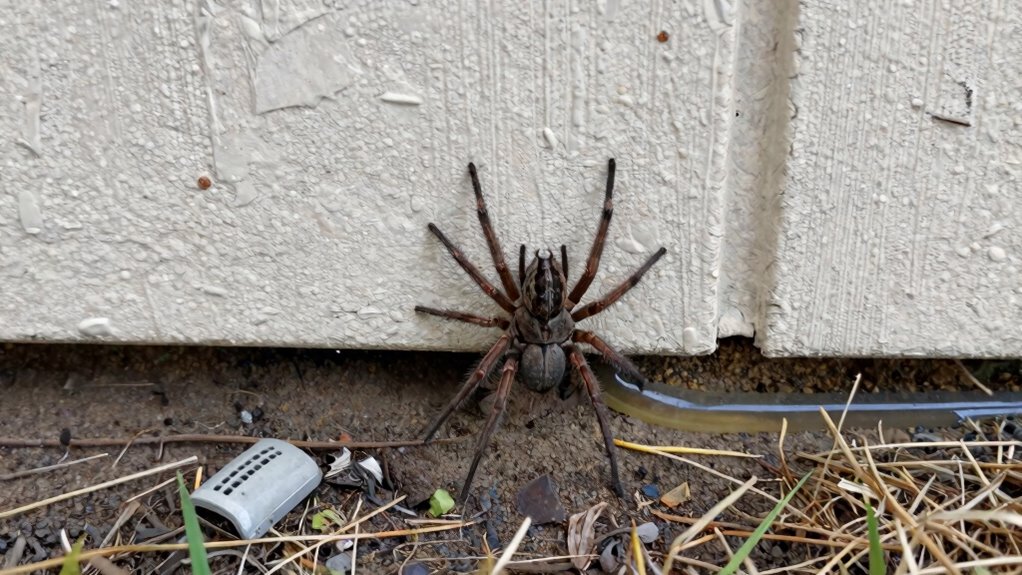
Those ultrasonic devices sound promising but have all the stopping power of a polite suggestion. It is time to turn to methods that actually work: exclusion.
The key is to physically block every spider sized gap. Seal cracks around pipes, gaps under doors, and torn window screens with caulk or weatherstripping for under ten dollars.
This stops the spider before it ever enters your home. For added protection, apply a residual spray of pyrethrin along baseboards and window frames.
This chemical barrier creates a short lived perimeter spiders won’t cross. Apply every few weeks for best results, costing about fifteen bucks per treatment. Residual-effect sprays on non-porous surfaces offer long-lasting protection up to 12 months.
For indoor monitoring, place sticky traps near corners and behind furniture. These flat gluey cardboard rectangles catch wandering spiders and reveal where entry points hide.
It is not thrilling, but it works with no noise and no false hope. You get a sealed home, a quiet trap, and zero spidey guests.
What to Buy Instead of Ultrasonic Repellers
Buying something that actually works feels almost rebellious after reading those ultrasonic claims. Instead, grab a caulk gun for pest proofing; it’s your new best friend for home pest control.
Seal every crack, gap, and crevice around baseboards, windows, and pipes. Spiders follow invisible highways, so block them with physical barriers for effective spider prevention.
Chemical barriers stop spiders at entry points. Spray a residual insecticide like Onslaught FastCap, which costs around $30 and lasts weeks.
Chemical barriers stop spiders cold at entry points—residual spray like Onslaught FastCap lasts weeks for about $30.
It creates a zone spiders won’t cross, ideal for long term pest control. For a natural alternative, try Mighty Mint Peppermint Spider repellent sprays that are safe for pets and kids while providing lasting protection on patios or in garages.
Vacuum removal is immediate and satisfying with a crevice tool.
Suck up webs, egg sacs, and spiders themselves. It costs nothing once you own a vacuum, and doing it weekly reduces infestations.
Sticky traps reveal hot spots without hype. Place them in corners and under furniture for about $10 a pack.
They catch spiders and give you real data on pest activity.
Skip the gadgets and spend $40 on caulk, spray, and traps for actual results.
This practical approach targets buyer intent for proven solutions. You get durable spider repellent without false promises.
The Bottom Line: Save Your Money
The verdict is simple: ultrasonic spider repellers are a waste of money, plain and simple. Eco skepticism is well warranted here, as no peer reviewed study proves they work.
Spiders don’t hear airborne ultrasound like rodents do. They feel vibrations through surfaces, making these devices biologically irrelevant.
Any apparent effect is likely the placebo effect. It convinces users that seasonal spider declines are caused by a thirty dollar plastic box.
After a few days, spiders habituate and return. Your money is better spent on caulking cracks, installing screens, or simply sweeping webs.
Bottom line: skip the ultrasonic gimmick. It is a solution looking for a problem that doesn’t exist.
Save your cash for something that actually works. A good vacuum or professional pest control treatment is a smarter investment for spider removal.
Instead, focus on sealing entry points with steel wool or wire mesh to physically block pests, as these barriers stop gnawing rodents and insects alike.
Frequently Asked Questions
Do Ultrasonic Repellers Affect Spiders Through Walls?
Ultrasonic repellers do not affect spiders through walls. Drywall and wood block the ultrasonic sound from reaching the spider.
Spiders detect wall vibrations instead of airborne noise. A repeller in one room is useless against spiders in the next.
For around 30 dollars, you are better off saving your cash. Seal cracks and gaps with caulk to stop spiders at the source.
Target the prey insects, not the air, for real pest control results. Buy caulk for a practical, long term spider prevention solution.
Can Spiders Hear or Detect Ultrasonic Frequencies?
No, spiders cannot hear ultrasonic frequencies the way humans or animals can. Their hearing simply isn’t built for it, so those pest repellers won’t work on them.
Most spiders have no ears and rely on sensing vibrations through surfaces like webs and legs. Their hearing range tops out far below the high pitched blasts from ultrasonic devices.
So when a repeller shrieks at 30,000 Hz, a spider’s brain doesn’t care at all. They might twitch once, then frequency adaptation kicks in within days.
For effective spider control, skip the gadget and spend that $20 on caulk or a broom instead. Sealing cracks and removing webs are proven pest control solutions that actually work.
If you want to keep spiders out of your home, focus on exclusion and sanitation. Those practical steps beat any ultrasonic device for long term pest management.
How Long Does It Take Spiders to Ignore the Sound?
Spider habituation timeline is surprisingly short, typically 3 to 7 days. Their auditory adaptation rate kicks in fast since they don’t rely on airborne sound.
They feel vibrations through surfaces and webs instead. So that initial startle response fades quickly.
It is like a neighbor’s barking dog. Annoying at first, then ignorable.
Within a week, spiders resume normal activity. They treat the ultrasonic noise as harmless background hum.
Any temporary displacement is just that, temporary. For effective spider control, you need a long term solution that targets webs and hiding spots.
Many homeowners ask how long pest control devices take to work. The answer depends on the type of repellent and the spider species.
If you want to buy a spider repellent, look for one that disrupts their vibration sensing. The best pest control products combine ultrasonic waves with physical barrier treatments.
For lasting results, combine sound deterrents with routine cleaning and crack sealing. This approach makes your home less inviting to spiders and other pests.
Are Any Ultrasonic Repellers Approved by Government Agencies?
Bottom line: Don’t mistake “no regulation” for “government backed.” The EPA does not test or approve ultrasonic pest repellers for effectiveness against rodents or insects.
Instead, these devices are sold under a “minimum risk” exemption which means no efficacy data is required. So when you shop for pest control solutions, don’t assume government approval equals better performance.
For serious pest removal, you need proven, EPA registered products like bait stations and traps. Buyers who search for “do ultrasonic repellers work” often find they fail to drive out mice or roaches long term.
If you want a smart purchase, look for devices with strong user reviews and third party lab tests. Integrate ultrasonic repellers as part of a broader pest management plan with exclusion and sanitation methods.
What Actually Causes Spider Numbers to Drop Naturally?
Seasonal temperature changes are the main reason spider numbers drop naturally. Spiders can’t handle freezing cold or extreme heat, so they either move indoors or die off on their own.
Reduced prey availability also plays a big role. Fewer flies and mosquitoes force spiders to relocate in search of a meal, which is why you see less activity.
This isn’t magic, it’s just nature’s balance at work. If you notice fewer spiders in autumn, the cold is the likely cause, not some gadget.
You don’t need to buy a cheap ultrasonic repeller for that. For effective pest control solutions, focus on sealing entry points and reducing moisture around your home.
Using a trusted spider repellent or natural barrier spray can help keep your space pest free. Choose products that target crawling insects to also limit their food source.
That way, you’re solving the root problem instead of wasting money on gimmicks. A smart purchase means investing in treatments that work with nature, not against it.


