
Cellar spiders usually show up because your basement or crawl space gives them exactly what they want: moisture and a steady supply of tiny insects. Cut off those two things, and the spiders will move out on their own. You don’t need to chase them down with sprays every day, either—the real fix is changing the environment they’re thriving in. That’s why this guide on how to get rid of cellar spiders focuses on dry air, sealing entry points, and removing their food source.
We’ll walk you through the practical steps, like running a dehumidifier below 50% humidity, vacuuming webs and egg sacs, and swapping outdoor lights to reduce insect traffic. You’ll also learn where to place glue traps for monitoring and why simple caulk beats any repellent in the long run.
Stick with us—the next sections cover the exact sealing techniques and spraying strategies that make the difference between a temporary fix and a permanent solution.
At A Glance
- Reduce indoor humidity to 40-50% using a dehumidifier.
- Clear clutter like boxes and papers to eliminate hiding spots.
- Vacuum webs, egg sacs, and spiders from corners and baseboards.
- Place glue traps along baseboards to catch wandering spiders.
- Switch outdoor lights to yellow or amber bulbs to reduce insect prey.
What Is a Cellar Spider? (And Why Are They in Your Home)
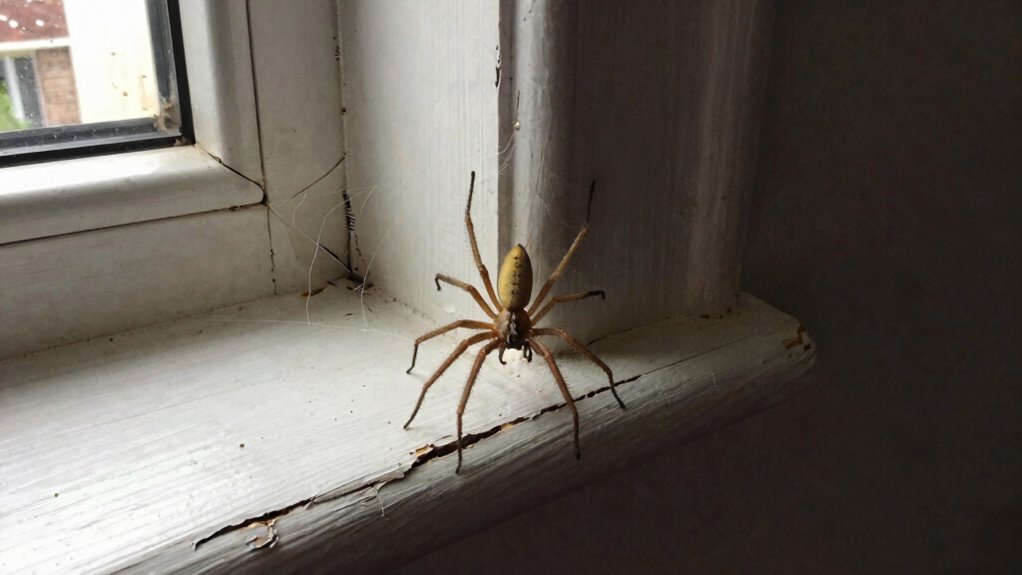
Cellar spiders are the long-legged, wispy arachnids often mistaken for harvestmen or daddy longlegs. This spider species boasts an unmistakable body shape: a tiny, oval abdomen perched on a comically small cephalothorax.
Cellar spiders have tiny oval bodies on comically small cephalothoraxes, with legs stretching over two inches.
Leg length is the real giveaway, as their spindly appendages can stretch two inches or more. The body itself seems like an afterthought compared to those long legs.
They have a neat party trick: they bounce wildly in their webs when disturbed. This is either an evasive maneuver or a very confused jig.
These spiders are drawn indoors by two things: humidity and a buffet of smaller insects. Think damp basements, garages, or crawl spaces, which are perfect spots for these leggy squatters to set up shop.
The good news is they don’t bite humans and mostly mind their own business. To reduce cellar spider populations in your home, focus on pest control for the small insects they eat.
Another effective strategy to get rid of cellar spiders is to lower humidity with a dehumidifier set to maintain humidity levels between 50-60% to create an environment unsuitable for them. For persistent infestations, call a pest control service to inspect your crawl space and treat dark corners.
Identify a Cellar Spider vs. a Daddy Longlegs
| Feature | Cellar Spider | Daddy Longlegs |
|---|---|---|
| Body shape | Two segments (cephalothorax + abdomen) | Single, fused oval body |
| Eye count | Eight eyes (some arrangement) | Two eyes (one pair) |
| Web usage | Builds messy, sheet-like webs | No web; forages on ground |
A cellar spider has a distinct waist between its two body parts, while a daddy longlegs looks like one smooth oval.
If you spot a web in a damp basement corner, that is a cellar spider’s sign, not a daddy longlegs.
Daddy longlegs never spin silk, so they wander across floors and walls hunting small insects directly.
Cellar spiders are common indoor pests, and their webs collect dust, making them a top reason homeowners seek pest control services.
For quick identification, count the eyes: eight tiny dots mean cellar spider, but only two on a raised bump mean daddy longlegs.
When you need to get rid of either, a professional pest control treatment can target their hiding spots and reduce future activity.
Both are harmless to humans, but their presence often signals moisture or other pest issues that require an inspection.
If you want a long term solution, call a local exterminator to handle cellar spider infestations and prevent daddy longlegs from entering gaps.
Remember, cellar spiders hang upside down in their webs, while daddy longlegs stay on surfaces and move fast when startled.
For a thorough home defense plan, combine sealing cracks with scheduled pest control visits, and you will keep both species out for good.
Place non-toxic glue traps along baseboards and corners to catch wandering cellar spiders without using harsh chemicals.
Remove Cellar Spider Webs, Eggs, and Spiders Without Chemicals
A broom and a vacuum are your first line of defense, no chemicals required. Simply sweep down dusty, dangling spider webs from corners and ceilings, paying attention to hidden egg sacs clinging nearby.
A broom and vacuum are your first line of defense for chemical-free spider removal.
Those silky pouches, each packed with dozens of future spiders, need to go straight into an outdoor bin. Vacuuming is faster, sucking up webs, egg sacs, and the long-legged cellar spiders themselves without any spray.
Empty the canister or bag right away to prevent escapees, and this manual scrub leaves no residue, just clean corners. Your home will look better, and it lets you easily spot new spider webs later, acting as a free early-warning system for persistent pest activity.
For thorough cellar spider control, focus on corners, window frames, and baseboards where they build funnel-shaped webs. If you see tiny round sacs, remove them with a paper towel and crush them before disposal to avoid accidental hatching indoors.
This chemical-free spider removal method is ideal for pest-free home maintenance and safe for kids and pets. By regularly inspecting and cleaning, you reduce spider populations and prevent future infestations without relying on pesticides.
Combine this with sealing cracks and reducing humidity to target the root cause of spider activity. A quick weekly sweep keeps your basement or cellar less inviting, and you avoid the need for professional pest control services.
This natural spider elimination approach not only cleans but also helps you track where spiders keep returning, so you can adjust your home pest prevention strategy. No harsh fumes, no residue, just consistent physical removal that works for long-term spider management. For those who prefer a backup option, plant-based peppermint oil sprays provide a safe, non-toxic alternative for spot treatments.
Cut Off Their Food Supply to Keep Them Away

Cellar spiders hang around for one simple reason: a steady supply of insects to eat.
Reducing household pests with proper sanitation and sticky traps will send them searching elsewhere.
Switching outdoor lights to yellow or sodium vapor lamps cuts the nighttime insect draw significantly.
Starve the spiders of their food source, and they will eventually move on to find a meal elsewhere.
For crawling pests like spiders, consider using pre-baited traps with fruity or molasses scents designed for long-term, non-toxic capture.
Reduce Indoor Insects
Cutting off a cellar spider’s food supply is half the battle, and you can actually win it without any spray. Start by learning seasonal patterns because insects invade during warm, wet months so a proactive approach works best.
Place sticky traps along baseboards and corners to catch flies and gnats before spiders find them. Keep your home dry with a dehumidifier around $150 in basements or garages to cut humidity that insects hate. Maintaining humidity levels between 40-50% directly prevents pest reproduction and stops booklice from thriving.
Low maintenance plants like snake plants or succulents do not harbor pests, reducing indoor bug populations naturally. Vacuum regularly especially under furniture to remove crumbs and insect eggs.
This is not about perfection but about making your home a lousy diner for spiders. A simple dry and clean environment is your best pest control strategy.
Switch Outdoor Lights
Most outdoor lights act like all-you-can-eat buffets for insects, and where the bugs go, cellar spiders follow. Switching them off cuts the food supply for pest control, plain and simple.
Replace standard bulbs with yellow bulbs that emit a warmer spectrum bugs barely notice. This reduces light pollution and insect traffic by up to 70 percent, a simple buyer-intent fix.
Install motion-sensor fixtures for 20 to 40 dollars so lights only turn on when needed. This pest management trick saves energy and keeps spiders away all night.
Use low-wattage LEDs of 5 to 10 watts instead of 60-watt incandescents. They attract fewer insects and last years, perfect for outdoor pest elimination.
Direct pole lights away from your house toward the driveway, not the door. This insect control tactic draws bugs elsewhere and reduces spider food sources.
For porches, consider amber-tinted LED floodlights costing 15 dollars each. They keep the area visible but unwelcoming to flying snacks, a smart spider repellent choice.
The bottom line is swap bulbs and aim wisely. Fewer insects mean fewer cellar spiders, and less light pollution means happier neighbors. For those seeking long-lasting protection against the bugs that attract spiders, look for repellents with 25-40% DEET.
Seal Every Entry Point: Cracks, Windows, and Doors
A thorough inspection of cracks and crevices around the home, along with the installation of weatherstripping and door sweeps, creates a formidable barrier against cellar spiders.
Fine mesh screens should be placed over every vent, window, and possible entry point to prevent these long-legged visitors from slipping inside.
Addressing these weak spots is a straightforward, low-cost pest control tactic that effectively stops spiders from entering in the first place.
Focus on sealing gaps and cracks to keep your home spider-free and reduce the need for pest treatments.
Using a three-hole hollow design allows adjustable compression to fill uneven gaps and maintain a tight seal.
Inspect Cracks and Crevices
Check window frames and door thresholds for hairline cracks, since spiders can squeeze through incredibly tiny gaps. Also examine utility entry points where pipes, wires, or cables come into the home, and seal these with caulk or expanding foam for a reliable barrier. For a more durable seal in damp areas, use rust-resistant stainless steel wool or copper mesh inside larger gaps.
Look for rotted wood or loose siding that creates hidden gaps, especially in older basements and crawlspaces. Probe around vents, especially dryer vents, and confirm the flap closes tightly with a full seal intact.
Inspect attic eaves and soffits, where gaps often form between roofing materials and exterior walls. For a complete pest proofing job, use quality silicone caulk at around five dollars per tube.
This low cost fix is permanent and directly reduces spider entry points while starving their insect prey. A tight seal also supports long term pest control and keeps your home more energy efficient.
Install Weatherstripping and Sweeps
Install weatherstripping and door sweeps to seal cracks around windows, doors, and the gaps beneath them. This pest control step isn’t glamorous, but it works to block spider entry.
Weatherstripping is a peel and stick foam or rubber strip costing about $10 per roll. It seals gaps around window frames to stop insect invaders.
Door sweeps priced around $15 slide onto the bottom of doors. They wipe out gaps where spiders stroll in from outside.
Pair this with leaf removal near your foundation. That eliminates hiding spots for pests and their prey.
Also consider careful light placement. Swap white bulbs for yellow or sodium vapor lamps to reduce insect activity near doors.
This cuts spider food sources effectively. Focus on front and back doors plus basement windows.
Get an adhesive weatherstripping kit from any hardware store. Measure twice and stick it firmly for a tight seal. For blocking entry points, brush seal strips handle irregular gaps and sliding doors especially well.
The verdict is cheap, easy, and surprisingly effective against those leggy invaders. Buy your supplies today for quick home pest control.
Use Fine Mesh Screens
Fine mesh screens are the unsung heroes of cellar spider exclusion, turning vents and windows into true no entry zones. Use stainless steel mesh with openings no larger than 1/16 inch, costing about $10 to $15 per roll.
This small size blocks spiderlings and flies while improving ventilation. Lower humidity reduces the bugs that attract pests, supporting your habitat removal strategy.
Cover all window and foundation vents, even basement ones nobody sees. Install screen tightly over doorways; a gap as thin as a credit card is too much for effective pest control.
Check attic louvers, as spiders love those dark, breezy spots for their webs. Use caulk or construction adhesive to seal screen edges to frames, not just staples.
Replace any torn screen immediately, because one rip negates all your work. Proper mesh is a permanent, chemical free solution that stops the buffet before it starts.
For even greater protection, consider using ultra-fine mesh netting with 0.8mm x 1mm holes that effectively blocks locust nymphs and adults.
Why Humidity and Clutter Matter
Why does humidity matter so much to cellar spiders? These arachnids and their insect prey are moisture dependent. High humidity, often above 60 percent, creates a sustainable environment where insects thrive. Spiders follow the buffet, so controlling moisture is a key pest control strategy.
Temperature effects also play a role, warm damp basements mimic their ideal cave-like habitat. This encourages reproduction and makes your home a target for spider infestations.
Clutter amplifies the problem, old boxes, stacked papers, and forgotten debris provide countless hiding spots. Spiders can set up shop without disturbance, so think of clutter as a spider’s personal condo complex. Unlimited rooms, no rent, no pest control intervention.
Reducing humidity with a dehumidifier, typically $30 to $150, is a cost effective step. Tossing old cardboard eliminates clutter and breaks the cycle of spider attractants. Combining moisture control with steel wool barriers helps block entry points used by spiders and their prey.
Less dampness means fewer bugs, fewer bugs means fewer spiders. Fewer spiders means you stop screaming at the laundry room light.
Best Environmental Fixes That Make Your Home Less Spider-Friendly
Turning your home into a spider-free zone starts with two simple moves: yanking the humidity and ditching the clutter.
A dehumidifier, like a $150 Frigidaire model for a damp basement, drops dampness levels below 50%, making the air too dry for cellar spiders to thrive.
Clearing out old boxes and piles from storage areas removes the dark, quiet hideouts they love, leaving them nowhere to spin their messy webs.
For a more proactive pest control approach, seal cracks around windows and doors with caulk, which blocks entry points for common household spiders.
You can also swap bright outdoor lights for yellow bug bulbs, since these attract fewer flying insects that spiders prey on.
Regularly vacuum corners, baseboards, and under furniture to remove egg sacs and leftover webs, which cuts down on spider reproduction.
Using a professional-grade spider repellent spray around entry thresholds adds a chemical barrier that deters re-infestation for weeks.
Pair that with a thorough inspection of attic vents and crawlspace gaps, because sealing those openings is a top buyer-intent fix for long-term prevention.
Keep firewood and leaf piles at least 20 feet from your foundation, as these harbor moisture and hiding spots for spiders.
A clean, dry, and sealed home is your best defense, so focus on these practical fixes to make your living space far less inviting.
For an added outdoor barrier, apply perimeter pest control granules around your home’s foundation to target crawling insects that spiders prey on.
Reduce Indoor Humidity
Since cellar spiders are basically eight-legged humidity meters with delusions of grandeur, drying out your home is the single most effective pest control strategy. Lowering moisture levels directly disrupts their comfort zone and forces them to relocate.
Place humidity monitors in problem areas and aim for 40–50% relative humidity. That is the sweet spot these arachnids hate for effective spider prevention.
Run a dehumidifier in basements, a 50-pint model covers about 2,000 square feet for around $200. Use ventilation tips like opening windows or running bathroom fans after showers for 20 minutes.
Fix leaky pipes or faucets without delay, as drips are essentially spider room service. Confirm dryer vents exit outside, not into crawl spaces, to avoid adding dampness.
Check humidity monitors weekly, if readings stay above 55%, increase ventilation or dehumidifier runtime. This is a simple, buyer-intent approach to keep your home dry and spider free.
For persistent moisture issues, consider supplementing with a chemical-free pest control device that uses ultrasonic waves to disrupt pests, though it works best alongside these humidity fixes.
Declutter Storage Areas
Clutter gives spiders a perfect place to hide and breed. Boxes piled for years and loose papers create dark, damp hiding spots.
Start by pulling everything off shelves and wiping down all surfaces. Toss anything unused to remove half the spider habitat instantly.
Sealed plastic bins are a simple pest control upgrade. Cardboard stays damp and attracts insects, which then attract spiders.
Vacuum corners where webs collect and keep items off the floor. Raised shelving cuts off easy access for spiders.
The result is fewer webs, fewer egg sacs, and fewer surprises. This home pest control project costs about $20 for bins and a weekend.
It is boring but effective. Do it once and spiders will check out early.
Tidy storage beats any spider spray every time. Clean, organized areas are your best defense. For ongoing protection, apply diatomaceous earth in cracks and crevices behind baseboards where spiders hide.
Use Sticky Traps for Monitoring and Control
Why not let spiders catch themselves? Sticky traps are a lazy genius’s dream, especially with recent innovation making them more efficient for monitoring infestations and reducing numbers.
Place traps in dark corners, behind furniture, or along baseboards where spiders actually walk. These traps capture wandering cellar spiders and their prey, breaking the food chain to stop spider breeding.
> Place traps where spiders walk—behind furniture and baseboards—to catch cellar spiders and break the food chain, stopping breeding.
A brand comparison shows Catchmaster’s pre‑scented models outperform generic sticky boards in durability, costing about eight dollars for ten traps. Pesticide-free adhesive prevents secondary poisoning risks for other animals in the household.
Check traps weekly and replace them when full, as a single trap can bag dozens of long‑legged guests.
You also get a hidden bonus, as these traps catch ants and flies, cutting off spider snacks.
Sticky traps are a low‑effort, weapon‑free solution for pest control. Use them, check them, and let spiders do the dirty work.
Use Insecticides Safely: Without Making Things Worse
Using insecticides as a first move against cellar spiders is like using a flamethrower to light a candle. It can work, but you will probably regret the mess.
The real trick is reading the label like it is a treasure map. Web toxins in sprays break down spider silk and kill on contact, but they are not picky.
They can harm household pets if applied carelessly, so keep cats and dogs away until the spray dries. Spot treat infested corners, not entire walls.
A ten dollar can of pyrethrin based spray is plenty for targeted spider control. However, pyrethrins break down fast in sunlight and require reapplication every 7–10 days. Do not douse the place, as it will not fix poor sanitation.
Old webs and bugs bring spiders back, so use the spray as a scalpel, not a sledgehammer. The verdict is spray sparingly, protect your pets, and let sticky traps handle the rest.
When to Call an Exterminator for Cellar Spiders
Two signs usually justify calling an exterminator: a sudden population explosion that outpaces your broom and vacuum, or finding spiders in places you cannot safely reach like inside wall voids or high attic beams.
Exterminator pricing for cellar spiders typically ranges from $150 to $400 for a single visit. This cost buys targeted chemicals and ladder work that your broom cannot match.
DIY limitations are clear because sprays won’t reach hidden nests and webs keep coming back.
Persistent infestations after three vacuum sessions mean you are fighting a losing battle. Egg sacs in crawlspaces or behind heavy appliances are difficult to scrape away yourself.
Structural gaps wider than a dime need professional caulking, not just a trap.
Second-story webs that require a 20-foot ladder are risky without a pro safety gear.
Allergic reactions to spider bites, though rare, warrant immediate professional help.
The bottom line is if you feel outmatched, shell out for the pro. It is cheaper than a hospital visit and gives you peace of mind.
Frequently Asked Questions
Can Cellar Spiders Bite Humans?
Cellar spiders can bite humans, but it’s extremely rare and their tiny fangs usually can’t pierce skin. If you’re worried about pest control in your home, remember that their venom is medically insignificant for people.
Common myths exaggerate their danger, unlike brown recluses, as bite symptoms are often just a tiny red dot. For accurate spider identification, note cellar spiders have long, thin legs and are not aggressive.
If you’re seeking spider removal solutions, know they prefer damp basements and crawl spaces. For targeted pest treatment, consider using a quality insecticide spray around windows and corners.
A professional pest control inspection can confirm if you have harmless cellar spiders or more concerning species. For home defense against unwanted spiders, sticky traps work well in low traffic areas.
No need to panic over these web builders; they are more interested in catching prey than biting people. Purchase an indoor spider repellent or contact a pest management expert for a tailored plan.
Do Cellar Spiders Actually Eat Other Spiders?
Yes, cellar spiders do eat other spiders. They are skilled web weavers, but their hunting tactics are sneaky.
They invade other spiders’ webs, vibrate the silk to confuse the owner, then strike. It is like a creepy, tiny ambush.
This makes them useful for controlling house spiders, though they add messy webs of their own. If you want natural pest control for spiders, cellar spiders can help reduce infestations.
But they are not exactly neat roommates. For targeted spider removal, consider using a spider repellent or a professional pest control service.
Buyers looking for long term spider prevention will want to seal entry points and eliminate webs. Use a residual insecticide spray to target spiders directly and keep your home bug free.
How Long Can a Cellar Spider Survive Without Food?
A cellar spider’s metabolism is very slow, so it can survive without food for several weeks or even up to two months. But there’s a catch. It all depends on prey availability.
If there are fewer bugs in your home, the spider will fade faster. A hungry spider spends energy it doesn’t have, since it won’t eat old webs but keeps adding new ones.
For effective pest control, reducing the overall insect population is key to shrinking spider numbers. If you spot cellar spiders, a targeted spider spray or professional pest control service can break their food chain fast.
Want a long term solution? Invest in preventive measures like sealing cracks and using insect baits to cut off their food supply. This buyer ready approach helps you stop spiders before they become a problem.
Will Sealing My Home Also Keep Cellar Spiders Out?
Sealing cracks absolutely helps keep cellar spiders out, but it’s not a magic fix. These long legged wanderers slip through tiny gaps, so caulk those baseboards and door frames.
The real payoff comes from pairing this with swapped outdoor lighting. Yellow bulbs instead of white ones cost about 10 dollars for a pack.
Fewer bugs means fewer spider snacks, so you starve them out. For 20 dollars, a tube of sealant and a light bulb turn your home into a fortress they won’t bother invading.
Are Cellar Spiders Harmful to Pets or Children?
Cellar spiders are not harmful to your pets or children. Their fangs are simply too short and weak to break human or pet skin.
Their venom is mild and typically causes no reaction at all. These skittish spiders prefer to flee or bounce in their webs rather than risk a bite.
If your dog eats one, there will be zero issues. For worried parents or pet owners, cellar spiders are more of a nuisance than a real threat.
They pose none of the dangers of black widows or brown recluses. If you need pest control for cellar spiders, consider a residual spray for baseboards or a natural spider repellent.
A simple crack and crevice treatment can keep them out of basements and garages. For the best results, combine a contact killer with a long lasting barrier product.
You can buy a reliable spider control kit from a trusted pest control supplier. This approach ensures your home stays safe without risking your family’s health.


