
Do bed bug traps work? Yes—but only if you pick the right one for your situation. A dry ice trap can catch 850 bugs a night in a heavy infestation, while a simple passive interceptor might snag just seven.
Yet that same interceptor nails 70% of very low-level cases that fancy monitors miss completely. The secret is matching your trap to the bug load, and our guide below breaks down exactly which trap wins for every scenario.
At A Glance
- Dry ice traps catch 850 bed bugs nightly in heavy infestations, but require daily replacement.
- Passive interceptors under furniture legs detect 70% of very low infestations for under $20.
- High CO2 traps like dry ice are 4x more effective than NightWatch for sparse populations.
- One night of trapping can miss shy or fed bugs; three to four nights improve accuracy.
- Visual inspections miss 50% of very low infestations, while traps can catch 70% or more.
Which Bed Bug Trap Catches the Most Bugs?
If you are wondering which bed bug trap catches the most bugs, the answer is clear: the dry ice trap wins by a long shot. In a direct comparison, dry ice traps snagged an average of 850 bed bugs per night in heavy infestations, while the CDC3000 caught 207 and the NightWatch only 58.
If you’re wondering which bed bug trap catches the most, the dry ice trap wins by a long shot.
The secret is bait choice. Dry ice releases CO2 at four times the rate of NightWatch, directly boosting capture rates. Bed bug behavior drives this, as they are strongly attracted to a powerful CO2 plume.
Trap placement also matters, especially in unoccupied rooms where room occupancy does not interfere. Interceptor limits become obvious here, as they work slowly and need a week to match dry ice’s single night haul. However, for a more passive and budget-friendly option, reusable interceptor traps offer continuous monitoring without the need for expensive CO2 refills.
Monitor costs favor dry ice, which is cheap, compared to the pricey NightWatch at $450 or the CDC3000 at $1,000. Detection timing and infestation severity can affect results, but for pure catch volume, dry ice wins hands down.
If you are shopping for a bed bug trap, the dry ice type is the best choice for heavy infestations. For lighter problems, you might consider a slower interceptor or a less expensive CO2 option.
Why Dry Ice Traps Crush CO2 Canister Monitors
Why do dry ice traps outperform CO2 canister monitors like the NightWatch and CDC3000? It comes down to CO2 output. Dry ice releases gas at four times the rate of the NightWatch and nearly twenty times that of the CDC3000. More CO2 means more bed bugs lured in, plain and simple. For a pesticide-free choice like the BugMD Bed Bug Trap, physical barriers and ultra-sticky glue provide safe, chemical-free detection without relying on CO2 output. In heavy infestations, dry ice traps caught 850 bugs per night versus 207 for the CDC3000 and just 58 for the NightWatch. But dry ice isn’t perfect, it comes with safety hazards like accidental ingestion or skin burns from handling the frozen blocks. Still, for raw catching power and price, dry ice traps cost far less than those $450 plus monitors. It is the clear winner for anyone seeking a low cost bed bug trap. Just keep the kids and pets away from the dry ice. Bottom line: if you want maximum catch and can manage the risks, dry ice traps crush the competition for pest control.
Why Visual Inspections Miss Low-Level Bed Bug Infestations
Why do visual inspections so often fail to catch low-level bed bug infestations? Humans simply aren’t great at spotting a few bugs in a cluttered room.
In large-scale trials, visual checks caught only 50% of very low-level infestations, while passive interceptors nabbed 70%. It’s a classic case of “you don’t see what you don’t look for.”
In large-scale trials, visual checks caught only 50% of low-level infestations, but interceptors nabbed 70%.
Even with expert eyes, a single bug hiding behind a baseboard is basically a ninja. Pheromone comparisons show active monitors using CO₂ or lures consistently outperform human searches.
For early detection, skip the squint-and-hope method. Interceptors or dry ice traps are boring but reliable.
They cost less than your frustration at missing an infestation. Don’t trust your eyes, trust plastic. Passive interceptors use behavioral trapping designs that let bed bugs climb in but prevent escape, offering a reliable detection method.
Detection Rates at Low vs. Very Low Infestations
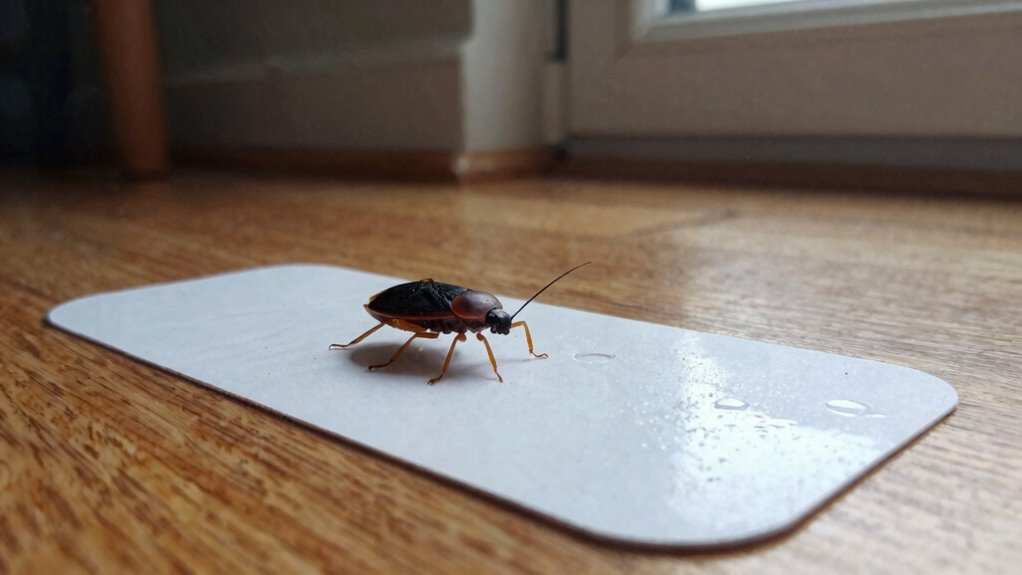
For very low infestations under ten bed bugs, visual inspections miss half of them. Simple interceptors catch seventy percent, but fancy traps often fall flat.
Dry ice traps releasing CO₂ at four times the rate of commercial monitors detect sixty percent of these hidden populations. The expensive NightWatch catches only ten percent at that level.
At low infestations though, almost all traps hit eighty to one hundred percent detection. This proves CO₂ output matters most when bugs are scarce and you need a reliable detection tool. Boric acid acts as a stomach poison that disrupts the digestive and nervous systems of pests.
Visual Inspections vs Traps
Do bed bug traps actually work when the infestation is barely there? In very low-level cases of 1 to 9 bugs, visual inspections catch only half. Passive interceptors, like Climbup, do better with 70% detection because trap placement matters. These simple cups sit under furniture legs, catching bugs as they crawl up. No CO₂, no gadgets, just physics.
A bed sheet touching the floor creates a bridge, letting bugs bypass the trap entirely. Infestation level changes the game. At low levels of 11 to 35 bugs, traps and visual checks both hit 100% detection.
For the faintest infestations, professional pest control interceptors win if placed correctly. Visual inspections need trained eyes, but traps just sit there waiting. The verdict for barely there bugs is to use interceptors under all legs. They are cheap, effective, and they do not need a magnifying glass. For a complete defense system, also seal mattresses with six-sided zippered encasements to trap any remaining bugs inside.
Very Low Infestation Gaps
Detection gaps matter for effective bed bug control. At very low infestations with 10 or fewer bed bugs, the NightWatch monitor caught only 10% of cases while dry ice traps snagged 60%.
That is a huge leap for burst activity detection, catching those random feeding sprees. But no trap nailed harbor reconnaissance perfectly because zero catch never means bug free.
Low level infestations of 11 to 35 bugs saw all active traps hit 80% to 100%. At very low counts, cheap dry ice traps at about five dollars per use beat fancy commercial gear costing four hundred fifty dollars.
For pest control professionals, skip costly monitors for sparse clues. For homeowners, interceptors under bed legs at ten dollars each catch 70% of very low infestations without CO2 fuss.
Match your trap to the infestation level or waste both time and cash. Choosing the right bed bug detection equipment saves money and improves results.
High CO₂ Boosts Detection
The more carbon dioxide a trap releases, the better it works, and the data proves it. Dry ice traps emit CO2 at four times the rate of a NightWatch and nearly 20 times that of a CDC3000.
In heavy infestations, dry ice traps caught 850 bed bugs per night, while NightWatch nabbed 207 and the CDC3000 just 58. For very low level infestations of 10 bugs or fewer, dry ice detected 60 percent of them, while NightWatch only caught 10 percent.
For unoccupied rooms, this CO2 boost is a game changer because pests chase the fake breath instead of a sleeping human. That means early detection becomes far more realistic when you are inspecting empty apartments or hotel rooms between guests.
The takeaway is simple: CO2 output directly impacts your trap’s success. If you want reliable bed bug monitoring, invest in dry ice traps, which cost under $30 in supplies, or skip the weak monitors altogether. For even more comprehensive control, combine traps with a spray that offers up to 16 weeks of residual protection from brands like Harris or Hygea Natural.
Your wallet and your peace of mind will thank you, especially when you avoid a costly infestation down the road. So for pest control professionals or property managers, prioritizing high CO2 traps is the smart, budget friendly move.
Passive Interceptors vs. Active Monitors: Daily Catch Comparison
When you compare passive interceptors to active monitors for daily catch, the results challenge common assumptions. Bed bugs wander each night and interceptors take advantage of that behavior.
Place traps under all furniture legs and avoid any contact with bed linens touching the floor. That contact creates a bridge for bed bugs to bypass the trap.
On a daily basis, interceptors caught more bugs than active monitors like the CDC3000 or NightWatch. Interceptors averaged about 7.3 bugs per apartment daily, with a simple setup costing just $20.
Interceptors caught an average of 7.3 bed bugs daily per apartment, with a setup cost of just $20.
Active monitors like dry ice traps can catch 850 bugs in heavy infestations, but their daily averages fall short. These units cost between $450 and $1,000, making them a bigger investment.
The key takeaway is that interceptors offer steady, low cost surveillance for ongoing bed bug monitoring. Active traps work well for a quick, heavy catch but are less practical for day to day use.
If you are patient and careful with placement, passive traps can out catch active monitors over time. For budget conscious buyers, interceptor traps are the smarter choice for daily pest control.
In contrast, dedicated heat treatment systems achieve a 100% kill rate by reaching lethal temperatures throughout a room or chamber.
Multi-Night Trapping: When It’s Worth the Extra Effort
One night of trapping might not tell the full story, especially when bed bugs are shy or have just fed. Multi-night setups pay off when you are chasing infestation thresholds, the line between maybe and a real problem.
Here is why patience wins with professional bed bug monitoring. NightWatch caught six apartments on day one, but only added one more on day two.
Diminishing returns are common, but that extra hit matters for accurate pest control assessment. Trap saturation limits are a real concern in any bed bug detection plan.
A dry ice trap can snag 850 bugs nightly, so a single night could overflow and skew your counts. Low-level infestations, under 35 bugs, often need three to four nights for a reliable read.
Cumulative catches, like NightWatch’s 4.6 per apartment over four days, match week-long passive interceptors. Hungry bugs are eager to find a host, while fed ones are lazy, so extra nights boost your odds.
Bottom line, skip multi-night for big infestations you can see clearly. For sneaky low counts, investing in extended monitoring is worth the wait for a treatment decision.
Why Feeding Status Changes Trap Responsiveness
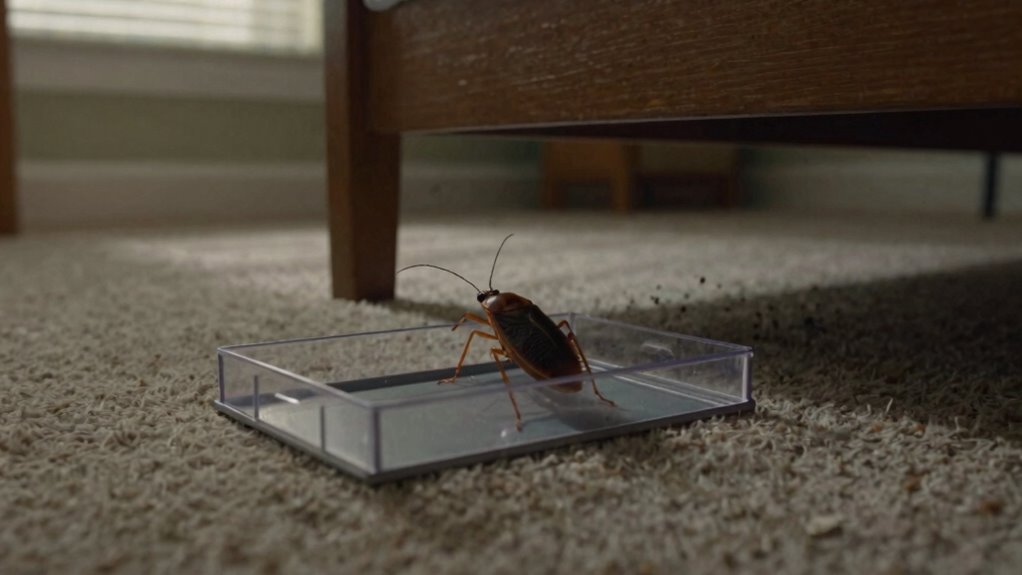
A bed bug that just finished a blood meal is basically a couch potato with six legs. Trap responsiveness hinges entirely on hunger for effective pest control.
Recent feeding habits directly impact how likely a bug is to wander into a trap. A well-fed bed bug, full and sluggish, displays strong trap avoidance. It simply stays put near its host instead of investigating CO2 plumes.
Conversely, a hungry bug driven by starvation will actively seek out that carbon dioxide signal. This makes it far more catchable for your monitoring efforts.
This explains why traps sometimes fail in occupied apartments. Human hosts provide an easier meal, so bugs ignore the lure you set for them.
For best results with bed bug monitors, place them in vacant rooms for a few days. Letting hunger override their natural caution improves your capture rate.
It is a simple math of motivation. Wait for them to get hungry, because fed bugs just do not care about your trap. For added defense, contact-kill sprays provide immediate bug elimination on direct contact.
How to Choose a Bed Bug Trap: Dry Ice, NightWatch, or CDC3000
Dry ice traps are excellent for heavy infestations with a high catch rate at low cost. The downside is you need to replace the ice daily to keep them working.
Dry ice traps catch many bed bugs cheaply, but require daily ice replacement.
NightWatch costs $450 but is slow for detection, catching only 10% of very light infestations in one night. The CDC3000 runs $1,000 and offers mid-tier catch, making it too pricey for most homeowners.
Passive interceptors are cheaper and effective over several days when placed properly under furniture legs. Active monitors work best in unoccupied rooms because they reduce host competition, drawing bugs more reliably.
For a practical choice, pick dry ice traps for severe bed bug jobs. Choose passive traps for light infestations to save money and effort. For severe infestations, steamers that reach 221°F kill bed bugs and eggs faster than traps alone.
The Cost vs. Catch Rate Tradeoff You Need to Know
Balancing cost against catch rate is the real math of bed bug traps, and the numbers don’t lie. That fancy NightWatch runs about $450, whereas a dry ice setup costs maybe $20.
Yet dry ice traps catch 850 bed bugs a night in dense infestations, while NightWatch grabs 58. Chemical lures and heat gadgets sound clever, but they don’t punch as hard as pure CO2 for bed bug control.
Visual inspection limits are another gotcha, as they spot only half of very low level infestations. Interceptors, meanwhile, cost pocket change and out catch active monitors per day.
The takeaway is don’t overspend on flashy gear for pest management. For light infestations, interceptors rule for affordable bed bug detection.
For heavy ones, grab dry ice for a proven, high catch rate solution. Your wallet and your walls will thank you for choosing the right trap for your home. In contrast, some laundry additives like Premo Guard use plant-based ingredients to target bed bugs during washing without harsh chemicals.
What Does a Zero Catch Really Mean?
The uncomfortable truth about bed bug traps is that a zero catch is not a clean bill of health. You might feel relieved, but science disagrees: zero only means zero bugs inside that trap, not zero bugs in your room.
Think of it this way. You are a better buffet than any plastic dish, so bed bugs simply choose you instead.
A well-fed bug is a lazy bug. It won’t wander for hours toward a lure, so a zero catch often means they just ate from you recently.
Low-level infestations frequently produce zero catches. Research shows active monitors can miss up to 90% of very small populations.
Placement also matters. A trap can be in the wrong spot despite being deployed perfectly, giving you false confidence.
No monitor on the market delivers zero false negatives. Treat any zero catch as inconclusive, not as a clean sweep.
Keep investigating with glue boards, interceptors, and a flashlight. If you’re searching for effective bed bug control products, consider a multi-layered monitoring plan.
For a professional bed bug inspection near you, combine passive traps with active scent lures. Recheck every 48 hours and look for fecal spots or shed skins.
A zero catch is a signal to work harder, not a reason to stop. Your next step is to inspect baseboards, mattress seams, and furniture joints.
If you need bed bug extermination services, don’t wait for a confirmed sighting. Early treatment plans are cheaper and more effective than waiting for proof.
Where to Place Bed Bug Traps for Maximum Capture
Interceptors work best under furniture legs, especially bed frames and couches, since bed bugs climb up from the floor. Place these traps near bedding areas, close to the mattress edge, but avoid blocking paths where people sleep.
Unoccupied rooms left empty for a few days draw out hungry bugs better than occupied ones. These spots become prime real estate for maximum capture during your bed bug treatment.
For additional control, diatomaceous earth powder can be applied in cracks and crevices to kill bed bugs mechanically by dehydration within 48 hours.
Under Furniture Legs
Why would you put a trap under a couch leg and expect it to catch bed bugs? Bed bugs are lazy hitchhikers, so they climb furniture legs to reach you, and traps intercept this route.
Proper placement is critical for effective bed bug control. Place traps under all furniture legs, not just beds, but also couches, chairs, and desks too.
Make sure furniture legs sit snugly inside the trap’s well. Avoid “bridges” like bed linens touching the floor, which bugs use to bypass traps.
For homes with many legs, choose traps with a portable design like lightweight plastic interceptors. They are easy to move and clean for regular pest management.
Safety concerns are low with passive traps that use no CO₂ or heat. They rely on a slippery pit, so there is no risk of burns or gas leaks.
In very low level infestations of 1 to 9 bugs, interceptors detect 70% of cases. This beats visual checks, which only catch about 50%.
Bottom line: place them under every leg and check weekly. Remember that no trap catching zero bugs means you have zero bugs. For enhanced control, consider using a hand duster to apply a non-repellent powder into nearby cracks and crevices.
Near Bedding Areas
Placing traps near bedding areas is essential because that is where bed bugs are most active and hungry. These pests crawl toward sleeping humans, so monitor placement along mattress seams, box springs, and headboard cracks is critical.
Check and replace sticky inserts weekly to prevent escapes and keep capture rates high. Active monitors like dry ice traps caught 850 bed bugs per night versus just 58 for NightWatch near bedding.
This proves that CO2 alone beats fancy heat lures for effective bed bug control. One hitch is that traps under bed linens fail if sheets touch the floor.
A sheet bridge gives bugs a path past your trap, so tuck bedding tight to block that route. The bottom line is to trap where you sleep and maintain those traps regularly.
Do not let comfort sabotage capture, or a hungry hitchhiker might skip your trap entirely. Ventilate treated areas afterward to ensure any nearby residual sprays remain safe for sleeping spaces.
Unoccupied Rooms First
Dry ice traps work best in unoccupied rooms because they produce high CO2 output. At roughly $5 per night, they are the most cost effective option for bed bug control.
The NightWatch costs $450 and provides a weaker lure, but it still caught some bugs. The CDC3000 is a mid range trap at $200 with moderate CO2 emissions, though it is less effective without a host.
Passive interceptors are cheap and steady when placed under furniture legs. The key insight for empty spaces is to skip heat based traps and focus on CO2 rich lures.
For unoccupied rooms, pick a high CO2 trap and ignore fancy gadgets. This approach delivers reliable pest management results without overspending. Plant-based sprays offer a chemical-free alternative for indoor pest control, using essential oils like peppermint and rosemary to repel insects.
Frequently Asked Questions
Can Bed Bug Traps Be Used for Treatment Instead of Monitoring?
No, bed bug traps cannot replace professional treatment. They catch some bugs but leave entire infestations hiding in walls or furniture untouched.
The bed bug lifecycle includes eggs and nymphs that traps never catch. Hiring a pest control exterminator becomes necessary since traps only monitor, not eliminate.
Dry ice traps can catch 850 bugs per night but miss hidden populations. Interceptors fail when bed linens bridge them, letting bugs bypass the trap.
The bottom line is to use traps for detection. Hire a professional pest control service for complete eradication.
Do Bed Bug Traps Work on All Life Stages Including Eggs?
Bed bug traps do not work on eggs because glue adhesion can’t trap something that isn’t moving. That means egg detection with a monitor is basically useless from the start.
Traps only capture crawling nymphs and adults, so eggs remain hidden in crevices. Bed bugs glue their eggs directly to surfaces, making trap placement ineffective.
The hatching cycle ensures nymphs emerge later, so traps only catch mobile life stages. For a thorough pest control solution, you need visual inspection as the primary detection method.
If you want to confirm an infestation early, professional bed bug extermination services are your best bet. There’s no shortcut: traps catch crawlers, not eggs, so skip the false hope.
For effective bed bug treatment, combine monitors with detailed visual checks of mattresses and baseboards. Smart buyers know that proper bed bug management requires both active traps and hands on inspection.
How Long Should Traps Remain in Place Before Checking Results?
For active monitoring, check traps after one night, but don’t panic if it’s empty.
Passive traps versus active monitors matter: passive interceptors need a full week to catch stragglers, whereas sticky traps work overnight.
For accurate infestation size estimation, leave active monitors out three to four nights.
Cumulative catches, like NightWatch averaging 4.6 per apartment over four days, beat a single glance.
Initial placement under all furniture legs is critical.
Miss a bridge, like bed linens touching the floor, and the trap becomes a fancy cup.
Bottom line: one night for quick checks, a week for reliable results.
Will Bed Bug Traps Still Work if the Room Is Occupied?
Yes, bed bug traps can still work in an occupied room, but with an important limitation. In a space where people are sleeping, human hosts actually compete with the traps for the bed bugs’ attention.
That competition can significantly reduce the effectiveness of active infestation monitors, especially if the bugs have easy access to you. Passive monitoring devices like interceptor traps are actually more reliable in occupied bedrooms.
These interceptors catch bugs as they crawl toward your bed at night, so they don’t rely on luring pests away from a host. Hungry bed bugs will still respond to traps, just less eagerly than they would in an empty room.
For best results, use a combination of interceptors under bed legs and active monitors near sleeping areas. This approach gives you the most accurate reading when dealing with an active bed bug infestation.
If you are looking for professional grade bed bug detection tools, focus on products that catch bugs before they reach you. Smart buyers prioritize interceptors when their home is still occupied.
Are There Any Non-Co2 Attractants That Work for Bed Bugs?
Non CO2 attractants for bed bugs do exist, but they are not very effective on their own. Heat seeking and chemical lures like pheromones fall far short compared to CO2’s proven trapping power.
In practice, bed bugs can sense warmth, but that heat signal acts like a dinner bell with no actual meal. Chemical lures such as kairomones are added to commercial traps like the NightWatch and CDC3000, yet they rarely boost capture rates significantly.
In head to head testing, dry ice which is plain CO2 outperformed those expensive lure combos. For serious bed bug detection and control, skip the fancy additives and stick with CO2 based traps or simple passive interceptors.


