
How to Get Rid of Rice Weevils doesn’t have to mean tossing every bag of grain in your kitchen. If you’ve spotted tiny brown bugs in your rice or flour, you’re not alone—and you don’t need harsh chemicals to fix it. The trick is knowing which methods actually kill weevils and eggs without ruining your food. This guide breaks down freezing, baking, and rinsing techniques so you can save what’s salvageable and prevent future invasions. You’ll also learn why a $5 bag clip can outsmart a full-blown infestation. From airtight storage to CO₂ treatments, every step here is practical and pantry-safe. Read on to clear your shelves and keep them quiet for good.
At A Glance
- Freeze infested rice at 0°F for at least 48 hours to kill all life stages.
- Discard heavily contaminated rice and vacuum pantry shelves thoroughly.
- Wash remaining rice in cold water, swish, and repeat until water runs clear.
- Store grains in airtight containers with silicone gaskets to block re-infestation.
- Keep rice below 20°C and monitor every two weeks for early signs.
What Are Rice Weevils and How Do They Get Into Your Rice?

Rice weevils are tiny, sneaky, and surprisingly persistent, so they often seem to appear out of nowhere in your pantry. These little beetles, about 2–3 millimeters long, have a sneaky egg biology that hides them inside rice grains.
An adult female chews a tiny hole in a single kernel, deposits one egg inside, and seals it up like a microscopic horror movie. The life cycle unfolds entirely within that grain. The egg hatches in 5–6 days, the larva molts three times over 19–22 days, then pupates for another 9–11 days. All told, it takes about 107 days from egg to adult, at warm, humid conditions.
The entire life cycle happens inside a single grain of rice, a microscopic horror story.
Each female can lay around 400 eggs in her lifetime. So, when you spot an adult weevil crawling out, that grain has been hosting a tiny tenant for weeks. To stop an infestation, inspect all grains before storage and use airtight containers to keep new weevils out. For effective pest control, consider freezing rice for four days to kill any hidden eggs or larvae.
Buying in bulk requires extra caution, as rice weevils often enter your home through infested packaging. Using containers with silicone gaskets and locking hinges provides an effective barrier against these pests. If you see signs of weevils, toss the contaminated rice and clean your pantry shelves thoroughly.
First Signs of a Rice Weevil Infestation You Shouldn’t Ignore
The first clear signal of trouble is spotting tiny, dark-brown adult weevils crawling in your rice or flying near the container. These 2-3 millimeter beetles are the most obvious sign that pantry pest control is overdue.
Damaged rice kernels with hollowed centers or small exit holes are another dead giveaway, along with fine grain dust settling at the bottom of the bag. This dust is actually frass and debris from feeding, which means you’re already dealing with active larvae.
Ignoring these clues lets a small issue spiral into a full-blown infestation, so take action with targeted grain insect control products right away. Regular monitoring every couple of weeks will help you catch reinfestation early and protect your stored food supplies. For comprehensive coverage, place pheromone-based traps 25-30 feet apart near infested grains and pantry corners.
If you spot any of these warning signs, discard the contaminated rice immediately and vacuum the pantry shelves thoroughly. Then, consider using food-safe diatomaceous earth or pheromone traps to prevent future rice weevil problems.
For a more permanent solution, store all grains in airtight glass or hard plastic containers to break the pest life cycle. Acting fast on these three clues will save you money and keep your kitchen pest-free.
Visible Adult Beetles
Weevil-watching isn’t a hobby anyone signs up for, yet a 2-3 millimeter adult beetle crawling across your countertop is the one foolproof sign that your rice stash has company. These tiny, snouted beetles chew their way out of kernels after spending 35-40 days inside, completing their lifecycle stages.
Temperature control is your biggest ally against them. Below 15°C, development grinds to a halt.
Each female lays about 400 eggs, one per grain. This means a single beetle signals dozens more hiding inside.
Spot one adult, and the infestation is active. Cold storage below 5°C kills them, whereas keeping rice airtight with silicone gaskets stops new ones.
Don’t panic. Wash the rice and eat it safely, but check every bag.
A beetle on the counter means eggs in the pantry. For effective pest control, inspect all grains immediately and use airtight containers to prevent reinfestation.
Damaged Rice Kernels
Why do so many people miss the first clue? It’s because damaged rice kernels look like tiny, hollowed-out shells, perfectly normal at a glance.
But that’s the trick: look closer, and you’ll spot small, round exit holes, each one a sign of an adult weevil chewing its way out after a month inside.
This is the foundation of proper grain inspection, and it’s your first line of defense in pest prevention. The kernel itself is a silent witness, and the damage is unmistakable once you know what to search for.
A single damaged kernel can mean a pantry full of future bugs, so early detection saves you from a full-blown infestation.
Give your rice a quick once-over; if you see holes, don’t ignore them. That’s the first warning, not the last, and acting now can stop weevil control from becoming a bigger headache.
Check your stored grains regularly, and when you spot those exit holes, consider replacing the batch and sealing new rice in airtight containers.
Professional pest management starts with this simple habit, and it beats any expensive chemical treatment later.
For a targeted solution, look for an organic spray like Captain Jack’s Deadbug Brew that uses spinosad to handle pantry weevils with minimal impact on helpful bugs.
Fine Grain Dust
Fine grain dust at the bottom of your rice container signals a serious weevil problem. This powder is created when adult weevils chew exit holes, indicating an active infestation that has been growing for weeks.
Those tiny holes also ruin egg viability inside the grain. Weevils lay eggs inside single kernels, and once the larvae emerge, the rice is hollowed out from the inside.
For effective pest control, stop the cycle with hermetic storage that seals out oxygen completely. Use airtight containers like a 5-gallon bucket with a gamma seal lid for around $15 to $20.
In this oxygen free environment, weevil eggs cannot hatch and adult insects suffocate. No chemicals are needed, and the process is simple and foolproof.
Check your pantry today for that telltale dust. If you find it, dump the rice, wash the container thoroughly, and switch to hermetic storage for long term protection.
This is your best buy for a weevil free future. Hermetic solutions are the guaranteed way to prevent pantry pests from returning.
For added defense, you can also apply a light dusting of food-grade diatomaceous earth to pantry shelves and cracks to kill emerging weevils on contact.
Should You Wash That Rice or Toss It Out?
Washing rice is a safe and effective way to remove weevils. A thorough rinse in cold water makes the pests float away. Swish the grains well and drain. Repeat this process two or three times to clear out most adults and larvae. The insects do not carry diseases, so this method works well for light infestations.
However, if the rice smells musty or has heavy webbing, trust your nose and discard it. No amount of washing can fix that level of contamination.
For persistent issues, ensure any replacement grain is kept in dry, resealable packaging to prevent reinfestation.
Safe to Eat
Most people panic and toss the whole bag when they spot tiny beetles in rice, but those rice weevils are actually harmless to eat. Their full life cycle happens inside the grain, from egg to adult, so the rice itself stays unspoiled and safe for consumption.
Weevils don’t bite or spread disease, and they’re just extra protein, not a health threat. A thorough rinse under running water removes them easily, and no one has ever gotten sick from accidentally cooking a few.
For pest control peace of mind, you can also freeze the bag for 48 hours to kill any hidden eggs before storage. Dried rice stays perfectly fine after treatment, though bagged rice kept past six months may lose some flavor.
Bottom line: don’t waste food, just wash and cook, because these little bugs are harmless unwelcome guests. If you’re buying new rice, store it in airtight containers with bay leaves to deter future infestations. For added protection, keep a food-grade DE application dusted lightly around pantry shelves to target crawling insects without harming your family.
Washing Techniques
Before you panic and launch an entire bag of rice into the trash, let’s clarify the washing situation. Washing removes weevils, larvae, and debris, making the rice safe to eat.
No need to toss it, just rinse thoroughly in a fine-mesh strainer until the water runs clear. For extra peace of mind, soak the rice for ten minutes to dislodge hidden eggs.
Cold water rinse removes adult weevils and dust, while a warm water soak for ten minutes loosens eggs and larvae. Repeated rinsing clears all floating debris, and a final strainer check guarantees no weevils remain.
Prevention works better than panic. Treating storage with neem oil repels weevils naturally, which is a top choice for long-term pest control.
For large batches, chilled aeration, cooling grain below 15°C, stops eggs from hatching effectively. This method is ideal for bulk buyers seeking proactive grain protection.
Wash first, store smart, and you will never waste rice again. Keep your pantry sealed and dry, and use oxygen absorbers for extra buyer confidence. For ongoing protection, focus on treating dark damp spots like baseboards and crevices with a residual spray to stop hidden pests from spreading.
How to Remove Weevils From an Open Rice Container
Dump the rice into a fine-mesh strainer and shake it vigorously outdoors. The adults, larvae, and debris will fall through, so discard them immediately.
Wash the container with hot, soapy water and dry it completely before reuse. Remember that one female lays about 400 eggs inside kernels, so even a few survivors mean reinfestation.
Fumigation restrictions mean you cannot use harsh chemicals at home, but heat or freezing works fine for grain pest control. For now, strain and clean, then check daily for any signs of weevils.
Fumigation restrictions rule out harsh chemicals, but heat or freezing works fine for grain pests—just strain, clean, and inspect daily.
If weevils return, you are dealing with a deeper infestation. Consider buying smaller bags next time to reduce the risk of pantry bug problems. After cleaning, use non-toxic pheromone traps in nearby cabinets to catch any male moths and break the breeding cycle before it spreads further.
How to Freeze or Heat Your Rice to Kill Weevils
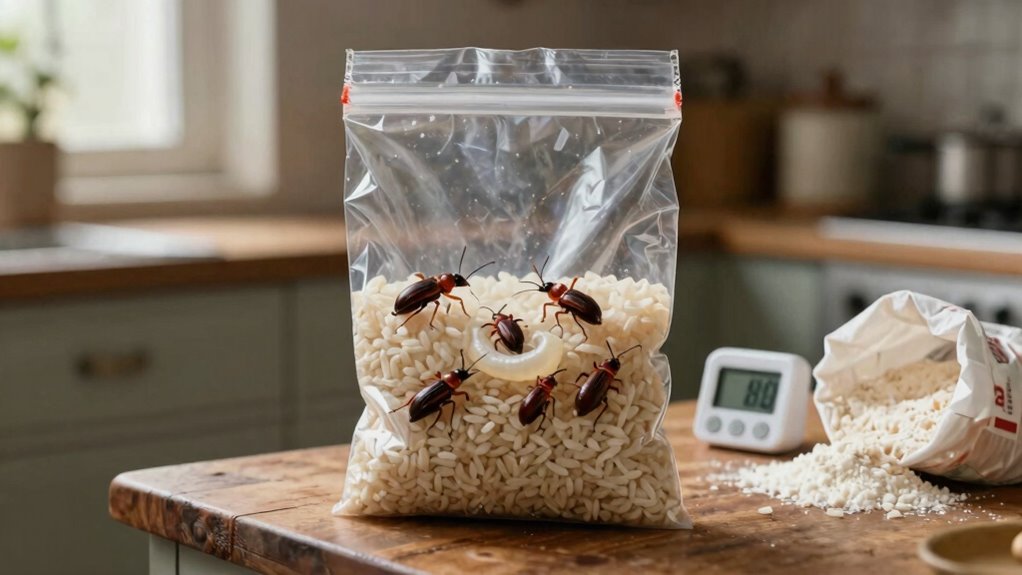
Freezing and heating are two of the most dependable, low cost ways to wipe out weevils hiding in your rice. Pop the rice in a freezer at 0°F for at least 48 hours, or bake it at 140°F for 15 minutes to kill adults and eggs.
Both methods eliminate pests without needing chemical fumigation, which requires repeated applications and carries health risks. A controlled atmosphere using carbon dioxide or nitrogen in a sealed bag also works, but it is pricier and needs airtight containers. For a natural alternative, introducing biological controls like predatory insects or natural bacteria can break down pest habitats without harming beneficial organisms. Neem oil can repel weevils in open air, but it is not a kill everything solution for a full infestation. For home use, freezing is your safest bet for pest control.
It is cheap, easy, and uses zero chemicals. Just remember to let the rice come to room temperature before sealing it up.
No fuss, no eggs left behind. Use this simple rice storage trick to protect your pantry from future bug problems.
5 Ways You’re Accidentally Breeding Weevils in Your Pantry
Most people never realize their own habits invite rice weevils into the pantry. Without a single conscious invitation, your kitchen can become a five star resort for these pests.
Leaving bags open is the top offender. Sealed clips cost under five dollars, yet most people skip this simple pest control solution.
Buying bulk rice without rotating stock leaves old kernels at the bottom. That is where females lay eggs, and they hatch in weeks.
Reusing dirty containers without washing and drying deposits eggs directly into fresh grain. A clean storage method is essential for effective weevil prevention.
Storing rice near warm appliances like a toaster speeds up their development. Lifespan variations surge above 20°C, so keep grain in a cool spot.
Ignoring spillage in cracks creates hidden nurseries. That stray dust has an environmental impact beyond waste, feeding a new generation of pantry bugs. For ongoing control, place non-toxic glue traps near cracks and baseboards to catch crawling pests without chemicals.
Fix these five habits and your pantry goes from resort to ghost town. No chemical warfare is needed with this integrated pest management approach.
Seal, rotate, clean, cool, and sweep. Bottom line for long term pantry protection.
Best Containers and Storage Spots to Keep Rice Weevils Out
Glass or hard, airtight plastic containers are the gold standard for preventing rice weevils. For bulk storage, a 5-gallon Gamma2 Vittles Vault works well and costs around 40 to 60 dollars.
Glass or hard, airtight plastic containers are the gold standard for preventing rice weevils.
In a small kitchen, a 2-gallon OXO Pop container fits snugly on a shelf for about 20 dollars. Avoid flimsy plastic or cardboard since weevils chew through those easily.
If you buy bulk bags, transfer the rice immediately to a sealed container. Store containers in a cool, dark pantry away from warm appliances, ideally below 70 degrees Fahrenheit.
A basement or garage works if it stays dry and cool. Never leave open bags in cupboards, as that invites an infestation.
The bottom line is airtight, rigid containers in a cool spot. That is all you need for effective pest control. No fancy tricks are required to keep rice weevils out. Locking buckles and sealing rings ensure these containers block pests effectively.
Kill Rice Weevils With Neem Oil or CO2: Which Is Better for Home Use?

Two solid options exist for killing rice weevils at home: neem oil and carbon dioxide. But they serve very different purposes, and one is clearly better for the average kitchen.
Neem oil, a natural botanical extract, disrupts the insect life cycle and stops larvae from maturing inside grains. However, it demands thorough coating of every kernel, which is messy and risky for pantry staples. Pure neem oil solidifies in cold weather and requires a warm-water bath to restore it before mixing.
Carbon dioxide, on the other hand, starves weevils of oxygen in a sealed container. It tackles kernel infestation at all stages, including eggs.
Neem oil is cheap at around $10 per bottle, but leaves a bitter residue and needs reapplication weekly. CO2 costs $20 to $30 for a setup, yet kills in three to five days with zero residue.
The verdict is that CO2 wins for home use because it is foolproof and does not ruin your rice’s taste. Neem oil is better for outdoor grain bins, not your pantry.
One Monthly Check That Keeps Rice Weevils From Coming Back
Consistency, not panic, is the real secret to keeping rice weevils out of your pantry. One monthly check, taking just five minutes, prevents reinfestation and saves you from buying pest control sprays.
Start with grain inspection. Pour a small amount of rice onto a white plate, looking for tiny holes or adult beetles. A single weevil seen means eggs are likely inside the kernels, so discard that batch to stop an infestation. Then, verify container sealing. Confirm lids snap tight, and gaskets are clean and crack free.
A dollar store clamp for flour bags works wonders, too. If any container shows damage, swap it out. Weevils can squeeze through hairline gaps, so check for airtight protection. Finally, wipe down shelves with vinegar. It smells awful, but it deters stragglers and supports your pantry pest control routine. For extra defense against stray pests, consider bright yellow sticky traps placed near the pantry.
That monthly ritual beats fumigation headaches. It keeps the pantry quiet, which is nice for a change.
Frequently Asked Questions
Can Rice Weevils Fly and Infest Other Rooms?
Yes, rice weevils can fly and that is why they spread so easily. Their functional wings let them take short, clumsy flights, especially at night in warm and humid conditions.
This means a pantry infestation can quickly move to other rooms in your home. They are not picky about location and will seek out new grain sources wherever they can find them.
To stop a full blown infestation, you need to inspect more than just the rice. Check cereal boxes, pasta, and flour as part of your pest control routine.
Using airtight storage containers is a smart purchase to prevent future problems. If you spot these tiny travelers, consider a targeted grain weevil spray or pheromone traps for effective treatment.
Do Weevils Only Live in Rice or Can They Spread?
Weevils definitely don’t just live in rice. Their migration patterns show they’ll spread to nearby grains like wheat, oats, or corn, especially if storage isn’t airtight.
That’s why pest containment strategies matter. You should seal everything in hard containers, not bags, to stop grain weevil infestations from moving.
They won’t colonize your whole house. But they will hop to any pantry grain within reach, so check all your dry goods.
A quick clean out prevents a pantry party you didn’t invite. For effective pest control, inspect flour, pasta, and cereal too.
If you’re serious about home pest prevention, consider using airtight storage solutions and food safe traps. These are the best products for keeping weevils out of your kitchen.
Is It Safe to Eat Rice With Weevil Eggs Inside?
Eating rice with weevil eggs is safe, and the raw eggs are tiny, harmless, and invisible to the eye. You might notice black specks from adult weevils or leftover debris, but washing rice removes them easily.
These pantry pests don’t spread disease, and no one has reported illness from accidental ingestion. Still, it’s not appetizing, and if you want to keep your kitchen pest free, a quick rinse before cooking works for light infestations.
For heavier cases, it’s best to toss the rice and invest in airtight storage containers to prevent future infestations. If you’re looking for the best pest control solutions for your pantry, consider food grade diatomaceous earth or bay leaves as natural repellents.
Bottom line, it’s safe, but maybe not worth the ick factor for many homeowners. For smart buyers, products like pheromone traps or sealed canisters are a worthwhile purchase to avoid weevil problems altogether.
Can Weevils Survive in the Refrigerator or Freezer?
Yes, weevils can survive in the refrigerator, but only for a short time. Cold storage at typical fridge temps around 4°C just slows them down instead of killing them.
Freezing at -18°C will do the job, but it takes a few days to fully eliminate these grain pests. For reliable pest control, toss infested rice or flour into the freezer for 48 hours.
This simple DIY method works as a preventive measure, but a dedicated pantry treatment is better for long term protection. If you need a faster solution, consider buying food grade diatomaceous earth or pantry trap monitors.
These products are safe for kitchen use and target weevils, beetles, and moths before they spread. Stubborn infestations often require a full pest control product like insecticide sprays for stored grain.
Always check expiration dates on bulk food storage and seal containers tightly. A smart purchase today can save you from tossing entire supplies later.
How Long Do Rice Weevils Live Without Food?
Adult rice weevils can survive without food for about two to three weeks, depending on temperature and humidity. Without grain storage, however, egg survival is impossible because larvae need a kernel to develop.
Think of them as freeloaders that need a steady supply of rice. If you clear out your pantry and keep it cool, they will starve quickly.
This simple solution requires vigilance, but it works. The bottom line is deny them food and they are gone.
For effective pest control, focus on storing dry goods in airtight containers. Use a targeted rice weevil killer spray to treat infested shelves.
If you want long term pantry pest prevention, consider diatomaceous earth or pheromone traps. These are smart purchase choices for buyers who want to stop infestations before they start.


